


Le marché mondial de l’emballage de la chaîne du froid biopharmaceutique devrait presque doubler d’ici 2033
Le marché mondial de l’emballage de la chaîne du froid biopharmaceutique devrait presque doubler d’ici 2033
L’emballage de la chaîne du froid biopharmaceutique est prêt pour une forte croissance grâce 2033

A newly released market study from DataM Intelligence shows the global biopharmaceutical cold chain packaging market is on track for robust expansion over the next decade. The research indicates the market’s value, estimé à USD 4.81 Billion in 2025, is expected to reach approximately USD 9.11 Billion by 2033, représentant un taux de croissance annuel composé (TCAC) d'environ 7.4%.
The forecast emphasizes that rising demand for temperature-controlled solutions—spanning biologics, vaccins, cell and gene therapies—is a major driver of growth. As novel therapies proliferate globally, maintaining strict temperature integrity from manufacturing to patient delivery has become a strategic priority for pharmaceutical companies and logistics providers alike.
Key Drivers Shaping Cold Chain Packaging Demand
Several factors are cited as shaping the future trajectory of the biopharmaceutical cold chain packaging sector:
- Biologics and Advanced Therapies — Accelerating global demand for mRNA, thérapies géniques, and other biologics increases the need for ultra‑cold and precision‑controlled packaging infrastructure.
- Exigences réglementaires — Stricter temperature validation and traceability standards, including alignment with WHO and FDA guidelines, are prompting broader use of compliant thermal packaging systems.
- Intelligent & Innovations en matière d'emballage durable — Adoption of IoT‑enabled monitoring, Matériaux à changement de phase (PCM), and recyclable packaging formats improves real‑time visibility and reduces environmental impact.
- Expansion géographique — Growth in Asia‑Pacific and other emerging markets is expanding distribution networks for cold chain medicines and vaccines.
The report highlights that North America currently leads the market with around 42.6% partager, underpinned by advanced healthcare infrastructure and stringent regulatory frameworks, while Asia‑Pacific shows the fastest expansion potential.
What This Means for Packaging Suppliers and Logistics Providers
For manufacturers and suppliers of cold chain packaging solutions, the projected growth underscores the importance of innovation in thermal protection and end‑to‑end temperature control.
Key implications include:
- Rising demand for engineered, performance‑tested packaging systems
- Integration of real‑time monitoring and data logging technologies
- Greater adoption of reusable and sustainable solutions
This trend is notable not just for pharmaceutical logistics but also for broader temperature‑sensitive supply chains, including biologics, médicaments spécialisés, and high‑value food distribution.
Une étude révèle des changements dans les performances des emballages de la chaîne du froid EPS dans les conditions du fret aérien
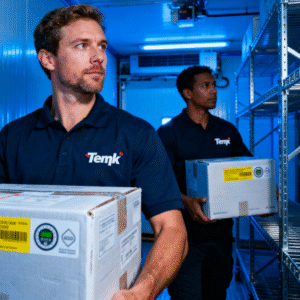
New Research Examines Cold Chain Packaging Behavior in Air Transport
A newly published scientific study is drawing attention to how EPS foam cold chain packaging performs under aircraft cargo conditions, highlighting potential risks for temperature-sensitive shipments.
The research, published in March 2026, investigates how foam boxes combined with ice-based cooling systems behave in low-pressure environments typical of aircraft cargo holds.
Aircraft Conditions Alter Thermal Performance
According to the study, le reduced air pressure and environmental changes during flight significantly influence heat transfer inside packaging systems.
Utilisation de modèles de simulation et d'analyse de champ de température, les chercheurs ont découvert que:
- Thermal behavior differs between ground and flight environments
- Cooling efficiency may decrease under low-pressure conditions
- Temperature distribution inside packaging becomes less predictable
These findings suggest that standard ground-based validation may not fully reflect real transport conditions.
Implications for Pharma and Food Cold Chain Logistics
The results are particularly relevant for:
- Expéditions pharmaceutiques (biologique, vaccins)
- Temperature-sensitive food logistics
- Long-haul air freight operations
Even small deviations in thermal performance can increase the risk of temperature excursions, potentially affecting product quality and regulatory compliance.
Need for Route-Specific Packaging Validation
The study highlights a growing industry requirement:
👉 Cold chain packaging must be validated for specific transport conditions, not just standard test environments
Cela comprend:
- Air transport simulation
- Environmental modeling
- Real-world performance testing
As cold chain logistics become more complex, packaging validation is moving toward scenario-based testing rather than generalized standards.
Impact sur l'industrie
For cold chain packaging manufacturers and solution providers, the study reinforces several key trends:
- Increased demand for high-performance insulation systems
- Greater focus on scientifically validated packaging design
- Need for packaging that performs consistently across air, sol, and last-mile transport
SOCO lance la série ICEBANK™ Gel Ice Pack pour des solutions de refroidissement durables pour la chaîne du froid
SOCO Introduces New Gel Ice Pack Technology at ISTA Forum
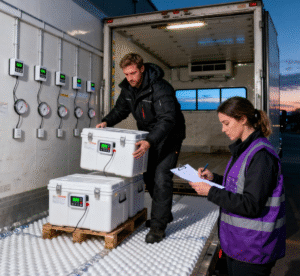
SOCO Group has unveiled its latest ICEBANK™ series gel ice packs at the ISTA Forum USA, presenting a new generation of cooling solutions designed for cold chain logistics across food, pharmaceutique, et applications médicales.
The product lineup includes multiple gel ice pack variants with different performance characteristics, addressing a wide range of temperature-controlled shipping requirements.
High-Performance Cooling with Sustainable Materials
According to the announcement, the ICEBANK™ series is built around advanced polymer formulations capable of:
- Absorbing up to 430 times their weight in water
- Forming stable gel structures for 48–72 hours of cooling duration
- Maintaining integrity during storage and transport without leakage
En outre, several variants are designed with Matériaux biodégradables, aligning with increasing regulatory and environmental pressures on cold chain packaging.
Expansion into PCM and Sub-Zero Applications
The new portfolio also includes specialized solutions such as:
- -10°C phase change ice packs for deep-freeze logistics
- Reusable and leak-proof designs for vaccine transport
- Water-soluble cooling materials that simplify disposal and wastewater handling
These developments highlight ongoing innovation in PCM-based cold chain packaging, particularly for pharmaceutical and ultra-low-temperature logistics.
Integrated Manufacturing Solutions for B2B Clients
Beyond the cooling materials themselves, SOCO also introduced a complete gel ice pack production solution, y compris:
- Laminated film materials
- Automated filling and sealing equipment
- Polymer formulations and technical support
This approach enables customers to build or scale their own manufacturing lines, reflecting a shift toward end-to-end cold chain packaging solutions rather than standalone products.
Market Implications
For cold chain packaging suppliers and buyers, this launch signals several important trends:
- Increasing demand for high-performance gel ice packs and PCM solutions
- Strong push toward sustainable and biodegradable materials
- Growing interest in integrated production and supply chain solutions
As cold chain logistics continues to expand across food, Soins de santé, and e-commerce sectors, advanced cooling media like ICEBANK™ are becoming a key component of reliable temperature-controlled shipping systems.
Les emballages de la chaîne du froid doivent résister aux conditions extrêmes de la logistique alimentaire et pharmaceutique, Résultats de l'étude
Cold Chain Packaging Faces Harsh Real-World Conditions
A recent industry analysis highlights how cold chain packaging is being pushed to perform under increasingly demanding real-world conditions, particularly in food and pharmaceutical logistics.
According to newly published content, packaging used in cold chain environments must withstand exposure to moisture, basses températures, and heavy handling during transport. Systems that are not specifically designed for these conditions can degrade quickly, increasing the risk of spoilage and product loss.
Performance and Durability Becoming Critical Design Factors
The analysis points out that cold chain packaging is no longer just about insulation. It must also deliver:
- Structural durability under wet and cold conditions
- Consistent thermal performance during transport
- Resistance to mechanical stress during handling
For products such as seafood, volaille, and temperature-sensitive pharmaceuticals, packaging failure can directly impact product safety and supply chain efficiency.
Increasing Demand for Cold-Chain-Specific Packaging Solutions
As logistics environments become more complex, the industry is moving away from general-purpose packaging toward cold-chain-specific design.
Cela comprend:
- Specialized insulated packaging systems
- Improved material selection for thermal stability
- Packaging engineered for real-world transport scenarios
Pour les fournisseurs, this reflects growing demand for packaging solutions that are both performance-driven and application-specific, rather than standardized across all use cases.
Implications for B2B Buyers
Pour les fabricants, distributeurs, et fournisseurs de solutions pour la chaîne du froid, the key takeaway is:
- Packaging must be designed for actual transport conditions, pas seulement les performances du laboratoire
- Durability and thermal reliability are becoming core purchasing criteria
- Demand will increase for packaging systems that can handle humidité, stresser, and long transport durations
Cold Chain Technologies obtient un nouveau brevet pour un système d'emballage thermique avancé

New Patent Strengthens Cold Chain Packaging Design Capabilities
Cold Chain Technologies has secured a newly granted U.S. patent covering an advanced system for transporting temperature-sensitive materials, marking a significant development in cold chain packaging design.
The patent, granted in early 2026, describes a modular insulated shipping system built around a structured inner support and layered insulation materials designed to maintain stable temperature conditions for extended durations.
Multi-Layer Insulation and PCM Integration
According to the patent description, the system combines:
- Multi-layer insulation structures
- Integrated temperature-control materials
- Modular packaging components
This design enables more precise thermal management across a range of shipping conditions. The system is also adaptable for different payload sizes and temperature requirements, including pharmaceutical and biologics transport.
Focus on Extended Duration and Stability
One of the key objectives of the patented system is to maintain products within a defined temperature range for longer periods, especially in environments where external conditions fluctuate.
The configuration includes top and bottom insulation layers, as well as internal placement of temperature-control media, allowing for improved thermal stability compared to conventional packaging solutions.
Industry Implications
For cold chain packaging manufacturers and solution providers, this patent reflects ongoing innovation in:
- Passive thermal packaging systems
- PCM-integrated shipping solutions
- Modular insulated container design
It also highlights increasing demand for packaging that can support long-duration shipments and complex logistics environments, particularly in pharmaceutical cold chain applications.
Une nouvelle étude révèle les risques liés aux performances en matière de température des emballages en mousse de la chaîne du froid dans le transport aérien

Une étude scientifique récemment publiée a fourni un nouvel aperçu des performances des systèmes d'emballage de la chaîne du froid à base de mousse dans des conditions de fret aérien., mettre en évidence les risques potentiels liés au contrôle de la température pendant le transport aérien.
La recherche se concentre sur les caisses en mousse EPS combinées à des systèmes de refroidissement à base de glace et analyse comment la réduction de la pression de l'air et les conditions environnementales en vol affectent les performances thermiques.. Utilisation de modèles de simulation et d'analyse de champ de température, l'étude démontre que le comportement de l'emballage peut différer considérablement selon les conditions au sol et les environnements de vol.
Cette découverte est particulièrement pertinente pour la logistique de la chaîne du froid pharmaceutique et alimentaire., où le transport aérien est largement utilisé pour les expéditions urgentes. Les variations de performances thermiques peuvent augmenter le risque d'excursions de température, surtout lors du transport longue distance.
Pour les fabricants d’emballages et les fournisseurs de solutions de chaîne du froid, l'étude renforce l'importance de la validation des emballages spécifiques à un itinéraire. Les conditions de test standard peuvent ne pas refléter pleinement les environnements d'expédition réels, spécialement pour le fret aérien.
D'un point de vue commercial, cela met en évidence un besoin croissant de conception d’emballages plus avancées, outils de simulation, et des méthodes de validation qui tiennent compte des différentes conditions de transport. Les entreprises capables de fournir des solutions d'emballage scientifiquement validées auront un avantage plus important pour garantir la sécurité des produits et la conformité réglementaire..
La technologie prédictive d’emballage sous chaîne du froid améliore les performances thermiques et la rentabilité
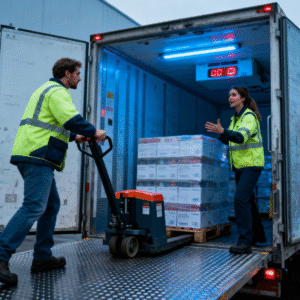
Une analyse récente de l'industrie met en évidence une évolution croissante vers une technologie d'emballage prédictive de la chaîne du froid, où les stratégies de protection thermique sont adaptées aux conditions d'expédition spécifiques plutôt que d'utiliser des approches d'emballage standardisées.
Ce modèle se concentre sur l'optimisation de variables clés telles que la configuration de l'isolation, quantité de glace sèche, et la durée du transit en fonction de facteurs réels tels que les conditions météorologiques, routes maritimes, et délais de livraison. Au lieu de compter sur des configurations d'emballage fixes, les entreprises commencent à utiliser des méthodes basées sur les données pour améliorer à la fois les performances et la rentabilité.
L'un des principaux avantages de cette approche est la capacité de réduire le suremballage tout en préservant la sécurité des produits.. L’excès de matériaux d’isolation et de refroidissement augmente les coûts d’expédition, tandis qu'une protection insuffisante crée un risque d'excursions de température. L'emballage prédictif permet d'équilibrer ces facteurs en alignant la conception de l'emballage sur les exigences réelles de l'expédition..
D'un point de vue commercial, cette tendance est particulièrement pertinente pour la livraison de nourriture, marchandises surgelées, et la logistique pharmaceutique, où le contrôle des coûts et l’intégrité des produits sont tous deux essentiels. Alors que les réseaux de la chaîne du froid deviennent plus complexes, l’emballage est de plus en plus considéré comme un composant actif de l’optimisation logistique plutôt que comme une simple couche de protection passive.
Pour les fournisseurs, cela signale une demande croissante de matériaux isolants plus performants, des systèmes d'emballage plus intelligents, et des solutions pouvant s'intégrer aux plateformes de données et de logistique. Entreprises capables de prendre en charge des, les stratégies d'emballage spécifiques à un itinéraire bénéficieront probablement d'un avantage concurrentiel sur le marché en évolution de la chaîne du froid.
Nordic lance un laboratoire d'innovation en matière d'emballage GLP-1 pour l'expédition sous chaîne du froid de petits formats

Nordic Cold Chain Solutions a introduit un nouveau GLP-1 & Laboratoire d'innovation en emballages petit format, targeting one of the fastest-growing segments in temperature-sensitive healthcare logistics. According to the company’s March 26 announcement, the new lab is designed to support specialty pharmacies, pharmaceutical manufacturers, and e-commerce operators handling parcel-based shipments of GLP-1 therapies and other small-format cold chain products.
What makes this development commercially important is its focus on small-format shipping, a segment that is becoming more demanding as direct-to-patient fulfillment and specialty pharmacy distribution continue to expand. Nordic says the lab brings customers into the packaging design process earlier, with work centered on mailers, compact shippers, conception d'emballage, essai, and faster scale-up into production. That means the launch is not just another corporate facility update. It is a direct response to the need for more specialized cold chain packaging built for parcel networks and high-velocity healthcare fulfillment.
Pour les acheteurs B2B, the practical takeaway is clear. As GLP-1 and other temperature-sensitive therapies move through smaller, faster distribution channels, packaging requirements become more complex. Companies need systems that do more than hold temperature. They also need solutions that support repeatable packout, cohérence opérationnelle, test-backed performance, and smoother movement from development to commercial deployment. Nordic’s announcement also highlights the company’s broader capabilities in engineered packaging, réfrigérants, and ISTA-certified laboratory testing, which reinforces the market trend toward integrated cold chain development support rather than simple box-and-coolant supply.
From an industry-news perspective, il s'agit d'un signal plus utile qu'une histoire d'expansion logistique générique car il pointe vers un domaine très spécifique de demande de produits et d'emballages.: des systèmes de chaîne du froid adaptés à l'expédition de soins de santé à l'échelle des colis. Pour les fournisseurs d'emballages, fabricants de composants, et partenaires de validation, le message est que le marché s'oriente vers des formats plus petits, piloté par les tests, programmes d'emballage sous chaîne du froid spécifiques aux clients, en particulier dans les catégories thérapeutiques où la conception de l'expédition affecte directement la conformité, protection du produit, et performances d'accouchement des patients.
Les prévisions du marché de l’emballage sous chaîne du froid mettent en évidence la croissance à long terme des produits biologiques et du transport thermique
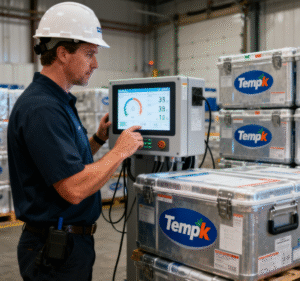
A newly published market forecast from MarketGenics says the global cold chain packaging market is valued at about USD 30.2 milliards en 2025 et pourrait atteindre USD 67.6 milliards 2035, expanding at a projected 8.4% TCAC. The release links that growth to rising demand for temperature-sensitive pharmaceuticals, biologique, vaccins, et les aliments périssables, along with continued investment in cold chain infrastructure.
This item is not a straight event-driven news report, so under your new rule set it fits as a Fallback rather than a Standard article. Toujours, it has practical value because it reinforces where the market is moving: toward higher-performance thermal packaging, greater use of smart monitoring, and stronger demand from healthcare and food cold chains.
For packaging manufacturers and solution providers, the commercial meaning is straightforward. Long-term demand growth in biologics and perishable distribution usually translates into more pressure on insulated shippers, coolant media, aide à la validation, and packaging systems that can maintain performance under stricter compliance and wider geographic distribution needs.
Autrement dit, even though this piece is forecast-led rather than event-led, it still adds usable context for B2B decision-makers. It supports the view that cold chain packaging is becoming more strategically important as supply chains become more temperature-sensitive, more monitored, and more dependent on reliable thermal performance
Nordic lance un laboratoire d'innovation en matière d'emballage GLP-1 pour l'expédition sous chaîne du froid de petits formats

Nordic Cold Chain Solutions a lancé un nouveau GLP-1 & Laboratoire d'innovation en emballages petit format, expanding its support for specialty pharmacies, pharmaceutical manufacturers, and e-commerce operators handling temperature-sensitive shipments. According to the company’s March 26 announcement, the new lab is designed to help customers manage the speed and complexity of shipping GLP-1 therapies and other cold-chain payloads through parcel and small-format distribution channels.
The new initiative is commercially important because it focuses on an increasingly difficult part of the market: grand volume, small-format cold chain fulfillment. Nordic says the lab is meant to bring customers into the design process earlier, with work centered on mailers and compact shippers, conception d'emballage, product testing, and faster movement from concept to scalable production. That makes the launch more than a branding update; it signals deeper demand for fit-for-purpose packaging in the fast-growing GLP-1 shipping segment.
Pour les acheteurs B2B, the practical takeaway is clear. As demand rises for direct-to-patient delivery, specialty pharmacy distribution, and parcel-based temperature control, packaging systems need to do more than hold temperature. They also need to support packout consistency, attentes réglementaires, discipline documentaire, and scale-up into repeatable operations. Nordic explicitly connects the lab to regulated healthcare environments and says the model aligns with URAC- and AIChE-related operational expectations.
This is also relevant from a sourcing perspective because Nordic frames the lab as part of a broader cold chain offering that spans engineered packaging, réfrigérants, and ISTA-certified laboratory testing. That combination suggests customers are looking not only for materials, but for integrated cold chain packaging development support that can shorten validation cycles and improve shipping reliability for temperature-sensitive therapies
















