


Détail du blog
C.H.. Robinson étend la logistique de la chaîne du froid des produits frais dans le sud du Texas
C.H.. Robinson étend la capacité transfrontalière de la chaîne du froid des produits frais
Ce qui s'est passé
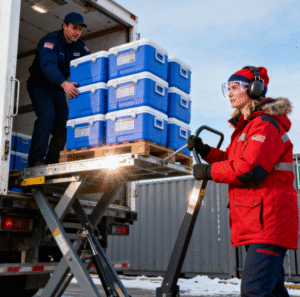
C.H.. Division des chaînes d'approvisionnement fraîches de Robinson, Robinson frais, a ouvert un nouveau centre logistique de 142 600 pieds carrés dans le sud du Texas. L'installation est située à Pharr, près de la frontière américano-mexicaine, et est conçu pour aider les expéditeurs de produits frais à acheminer plus rapidement les produits de la ferme au marché tout en protégeant la fraîcheur et la qualité..
La société a annoncé l'installation en mai 13, 2026. C.H.. Robinson a déclaré que le site étend ses capacités transfrontalières et prend en charge les clients qui ont besoin d'une manipulation plus rapide des produits., temps de séjour réduit, et une exécution plus rigoureuse à proximité des principaux postes frontières.
Comment ça marche
La nouvelle installation a 69 portes de quai, plusieurs zones de température, services à valeur ajoutée, et certifications alignées sur les normes de la Global Food Safety Initiative et les exigences USDA Organic. Il est intégré dans C.H.. Plateforme logistique de bout en bout et réseau à température contrôlée de Robinson.
Le site prend en charge un dédouanement plus rapide, refroidissement immédiat, maturité, contrôle de qualité, reconditionnement, consolidation, et opérations de cross-dock. C.H.. Robinson a déclaré que l'installation est située près du pont international Pharr-Reynosa., le pont international d'Anzalduas, autoroutes à proximité, Aéroport international McAllen, accès ferroviaire, et les ports de Brownsville et Matamoros.
Pourquoi ça compte
La logistique des produits frais dépend de la rapidité, contrôle de la température, calendrier d'inspection, et temps de séjour court. C.H.. Robinson a déclaré que 98% de tous les produits frais importés du Mexique entrent aux États-Unis via le Texas, New Mexico, Arizona, ou en Californie, et ça 55% de ce volume transite par le Texas. Cela fait du sud du Texas une porte d’entrée essentielle pour les chaînes d’approvisionnement de produits périssables..
En plaçant le refroidissement, inspection, reconditionnement, étiquetage, et des capacités de consolidation à proximité de la frontière, les expéditeurs peuvent réduire les délais de traitement et protéger la qualité des produits plus tôt dans le processus d'importation. Pour les produits frais, ces heures peuvent affecter directement la durée de conservation, qualité de vente au détail, et l'exécution des commandes.
Impact B2B
Pour les producteurs de fruits et légumes, importateurs, détaillants, et acheteurs de restauration, la nouvelle installation du sud du Texas pourrait améliorer l'exécution transfrontalière et réduire l'incertitude logistique. La combinaison de plusieurs zones de température, contrôle de qualité, reconditionnement, et la capacité de cross-dock offre aux expéditeurs plus de flexibilité après l'entrée des produits aux États-Unis..
Pour les prestataires de services de la chaîne du froid, cette évolution témoigne d’une demande croissante d’infrastructures à température contrôlée adjacentes aux frontières. Les clients de produits frais ont de plus en plus besoin de services intégrés combinant stockage frigorifique, inspection, coordination douanière, consolidation, reconditionnement, et distribution nationale.
Pour les fournisseurs de la chaîne du froid B2B, l'opportunité est plus large que le stockage. Des installations comme celle-ci nécessitent une surveillance de la température, équipement de quai, flux de travail de manutention isolés, compatibilité des emballages, systèmes de gestion d'entrepôt, et des processus de contrôle de la qualité qui aident à préserver la fraîcheur depuis l'entrée à la frontière jusqu'au marché final.




