


Détail du blog
Copeland et Blue Yonder intègrent la visibilité sur la chaîne du froid pour une prise de décision basée sur les conditions
Source: Copeland
Copeland et Blue Yonder intègrent les données sur l'état des expéditions dans les décisions relatives au flux de travail de la chaîne du froid
Ce qui s'est passé
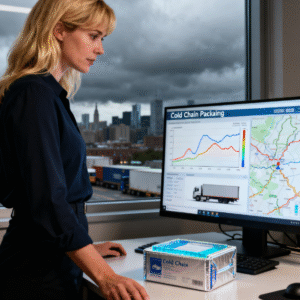
Copeland a annoncé une intégration entre son logiciel de surveillance du fret Oversight360 et Blue Yonder Network, création d'une vue de plate-forme unifiée pour l'emplacement de l'expédition, données sur l'état des produits et informations sur le flux de travail de la chaîne d'approvisionnement.
L'intégration est conçue pour aider les fournisseurs, partenaires, les opérateurs logistiques et les détaillants réduisent les pertes, améliorer la visibilité des expéditions et réagir plus tôt aux perturbations du transit. Il combine les données des trackers GO de Copeland et du logiciel Oversight360 avec les capacités de flux de travail et de visibilité de Blue Yonder Network..
Cette annonce est importante pour les opérateurs de la chaîne du froid, car elle étend la visibilité au-delà du simple suivi des expéditions.. Au lieu de traiter les données de localisation et les données sur les conditions de température comme des flux d'informations distincts, l'intégration les connecte au sein des flux de travail opérationnels où les équipes peuvent prendre des décisions plus rapides.
Copeland a déclaré que le système était actuellement mis en œuvre avec un important fournisseur américain.. détaillant de produits alimentaires pour soutenir les objectifs d'expédition entrants tels que la ponctualité, livraison complète et suivi plus cohérent.
Comment ça marche
Les expéditions sous chaîne du froid génèrent plusieurs types de données différents pendant le transit.
Une équipe logistique peut savoir où se trouve le camion, mais pas si la cargaison reste dans la bonne plage de température. Une équipe qualité peut avoir accès aux données de condition, mais pas toujours dans le même système où le statut de l'expédition, les plannings de réception ou les workflows d'exception sont gérés.
Cela crée un écart de visibilité. Lorsque les flux de données sont séparés, les équipes peuvent détecter un problème trop tard ou passer du temps inutile à rapprocher les informations de plusieurs systèmes.
L'intégration de Copeland et Blue Yonder comble cette lacune en réunissant les informations sur les conditions d'expédition et les données de flux de travail logistique.. La plateforme Oversight360 de Copeland fournit la localisation des expéditions et des signaux télématiques en temps réel. Quand ces informations circulent dans Blue Yonder Network, il peut être regroupé, analysé et utilisé dans le cadre de flux de travail plus larges de la chaîne d'approvisionnement.
En pratique, cela signifie que les équipes de la chaîne du froid peuvent évaluer l'état des expéditions grâce à une vue plus complète:
- où se trouve l'envoi
- dans quel état se trouve le produit
- si l'itinéraire ou le délai de livraison change
- si le risque nécessite une action opérationnelle
- si l'expédition peut affecter les délais, performance complète
Ceci est particulièrement précieux pour la nourriture, boisson, logistique de vente au détail et pharmaceutique, car les écarts de température ne sont pas seulement un problème de transport. Cela peut affecter la durée de conservation, qualité du produit, sécurité, risque de réclamation et conformité des clients.
Pourquoi ça compte
Pendant de nombreuses années, la visibilité de la chaîne du froid est fortement axée sur les rapports après coup. Un expéditeur peut examiner un enregistrement de l'enregistreur de données après la livraison et déterminer si le produit est resté dans la plage de température requise..
Ce modèle n'est plus suffisant pour les gros volumes, des réseaux de chaîne du froid en évolution rapide.
Les détaillants et les distributeurs alimentaires attendent de plus en plus des fournisseurs qu'ils fournissent une visibilité en temps quasi réel sur le statut des expéditions et l'état des produits.. Un retard, l’écart d’itinéraire ou le changement de température doivent être traités pendant que la charge est encore récupérable, pas après qu'il soit arrivé endommagé ou hors spécifications.
L'intégration Copeland-Blue Yonder reflète un passage plus important de la surveillance passive au contrôle actif de la chaîne du froid..
Dans un réseau logistique moderne à température dirigée, la valeur des données dépend de la rapidité avec laquelle elles deviennent une action. Une alarme de température n'est utile que si la bonne équipe la voit, comprend le contexte et peut intervenir. Cette intervention peut impliquer de contacter un transporteur, rediriger un véhicule, prioriser un rendez-vous de réception, organiser un entreposage frigorifique alternatif ou lancer un examen de la qualité avant que le produit n'atteigne le client.
C’est également pourquoi la prise de décision prédite par l’IA devient plus pertinente. Les réseaux de la chaîne du froid produisent trop de données pour un examen manuel seul. Les opérateurs ont besoin de systèmes capables de filtrer le bruit, identifier les risques significatifs et guider les équipes vers les exceptions les plus importantes.
Impact B2B
Pour les détaillants alimentaires, l'intégration peut prendre en charge une plus grande conformité de la chaîne du froid entrante. Les détaillants peuvent utiliser des informations plus complètes sur les expéditions pour réduire les chargements rejetés, améliorer la planification des réceptions et protéger la fraîcheur des produits avant que les stocks n'atteignent les magasins ou les centres de distribution.
Pour les fournisseurs, les données d'état connectées contribuent à améliorer la conformité des clients et à réduire les litiges. Si un produit arrive en retard, chaud ou endommagé, un enregistrement de données partagé peut permettre d'identifier plus facilement si le problème s'est produit lors du ramassage, transit, temps de séjourner, transfert ou réception par l'opérateur.
Pour les 3PL et les transporteurs réfrigérés, cela élève le niveau de transparence des services. Les clients s'attendront de plus en plus à ce que les opérateurs fournissent non seulement des mises à jour de localisation, mais également des enregistrements d'état exploitables qui soutiennent l'intégrité du produit et la prévention des réclamations..
Pour les fournisseurs de technologie de la chaîne du froid, cette évolution montre que les tableaux de bord autonomes ne suffisent plus. Le marché évolue vers des flux de travail intégrés dans lesquels les données des capteurs, étapes d'expédition, exigences du détaillant, les plannings de livraison et la gestion des exceptions fonctionnent au sein de plateformes connectées.
Pour les fournisseurs d'emballages, une meilleure visibilité sur l'état de l'expédition peut aider à identifier où le risque thermique se produit réellement. Si les données montrent des stress thermiques fréquents pendant le temps de séjour, chargement, transfert cross-dock ou livraison du dernier kilomètre, la conception de l'emballage peut être ajustée en fonction de l'exposition opérationnelle réelle plutôt qu'en fonction d'hypothèses génériques.
Pour les équipes qualité et conformité, l'avantage le plus important est l'auditabilité. Un système connecté peut aider à créer un enregistrement plus complet de l'emplacement de l'expédition, condition, actions de réponse et résultat final. Cela soutient la sécurité alimentaire, conformité client et amélioration continue interne.
La leçon plus large est claire: l'intégrité de la chaîne du froid devient un problème de coordination des données autant qu'un problème de réfrigération. Les meilleurs opérateurs seront ceux capables de connecter la température, emplacement, flux de travail et prise de décision dans un seul système de contrôle.




