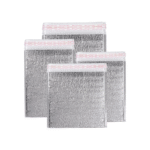
Buyers who search insulated shopping bag commercial usually want one thing: a dependable result. That means a bag that fits the route, la charge utile, the brand, the regulatory environment, and the supplier's real manufacturing capability.
This optimized guide combines product education, deeper technical screening, and current market thinking. It is designed to help retail chains, supermarchés, food delivery operators, and wholesale buyers approve the right bag faster and defend that decision internally.
Cet article répondra:
- Which specification choices matter most for commercial insulated shopping bag in real use
- Comment comparer les matériaux, isolation, and construction without paying for the wrong extras
- What tests, documents, and supplier checkpoints reduce approval risk
- Comment 2026 market and sustainability pressures should change your buying plan
- How to combine cost, conformité, brand impact, and supply resilience in one decision
How do you define the right Insulated Shopping Bag Commercial specification?
Le meilleur 2026 buying process starts with one disciplined question: what exactly must this bag do in the field? For commercial insulated shopping bag, that means translating support daily retail and delivery use with a reusable bag that survives repeat handling and still looks presentable into a clear structure, charger, fenêtre d'itinéraire, attente de nettoyage, and branding plan.
De là, write the specification as a system. Inclure les dimensions, outer material, type d'isolation, type de doublure, seam method, type de fermeture, support de base, méthode de logo, packaging plan, and the operating conditions that matter most.
Commercial buying is about cost per successful trip, not just cost per piece. Durable structure often beats the lowest quotation over a full season. Once the brief is written in this way, supplier comparison becomes much easier. You stop comparing storytelling and start comparing actual capability.
Which specification details are non-negotiable?
Your non-negotiables should link directly to failure risk: repeat-use structure, cleanable liner, strong handles, and stack-friendly shape. Those items shape the customer experience far more than minor decorative choices because they touch stability, hygiène, apparence, and thermal behavior.
If the program is branded or exported, add artwork approval logic, marques de carton, and document requirements as non-negotiable items too. A technically sound bag can still fail commercially if those points are vague.
| Zone de spécifications | Que définir | Approval evidence | Why it protects performance |
| Functional structure | Dimensions, base, fermeture | Approved physical sample | Stops mismatch between quote and use |
| Material stack | Extérieur, mousse, doublure | Spec sheet and cut sample | Protects thermal and durability intent |
| Commercial controls | Marque, cartons, documents | Signed layout and PO checklist | Reduces shipment-stage confusion |
Conseils et suggestions pratiques
- Write the brief around the route, not around a competitor photo.
- Turn every vague word into a measurable checkpoint.
- Ask for both flat photos and in-use photos. Many bag problems only appear when the unit is filled, zippé, et porté.
Exemple de cas: A procurement manager compared three suppliers on the same structure, not three different concepts. With one common specification, the team could see which factory was strongest on response speed, sample accuracy, and bulk-readiness instead of just headline price.
How do you validate thermal performance, conformité, et durabilité?
Validation should move from light to deep. Start with a field-style sample check, then add targeted thermal, durabilité, and documentation review. This staged approach is faster and cheaper than requesting every possible test before you know the design is worth keeping.
For thermal confidence, use evidence that matches your actual pack system. ASTM D3103 is useful for controlled comparison, while ISTA 20 and 7E remain valuable reference points when you need a more rigorous route-oriented logic. For compliance, ask which sanitary transport, contact alimentaire, and restricted-substance documents are relevant for your target markets.
Dans 2026, this is not optional theater. Attentes de la FDA en matière de transport, EU packaging rules, and buyer audit culture all reward suppliers who can show what they built, what they tested, and why the design fits the market.
Which approval evidence should come before the PO?
Before the main order, you should have an approved sample, a locked specification sheet, a final artwork file, a packaging plan, an inspection checklist, and the material declarations that matter for the markets you serve.
Do not let those items arrive one by one after the PO. By then, schedule pressure makes quality discussions weaker. Strong buyers finish the hard questions before they book the line.
| Validation area | Minimum evidence | Better evidence | Decision value |
| Thermique | Field-style sample trial | Controlled report tied to actual pack system | Shows route fit instead of guesswork |
| Durabilité | Load and zipper checks | Repeat-use and cleaning observations | Predicts replacement cost |
| Conformité | Basic declarations | Market-specific documentation set | Protects audits and market entry |
Conseils et suggestions pratiques
- Match every test request to a decision question.
- Reject data that does not reflect the actual quoted structure.
- Write down rejection points early, especially around bags losing shape after repeated folding and poor cost per use, so the supplier knows what actually matters.
Exemple de cas: A delivery chain reduced replacement volume by moving to stronger handle reinforcement and a simpler rectangular shape that stacked better. A buyer team treated the first sample as a field tool instead of a showroom sample. They loaded real payloads, checked cleaning time, and noted where bags losing shape after repeated folding appeared. That small pilot changed the final specification before the main purchase order.
How do you balance branding, durabilité, et coût au débarquement?
These three goals should not be handled in isolation. Branding affects material choice, sustainability affects future compliance risk, and landed cost depends on both the bag and the packaging around it.
Start with repeat use. If the bag is meant to stay in circulation, prioritize a cleanable liner, durable structure, and a logo method that survives folding and handling. Then reduce unnecessary complexity in the bag and in the shipper packaging so the program feels credible rather than wasteful.
2026 market pressure reinforces this approach. The EU PPWR, Australie's circular packaging push, and more serious buyer scrutiny around material disclosure all favor programs that are easier to explain, plus facile à documenter, and less likely to need redesign next year.
Where can you save money without weakening the product?
The safest savings usually come from rationalizing size, removing low-value decorative details, improving carton efficiency, and choosing the right—not the maximum—insulation build. Unsafe savings usually come from weaker liners, weaker handle reinforcement, or vague substitutions after sample approval.
If you want a cleaner margin story, calculate landed cost, durée de vie prévue, and replacement cycle together. That reveals whether the bag is truly economical.
| Levier de coûts | Safe move | Risky move | Pourquoi ça compte |
| Niveau d'isolation | Match to real route | Over-thin to hit price | Protects performance without waste |
| Marque | Choose fit-for-fabric method | Force cheap print on wrong surface | Protects logo life and brand feel |
| Conditionnement | Des cartons aux bonnes dimensions | Weak transit protection | Balances freight, déchets, et risque de dommages |
Conseils et suggestions pratiques
- Review the bag and shipper together before final costing.
- Let sustainability improve design discipline, not add empty marketing language.
- Write down rejection points early, especially around bags losing shape after repeated folding and poor cost per use, so the supplier knows what actually matters.
Exemple de cas: A buyer team treated the first sample as a field tool instead of a showroom sample. They loaded real payloads, checked cleaning time, and noted where bags losing shape after repeated folding appeared. That small pilot changed the final specification before the main purchase order.
How do you shortlist a supplier and launch faster?
The fastest launches come from fewer, better comparisons. Shortlist suppliers who answer technical questions clearly, return revised samples quickly, and show discipline around packaging and documentation.
Use one scorecard across commercial, technique, and operational criteria. A supplier can only be 'meilleur' if they are good enough in all three. A low quote with weak sampling or slow correction will usually cost more in project friction.
Then launch in stages. Concept approval, functional sample, pilot run, pre-production confirmation, and bulk order is still the safest path for any program that affects food quality, fiabilité des itinéraires, or visible brand perception.
What should your supplier scorecard include?
Score response speed, sample accuracy, structure quality, document readiness, packaging logic, price discipline, and willingness to correct issues with evidence rather than excuses. This gives procurement, conception, and operations a common language.
The point of the scorecard is not complexity. It is alignment. When the team uses one framework, approval decisions become faster and easier to defend internally.
| Zone de tableau de bord | À quoi ressemble le bien | Warning sign | Pourquoi ça compte |
| Échantillonnage | Rapide, précis, revision-aware | Slow or inconsistent sample cycles | Predicts launch timing |
| Quality discipline | Clear spec control and inspection | Vague quality language | Predicts shipment stability |
| Ajustement commercial | Transparent MOQ and reorder logic | Headline price only | Prédit l'utilisabilité à long terme |
Conseils et suggestions pratiques
- Use the same scorecard for every shortlisted supplier.
- Do not skip the pilot if the bag changes user workflow or food safety risk.
- Do one real-load test that reflects support daily retail and delivery use with a reusable bag that survives repeat handling and still looks presentable; lab-perfect samples can still fail in daily handling.
Exemple de cas: A delivery chain reduced replacement volume by moving to stronger handle reinforcement and a simpler rectangular shape that stacked better. A launch stayed on schedule because the buyer locked artwork, marques de carton, and final material callouts before production booking. Cela semble basique, but it prevented the kind of late changes that often turn a good sample into a weak shipment.
Five-minute decision tool
- Define the real route and payload in one sentence.
- List the three non-negotiable failure points you must avoid.
- Score each supplier on sample accuracy, discipline de qualité, and commercial fit.
- Check whether the design still looks smart under 2026 sustainability and compliance pressure.
- Approve only the structure you can defend with evidence.
2026 strategic trend summary for Insulated Shopping Bag Commercial
The most successful bag programs in 2026 combine four traits: des spécifications plus claires, meilleure validation, smarter sustainability choices, and tighter supplier execution. Any one of those can create value, but the strongest results appear when all four move together.
That is why optimized sourcing now looks more cross-functional. Approvisionnement, conception, opérations, conformité, and marketing increasingly share one bag decision instead of treating it as a simple packaging order.
- Grand View Research places the global cold chain packaging market at about USD 38.30 milliards en 2026, avec un projet 13.5% CAGR à travers 2033.
- Depuis 12 Août 2026, EU food-contact packaging cannot be placed on the market above the Regulation's PFAS limits, which means coating choices and material declarations matter more than they did a few years ago.
- USDA says food waste in the United States is still estimated at roughly 30% à 40% de l'approvisionnement alimentaire, so better temperature control continues to matter economically and environmentally.
FDA sanitary transportation rules remain focused on the same core risks: improper refrigeration, dirty transport equipment, and inadequate product protection during movement. Norme ISTA 20 and 7E remain important reference points for temperature-sensitive transport because they use a science-based qualification path and real-world thermal profiles gathered across 82 shipping lanes.
Questions fréquemment posées
How long can commercial insulated shopping bag keep items cold?
That depends on the full system: température de départ du produit, taux de remplissage, chaleur ambiante, fréquence d'ouverture, qualité de fermeture, and whether you use coolant. Ask for route-matched evidence, not a single headline claim.
Which material is best for commercial insulated shopping bag?
There is no single best material. The right answer depends on whether you value easy cleaning, stronger branding, better fold life, heavier commercial use, or a lower-cost reusable design.
Should I choose the cheapest quotation?
Only if the brief, échantillon, conditionnement, and quality plan are truly the same. Dans la plupart des projets, the cheapest offer hides weaker structure, slower revisions, or higher replacement cost later.
Quels documents un fournisseur sérieux doit-il fournir?
Au minimum, ask for a clear spec sheet, approved sample reference, détails de l'emballage, plan d'inspection, and any food-contact or substance declarations needed for your target markets.
Is a thicker bag always better?
Non. A thicker bag can be bulkier, slower to pack, and more expensive without improving your actual route result. Match insulation to the route, not to a sales story.
How can I reduce risk before ordering insulated shopping bag commercial in bulk?
Run a field-style sample check, lock the artwork and structure separately, confirm packaging details, and require a pre-production sample before the main PO.
Do I need thermal testing for every project?
Not every simple program needs expensive testing, but every serious project needs evidence that matches the real use. Use testing where temperature control, valeur du produit, or compliance risk is meaningful.
Résumé et recommandations
Dans 2026, the winning insulated shopping bag commercial program combines practical use, measurable validation, cleaner material thinking, and a supplier process that can repeat success at volume. Quand ces pièces s'alignent, you protect both product performance and business performance.
Votre prochain mouvement devrait être simple: write the brief, shortlist the right suppliers, run a functional sample, and approve only what can be explained with evidence. That is how you turn an insulated bag purchase into a reliable operating asset.
À propos du tempk
À propos du tempk: We focus on cold-chain and temperature-sensitive packaging solutions that are practical to source and practical to use. Our work covers reusable insulated bags, OEM development, export-ready packaging details, and quality checkpoints that help teams move from sample to shipment with less friction.
For buyers exploring insulated shopping bag commercial, we aim to combine product guidance with execution discipline. Tempk can optimize commercial insulated shopping bag programs for store handling, livraison, and private-label growth. If you need technical advice, planification des échantillons, or a structured sourcing discussion, the next step is to align the brief and review the target use case.