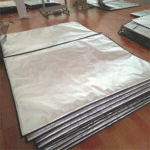
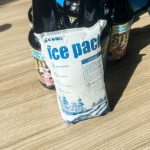
Choosing the best recyclable insulated box liner supplier means balancing performance, disposal simplicity, and sourcing reliability. You need a liner that protects temperature-sensitive shipments, fits your packing process, and supports sustainability goals without creating new operational risk. Dans 2026, the best suppliers are the ones that combine material transparency, route-based validation, and scalable support.
Cet article vous aidera à comprendre:
- How to choose the right recyclable insulated box liner supplier
- What thermal, humidité, stockage, and fit criteria matter most
- Which regulations and public trends are shaping buying decisions in 2026
- How to create a low-risk supplier scorecard for scale-up
Why should you care about supplier quality, not just liner price?
Because a liner is part of a shipping system, not a stand-alone product. The wrong supplier can give you a low unit price and still cost you more through spoilage, slower packout, poor storage efficiency, or confusing end-user disposal. The right supplier helps you protect products and simplify operations at the same time.
That matters for almost every cold-chain buyer. Meal kits need speed and clean presentation. Seafood shipments need stronger moisture tolerance. Pharma-adjacent shipments need documentation discipline. Direct-to-consumer brands need packaging that customers understand quickly. A good supplier sees those differences and recommends a liner format based on your shipping reality, not only on what is easiest to sell.
Supplier traits that usually predict success
- Clear questions about your route, saison, et charge utile
- Defined packout guidance instead of generic hold-time claims
- Consistent dimensions and production quality
- Practical sustainability language with clear scope
- Strong response time for samples, revisions, and complaints
What should you check in the liner itself?
The liner must perform thermally, structurally, and operationally. Buyers often over-focus on material names and under-focus on structure. What really matters is whether the liner traps air well, keeps shape under handling, resists moisture damage, and fits closely inside the carton without leaving major gaps.
Paper-heavy recyclable liners can be a strong choice when your route and product fit the design window. They can also support a cleaner end-of-life story for the customer. But they still need to be checked for thickness consistency, rebound after compression, qualité de fermeture, moisture behavior, and compatibility with the refrigerant system you use.
Core liner evaluation points
- Thermal fit for your shipment duration
- Stability after flat storage or compression
- Moisture handling in chilled or frozen use
- Packout speed and training simplicity
- Customer disposal clarity
- Box-size compatibility and dimensional control
- Practical buyer advice
Pour 24- to 48-hour chilled deliveries: Start with paper-heavy recyclable systems and validate labor efficiency.
Pour les expéditions surgelées: Focus on corner integrity, condensation behavior, and refrigerant layout.
For premium direct-to-consumer brands: Ask for cleaner fold geometry and better unboxing appearance.
Useful buying rule: If a supplier can explain why a liner works for your lane, not just that it “works,” you are probably talking to a stronger partner.
What data should you request before approval?
You should request proof tied to your shipping logic. Ask what temperature range, masse de charge utile, refrigerant type, carton size, and ambient profile were used in the supplier’s testing. Ask whether the results came from a single run or a repeatable process. Ask what changes between summer and winter packouts.
A strong supplier will not be afraid of those questions. En fait, a strong supplier expects them. They may even help you narrow the first pilot design so you do not waste time testing too many variables at once.
How is the 2026 market changing supplier evaluation?
Three public shifts stand out in 2026. D'abord, packaging regulation in Europe is becoming more operational because the EU Packaging and Packaging Waste Regulation entered into force on February 11, 2025 and starts applying from mid-2026. Deuxième, food-contact scrutiny remains important in the U.S., where FDA says relevant food-contact substances must be authorized before market use and has also moved PFAS grease-proofing agents out of paper and paperboard food packaging authorizations. Troisième, paper recycling data remains commercially relevant: AF&PA reported 2024 recycling rates of 60%–64% for paper and 69%–74% for cardboard. Ensemble, those facts make buyers more likely to ask for both recyclability clarity and technical evidence. (Environnement)
Why does testing still matter more than claims?
Because thermal performance is route-dependent. The same liner can pass one lane and fail another. Chaleur ambiante, retards de transit, handoff points, and staging conditions all change results. That is why testing standards matter. ISTA says Standard 7E uses real-world heat and cold transport profiles, and Standard 20 provides a structured qualification process for insulated shipping containers through certified labs. Serious buyers use those ideas to validate their shipping system instead of trusting generic brochure language. (association internationale de transport sécuritaire)
Commercial market examples also show what buyers value right now. Paper-based and vacuum-compressed liner systems are being marketed for flat shipping, efficacité de l'espace, et 48- to 72-hour parcel protection, which reflects the market’s push toward easier storage and simpler deployment. Those examples are useful, but the right decision still depends on your own pilot results. (Insulated Products Corporation)
What is the best buying process?
The best buying process is short, structuré, and evidence-based. Start by grouping shipments into lane families. Then shortlist suppliers whose material story and thermal design seem compatible. Request sample kits. Pilot them with your real product, réfrigérant, et carton. Mesurer la température, temps de travail, storage footprint, and disposal feedback.
A simple 6-step process
- Define chilled, congelé, and seasonal route groups
- Shortlist recyclable liner suppliers by material transparency
- Request route-based test assumptions and sample packs
- Run controlled pilot shipments
- Score each option on thermal, travail, stockage, et élimination
- Approve the supplier that delivers the strongest total value
Questions fréquemment posées
What is the top sign of a strong recyclable insulated box liner supplier?
A strong supplier asks detailed questions before quoting and supports testing that reflects your actual shipping conditions.
Are paper-based recyclable liners always enough for frozen shipping?
Pas toujours. They can work well, but frozen lanes usually need tighter validation and refrigerant planning.
Should I prioritize recyclability or temperature control first?
Temperature control comes first because product protection is non-negotiable. Then you choose the most practical recyclable option that meets the route.
How many suppliers should I test?
Usually two to three is enough for a first comparison. Too many options slow learning and make decision-making harder.
Résumé et recommandation
The best recyclable insulated box liner supplier in 2026 is not the one with the loudest sustainability claim. It is the one that gives you a strong packout fit, repeatable quality, practical documentation, and a disposal story your customer can understand. That combination protects both product and brand.
Your best next move is to build a short supplier scorecard and run real pilot lanes. That approach turns packaging sourcing into a controlled decision instead of a guess.
À propos du tempk
Et tempk, we help buyers compare thermal packaging options through the lens of route risk, packout efficiency, and practical material fit. We believe recyclable solutions should be judged honestly, with both operational and sustainability goals in view.
If you are evaluating recyclable insulated box liner suppliers, we can help you narrow the field, identify the key technical questions, and structure a smarter test plan.