If you need a waterproof plastic tote service for food shipping, the smartest buying decision comes from combining buyer-fit, technical validation, et 2026 market reality in one shortlist. Food shipping often mixes wet handling, schedule pressure, and strict product protection. A waterproof tote or bin should make the route cleaner, easier to scan, and simpler to sanitize after use. This guide brings together practical buying checks, science des matériaux, et 2026 trend signals so you can buy with more confidence. The goal is to help you compare options with less guesswork and more evidence from the start.
What this article will answer
- How to match waterproof plastic tote performance to your real route and payload risk
- Which data, essais, and supplier documents reduce buying risk for food shipping
- Which supplier checks, cost metrics, and validation steps deserve the most weight
- Quoi 2026 trends mean for sourcing, conformité, and sustainability planning
Why is waterproof plastic tote a smart fit for food shipping?
The best waterproof plastic tote is the one that solves your real operating risk with the least added complexity. That means aligning the design with payload sensitivity, route conditions, handling speed, cleaning reality, and the business value of reuse. When those pieces fit, container choice becomes a measurable performance tool rather than a packaging guess.
Food shipping often mixes wet handling, schedule pressure, and strict product protection. A waterproof tote or bin should make the route cleaner, easier to scan, and simpler to sanitize after use. If your highest-cost failure comes from rain or condensation, cross-contact, and temperature drift, then the shortlist should start there. A buyer who first defines the route problem usually gets a better answer than a buyer who starts with a catalog dimension and works backward. That is why route profiling should come before price negotiation.
What makes route fit more important than list price?
A low unit price looks attractive until the container causes recurring loss, slow cleaning, stack instability, or exception work at receiving. Once those hidden costs appear, the cheaper quote often becomes the more expensive decision. Route fit protects both product quality and operating rhythm, which is why procurement teams increasingly review use-case evidence early in the process.
| Decision area | Que définir | Pourquoi ça compte | Votre prochaine étape |
|---|---|---|---|
| Payload risk | Product sensitivity to moisture, chaleur, impact, ou contamination | Tells you which design feature matters most | Rank risks before requesting quotes |
| Route reality | Dwell time, météo, manutention, and return loop | Turns generic containers into scenario-based options | Build the shortlist from real lanes |
| Operational fit | Méthode de nettoyage, étiquettes, ergonomics, et stockage | Protects daily throughput after rollout | Include operations in the evaluation |
Conseils pratiques et recommandations
- Write a one-page route profile before you talk to suppliers.
- Identify the single failure that would cost you the most, then weight that in the scorecard.
- Use route fit as the filter that narrows the field before technical and commercial review.
Illustrative field case: In a procurement review for a prepared food shipping network, the final shortlist was scored on route fit, technical validation, and lifecycle cost. The stronger option proved easier to justify because its supplier could explain how the design would perform, how it would be cleaned, and how the business case would improve over repeated reuse.
Which specifications actually protect product quality?
Specifications only matter if they protect quality in the real world. For this category, the most useful data usually covers structural behavior, environmental exposure, identification, cleaning response, and any temperature or airflow performance relevant to the product. A long spec sheet is not the goal. A decision-grade spec sheet is.
In technical reviews, teams often focus on dimensions first because dimensions are easy to compare. But failures usually come from how a design behaves under weight, motion, humidité, froid, or repeated sanitation. That is why you should test the features that control your main risk, whether that is leak resistance, vent pattern, tenir le temps, stack strength, or fold-cycle durability.
Which data points deserve the most weight?
Weight the data that connects directly to product protection, manutention, and qualification. Structural numbers matter, but only under the conditions you really use. Environmental data matters, but only if the test setup resembles your route. When the evidence is route-specific, technical comparison becomes much clearer and internal sign-off becomes easier.
| Key data point | À quoi ressemble le bien | Pourquoi ça compte | Decision effect |
|---|---|---|---|
| Structural performance | Documented load behavior in realistic stack and route conditions | Protects against distortion and transport damage | Separates durable designs from cosmetic ones |
| Environmental response | Evidence under wet, froid, thermique, or washdown conditions as relevant | Shows whether the design still works outside ideal lab settings | Reduces hidden field risk |
| Control features | Clear label zones, logger fit, couvercles, évents, or tamper options | Improves product control and audit readiness | Supports smoother operations after rollout |
Conseils pratiques et recommandations
- Ask the supplier to explain the test conditions, not just the headline result.
- Score each data point by its connection to route risk rather than by how impressive it sounds.
- Use a small pilot to verify the highest-weight specification before full standardization.
Illustrative field case: In a procurement review for a prepared food shipping network, the final shortlist was scored on route fit, technical validation, and lifecycle cost. The stronger option proved easier to justify because its supplier could explain how the design would perform, how it would be cleaned, and how the business case would improve over repeated reuse.
How should you compare suppliers, validation, and lifecycle cost?
Supplier comparison should combine technical fit, documentation quality, and lifecycle cost. The strongest service partner is not simply the one who offers the lowest quote. It is the one who can show how the design was chosen, how it should be used, and what it will cost across many cycles rather than one purchase order.
Lifecycle cost should include trip life, taux de retour, travail de nettoyage, repair or replacement frequency, storage efficiency, and the operational cost of failure. A better reusable design often wins because it lowers exception handling and keeps the route more stable. That is particularly important in food shipping, where packaging errors can trigger quality reviews, wasted labor, or avoidable spoilage risk.
What should a buyer scorecard include?
A practical scorecard usually combines route fit, performance evidence, compliance support, ergonomic usability, and total cost over time. That mix reduces the chance that one attractive number, such as unit price, dominates a decision it should not dominate. If a supplier cannot support a simple scorecard conversation, the partnership risk is already visible.
| Scorecard item | What to review | Pourquoi ça compte | Suggested weight |
|---|---|---|---|
| Route fit | How closely the design matches your actual lane and payload | Controls product and handling risk | 30% |
| Evidence and compliance | Test data, qualification support, and operational documentation | Supports approval and audits | 30% |
| Lifecycle value | Trip life, return efficiency, cleaning burden, and replacement risk | Shows true economic performance | 40% |
Conseils pratiques et recommandations
- Use the same weighted scorecard for every shortlisted supplier.
- Review total cost after 10, 50, et 100 cycles where reuse applies.
- Include operations feedback in the final score so the chosen design works in daily reality.
Illustrative field case: In a procurement review for a prepared food shipping network, the final shortlist was scored on route fit, technical validation, and lifecycle cost. The stronger option proved easier to justify because its supplier could explain how the design would perform, how it would be cleaned, and how the business case would improve over repeated reuse.
What changes in 2026 should you plan for now?
Le 2026 packaging environment rewards buyers who think ahead about compliance, circularité, and data visibility. Official requirements around food safety, distribution pharmaceutique, produce hygiene, and packaging reuse are not all the same, but they point in a similar direction: better evidence, opérations plus propres, and more disciplined packaging choices.
FDA’s sanitary transport rule continues to anchor buyer questions around equipment suitability, contamination prevention, enregistrements, et formation. Europe’s PPWR also changes the tone of packaging conversations by pushing the market harder toward waste reduction, lower raw-material demand, and circular packaging logic. For buyers, the practical takeaway is simple: choose designs that are easier to qualify, easier to recover, and easier to defend in front of customers, auditeurs, or internal stakeholders.
How should you prepare now?
Start by updating your packaging brief. Add route evidence, reuse assumptions, cleaning expectations, identification needs, and end-of-life questions before the next tender starts. The teams that do this early usually buy faster and with fewer surprises because they are comparing suppliers against a modern decision standard rather than an old price-only format.
| 2026 priority | Ce qui a changé | Pourquoi ça compte | Action now |
|---|---|---|---|
| Documentation quality | Audits and buyer expectations now emphasize evidence more strongly | Weak paperwork slows approval and CAPA response | Standardize your qualification checklist |
| Circular packaging readiness | Policies and customers increasingly reward reuse and waste reduction | Packaging decisions now affect both cost and sustainability goals | Review trip life, flux de retour, and end-of-life pathways |
| Operational proof | Route fit matters more than generic claims | Real performance beats brochure language | Pilot before broad rollout |
Conseils pratiques et recommandations
- Refresh your packaging specification to reflect 2026 compliance and sustainability expectations.
- Ask suppliers how they support both qualification and end-of-life planning.
- Use policy change as an opportunity to remove underperforming legacy packaging from the system.
Illustrative field case: In a procurement review for a prepared food shipping network, the final shortlist was scored on route fit, technical validation, and lifecycle cost. The stronger option proved easier to justify because its supplier could explain how the design would perform, how it would be cleaned, and how the business case would improve over repeated reuse.
Quick buyer self-check
Use this final scorecard before supplier approval. A strong option should satisfy most of these questions without forcing exceptions or optimistic assumptions.
- Have you defined the real payload, durée de l'itinéraire, and worst-case handling conditions for food shipping?
- Can the supplier explain how the waterproof plastic tote addresses your top failure mode?
- Do you have relevant evidence for load, environnement, and cleaning or temperature conditions?
- Is the reusable business case clear on trip life, taux de retour, and replacement risk?
- Would operations, QA, and procurement all give the same reason for choosing this design?
Scoring shortcut: 5 yes answers usually means the shortlist is mature; 3 or fewer means the project still needs clarification.
Derniers développements et tendances dans 2026
Dans 2026, the best packaging programs are combining route-fit logic, stronger documentation, and circular packaging planning in a single sourcing standard. That shift is practical rather than theoretical. Buyers want fewer exceptions, fewer wasted assets, better recovery, and a packaging format that remains defensible as rules and customer expectations keep tightening.
Derniers développements en un coup d'œil
- **Evidence over claims:** Buyers want load, température, fuir, or airflow data that matches real use conditions.
- **Circular packaging pressure:** Reusable and recyclable transport packaging gets more attention as PPWR-driven thinking spreads through global sourcing.
- **Operational fit:** Containers are increasingly judged by cleaning speed, label control, ergonomics, and return-loop efficiency.
From a market standpoint, shipping teams want containers that lower rework, reduce soggy packaging waste, and fit reusable loop economics. Choose waterproof geometry when product value is high and relabeling is expensive. The suppliers most likely to win are the ones that turn those needs into easy-to-compare documentation and simple qualification steps.
Questions fréquemment posées
How do I choose a waterproof plastic tote service for food shipping?
Start with route risk, not catalog size. Define payload, manutention, nettoyage, and the biggest failure mode first. Then compare suppliers on evidence, convivialité, and lifecycle value so the chosen waterproof plastic tote fits real operations instead of only looking good on paper.
Which material is usually better for food shipping, PEHD ou PP?
There is no universal winner. HDPE is often chosen for low-temperature toughness and chemical resistance, while PP is often chosen for stiffness and lighter designs. The correct choice depends on route temperature, washdown conditions, hinge geometry, and expected load.
What data should a supplier provide before approval?
Request dimensional information, relevant performance data, conseils de nettoyage, and a route-fit explanation. Si la température, flux d'air, contrôle des fuites, or compliance matters in your use case, ask for that evidence directly rather than assuming it is part of the standard quote.
When does reusable packaging lower total cost?
Reusable packaging wins when trip life is long enough, return rates are strong enough, and cleaning plus handling do not erase the savings. Model cost across repeated cycles instead of comparing purchase price only once.
What is the biggest buying mistake in this category?
The most common mistake is approving a container without matching it to the real route. A design can look strong in a brochure but still fail when the route includes rain or condensation, cross-contact, and temperature drift or more demanding cleaning and handling than the supplier assumed.
Summary and recommendation
Waterproof Plastic Tote works best when the design matches your actual route, charge utile, and cleaning reality. The most useful supplier data usually covers water resistance, sanitaire, and route consistency, durabilité, and route-specific validation. Compliance should be checked early, whether your route is shaped mainly by food safety rules, GDP-style controls, or transport testing. Lifecycle value matters: a slightly stronger reusable design often outperforms a cheaper option that fails early or returns poorly.
Use a weighted scorecard that combines route fit, preuve, and lifecycle value. Shortlist only the suppliers who can support real qualification and realistic reuse economics. Then confirm the choice with a focused pilot and a clean approval file.
À propos du tempk
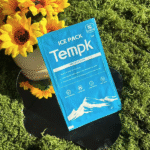
Tempk focuses on reusable plastic transport packaging for cold chain and industrial applications. We emphasize route-fit design, material selection, and practical qualification support so buyers can match packaging choice to product risk, handling reality, and lifecycle cost. For teams comparing waterproof plastic totes, that means clearer specifications, better operational fit, and a more disciplined path from shortlist to rollout.
The next step is simple: define your route, charge utile, and top failure risks, then compare options against that brief. A focused conversation usually leads to a better packaging decision than a broad catalog search.