Mis à jour le: Peut 20, 2026
How to Evaluate a VIP refrigerated shipping container for clinical sample transport Before You Scale Cold-Chain Shipments
UN Conteneur maritime réfrigéré VIP for clinical sample transport can be the right choice when clinical samples, échantillons diagnostiques, échantillons d'essai, and related biological materials needs more thermal margin than a basic insulated carton can provide. La décision doit toujours être prise comme une décision relative au processus de la chaîne du froid, pas un raccourci d'emballage. Commencez par l'état du produit, exposition par voie, carte de charge utile, plan de refroidissement, et preuves requises à la réception. L'isolation VIP peut améliorer la conception, mais l'emballage complet et la procédure opérationnelle déterminent si l'envoi est fiable.
Pour les acheteurs, le but pratique est d'éviter deux erreurs: sous-protéger l'envoi et faire trop confiance à une boîte sans preuve. La boîte peut paraître simple de l'extérieur, mais il interagit avec la température, temps, personnes, documents, et l'incertitude de l'itinéraire. C'est pourquoi une évaluation utile doit couvrir à la fois les performances et les opérations..
La bonne question est pertinente, pas de matériel haut de gamme
L’isolation VIP est attractive car elle peut offrir une forte résistance thermique dans un format compact. Cela est important lorsque l’espace de l’envoi est limité, valeur élevée, ou des transferts incertains. But a VIP refrigerated shipping container for clinical sample transport is not automatically better for every lane. Si le parcours est court, l'exigence de température est large, et la manipulation est contrôlée, une solution isolée plus simple peut suffire. If the route includes site-to-lab courier routes, air express lanes, central laboratory submissions, and regional sample consolidation, le tampon thermique plus fort peut être plus facile à justifier.
Une évaluation basée sur l'ajustement évite les achats excessifs et la sous-conception. Le surachat se produit lorsque l'équipe choisit une boîte premium sans vérifier si la charge utile, transporteur, et le récepteur peut l'utiliser correctement. La sous-conception se produit lorsque l'équipe choisit un package à faible coût qui ne peut pas gérer le risque réel de transfert.. Les deux problèmes peuvent créer des déchets. La meilleure approche consiste à décrire clairement la voie, puis à sélectionner le package qui correspond au risque..
For clinical laboratories, trial logistics teams, réseaux hospitaliers, and sample management coordinators, fit inclut également le flux de travail. Le personnel d'emballage peut-il charger la boîte rapidement et de manière cohérente? Le destinataire peut-il trouver l'enregistreur ou les documents? La boîte peut-elle être nettoyée ou retournée si une réutilisation est prévue? Les unités endommagées peuvent-elles être identifiées? Ces questions peuvent paraître basiques, mais ils décident souvent si l'emballage fonctionne après les premiers envois d'échantillons.
Construire l'exigence en cinq couches
La première couche est l'état du produit. Définir l’exigence exacte de température et les conséquences de l’exposition. Certains produits sont endommagés par la chaleur, certains en les congelant, certains en décongelant, et certains en faisant du vélo à plusieurs reprises. Évitez d'emprunter une plage de température familière à une autre catégorie de produits. La gamme doit provenir de la spécification du produit, protocole, étiquette, fichier de qualité, ou exigence de l'acheteur.
La deuxième couche est l'exposition de l'itinéraire. Le temps de transit total n'est pas suffisant. Un colis peut passer du temps sur un banc d'emballage, sur un quai, dans un véhicule de messagerie, dans un aéroport, à la douane, ou sur le pas d'une porte résidentielle. Chaque point peut créer un risque différent. Un bon examen de l’emballage trace le parcours depuis la sortie jusqu’à la réception, y compris les retards raisonnablement prévisibles.
La troisième couche est le pack chargé. Les dimensions internes ne sont pas les mêmes que l'espace de charge utile utilisable. Liquide de refroidissement, séparateurs, matériau absorbant, doublures, documents, et les appareils de surveillance utilisent tous de l'espace. La quatrième couche est la preuve: contexte de test, données sur la voie pilote, documentation fournisseur, ou un emballage de qualité approuvée. La cinquième couche est la gestion des exceptions. Si l'envoi est en retard, endommagé, ou en dehors de l'enregistrement attendu, l'équipe a besoin d'un chemin de décision.
| Couche d'évaluation | Point de décision | Erreur courante de l'acheteur |
|---|---|---|
| État du produit | Confirmer la température requise et la règle d'acceptation. | Utiliser une gamme générique n'appartenant pas au produit. |
| Exposition de l'itinéraire | Mise en scène de la carte, transferts, temps de séjourner, et la saisonnalité. | À en juger uniquement par le temps de transit du courrier. |
| Conception de l'emballage | Révision du liquide de refroidissement, séparateurs, carte de charge utile, fermeture, et surveiller le placement. | Approuver un échantillon vide sans test chargé. |
| Preuve | Faites correspondre les données de test ou les enregistrements pilotes avec la voie prévue. | Traiter une réclamation de durée de détention générale comme universelle. |
| Opérations | Définir l'emballage, recevoir, réutilisation, nettoyage, et procédures d'exception. | En supposant que le personnel interprétera correctement le processus sans instructions écrites. |
Ces couches maintiennent le processus d'achat ancré. Une conversation avec un fournisseur devient plus utile lorsque l'acheteur peut décrire le produit, itinéraire, emballage, niveau de preuve, et processus opérationnel. Cela facilite également la comparaison des devis, parce que chaque fournisseur répond à un même besoin réel plutôt qu'à une demande large de caisson isotherme.
Où le package complet peut échouer
L'élément le plus visible est la boîte, mais l'échec vient souvent de quelque chose de moins visible. Le liquide de refroidissement peut être mal conditionné. Il manque peut-être un séparateur. La charge utile peut être chargée dans une orientation différente de celle de la carte approuvée. Un couvercle peut ne pas se fermer complètement. Un enregistreur peut être placé contre le liquide de refroidissement plutôt qu'à proximité de la zone à risque de charge utile.. Une équipe qui reçoit peut ouvrir la boîte, supprimer des éléments, et j'oublie de télécharger le relevé de température.
Pour ce sujet, la frontière est importante: it is not a complete clinical sample transport system without compliant sample packaging, matériau absorbant, marques, documents, and monitoring where needed. Les acheteurs doivent donc éviter les déclarations qui font que la boîte ressemble à l'ensemble du système de contrôle.. Une déclaration plus précise est que la boîte prend en charge un emballage passif à température contrôlée lorsqu'elle est combinée avec le bon liquide de refroidissement., procédure de chargement, surveillance, et examen spécifique à l'itinéraire.
Un autre point d’échec est le changement. Le packout peut fonctionner pour une taille de charge utile mais pas pour une autre. Cela peut fonctionner une saison mais nécessiter un ajustement une autre. Il peut fonctionner avec un opérateur mais échouer lorsqu'il est transféré à un niveau de service différent. Il peut être accepté par un destinataire mais rejeté par un autre parce que les formalités administratives ou le processus d'enregistrement diffèrent.. Un état d'esprit axé sur le contrôle du changement est important, même pour les emballages qui semblent physiquement simples..
Exemple pratique: un exemple d'approbation qui évite des problèmes ultérieurs
Imagine a clinical trial site shipping blood samples to a central lab with a narrow pickup window and documented receipt checks. Pendant l'approbation de l'échantillon, l'équipe ne doit pas seulement vérifier si la boîte se ferme. Ils doivent charger la charge utile ou un équivalent réaliste, ajouter le liquide de refroidissement, positionner n'importe quel enregistreur, inclure des documents, et simulez les étapes que le personnel suivra. Ils doivent noter si la boîte est facile à fermer, si les étiquettes conviennent, si la charge utile est protégée du contact direct avec le liquide de refroidissement, et si le destinataire peut inspecter l'envoi sans confusion.
Cette approche peut révéler des problèmes avant que la commande d'achat ne soit importante. Peut-être que la charge utile change pendant la manipulation. Peut-être que la boîte est trop grande pour un service de messagerie. Peut-être qu'un modèle réutilisable nécessite un processus de suppression des étiquettes plus rigoureux.. Peut-être que le plan de refroidissement est trop complexe pour une ligne de traitement des commandes très chargée.. Ces résultats ne constituent pas des échecs de l'échantillon. Ce sont des informations utiles qui transforment une idée d’emballage en mode opératoire.
Outils de décision utiles
Vérifiez les détails avant de choisir l'emballage
Ces outils rapides peuvent vous aider à comparer le risque d'itinéraire, besoins de dimensionnement, choix de liquide de refroidissement, et les détails de l'emballage avant de demander un devis.
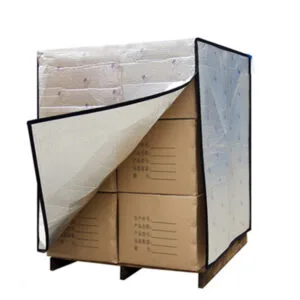
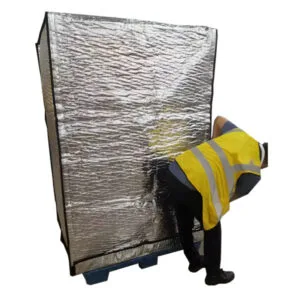
Doublure de boîte & Dimensionnement des couvertures de palettes
Vérifiez la logique de dimensionnement du revêtement de boîte et du couvercle de palette pour les projets d'emballage isotherme.
Dimensionnement estiméLiquide de refroidissement & Référence PCM
Comparez les options de liquide de refroidissement et de PCM lorsqu'un itinéraire nécessite une prise en charge supplémentaire de la température.
Comparez les optionsGénérateur de liste de contrôle de conformité
Créer une liste de contrôle pratique pour l'examen des emballages, expédition, et documentation.
Construire une liste de contrôleQuestions des fournisseurs qui comptent vraiment
When comparing suppliers for a VIP refrigerated shipping container for clinical sample transport, demandez comment les panneaux VIP sont protégés, quel est le volume utilisable chargé, et si les unités de production correspondent à l'échantillon. Demandez les instructions d'emballage et les hypothèses de test derrière toute déclaration de performance.. Demandez si le fournisseur peut prendre en charge les variations saisonnières, inspection de la boîte endommagée, composants de remplacement, et répéter les commandes. Si l'envoi est réglementé, demander ce que le fournisseur fournit et ce qui reste de la responsabilité de l'acheteur.
Les bonnes conversations avec les fournisseurs sont spécifiques et parfois inconfortables. Un fournisseur crédible doit être prêt à discuter des limites, pas seulement des avantages. Si une case n'a pas été évaluée pour une voie, le fournisseur ne doit pas le présenter comme prouvé pour cette voie. Si une allégation de durabilité dépend de la réutilisation, le taux de retour et le processus de nettoyage devraient faire partie de la discussion. Si une réclamation de conformité dépend des procédures de l'acheteur, cette frontière devrait être claire.
Pour les échantillons cliniques, échantillons diagnostiques, échantillons d'essai, and related biological materials, l'équipe d'achat doit également impliquer les opérations dès le début. L'approvisionnement peut comparer les prix, la qualité peut examiner les preuves, la logistique peut comprendre le risque du transporteur, et le personnel de l'entrepôt peut savoir si l'emballage peut être répété. Le package ne réussit que lorsque ces équipes se mettent d’accord sur ce que la boîte est censée faire et sur ce qui doit être vérifié à chaque étape..
Vérifications opérationnelles avant déploiement
La répétabilité du personnel mérite sa propre révision. A VIP refrigerated shipping container for clinical sample transport may look robust during sample approval, mais les expéditions de routine dépendent du fait que des personnes effectuent les mêmes étapes dans des délais serrés. Le personnel d'emballage a besoin d'un ordre de travail clair: préparer la boîte, état du liquide de refroidissement, vérifier les doublures, charger la charge utile, placez n'importe quel moniteur, fermez correctement le couvercle, appliquer des étiquettes, et enregistrer les informations de sortie. Si ces étapes ne sont pas faciles à répéter, l'avantage thermique théorique de l'isolation VIP pourrait ne pas devenir une performance d'expédition fiable.
Les acheteurs doivent également séparer l'approbation de la conception de l'approbation de l'achat.. Design approval asks whether the packout protects clinical samples, échantillons diagnostiques, échantillons d'essai, and related biological materials under realistic conditions. L'approbation d'achat demande si le fournisseur peut livrer des unités cohérentes, pièces de rechange, instructions d'emballage, et assistance lorsque les itinéraires changent. Un devis bas est moins attractif si les dimensions de la boîte varient, si l'ajustement du couvercle change entre les lots, ou si le fournisseur ne peut pas expliquer comment l'emballage a été évalué.
Les équipes qui reçoivent méritent également qu’on s’y intéresse. Un colis peut quitter l'entrepôt correctement et échouer à l'inspection si le site de réception ne sait pas où se trouve l'enregistreur., quelles preuves de température examiner, comment juger les dommages physiques, ou que faire en cas de retard de livraison. Pour les expéditions contrôlées, la liste de contrôle de réception doit être rédigée avant que l'emballage ne soit mis à l'échelle, parce qu'il définit à quoi ressemble le succès au bout du chemin.
Ne traitez pas la saisonnalité comme un détail mineur. Itinéraires par temps chaud, itinéraires par temps froid, expédition le week-end, temps d'arrêt à l'aéroport, et les embouteillages pendant les vacances peuvent modifier le profil de risque. A VIP refrigerated shipping container for clinical sample transport should be reviewed against these conditions before it is used broadly. Quand les preuves manquent, demander un envoi pilote, un test en chambre, ou un examen documenté de l'emballage plutôt que de s'appuyer sur une affirmation générale concernant les performances d'isolation.
La revue commerciale doit inclure le support après-vente. Demandez comment le fournisseur gère les unités endommagées, doublures de remplacement, oeuvre révisée, instructions de chargement mises à jour, et répéter la production. C'est important parce que emballage chaîne du froid est rarement un achat unique. Once a VIP refrigerated shipping container for clinical sample transport becomes part of a shipping program, de petits changements de fournisseur peuvent affecter la vitesse d’emballage, recevoir des chèques, et confiance dans le dossier d'expédition.
FAQ
What makes a VIP refrigerated shipping container for clinical sample transport different from a basic insulated box?
La principale différence réside dans l'utilisation de panneaux d'isolation sous vide pour réduire le transfert de chaleur dans un profil d'isolation plus fin.. Cela peut aider à préserver l’espace de charge utile ou à améliorer la marge thermique. La différence n’a d’importance que lorsque l’emballage complet est conçu et utilisé correctement.
Puis-je me fier aux réclamations relatives aux délais de rétention des fournisseurs?
Utilisez-les comme point de départ, pas comme une promesse universelle. Demandez la charge utile, liquide de refroidissement, profil ambiant, placement du capteur, et les critères d'acceptation derrière la réclamation. Si votre voie diffère, demander un examen pilote ou une évaluation spécifique à un itinéraire.
Ce type d'emballage est-il adapté aux envois réglementés?
Il peut prendre en charge les expéditions réglementées, mais la boite seule ne crée pas de conformité. Les marchandises réglementées peuvent nécessiter une classification, Sops, personnel formé, surveillance, documentation, gestion des écarts, ou exigences spécifiques en matière d'emballage. L'acheteur doit confirmer les exigences auprès de l'équipe qualité ou réglementaire.
Quel est le contrôle d'échantillon le plus important?
Approuver le pack chargé, pas la boîte vide. Confirmer l'espace utilisable, emplacement du liquide de refroidissement, emplacement du séparateur, qualité de fermeture, zone d'étiquette, emplacement du moniteur, et étapes de réception. Cela évite les surprises lorsque le colis passe de l'examen des échantillons à l'opération de routine..
Cet emballage peut-il soutenir les objectifs de durabilité?
Ça peut, surtout quand cela réduit les échecs d'expédition, suremballage, ou déchets à usage unique. Mais les allégations de neutralité carbone ou de faible émission de carbone nécessitent des preuves mesurées. Réutilisation, logistique de retour, nettoyage, taux de dégâts, et la manipulation en fin de vie affectent tous le résultat.
Conclusion
A VIP refrigerated shipping container for clinical sample transport should be evaluated as part of a complete cold-chain workflow. L'isolation VIP peut être précieuse, mais la vraie décision dépend de l'état du produit, exposition par voie, carte de charge utile, plan de refroidissement, preuve, répétabilité du personnel, et réception de l'inspection. Le processus d'approvisionnement le plus sûr demande des preuves spécifiques, définit les limites, et vérifie si l'échantillon peut devenir un emballage de routine fiable.
À propos du tempk
Tempk fournit emballage à température contrôlée composants tels que packs de glace, Sources de froid liées au PCM, boîtes isolées, glacières médicales, doublures, et couvertures de palettes pour la logistique sous chaîne du froid. For buyers comparing a VIP refrigerated shipping container for clinical sample transport, nous nous concentrons sur l'ajustement de l'itinéraire, espace utilisable, gérer les réalités, et répétabilité des emballages. Cette approche pratique aide les équipes à éviter toute confusion matériau isolant avec un fini, système d'expédition qualifié.
Prochaine étape
Share sample type, classification, protocol condition, and route timing to discuss a practical clinical sample packaging setup.