En utilisant des packs de glace carbonique pour garder les médicaments au frais peut être une bouée de sauvetage pour les longs voyages, mais seulement si vous atteignez le juste milieu entre des températures sûres et les dégâts dus au gel. Ce guide vous montre les étapes exactes, tailles de conditionnement, et 2025 réglementations dont vous avez besoin pour protéger chaque flacon.
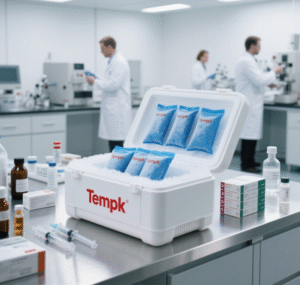
-
De quelle quantité de glace sèche vous avez réellement besoin pour les médicaments courants
-
Quels médicaments tolèrent les températures ultra froides et lesquels ne le tolèrent pas ?
-
Emballage étape par étape qui évite les chocs dus au gel et les fuites
-
2025 règles d'expédition et de compagnie aérienne que vous devez suivre
-
Conseils éprouvés pour maximiser la durée de vie et la sécurité du sac
De quelle quantité de glace carbonique avez-vous besoin pour vos médicaments?
Commencez avec 5 livres (2.3 kg) de blocs de glace carbonique par 24 heures pour un expéditeur isolé de la taille d’une boîte à chaussures. Ajuster de ± 2 lb en fonction de la chaleur extérieure ou de l'épaisseur de la boîte. Gardez le total sous 5,5 lb (2.5 kg) si vous volez, les règles de la FAA le limitent toujours à ce niveau.
Les packs de glace carbonique se subliment plus rapidement dans l’espace vide. Remplissez les espaces avec du papier bulle ou des inserts en mousse pour prolonger le temps de refroidissement. Pour le transport 48 heures de produits biologiques congelés, une charge de 10 lb dans une glacière de 20 pintes maintient le contenu en dessous de –20 °C de manière fiable.
Poids du pack de glace carbonique vs. Taille de l'expédition
| Volume de la boîte | Packs de glace carbonique (livres/kg) | Heures en dessous de –10°C | Ce que cela signifie pour vous |
|---|---|---|---|
| 5 L | 3 /1.4 | ~18h | Analyses d'échantillons en chirurgie ambulatoire |
| 10 L | 5 /2.3 | ~ 24h | Livraison de nuit en pharmacie |
| 20 L | 10 /4.5 | ~ 48h | Expédition de produits biologiques en deux jours |
Conseils pratiques
-
Précongeler les packs à –80°C pour un temps de maintien maximum.
-
Couche de briques PCM (2–8 ° C) au-dessus des flacons qui ne doivent pas geler.
-
Évacuer l'expéditeur; Le gaz CO₂ a besoin d’un chemin d’évacuation.
Vraie cas: Une entreprise de biotechnologie a expédié des anticorps monoclonaux à –75 °C pendant 36 heures en utilisant 8 lb de blocs de glace carbonique dans une glacière VIP de 12 L. La température d'arrivée était de –72 °C sans aucun bris de flacon..
Les packs de glace sèche endommageront-ils les médicaments sensibles à la température ??
Oui, si le médicament n'a besoin que de 2 à 8°C, un contact direct avec des packs à –78°C peut geler et les abîmer. Utiliser une couche tampon: des packs de gel à changement de phase ou une entretoise en mousse de 1 pouce. Médicaments étiquetés «Rester Frozen» (–20°C ou moins) sont compatibles avec la glace carbonique; la plupart des vaccins et l'insuline ne le sont pas.
Référence de la plage de stockage des médicaments
| Type de médicament | Portée sûre | Compatible avec la glace carbonique? | Emporter |
|---|---|---|---|
| Insuline | 2–8 ° C | ❌ | Utiliser du PCM ou des transporteurs réfrigérés |
| vaccin à ARNm | –90°C à –60°C | ✅ | Glace carbonique requise |
| Anticorps monoclonal | –25°C à –15°C | ✅ | Nécessite une couche tampon |
| Antibiotiques reconstitués | 2–8 ° C | ❌ | Utilisez des packs de gel, pas de glace carbonique |
Conseils axés sur l'utilisateur
-
Pour les médicaments réfrigérés: Placez-les dans une petite glacière avec des packs de gel +4°C, puis emboîtez cette glacière à l'intérieur de l'expéditeur de glace carbonique.
-
Pour les médicaments congelés: Ajoutez une étagère en carton entre les packs et les flacons pour éviter les fissures du verre.
-
Pour les charges mixtes: Séparez chaque niveau de température séparément, sacs étiquetés.
Comment emballer correctement les médicaments avec des packs de glace carbonique?
-
Portez des gants cryogéniques épais; la glace carbonique brûle la peau instantanément.
-
Tapisser le bas de l'expéditeur avec un carton ondulé.
-
Ajoutez une couche de packs de glace carbonique, puis une feuille tampon.
-
Placer le médicament dans une pochette scellée avec une sonde de température.
-
Complétez avec plus de packs, laissant un espace libre d'un demi-pouce.
-
Fermez mais ne fermez pas hermétiquement—percez deux trous d'aération de 3 mm.
-
Étiquetez la boîte «Glace sèche (≤ 2,5 kg), UN1845, Classe 9. »
Idée interactive: Utilisez notre calculateur de taille de paquet pour obtenir le poids exact en 30 secondes.
2025 Règles et innovations pour l'expédition de médicaments sur glace carbonique
Les compagnies aériennes autorisent désormais l’approbation préalable en ligne des kits de médicaments sous glace carbonique, réduisant l’enregistrement à l’aéroport de 15 minutes en moyenne. Les packs légers en composite de carbone lancés cette année réduisent la sublimation de 18 %, tandis que les capteurs de CO₂ Bluetooth portables sous $25 vous alerter si du gaz s'accumule dans le coffre de votre voiture.
Dernières points forts
-
Évents intelligents pression de libération automatique supérieure à 5 psi.
-
Packs avec support en aérogel prolonger le temps de maintien jusqu'à 20 %.
-
CO₂ récupéré provenant d’usines de bioéthanol réduit l’empreinte carbone des emballages.
Perspicacité du marché: La demande mondiale de logistique pharmaceutique ultra-froide a augmenté de 12 % en 2024, mené par des essais de thérapie cellulaire et des campagnes de rappel d’ARNm.
Questions fréquemment posées {#FAQ}
Q: Puis-je voler avec des blocs de glace carbonique et des médicaments sur ordonnance?
Oui, restez en dessous de 5,5 lb, informer la compagnie aérienne, et purger le récipient.
Q: Combien de temps durent des packs de glace sèche?
Environ 18 à 24 heures par 5 lb, en fonction de l'isolation et de la chaleur ambiante.
Q: Comment puis-je me débarrasser des paquets restants?
Laissez-les se sublimer dans un endroit bien aéré, loin des enfants et des animaux domestiques..
Q: Les packs de gel sont-ils plus sûrs pour l'insuline?
Absolument. Ils tiennent entre 2 et 8°C sans risque de gel.
Résumé & Plats à emporter
Les blocs de glace carbonique peuvent garder les médicaments au frais ou congelés lorsqu'ils sont adaptés à la bonne plage de température., poids du paquet, et couches tampons. Connaissez la zone de sécurité de vos médicaments, respecter les plafonds de poids des compagnies aériennes, évacuer l'expéditeur, et utilisez des entretoises pour éviter les chocs dus au gel. Faites cela et chaque dose arrive puissante.
Que faire ensuite
-
Exécutez notre calculateur de taille de paquet pour trouver votre poids de glace idéal.
-
Saisissez les expéditeurs prêts à être acheminés de la ligne médicale de Tempk.
-
Partagez ce guide avec des collègues pour éviter des pertes coûteuses.
À propos
Nous concevons des expéditeurs isolés, Briques PCM, et des enregistreurs de données intelligents qui protègent les produits pharmaceutiques jusqu'à 120 heures. Notre laboratoire accrédité CNAS teste chaque conception sous contrainte, vous offrant une fiabilité éprouvée pour les cliniques, essais, et livraison du dernier kilomètre.
Besoin de conseils personnalisés? Parlez à notre équipe chaîne du froid aujourd'hui.