Comment le transport du chocolat réfrigéré peut-il préserver la qualité 2025?

Quand vous transportez du chocolat premium, maintenir le bon environnement est primordial. Transport de chocolat réfrigéré s'appuie sur des plages de température et d'humidité étroites pour empêcher la fonte, floraison de sucre et perte de texture. Alors que les prix du cacao atteignent des niveaux records et que le marché mondial de la chaîne du froid est en plein essor, protéger chaque expédition ne consiste pas seulement à contrôler la qualité : il s’agit également de préserver la valeur. Dans ce guide, vous apprendrez comment conserver le goût du chocolat grâce à une gestion minutieuse de la température., emballage intelligent, suivi en temps réel et logistique durable.
Pourquoi le chocolat a-t-il besoin d'un transport réfrigéré? Découvrez pourquoi les fluctuations de température et l'humidité provoquent une prolifération de graisse et une prolifération de sucre..
Quelles sont les conditions optimales pour le transport du chocolat réfrigéré? Découvrez les plages de température et d'humidité idéales et en quoi elles diffèrent dans l'obscurité, chocolat au lait et blanc.
Quelles solutions d'emballage et de refroidissement fonctionnent le mieux? Comparez les emballages passifs et actifs, matériaux d'isolation et de changement de phase.
Comment la technologie peut-elle améliorer la logistique du chocolat? Explorez les capteurs IoT, analyses prédictives et routage IA pour réduire la perte et la consommation d'énergie.
Quelles pratiques de développement durable sont importantes? Découvrez comment les véhicules électriques, les emballages biodégradables et les entrepôts économes en énergie réduisent les émissions.
Comment planifiez-vous le dernier kilomètre? Obtenez des conseils pratiques pour la livraison du dernier kilomètre afin d'éviter les écarts de température.
Quelles sont les dernières tendances pour 2025? Examiner les prévisions de croissance du marché, de nouvelles catégories de produits et des innovations technologiques façonnent le transport du chocolat réfrigéré.
Pourquoi le chocolat a-t-il besoin d'être transporté réfrigéré?
Réponse directe
Le chocolat peut sembler stable en rayon, mais c'est extrêmement sensible à la température, humidité et manipulation. Une chaleur élevée provoque la séparation du beurre de cacao, formant un film blanchâtre appelé grosse floraison. Des baisses soudaines de température peuvent créer floraison de sucre, où l'humidité se condense à la surface et les sucres recristallisent. Ces défauts ruinent l’apparence et le goût, générer du gaspillage et des plaintes des clients. Pour éviter la floraison, le chocolat doit voyager dans une bande de température étroite et l'humidité doit rester en dessous 50 %.
Explication élargie
Les enjeux sont plus élevés que jamais. Le chocolat est une industrie mondiale multimilliardaire, et le marché américain à lui seul devrait dépasser 20 milliards de dollars d'ici 2025. La demande croissante coïncide avec des prix record du cacao – depuis plus de $12,600 par tonne métrique—causé par des pénuries d’approvisionnement liées au climat. Toute perte due à la floraison ou à la détérioration a un impact direct sur les marges bénéficiaires. En plus, le chocolat parcourt souvent de longues distances, depuis les usines européennes jusqu'aux détaillants asiatiques, et rencontre des climats et des niveaux d'humidité variés.. Sans transport réfrigéré, le risque de fondre, la condensation et l’absorption des odeurs augmentent. Une chaîne du froid bien conçue atténue ces risques en contrôlant la température, humidité et débit d'air de la production à la livraison.
Effet de la température et de l'humidité sur la qualité du chocolat
La qualité du chocolat dépend du maintien de conditions spécifiques. L'excès de chaleur ramollit le beurre de cacao et provoque la séparation des graisses, tandis que les températures froides suivies d'un réchauffement favorisent l'absorption de l'humidité et la cristallisation du sucre.. La plage idéale pour la plupart des types de chocolat est de 12 à 20 °C avec une humidité inférieure à 50 %. Au sein de ce groupe, le chocolat conserve son aspect brillant et éclatant. Les écarts conduisent à:
| Type de chocolat | Température optimale | Niveau d'humidité | Importance pratique |
| Chocolat noir | 12–20 ° C (54–68 °F) | ≤50 % | Une teneur plus élevée en beurre de cacao le rend stable à l'extrémité inférieure de la fourchette; tolère un léger refroidissement. |
| Chocolat au lait | Même gamme que le dark mais moins tolérant aux excursions | ≤50 % | Plus sensible en raison de la teneur en lait; a besoin d'un contrôle plus strict. |
| Chocolat blanc | 12–20 °C mais nécessite une surveillance continue | ≤50 % | Le plus sensible; une faible teneur en solides de cacao signifie que les graisses peuvent se séparer rapidement. |
| Chocolats fourrés/crème | 12–20 ° C | ≤50 % | Sujet à la fissuration ou à la dissolution du remplissage lorsque les températures fluctuent. |
Conseils pratiques pour maintenir la qualité du chocolat
Stabiliser la température: Conservez les produits dans la plage de 12 à 20 °C et évitez les changements rapides. Utiliser des conteneurs isolés et des éléments de refroidissement à changement de phase.
Surveiller l'humidité: Maintenir l'humidité relative en dessous 50 % pour éviter la floraison des sucres. Utiliser des enregistreurs d'humidité aux côtés de capteurs de température.
Assurer une bonne circulation de l’air: Prévoyez de l'espace entre les palettes et évitez de stocker du chocolat avec des produits odorants.
Protéger de la lumière: Utilisez un emballage opaque pour protéger le chocolat de l’exposition à la lumière.
Plan pour le type de produit: Le chocolat noir est plus indulgent; les variétés laitières et blanches nécessitent un contrôle plus strict.
Cas du monde réel: Une importante entreprise de logistique transportant des truffes gastronomiques à travers les continents a été confrontée à la floraison des sucres cet été. Après avoir mis en œuvre une surveillance continue de la température et de l’humidité et être passé à un emballage passif isolé, leur taux de rejet de produits est passé de 15 % à 2 %. Cette simple combinaison de capteurs et d'isolation préservait la qualité et protégeait la marque.
Quelles sont les conditions optimales pour le transport du chocolat réfrigéré?
Réponse directe
Des conditions de transport réfrigérées optimales garantissent que le chocolat conserve sa texture, goût et attrait visuel. Maintenir une température stable entre 12 °C et 20 °C et humidité relative ci-dessous 50 %. Le chocolat noir peut gérer l’extrémité inférieure de la gamme, tandis que les chocolats au lait et blanc ont besoin de consistance pour éviter de fleurir. Emballage approprié, les éléments de refroidissement et les contrôles environnementaux fonctionnent ensemble pour maintenir ces paramètres.
Explication élargie
La température seule ne suffit pas : l’humidité et la circulation de l’air jouent des rôles tout aussi importants. Un flux d'air inadéquat peut amener le chocolat à absorber les odeurs des produits à proximité, tandis qu'un mauvais contrôle de l'humidité peut entraîner de la condensation et une floraison de sucre.. L'emballage doit protéger le chocolat de la lumière, humidité et dommages mécaniques. Les solutions efficaces incluent des boîtes isolées doublées d'un film réfléchissant, packs de gel ou matériaux à changement de phase (PCMS) qui maintiennent les températures cibles pendant toute la durée de l’expédition. Les appareils de surveillance (enregistreurs de données ou capteurs IoT) fournissent des informations en temps réel, permettre des actions correctives si les conditions dérivent. À mesure que les chaînes d’approvisionnement deviennent plus complexes, de nombreux expéditeurs utilisent également des micro-centres de distribution pour raccourcir les délais de livraison et réduire l'exposition aux conditions extrêmes..
Choisir des solutions d'emballage et de refroidissement
L'emballage est la première ligne de défense dans le transport du chocolat réfrigéré. Emballage passif utilise des matériaux isolés et des éléments de refroidissement sans réfrigération mécanique. Emballage actif implique des systèmes de réfrigération motorisés qui contrôlent activement la température. Pour la plupart des expéditions de chocolat, l'emballage passif est rentable et évolutif, notamment pour le e-commerce et les livraisons du dernier kilomètre.
| Solution | Caractéristiques clés | Environ. durée | Avantages |
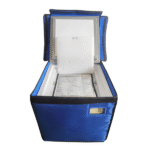
| Boîtes isolées | Matériaux multicouches (polystyrène, papier, coton) transfert de chaleur lent | 24–72 heures | Léger, peu coûteux, tailles personnalisables. |
| Matériaux à changement de phase (PCMS) | Packs de gel ou PCM avancés qui absorbent/libèrent de la chaleur pendant le changement de phase | 24–96 heures | Maintenir des températures stables sur une plage plus large; réutilisable; durée de vie plus longue. |
| Conteneurs actifs | Groupes frigorifiques motorisés; Contrôle précis de la température | 72 heures ou plus | Convient aux expéditions de grande valeur ou sur de longues distances; plus cher. |
| Solutions hybrides | Combinaison d'isolation, PCM et refroidissement actif minimal | 48–96 heures | Équilibrer coût et performances pour les expéditions à moyenne distance. |
Recommandations d'emballage et de refroidissement
Utilisez une isolation thermique adaptée à votre itinéraire. Des températures ambiantes plus élevées nécessitent des revêtements plus épais ou plus performants (Par exemple, mousse encapsulée en papier kraft).
Sélectionnez les PCM adaptés à la plage de température souhaitée. Les packs de gel standard maintiennent des températures proches 0 °C; les PCM spécialisés supportent une température de 15 à 20 °C, ce qui est idéal pour le chocolat.
Emballage primaire sécurisé. Les boîtes robustes empêchent l'écrasement et la pénétration de l'humidité.
Ajuster en fonction de la saisonnalité. Augmentez la quantité de liquide de refroidissement ou d'isolation en été et isolez du froid en hiver.
Intégrer des enregistreurs de données. Une surveillance continue détecte les écarts à un stade précoce afin que vous puissiez intervenir avant que la floraison ne se produise..
Cas réel: Un chocolatier en ligne a adopté les doublures ClimaCell® et les emballages PCM à base de papier pour ses expéditions estivales. Couplé avec des enregistreurs en temps réel, l'entreprise a maintenu ses livraisons entre 60 et 70 °F (15–21 °C) gamme et ont vu les plaintes des clients chuter malgré une canicule. Même si les coûts d'emballage ont légèrement augmenté, la croissance des ventes a compensé les dépenses et amélioré la réputation de la marque.
Comment la technologie peut-elle améliorer la logistique du chocolat?
Réponse directe
La logistique moderne de la chaîne du froid dépend de la technologie. Capteurs IoT, analyse prédictive, IA et blockchain travailler ensemble pour offrir une visibilité en temps réel, prévenir les pannes d’équipements et sécuriser la chaîne d’approvisionnement. Ces outils vous aident à surveiller la température et l'humidité en continu, prévoir les problèmes potentiels et optimiser les itinéraires, réduisant la détérioration et les coûts opérationnels.
Explication élargie
Les opérations traditionnelles de la chaîne du froid reposaient sur des contrôles manuels et des réponses réactives. Aujourd'hui, les technologies numériques permettent une intervention proactive. Capteurs IoT capturer la température, données d'humidité et de localisation, alors que analyse prédictive utilise des modèles historiques pour prévoir les pannes d'équipement et les perturbations d'itinéraire. Ces informations peuvent réduire les temps d'arrêt imprévus jusqu'à 50 % et réduire les coûts de réparation en 10–20 %. Algorithmes d'IA optimiser le chargement et l'acheminement des camions, économiser du carburant et réduire les émissions; Le système ORION d’UPS en est un exemple, économiser des millions de gallons de carburant chaque année. Chaîne de blocs ajoute une traçabilité inviolable, essentiel pour les chocolats de grande valeur et le respect des réglementations en matière de sécurité alimentaire.
Implémentation d'une surveillance basée sur l'IoT pour les expéditions de chocolat
Les appareils IoT se présentent sous de nombreuses formes, des simples enregistreurs de température aux packages multi-capteurs sophistiqués. Ils transmettent des données à une plateforme cloud, où les modèles prédictifs analysent les tendances et déclenchent des alertes.
| Technologie | Ce que ça fait | Avantages pratiques |
| Capteurs IoT | Surveiller en permanence la température, humidité et emplacement | Fournir une visibilité en temps réel; alerter les opérateurs des écarts de température avant que la floraison ne se produise. |
| Analyse prédictive | Utilise les données des capteurs pour prédire les pannes d'équipement et les perturbations d'itinéraire | Réduit les temps d'arrêt imprévus jusqu'à 50 % et réduit les coûts de réparation de 10 à 20 %. |
| Analyse énergétique | Suit la consommation d’énergie dans les unités de réfrigération | Aide à optimiser la consommation d’énergie et à réduire les coûts de 10 à 30 %. |
| Optimisation de l'itinéraire IA | Planifie des itinéraires de livraison efficaces | Économise du carburant, réduit les émissions et raccourcit les délais de livraison. |
| Chaîne de blocs | Enregistre chaque transfert dans un grand livre immuable | Garantit l’authenticité du produit, simplifie les rappels et dissuade la falsification. |
Conseils pour l'adoption du numérique
Adoptez une plateforme connectée. Choisissez des appareils et des logiciels IoT qui s'intègrent parfaitement afin de disposer d'un tableau de bord unique pour la surveillance..
Commencez par les atouts clés. Équipez en premier les unités de réfrigération et les véhicules de livraison les plus critiques; évoluer après avoir constaté le retour sur investissement.
Sélectionnez stratégiquement la blockchain. Réserver la blockchain aux chocolats à haut risque ou de grande valeur; un suivi plus simple peut suffire pour d'autres envois.
Formez votre équipe. Assurez-vous que le personnel interprète les données et réponde rapidement aux alertes.
Étude de cas: Un confiseur européen a intégré des capteurs IoT et des analyses prédictives dans sa flotte. Avant l'adoption, à propos 15 % des expéditions ont subi des écarts de température. Dans un délai d'un an, les écarts sont tombés à 3 %, économisant des milliers de kilos de chocolats et réduisant la consommation de carburant en 12 % grâce à des itinéraires optimisés par l'IA. L'investissement a été rentabilisé par une réduction des déchets et une amélioration de la satisfaction des clients..
Quel rôle joue la durabilité dans le transport du chocolat réfrigéré?
Réponse directe
La durabilité est désormais une exigence fondamentale dans la logistique de la chaîne du froid. Réduire la consommation d'énergie, la réduction des émissions de gaz à effet de serre et la réduction des déchets sont essentielles à la gestion de l'environnement et permettent également d'économiser de l'argent.. Véhicules électriques et hybrides, carburants renouvelables, entrepôts économes en énergie et emballages écologiques sont des stratégies clés pour le transport durable du chocolat réfrigéré.
Explication élargie
Le transport représente une part importante des émissions logistiques. Véhicules moyens et lourds, tout en représentant moins de 5 % de véhicules, produire plus 20 % des émissions des transports. Le passage aux camions électriques peut réduire les coûts de carburant jusqu'à 70 %, et de grands transporteurs comme UPS ont déjà commandé des milliers de camionnettes de livraison électriques. Les biocarburants offrent des avantages transitoires, réduire les gaz à effet de serre jusqu'à 80 % par rapport au diesel. La planification d'itinéraire intelligente utilisant l'IA peut réduire la consommation de carburant de 15 %. Les entrepôts passent au vert grâce à l’éclairage LED, des panneaux solaires et des systèmes CVC pilotés par l'IA qui offrent 20–30 % économies d'énergie. La durabilité des emballages s’améliore également: Matériaux biodégradables (maïzena, racines de champignons) et les contenants réutilisables réduisent les déchets plastiques.
Options d'emballage et de transport écologiques pour les chocolats
| Mesure | Comment il réduit les émissions | Avantages pour vous |
| Véhicules électriques/hybrides | Réduire la consommation de carburant et les émissions de gaz à effet de serre; des coûts d'exploitation réduits | Réduisez les frais d’expédition, respecter la réglementation verte, valoriser l'image de marque. |
| Carburants renouvelables (biodiesel, diesel renouvelable) | Réduire les émissions jusqu'à 80 % | Offrir une option de transition pour les flottes existantes; aucune mise à niveau majeure du véhicule n'est nécessaire. |
| Optimisation de l'itinéraire IA | Économise du carburant et réduit les émissions de carbone de 10 à 15 % | Améliorez les livraisons à temps et réduisez les coûts. |
| Entrepôts économes en énergie | L'éclairage LED et le CVC intelligent réduisent la consommation d'énergie de 20 à 30 % % | Réduisez les dépenses opérationnelles et maintenez des conditions de stockage constantes. |
| Emballages biodégradables ou réutilisables | Réduit les déchets plastiques et soutient les chaînes d’approvisionnement circulaires | Répond à la demande des consommateurs pour des produits respectueux de l'environnement, améliore les références en matière de durabilité. |
Recommandations en matière de logistique durable
Véhicules électriques pilotes sur des itinéraires urbains à haute densité pour évaluer les économies et la réponse des clients.
Adopter des carburants renouvelables pour que les flottes diesel existantes réduisent immédiatement leurs émissions.
Utiliser l'IA pour la planification d'itinéraire pour minimiser la distance et le temps de déplacement.
Améliorer les entrepôts avec éclairage LED et systèmes CVC intelligents pour réduire la consommation d'énergie.
Choisissez un emballage vert tels que des doublures recyclables et des isolants à base de papier.
Mettre en œuvre des programmes de recyclage et de compostage pour emballages et déchets organiques.
Exemple: Un centre de distribution est passé à l'éclairage LED et a installé un panneau solaire sur le toit, compensation 40 % de sa consommation d'énergie. Ils ont également opté pour des contenants isothermes réutilisables pour le chocolat., réduire les emballages à usage unique en 80 % et des économies sur les coûts d'élimination. Les clients ont apprécié la démarche éco-responsable, améliorer la fidélité à la marque.
Comment planifier la livraison du dernier kilomètre pour le chocolat glacé?
Réponse directe
Le dernier mile est souvent la partie la plus difficile du transport du chocolat réfrigéré. Les fluctuations de température lors de la livraison finale peuvent entraîner une dégradation rapide. Pour protéger la qualité, tu as besoin planification efficace, manipulation minimale, itinéraires optimisés et micro centres de distribution qui rapprochent les stocks des clients.
Explication élargie
La livraison du dernier kilomètre est soumise à des conditions imprévisibles: retards de circulation, conditions météorologiques extrêmes, et des transferts fréquents. Sans une bonne planification, le chocolat peut passer trop de temps en dehors des environnements contrôlés. Pour atténuer cela, planifier les livraisons pendant les périodes les plus fraîches de la journée, minimiser le temps de séjour en dehors de la réfrigération et utiliser l'analyse prédictive pour la planification des itinéraires. Les micro-centres de distribution situés à proximité des clients urbains réduisent les distances de transit, réduire l’exposition à la chaleur et à l’humidité. Utilisez le suivi en temps réel pour que les conducteurs puissent répondre aux alertes et ajuster les itinéraires à la volée. L'emballage joue également un rôle: les emballages passifs contenant des PCM peuvent maintenir la température pendant plusieurs heures pendant le transit du dernier kilomètre.
Stratégies pour le contrôle de la température du dernier kilomètre
| Stratégie | Ce que cela implique | Avantages |
| Planification efficace des livraisons | Livrez pendant les périodes plus fraîches et évitez la chaleur de midi | Réduit l’exposition à la température; améliore l'intégrité du produit. |
| Minimiser le temps de traitement | Limitez le temps que le chocolat passe en dehors des emballages isothermes | Empêche un réchauffement ou un refroidissement rapide. |
| Microcentres de distribution | Positionner les petits entrepôts à proximité des clients | Réduit les distances de déplacement; améliore la vitesse de livraison. |
| Optimisation des itinéraires | Utilisez l'IA et l'analyse prédictive pour planifier les itinéraires les plus rapides | Réduit la consommation de carburant et garantit une livraison dans les délais. |
| Surveillance en temps réel | Equiper les véhicules de capteurs de température et d'enregistreurs de données | Permet une intervention immédiate si les conditions dérivent. |
Conseils pour la livraison du dernier kilomètre
Communiquer avec les clients sur les délais de livraison pour garantir que quelqu'un soit disponible pour recevoir le colis rapidement.
Planifier les variations saisonnières. En été, emportez du liquide de refroidissement supplémentaire; en hiver, isoler du froid.
Consolider les livraisons dans la mesure du possible, réduire le nombre total de déplacements et les émissions des véhicules.
Établir des plans d'urgence pour les retards (Par exemple, chambre froide temporaire dans le véhicule de livraison).
Exemple pratique: Un chocolatier spécialisé utilise des micro-centres de distribution dans les grandes villes. En stockant l'inventaire dans 20 km de clients et planifier les livraisons le matin, l'entreprise a réduit le temps de transit de 30 %. Des capteurs de température en temps réel alertaient les conducteurs des écarts inattendus, leur permettant d'ajouter des packs de gel pendant une vague de chaleur et d'éviter d'endommager le produit.
2025 Derniers développements et tendances dans le transport du chocolat réfrigéré
Aperçu de la tendance
Le paysage de la chaîne du froid et du transport du chocolat évolue rapidement. Le marché mondial de la logistique de la chaîne du froid, valorisé à 341 milliards de dollars américains 2024, devrait croître à un rythme 15.3 % taux de croissance annuel composé, atteinte environ 1 190 milliards de dollars américains d’ici 2034. Cette croissance découle de la demande croissante d'aliments et de produits pharmaceutiques sensibles à la température., le boom du commerce électronique et les progrès de la technologie numérique. Entre-temps, le marché de l'emballage à température contrôlée devrait atteindre 48,9 milliards de dollars américains 2025 et grandir à 9.4 % chaque année jusqu'à 2034. Pour les chocolatiers, ces tendances se traduisent par une logistique plus sophistiquée, des emballages plus intelligents et des exigences plus élevées en matière de durabilité.
Dernier progrès en un coup d'œil
IoT & Intégration de l'IA: Les entreprises combinent de plus en plus de capteurs avec des analyses prédictives pour automatiser la gestion de la chaîne du froid. La surveillance en temps réel et le routage IA réduisent la détérioration et la consommation d'énergie.
Déploiement de véhicules électriques: Les principaux transporteurs déploient des camionnettes de livraison électriques, réduire les émissions et les coûts de carburant.
Innovations en matière d'emballage durable: Les isolants biodégradables et les conteneurs réutilisables gagnent du terrain, Équilibrer performance thermique et responsabilité environnementale.
Expansion du micro-exécution: Les acteurs du commerce électronique investissent dans des centres de distribution locaux pour accélérer les livraisons et maintenir la qualité des produits.
Accent réglementaire: Des réglementations plus strictes en matière de sécurité alimentaire et pharmaceutique stimulent les investissements dans l’infrastructure et la surveillance de la chaîne du froid.
Insistance au marché
Les préférences des consommateurs s'orientent vers des chocolats haut de gamme et d'origine éthique.. Couplé à l’essor des confiseries à base de plantes et hypoallergéniques, la variété des produits chocolatés nécessitant un transport réfrigéré s'élargit. Les surgelés et les plats cuisinés représentent actuellement 46 % du marché de la chaîne du froid, mais le chocolat et la confiserie représentent un segment en croissance. Les différences régionales sont notables: les États-Unis. le marché devrait croître à 10.3 % chaque année entre 2025 et 2032, tandis que l’Asie-Pacifique devrait tirer la croissance en raison de la hausse des revenus et de l’urbanisation.. Les mises à niveau des infrastructures, telles que la modernisation des entrepôts et les outils de visibilité numérique, seront essentielles pour gérer cette croissance..
Questions fréquemment posées
A quelle température faut-il transporter le chocolat?
Transporter le chocolat entre 12 °C et 20 °C. Le chocolat noir peut tolérer le bas de cette fourchette, mais les chocolats au lait et blancs nécessitent des températures moyennes constantes pour éviter la floraison.
Qu'est-ce que la prolifération de sucre et comment puis-je la prévenir?
La floraison du sucre se produit lorsque l’humidité se condense sur le chocolat et que les sucres recristallisent., laissant un blanc, surface granuleuse. Prévenez-le en maintenant l'humidité relative en dessous 50 %, éviter les chutes brusques de température et utiliser des emballages isothermes.
L'humidité est-elle importante pendant le transport du chocolat?
Oui. Une humidité élevée peut entraîner une prolifération de sucre et favoriser la croissance de moisissures. Maintenir l'humidité relative en dessous 50 % et surveillez-le en permanence.
En quoi l'emballage passif diffère-t-il de l'emballage actif?
L'emballage passif repose sur des éléments d'isolation et de refroidissement (packs de gel, PCMS) sans réfrigération mécanique. C'est plus léger, moins cher et idéal pour les expéditions du dernier kilomètre ou pour le commerce électronique. L'emballage actif utilise des unités de réfrigération motorisées pour un contrôle précis et convient aux expéditions longue distance ou de très grande valeur..
Les capteurs IoT peuvent-ils empêcher la détérioration du chocolat?
Oui. Les capteurs IoT fournissent des données de température et d'humidité en temps réel. Combiné avec l'analyse prédictive, ils vous alertent des écarts avant que la détérioration ne se produise, réduire les déchets et garantir la qualité des produits.
Les emballages durables sont-ils suffisamment solides pour l'expédition de chocolat?
Isolants modernes biodégradables et recyclables, comme les doublures à base de papier, offrir des performances thermiques élevées tout en réduisant l’impact environnemental. Ils sont suffisamment robustes pour les expéditions de commerce électronique et offrent une expérience de déballage haut de gamme..
Résumé et recommandations
Principaux à retenir
Le chocolat nécessite un contrôle strict de la température et de l'humidité. Transporter entre 12 et 20 °C et maintenir l'humidité en dessous 50 % pour éviter la floraison des graisses et des sucres. Sombre, les chocolats au lait et blanc ont des plages similaires mais diffèrent en termes de sensibilité.
L’emballage compte. Utiliser des boîtes isothermes, PCM et emballage primaire robuste. Les solutions passives sont rentables pour la plupart des expéditions.
La technologie améliore la fiabilité. Capteurs IoT, l'analyse prédictive et le routage IA offrent une visibilité en temps réel et réduisent les pertes.
La durabilité est une priorité. Véhicules électriques, les carburants renouvelables et les emballages biodégradables réduisent les émissions et séduisent les consommateurs soucieux de l'environnement.
La planification du dernier kilomètre est cruciale. Planification efficace, les micro-centres de distribution et l'optimisation des itinéraires assurent la sécurité du chocolat lors de la livraison finale.
2025 les tendances montrent une croissance continue. Les marchés de la chaîne du froid et de l’emballage se développent rapidement, porté par le commerce électronique et l’innovation technologique.
Plan d'action
Évaluez votre processus actuel d’expédition de chocolat. Cartographiez l’exposition à la température et à l’humidité tout au long de votre chaîne d’approvisionnement. Identifiez les points où les conditions peuvent dépasser les 12-20 °C et 50 % seuils d'humidité.
Emballage de mise à niveau. Sélectionnez des éléments d'isolation et de refroidissement adaptés à vos parcours. Envisagez d'utiliser des PCM et des doublures recyclables pour équilibrer performances et durabilité.
Mettre en œuvre une surveillance en temps réel. Commencez avec des capteurs IoT sur les expéditions à haut risque. Utiliser l'analyse prédictive pour anticiper les problèmes d'équipement et les perturbations d'itinéraire.
Adoptez une logistique durable. Piloter des véhicules de livraison électriques en zone urbaine, adopter des carburants renouvelables pour les flottes existantes et choisir des matériaux d'emballage respectueux de l'environnement.
Optimiser le dernier kilomètre. Utilisez des micro-centres de distribution lorsque cela est possible, planifier les livraisons pendant les périodes plus fraîches et garantir que les clients sont prêts à recevoir les produits.
Restez informé des tendances de l'industrie. Surveiller la croissance du marché, changements réglementaires et développements technologiques pour maintenir la compétitivité de votre transport de chocolat réfrigéré.
Collaborez avec des experts. Collaborer avec des fournisseurs spécialisés dans la chaîne du froid et des fournisseurs d'emballages qui comprennent les besoins uniques de la logistique du chocolat..
À propos du tempk
À Rotation, nous sommes spécialisés dans les solutions avancées d'emballage pour la chaîne du froid qui assurent la sécurité de vos produits de l'usine à la porte d'entrée. Nos caisses isothermes, les matériaux à changement de phase et les systèmes de surveillance intégrés IoT sont conçus pour les produits pharmaceutiques, nourriture et confiseries. Nous investissons continuellement dans la recherche et le développement pour offrir emballage réutilisable et recyclable qui réduit les déchets et est conforme aux dernières réglementations. Notre approche centrée sur le client signifie que nous adaptons les solutions à vos besoins spécifiques, que vous expédiiez localement ou mondialement.
Prêt à protéger vos expéditions de chocolat? Contactez notre équipe pour une consultation personnalisée. Nous sommes là pour vous aider à garantir que chaque barre, la truffe ou le bonbon arrive aussi parfait qu'il a quitté la chaîne de production.