Fournisseur de boîtes isolées EPP pour l'aérospatiale
Le droit Fournisseur de boîtes isolées EPP pour l'aérospatiale, on se demandera ce qu'il faut préserver, comment la panne est détectée, et quelles preuves votre programme accepte. Ces questions comptent plus qu'une taille de catalogue ou une affirmation générique de « qualité aérospatiale ».. Le polypropylène expansé peut offrir un amorti de faible masse, isolation, ajustement moulé, et potentiel de réutilisation. Cela ne peut pas, par lui-même, établir une protection ESD, propreté, performances d'inflammabilité, faible dégazage, qualification de température, ou aptitude au transport. Un achat défendable relie les exigences de charge utile à une conception de colis contrôlée et maintient cette connexion intacte tout au long de la production et de la réutilisation..
Commencez par une déclaration de protection que tout le monde peut utiliser
La plupart des projets d'emballage commencent trop tard dans la logique. Une demande de «boîte isolée en PPE» assume déjà la matière et le format avant que les risques ne soient définis. Inverser la séquence. Donnez aux fournisseurs potentiels une brève déclaration de protection indiquant que l'achat, ingénierie de produits, qualité, logistique, et recevoir tout le monde reconnaît.
Décrivez d'abord la charge utile. Inclure le dessin contrôlé ou l'enveloppe dimensionnelle, propriétés de masse, centre de gravité le cas échéant, zones de contact autorisées, traits fragiles, connecteurs, câbles attachés, capuchons de protection, sacs primaires, limites de l'état de surface, et tout élément qui doit l'accompagner. Séparer les dimensions nominales de l'enveloppe emballée maximum. Si différentes révisions de charge utile partageront le package, lister les caractéristiques distinctives et la règle de configuration.
Décrivez ensuite les dangers. Ceux-ci peuvent inclure la manipulation des gouttes, vibrations du véhicule, compression, ponction, abrasion, humidité, poussière, soleil, mise en scène incontrôlée, exposition thermique, décharge électrostatique, corrosion, contamination, ou des débris de corps étrangers. Ne transformez pas tous les dangers possibles en exigence. Classez les itinéraires crédibles pour l’itinéraire et expliquez les conséquences de l’échec.
Définir ensuite l'acceptation. « Aucun dommage » est rarement assez précis pour un article aérospatial sensible. Indiquer si l'acceptation dépend de l'état visuel, jauges de connecteur, tests fonctionnels, étalonnage, alignement, intégrité des fuites, propreté, inspection des surfaces, statut du sceau, ou un dossier environnemental. Le paquet lui-même peut également avoir des limites de fermeture, déformation permanente, larmes, contamination, ou l'état de l'étiquette.
Enfin, décrire le voyage. Inclure l'emballage et la mise en scène, modes de transport, consolidation, transferts aéroport ou frontière, gestion des destinations, limites des zones contrôlées, déballage, stockage, et tout retour. Identifiez qui effectue chaque action critique et où des retards peuvent survenir. Pour un mouvement en boucle fermée, expliquer comment les conteneurs vides sont inspectés, accumulé, revenu, et remis en service.
Cette déclaration donne aux fournisseurs une base commune pour proposer une conception, déclarer des hypothèses, et identifier les informations manquantes. Il fixe également les critères d'acceptation avant les tests.
Décidez si le PPE est la bonne couche
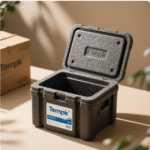
L'EPP est un matériau en polypropylène cellulaire moulé. Sa structure peut absorber de l'énergie et réduire le transfert de chaleur tout en maintenant la masse du colis à un niveau faible.. Poches moulées, côtes, poignées, caractéristiques du couvercle, et les détails de localisation peuvent rendre un emballage reproductible et réduire le rembourrage lâche. La résilience peut supporter des manipulations répétées, à condition que la note soit réelle, forme, limites de dommages, et le processus d'inspection sont adaptés.
Ces avantages doivent être attribués à une couche spécifique. Le matériel sensible nécessite souvent plusieurs couches avec des fonctions différentes:
| Besoin de protection | Rôle possible du PPE | Autre couche ou contrôle pouvant être nécessaire | Preuve à demander |
|---|---|---|---|
| Choc et manipulation | Coussin façonné et répartition de la charge | Protection extérieure rigide, retenue, capuchons, ou fonctionnalités de contact autorisées | Données d'amortissement applicables et test de colis assemblé |
| Vibrations et frottements | Support et dégagement contrôlés | Barrière de surface, contrôle de précharge, retenue des attaches, ou isolement extérieur | Analyse de la conception et inspection post-test spécifique au produit |
| Exposition thermique | Enceinte isolante | Packs de gel conditionnés ou PCM, séparateurs, instruction d'emballage, et surveillance | Etude complète de configuration thermique sous un profil approprié |
| Electronique sensible aux ESD | Support mécanique uniquement, sauf si des propriétés particulières sont vérifiées | Emballage de blindage ou de contrôle statique et manipulation protégée | Tests pour les matériaux d'emballage exacts dans le cadre du plan ESD applicable |
| Matériel propre ou sensible au FOD | Organisation moulée et fardage réduit | Barrière homologuée, nettoyage contrôlé, méthode de transfert, et inventaire | Processus de propreté et d’acceptation des FOD pour la zone prévue |
| Risque de corrosion ou d’humidité | Structure extérieure protectrice | Pare-vapeur, déshydratant, méthode de conservation, ou emballage primaire scellé | Preuve de compatibilité et d'intégrité du package pour les conditions réelles |
| Problème de matériaux liés au vol ou au vide | Pas de qualification automatique | Examen du matériel du programme et sélection de la note exacte | Inflammabilité applicable, dégazage, compatibilité, ou d'autres preuves de programme |
Le tableau clarifie pourquoi un matériau ne peut pas répondre à l'intégralité de l'exigence.. Un shell EPP peut remplir plusieurs fonctions physiques, mais le système final doit aussi gérer les interfaces entre couches. Un capuchon pointu peut endommager un sac; le liquide de refroidissement peut entrer en contact avec une surface sensible à la température; un boîtier extérieur rigide peut contourner le coussin prévu; ou une étiquette incorrecte peut envoyer un bon colis sur le mauvais itinéraire.
Le PPE n'est pas la réponse par défaut pour chaque expédition aérospatiale. Un étui rigide réutilisable peut être préférable lorsque le scellage, sécurité, ou le matériel robuste domine. Un matériau de rembourrage différent peut convenir à une condition de fragilité ou de propreté spécifique.. Les emballages à usage unique peuvent être rationnels dans un itinéraire à sens unique sans réseau de récupération. Le fournisseur doit comparer des architectures crédibles plutôt que d'imposer chaque exigence dans un moule existant..
Construire un dossier fournisseur, pas un recueil de réclamations
Une fois que le PPE aura un rôle justifié, l'acheteur a besoin d'un dossier contrôlé pour le package proposé. Commencez par l’identité matérielle. Enregistrez la note exacte de l'EPP, additifs ou formulation spéciale, couleur là où elle a un but technique, et tous les composants attachés. Déclarations génériques sur la résistance aux chocs du PPE, isolation, ou la résistance chimique sont des informations générales, pas la définition de la production.
Les preuves d'amortissement doivent relier la pente et la géométrie à la charge utile. Demandez quelles données d'amortissement dynamique, calculs, modèles, ou des tests ont été utilisés; quelle zone de contact et quelle orientation ont été supposées; et si la température de manipulation prévue ou une utilisation répétée modifie la conception. La densité peut être documentée, mais cela ne devrait pas remplacer la base d'ingénierie. Définir les chemins de charge et les contacts interdits sur le dessin.
Le contrôle dimensionnel nécessite la même attention. Identifier les dimensions critiques, la date, jauges, méthode d'échantillonnage, et comment les pièces moulées sont conditionnées avant la mesure. Les tolérances doivent être négociées pour la fonction et la capacité du processus plutôt que copiées à partir d'un dessin de composant usiné.. Vérifier l'engagement du couvercle, rétention d'insert, dégagement autour des barrières primaires, fonctionnalités d'imbrication, interfaces d'empilage, et toutes les dimensions pouvant exercer une précharge sur la charge utile.
Les réclamations de propriété spéciale nécessitent une preuve distincte:
- Pour les articles sensibles aux ESD, Il ne faut pas supposer que l'EPP ordinaire dissipe la charge ou protège les champs externes. Confirmer les fonctions de protection, matériaux exacts, méthodes d'essai, conditionnement, limites, et gérer les contrôles requis par le programme.
- Pour la propreté et le FOD, définir l'acceptation des particules ou des débris, chimie de nettoyage, rincer ou essuyer les résidus, emballage après nettoyage, comportement de l'étiquette, état de stockage, et transfert en zone contrôlée.
- Pour la flamme, fumée, ou des problèmes de toxicité, établir quel environnement d'utilisation et quelle exigence contractuelle s'appliquent. Un colis d'expédition terrestre et un matériel conservé avec le matériel de vol ne partagent pas de règle automatique.
- Pour dégazage ou contamination moléculaire, impliquer le matériel du programme ou l’autorité de contrôle de la contamination. Un résultat de dépistage pour un polymère générique n'approuve pas une boîte finie avec des additifs, étiquettes, adhésifs, et historique de traitement.
- Pour l'exposition chimique, évaluer le nettoyant exact, fluide, concentration, durée, température, état de stress, et nombre d'événements de nettoyage. Les tableaux de compatibilité étendue doivent être traités comme des entrées de sélection.
Les preuves de transport doivent décrire l'unité testée complète. ASTM D4169 ou une procédure ISTA applicable peut fournir un cadre reconnu pour les tests de distribution, tandis que les spécifications du client ou les données d'itinéraire peuvent nécessiter une autre séquence. Enregistrez la charge utile ou le substitut, révision du paquet, conditionnement, niveaux de test, orientations, séquence, écarts, et méthodes d'acceptation des produits. Une passe n'a de sens que dans cette limite.
Les preuves du système qualité ont une portée différente. Certification IAQG série 9100, si nécessaire, concerne une organisation et ses activités auditées, pas une approbation de produit. Vérifier son statut et sa portée, puis évaluez comment le fournisseur contrôle les outils, processus, lots de matériaux, inspections, enregistrements, non-conformités, et travail externalisé.
Compléter le dossier avec traçabilité et contrôle des modifications. Définir si les enregistrements sont liés à un lot, date de fabrication, cavité d'outil, actif individuel, ou un autre niveau convenu. Répertoriez les modifications qui nécessitent une notification: substitutions de résine ou d'additifs, mouvements de processus, réparations d'outils, dimensions, révisions de l'insert ou du couvercle, étiquettes, adhésifs, produits de nettoyage, liquide de refroidissement, et lieu de fabrication. Décider qui évalue l’impact et quand les échantillons ou les tests doivent être répétés.
Utiliser les portes de qualification de l'échantillon à la production
Un seul échantillon approuvé peut cacher un risque. Les prototypes de développement peuvent confirmer l'ajustement sans représenter le matériel de production, fusion de perles, état de surface, stabilité dimensionnelle, ou réponse d'amortissement. Les échantillons équivalents à la production peuvent toujours être emballés différemment de l'unité de test. La qualification devrait donc passer par des portes, avec un objectif clair à chaque étape.
Outils de décision utiles
Vérifiez les détails avant de choisir l'emballage
Ces outils rapides peuvent vous aider à comparer le risque d'itinéraire, besoins de dimensionnement, choix de liquide de refroidissement, et les détails de l'emballage avant de demander un devis.
Sélecteur d'emballage
Comparez les options d'emballage isotherme par produit, itinéraire, et besoin de température.
Trouver un emballageDoublure de boîte & Dimensionnement des couvertures de palettes
Vérifiez la logique de dimensionnement du revêtement de boîte et du couvercle de palette pour les projets d'emballage isotherme.
Dimensionnement estiméLiquide de refroidissement & Référence PCM
Comparez les options de liquide de refroidissement et de PCM lorsqu'un itinéraire nécessite une prise en charge supplémentaire de la température.
Comparez les optionsÀ la porte du concept, consulter la déclaration de protection, architecture du paquet, hypothèses, et modes de défaillance. Confirmez que l'EPP résout un problème identifié et que d'autres niveaux couvrent l'ESD., propreté, corrosion, température, ou besoins extérieurs. Résoudre les conflits évidents avant que les outils de production ne soient engagés.
À la porte de l’ajustement et du flux de travail, utiliser la charge utile réelle ou un représentant contrôlé. Inclure les sacs, capuchons, retenues de câbles, documents, composants du liquide de refroidissement, capteurs, et emballage extérieur. Vérifier la poignée de l'opérateur, orientation, force d'insertion, indication de fermeture, placement d'étiquette, et retrait. Demander à un opérateur qui n'a pas conçu le colis de suivre le projet d'instruction; l'ambiguïté apparaît rapidement dans un emballage réaliste.
À la porte de vérification, tester les unités représentatives de la production par rapport à des éléments mécaniques définis, thermique, propriété spéciale, et critères d'acceptation des produits. Tous les projets ne nécessitent pas tous les tests. Le plan doit suivre les risques de défaillance et les obligations contractuelles. Si des substituts sont utilisés, documenter pourquoi leur masse, géométrie, rigidité, comportement thermique, ou la fragilité représente la charge utile réelle.
Imaginez un hypothétique kit de collage sensible à la température voyageant avec un applicateur électronique. La première conception place le PCM conditionné autour des cartouches de matériau et supporte l'applicateur dans la même cavité EPP.. L'examen technique révèle deux conflits: l'électronique nécessite une barrière ESD vérifiée, et la proximité directe du liquide de refroidissement pourrait les exposer à la condensation. L'architecture a été revue afin que les cartouches occupent une zone thermique définie tandis que l'applicateur reste à l'intérieur d'une barrière de protection séparée et d'un compartiment sec.. Les tests portent ensuite sur l'ensemble du pack configuré, pas une simple boîte EPP.
À la sortie de la production, comparer les premières unités avec le matériel approuvé, dimensions, surface, composants, étiquettes, instructions, et des enregistrements. Documenter l'équivalence si les tests ont utilisé un outil de développement ou une configuration spéciale.
L'acceptation continue est la porte finale. Inspections à la réception des aliments, non-conformités, retours endommagés, enregistrements thermiques, et les changements de fournisseurs en cours d'examen. La qualification reste pertinente uniquement tant que le produit, emballer, processus, et l'utilisation reste dans les limites approuvées.
Concevoir la boucle de fonctionnement avant de commander du volume
L'emballage de la production réussit lorsque les actions de routine sont faciles à réaliser correctement. Créer une nomenclature visuelle et une séquence d'emballage. Orientation des marques et substitutions autorisées. Définir le stockage et le conditionnement des packs de gel ou PCM, le temps imparti lors du montage le cas échéant, et qui libère l'envoi. Pour les appareils de surveillance, spécifier la configuration, preuve d'étalonnage, placement, démarrer et arrêter des actions, récupération de données, évaluation des alarmes, et disposition après une excursion.
Les exigences en matière de fret aérien dépendent de l'envoi. Temps- et services sensibles à la température, marchandises, liquide de refroidissement, piles, produits chimiques, et les variations des opérateurs peuvent introduire un emballage, marquage, documentation, ou dispositions de manutention. IATA actuel, gouvernement, transporteur, et les exigences du contrat doivent être examinées par un personnel qualifié.. Un conteneur EPP ne crée ni ne supprime la classification de l'expédition.
Les instructions de réception doivent refléter les contrôles d'expédition. Dites au destinataire comment inspecter la fermeture et l'extérieur, confirmer l'identité et la révision, gérer toutes les données de surveillance, transférer la charge utile vers un stockage contrôlé, et conserver les preuves si des dommages ou une excursion sont suspectés. Définir si le box peut entrer dans une zone contrôlée ou doit s'arrêter à une limite de transfert.
Pour les systèmes réutilisables, établir la propriété et la facilité d’entretien avant d’acheter du volume. Décidez où les vides sont stockés, qui paie et organise le retour, comment les accessoires sont comptés, combien d'anciennes étiquettes sont supprimées, quel nettoyage est autorisé, et qui libère une boite pour un autre voyage. Fixer des critères de retraite pour les réductions, chemins de charge écrasés, ensemble permanent, surfaces contaminées, fermetures endommagées, composants manquants, ou réparation non autorisée.
La durabilité doit être mesurée à travers cette véritable boucle. Les informations pertinentes peuvent inclure les voyages terminés, distance de retour, perte, intrants de nettoyage, boîtes endommagées, perte de produit, emballage extérieur, stockage, et disposition en fin de vie. Le PPE est à base de polypropylène et peut être récupéré là où un flux propre et une infrastructure acceptante existent, mais les étiquettes, adhésifs, contamination, parties mixtes, et l'accès régional affectent le recyclage pratique. Ne promettez pas un bénéfice d’un décompte théorique de réutilisation.
La comparaison commerciale doit suivre la même frontière. Inclure l'outillage, qualification, travail d'emballage, liquide de refroidissement, surveillance, protection extérieure, fret de retour, nettoyage, stockage, perte, pièces de rechange, et gestion des pannes. Renseignez-vous sur la commande minimum et le délai de livraison en tant que questions spécifiques au projet. Choisissez une conception qui contrôle les risques à un coût total exploitable.
Questions fréquemment posées
Que faut-il envoyer à un fournisseur avant de demander un devis?
Envoyer une enveloppe de charge utile contrôlée, informations de masse et sur les éléments fragiles, zones de contact autorisées, description de l'itinéraire et de la manutention, température requise ou condition environnementale, principaux obstacles, modèle de réutilisation attendu, critères d'acceptation, et les exigences applicables en matière de qualité ou de matériaux. Marquez clairement les inconnues. Cela permet à l'évolution des prix du fournisseur et aux preuves, pas seulement une boîte extérieure.
Un boîtier EPP standard peut-il être qualifié de certifié aérospatial?
Cette phrase est généralement trop large. Les programmes aérospatiaux approuvent les organisations, matériels, processus, dessins, ou configurations dans des périmètres définis. Une boîte peut être produite dans le cadre d'un système de qualité certifié ou testée selon un protocole convenu, mais ces faits doivent être énoncés séparément. Demandez quelle approbation exacte, test, contracter, site, et la configuration couverte par une réclamation.
Comment vérifier la cohérence de l'échantillon à la production?
Comparer la définition de production avec l'unité approuvée et testée: qualité du matériau, moule et révision, dimensions critiques, fusion des billes et état de surface, inserts, couvercle, fermeture, étiquettes, accessoires, nettoyage, et emballage. Utiliser une inspection initiale et continue adaptée au risque. Exiger une notification avant les modifications susceptibles d'affecter les caractéristiques vérifiées.
Quand une boîte EPP isolée ne suffit-elle pas pour le contrôle de la température?
Cela ne suffit pas lorsque la charge utile doit rester dans un état défini et que l'isolation seule ne peut pas démontrer ce résultat.. Un système passif peut nécessiter des packs de gel ou un PCM correctement conditionnés, séparateurs, un processus de chargement spécifié, preuves thermiques pertinentes pour l'itinéraire, et surveillance. Le Product Owner doit définir la plage acceptable et la décision d'excursion.
Conclusion: choisir des preuves qui survivent au transfert
Le PPE peut alléger un emballage aérospatial, organisé, isolé, amorti, et réutilisable. La valeur d'achat n'apparaît que lorsque ces fonctions sont liées à la charge utile et maintenues à chaque transfert.. Définir la déclaration de protection, attribuer des fonctions entre les couches, collecter des preuves de qualité exacte et de systèmes assemblés, qualifier les unités représentatives de la production, et contrôler les changements. Concevez ensuite les processus de réception et de retour avec le même soin. Un fournisseur qui expose des hypothèses et préserve cette chaîne de preuves est un meilleur partenaire qu'un fournisseur proposant une affirmation universelle non étayée..
À propos du tempk
Fournitures temporaires emballage chaîne du froid options, y compris des packs de gel standard et des options de matériaux à changement de phase, emballage isolé avec choix PPE, et conception d'emballage ou assistance aux tests. Nous pouvons discuter d'une configuration proposée en utilisant l'exigence de température, charge utile, itinéraire, et processus de traitement définis par l'acheteur. Pour les usages aérospatiaux, la qualité du matériau requis, propriétés spéciales, plan de test, documentation, et l'acceptation du programme doit être confirmée pour l'application exacte. Tempk ne suppose pas qu'un récipient isolé est automatiquement certifié aérospatial ou adapté à chaque article.
Définir les preuves avant la commande: Partagez votre charge utile, itinéraire, condition requise, et les contraintes du programme avec Tempk pour discuter d'un chemin d'emballage et de vérification approprié.