The best choice in this category is rarely the one with the loudest claim. It is the one that protects diagnostic reagents, hospital pharmacy replenishment, specimen kits, vaccins, and other temperature-sensitive medical products in a repeatable way and still makes sense when you account for cleaning, étiquetage, retours, et cohérence des fournisseurs.
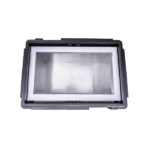
En pratique, the container should be treated as a reusable thermal packaging component used in short- and medium-duration medical distribution where a reusable insulated bin can support hub-and-spoke, dernier kilomètre, or internal network transport. You should treat the container description as only the starting point. For temperature-sensitive loads, performance depends on the full pack-out, le profil de l'itinéraire, and the way the shipper is conditioned, fermé, et surveillé. For medical logistics, the container has to match the product temperature band, durée du transport, exposition ambiante, méthode d'emballage, and receipt process. The bin name alone does not prove fitness for use.
In pharmaceutical and medical cold chains, good distribution practice is less about marketing language and more about documented control. Passive packaging should be matched to the route, packed in the exact approved configuration, and monitored in a way that lets the receiving team judge whether the shipment stayed in range.
What Buyers Are Usually Trying to Solve
The fastest way to judge fit is to look at the real operating scenario rather than the catalog category. A reusable medical logistics bin may be ideal for routine pharmacy replenishment, clinic deliveries, or regional diagnostics distribution where the same route runs repeatedly and return logistics are manageable. It can also make sense for internal hospital networks moving products between a central pharmacy, laboratoires, outpatient sites, and satellite facilities.
But the provider should be talking about lane design, receipt checks, and conditioning discipline as much as the physical bin itself. That is where medical logistics programs usually succeed or fail. This is why the same temperature-controlled plastic bin can be an excellent choice in one workflow and the wrong answer in another.
In regulated medical and pharmaceutical environments, the container is part of the handling system rather than the product claim. Clear lot visibility, status labeling, and cleanability usually matter more than decorative features.
How to Compare Design Without Overbuying
Once the use case is clear, the next question is how the container behaves under repeated handling. Pour cette catégorie, the most important variables usually include thermal range and duration, lid seal and coolant layout, sanitization and drying, and monitoring and receipt inspection. These are not abstract technicalities. They determine whether operators can pack quickly, whether the load stays protected, and whether the container still performs after months of reuse.
In reusable temperature-controlled formats, the outer shell is only one layer of the design. Isolation en mousse, phase-change or gel refrigerants, conception de fermeture, and empty-space management usually decide whether the payload stays in range. Autrement dit, a temperature-controlled tote, crate, or bin should be reviewed as a thermal package design, not merely as a plastic shell with coolant nearby.
Look at real stacking behavior, not just a catalog photo. Stable column stacking, support d'angle, and pallet fit matter more than a vague claim of being stackable.
Treat the thermal system as the main design question. Type d'isolation, choix du réfrigérant, pack-out pattern, and conditioning instructions will matter more than the outer shell name.
Ask for the true internal dimensions and usable volume. External size alone does not tell you whether the container fits your trays, packs, or protective inserts.
Review how the container is labeled and identified. Flat label panels, molded IDs, or barcode-ready surfaces become important once the program scales beyond a single room or lane.
Si vous le pouvez, compare these points with a physical sample rather than a specification sheet alone. A container that looks acceptable on paper may feel awkward on a line, unstable on a pallet, or difficult to wash and relabel once it enters real operations.
Where This Format Usually Works Best
The best applications are the ones where the container solves a repeat problem. For medical logistics, that often means improving one or more of these points: handling protection, discipline de mise en scène, présentation plus propre, more stable stacking, or easier return logistics.
A reusable medical logistics bin may be ideal for routine pharmacy replenishment, clinic deliveries, or regional diagnostics distribution where the same route runs repeatedly and return logistics are manageable. It can also make sense for internal hospital networks moving products between a central pharmacy, laboratoires, outpatient sites, and satellite facilities. But the provider should be talking about lane design, receipt checks, and conditioning discipline as much as the physical bin itself. That is where medical logistics programs usually succeed or fail.
If your workflow is irregular, Sens Unique, or highly unpredictable, a reusable program may still work, but the bar for justification is higher. That is especially true when losses, cleaning complexity, or cross-border recovery of empties will drive the total cost more than the container purchase itself.
A Quick Comparison Before You Shortlist Suppliers
Most buying mistakes happen when teams compare formats that solve different problems. The table below is not a brand ranking. It is a way to separate the main option types so you can match them to the workflow instead of paying for the wrong strength.
| <fort>Option</fort> | <fort>Mieux pour</fort> | <fort>Principal point fort</fort> | <fort>Principale mise en garde</fort> |
| Reusable insulated bin | repeat medical logistics lanes | good balance of durability and thermal control | needs return, nettoyage, et surveiller la discipline |
| Single-use insulated shipper | irregular or one-way lanes | simple deployment | more waste and less reuse value |
| Active mobile refrigeration | high-volume or long-duration routes | continuous powered control | higher infrastructure and operating cost |
Use a table like this as a starting point, not a final approval. Once you narrow the category, you still need to confirm dimensions, emballer, handling fit, and supplier consistency in the exact version you plan to buy.
What Buyers Should Ask Before Ordering in Bulk
The supplier decision is not only about price. In a real B2B program, you are buying program fit, onboarding support, and service continuity as much as the container itself. A supplier who cannot hold dimensions, spécification matérielle, or repeat part identity can turn a sensible packaging choice into a recurring operational problem.
Pour ce sujet, the review should pay close attention to route mapping and duration assumptions, instructions de conditionnement, stacking in vehicles and depots, and repairability and asset tracking. If your program will involve multiple sites, multiple SKUs, or a long service life, those questions matter early because they are expensive to fix later.
Confirm internal and external dimensions, true usable volume, and any tolerance range that could affect fit on shelves, palettes, chariots, or conveyors.
Ask which resin is used and whether the supplier can hold that material specification over time. In sensitive operations, an unannounced material change can create new cleaning or performance issues.
Review the closure, ventilation, drainage, and handle design in the exact version you plan to buy. Small hardware or mold differences can change how the container behaves in the field.
For thermal programs, ask for the tested temperature range, expected duration, diagramme d'emballage, coolant conditioning instructions, and the assumptions behind those claims.
Check stackability, nidification, and return efficiency under your real handling pattern, including pallet height, backhaul distance, and whether operators load by hand or with equipment.
Understand hygiene and cleaning expectations. A reusable container is only valuable when it can be washed, séché, inspecté, and returned without introducing operational risk.
Specify labeling and traceability needs upfront, including barcode panels, molded IDs, codage couleur, quarantine tags, or other status markers.
Ask for load guidance under realistic conditions: full stack weight, exposition à la température, manipulation sur sol mouillé, risque de chute, and repeated opening or washing cycles.
Clarify MOQ, délai de mise en œuvre, tooling or customization options, replacement availability, and whether approved samples match volume production.
Document sample-to-production consistency and change control. This matters especially when the container has to fit a qualified pack-out, a clean workflow, or an automated handling step.
Do not approve a supplier on sample quality alone. Ask how the approved sample will be protected from silent changes in resin, mold condition, matériel, insulation layout, or accessory parts once production volumes increase.
Where Buyers Commonly Overestimate the Container
In pharmaceutical and medical cold chains, good distribution practice is less about marketing language and more about documented control. Passive packaging should be matched to the route, packed in the exact approved configuration, and monitored in a way that lets the receiving team judge whether the shipment stayed in range.
Good-distribution practice for temperature-sensitive products puts the emphasis on route suitability, documented pack-out, surveillance, receipt checks, and cleaning of reusable shipping assets. That is why a hold-time headline is never enough on its own. For many medical or pharmaceutical lanes, that means written conditioning instructions, an exact packing diagram, logger placement rules, and a receipt check that tells the consignee what to do if data or temperature looks wrong.
If dry ice or other refrigerants are involved, the review should also cover safe venting, replenishment rules if applicable, and who owns the decision when a shipment is delayed. A reusable thermal container can be a strong operational tool, but only when the surrounding instructions are just as repeatable as the hardware.
Common Buying Mistakes
A lot of container programs fail for ordinary reasons. The format itself may be sound, but a few overlooked details create friction every day until the buyer concludes that reusables were a bad idea.
Treating the thermal hold-time claim as universal instead of asking which ambient profile, charge utile, and pack-out were used.
Approving the hardware before the conditioning instructions, Placement de l'enregistrement, and receipt inspection plan are defined.
Ignoring how the tote or crate will be cleaned, séché, repaired, and returned once the fleet is active.
Assuming one temperature-controlled format will work equally well for every route, saison, and product stability profile.
The cure is not a more complicated specification. It is a clearer one: define the route or workflow, define the control points, and make the supplier prove fit against those realities before volume approval.
How to Validate Fit Before Full Rollout
A short pilot often reveals more than a long specification review. Run the container through your real packing routine, transport touches, receipt checks, and return or cleaning steps. That process quickly shows whether the handles are awkward, the labels peel, the stack becomes unstable, or the thermal pack-out is too easy to improvise incorrectly.
If several teams will touch the asset, include them all in the pilot: opérations, logistique, qualité, and the receiving site. The best packaging programs are not the ones that look excellent in one department. They are the ones that make sense across the full loop.
During the pilot, write down what must stay fixed in production. That may include resin type, wall format, insert layout, modèle de ventilation, coolant arrangement, lid hardware, or labeling location. Those points become the backbone of change control once you move to volume.
Sustainability Without Oversimplifying the Decision
Industry discussion around reusable packaging has shifted from simple waste reduction to a broader view of service life, efficacité de retour, repairability, et traçabilité. A reusable asset only performs well when the loop around it is realistic. That means you should be cautious with simplistic claims. A reusable format is not automatically the better environmental or economic choice if return distances are long, recovery rates are poor, or wash steps are inefficient.
Pour certaines voies, the sustainability win comes from longer service life and fewer damaged shipments. Pour les autres, it comes from standardized footprints, better fleet visibility, or the ability to repair or replace only a few components instead of the entire package.
The practical test is straightforward: can your organization recover the container, clean it, identify it, and put it back to work without creating hidden labor or quality risk? Si la réponse est oui, the reusable case becomes much stronger. Sinon, the sustainability story stays theoretical.
FAQ
Can one medical logistics bin handle every product type?
Habituellement pas. Different products, itinéraires, and durations often require different temperature ranges, packs de liquide de refroidissement, or pack-out rules.
Are reusable bins always better than single-use shippers?
They can be better on repeat lanes, but only if the return, nettoyage, and monitoring process is strong enough.
What should a provider help with during onboarding?
Route assumptions, instructions d'emballage, entraînement, enregistrement de données, conseils de nettoyage, and a plan for damaged or lost assets.
Conclusion
A good decision in this category is not about finding the most impressive catalog line. It is about matching the container to diagnostic reagents, hospital pharmacy replenishment, specimen kits, vaccins, et autres produits médicaux sensibles à la température, the route or workflow, and the controls needed around it. Quand l'ajustement est bon, the container becomes a quiet operational asset rather than a constant exception.
If you remember only one rule, let it be this: test the exact design against your real handling conditions before scaling the order. That is the safest way to confirm whether the supplier’s promise will survive daily use, repeated cleaning, and the operational variation that comes with growth.
À propos du tempk
We focus on temperature-controlled packaging for business and consumer applications. Rotation, Une marque de Shanghai Huizhou Industrial Co., Ltd., presents product lines such as ice packs, sacs isolés, glacières, couvertures de palettes, and custom temperature-control packaging. The company also highlights a CNAS-certified lab and custom solution support for food, pharmaceutique, Soins de santé, and logistics use cases. Pour ce sujet, the most relevant fit is temperature-controlled packaging, packs de glace, boîtes isolées, and custom cold-chain design support for medical logistics programs.
Prochaine étape
If your lane involves a defined temperature range, share the product band, durée de l'itinéraire, and handling conditions before you choose a bulk solution.