Comment chaîne du froid bio vegetables IoT solutions keep your produce fresh and compliant in 2025
Vous travaillez dur pour cultiver et expédier des légumes biologiques, but a single temperature
spike can wilt weeks of effort. Dans 2025 the chaîne du froid is no longer
something you can leave to chance – by combining biovegetables with IoT
solutions you can monitor every handoff, reduce waste and meet new
exigences de traçabilité. The global chaîne du froid market is expected to
croître à partir de l'USD 228.3 milliards en 2024 en USD 372 milliards 2029,
and IoT devices are central to this expansion. Around one third of food
produced worldwide is lost or wasted, with fruits and vegetables accounting
for a large share. Ce guide explique les défis
you face and shows how modern sensors, AI and regulatory compliance can
protect your harvest and your business.
Cet article répondra
Why do biovegetables spoil so quickly? – explore storage and transport
challenges with data on temperature and humidity losses.
How can IoT sensors and AI improve chaîne du froid reliability? – discover
how realtime monitoring has improved reliability by 30 %,
reduced inspection times by 90 % and cut waste.
What regulations apply to organic produce in 2025? – understand the
Food Safety Modernization Act’s traceability requirements and the
Juillet 20 2028 date de conformité.
How do you select the right IoT solution? – learn about sensors,
connectivity and workflows using the practical fivelayer model.
What trends will shape the chaîne du froid by 2025 et au-delà? – voyez comment
jumeaux numériques, 5G, solar cooling and emballage durable conduire
innovation.
What challenges do biovegetables face in the chaîne du froid?
Vegetables are living tissues that continue to respire and lose moisture
après la récolte, and their delicate structure makes them highly sensitive to
temperature and humidity changes. If your produce is
exposed to warm air for even a short period during staging, loading or
transport, respiration rates accelerate, nutrients degrade and greens wilt
rapidement. Par exemple, asparagus toughens rapidly above 2 °C and lettuce
stored above 5 °C brunit et flétrit. Jusqu'à
25 % of chaîne du froid food can be wasted due to temperature breaches,
and more than USD 2.7 trillion worth of temperaturecontrolled goods were
shipped by truck in the United States in 2022. Ces
figures underline how much is at stake if your chaîne du froid fails.
Understanding produce “personalities”
Not all vegetables thrive under the same conditions. Considérez-les comme
personalities with different comfort zones. Keeping each group in its ideal
température et humidité relative (RH) range slows respiration and prevents
dommage, while deviations cause irreversible spoilage. The table below
summarises updated recommendations for 2025.
| Groupe de légumes | Température & RH | Ce que cela signifie pour vous |
| Légumes-feuilles & herbes | 0–2 °C pour les feuilles non coupées; ≤ 5 °C pour les produits coupés; RH 95-100 % | High humidity prevents wilting and pathogen growth while cold temperatures retain turgidity. |
| Racine & légumes-tubercules | 0–2 °C and RH 90–95 % pour les carottes, betteraves et radis; 3–4 °C and RH 85–90 % pour les pommes de terre; 10–13 °C and RH 70–75 % for sweet potatoes and winter squash | Cold and humid conditions preserve crunch and prevent sprouting; warmer conditions avoid chilling injury in tropical tubers. |
| Légumes-fruits | Tomatoes at 12–15 °C; cucumbers and peppers at 7–10 °C; eggplants and zucchini at 10–12 °C; RH 85-90 % | Moderate humidity avoids condensation and fungal growth while specific temperature ranges prevent chilling injury and preserve flavour. |
| Mélanges coupés ou prêts à consommer | ≤ 5 °C; HR 90-100 % | Un contrôle strict de la température supprime les agents pathogènes; les atmosphères contrôlées prolongent la durée de conservation. |
Astuces et conseils pratiques
Precool rapidly: Remove field heat within hours of harvest using
vacuum or hydrocooling to reach the recommended pulp temperature. Retards
increase microbial growth.
Maintenir une humidité élevée: Use perforated bags or misting systems to keep
humidity between 95 % et 100 % pour les légumes-feuilles; moisture loss causes
flétrissement.
Avoid ethylene exposure: Keep ethyleneproducing fruits like apples
separate from greens and cucumbers to prevent premature yellowing.
Ensure even airflow and gentle handling: Stack pallets to avoid
blocking refrigeration vents and train staff to load and unload carefully
to avoid bruising.
Surveiller en continu: Install IoT sensors or data loggers in each load;
set alarms slightly below thresholds and receive realtime alerts when
dérive des températures.
Étude de cas: L'Association internationale des produits frais estime que
à propos 25 % des aliments de la chaîne du froid sont gaspillés en raison de dépassements de température.
By implementing recommended temperature ranges and precooling strategies,
one trucking company reduced spoilage claims on leafy greens by 40 % dans un
single season. This underscores the economic and environmental stakes and
shows that small changes in handling practices can deliver big results.
How do IoT sensors and AI improve chaîne du froid reliability?
Realtime monitoring transforms invisible risks into actionable data.
Traditional chaîne du froid operations rely on periodic checks or single data
bûcherons, which often reveal problems only after spoilage occurs. Dans
contrast, modern IoT sensors continuously measure temperature, l'humidité et
emplacement; they send instant alerts for deviations and even monitor
refrigeration equipment health. La recherche montre que
firms have improved chaîne du froid reliability by 30 % through realtime
notifications and proactive interventions. Pour
organic vegetables, sensors can detect ethylene buildups and moisture
levels that accelerate spoilage.
Benefits of sensors, IA, blockchain et jumeaux numériques
IoT devices provide the raw data, but analytics make the difference. IA
algorithms analyse consumption patterns, climate data and traffic flows to
forecast demand spikes and identify potential disruptions. En pratique
this means that distributors can plan routes better, schedule predictive
maintenance and even forecast ripening stages. A dairy distributor in
Saudi Arabia uses AI to predict Ramadan demand surges weeks in advance,
optimiser les stocks et réduire les déchets. Dans un
biovegetables context, hyperspectral imaging combined with AI can analyse
internal quality attributes such as sweetness and maturity, réduire
manual inspection time by up to 90 % et améliorer la précision en 15 %
.
De plus, AIpowered inspections integrated with realtime tracking
retrait réduit de 67 % et la perte globale par 17 % in an avocado supply
chaîne. Blockchain complements these
technologies by recording each transaction and handling event in an
grand livre immuable, simplifying regulatory audits and building consumer
confiance. Smart contracts can automatically
trigger payments or update certifications when products are delivered
.
Digital twins go a step further by creating a virtual replica of the
physical chaîne du froid. Operators can simulate storage conditions, predict
outcomes and test interventions without risking real products.
Combined with intelligent packaging that monitors freshness and
communicates with IoT systems, these technologies extend shelf life and
réduire les déchets. The International Institute of
Refrigeration notes that apples stored at ambient temperatures can lose
jusqu'à 18.2 % of their weight, whereas controlled atmosphere and ultralow
oxygen storage can extend apple shelf life to 12 months while saving up
à 50 % en coûts énergétiques.
| Technologie | Key functions | Benefits for biovegetables |
| Capteurs IoT & RFID | Surveiller la température, humidité, niveaux et emplacement d'éthylène; envoyer des alertes en temps réel; permettre la maintenance prédictive | Prevent spoilage during transport and improve chaîne du froid reliability by 30 %. |
| Intelligence artificielle | Analyser les données des capteurs, prévoir la demande et les perturbations, optimise routes and inventory | Réduisez le temps d’inspection en 90 %, augmenter la précision en 15 %, réduire les déchets en 65 %, increase revenue. |
| Chaîne de blocs | Create tamperproof records; automatiser les audits et les contrats intelligents | Améliorer la transparence, simplify compliance and build consumer trust. |
| Jumeaux numériques | Simulate storage conditions; planifier la maintenance et la capacité | Optimise temperature and humidity settings and improve energy efficiency. |
| Emballage intelligent | Monitor freshness and communicate with IoT systems using sustainable materials | Prolonger la durée de conservation, reduce waste and align with consumer demand for ecofriendly packaging. |
Tips for deploying IoT sensors
Commencez petit et évoluez: Begin with your highestclaim lane and measure
handoffs first. This identifies critical points
where damage occurs.
Focus on actionable data: Too many sensors can generate noise. Utiliser
the smallest set that explains shrinkage; temperature is mandatory,
humidity is recommended for leafy greens, and shock or light sensors are
facultatif.
Choose connectivity based on intervention possibilities: Si vous le pouvez
intervene midroute, invest in realtime cellular connectivity. Sinon,
a “proof later” model with lowpower networks may suffice.
Make data part of your workflow: Sensors are only valuable if staff
know how to respond. Define clear actions for each alert level and
integrate this into training.
Étude de cas: An emerging review on smart rangement froid trouvé que
digital twins combined with IoT sensors and AI can predict maintenance
needs and adjust cooling parameters dynamically. Des innovations telles que
highhumidity cold chambers, dry misting and solarpowered mobile cold
storage are already reducing postharvest losses while saving up to 50 %
en coûts énergétiques. These developments point
toward a greener and more resilient chaîne du froid.
What regulatory requirements apply to biovegetable traceability in 2025?
Traceability is no longer optional. La loi sur la modernisation de la sécurité alimentaire
Section 204, known as FSMA 204, introduces strict recordkeeping
requirements for certain foods to enable faster identification and removal
of contaminated products. Les États-Unis. Food and Drug Administration issued
the Food Traceability Final Rule in 2022, and the compliance date has been
étendu à Juillet 20 2028. The rule requires both
domestic and foreign businesses to maintain specific data about Critical
Tracking Events (CTE) and Key Data Elements (KDE) and to provide this
information to FDA within 24 heures.
FSMA 204 applies to many foods on the Food Traceability List (FTL),
y compris les concombres, poivrons, tomates, melons, légumes-feuilles, herbs and
choux. Canadian exporters and other foreign
suppliers also need to comply, even if their domestic regulations differ. Le
goal is to enable the FDA to trace contaminated foods quickly and reduce
foodborne illnesses. While the rule focuses on highrisk foods, le
documentation and digital systems it requires will ripple across all
perishable categories, including biovegetables.
Préparation à la FSMA 204 et normes mondiales
Adopting traceability isn’t simply about installing software; ça nécessite
changes to processes, data structures and culture. The following
stepbystep plan is adapted from the FSMA guidelines and industry
expérience.
Map your current supply chain: Identify every harvest, refroidissement,
emballage, storage and shipping event. Document existing controls and
potential vulnerabilities.
Adopt global identification standards: Use GS1 identification keys
to assign unique identifiers to cartons, palettes et expéditions. Barcodes may suffice for small operations; RFID tags offer remote readability for larger networks.
Mettre en œuvre la surveillance de l'IoT: Equip facilities, véhicules et emballages
with sensors to measure temperature, niveaux d'humidité et d'éthylène. Connect sensors to a central platform and configure realtime alerts.
Integrate AI analytics: Feed sensor data into AI platforms to
prévision de la demande, predict spoilage and schedule maintenance.
Build a blockchainenabled data hub: Store each handling event in an
grand livre immuable; use smart contracts to automate payments and update
attestations.
Élaborer un plan de conformité: Document procedures and assign roles to
capture KDEs at every CTE. Train staff on IoT platforms, Tableaux de bord IA
and blockchain workflows.
What global rules mean for you
Des rappels plus rapides: En vertu de la FSMA 204 the FDA expects information within
24 heures; failing to provide data can lead to loss of market access.
Outils de décision utiles
Vérifiez les détails avant de choisir l'emballage
Ces outils rapides peuvent vous aider à comparer le risque d'itinéraire, besoins de dimensionnement, choix de liquide de refroidissement, et les détails de l'emballage avant de demander un devis.
Sélecteur d'emballage
Comparez les options d'emballage isotherme par produit, itinéraire, et besoin de température.
Trouver un emballageVérificateur de risque d'itinéraire
Examinez les conditions des pistes avant de sélectionner l'emballage en fonction des exigences opérationnelles réelles..
Vérifier le risque d'itinéraireCalculateur de glace carbonique
Estimer les besoins en glace carbonique pour les envois congelés ou ultra-froids avant l'emballage.
Estimation de la neige carboniqueStricter export requirements: Canadian and other foreign suppliers must
comply with FSMA to export to the U.S. Waiting until 2028 will put
exporters at a disadvantage.
Données standardisées: Adoption of KDE/CTE structures reduces confusion and
helps you integrate with retailers and regulators.
Étude de cas: Regulators estimate that immediate traceability reduces
foodborne illnesses and supports efficient recalls. Pendant
pilot programs, the ability to trace shipments within hours allowed
distributors to isolate contaminated lots quickly, minimising waste and
preserving consumer trust.
How do you choose the right chaîne du froid IoT solution?
Selecting a technology stack can be overwhelming. A proven framework is
le fivelayer model, which ensures that each component of your
solution works together:
Sensing: Use temperature sensors as the baseline and add humidity
sensors for highrespiration products. Shock or light sensors are
optional but helpful for detecting bruising and “dooropen” events.
Connectivité: Choose how data leaves the shipment. Les options incluent
LoRaWAN, LTE, NBIoT and BLE plus gateway. Your choice should
depend on whether you can intervene during transit.
Plate-forme: The cloud or onpremises system where data is stored and
analysed. Ensure it can handle multiple data streams and integrate
with your business systems.
Alertes: Define rules for mild drifts, high temperature events and
pointes répétées. Set thresholds slightly below limits to allow
action corrective.
Flux de travail: The procedures your team follows after receiving an alert.
This is where ROI happens; sensors are useless if staff don’t respond
de manière appropriée.
Connectivity options at a glance
| Options de connectivité | Mieux pour | Compromis | Signification pour vous |
| LoRaWAN | Fermes, packhouses and yards | Requires gateways and has lower data rates | Moins de maintenance sur les sites fixes; ideal for precooling and storage. |
| LTE | Moving trucks and realtime rescue | Requires a SIM and subscription | Enables interventions during transit and alerts while issues are still fixable. |
| NBIoT | Rapports périodiques | Not suitable for highrate streaming | Provides efficient compliance proof and low power usage. |
| BLE + porte | Dense sensor deployments in hubs | Dependent on gateways | Devices are cheap but operations become more complex. |
Outil de décision: realtime vs “proof later”
Ask yourself two questions: (1) Pouvez-vous intervenir pendant le voyage? et
(2) Do you have repeated highcost failures on specific lanes? If both
answers are “yes,” prioritise realtime alerts via LTEM or gatewayenabled
solutions. If intervention is impossible, lowpower networks that record
data for postdelivery analysis may be more costeffective.
Exemple pratique
A distributor discovered that most temperature exceptions occurred during
lateday crossdocking rather than transit. By focusing
on handoffs and implementing realtime alerts, the company reduced
shrinkage on its highestclaim route by 25 %. This illustrates how
targeted interventions can yield quick wins.
2025 trends and innovations in chaîne du froid biovegetables IoT solutions
Le secteur de la chaîne du froid évolue rapidement, et 2025 brings a wave of
innovations that make your operations smarter, plus vert et plus résilient.
Aperçu de la tendance
Digital twins and predictive cold storage: Virtual replicas of
physical cold rooms allow operators to simulate various scenarios and
adjust cooling parameters to minimise energy use. A recent review
notes that digital twins combined with IoT sensors and AI are
transforming postharvest cold storage. Technologies
such as highhumidity cold chambers, dry misting and solarpowered
mobile cold storage are reducing food loss and energy consumption.
5G and edge AI: The rollout of 5G networks enables ultrareliable
communication for IoT devices, même dans les zones reculées. Edge AI processes
data locally to provide realtime decision support when connectivity is
limité.
Sustainable packaging and insulation: Intelligent packaging monitors
freshness indicators and uses compostable materials to reduce waste and
meet consumer expectations. Smart insulation and
solarpowered cooling units cut carbon emissions.
Electrification of reefers and lastmile fleets: Électrique
véhicules frigorifiques, combined with cold storage hubs, make lastmile
delivery cleaner and more efficient.
Blockchainbacked supply chain networks: Distributed ledgers provide
dossiers infalsifiables, automate payments via smart contracts and
facilitate customs clearance.
IoT circuits on flexible labels: Advances in printing technology
enable billions of connected labels to track location, temperature and
humidity on individual items, giving complete visibility from farm to
fork.
Insistance au marché
The growth of the chaîne du froid market underscores why these innovations are
important. Le marché mondial de la chaîne du froid devrait passer de
USD 228.3 milliards en 2024 en USD 372 milliards 2029, un TCAC robuste de
10.3 %. The chaîne du froid monitoring market alone was
évalué à USD 7.2 milliards en 2025 et devrait atteindre USD 22.2 milliard
par 2035, Grandir à un TCAC de 12.1 %. Consumption of
perishables such as fresh produce, viande, dairy and ready meals continues
to rise, and ecommerce expansion is driving demand
for lastmile cold delivery solutions. Le global
chaîne du froid logistics market is expected to expand from USD 436.3 milliard
dans 2025 en USD 1 359.78 milliards 2034. Ces
numbers highlight a dual opportunity: there is more revenue to capture,
but inefficiencies become more costly if left unaddressed.
Aperçu: Autour 1.6 billion tons of food worth USD 1.2 trillion is
lost or wasted every year. The United Nations
aims to cut global food waste by 50 % par 2030, and IoT technologies
could help achieve a 20 % réduction de 2025 et un 50 % reduction before
the end of the decade. Combining realtime
surveillance, predictive analytics and flexible labels is key to meeting
these targets.
Questions fréquemment posées
Q1: What is the ideal temperature range for root and tuber vegetables in the chaîne du froid?
Root and tuber vegetables such as carrots, beets and radishes prefer 0–2 °C at 90–95 % RH, while potatoes require 3–4 °C and 85–90 % RH, and sweet potatoes and winter squash do best at 10–13 °C with 70–75 % RH. Staying within these ranges preserves crunch and prevents sprouting.
Q2: How can IoT sensors reduce waste in organic vegetable supply chains?
By continuously monitoring temperature, niveaux d'humidité et d'éthylène, IoT sensors provide realtime alerts that allow you to intervene before spoilage occurs. Companies have increased chaîne du froid reliability by 30 % using such notifications, and AI analysis of sensor data can further reduce manual inspection time by 90 %.
Q3: Qu’est-ce que la FSMA ? 204 conformité, and how does it affect exporters?
FSMA 204 is the Food Traceability Final Rule requiring companies to maintain electronic records of Key Data Elements for each Critical Tracking Event and provide them to the FDA within 24 heures. The compliance date is July 20 2028, and the rule applies to many fresh fruits and vegetables. Exporters to the U.S. must meet these requirements or risk losing market access.
Q4: How do digital twins and AI improve cold storage efficiency?
Digital twins are virtual replicas of physical cold rooms. They simulate storage conditions, allowing you to adjust cooling parameters and plan maintenance without risking product. Combined with IoT sensors and AI, digital twins reduce energy use and predict equipment failures. Controlled atmosphere and ultralow oxygen storage can extend apple shelf life up to 12 months and cut energy costs by 50 %.
Q5: Why is humidity monitoring important for leafy greens?
Leafy greens have high respiration rates and lose moisture quickly. Monitoring humidity helps maintain crispness and reduces wilting. Trop sec provoque la déshydratation; too wet promotes condensation and decay. Using humidity and temperature sensors together allows you to finetune conditions for better shelf life.
Q6: Can IoT truly reduce global food waste?
Oui. Global food wastage can be cut by 20 % par 2025 et jusqu'à 50 % before the end of the decade through IoTenabled supply chains. When billions of connected devices provide realtime visibility from farm to fork, producteurs, distributors and retailers can identify and correct inefficiencies quickly, preventing oversupply and spoilage.
Résumé et recommandations
Cold chain biovegetables IoT solutions are no longer optional – they are
essential for preserving freshness, complying with regulations and staying
competitive in a rapidly growing market. Biovegetables spoil quickly
without strict temperature and humidity control; following the
recommendations for each produce group reduces spoilage and maintains
qualité. Realtime monitoring through IoT sensors
improves reliability by 30 %, and AI can cut
inspection time by 90 % tout en réduisant les déchets.
Jumeaux numériques, blockchain and intelligent packaging provide predictive
insights and transparent records, tandis que la FSMA 204 requires you to adopt
traceability systems by July 20 2028. The chaîne du froid
le marché se développe rapidement, but inefficiencies become
more expensive as volumes grow.
Prochaines étapes réalisables
Évaluez vos processus actuels: Cartographiez votre chaîne d'approvisionnement, identifier
critical points and compare conditions to recommended ranges.
Deploy targeted monitoring: Start with your most problematic lane;
install temperature and humidity sensors and configure realtime alerts
based on recommended thresholds.
Investissez dans l'analyse: Use AI platforms to predict demand, durée de conservation
and maintenance. Consider digital twins and hyperspectral imaging to
augment decisionmaking.
Planifier la conformité: Begin documenting KDEs and CTEs, adopt GS1
standards and train staff in traceability workflows.
Adoptez la durabilité: Explore smart insulation, à énergie solaire
cooling and compostable packaging to reduce your carbon footprint.
Appel à l'action: Prêt à moderniser votre chaîne du froid? Use the fivelayer
model to evaluate IoT solutions, prioritise realtime monitoring where it
matters most and prepare your business for FSMA 204. Your customers
expect fresh, organic produce – and the right technology makes this
possible.
À propos du Tempk
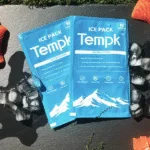
Tempk is a provider of Emballage de la chaîne du froid and IoT solutions dedicated to
preserving the quality of temperaturesensitive goods. Notre réutilisable
boîtes isolées, packs de glace and smart monitoring systems help farms,
distributors and healthcare companies maintain precise temperature and
humidity levels from origin to destination. We invest in research and
development to deliver energyefficient insulation and digital monitoring
that meet evolving regulations. With our support,
vous pouvez réduire les déchets, enhance traceability and deliver fresher products to
your customers.
For tailored advice and solutions d'emballage, contactez nos experts. Étaient
here to help you build a smarter, une chaîne du froid plus verte.