Isolation de la chaîne du froid: Matériaux durables & Tendances 2025
Introduction: Cold chain insulation keeps perishable goods safe during transport by maintaining strict temperature ranges. Dans 2025, the global cold chain packaging market is projected to reach $27.7 milliard and expand to $102.1 milliards 2034, while the wider cold chain logistics sector is valued at à propos $436 milliard et devrait dépasser $1.3 mille milliards par 2034. Those numbers highlight the growing demand for robust insulation to protect vaccines, biologics and perishable food. This guide demystifies cold chain insulation and shows how you can choose materials that meet regulatory requirements, reduce emissions and enhance shipment reliability.

What is cold chain insulation and why does it matter? Learn why temperature control is critical for vaccines and perishable foods and how insulation mitigates spoilage.
How do modern insulation materials compare? Compare foam, panneaux isolés sous vide (Vips), matériaux à changement de phase (PCMS), aerogels and natural fibres using real performance data.
How to select the right cold chain insulation? Use a step by step framework to match materials to temperature zones, durée de l’expédition et objectifs de durabilité.
What sustainability and regulatory factors influence decisions? Understand how emissions reduction, circular economy laws and consumer preferences are reshaping cold chain packaging.
What technologies and trends will shape 2025? Explorez la surveillance basée sur l'IoT, predictive analytics and reusable packaging ecosystems emerging this year.
What Is Cold Chain Insulation and Why Does It Matter?
Réponse directe: Cold chain insulation refers to the protective materials and systems used to keep temperature sensitive goods within a defined range during storage and transport. Sans isolation adéquate, temperature fluctuations can compromise product safety—more than 25 % des vaccins arrivent avec une efficacité réduite en raison de défaillances de la chaîne du froid. By combining insulation with cooling systems and monitoring devices, logistics providers can protect shipments worth hundreds of thousands of dollars, ensure regulatory compliance and maintain customer trust.
Explication élargie: Imagine shipping a box of biologics valued at $500,000; a two hour temperature excursion could ruin the entire lot. Cold chain insulation acts like a thermos, resisting heat transfer between the cargo and the outside world. It pairs with refrigeration and Capteurs IoT that transmit data every 30 seconds to create a controlled environment. Insulation also protects food, where improper cooling allows microbes to multiply and reduces nutrient quality. For you as a shipper, reliable insulation reduces waste, avoids recalls and supports your reputation for delivering safe products.
Sensibilité à la température: Why a Few Degrees Make a Difference
Informations détaillées: Different products require specific temperature ranges, and deviation can be costly. Par exemple, vaccines typically need 2–8 °C ou –20 °C, while some biologics demand ultra low conditions. The table below summarizes common temperature zones and their applications using data from industry sources. Staying within these ranges preserves product quality and meets regulatory requirements like the NOUS. Loi sur la modernisation de la sécurité alimentaire (FSMA) Règle 204 requiring 24 hour traceability for high risk foods.
| Zone de température | °F / Plage °C | Produits typiques | Sens pratique |
| Ambiant | 59–86 °F (15–30 ° C) | Aliments en conserve, boissons de longue conservation | Protects goods from excessive heat; moderate control prevents spoilage. |
| Cool | 50–59 °F (10–15 °C) | Pommes de terre, bananes | Slows ripening and prevents spoilage during short transits. |
| Réfrigéré | 32–50 °F (0–10 °C) | Laitier, produits frais, vaccins | Maintient la fraîcheur et l’intégrité des nutriments; essentiel pour la plupart des aliments périssables. |
| Congelé | –22 à 32 °F (–30–0 °C) | Viande, glace | Arrête la croissance microbienne et prolonge la durée de conservation; requires specialized freezers. |
| Très froid | Below –94 °F (–70 °C) | Certains vaccins, biologique | Achieved using dry ice or cryogenic systems; ensures viability of sensitive therapies. |
Conseils pratiques et recommandations
Planifiez soigneusement l’emballage: Match insulation thickness and PCM type to the product’s temperature zone and duration. Oversized containers waste space and increase costs.
Use multi sensor monitoring: Deploy sensors at different points inside the package or vehicle; répondre aux alertes dans 15 minutes pour éviter la détérioration.
Élaborer des plans d’urgence: Keep backup refrigerants or dry ice to maintain temperatures for 8–12 hours during emergencies.
Train personnel and document: S'assurer que le personnel comprend les procédures de manipulation, calibrate equipment regularly and maintain temperature logs every 15 minutes.
Exemple du monde réel: A regional meal kit company implemented real time multi sensor monitoring and trained drivers to adjust settings on the fly. En répondant rapidement aux alertes, il réduction de la détérioration par 40 % et amélioration de la satisfaction client.
Comparing Modern Cold Chain Insulation Materials
This section compares the most common materials used in cold chain insulation. You’ll discover how they perform, what makes them sustainable and when each is appropriate.
Mousses haute performance et panneaux hybrides
Informations détaillées: Rigid foams such as polystyrène élargi (PSE) et polyuréthane (Pur) sont les bêtes de somme de l’emballage sous chaîne du froid. They combine low cost, light weight and solid thermal resistance. Par exemple, Kingspan’s Kooltherm K20 board delivers an R value of about R 7.4 per inch, giving R 30 in a 4 inch panel. Foam insulation is a $29.2 billion market in 2024 et devrait atteindre $41.1 milliards 2030 avec un TCAC de 5.8 %, driven by demand for temperature controlled logistics and high R value formulations. Hybrid boards combining polyisocyanurate (PIR) with recycled content and fire retardants offer higher thermal stability and improved sustainability.
Importance pratique: Foams are ideal for short and medium duration shipments (24–72 heures). Their low cost and ease of molding make them suitable for meal kits, produire et standardiser des vaccins. Cependant, single use EPS is facing regulatory pressure due to poor recyclability, spurring a shift toward reusable or curbside recyclable foam systems. When choosing foam, consider hybrid formulations with recycled content or curbside recyclable designs to meet EPR laws and ESG commitments.
Panneaux isolés sous vide (Vips) et aérogels
Informations détaillées: Panneaux isolés sous vide consist of a porous core sealed within an evacuated envelope, delivering exceptional insulation with minimal thickness. Leading manufacturers offer VIPs with thermal conductivity as low as 0.007 Avec(m·K) for thicker panels and 0.008 Avec(m·K) for thin versions; quelques 15 mm panels achieve 0.0043 Avec(m·K) à 10 °C. VIPs allow more payload space and can maintain 2–8 ° C pour jusqu'à 72 heures when paired with phase change materials. Le marché mondial des VIP devrait croître de $9.5 milliards en 2024 à $13.8 milliards 2033 (TCAC 4.2 %).
Aérogels are ultra light materials composed of up to 99 % air. Ils sont 2–3 times more insulating than Styrofoam and can reduce package weight by up to 40 %. While aerogels remain expensive, they are gaining traction for high value shipments where weight reduction translates into lower transportation emissions and cost savings.
Importance pratique: VIPs and aerogels excel in ultra long duration shipments, biologique, gene therapies and space constrained packaging. Their high cost can be offset by reduced product losses and lower shipping volumes. Lors de la sélection des VIP, ensure proper handling because punctures can degrade performance.
Matériaux à changement de phase (PCMS) et packs de gel
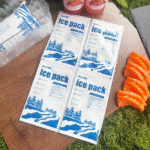
Informations détaillées: Matériaux à changement de phase absorb or release latent heat during phase transitions, maintenir une température presque constante. Advanced PCMs can hold temperatures from –75 °C à 151 °C, while traditional gel packs typically maintain 2–8 °C. Packs de glace à base d'eau émettre 39 % less CO₂ than equivalent gel packs and can save around 5.7 tonnes of CO₂ emissions per million packs produced. Les PCM sont réutilisables, non toxic and non hazardous, making them suitable for pharmaceutical shipments and reducing reliance on dry ice. Combining PCMs with VIPs can extend hold times beyond 72 heures.
Importance pratique: PCMs and gel packs are indispensable for controlling specific temperature windows. Choose PCMs with melting points aligned to the product’s desired temperature. Opt for water based packs for improved sustainability and plan for proper conditioning to avoid condensation.
Innovations respectueuses de l'environnement: Plume, Isolation aux algues et aux fibres
Informations détaillées: Sustainability concerns are driving research into natural insulation materials. PlumoPlus usages recycled feathers to create a high performance thermal liner; feathers exhibit jusqu'à 15 % lower thermal conductivity than EPS foam, and tests show that feather based packages kept temperatures below –20 °C for sur 120 heures, outperforming EPS at 105 heures dans des conditions similaires. Bioplastiques à base d'algues form foam that dissolves in water without leaving microplastics, offering a biodegradable alternative for meal kits and seafood shipments. Wood fibre and paper based liners provide curbside recyclable solutions and meet EU packaging regulations. Natural fibre products like NatureKool combine hemp and recycled fibres to produce compostable insulation suitable for e commerce meal kits.
Importance pratique: Eco friendly insulation appeals to consumers—79 % of shoppers change purchases based on environmental impact—and helps you comply with packaging waste directives and extended producer responsibility (EPR) les lois. Tout en émergeant, these materials show great potential for short duration shipments and can differentiate your brand.
| Matériel | Performance thermique | Impact environnemental | Meilleurs cas d'utilisation |
| Polystyrène élargi (PSE)/Polyuréthane (Pur) | Valeurs R autour R 7 per inch; low cost and robust | Poor recyclability; being phased out by regulations | Kits de repas, produire, vaccines for 24–72 hours |
| High Performance Foams (Mélanges PIR) | Improved thermal stability and fire resistance | Some formulations include recycled content; hybrid boards support circular economy | Expéditions plus longues; médicaments; building retrofits |
| Panneaux isolés sous vide (Vips) | Ultra low thermal conductivity (0.0043–0,008 W/(m·K)) | Thin and reusable; high manufacturing energy but offset by lower transport emissions | Produits biologiques de grande valeur, thérapies géniques, narrow packaging |
| Matériaux à changement de phase (PCMS) | Maintain constant temperatures across wide ranges; prolonger les temps d'attente au-delà 72 heures | Réutilisable et non dangereux; water based options reduce CO₂ emissions by 39 % | Médicaments, biotechnologie, aliments surgelés |
| Aérogels | 2–3 × the insulation of Styrofoam; weight reduction up to 40 % | Fabrication coûteuse; recyclable by specialized facilities | Space sensitive shipments; fret aérien |
| Feather Based Insulation | 15 % conductivité thermique inférieure que l'EPS; holds below –20 °C for 120 heures | Réutilise les déchets agricoles; biodégradable; reduces landfill burden | Kits de repas, fruit de mer, médicaments |
| Seaweed/Fibre Packaging | Se dissout dans l'eau; forme de la mousse ou des doublures | Compostable; ne laisse pas de microplastiques | Kits de repas, coastal seafood shipments |
Selecting the Right Cold Chain Insulation: A Practical Framework
Choosing the optimal insulation requires balancing thermal performance, durabilité, coût, regulatory requirements and product characteristics. Use this framework to guide your decision.
Étape 1: Define Product Requirements
Identify your product’s plage de température, sensibilité et durée en transit. Par exemple, fresh produce may require 32–50 °F (0–10 °C) for a day or two, whereas gene therapy may require –70 °C for several days. Consider the value of the shipment; high value biologics warrant premium insulation and redundancy.
Étape 2: Match Material to Duration and Temperature
Pour short transits (<24 heures) and moderate temperatures (ambient or cool), simple insulation (EPS or natural fibre) peut suffire.
Pour medium durations (24–72 heures) at refrigerated ranges, choose rigid foams or PCMs combined with gel packs. Ensure packaging is validated for 2–8 °C or –20 °C as needed.
Pour long or ultra cold shipments (>72 heures) or products requiring –70 °C, opt for VIPs or aerogels with PCMs and consider dry ice or cryogenic systems.
Étape 3: Evaluate Sustainability and Compliance
Check local regulations and corporate ESG goals. Many jurisdictions are phasing out single use plastics and imposing responsabilité élargie du producteur frais; Règlement de l’UE sur les emballages et les déchets d’emballages (PP) mandates increased recyclable and reusable content. Choose materials with recyclable or biodegradable components. Using water based ice packs and fibre liners can significantly reduce carbon footprint.
Étape 4: Intégrer la surveillance et la documentation
No insulation works perfectly without monitoring. Intégrer Capteurs IoT that transmit temperature, l'humidité et les chocs tous les 30 seconds with up to 30 day battery life. Hardware for tracking shipments accounts for over 76 % of the monitoring market share; investing in quality devices helps avoid spoilage and ensures compliance with FSMA and GDP guidelines. Keep detailed logs and maintain a chain of custody for audits.
Sustainability and Regulatory Drivers in Cold Chain Insulation
Why Sustainability Matters in Cold Chain Packaging
The environmental impact of packaging has become a strategic concern. Cold chain packaging is shifting from single use EPS to reusable, systèmes recyclables. This shift is driven by regulatory mandates and consumer expectations: 79 % of consumers change purchases based on environmental impact. Sustainability strategies include using materials with recycled content, designing for end of life recycling, and adopting rental or pooling systems that reduce waste. Water based ice packs lower CO₂ emissions by 39 % par rapport aux packs de gel, and natural fibre insulation eliminates microplastics.
Regulations Shaping Cold Chain Insulation in 2025
Responsabilité élargie du producteur (EPR) and Packaging Waste Directives: Le Règlement de l’UE sur les emballages et les déchets d’emballages (PP) requires higher percentages of recyclable and reusable content. EPR laws impose fees on non recycled plastics, prompting companies to adopt eco friendly insulation.
FSMA et FSMA 204: Aux États-Unis, le Loi sur la modernisation de la sécurité alimentaire mandates that cold chain shipments maintain safe temperatures and document them; le Règle de la FSMA 204 requires capturing key data elements (numéros de lot, horodatages) for high risk foods with 24 hour traceability.
Bonne pratique de distribution (PIB) Lignes directrices: Pour les produits pharmaceutiques, GDP guidelines specify validated packaging, temperature mapping and real time monitoring to protect drug efficacy. Non compliance may lead to product recalls and legal penalties.
Climate and Sustainability Reporting: Companies must disclose carbon footprints and supply chain emissions. Choosing low carbon insulation materials like VIPs or bio based foams helps meet sustainability targets and avoid greenwashing.
Modèles d’emballages réutilisables et d’économie circulaire
Reusable cold chain packaging offers both environmental and economic benefits. Le reusable cold chain packaging market is forecast to grow from $4.97 milliards en 2025 à $9.13 milliards 2034. Reuse programs require standardized container sizes, robust reverse logistics and sanitation protocols. Leaders like Peli BioThermal’s Crēdo Go demonstrate that rental and pooling systems cut waste and optimize total cost of ownership. As regulations and consumer pressure mount, reusable programs will become mainstream.
Technological Advances and Smart Packaging for Insulation
IoT Monitoring and Predictive Analytics
Temperature control no longer relies on insulation alone. IoT enabled tracking with 1–5 minute intervals is becoming standard practice. Devices transmit temperature, données d'humidité et de localisation vers les plateformes cloud, permettre une intervention proactive. Analyse prédictive identify high risk routes and optimize delivery schedules. Pharmaceutical companies used these systems during the COVID 19 vaccine rollout to maintain ultra cold conditions from production to administration.
Avantages pour vous: Real time monitoring reduces spoilage by up to 40 %, ensures compliance with GDP and FSMA requirements and provides evidence in case of disputes. When selecting monitoring equipment, look for long battery life, tamper proof records and compatibility with your existing systems.
Blockchain and Digital Twins
Beyond sensors, blockchain technologies can record immutable temperature data, improving transparency and trust among stakeholders. Jumeaux numériques—virtual models of shipments—allow simulation of temperature profiles and optimization of packaging before a shipment departs. These technologies complement insulation by predicting and preventing failures.
Smart Materials and Passive Indicators
Innovations are emerging in smart materials, tel que temperature sensitive inks that change colour when a product experiences an excursion. Some packaging includes printed circuits or RFID tags that alert handlers via smartphone. Combining passive indicators with active monitoring creates a multi layered defence.
2025 Cold Chain Insulation Trends and Future Outlook
Aperçu de la tendance
2025 marks a pivotal year for cold chain insulation. Several trends are reshaping the industry:
Expansion rapide du marché: The thermal insulation packaging market is valued at $99.7 milliards en 2025 et devrait atteindre $338.4 milliards 2035, avec un TCAC de 13 %. EPS still accounts for 34.6 % de part de marché, while pharmaceuticals and biotechnology represent 38.1 % de la demande.
Shift from Single Use to Reusable Systems: Companies are moving away from disposable EPS toward reusable and curbside recyclable systèmes. Mergers and acquisitions—such as Smurfit Kappa’s merger with WestRock in July 2025—highlight industry consolidation to offer sustainable thermal solutions.
Emergence of Natural and Bio Based Insulation: Des innovations comme feather based PluumoPlus, seaweed foams and wood fibre boards are gaining traction. These materials provide insulation comparable to traditional foams while reducing environmental impact.
Integration of Digital Technologies: Surveillance de l'IoT, predictive analytics and AI driven route optimization are becoming standard features. Real time data not only prevents spoilage but also informs packaging design and inventory planning.
Standardization and Interoperability: The industry is working toward standard container sizes, material specifications and shared pooling networks. Public–private partnerships could drive this effort, enabling smaller players to participate and reducing reverse logistics costs.
Derniers développements en un coup d'œil
Sustainable mergers: The formation of Smurfit WestRock en juillet 2025 created a packaging giant focused on paper based thermal solutions, alors que Sonoco’s acquisition of Eviosys en juin 2025 expanded metal packaging capabilities.
Expansion régionale: En septembre 2025, Cold Chain Technologies opened hubs in Tokyo and Mumbai to meet pharmaceutical demand in Asia.
Maintenance prédictive et IA: Industry reports in August 2025 highlighted the rise of IA et analyse prédictive for maintenance and route optimization.
Insistance au marché
Le chaîne du froid pharmaceutique alone is valued at environ $65 milliards en 2025 and is expected to double over the next decade. Growth drivers include biologics, mRNA vaccines and precision medicine requiring strict temperature control. Règlements sur la sécurité alimentaire comme la règle FSMA 204 push food companies to adopt traceability ready packaging. In the cold chain packaging market, mergers and investments in digitalization signal intense competition and rapid innovation.
Questions fréquemment posées
Q1: How does cold chain insulation differ from refrigeration? L'isolation ralentit le transfert de chaleur, while refrigeration actively removes heat. Effective cold chain systems use both: insulation stabilizes temperatures and reduces load on refrigeration units, lowering energy use and emissions.
Q2: Is foam still a viable option amid sustainability concerns? Foam remains useful for short duration shipments due to its low cost and good thermal performance. Cependant, regulations are phasing out single use EPS, so consider recycled or curbside recyclable foams and plan for reuse.
Q3: What makes VIPs more expensive than other materials? VIPs require specialized manufacturing to create a vacuum and barrier film, which increases cost. Yet their thin profile and superior thermal performance reduce shipping volume and product loss, often offsetting the initial investment.
Q4: Are natural fibre and feather based insulations durable enough for pharmaceuticals? Oui. Feather based materials have demonstrated 15 % conductivité thermique inférieure à celle du PSE and maintained temperatures for sur 120 heures. When properly packaged, they meet GDP requirements and reduce environmental impact.
Résumé et recommandations
Principaux à retenir: Cold chain insulation safeguards billions of dollars’ worth of vaccines, produits biologiques et aliments périssables. The market is growing rapidly—cold chain packaging is expected to atteindre $27.7 milliards en 2025—and is shifting toward reusable, sustainable systems. Mousses haute performance, VIPs and PCMs offer tailored thermal protection; natural materials like feather and seaweed insulation add eco friendly options; and digital technologies such as IoT sensors and predictive analytics enable proactive risk management. Réglementations comme la règle FSMA 204 and EPR laws are driving adoption of traceability and recyclable materials.
Plan d'action:
Évaluez vos expéditions—determine temperature requirements, value and risk tolerance.
Sélectionnez une isolation appropriée—match materials to duration and temperature; consider VIPs and PCMs for long or ultra cold shipments, and natural fibre options for short routes.
Intégrer la surveillance—deploy IoT sensors and predictive analytics to receive alerts and act quickly.
Adopter des pratiques durables—switch to water based ice packs, curbside recyclable foam, or natural fibres; explore reusable packaging programs to comply with EPR laws.
Stay informed and train staff—keep abreast of regulatory updates, calibrate equipment regularly and provide continuous training on cold chain protocols.
By following this framework, vous pouvez protéger vos produits, meet regulatory obligations and contribute to a more sustainable future for cold logistics.
À propos du tempk
Contexte de l'entreprise: Le tempk est un leader des solutions de chaîne froide, providing a full range of insulation materials, packs de gel, VIPs and smart packaging. Nous investissons massivement dans R&D to offer innovative products like recycled content foams and natural fibre insulation. Our solutions are rigorously tested to comply with GDP and FSMA requirements, assurer un contrôle fiable de la température pour les produits pharmaceutiques, biologique, fresh food and speciality chemicals.
Pourquoi nous choisir: We combine technical expertise with a commitment to sustainability. Our water based ice packs reduce CO₂ emissions by 39 % compared to traditional gel packs, and our reusable packaging programs cut waste while lowering total cost of ownership. Whether you need off the shelf products or bespoke designs, we offer expert guidance, validation services and responsive support.
Appel à l'action: Ready to upgrade your cold chain insulation? Contact Tempk’s specialists today to discuss your shipment requirements and receive a tailored solution. We’re here to help you safeguard your products and achieve your sustainability goals.