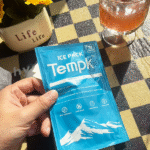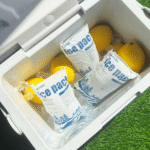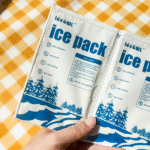
Emballage logistique pour la chaîne du froid pour des conditions d'expédition définies
Cold chain logistics packaging should be selected as part of a shipping system, not purchased as a generic boîte isotherme or a fixed quantity of packs de gel. A useful system begins with the condition the product must hold, then connects the payload, exposition par voie, isolation, fluide de refroidissement, loading pattern and operating steps needed to protect that condition.
Packaging is one control within the distribution process. It can reduce the temperature risk that a shipment sees, but it does not replace carrier selection, recevoir des mesures disciplinaires, product stability decisions or an agreed response to an excursion. Clarifying those boundaries early prevents a packaging quotation from being mistaken for a logistics guarantee.
Define the system boundary before comparing options
| Part of the system | What it should answer | Typical owner or decision maker |
|---|---|---|
| Exigence du produit | What temperature or handling limits, sensitivities and release rules apply? | Product owner and quality team. |
| Configuration de l'emballage | Quel expéditeur, isolation, liquide de refroidissement, barrières, layout and closure are approved? | Emballage, engineering and operations. |
| Transport process | Which carrier, transferts, niveau de service, storage points and contingency actions apply? | Logistics owner and carrier or forwarder. |
| Evidence and records | What test, surveillance, document, training and review evidence is needed? | Qualité, operations and the responsible business owner. |
The division of responsibility can change by contract and market. The important point is that no critical requirement is left between the packaging supplier, expéditeur, carrier and receiver. In temperature-sensitive pharmaceutical transport, WHO guidance treats the outer shipper, ancillary packaging and temperature-stabilizing medium as a complete shipping system and highlights the handoffs where control can be lost.
Use a request brief that creates comparable proposals
Two quotes are not comparable if one supplier assumes a small payload, short route and mild weather while another plans for a larger load and seasonal delay. A structured request brief makes the technical and commercial conversation faster by separating known inputs from open decisions.
- Product and condition. State the product handling requirement, sensibilité au gel ou à la chaleur, état de départ, orientation needs and any non-thermal protection requirements.
- Charge utile. Provide internal usable-space needs, dimensions du produit, masse totale, minimum and maximum fill cases, and whether multiple SKUs share the shipper.
- Route and exposure. Describe origin and destination, durée prévue, mode de transport, transferts, likely delay points, seasonal conditions and receiver availability.
- Operating model. Explain who conditions coolant, où se produit l'emballage, whether materials are staged, who closes the shipment, and how receiving or returns are handled.
- Decision needed. Specify whether the immediate need is a sourcing proposal, sample-fit review, dessin d'emballage, thermal test plan, monitoring plan or a controlled packing instruction.
Choose the packaging architecture around the risk
A passive system usually combines an insulating layer with conditioned cooling or phase-change media and a controlled payload arrangement. The outer handling case, isolation, coolant and internal spacers each serve a different purpose. More insulation or more coolant is not automatically safer; the configuration must protect against both warm exposure and unintended cold contact.
The most appropriate architecture depends on the required condition and the operational limits. Un compact, predictable local route may prioritize speed and repeatable assembly. A lane with multiple handoffs may need a different margin, monitoring plan or contingency arrangement. A reusable system may introduce a return, inspection and component-conditioning process that should be planned, pas supposé.
Ask what evidence supports the proposal
A proposal should distinguish between component information and system evidence. A material datasheet can explain an matériau isolant. A coolant specification can describe the coolant. Neither proves that the loaded shipment will meet its requirement on a particular route. Ask what full configuration, charge utile, méthode de préparation, profil externe, duration and sensor locations were used for any reported test.
Outils de décision utiles
Vérifiez les détails avant de choisir l'emballage
Ces outils rapides peuvent vous aider à comparer le risque d'itinéraire, besoins de dimensionnement, choix de liquide de refroidissement, et les détails de l'emballage avant de demander un devis.
Calculateur d’accumulateurs de froid
Estimation de la quantité de pain de glace pour les expéditions réfrigérées et planification pratique des itinéraires.
Estimer les packs de glaceCalculateur de glace carbonique
Estimer les besoins en glace carbonique pour les envois congelés ou ultra-froids avant l'emballage.
Estimation de la neige carboniqueSélecteur d’emballage
Comparez les options d'emballage isotherme par produit, itinéraire, et besoin de température.
Trouver un emballageFor pharmaceutical products when the récipient thermique provides the primary environmental control, Health Canada guidance recommends qualification against the expected ambient extremes and selection based on product requirements, volume, route profile and estimated transport time. That does not create a universal legal rule for every product category, but it is a sound reminder that the complete system and the exposure assumptions must be visible.
Turn the design into an operating package
A commercial packout becomes operational only when the team can reproduce it. The release package should normally include the approved bill of materials, packing drawing or photos, instructions de conditionnement, séquence d'assemblage, label and document requirements, component substitution rules, inspection checkpoints and an escalation path for delays or damaged components.
Do not separate the technical design from warehouse reality. If coolant must be conditioned for a particular state, define how that state is identified. If the configuration depends on a maximum staging interval, make the clock visible. If a receiver must retrieve a monitor or inspect a damage indicator, make that action part of the handoff instruction.
Keep the system current when conditions change
Review the configuration whenever a meaningful input changes: présentation du produit, plage de charge utile, packaging component, géométrie d'emballage, processus de conditionnement, itinéraire, transporteur, saison, expected dwell time or acceptance rule. The purpose is not to recreate qualification for every shipment. It is to avoid treating old evidence as if it automatically covers a new configuration.
The strongest cold chain logistics packaging projects start with a defined shipping condition and end with a reproducible operating process. That creates a more useful basis for sourcing, essai, training and later improvement than a request for a box that can “hold temperature” without stated conditions.
Prochaine étape
Send a concise shipment brief: état du produit, dimensions et masse de la charge utile, route and exposure assumptions, emballage actuel, gestion des contraintes, required evidence and target implementation date. The resulting review can then focus on a defined packaging system, not an unsupported universal performance claim.
Références
- Supplément technique de l’OMS Opérations de transport à température contrôlée par route et par air
- Lignes directrices de Santé Canada pour le contrôle de la température des produits médicamenteux pendant l'entreposage et le transport