Cold Chain Packout Instructions: A Repeatable Sequence for Every Shipment
Cold chain packout instructions convert an approved packaging configuration into a sequence that an operator can follow at the packing station. The instructions should identify the correct components, explain how they are prepared and positioned, show where the payload and logger belong, and define the checks required before dispatch.
They are not a substitute for qualification or approval of the packaging system. The configuration defines the tested or approved arrangement; packout instructions preserve that arrangement during routine use. If an operator must guess how much coolant to use, where a barrier belongs, or whether a substitute component is acceptable, the instructions are not sufficiently controlled.
Avant l'emballage: confirm the correct configuration
Begin by matching the shipment to the approved configuration. Check the product or order identity, payload size and quantity, destination or route, and current configuration revision. Confirm that the planned payload is within the approved range and that the required monitoring method is available.
Do not begin assembly if the shipment falls outside the documented conditions. Examples include an unusually large payload, a different product arrangement, an unapproved route, or a requested delivery time that exceeds the supported plan. Hold the shipment and contact the designated packaging, logistique, or quality owner.
Prepare the full component kit
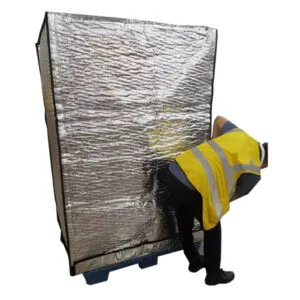
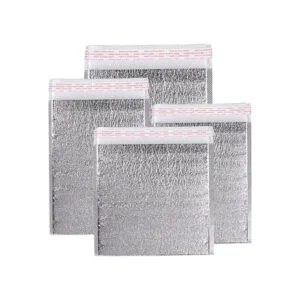
Use the current bill of materials or pick list. Depending on the approved system, the kit may include the outer shipper, doublure isolante, coolant elements, internal barriers, inserts, remplissage de vide, enregistreur, étiquettes, scellés, et les documents d'expédition. Each critical component should be identifiable by a part number or controlled label.
Check the quantity and condition before assembling the shipper. Segregate damaged, fuite, contaminé, or unidentified items. A component that looks similar to the approved item should not be treated as interchangeable without authorization.
Confirm coolant conditioning
Coolant preparation is configuration-specific. Différent packs de gel or phase-change materials may require different conditioning procedures, so there is no universal freezer duration or preparation state that applies to every system. Follow the approved instruction for the exact coolant and configuration.
The instruction should explain how readiness is confirmed and how coolant in different states is identified and stored. Do not mix ready-to-use coolant with packs that are still conditioning or awaiting inspection. If the required state cannot be verified, do not estimate it by touch or appearance; follow the hold and escalation process.
For systems that use different seasonal variants, the approved selection rule must be clear. Staff should not independently add or remove coolant because the day feels warmer or colder than usual.
Assemble the shipper in the approved order
Use a numbered diagram or annotated photograph showing the package orientation and component placement. The exact sequence varies by system, but the instruction should define each critical action:
- Prepare the outer shipper and insulation. Check that the container and liner are the approved types, correctement orienté, and free of damage that could affect fit or closure.
- Install the base components. Place the specified base insulation, insérer, or coolant in the exact position shown.
- Add the required barriers. Install separators or contact barriers where specified. Do not cut them smaller, fold them differently, or replace them with generic padding unless the change has been approved.
- Position the coolant. Use the approved component count and location. If the configuration prohibits direct contact between coolant and payload, verify that the barrier fully separates them.
- Chargez la charge utile. Check product identity and quantity, use the specified orientation, and keep the load within the approved fill range. Do not force extra units into the shipper or rearrange the layout to make the lid close.
- Add remaining components. Install the specified top layer, remplissage de vide, contraintes, or additional barriers. Ensure the payload cannot shift into an unintended position during handling.
- Place the logger. Position and activate the approved monitoring device according to the monitoring plan. Record its identifier against the shipment where required.
- Close the shipper. Seat the lid or closure fully and apply the specified tape, joint, or locking method.
- Apply labels and documents. Confirm that the shipment identity and required handling labels are readable and that all required documents are included.
This sequence is an operational framework, not a universal layer pattern. The approved configuration diagram controls the actual order, emplacement du liquide de refroidissement, and barrier arrangement for each system.
Place the logger for its intended purpose
Un enregistreur de données de température enregistre les conditions à l'emplacement de sa sonde; it does not cool the payload or guarantee that every product in the shipper experiences the same temperature. The sensor position should therefore match the approved monitoring plan. Moving the probe to make it easier to reach can change what the reading represents.
The instruction should identify the device, show the exact probe location, define any activation or start step, and explain how the record is associated with the shipment. If the device is missing, endommagé, not activated, or displaying an error, stop and follow the defined exception process rather than dispatching without an approved decision.
Outils de décision utiles
Vérifiez les détails avant de choisir l'emballage
Ces outils rapides peuvent vous aider à comparer le risque d'itinéraire, besoins de dimensionnement, choix de liquide de refroidissement, et les détails de l'emballage avant de demander un devis.
Calculateur de glace carbonique
Estimer les besoins en glace carbonique pour les envois congelés ou ultra-froids avant l'emballage.
Estimation de la neige carboniqueSélecteur d’emballage
Comparez les options d'emballage isotherme par produit, itinéraire, et besoin de température.
Trouver un emballageRésistance aux chutes du matériau isolant
Examinez la résistance aux chutes et les facteurs de manipulation avant de choisir des matériaux d'isolation..
Vérifier la résistanceComplete the release check
The final check should be based on observable criteria. Selon le système, vérifier:
- Correct configuration revision and component identities.
- Required coolant condition and quantity.
- Correct barrier coverage and coolant placement.
- Identité de la charge utile, orientation, and permitted fill range.
- Emplacement de l'enregistreur, activation, and shipment association.
- Fermeture, joint, étiquette, and document completeness.
- Completion of required records and approvals.
A general statement such as “inspect package before shipping” is not enough if the critical details are not specified. Where a second-person verification is required, define exactly which elements the verifier must confirm.
Dispatch and handoff
After release, move the package to the designated dispatch area and protect it from unauthorized opening or exposure outside the approved staging conditions. Record the required dispatch information and complete the carrier handoff. If the carrier is late, the package is opened, the shipper is damaged, or the route changes, do not assume that the original release remains valid. Follow the approved escalation rule.
Le processus de réception doit également être défini. The receiver may need to inspect the outer package, transfer the product promptly to its required storage environment, review monitoring data, and report damage or a suspected temperature excursion. Packout instructions should identify the receiving documents or labels needed to support this handoff.
What to do when the packout cannot be completed as written
Stop and escalate when a required component is missing, the coolant state is uncertain, the payload does not fit, a barrier is damaged, the logger fails, or an unapproved substitution appears necessary. Record the shipment identifier, configuration revision, affected component, temps, and reason for the hold. The designated owner should decide whether to replace materials, remballer, perform further assessment, or cancel the shipment.
Do not let an operator resolve a design issue by adding more coolant, changing the layer order, or removing a barrier. Such changes may alter thermal performance and can make the actual shipment different from the configuration that was assessed.
How to make instructions usable at scale
A strong instruction sheet combines controlled text with clear visuals. Include the configuration name and revision, une liste de composants, the sequence of actions, coolant conditioning reference, limites de charge utile, Placement de l'enregistrement, exigences de fermeture, release checklist, and stop-and-escalate conditions. Use separate diagrams for genuinely different approved variants.
Avant la sortie, test the document with an operator who did not write it. Provide the approved materials and ask the operator to complete a representative packout without coaching. Observe where the person hesitates or guesses, compare the finished assembly with the approved diagram, and revise the instruction to remove ambiguity. Withdraw obsolete copies and train affected staff whenever the controlled version changes.
Pour les médicaments, applicable distribution guidance and the organization’s quality system may impose additional requirements for packaging selection, surveillance de la température, entraînement, et des enregistrements. Other cold chain applications may follow different rules. Dans tous les cas, packout instructions should match the approved configuration and should not imply that a particular duration or temperature outcome is guaranteed unless the evidence supports that claim.
The goal is straightforward: every trained operator should be able to assemble the approved package in the same way, verify the critical details, and recognize when a shipment must be held. Clear packout instructions protect both thermal performance and the integrity of the operational record.
Troubleshooting at the packing station
The instruction should give operators a short, unambiguous response for common problems:
- A required component is missing: pause the packout and obtain the approved component; do not replace it with a visually similar item.
- Coolant readiness is uncertain: segregate the pack and confirm its status using the approved method before use.
- The payload does not fit: stop and check the permitted payload range; do not force the lid closed or remove a barrier.
- The logger fails or is unavailable: hold the shipment and follow the monitoring exception process.
- The shipper is damaged or has been opened after release: protect the product and request an authorized assessment before dispatch.
- The pickup is delayed or the route changes: compare the event with the approved shipping plan and escalate when it falls outside the stated conditions.
These responses should point to real roles and records in the company’s process. A generic instruction to “contact a supervisor” is less useful than naming the responsible role and specifying the shipment details needed for a decision. The packout sheet should not attempt to resolve every unusual event; it should help the operator recognize the limit of the approved method and stop before an improvised change becomes an undocumented configuration.