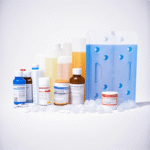
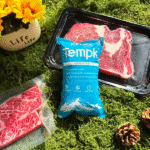
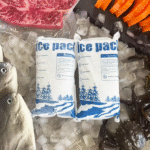
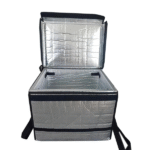
Cartons d'expédition sous chaîne du froid are specialized containers designed to keep temperature sensitive products safe during transit. They rely on insulation and cooling elements rather than powered refrigeration, making them essential for pharmaceuticals, biologique, fruits de mer et plats préparés. Selon un 2025 industry guide, cold boxes typically hold 5–25L of vaccines and are categorized as short range (durée de vie minimale au froid de 48 hours at 43 °C) ou longue portée (minimum 96 heures). With e commerce, biologics and meal kit deliveries surging, le marché mondial de l’emballage sous chaîne du froid devrait passer de US$33.67 billion in 2025 to US$75.93 billion by 2033. This guide explains how these boxes work, comment choisir la bonne taille et le bon matériau, and why they are evolving in 2025.
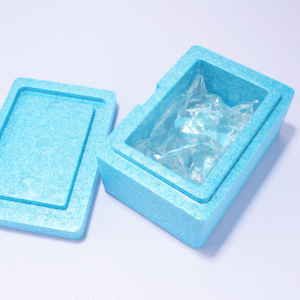
What defines a cold chain shipping box? A clear explanation of passive vs. systèmes actifs, core components and how they maintain temperature.
How should you select the correct box size and insulation? A step by step guide to measuring payloads, choosing insulation (PSE, Pur, VIP), and planning for cooling elements.
Which materials and technologies improve reliability? Discussion on insulation, réfrigérants, dispositifs de surveillance, and sustainable innovations.
What do market trends look like in 2025? Updated data on market growth, regional leadership, and drivers like pharmaceuticals, commerce électronique et durabilité.
What common questions do people ask about cold chain boxes? Quick answers to high volume queries about materials, duration and compliance.
What Are Cold Chain Shipping Boxes and How Do They Work?
Core definition and functioning: Cold chain shipping boxes are insulated containers designed to keep products within a specific temperature range without powered refrigeration. UNICEF’s procurement guidelines state that cold boxes are passive devices lined with coolant packs; they usually hold 5–25L and are classified as short range (cold life ≥ 48 hours at 43 °C) ou longue portée (cold life ≥ 96 hours). Les porte-vaccins sont plus petits (0.8–3.4 L), fourniture 15–30 hours of cold life for health workers on foot. Instead of compressors, passive boxes rely on insulation (such as expanded polystyrene or vacuum insulated panels) and pre conditioned coolant packs to maintain the payload temperature.
Key components explained: A cold chain box consists of several layers. Le couche d'isolation—made from polystyrène élargi (PSE), polyurethane foam or vacuum insulated panels (Vips)—minimizes heat transfer and maximizes payload space. Coolants or phase change materials (PCMS) comme des packs de gel, dry ice or water bottles absorb or release heat to maintain specific temperature ranges. UN packaging enclosure crafted from polyéthylène haute densité, corrugated cardboard or metal shells provides structural integrity and protection. Appareils de surveillance de la température (enregistreurs de données numériques, IoT sensors or RFID tags) track internal temperature and humidity, sending real time alerts when excursions occur. Enfin, closure mechanisms and gaskets ensure a tight seal to prevent thermal leakage.
Passif vs. Systèmes actifs
Differences and use cases: Passive boxes use insulation and coolants without external power, alors que systèmes actifs incorporate compressors and fans powered by electricity or batteries. Passive systems are lighter, cheaper and ideal for last mile deliveries or areas without reliable power. Active boxes, although heavier and costlier, provide precise temperature control for ultra long shipments or when a constant power source is available. The choice depends on shipment duration, temperature range and access to electricity.
| Composant | Exemples de matériaux | Fonction | Ce que cela signifie pour vous |
| Isolation | PSE, mousse de polyuréthane, Vips | Minimizes heat transfer and maximizes payload volume | Better insulation extends cold life and reduces required coolant packs. |
| Coolants/PCMs | Packs de gel, glace carbonique, bouteilles d'eau | Absorb or release heat to maintain desired temperature | Choosing the right PCM ensures stability for vaccines (2–8 ° C) ou produits surgelés (–20°C à –80°C). |
| Packaging Enclosure | Polyéthylène haute densité, carton ondulé, coques métalliques | Provides physical protection and prevents crushing or contamination | Durable enclosures enable reuse and protect high value contents. |
| Surveillance de la température | Capteurs IoT, Tags RFID, bûcherons de données | Tracks internal conditions and location in real time | Monitoring helps you detect excursions early and maintain compliance. |
| Fermeture & Joint | Couvercles verrouillables, joints en silicone | Seals the container to prevent thermal leakage | Proper sealing protects against spills and maintains internal temperature. |
Tips and Advice for Users
For short range deliveries (Par exemple, regional vaccine distribution): Choose a lightweight passive box sized 5–25 L with high quality EPS insulation and gel packs. Ensure coolants are conditioned to 2–8 °C for at least 24 hours before packing.
For long range or ultra cold shipments: Consider boxes with VIP insulation and PCMs tailored to –20 °C or –80 °C. If shipments exceed 96 hours, explore hybrid solutions that combine PCMs with dry ice or choose an active unit.
Pour les livraisons du dernier kilomètre: Vaccine carriers under 3.5 L are portable and maintain 15–30 hours of cold life—perfect for community health workers.
Cas du monde réel: A medical NGO in rural Africa used passive long range cold boxes lined with VIPs and PCM packs to transport vaccines from regional depots to remote clinics. The boxes maintained 2–8 °C for 96 hours without power, allowing health workers to complete immunization campaigns before returning for reconditioning. The NGO reported zero vaccine wastage during this campaign.
How Do You Select the Right Cold Chain Shipping Box Size and Insulation?
Selecting the right box size involves balancing cost, protection and temperature control. Oversized boxes increase shipping costs because of dimensional weight charges, while undersized boxes risk product damage and poor temperature control. Below is a step by step guide based on 2025 industry recommendations.
Measure your product accurately: Determine the product’s length (L), largeur (W) and height (H) using a tape measure; record these dimensions in the order L×W×H. Pour les formes irrégulières, use string to measure curves. Leave a small buffer of about 1⁄8 inch on each side for cushioning.
Account for insulation and cooling materials: Always leave room for insulation and cooling elements. Use polystyrene or vacuum panels depending on your temperature needs. Plan for cooling elements such as gel packs or dry ice to maintain stability. Label packages clearly for safe handling.
Insulation Materials and Temperature Ranges
Research from the Consortium for Distribution Packaging at Michigan State University provides guidelines on insulation types, plages de température et durée. The table below summarizes these materials and what they mean for your shipment.
| Matériel d'isolation | Plage de température typique | Durée (env.) | Importance pour vous |
| Polystyrène élargi (PSE) | 35 °F à 46°F (1.7 °C to 7.8 °C) | Jusqu'à 24 heures | Abordable et largement disponible; suitable for overnight shipments of refrigerated goods. |
| Polyurethane Panels (Pur) | –4 °F to 46 °F (–20 °C to 7.8 °C) | Up to 48 hours | Higher insulation performance; ideal for two day shipments requiring moderate freezing or refrigeration. |
| Panneaux isolés sous vide (Vips) | –60 °F to 46 °F (–51 °C to 7.8 °C) | Up to 120 hours | Exceptional thermal resistance with thin walls, maximizing payload space; ideal for long distance or ultra cold shipments. |
Facteurs à considérer
Sensibilité à la température des produits: Highly sensitive products like vaccines or biologics require strict temperature ranges (2–8°C ou –20°C). Select insulation and PCMs accordingly, and use monitoring devices to verify compliance.
Durée du transit: Longer transit times increase the risk of temperature excursions. Choose insulation and refrigerants that maintain stability for the entire duration. For shipments exceeding 96 hours or requiring –70 °C, consider dry ice combined with VIPs.
Seasonal Conditions: Summer shipments may need thicker insulation or additional cooling packs, while winter shipments might need extra thermal barriers to prevent freezing.
Shipping Budget: Balancing cost with performance is crucial. High quality insulation and PCMs require higher upfront investment but can reduce spoilage and returns.
Objectifs de durabilité: Choose eco friendly options like recyclable or biodegradable insulation to reduce environmental impact.
Conseils pratiques
Scénario: Shipping insulin to rural clinics: Use a VIP lined box with PCM packs set to 2–8 °C; measure the insulin vials carefully and allow space for a temperature logger. Choose a box just large enough to accommodate the vials, PCMs and cushioning to avoid excess cost.
Scénario: Delivering meal kits: Use EPS or PUR insulation with gel packs for overnight shipments. For summer months, double the number of gel packs or add a reflective box liner to minimize heat ingress.
Scénario: Exportation de fruits de mer surgelés: Use a combination of VIPs and dry ice to maintain –20 °C to –30 °C. Ensure the box allows for venting of sublimated CO₂ and follow hazardous materials regulations.
Cas réel: A meal kit company switched from oversized corrugated boxes to right sized PUR-insulated containers with optimized gel pack placement. This change reduced dimensional weight fees by 15 %, decreased spoiled shipments by 8 %, et amélioration de la satisfaction client.
Which Materials and Technologies Improve Cold Chain Reliability?
Isolation, Refrigerants and Outer Packaging
Effective cold chain packaging requires the right materials. Isolation est crucial: insulated shipping liners et thermal pouches create barriers that minimize heat transfer. Sacs thermiques are ideal for short term food storage, alors que insulated mailers protect small pharmaceutical samples during e commerce delivery. Réfrigérants work alongside insulation; phase change materials freeze and melt at specific temperatures, maintaining a stable environment, alors que packs de gel et glace carbonique provide cooling for refrigerated or frozen shipments. Corrugated cardboard boxes act as sturdy outer packaging and protect products from physical damage during handling.
Monitoring Devices and Data Logging
Temperature monitoring is vital. Enregistreurs de données numériques, Tags RFID et Capteurs IoT track internal temperature, humidité et localisation en temps réel. WHO’s vaccine shipping guidelines recommend including an electronic temperature device in each shipping carton to document temperature excursions and provide a record for compliance. These devices should measure temperatures from –20 °C to +55 °C, with ±0.5 °C accuracy, and include start/stop functions and alarm settings. Real time data allows logistics teams to act quickly if temperatures deviate from the required range.
Innovations durables
Environmental pressure and corporate responsibility are driving innovations in cold chain packaging. Les options durables comprennent:
Emballages recyclables et réutilisables: Straits Research note que les fabricants adoptent des plastiques et du carton recyclables pour réduire les déchets à usage unique.. Des sociétés telles que Softbox ont introduit le Tempcell ECO, un expéditeur de colis sans plastique fabriqué à partir de carton ondulé 100 % recyclable en bordure de rue.
Matériaux biodégradables: Glacières biodégradables à base de maïs, amidon, la fibre de bois et le coton se décomposent naturellement.
Matériaux d'isolation innovants: Les fibres de carton post-industriel recyclées peuvent offrir de fortes performances thermiques tout en étant recyclables.. Des panneaux isolés sous vide et des matériaux à changement de phase sont combinés pour prolonger la durée de vie au froid et réduire la consommation d'énergie..
Emballage intelligent et IoT: Des capteurs intégrés dans des boîtiers fournissent la température en temps réel, données d'humidité et de localisation. Les appareils IoT aident à optimiser les itinéraires, réduire la consommation d’énergie et automatiser les rapports de qualité.
Comparaison des PCM et de la neige carbonique
Dans 2025, les développeurs d'emballages doivent choisir entre Matériaux à changement de phase (PCMS) et glace carbonique. Les PCM absorbent et libèrent de la chaleur à des températures prédéfinies (Par exemple, 2–8°C ou –20°C) et sont généralement réutilisables. La glace carbonique fournit des températures ultra froides (< –70°C) convient aux produits biologiques surgelés mais nécessite un étiquetage des matières dangereuses.
| Type d'emballage | Plage de température typique | Meilleurs cas d'utilisation | Notes |
| Matériaux à changement de phase | +2 °C à –20°C | Vaccins, biologique, réactifs, kits d'essais cliniques | Réutilisable et non dangereux; plusieurs cycles de réutilisation compensent le coût initial plus élevé. |
| Glace sèche | < –70°C | Produits biologiques ultra froids, CRISPR, cellules congelées, échantillons de plasma | Efficace mais à usage unique; nécessite un étiquetage dangereux et des conteneurs ventilés. |
Conseils d'utilisation et conseils basés sur des scénarios
Pour les entreprises soucieuses du développement durable: Sélectionnez une isolation recyclable ou biodégradable et réutilisez les boîtes et les packs de gel. Communiquer ce choix aux clients pour renforcer la fidélité à la marque.
Pour les expéditions soumises à des exigences réglementaires strictes: Utilisez des systèmes PCM validés avec des enregistreurs de données et assurez le respect des bonnes pratiques de distribution (PIB) et les réglementations FDA. Les PCM évitent les étiquetages dangereux et simplifient le dédouanement transfrontalier.
Pour des températures extrêmement basses: Utilisez de la neige carbonique dans des récipients ventilés. Former le personnel à la manipulation des matières dangereuses et inclure la documentation et les étiquettes appropriées. Envisagez des systèmes hybrides combinant PCM et neige carbonique pour maintenir la stabilité sur de longues durées.
Cas pratique: Une entreprise de biotechnologie est passée des packs de gel aux conteneurs PCM pour des charges utiles de 2 à 8°C et a obtenu 40 % de réduction des coûts après dix expéditions, avec excursions à température nulle. Une autre entreprise de thérapie génique a adopté des expéditeurs de glace carbonique pour les charges utiles ultra froides et a obtenu un dédouanement fluide en suivant l'étiquetage des dangers et des protocoles validés..
Quelles sont les dernières tendances du marché et les moteurs de croissance des boîtes d’expédition pour la chaîne du froid en 2025?
Le marché des emballages pour chaîne du froid, en particulier des boîtes d'expédition isothermes, connaît une expansion rapide en raison de la demande croissante de produits pharmaceutiques., biologique, kits repas et épicerie en ligne. Analysts predict multiple growth trends:
Croissance et taille du marché
Marché de l'emballage sous chaîne du froid: Straits Research values the global cold chain packaging market at US$30.41 billion in 2024, projecting it to grow from US$33.67 billion in 2025 to US$75.93 billion by 2033, un CAGR of 10.70 %. Another report forecasts US$89.84 billion by 2034 (11.3 % CAGR).
Insulated packaging market: IMARC Group estimates the global insulated packaging market at US$15.17 billion in 2024, avec un projet US$23.84 billion by 2033 et un CAGR of 4.89 % (2025–2033). Boxes and containers account for 45.7 % of this market, while Asia Pacific leads with more than 35.8 % market share.
Aperçus régionaux: L'Amérique du Nord a dominé le marché de l'emballage de la chaîne du froid en 2024 due to mature logistics networks and stringent FDA regulations. Asia Pacific is expected to grow significantly thanks to rising exports of seafood and pharmaceuticals.
Facteurs de croissance: Market growth is driven by vaccine distribution, biologique, gene therapies and home delivery of medicines; the fish, meat and seafood segment dominated in 2024; et le commerce électronique et les kits de repas nécessitent des boîtes isolées robustes.
Facteurs et tendances
Pharmaceutique et biotechnologie: Le nombre croissant de produits biologiques et de thérapies géniques exige un contrôle strict de la température. Les sociétés pharmaceutiques investissent dans des boîtes isolées avancées intégrant des VIP, PCM et refroidissement actif pour les expéditions de médicaments GLP 1, Vaccins à ARNm et thérapies géniques.
Nourriture et boisson: Le commerce mondial des denrées périssables et l’explosion des services de kits repas nécessitent des boîtes d’expédition fiables. Poisson, les expéditions de viande et de fruits de mer dominent le marché, tandis que les kits repas reposent sur des expéditeurs de colis plus petits dotés d'une isolation haute performance..
Commerce électronique & Directement au consommateur: Les courses en ligne et les livraisons en pharmacie se développent; les consommateurs exigent un service rapide, expéditions à température contrôlée. Les États-Unis. Les secteurs des produits pharmaceutiques destinés aux consommateurs et des kits repas sont en expansion, favoriser l’adoption des emballages isothermes.
Durabilité: La durabilité est un moteur essentiel. A McKinsey survey found that 43 % of consumers consider environmental impact et 74 % of Americans are interested in refillable packaging. Producers are therefore investing in recyclable, biodegradable and reusable boxes.
Innovations technologiques: Capteurs IoT, RFID tags and smart packaging provide real time visibility and data analytics, enabling route optimization and proactive risk management.
Pression réglementaire: Rules like the Food Safety Modernization Act (FSMA) aux États-Unis. and EU GDP guidelines require validated packaging and traceability. FSMA 204 mandats 24traçabilité horaire pour les aliments à haut risque, pushing companies to invest in data loggers and standardized packaging.
Challenges and Opportunities
Sustainability vs. Performance: Balancing thermal performance with eco friendly materials remains a challenge. VIPs and PCMs provide superior insulation but come at higher cost and may not be easily recyclable. Des recherches sont en cours pour développer des VIP en fibres recyclées et des mousses biodégradables.
Attentes des consommateurs: Les clients attendent de plus en plus que les emballages soient durables et faciles à recycler. Les entreprises qui adoptent des boîtes réutilisables ou recyclables en bordure de rue peuvent fidéliser leur marque..
Infrastructures dans les régions en développement: Les pays en développement investissent dans les corridors de la chaîne du froid plutôt que de construire des réseaux entiers, se concentrer sur les exportations clés comme les fruits de mer ou les vaccins. L’approbation par l’Inde de 27 nouveaux projets de chaîne du froid montre comment des investissements ciblés peuvent stimuler les exportations agroalimentaires.
Questions fréquemment posées (FAQ)
- De quoi sont faits les cartons d'expédition sous chaîne du froid?
Les boîtes de la chaîne du froid sont généralement fabriquées à partir de matériaux isolantscomme le polystyrène expansé (PSE), polyurethane foam or vacuum insulated panels. Ils comprennent un enceinte rigide(carton ondulé, polyéthylène haute densité ou métal) et packs de liquide de refroidissement comme des packs de gel ou des matériaux à changement de phase pour maintenir des températures stables. - Combien de temps une boîte à chaîne du froid peut-elle maintenir la température?
Les glacières sont classées par durée de vie froide. Boites courte portéemaintenir la température pendant au moins 48 heuresà 43°C ambiant, alors que boîtes longue portée le conserver pendant 96 heures. Les porteurs de vaccins fournissent 15–30 hours de la vie froide. - Quelle est la différence entre les boîtes d'expédition actives et passives?
Boîtes passivesutiliser des packs d'isolation et de refroidissement sans alimentation externe. Ils sont légers et idéaux pour les expéditions du dernier kilomètre ou de courte durée.. Active boxescontenir des unités de réfrigération motorisées (compresseurs et ventilateurs) et sont utilisés pour les expéditions longue distance ou ultra froides nécessitant un contrôle précis. - Quel matériau d'isolation choisir?
EPS est abordable et adapté aux expéditions jusqu'à 24 heures; les panneaux en polyuréthane offrent des performances de milieu de gamme jusqu'à 48 heures; Les VIP offrent la meilleure isolation pour les expéditions jusqu'à 120 heures. Le choix dépend de la durée, plage de température et budget. - Les cartons d'expédition sous chaîne du froid sont-ils recyclables?
De nombreuses boîtes modernes utilisent plastiques recyclables et carton ondulé. Les entreprises développent des expéditeurs sans plastique comme Tempcell ECO de Softbox, entièrement en carton ondulé. La réutilisabilité et le recyclage réduisent les déchets et s'alignent sur les objectifs de développement durable. - Ai-je besoin d'un enregistreur de température?
Oui. Les lignes directrices de l'OMS recommandent d'inclure un appareil de température électroniquedans chaque expédition internationale de vaccins pour enregistrer les températures et vérifier que les limites ne sont pas dépassées. Les enregistreurs de données fournissent un enregistrement continu et contribuent à garantir la conformité au RGPD et à la FSMA. 204 règlements. - En quoi les PCM diffèrent-ils de la neige carbonique?
Les PCM absorbent et libèrent de la chaleur à des points de consigne spécifiques (Par exemple, 2–8°C ou –20°C), sont réutilisables et généralement non dangereux. Dry ice sublimes at –78.5 °C and is used for deep freeze shipments (< –70°C) but requires hazardous materials labels. - What regulations affect cold chain boxes in 2025?
Aux États-Unis, le Loi sur la modernisation de la sécurité alimentaire (FSMA), Analyse des risques et points de contrôle critiques (HACCP)et Loi sur la sécurité de la chaîne d'approvisionnement en médicaments (DSCSA)require traceability, proper temperature control and documentation. The World Health Organization’s PQS specifications and Good Distribution Practice guidelines set standards for vaccine transport.
Résumé et recommandations
Principaux à retenir: Cold chain shipping boxes are passive or active insulated containers that maintain specific temperature ranges using insulation, coolant packs and monitoring devices. Choosing the right box size requires accurate measurements, room for insulation and the correct combination of EPS, PUR or VIP materials, along with gel packs or dry ice. Market data show that cold chain packaging will grow significantly, porté par les produits pharmaceutiques, biologique, e commerce and sustainable packaging. Les consommateurs attendent des options respectueuses de l’environnement, et les réglementations exigent une traçabilité et un contrôle de la température fiables.
Plan d'action:
Évaluez les besoins de votre produit: Identifier la plage de température, durée du transit et sensibilité. Utilisez ces informations pour sélectionner les matériaux d'isolation et de refroidissement appropriés..
Dimensionner correctement votre boîte: Mesurez les dimensions de la charge utile et laissez de l'espace pour l'isolation et le refroidissement. Évitez les cartons surdimensionnés pour réduire les frais d'expédition.
Investissez dans la surveillance: Incluez un enregistreur de données numériques ou un capteur IoT dans chaque envoi pour garantir la conformité et assurer la traçabilité..
Choisissez des options durables: Optez pour des matériaux recyclables ou biodégradables pour correspondre aux attentes des clients et aux objectifs de développement durable de l'entreprise..
Restez au courant de la réglementation: Surveiller les mises à jour de la FSMA, Directives DSCSA et OMS pour garantir que votre emballage répond aux exigences légales et évite les pénalités.
À propos du tempk
Le tempk est un principal fournisseur de solutions de chaîne du froid, spécialisé dans les caisses isothermes, packs de gel, matériaux à changement de phase et dispositifs de surveillance de la température. Our research and development center continuously explores eco friendly materials and advanced insulation technologies to deliver produits de la chaîne du froid réutilisables et recyclables. Nous offrons customized packaging designs adapté à la nourriture, industries pharmaceutiques et biotechnologiques, ensuring product integrity from origin to destination. Partner with Tempk to optimize your cold chain operations.
Appel à l'action: Prêt à améliorer votre chaîne du froid? Contact us for a consultation and discover how our innovative boxes, PCMs and monitoring solutions can safeguard your products, reduce waste and help your business meet 2025 compliance standards.