Comment choisir une boîte en mousse EPP légère et personnalisable
Dernière mise à jour: Décembre 18, 2025.
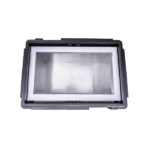
UN boîte en mousse EPP légère personnalisable est un moyen pratique d'expédier des produits sensibles à la température ou fragiles avec moins de casse et moins de pannes « surprises estivales ».
Vous obtiendrez les meilleurs résultats en traitant le boîte en mousse EPP légère personnalisable comme système: boîte + inserts + POS d'emballage + validation + suivi de la réutilisation.
Cet article répondra pour vous:
-
Comment un boîte en mousse EPP légère personnalisable réduit les dommages et les variations de température
-
Que spécifier Performances d'isolation thermique de la boîte en mousse EPP (sans deviner)
-
Comment construire un boîte en mousse EPP personnalisable avec inserts qui arrête le mouvement
-
Comment valider un boîte en mousse EPP légère personnalisable pour les vraies voies (pas des fantasmes de laboratoire)
-
Comment nettoyer, réutilisation, et suivre les boîtes de mousse EPP dans les opérations quotidiennes
Pourquoi une boîte en mousse EPP légère et personnalisable surpasse-t-elle les emballages de taille unique?
Réponse de base: Une boîte en mousse EPP légère et personnalisable gagne car elle transforme l'incertitude en un système reproductible. Quand la boîte s'adapte à votre produit et à votre itinéraire, vous arrêtez de suremballer « juste au cas où ».
Vous utilisez moins de remplissage des vides, tu réduis les cliquetis, et vous obtenez un comportement de température plus stable.
Pensez à trois leviers que vous pouvez réellement contrôler: ajuster, protection, et réutiliser. L'ajustement réduit l'air vide, la protection réduit les chocs, et la réutilisation répartit les coûts sur davantage de voyages.
Le test de la réalité « ajuster-protéger-réutiliser »
| Ce que vous optimisez | Résultat de boîte de taille unique | Résultat personnalisé | Ce que cela signifie pour vous |
|---|---|---|---|
| Ajustement du produit | Vides + déplacement | Positionnement stable | Moins de fuites et de casse |
| Utilisation du liquide de refroidissement | "Plus c'est plus sûr" | Emballage de bonne taille | Coût moindre par expédition |
| Temps de travail | Farce supplémentaire | Chargement et départ rapides | Réalisation plus rapide |
| Retours | Risque de dommages plus élevé | Capacité de survie plus élevée | Des réutilisations plus réussies |
Conseils pratiques que vous pouvez utiliser aujourd'hui
-
Si les dommages sont le problème: arrêter d'abord le mouvement avec des inserts, avant d'épaissir les murs.
-
Si la température est le problème: traiter le joint du couvercle et les entrefers comme des objectifs de conception de « première classe ».
-
Si le coût est le problème: standardiser une coque extérieure, puis échangez les inserts par SKU.
Exemple pratique: Un opérateur du dernier kilomètre a amélioré ses résultats avec une règle simple: "couvercle fermé après l'emballage, pas de réouverture.
Que devez-vous spécifier pour une boîte en mousse EPP légère et personnalisable?
Réponse de base: Spécifiez une boîte en mousse EPP légère et personnalisable comme un outil, pas un coffret cadeau. Vous voulez des objectifs mesurables qui correspondent à votre itinéraire et à la réalité de votre gestion.
Quand les spécifications sont claires, vous évitez les boucles de refonte et les coûts cachés.
Commencez par ces six éléments de spécifications. Ils couvrent 80% de réussite, sans diplôme d'ingénieur.
La liste de contrôle des spécifications minimales (copier / coller)
-
Taille de la charge utile + poids (y compris l'emballage intérieur)
-
Options de densité (et où la densité est utilisée)
-
Plage d'épaisseur de paroi + tolérance
-
Règle réussite-échec en cas de chute/impact (méthode d'essai + seuil)
-
Objectif de temps de maintien thermique (heures à température ambiante définie)
-
Nettoyage + cible de réutilisation (méthode approuvée + cycles)
Tableau de spécifications convivial pour l'acheteur
| Article de spécification | Ce que vous fournissez | Pourquoi ça compte | Ce que cela signifie pour vous |
|---|---|---|---|
| Temps de passage | ___ heures | Définit l'objectif de temps de maintien | Moins de réclamations liées à la température |
| Plage ambiante | ___ à ___ | Définit la charge la plus défavorable | Moins d’« échecs d’été » |
| Intensité de manipulation | faible / avec / haut | Insertion des lecteurs + structure | Taux de dégâts inférieur |
| Réutiliser l'objectif | ___ voyages | Enables ROI | Coût prévisible par voyage |
Conseils et suggestions pratiques
-
Concevoir pour le pire jour: délai le plus long + ambiance la plus chaude, pas la moyenne.
-
Demander le langage réussite/échec: "aucun dommage après X chutes" bat "fort".
-
Ne négligez pas la plage de confort: de nombreux fournisseurs décrivent le fonctionnement du PPE à peu près -40°C à +110°C (dépendant du type).
Comment les inserts améliorent-ils une boîte en mousse EPP légère et personnalisable?
Réponse de base: Les inserts sont le moyen le plus rapide d'améliorer une boîte en mousse EPP légère et personnalisable.. Si votre charge utile tremble, la densité à elle seule ne résoudra pas le problème. Les inserts seront.
Un bon jeu d’inserts accélère également l’emballage, parce que la « bonne voie » devient évidente.
Vous pouvez considérer les inserts comme des « ceintures de sécurité » à l'intérieur du boîte en mousse EPP légère personnalisable. Ils empêchent le déplacement, isoler les points froids, et protéger les coins.
Boîte en mousse EPP personnalisable avec inserts: 4 insérer des archétypes
| Insérer un style | Mieux pour | Risque principal | Ce que cela signifie pour vous |
|---|---|---|---|
| Insert de berceau | fragile, articles haut de gamme | mauvaise tolérance d'ajustement | Moins de casse si bien dimensionné |
| Insertion de grille | kits multi-articles | emballage lent | Plus rapide lorsque les emplacements sont étiquetés |
| Insert de poche pour liquide de refroidissement | marchandises sensibles à la température | points froids | Empêche les « brûlures dues au gel » directes |
| Insert hybride | longs itinéraires | complexité | Idéal pour les niveaux de service premium |
(Archétypes résumés à partir des brouillons téléchargés.)
Conseils et suggestions pratiques
-
Si vous expédiez des SKU mixtes: garder une coquille, échanger les inserts (moins de chaos SKU).
-
Si le gel est un risque: ajouter une couche tampon entre le liquide de refroidissement et le produit.
-
Si le temps de formation est élevé: utilisez des inserts à clé qui ne s'ajustent que dans un seul sens.
Exemple pratique: Un opérateur de kits repas a réduit les remboursements en passant des emballages en vrac à un insert ajusté qui bloquait le produit et le liquide de refroidissement..
Comment choisir la densité pour une boîte en mousse EPP légère et personnalisable?
Réponse de base: Choisissez la densité pour les chemins de charge, pas pour l'ego. Une densité plus élevée aide dans les coins, jantes, et chemins de charge de base, tandis qu'une densité plus faible peut garder les murs plus légers.
Cela donne à votre boîte en mousse EPP légère personnalisable la force là où se concentrent les impacts, sans payer de poids supplémentaire partout.
Une règle simple: densité de sélection basée sur poids de charge utile + rugosité de manipulation. Puis validez avec un pilote.
Quand la densité n’est pas votre principal levier
| L'échec tu vois | Qu'est-ce qui le résout habituellement | Pourquoi | Ce que cela signifie pour vous |
|---|---|---|---|
| Dommages retentissants | Meilleur ajustement des inserts | Arrête le mouvement | Moins de casse |
| Coin écrasé | Côtes + zonage de densité | Ajoute de la structure | Durée de vie plus longue |
| Dérive de température | Joint du couvercle + remplir les vides | Moins d'échange d'air | Plus de stabilité |
Conseils et suggestions pratiques
-
Pilotez deux options: tester deux densités ou deux styles de couvercle avant de procéder à la mise à l'échelle.
-
Ne construisez pas trop: trop dense peut augmenter les coûts sans réels gains.
-
Suivre les « dommages par 100 voyages »: cela rend les améliorations visibles pour la finance.
Comment une boîte en mousse EPP légère et personnalisable améliore-t-elle les performances d'isolation?
Réponse de base: Votre couvercle et vos espaces d’air peuvent avoir autant d’importance que l’épaisseur des murs. L'isolation ralentit le flux de chaleur, mais l'échange d'air et l'espace vide peuvent détruire rapidement le temps de maintien.
C'est pourquoi un boîte en mousse EPP légère personnalisable doit être conçu comme un « système de géométrie," pas seulement une mousse plus épaisse.
De nombreuses références citent la conductivité thermique du PPE autour λ 0,035–0,041 W/mK (plus bas est une meilleure isolation).
Utilisez-le comme contexte, mais faites plus confiance à votre test de voie qu'à n'importe quel numéro.
Géométrie du joint du couvercle: votre mise à niveau d'isolation cachée
| Conception du couvercle | Risque de changement d'air | Facilité d'utilisation | Ce que cela signifie pour vous |
|---|---|---|---|
| Couvercle amovible | Plus haut | Facile | Temps de maintien plus court |
| Couvercle à rainure emboîtée | Inférieur | Facile | Plus stable |
| Couvercle avec joint | Le plus bas | Moyen | Meilleur pour les longues voies |
Conseils et suggestions pratiques
-
Remplir l'espace vide: les séparateurs ou les inserts réduisent le mouvement de l'air interne.
-
Réduire les ouvertures: contrôles et transferts par lots, puis ferme et continue.
-
Condition préalable: pré-refroidir la boîte pour les envois froids avant de l'emballer.
Exemple pratique: Un expéditeur de produits de la mer a amélioré ses performances estivales en resserrant le siège du couvercle et en réduisant les espaces d'air., pas en rendant la boîte plus épaisse.
Comment valider une boîte en mousse EPP légère et personnalisable pour votre voie?
Réponse de base: Une boîte en mousse EPP légère et personnalisable doit gagner la confiance grâce à des tests en ligne. Le test doit refléter vos conditions ambiantes, temps de séjourner, ouvertures, et masse de charge utile.
Exécutez au moins trois cycles pour mesurer la variabilité, pas une seule course chanceuse.
Cela vous évite le piège du « ça a fonctionné la semaine dernière ». Il crée également des preuves prêtes à l'audit pour les clients.
Tableau du plan de test de voie (simple et reproductible)
| Élément de test | Ce que vous mesurez | Règle de passage simple | Ce que cela signifie pour vous |
|---|---|---|---|
| Tenir le temps | Heures dans la bande cible | Respecte la durée de la voie + tampon | Moins d'excursions |
| Point chaud du couvercle | Température maximale près du couvercle | Pas de pics lors des transferts | Protège la couche supérieure |
| Répétabilité des packs | Temps d'emballage | Sous votre limite de travail | Coût prévisible |
| Dérive de réutilisation | Après les cycles de lavage | Des performances similaires | Réutiliser la confiance |
Conseils et suggestions pratiques
-
Testez d'abord le pire jour: ambiance chaude + longue attente + un événement de retard.
EPP léger personnalisable pour…
-
Placer des capteurs dans la zone de charge utile: pas seulement près du couvercle.
EPP léger personnalisable pour…
-
Standardiser le placement du liquide de refroidissement: les poches moulées réduisent la variabilité humaine.
EPP léger personnalisable pour…
Comment nettoyer et réutiliser les boîtes en mousse EPP en toute sécurité?
Réponse de base: Les matériaux à cellules fermées aident, mais votre SOP fait le vrai travail. La réutilisation réussit lorsque vous pouvez nettoyer, inspecter, sec, et retirez les boîtes de manière cohérente.
Si vous sautez le séchage ou l'inspection, les problèmes d'hygiène et les odeurs apparaissent rapidement.
EPP léger personnalisable pour…
Traitez votre boîte en mousse EPP légère personnalisable comme un outil réutilisable: nettoyez-le de la même manière, à chaque fois.
EPP léger personnalisable pour…
POS de nettoyage (5 étapes que vous pouvez exécuter quotidiennement)
-
Pré-inspecter: retirer les inserts; vérifier les fissures et les rainures profondes.
-
Pré-rinçage: enlever les débris; éviter de broyer la saleté sur les surfaces.
-
Laver: détergent approuvé; temps de contact contrôlé.
-
Rincer + sec: sécher complètement avec les couvercles ouverts avant de réemballer.
-
Post-inspection: contrôle des odeurs; lisibilité de l'étiquette; échecs à la retraite.
(Aligné sur la logique « nettoyer-inspecter-retirer » soulignée dans les ébauches.)
Conseils et suggestions pratiques
-
Si l'odeur continue de revenir: le séchage est généralement l'étape manquante.
EPP léger personnalisable pour…
-
Si les étiquettes se décollent: ajoutez une zone de plaque d'étiquette lisse et un placement standard.
EPP léger personnalisable pour…
-
Si les retours sont compliqués: définir une règle de retour simple et l'appliquer chaque semaine.
EPP léger personnalisable pour…
Comment calculer le retour sur investissement d'un programme de boîtes en mousse EPP légères et personnalisables?
Réponse de base: Calculer le « coût par livraison réussie »,"pas de prix unitaire en boîte. Un système réutilisable gagne lorsque les rotations sont réelles et que les pertes sont contrôlées.
EPP léger personnalisable pour…
Utilisez ce calculateur de coût par voyage. C'est intentionnellement simple pour que les équipes opérationnelles l'utilisent réellement.
EPP léger personnalisable pour…
Calculateur du coût par voyage (interactif)
Remplir:
-
Prix de la boîte (une fois): $____
-
Insérer le prix fixe (une fois): $____
-
Déplacements moyens avant la retraite: ____ voyages
-
Nettoyage + manutention par voyage: $____
-
Frais de retour par voyage (le cas échéant): $____
-
Taux de perte (non retourné/endommagé): ____ %
Coût par voyage = (Boîte + Insertions) ÷ Voyages + Nettoyage + Retour + Allocation pour perte
Un exemple rapide (pour que vous puissiez vérifier votre santé mentale)
-
Boîte + inserts = $48
-
Voyages = 20 → $48 ÷ 20 = $2.40 par voyage
-
Nettoyage = $0.60
-
Retour = $0.50
-
Allocation pour perte = $0.30
Coût total par voyage ≈ $3.80
Si votre emballage aller simple coûte $6.00 par expédition, vous avez la possibilité de financer la réutilisation, suivi, et de meilleurs inserts.
Comment faire 2025 les règles de durabilité changent les décisions en matière de boîtes en mousse EPP légères et personnalisables?
Réponse de base: Dans 2025, les acheteurs veulent de plus en plus de preuves, pas de réclamations. Une réponse forte en matière de durabilité ressemble à: temps de maintien validé, objectif du cycle de réutilisation, POS de nettoyage, et plan de tri en fin de vie.
EPP léger personnalisable pour…
Les mises à jour de la politique européenne en matière d’emballage favorisent également la recyclabilité et de meilleures attentes en matière de conception d’emballages.. Les projets téléchargés indiquent que le PPWR est entré en vigueur le 11 Février 2025 et pointe vers des objectifs de recyclabilité en 2030.
EPP léger personnalisable pour…
Score de préparation à la durabilité (0–10)
Donnez-vous 1 indiquer pour chaque « oui »:
-
J'ai un objectif de cycle de réutilisation.
EPP léger personnalisable pour…
-
J'ai une SOP de nettoyage écrite.
EPP léger personnalisable pour…
-
Je peux retirer rapidement les cartons endommagés.
EPP léger personnalisable pour…
-
Je surveille les résultats de validation du temps d'attente.
EPP léger personnalisable pour…
-
J'ai un plan de tri en fin de vie.
EPP léger personnalisable pour…
Signification du score:
-
0–3: commencez par des SOP et un suivi simple.
-
4–7: ajouter la validation des voies et le suivi de la rotation.
-
8–10: vous êtes prêt à affronter les clients ayant de gros achats.
EPP léger personnalisable pour…
Outil de décision: choisissez votre première boîte en mousse EPP légère et personnalisable 90 secondes
Réponse de base: Choisissez en fonction du temps de voie + intensité de manipulation + sensibilité à la température. Cela évite « d’acheter à l’aveugle » et vous aide à prioriser les bons leviers de conception.
L'outil de sélection de 90 secondes (interactif)
-
Temps de passage:
-
UN) < 6 heures
-
B) 6–24 heures
-
C) > 24 heures
-
Intensité de manipulation:
-
UN) Faible (quelques touches)
-
B) Moyen (cross-dock, multi-arrêts)
-
C) Haut (traitement comme un colis, retours)
-
Sensibilité à la température:
-
UN) Faible (ils tolèrent l'ambiance)
-
B) Moyen (glacé)
-
C) Haut (bande serrée)
Raccourci des résultats:
-
Si tu as choisi Manipulation C: prioriser les insertions + bords renforcés + fonctionnalités de la pile.
-
Si tu as choisi Température C: donner la priorité au joint du couvercle + réduction des vides + poches de liquide de refroidissement standardisées.
EPP léger personnalisable pour…
-
Si tu as choisi Temps de voie C: donner la priorité à la validation complète du système et à la discipline SOP.
EPP léger personnalisable pour…
Matrice de recommandations
| Votre profil | Accent sur la conception | Pourquoi ça marche | Ce que cela signifie pour vous |
|---|---|---|---|
| Court + faible manipulation | coque simple + couvercle rapide | vitesse | moindre coût |
| Moyen + moyen | meilleurs inserts + couvercle emboîté | stabilité | moins de réclamations |
| Long + haute sensibilité | mise au point du phoque + annuler le contrôle | tampon thermique | une plus grande fiabilité |
| Maniabilité élevée (n'importe quelle voie) | bords renforcés + empilement | durabilité | durée de vie plus longue |
2025 derniers développements et tendances pour les programmes de boîtes en mousse EPP légères et personnalisables
Dans 2025, l’histoire passe de « l’isolation uniquement » à des systèmes qui prouvent les résultats.
Trois tendances comptent le plus:
-
Pression réglementaire: les attentes en matière de recyclabilité des emballages augmentent (notamment, Calendrier PPWR et 2030 direction).
EPP léger personnalisable pour…
-
Plus de programmes de réutilisation: les acheteurs s'attendent à un nettoyage, inspection, et des routines de retraite qui fonctionnent quotidiennement.
EPP léger personnalisable pour…
-
Personnalisation plus fonctionnelle: le zonage de densité et les options de qualité spéciale élargissent ce pour quoi vous pouvez concevoir.
EPP léger personnalisable pour…
Perspicacité du marché: votre meilleure réponse « durabilité » en est la preuve: temps de maintien validé, cible de réutilisation, POS de nettoyage, et plan de fin de vie.
EPP léger personnalisable pour…
Questions courantes sur la boîte en mousse EPP légère et personnalisable
Q1: Qu'est-ce qu'une boîte en mousse EPP légère et personnalisable en termes simples?
Il s'agit d'un conteneur isotherme réutilisable en mousse de polypropylène expansé que vous adaptez à votre produit et à votre itinéraire..
EPP léger personnalisable pour…
Q2: À quel point une boîte en mousse EPP légère et personnalisable peut-elle être manipulée à froid ou à chaud?
De nombreux fournisseurs décrivent des fonctionnalités dans une large gamme, à peu près -40°C à +110°C, selon le type.
EPP léger personnalisable pour…
Q3: Quelle est la plus grosse erreur lors de la conception d’une boîte en mousse EPP personnalisable avec inserts?
Laisser trop d'air vide et laisser la charge utile se déplacer. Le mouvement entraîne des dégâts et un réchauffement plus rapide.
EPP léger personnalisable pour…
Q4: Une densité plus élevée signifie-t-elle toujours une meilleure protection?
Pas toujours. Si la charge utile tremble, la densité ne résoudra pas le problème. Les inserts seront.
EPP léger personnalisable pour…
Q5: Comment prouver les performances d'isolation thermique d'une boîte en mousse EPP?
Exécutez un test de temps de maintien avec une charge utile et un liquide de refroidissement réels dans les conditions ambiantes les plus défavorables., puis documenter la réussite/l'échec.
EPP léger personnalisable pour…
Q6: Quel est le moyen le plus rapide d’améliorer la stabilité de la température?
Améliorez l'assise du couvercle et réduisez les espaces d'air internes avant d'agrandir la boîte..
EPP léger personnalisable pour…
Résumé et recommandations
UN boîte en mousse EPP légère personnalisable fonctionne mieux lorsque vous concevez votre voie, pas pour une brochure.
Les mouvements à fort impact sont simples:
-
Arrêtez le mouvement avec un boîte en mousse EPP personnalisable avec inserts.
-
Donner la priorité à la géométrie du joint du couvercle et à la réduction des vides pour plus de stabilité.
-
Validez avec un test de type voie avant la mise à l'échelle.
-
Lancer une SOP d'emballage et une SOP de nettoyage, puis suivez les exceptions chaque semaine.
Plan d'action (suivant 10 jours): documentez votre pire voie, piloter deux modèles, suivre les dommages et les exceptions de température, puis faites évoluer la conception qui réduit le coût total par livraison réussie.
À propos du tempk
Et tempk, nous concevons des flux de travail d'emballage et d'emballage à température contrôlée qui fonctionnent sous une réelle pression opérationnelle. Nous nous concentrons sur la performance pratique: conception d'insertion qui empêche le mouvement, concepts de couvercles qui réduisent les échanges d’air, et validation par voie pour que les résultats restent cohérents d'une saison à l'autre.
Appel à l'action: Partagez les dimensions/poids de votre charge utile, temps de couloir, et vos deux principaux modes de défaillance (dommage, dérive de température, ou emballage lent). Nous vous recommanderons un boîte en mousse EPP légère personnalisable direction—taille, style d'insertion, et concept de fermeture : pour que vous puissiez piloter rapidement sans complexité inutile