Les plaques de glace carbonique révolutionnent la logistique de la chaîne du froid. Contrairement à la glace sèche traditionnelle, ces feuilles flexibles utilisent des matériaux à changement de phase (PCMS) to maintain ultra low temperatures between –20 °C and –70 °C for up to 72 heures. They activate when flexed and don’t sublimate into carbon dioxide gas, making them easier to handle and comply with regulations. Pour les expéditeurs, understanding how to select and use these sheets—along with conventional sacs à glace sec—can reduce spoilage, cut costs and ensure safety. This guide explains their benefits, usage guidelines and trends so you can ship with confidence.
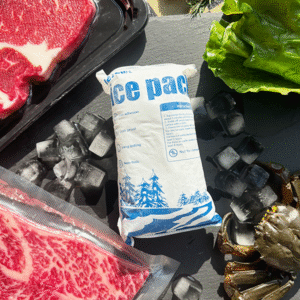
What is a dry ice bag and how does it differ from a dry ice pack sheet? — definitions, temperature range and handling implications.
How do dry ice pack sheets improve cold chain logistics? — benefits, sécurité, sustainability and regulatory advantages.
How to package and use dry ice safely? — step by step instructions for both traditional dry ice and modern pack sheets, including training requirements, étiquetage et ventilation.
De quelle quantité de neige carbonique avez-vous besoin? — rule of thumb quantities and simple calculations to ensure your shipment stays cold without overloading.
What’s new in cold chain technology for 2025? — insights on smart monitoring, hybrid cooling systems and market trends.
Questions fréquemment posées — clear answers about duration, réutilisation, disposal and international shipping.
What are dry ice bags and pack sheets, and why do they matter?
Sacs de glace carbonique are traditional blocks or pellets of solid carbon dioxide packaged in breathable bags. They keep products frozen by absorbing heat and sublimating directly to CO₂ gas at –78.5 °C. Each pound of dry ice delivers more than twice the cooling energy of water ice, but the gas build up can cause pressure, create an oxygen deficient atmosphere and require special handling. These bags must be vented, étiqueté « Dioxyde de carbone, Solide" (Et 1845) and used by trained personnel.
Feuilles de glace carbonique are flexible thermal devices containing proprietary PCMs that freeze at ultra low temperatures. Une fois plié avant utilisation, the PCMs start absorbing heat and release cold energy for 24–72 hours. Because pack sheets do not sublimate or emit hazardous gases, they are classified as non hazardous. This simplifies documentation, reduces training requirements and eliminates the need for vented packaging. Pack sheets are particularly useful for overnight shipments, emergency deliveries and cross border logistics.
How dry ice pack sheets work
Dry ice pack sheets function like miniature cold batteries. Each sheet contains a calibrated PCM that shifts from solid to liquid within a targeted range (–20 °C à –70 °C). During phase change, the material absorbs large amounts of heat, keeping products ultra cold without freezing them. Contrairement au CO₂ solide, the PCM doesn’t sublimate, so there is no release of gas, and the cold energy remains stable. Users simply flex the sheet to activate the PCM and insert it into the insulated container, where it begins cooling immediately.
| Fonctionnalité | Traditional dry ice bag | Feuille de glace carbonique | Ce que cela signifie pour vous |
| Plage de température | Maintient –78,5 °C; extremely cold | Maintains –20 °C to –70 °C for 24–72 hours | Pack sheets provide precise ultra cold temperatures without excessive freezing, ideal for biologics or delicate specimens. |
| Cooling energy | More than twice the cooling energy of water ice per pound | High energy density due to PCM; consistent output | Both offer strong cooling, but pack sheets deliver uniform cold without CO₂ release. |
| Manutention & sécurité | Nécessite des gants isolés; frostbite risk and hazard classification (Classe 9) | Classé comme non dangereux; no frostbite risk, requires standard thermal gloves | Pack sheets reduce training costs and injury risk. |
| Conformité réglementaire | Doit être ventilé; étiqueté « Dioxyde de carbone, Solid” and UN 1845; quantity limit 200 kg par forfait | Simplified documentation; complies with most international regulations without hazmat declarations | Pack sheets streamline customs and carrier approvals. |
| Durée & réutilisation | Sublimates at 5–10 lbs per 24 heures; cannot be reused | Lasts 24–72 hours depending on model; many versions are reusable for 50+ cycles | Pack sheets provide longer cold time and can be refrozen, réduire les coûts. |
| Impact environnemental | Made from CO₂; releases gas; packaging often single use | PCMs can be produced from renewable CO₂ and enclosed in recyclable materials | Choosing sustainable pack sheets reduces waste and carbon footprint. |
Conseils et suggestions pratiques
Pour les produits biologiques de grande valeur: Use dry ice pack sheets to maintain the required –20 °C to –70 °C range without subjecting your product to –78.5 °C. The absence of CO₂ gas simplifies international shipping.
For large frozen goods: Traditional dry ice bags provide more cooling energy per pound; cependant, ensure the container is vented and labeled correctly to meet regulatory requirements.
Pour les expéditions mixtes: Combine dry ice bags with gel packs or pack sheets to balance ultra cold temperatures and avoid freezing goods like fresh seafood or pharmaceuticals sensitive to freezing.
Exemple du monde réel: A cell therapy manufacturer needed to ship doses requiring –40 °C overnight across the country. By switching from bulky dry ice blocks to pack sheets, the team avoided hazardous materials paperwork and simplified handling. The pack sheets maintained the precise temperature for 48 hours and reduced handling costs by 25 %, demonstrating how modern refrigeration technologies optimize cold chain logistics.
Packaging and usage guidelines
Training and hazard identification
Dry ice is classified as a “miscellaneous” hazard (Classe 9) by both the U.S. Ministère des Transports (POINT) et l'Association du transport aérien international (Iata). Shipments that include only dry ice require hazardous materials training; employees must be certified before packaging or signing shipping documents. Training must be renewed every two years because regulations change frequently.
The main hazards associated with dry ice are:
Risque d'explosion: Sublimating CO₂ gas can build pressure in sealed containers, potentially causing an explosion.
Risque d'étouffement: Dans des espaces confinés, CO₂ gas can displace oxygen and create an oxygen deficient atmosphere.
Risque de contact: Dry ice causes severe frostbite upon direct contact with skin. Always wear insulated gloves when handling blocks or pellets.
Feuilles de glace carbonique do not carry these risks because the PCM does not sublimate. Standard thermal gloves are recommended to avoid cold burns.
Exigences d'emballage
When shipping with traditional dry ice bags, follow these regulations:
Évacuation des gaz: Packages must allow the release of carbon dioxide gas; ne jamais sceller la neige carbonique dans un récipient hermétique, threaded lid or sealed plastic bag.
Force du paquet: Containers must be insulated, free from damage and strong enough to withstand normal loading and unloading, vibration and changes in temperature, humidity and altitude.
Choix du matériau: Avoid plastics that become brittle at dry ice temperatures; use commercially available dry ice shipping systems.
Étiquetage: The outer container must display the Class 9 étiquette de danger, «Dioxyde de carbone, Solide," l'ONU 1845 identifier and the net weight of dry ice in kilograms. Labels should be affixed to a vertical side of the box and oriented upright.
Documentation: The air waybill must state “UN1845, Glace sèche, number of packages × net weight in kilograms.” FedEx and other carriers provide check boxes on their airbills to satisfy this requirement.
Limites de quantité: The maximum net quantity of dry ice per package is 200 kg. Some carriers impose additional limits (Par exemple, UPS restricts uncontracted shipments to 2.5 kg without a hazardous materials agreement).
Restrictions des transporteurs: FedEx and DHL accept dry ice shipments, but UPS and the U.S. Postal Service restrict hazardous materials; consult your carrier before shipping. Always coordinate logistics with the recipient and consider holidays or local closings to avoid delays.
For dry ice pack sheets, packaging is simpler:
Utiliser des conteneurs isothermes (Par exemple, PSE, vacuum panels or rigid coolers) pour minimiser le transfert de chaleur.
Seal the container to prevent moisture ingress but include a small vent if recommended by the sheet manufacturer.
Add secondary packaging and cushioning to secure the product, just as you would for dry ice shipments.
Handling procedures
The following steps outline proper handling for both dry ice bags and pack sheets:
Préparez le récipient: Choose an insulated box with minimal dead space. Fill any open areas with wadded paper or foam to reduce the rate of sublimation.
Place the refrigerant: Pour les sacs de glace carbonique, place them on top of or around the product, not inside sealed primary receptacles. Pour les feuilles de paquet, flex the sheet to activate the PCM, then line the container walls or wrap the product directly.
Ajouter du rembourrage: Secure secondary packaging so that it maintains orientation after the refrigerant melts or warms. Use cardboard or bubble wrap to immobilize fragile items.
Sceller et étiqueter: Close the insulated container, tape only the center seam of the outer box, affix hazard labels if using dry ice bags, and mark the net weight of dry ice.
Complete documentation: Fill out the air waybill with the UN 1845 details and note the number of packages. Provide training certificates if requested.
Arrange pickup and delivery: Schedule expedited services (overnight or priority) to ensure goods arrive within the refrigerant’s effective duration. Inform the recipient of the expected arrival date and ensure they can unpack promptly.
Packing for specific goods
Frozen foods and meats: Use heavy dry ice bags combined with gel packs to maintain frozen temperatures. According to shipping tables, un 10 lb product requires 10–15 lb of dry ice to maintain cold for 24–48 hours. Pour les longues distances, consider pack sheets to extend cooling and reduce hazardous materials paperwork.
Produits pharmaceutiques et vaccins: Regulatory bodies require that injectable medicines remain between 2–8 °C. Cold packs can achieve this range; avoid dry ice unless the product can withstand freezing. Pack sheets designed for moderate temperatures (–20 °C à –40 °C) offer an alternative for biologics needing ultra cold storage without the hazards of CO₂.
Thérapies cellulaires et géniques: These treatments often require –50 °C or colder. Pack sheets maintain –20 °C to –70 °C and can be combined with small amounts of dry ice to extend duration and maintain regulatory compliance.
Safety considerations and compliance
Équipement de protection individuelle
Pour la glace carbonique traditionnelle, wear leather or cryogenic gloves to prevent frostbite. Cover exposed skin with long sleeves and pants, and use safety glasses or a face shield when breaking blocks. Only handle dry ice in well ventilated areas to avoid CO₂ accumulation.
Dry ice pack sheets require less PPE. Standard thermal gloves are sufficient to prevent cold burns, and there is no risk of gas build up.
Stockage et élimination
Store dry ice in a hard sided insulated container; thicker insulation slows sublimation. Do not store in airtight or unventilated spaces such as refrigerators or closed vehicles. Fill open space with paper to limit dead air. Dispose of unused dry ice by leaving it in a well ventilated area or fume hood where it can sublimate safely.
Because pack sheets do not produce CO₂ gas, disposal is simpler. De nombreux fabricants proposent des programmes de recyclage. Follow local regulations for PCM disposal.
Regulatory compliance checklist
Use this checklist to ensure compliance when shipping with dry ice bags:
Et 1845 declaration: Confirm that “Carbon Dioxide, Solid” and the UN number appear on both the air waybill and the package.
Étiquette de danger: Afficher la classe 9 miscellaneous hazard label on a vertical side of the box.
Poids net: Mark the net weight of dry ice in kilograms. Ne dépassez pas 200 kg par forfait.
Ventilation: Ensure the container allows CO₂ to escape; Évitez les phoques hermétiques.
Training certification: Keep hazardous materials training documentation current.
Restrictions des transporteurs: Verify that your carrier accepts dry ice shipments and whether a hazardous materials contract is required.
Pack sheets generally require none of the above except proper packaging and labeling of the product itself.
De quelle quantité de neige carbonique avez-vous besoin?
Estimating how much dry ice to use depends on the payload weight, desired transit time and insulation level. Guidelines from universities and carriers provide a rule of thumb: dry ice sublimates at approximately 5–10 livres par 24 heures. More insulation and less headspace slow the sublimation rate.
General calculation
Determine the weight of your product (charge utile).
Identify the required transit time (24, 48 ou 72 heures).
Multiply the transit time by 5–10 lb to estimate the needed dry ice. Use the higher end for longer transit or less insulated containers. Par exemple, un 10 lb payload shipped for 48 hours might require 10–15 lb of dry ice.
Always consult your package manufacturer or carrier guidelines. Some carriers require shippers to include enough dry ice for an additional 24 heures pour tenir compte des retards.
Weight guideline table
| Poids de la charge utile | Temps de transit | Poids de glace carbonique recommandé | Signification pratique |
| 2 kg | 12–24 heures | 2–5 livres | Small packages (Par exemple, kits de repas) need modest dry ice; consider pack sheets for improved handling. |
| 5 kg | 24–48 heures | 4–8 lb | Suitable for medium frozen food shipments; ensure container is vented. |
| 10 kg | 24–48 heures | 10–15 lb | For larger parcels; consider combining dry ice and pack sheets for extended cooling. |
| 20 kg | 24–48 heures | 15–25 lb | Heavy shipments require substantial dry ice; training and labeling are critical. |
| 50 kg | 24–48 heures | 20–30 livres | Industrial or bulk shipments should follow formal hazardous materials protocols. |
Always minimize air space and choose insulated containers to maximize efficiency. If using pack sheets, follow manufacturer instructions and consider stacking multiple sheets for longer durations.
Benefits of dry ice pack sheets vs traditional dry ice
Conformité simplifiée: Since pack sheets are non hazardous and do not emit CO₂, they avoid hazardous materials training and labeling requirements.
Durée prolongée: High performance pack sheets can maintain temperatures from –20 °C to –70 °C for up to 72 heures, outlasting many dry ice shipments.
Réutilisabilité: Many pack sheet versions can be refrozen and reused for 50 + cycles, providing long term cost savings.
Safety and ease of handling: Pack sheets eliminate frostbite risk and require only standard thermal gloves. There is no explosion or suffocation hazard, and the sheets can be cut to size or wrapped directly around the product.
Durabilité: Manufacturers are adopting renewable CO₂ sources and biodegradable or recyclable materials. Pack sheets therefore reduce the carbon footprint and support circular economy models.
Implementing dry ice pack sheets: pas à pas
Évaluez vos besoins: Determine the required temperature range and duration for your shipment. Pack sheets cover –20 °C to –70 °C; choose a model that matches your product requirements.
Sélectionnez un emballage approprié: Use insulated containers with minimal headspace. Pair pack sheets with vented packaging to ensure any incidental gas release can escape, even though PCMs themselves do not produce gas.
Activate the sheets: Flex each sheet gently until you feel the PCM crackle; this triggers the phase change, ensuring the sheet begins cooling immediately.
Positionner stratégiquement: Line the interior walls of the container with pack sheets or wrap them around the product. Pour les expéditions sur plusieurs jours, layer multiple sheets or combine with small amounts of dry ice for extended duration.
Surveiller la température: Use temperature and humidity data loggers or integrated IoT sensors to track conditions during transit. Smart monitoring systems improve visibility and compliance.
Planifier la réutilisation: Après livraison, instruct recipients to refreeze and return pack sheets for future use. Implement take back programs or recycling partnerships with manufacturers.
User tips and scenarios
Échantillons de laboratoire: Use multiple thin pack sheets to wrap around vials, then insert them into a padded, récipient isolé. The uniform cold prevents freeze thaw cycles that can damage samples.
Meal kit delivery: Combine a moderate dry ice bag with pack sheets to keep ingredients frozen yet avoid freezer burn. Place the pack sheet between the bag and the product to create a thermal buffer.
International shipments: Pack sheets simplify customs because they are non hazardous. Always verify destination country regulations and include translation labels if needed.
2025 tendances et innovations de la chaîne du froid
Le secteur de la chaîne du froid évolue rapidement. Dans 2025, several trends are reshaping how businesses manage temperature sensitive shipments:
Systèmes de surveillance intelligents: Integrating IoT sensors into packaging allows real time tracking of temperature and humidity. These sensors send data to cloud platforms, enabling proactive intervention if conditions deviate from set parameters. Visibility reduces spoilage and improves regulatory compliance.
Systèmes de refroidissement hybrides: Combining dry ice with PCMs creates more stable temperature profiles and improves energy efficiency. Hybrid systems smooth temperature fluctuations and extend cooling duration.
Automation in packaging: Robotics and automated equipment are increasingly used to pack and handle refrigerants. L'automatisation réduit les erreurs humaines, speeds up operations and ensures consistent packaging quality.
Matériaux durables: Biodegradable and recyclable packaging is becoming standard. Companies are exploring renewable CO₂ sources and recyclable insulation to reduce environmental impact.
Science des matériaux avancée: New PCM formulations extend the range of temperatures and duration of pack sheets. Some contain integrated sensors that transmit real time data to logistics platforms.
Modèles d'économie circulaire: Manufacturers are implementing refurbishment and recycling programs for thermal materials. This reduces waste and lowers long term costs.
Croissance du marché: Demand for next day dry ice pack sheets is projected to grow by about 20 % chaque année à travers 2026. Integrated digital platforms that combine monitoring, route optimization and predictive analytics are becoming essential to stay competitive.
Trend impact table
| S'orienter | Description | Comment cela vous aide |
| Surveillance intelligente | Les capteurs IoT suivent la température et l'humidité en temps réel | Improves compliance, reduces spoilage and provides end to end visibility |
| Systèmes de refroidissement hybrides | Combining dry ice and PCMs stabilizes temperatures | Extends cooling duration and reduces energy use |
| Automation | Systèmes robotisés d’emballage et de manutention | Reduces human error and increases throughput |
| Matériaux durables | Utiliser des emballages biodégradables et recyclés | Lowers environmental impact and appeals to eco conscious consumers |
| PCM avancés | New formulations broaden temperature ranges | Offrir de la flexibilité pour des expéditions variées |
| Capteurs intégrés | Built in monitoring systems send data to your platform | Enables proactive response to deviations |
| Économie circulaire | Take back and refurbishing programs | Réduisez les déchets et réduisez les coûts |
Insistance au marché
Cold chain logistics is expanding rapidly. Market analysis predicts that demand for next day dry ice pack sheets will grow by roughly 20 % par an à travers 2026. Comme le commerce électronique, pharmaceuticals and biotechnology continue to boom, companies that adopt smart monitoring, sustainable materials and automation will see reduced spoilage, une conformité améliorée et une plus grande satisfaction des clients. Staying ahead of these trends ensures your operations remain competitive.
Questions fréquemment posées
Q1: How long do dry ice pack sheets maintain temperature? Most dry ice pack sheets maintain their target temperature range for 24–48 hours, and high performance versions can last up to 72 hours when paired with proper insulation. Always check manufacturer specifications and consider adding extra sheets for longer transit times.
Q2: Les feuilles de glace carbonique sont-elles réutilisables? Oui. Many pack sheet models are reusable and can be refrozen for 50 + cycles. This reusability reduces long term costs and waste.
Q3: Quelles précautions de sécurité dois-je prendre lors de la manipulation de ces feuilles? Use standard thermal gloves and avoid direct skin contact. Ensure adequate ventilation when unpacking packages to avoid any cold induced condensation.
Q4: Can dry ice pack sheets be used internationally? Oui. Because they are classified as non hazardous, dry ice pack sheets comply with most international shipping regulations. Always verify country specific requirements and include translated labels if necessary.
Q5: How should I dispose of or recycle used pack sheets? De nombreux fabricants proposent des programmes de recyclage. Follow local regulations for PCM disposal, or return the sheets to suppliers who refurbish them as part of circular economy initiatives.
Résumé et recommandations
Principaux à retenir
Understand your refrigerant options: Traditional dry ice bags provide extremely cold temperatures but require strict handling, ventilation and labeling. Dry ice pack sheets offer flexible, non hazardous cooling between –20 °C and –70 °C for up to 72 heures.
Follow packaging and safety guidelines: Packages de ventilation, use insulated containers and label shipments properly. Wear appropriate gloves and avoid confined storage.
Calculez vos besoins en glace carbonique: Use the rule of 5–10 lb of dry ice per 24 hours and consider hybrid solutions like pack sheets to extend duration and reduce weight.
Embrace emerging technologies: Surveillance intelligente, systèmes de refroidissement hybrides, automation and sustainable materials will define cold chain logistics in 2025.
Planifier pour la durabilité: Choose products made from renewable CO₂, participate in take back programs and reuse pack sheets to reduce your carbon footprint.
Étapes réalisables
Evaluate your cold chain needs: Déterminer les plages de température, durations and regulatory requirements before selecting a refrigerant.
Développer des procédures standardisées: Create step by step guides for packing, labeling and documenting shipments. Ensure staff receive regular training on hazardous materials handling.
Investissez dans des solutions durables: Opt for pack sheets and packaging made with recyclable materials and renewable CO₂ sources. Implement reuse and recycling programs.
Adoptez une surveillance intelligente: Use IoT sensors to track shipments in real time and respond quickly to temperature deviations.
Rester informé: Surveiller les évolutions réglementaires, carrier policies and market trends to maintain compliance and remain competitive.
À propos du tempk
Tempk is a pioneer in cold chain logistics, specializing in innovative dry ice pack sheets, packs de gel et conteneurs isothermes. Our products are engineered to deliver consistent ultra cold temperatures while prioritizing safety, durabilité et efficacité. We incorporate smart monitoring systems, eco friendly materials and advanced PCM technology to help businesses protect high value biologics, foods and pharmaceuticals. Avec des années d'expérience dans l'industrie, Tempk provides customized solutions, expert guidance and ongoing support to optimize your cold chain operations.
Appel à l'action: Prêt à améliorer votre stratégie de chaîne du froid? Consult Tempk specialists to select the right combination of dry ice pack sheets and packaging supplies for your shipments. Ensemble, we’ll help you achieve safer, more sustainable and cost effective logistics.