Groupe d'emballage de glace sec (2025): Comment construire, Valider & Scale Frozen Shipping
Dernière mise à jour: Août 8, 2025 • Temps de lecture: 9–12 minutes

1) What a “Groupe d'emballage de glace sec” Is—and Why It Matters
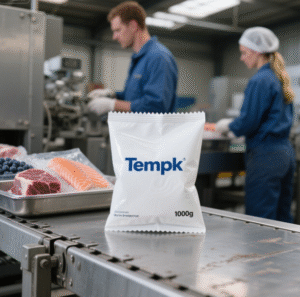
UN Groupe d'emballage de glace sec is a cross‑functional capability that designs, qualifies, and runs compliant frozen shipments at scale. It combines: (1) Regulatory ownership, (2) Thermal design & validation, (3) Sops & entraînement, (4) Fournisseur & carrier management, et (5) Operational analytics for melt‑rate and OTD.
This article synthesizes best practices and field patterns highlighted across your three drafts (team roles, SOP templates, procurement and local intent coverage).
2) Regulatory Ground Truth (2025)
Classification & Limites
-
Numéro de l'ONU & classe de danger: UN1845 – Carbon dioxide, solide (Glace sèche), Classe 9; no packing group assigned in the HMR entry.
-
Expéditions aériennes (Iata): Governed by Instruction d'emballage 954. Le Iata 2025 Liste de contrôle d'acceptation de la glace sèche (66th DGR) requires UN number, Nom d'expédition approprié, et poids net de glace carbonique en kg sur le bilan aérien. Typique quantity limit is 200 kg par forfait; always check State/Operator variations.
-
NOUS. HMR ventilation & marques: Packages must be designed to vent CO₂; vessel/vehicle markings are specified in 49 CFR §173.217.
-
Domestic postal reference: USPS PI 9A caps dry ice in domestic air mail at 5 kg (≈2,27kg) par courrier (for context; carriers differ).
Note: Some secondary sources misstate “PG III” pour la glace sèche; this is incorrect for UN1845. Your new SOPs should reflect “Class 9, no PG," et PI 954 (not “PI9700”).
Passenger baggage exception (for awareness)
Les passagers peuvent porter 2.5 kg of dry ice in checked/hand baggage under IATA personal baggage provisions, provided venting and marking. This does pas apply to cargo operations but helps explain airline‑level constraints.
3) Personnes, Roles & AMADOUER (Your Operating Model)
Core roles
-
DG Compliance Lead: Owns IATA/IMDG/49 CFR interpretations, change‑log, et listes de contrôle d'acceptation.
-
Thermal Packaging Engineer: Calculates heat load, selects insulation and dry ice mass, and drives ISTA 7E qualification.
-
Operations Supervisor: Trains packers, enforces labeling, runs re‑icing cadence, monitors exceptions.
-
Approvisionnement & Qualité: Approves suppliers (dry ice pellets/blocks, VIP sets), keeps SDS and COAs current.
-
Données & Cx: Tracks INP/LCP/CLS on key pages, local SEO footprint, and customer feedback loops.
AMADOUER (excerpt)
-
Verify contents (non‑DG vs DG) and lane → select PI 954 flow.
-
Choose box & isolation; ajouter ventilé primary and overpack.
-
Compute dry ice mass (see §4).
-
Paquet, marque & étiquette (Classe 9 pour l'air) et entrées AWB (UN1845 + nom propre + Kg net).
-
Acceptance self‑check using Iata 2025 Dry Ice Checklist.
-
Handover; record net dry ice and time‑to‑melt assumptions.
4) Pack‑Out Design & Validation
4.1 Matériels & Configuration
-
Isolation:
-
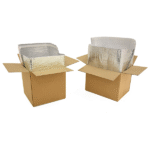
EPS/EPP/PUR: économique, moderate R‑value; larger ice loads.
-
Expéditeurs VIP: center‑of‑panel conductivity around 0.004–0,008 W/m·K vs PUR ~0.02–0.03 W/m·K (≈4–6× better), enabling longer holds or smaller cube.
-
-
Endiguement: Use durable corrugated or molded outer, ne pas fermer hermétiquement; the system must secouer Co₂.
4.2 How to Size Dry Ice (engineering shorthand)
-
Heat load ≈ U·A·ΔT·t + infiltration + door/opening losses.
-
Rule of thumb for sublimation energy: ~571 kJ/kg (derived from NIST ΔH_sub ≈ 25–27 kJ/mol). Use your chamber profile to back‑solve required kg.
4.3 Qualification
-
Execute lab & field cycles against Ista 7e (72/144 h heat/cold profiles). For certification or audited documentation, appliquer Standard 20 with 7E.
5) Acceptation, Marquage & Étiquetage (Air)
Before tender:
-
Confirmer max net dry ice per package against PI 954 (typiquement 200 kg), check State/Operator variations and aircraft constraints.
-
Sur le Sur Waybill, inclure: UN1845, «Dioxyde de carbone, solide » ou « Glace sèche,» Nombre de packages, et net weight of dry ice in kilograms.
-
Sur le colis: Classe 9 étiquette (air), Nom d'expédition approprié, UN1845, Kg net; assurer ventilation. (FedEx 2025 job aid reflects the same 200 kg/package ceiling and marking details.)
6) Sécurité & Entraînement
-
Exposition au coré: Follow OSHA exposure guidance—typical PEL 5,000 ppm twa; STEL ≈ 30,000 ppm (per NIOSH/agency guidance). Ventilate and monitor confined spaces.
-
Manutention: Risque de gel; use cryo‑gloves and tongs. Never place dry ice in scellé conteneurs.
-
Air ops: Operators may limit total aircraft dry ice loading; disclose net weights during booking per operator variations.