Packs de glace sec pour l'expédition de viande: Comment garantir la fraîcheur et la conformité des 2025
L’expédition de viande congelée peut être un défi, surtout lorsqu'il est essentiel de maintenir des températures appropriées pendant le transport. Les blocs de glace carbonique constituent une solution fiable pour conserver la viande congelée et conforme aux réglementations d'expédition nécessaires.. Dans ce guide, nous vous guiderons à travers 2025 règlements, bonnes pratiques d'emballage, et la quantité correcte de neige carbonique nécessaire pour garantir que vos expéditions de viande arrivent fraîches, sûr, et dans les limites de la conformité.
-
Que sont les 2025 dry ice packs for meat shipping règlements?
-
Comment calculer la bonne quantité de neige carbonique pour différents types de viande?
-
Erreurs courantes à éviter lors de l'utilisation de blocs de glace carbonique pour le transport de viande.
-
Comment garantir la conformité avec IATA PI 954 et autres réglementations.
-
Conseils pour réduire les frais d’expédition et optimiser l’utilisation de la glace carbonique.
Pourquoi utiliser des blocs de glace carbonique pour le transport de viande?
Dry ice packs are one of the most effective ways to keep meat frozen during long-distance shipping. Contrairement à la glace ordinaire, dry ice sublimates directly from solid to gas at -78.5°C, which creates a consistently cold environment that keeps meat products at the required temperature. This is particularly essential for products like fish and beef, which require sub-zero conditions to maintain quality and avoid spoilage.
Principaux avantages de l'utilisation de la glace carbonique pour le transport de la viande:
-
Durée plus longue: La glace carbonique dure plus longtemps que la glace ordinaire, keeping products frozen for up to 72 heures ou plus, depending on packaging and transit conditions.
-
Meilleur contrôle de la température: Dry ice maintains the necessary freezing temperatures throughout the shipping process, ensuring that meat stays at or below the required freezing temperatures.
-
Conformité aux réglementations: Dry ice is regulated as a hazardous material for shipping, but when used properly, it ensures compliance with essential regulations, including IATA PI 954 et UN1845.
Étude de cas: A seafood distributor switched from gel packs to dry ice for their international shipments. They saw a significant reduction in spoilage claims, améliorer la satisfaction des clients et réduire les déchets.
How do you calculate the right amount of dry ice for meat shipping?
Calculating the correct amount of dry ice is crucial to ensure that your meat stays frozen but also avoids unnecessary waste. A general guideline is to use 5–10 pounds of dry ice per 24 hours of transit per package. Cependant, this will vary based on ambient temperatures, the type of meat, et la durée d'expédition.
Steps to Calculate Dry Ice Requirements:
-
Estimate the transit time: Les expéditions plus longues nécessitent plus de glace carbonique.
-
Consider the insulation of your packaging: Une meilleure isolation réduit la quantité de neige carbonique nécessaire.
-
Factor in the type of meat: Delicate meats like seafood may require more dry ice.
-
Account for environmental conditions: Hotter weather accelerates sublimation, meaning more dry ice will be needed.
| Durée de l'expédition | Température ambiante | Dry Ice Needed per 10 lb Meat |
|---|---|---|
| 24 Heures | 20–25°C | 5–8 livres |
| 48 Heures | 25–30°C | 10–15 livres |
| 72 Heures | 30–35°C | 20–25 lbs |
How to package dry ice for meat shipping?
Packaging is just as important as the amount of dry ice used. If dry ice is packed incorrectly, it might sublimate too quickly, leaving your meat at an unsafe temperature. Here’s how to ensure proper dry ice packing:
-
Choisissez le bon conteneur: Utilisez un solide, insulated container approved for dry ice shipping, comme des boîtes en polystyrène, which are lightweight and provide excellent insulation.
-
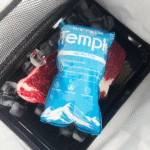
Add the dry ice: Place the dry ice on top of the meat, ensuring it doesn’t come into direct contact with the product. This prevents freezer burn while maintaining a steady temperature.
-
Évacuer le conteneur: Dry ice sublimates into gas and needs to be vented to avoid dangerous pressure build-up.
-
Seal and label the package: Once the dry ice is packed, seal the container and apply the UN1845 hazardous material label.
Meilleures pratiques d'emballage:
-
Use a layered approach when shipping multiple items, creating thermal zones with corrugated inserts.
-
Attach a temperature data logger to monitor conditions throughout transit.
Conseil: Ensure that your packaging meets IATA’s guidelines for hazardous materials to avoid issues at customs or with air carriers.
How to ensure compliance with 2025 regulations for meat shipping?
Dans 2025, dry ice shipping for meat continues to be regulated as a hazardous material. To stay compliant with IATA PI 954 and other international shipping regulations, you must adhere to the following practices:
Best Compliance Practices:
-
Mark the packaging correctly: Your packaging must include the UN1845 label, identifying dry ice as a hazardous material.
-
Assurer une bonne ventilation: All dry ice shipments must allow gas to escape to avoid dangerous pressure buildup.
-
Use the correct weight limits: Les expéditions aériennes sont limitées à 200 kg de glace sèche par colis. Larger shipments must be divided into smaller units.
-
Provide the right documentation: Ensure accurate documentation with the correct dry ice weight on the air waybill.
Regulatory Tip: Always double-check weight and labeling to prevent penalties. Accurate documentation is essential for smooth shipping processes.
Common mistakes to avoid in dry ice meat shipping
Shipping meat with dry ice is straightforward, but there are a few common mistakes that can lead to issues. Here’s how to avoid them:
-
Incorrect dry ice quantity: Not using enough dry ice to cover the transit time or environmental conditions may lead to thawing, détérioration, and potential health risks.
-
Improper packaging: Sealing the package too tightly or using the wrong box can prevent the escape of CO₂ gas, provoquant une accumulation de pression dangereuse.
-
Missing labels or documentation: Failing to properly label or provide necessary paperwork can lead to delays or issues during shipping.
-
Failure to monitor temperature: Not checking the temperature during transit means you can’t ensure that the meat remained frozen.
Best Tip: Always ensure your meat is packaged with proper insulation, and double-check the dry ice quantity before shipping.
Key trends in dry ice shipping for meat in 2025
2025 is seeing advancements in the cold chain industry that affect dry ice shipping practices. Some key trends to keep an eye on:
-
Digitalisation et automatisation: The rise of digital tracking systems and eAWB (electronic air waybill) is enhancing the transparency and efficiency of dry ice shipments.
-
Emballage durable: More companies are focusing on eco-friendly packaging materials to minimize environmental impact while ensuring the quality of frozen shipments.
-
Smarter temperature monitoring: Nouvelles technologies, like wireless sensors, allow for more precise temperature control and monitoring during transit.
Derniers développements:
-
Emballage intelligent: New insulated boxes that retain cold longer, réduisant la quantité de neige carbonique requise.
-
Automated Documentation: The increasing use of digital documentation has made compliance easier to manage.
-
CO₂ Regulations: Stricter regulations around CO₂ emissions are driving innovations toward greener shipping methods.
Perspicacité du marché: The demand for sustainable, efficiently shipped meat products is growing, en particulier pour les expéditions internationales. Companies that use smart packaging solutions report better results in terms of quality and regulatory compliance.
Questions fréquemment posées
Q1: De combien de glace sèche ai-je besoin pour expédier 10 pounds of meat for 48 heures?
A1: You will typically need about 10–15 pounds of dry ice for 48 heures, depending on ambient temperature and insulation quality.
Q2: Can I use regular ice for meat shipping instead of dry ice?
A2: Non, regular ice cannot keep meat frozen at the sub-zero temperatures required. Dry ice is essential for maintaining frozen meat during long transit durations.
Q3: What are the new regulations for dry ice shipping in 2025?
A3: Dans 2025, dry ice shipping regulations focus on proper packaging, ventilation, étiquetage (UN1845), and accurate documentation. Ensure compliance with IATA PI 954 and other international requirements.
Résumé et recommandations
To ship meat successfully with dry ice in 2025, use proper packaging, calculate the necessary dry ice amount, and adhere to regulations like UN1845 and PI 954. En suivant ces étapes, you can ensure your shipments stay safe and compliant.
Étapes suivantes:
-
Review your current dry ice packaging to ensure it complies with 2025 règlements.
-
Train your team on proper dry ice handling and labeling.
-
Implement temperature monitoring to ensure your shipments stay within safe temperatures.
À propos du tempk
Et tempk, we specialize in providing cold chain solutions tailored to the meat shipping industry. Our innovative dry ice packaging solutions ensure compliance with all necessary regulations while maintaining product quality.
For more details, visit our website or contact us to optimize your meat shipping process.