-
Combien de glace sèche à utiliser (with calculator rules of thumb)
-
Sécurité (Évacuation du CO₂, manutention, sécurité alimentaire)
Principaux à retenir (2025)
-
Air shipments with real dry ice must follow Voici pi 954 et variations de l'opérateur; packages must be ventilé, marqué Et 1845, et montrer net dry‑ice weight in kg. Utiliser le 2025 Liste de contrôle d'acceptation IATA.
-
NOUS. ground/air rules require vented packaging under 49 CFR 173.217; passengers carrying dry ice are limited to 2.5 kg (5.5 kg) par personne avec l'approbation de la compagnie aérienne.
-
How much to use: planifier sur ~5 à 10 livres (2.3–4,5 kg) par 24 heures dans un expéditeur bien isolé; adjust for lane/season. (University & government guidance align on this range.)
-
Page experience affects visibility: dans 2025 INP replaced FID dans Core Web Vitals; viser LCP ≤ 2.5 s, INP ≤ 200 ms, CLS ≤ 0.1 at the 75th percentile.
-
Google spam policies: le Mars 2024 core update cibles scaled content abuse, expired domain abuse, et site reputation abuse—quality and first‑hand expertise win.
What “dry ice pack” really means
In search results, « pack de glace carbonique » can refer to two different things:
-
Vraie glace sèche (co₂ solide, UN1845)—used to keep products congelé. Must be vented and labeled for transport.
-
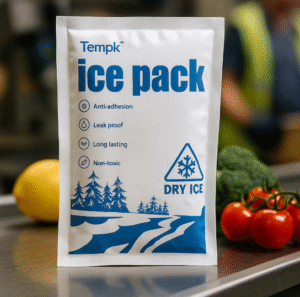
Reusable gel/PCM “ice packs”—colloquially marketed as “dry‑ice alternative,” typically freeze at –15 ° C (5 ° F) (Par exemple, Tundra de glace de l'Arctique) and keep items very cold but not as cold as real dry ice. Great for food that only needs to stay frozen/near‑frozen for shorter durations.
This article covers both, but any air shipment with real dry ice must comply with DG (marchandises) règles. The packout examples below consolidate the most practical steps from your drafts.
2025 rules at a glance (air & sol)
Air (Ici / ICAO):
-
Utiliser IATA DGR PI 954 for UN1845 Dioxyde de carbone, solide (Glace sèche). Le colis doit Permettre la libération de Co₂; marque “DRY ICE” or “CARBON DIOXIDE, SOLIDE", ajouter Et 1845, et le Kg net de glace sèche. Check your carrier’s Variations de l'opérateur et utiliser le 2025 Liste de contrôle d'acceptation IATA.
NOUS. domestique (49 CFR):
-
49 CFR 173.217 requires packaging designed to secouer Gaz coag; general packaging rules apply.
Bagages de passagers (reference only):
-
Limite 2.5 kg (5.5 kg) par passager avec approbation des compagnies aériennes; package must be vented and marked. (Helpful for staff/customer travel questions.)
Aides au travail des transporteurs:
-
FedEx/UPS provide practical placement d'étiquette and checklist details (Classe 9 diamant, UN1845, net kg on the same face as the label when space allows). Always confirm the current operator guidance.
Combien de glace sèche à utiliser (et pourquoi)
Rules of thumb from university/agency guidance and industry:
-
5–10 lb (2.3–4,5 kg) par 24 heures in a well‑insulated cooler/shipper. Expect faster sublimation in hot weather or at altitude.
Translate that into planning:
-
24 heures (small food parcel): 5 kg (2.3 kg)
-
48 heures (glacière de taille moyenne): 10–15 lb (4.5–6,8 kg)
-
72 heures (large payload/hot lane): 20–25+ lb (9–11+ kg)
Your drafts recommended similar amounts and stressed packout discipline; we kept that guidance and removed any conflicting suggestions.
Packouts that actually work (congelé & glacé)
Below are testé sur le terrain patterns that balance hold time, coût, et conformité. (Adapt per lane and season; validate with Ista 7e profiles for your lanes.)
UN) Frozen food with real dry ice (Air ou terre)
-
Extérieur: Certified insulated shipper or rugged cooler with ventilation (faire pas sceller hermétiquement).
-
Doublure: 1–2 pouces (25–50 mm) rigid foam or VIP as required.
-
Payload bag: Food vacuum‑sealed, placed in a moisture barrier bag.
-
Glace sèche: Split into multiple bricks on dessus et côtés (le froid descend vers le bas).
-
Remplissage de vide: Crumpled kraft/liners to minimize convection.
-
Marquage: «Glace sèche» (ou «dioxyde de carbone, SOLIDE"), Et 1845, Kg net de glace sèche. Classe 9 label on the same panel where possible.
B) “Dry‑ice‑alternative” for frozen/near‑frozen (durée plus courte)
-
Packs PCM (–15 ° C) (Par exemple, Tundra de glace de l'Arctique) conditionné ≥36 heures at the lowest freezer setting; lieu au-dessus et autour charge utile.
-
Expect performance below real dry ice; idéal pour du jour au lendemain to short‑haul frozen deliveries where DG handling is undesirable.
C) Mixed cold chain (congelé + glacé)
-
Sandwich payload: glace carbonique (haut) + 0 PCM °C around sensitive items to prevent over‑freezing. Keep food out of direct contact with dry ice.
-
Pour multi‑temp orders, separate with corrugate baffles and distinct inner cartons.
For production rollouts, qualify against ISTA 7E heat/cold profiles for the lane and duration (72–144 h baselines).
Marquage, étiquetage & paperasserie (zero‑ambiguity checklist)
-
Nom d'expédition approprié: Glace sèche (ou Dioxyde de carbone, Solide).
-
Numéro de l'ONU: Et 1845.
-
Étiquette de danger: Classe 9 Divers (100 × 100 mm minimum per IATA).
-
Poids net: montrer kg de glace sèche sur le paquet (and on documents when required).
-
Placement: When space allows, print the proper shipping name/UN1845 on the same side as the Class 9 étiquette (FedEx practice).
-
Ventilation: Le colis doit pas être hermétique; lid taping must allow gas release.
-
Acceptation: Utiliser le 2025 IATA Dry Ice acceptance checklist for non‑DG‑accompanied, non‑hazardous contents shipments.
Sécurité (Évacuation du CO₂, manutention, sécurité alimentaire)
-
Ventilation: La glace carbonique se sublime en CO₂. Respect workplace limits (NIOSH/OSHA: Twa 5,000 ppm; ENSEMBLE 30,000 ppm). Never confine in sealed spaces; open vans and walk‑ins regularly.
-
EPP: Gants isolés; no bare‑skin contact; eye protection when breaking bricks.
-
Sécurité alimentaire: Conserver la nourriture out of the 40–140 °F (4–60°C) « zone dangereuse »; use a calibrated probe at receiving; discard if time/temperature abused.
When to use gel/PCM instead of dry ice
Choisir PCM/gel “ice packs” quand:
-
Shipment is overnight/short‑haul, and food can tolerate –15 ° C hold rather than –78.5 °C.
-
You want to avoid DG handling/documentation.
-
You’re shipping consumer orders where simple reuse and no dry‑ice residue are preferred.
Exemple: Tundra de glace de l'Arctique packs freeze at –15 ° C (5 ° F) and are marketed as dry‑ice alternatives for coolers—excellent for consumer food boxes, not for multi‑day deep‑freeze lanes.
(Note on search intent): In AU/NZ retail, searches like “dry ice packs bcf” often surface gel/ice bricks sold by outdoor retailers (BCF), not real dry ice. Align your content and product taxonomy accordingly to capture both intents.
Coût & operational tips
-
Bonne taille your shipper: empty air volume is your enemy—more air = faster dry‑ice loss.
-
Condition préalable everything cold (produit, PCM, shipper walls).
-
Lane calendars: summer peaks, Week-end horizons, and holidays can add 24–48 h; buffer your dry‑ice mass accordingly.
-
QA & réclamations: include a simple temp indicator or logger for high‑value shipments.
FAQ
Q1) Can I ship food with dry ice by air?
Yes—within Voici pi 954 limites, en utilisant ventilé conditionnement, Et 1845 marquage, Classe 9 étiquette, et net kg de glace sèche. Utiliser le 2025 Liste de contrôle d'acceptation IATA.
Q2) How much dry ice should I add for a 48‑hour frozen lane?
Commencer par 10–15 lb (4.5–6,8 kg) and validate with a lane test; hot lanes or larger shippers may require 20 lb+. (Planifier 5–10 lb/24 h.)
Q3) Do I need special labels for UPS/FedEx?
Oui-Classe 9 diamant, Et 1845, Nom d'expédition approprié, et Kg net de glace sèche. Carriers publish job aids with placement examples.
Q4) Will Google still show FAQ/HowTo rich results if I add schema?
Google heavily restricted FAQ/How‑To rich results (2023). You can keep valid schema for machines and assistive uses, mais don’t expect guaranteed FAQ/How‑To visuals. Se concentrer sur people‑first content and page experience (Éléments essentiels du Web).