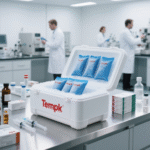
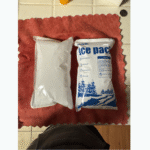
Si vous avez besoin de plats surgelés pour arriver rock-solid, packs de glace sec pour expédier de la nourriture are still the most reliable choice. Vous trouverez un estimateur rapide, Pack-by-by-step., 2025 conformité (Voici pi 954 / DOT §173.217 / Limites USPS), et moyens de réduire le coût sans couper le froid. Ce guide fusionné se consolide et améliore vos trois ébauches en un seul article prêt à 2025.
-
De combien de packs avez-vous besoin? Quick math using how much dry ice for 24–72 hours
-
Which packaging works best? EPS vs PUR vs VIP and pellets vs blocs
-
Are you compliant? 2025 Voici pi 954, DOT §173.217, USPS 5 lb par avion
-
Comment emballer? Un coffre-fort, répétable ship frozen meat with dry ice flux de travail
-
How to save? Coupez le liquide de refroidissement et le fret avec une isolation droite & mise en page
Combien packs de glace sec pour expédier de la nourriture Avez-vous besoin?
Réponse courte: plan 5–10 lb (2.3–4,5 kg) de glace sèche par 24 heures par boîte, puis ajoutez un 20–25% de tampon for summer peaks or air transit. Low pressure at altitude and warm lanes accelerate sublimation. One pound of dry ice becomes ~250 L of CO₂ gas, so vent your packaging.
Why the range? Le temps de maintien dépend de l'isolation (PSE < Pur < VIP), box fill %, profil ambiant (Par exemple, ISTA 7D/7E summer vs winter), and whether you use blocks (perte plus lente) or 16 mm pellets vs 3 mm pellets. VIP shippers can cut coolant mass dramatically; blocks and larger pellets last longer because of lower surface area.
Quick estimator for 24–72‑hour frozen shipments
Pick a daily loss rate based on lane & isolation (Par exemple, 6–8 lb/day EPS, 4–6 lb/day PUR, 3–5 lb/day VIP), then add 20–25%:
| Choix d'isolation | Typical daily loss you plan for | Common form factor | Ce que cela signifie pour vous |
|---|---|---|---|
| PSE (base de base) | 6–8 lb/day | Foam-lined shipper | Le moins cher, higher dry ice payload |
| Pur (vs EPS) | ~25–40% less ice | Rigid PUR walls | Détenir plus, smaller box possible |
| VIP (vs EPS) | Up to 2–3× tenir plus longtemps | Panneaux VIP / réutilisable | Minimum ice, premium cost, idéal pour les longues voies |
Ranges align with published comparisons (Pur > PSE; VIP superior). Validate on your lanes with ISTA 7D/7E.*
Practical picks
-
Blocks or 16 mm pellets for line‑haul; 3 Péllets MM for tight contact around product.
-
Été & air lanes: choose a rate near the high end; altitude increases loss.
Exemple de scénario: 48‑hour summer lane, Expéditeur EPS. Use 7.5 lb/day + 25% → ~19 lb de glace sèche. Swap to PUR and you’ll often trim the daily rate by roughly a third—dropping total coolant by several pounds per box. (Validate with your pack‑out tests.)
Which packaging keeps packs de glace sec pour expédier de la nourriture colder longer?
Tl;Dr: VIP > Pur > PSE for thermal performance; blocs > large pellets > petits pellets pour la longévité. VIP shippers command higher prices but can slash coolant and freight (smaller outer cartons).
Détails: EPS is inexpensive and widely available. PUR improves R‑value and hold time over EPS. VIP panels deliver the strongest insulation; many reusable systems pair VIP with data loggers for high‑risk product. Pellet size matters: 16 mm pellets sublimate more slowly than 3 mm, alors que blocs last the longest.
EPS vs PUR vs VIP at a glance
| Type d'expéditeur | Relative hold vs EPS | Cost tier | Votre point de relance |
|---|---|---|---|
| PSE | 1× | $ | Good for 24–48 h, high ice mass |
| Pur | ~1.3–1.6× | $$ | Cut dry ice & taille de boîte |
| VIP | ~2–3× | $$$ | Longues voies, minimal ice, reusable options |
Evidence from reviews and vendor specs supports the hierarchy; confirm with ISTA 7D/7E on your lanes.
Conseil: Keep boxes complet (less headspace), pre‑chill contents, and stage in a cold room before pickup. Those three habits often save more ice than switching pellet sizes.
Sont packs de glace sec pour expédier de la nourriture compliant with 2025 règles?
Must‑do checklist (air & sol):
-
Utiliser un emballage ventilé that allows CO₂ to escape (POINT 49 CFR §173.217(un)).
-
Mark the net dry‑ice mass (kg) sur le package extérieur (§173.217(c)(1)).
-
Marque/étiquette: "Glace sèche" ou "Dioxyde de carbone, solide,» Et1845, Classe 9 étiquette de danger (≥ 100 MM).
-
Paperasse (air): When dry ice is the only dangerous good, pas de déclaration de l'expéditeur est requis; inclure «Un1845, Glace sèche, x × y kg” sur le bilan aérien.
-
Voici pi954 acceptance requirements apply; ≤ 200 kg par paquet and proper marks/labels/weight.
-
USPS (air): ≤5lb (2.27 kg) glace carbonique par envoi postal; more allowed by surface.
-
UPS / FedEx: Follow carrier procedures (UPS requires ISC contract for many dry‑ice lanes; FedEx fournit 2025 job aids and checklists).
Sécurité: La glace sèche est de -78,5 ° C (−109,3 ° F); Limites d'exposition au CO₂: OSHA/NIOSH 5,000 ppm twa, 30,000 PPM Stel. Ventilate pack‑out areas; ne jamais sceller la glace carbonique dans des contenants hermétiques.
Carrier acceptance tip: IATA publishes a 2025 Dry Ice acceptance checklist—use it in QA so every box clears tender first time.
How do you pack a box with packs de glace sec pour expédier de la nourriture?
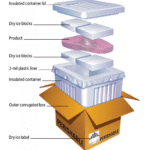
En un coup d'œil: bottom ice → product → top ice → void fill → vented lid → label & peser.
-
Condition préalable product to ≤ 0 °F (−18 ° C). Keep items tightly packed. (FDA/FSIS: keep foods ≤ 40 °F and frozen at 0 °F.)
-
Aliner l'expéditeur (EPS/PUR/VIP). Ajouter dry ice blocks or 16 mm pellets au bas. Use corrugated pads to prevent direct contact for “chilled, not frozen” items.
-
Charger in a snug layer; backfill voids with bubble or crumpled kraft (not sealed bags).
-
Top layer of dry ice. Pour les longues voies, split ice mass 60% bas / 40% haut so you keep a cold gradient.
-
Add a temp indicator or data logger (optional but smart).
-
Fermer & secouer: Faire pas tape vapor‑tight; leave a small vent path per DOT/IATA.
-
Marque & étiquette: « Glace sèche » ou « Dioxyde de carbone », solide", Et1845, Kg net, Classe 9 étiquette. For international air waybills: "Et1845, Glace sèche, x × oui kg.»
Hands‑on tips
-
Voies d'été: ajouter gel packs above product to buffer brief door‑open events; keep dry ice below and above for core freeze.
-
Parcel hubs: VIP or PUR shippers reduce risk of short “danger zone” spikes (40–140 °F). Keep total time above 40 °F under 2 heures.
2025 développements & tendances packs de glace sec pour expédier de la nourriture
Quoi de neuf 2025? More expéditeurs VIP réutilisables, recyclable paper‑based liners (Par exemple, ClimaCell), and broader use of lane‑profile testing (Ista 7e) and real‑time Enregistrement de la température IoT. These tools let you ship the same product with less coolant and smaller cartons—and still pass validation.
Dernier en un coup d'œil
-
Carrier tooling: FedEx issued 2025 dry‑ice job aids and checklists to simplify labels and acceptance.
-
Validation shift: More teams are adopting Ista 7e profiles for real‑world parcel temperatures; 7D still used for development stress tests.
-
Durabilité: Doublures recyclables (Par exemple, ClimaCell) et reusable VIP programs are scaling with meal‑kit and grocery growth.
Perspicacité du marché: Cold‑chain packaging demand continues to grow in 2025; reusable systems and monitoring devices are the fastest‑rising segments as brands target waste and chargebacks. (Independent industry trackers report sustained growth through 2030.)
Questions fréquemment posées
Q1: Combien dry ice for shipping food do I need for 48 heures?
Plan 10–16 lb pour PSE, 8–12 lb pour PUR, 6–10 lb pour VIP, puis ajouter 20–25% tampon. Adjust up for hot lanes or air.
Q2: Can I ship internationally without a Shipper’s Declaration?
Oui-si la neige carbonique est la seule marchandise dangereuse. Mettre «Un1845, Glace sèche, x × y kg” sur le bilan aérien; follow PI 954 and all marks/labels.
Q3: What’s the USPS limit for dry ice by air?
≤5 livres (2.27 kg) par envoi postal par avion; surface (sol) may exceed this.
Q4: Pellets or blocks—what lasts longer?
Blocs et 16 Péllets MM last longer than 3 mm pellets because of lower surface area.
Résumé & recommandations
Points clés: Utiliser 5–10 lb / jour as your planning anchor; choisir PUR / VIP to reduce ice and carton size; suivre DOT §173.217 / Voici pi954 / USPS règles; et étiquette avec Et1845 et Classe 9 (100 MM). Validate with Ista 7d / 7e, then trim buffer as data accumulates.
Étapes suivantes (fast track):
-
Exécutez l'estimateur above for your lanes (24/48/72 H).
-
Pilot PUR or VIP on one hot lane to cut coolant >20%.
-
Adopter le 2025 Liste de contrôle d'acceptation IATA to drive first‑pass tenders.
-
Add a temp indicator/logger for QA and fewer claims.
CTA: Besoin d'un rangement spécifique à la voie? Parlez à un spécialiste de la chaîne du froid Tempk for a free 15‑minute optimization review.
À propos du tempk
Tempk designs validated pack‑outs for frozen and chilled food, combinant packs de glace sec pour expédier de la nourriture with right‑sized EPS/PUR/VIP shippers. We back every design with ISTA thermal testing and 2025 IATA/DOT labeling guidance, helping you reduce coolant, shrink cartons, and pass carrier acceptance the first time.
Prêt à optimiser? Contact Tempk for a lane audit and pilot kit.