Guide d'achat des distributeurs d'échantillons de laboratoire EPP Box
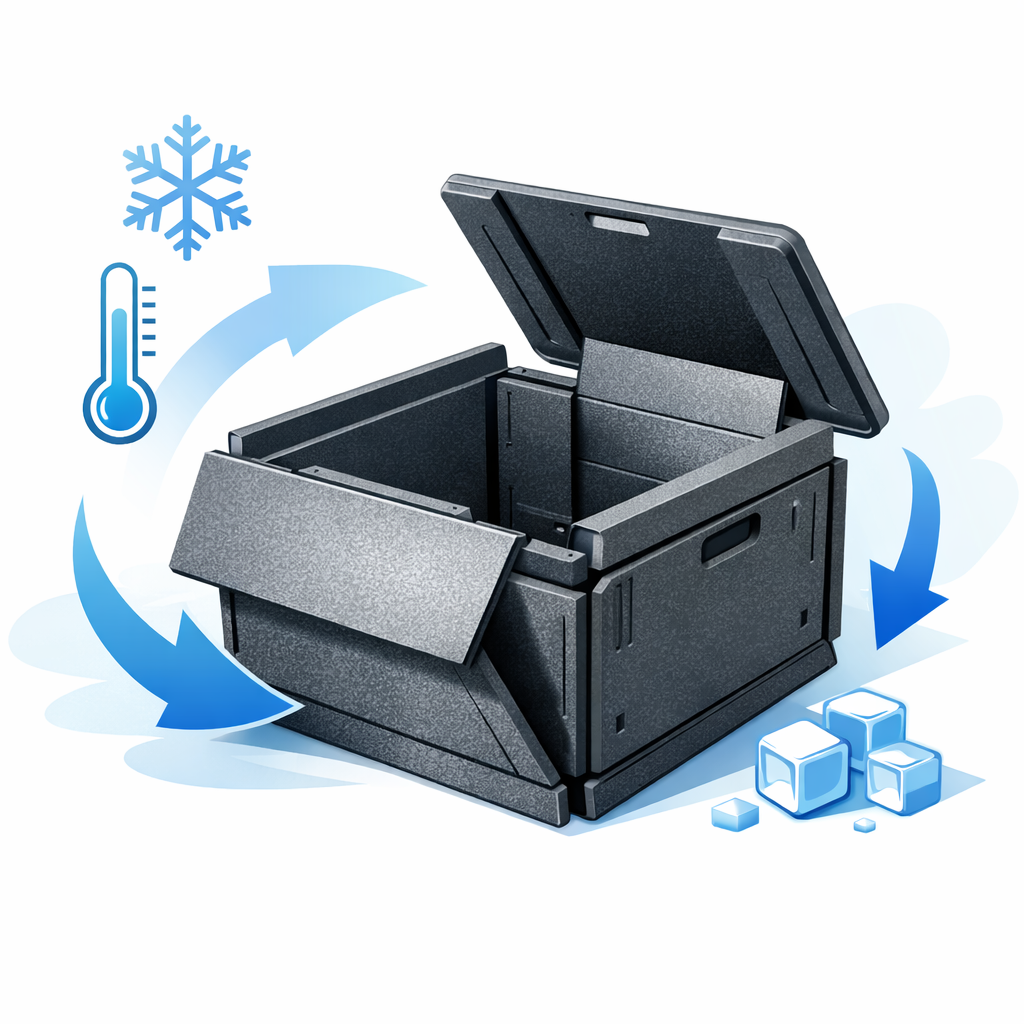
La meilleure façon d’évaluer le distributeur d’échantillons de laboratoire de boîtes EPP est de commencer par le travail que la boîte doit effectuer. La bonne décision en matière de boîtier EPP commence par la charge utile, pas l'image du catalogue. Taille, isolation, durabilité, prix, et l'assistance du fournisseur n'a de sens qu'après avoir défini la manière dont la boîte sera emballée, déplacé, ouvert, revenu, et inspecté. Pour les distributeurs d’échantillons de laboratoire, équipes logistiques de diagnostic, et le personnel d'approvisionnement soutenant le mouvement des échantillons, cela signifie vérifier la limite du conteneur, la charge utile, l'exigence thermique ou de protection, et les preuves du fournisseur avant de se concentrer sur le prix, apparence, ou revendications de catalogue.
Réponse pratique: Une boîte EPP mérite d'être considérée lorsque sa conception moulée, volume utilisable, couvercle, méthode de nettoyage, et les preuves opérationnelles correspondent au travail. Ne l'achetez pas uniquement parce que le matériau semble durable ou durable. Achetez-le car l'échantillon prouve qu'il correspond à votre charge utile, votre itinéraire, votre personnel, et vos besoins en documentation.
Commencez par la charge utile et l'itinéraire
Un examen pratique du distributeur d'échantillons de laboratoire en boîte EPP commence par la charge utile. Quelle est la taille du produit, poids, fragilité, sensibilité à la température, format d'emballage, et mouvement acceptable à l’intérieur de la boîte? Un récipient techniquement solide peut toujours se tromper si le produit tremble, si le couvercle appuie contre des surfaces délicates, ou si l'espace utilisable disparaît après l'ajout des inserts et du liquide de refroidissement.
Suivant, définir le parcours ou l'environnement d'utilisation. Utilisation en extérieur, livraison de nourriture, transfert de laboratoire, expédition d'électronique, transport de produits frais, et le transport pharmaceutique posent tous des questions différentes. Le même mur EPP peut être utile dans tous les cas, mais les preuves changent. Un produit de camping grand public peut nécessiter des tests de confort et de nettoyage. Un emballage pharmaceutique peut nécessiter une preuve de qualification, surveillance, et approbation de la qualité. Un itinéraire de produits peut nécessiter un contrôle de l’humidité et de la ventilation.
La leçon fondamentale de l’achat est simple: une boîte EPP peut prendre en charge la logistique des échantillons, mais il doit être traité comme faisant partie d'un système d'emballage documenté. Quand l'itinéraire n'est pas clair, la première étape la plus sûre est un examen d'un échantillon avec de vrais matériaux d'emballage et une liste écrite d'hypothèses.
Faites correspondre la boîte au système, Pas le slogan
Boîtes EPP sont souvent promus avec des mots tels que isolé, durable, recyclable, thermique, ou résistant aux produits chimiques. Ces mots peuvent être utiles, mais chacun a une limite. Isolé signifie que la boîte ralentit le transfert de chaleur. Cela ne signifie pas qu'il maintient toutes les plages de température. Durable signifie qu’il peut mieux résister aux chocs qu’un matériau plus fragile. Cela ne signifie pas que chaque conception survit à chaque chute ou pile.. Recyclable signifie que le matériau peut avoir un parcours de fin de vie où la collecte et le recyclage local existent. Cela ne signifie pas que le programme d’achat est automatiquement durable.
Si le contrôle de la température est important, définir le packout. Cela inclut le type de liquide de refroidissement, processus de préconditionnement, température de démarrage de la charge utile, emplacement de packs de gel ou packs PCM, remplissage de vide, scellement du couvercle, position de l'enregistreur de données, profil ambiant, et critères d'acceptation. Si la protection contre les impacts est importante, définir le système de retenue. Cela inclut les cavités moulées, inserts, pression du couvercle, séparateurs, et attentes en matière de chute ou de vibration. Si l'hygiène compte, définir le nettoyage et l'inspection.
Questions des fournisseurs qui évitent des retouches coûteuses
Demandez au fournisseur quel problème la boîte standard a été conçue à l'origine pour résoudre. Certains modèles sont conçus pour la livraison de nourriture, certains pour le transport en extérieur, certains pour la logistique médicale, et certains pour l'emballage de protection. Un modèle standard peut être adapté, mais l'adaptation doit être discutée ouvertement. Sinon, l'acheteur pourrait découvrir trop tard qu'une boîte de stock ne dispose pas d'une zone d'étiquette., un couvercle sécurisé, les bonnes dimensions intérieures, ou compatibilité avec la source de froid prévue.
Les meilleures questions sont concrètes. Quelles sont les dimensions internes et externes? Quel est le volume utile pratique après accessoires? Le fournisseur peut-il fournir des dessins? Ce qui change entre la production d'échantillons et la production en vrac? Quels produits de nettoyage conviennent? Existe-t-il des preuves de tests pour les réclamations thermiques ou d'impact? Quel est l'emballage attendu pour l'expédition à l'exportation? Comment les couleurs personnalisées, logos, inserts, ou les poignées affectent le coût et les délais de livraison? Si le fournisseur ne peut pas répondre immédiatement, la réponse devrait être un plan pour confirmer, pas une vague promesse.
Cadre décisionnel pour l’approbation des échantillons
| Question de l'acheteur | Pourquoi ça compte | Comment le vérifier |
|---|---|---|
| Quelle est la charge utile réelle et le volume utilisable? | Le volume interne brut peut ne pas correspondre à l'espace de chargement pratique après les inserts, packs de gel, échantillons, ou des plateaux de produits sont ajoutés. | Emballez un échantillon avec la charge utile réelle ou une charge utile factice réaliste et examinez la clôture, mouvement, et vitesse de chargement. |
| La boîte est-elle protectrice, isolé, ou partie d'un système thermique qualifié? | Ce sont des affirmations différentes. Un conteneur isotherme durable n'est pas automatiquement un expéditeur validé pour les marchandises réglementées. | Demandez l'usage prévu, méthode d'essai, hypothèses d'emballage, et une documentation de qualité qui soutient la réclamation. |
| Comment se comportera le couvercle lors de la manipulation? | Un couvercle desserré peut créer une fuite de chaleur, mouvement du produit, ou risque de contamination même lorsque les murs sont solides. | Vérifier l'ajustement du couvercle après le chargement, empilement, mouvement du véhicule, et ouverture répétée. |
| Le fournisseur peut-il assurer la cohérence de l'échantillon à la production? | Un bon échantillon ne suffit pas si la commande groupée change de dimensions, structure du mur, état de surface, ou accessoires. | Confirmer les dessins, tolérances, description du matériau, propriété du moule, et communication de contrôle des changements. |
| Quel nettoyage, retour, ou la voie d'élimination est réaliste? | Les allégations réutilisables et recyclables n'ont d'importance que si l'acheteur dispose d'un chemin opérationnel pour les utiliser. | Définir l'agent de nettoyage, point de contrôle, retourner le propriétaire, et processus de fin de vie avant la mise à l'échelle. |
Le tableau ne remplace pas la communication avec les fournisseurs. C'est une façon de garder la discussion concrète, surtout lorsque plusieurs fournisseurs utilisent des noms de produits similaires mais des hypothèses différentes.
Un examen discipliné protège également l'acheteur contre une commande excessive d'accessoires ou une sous-estimation du coût de la personnalisation.. Une fois que la charge utile réelle et le modèle de gestion sont visibles, le cahier des charges devient plus facile à défendre en interne.
Les acheteurs doivent garder à l’esprit les limites des preuves
Les références industrielles décrivent le polypropylène expansé comme une mousse à billes à cellules fermées utilisée là où le poids est faible., absorption d'énergie, isolation thermique, résistance à l'eau, et des manipulations répétées sont utiles. Cela soutient l’EPP en tant que candidat matériel, mais cela ne prouve pas qu'une conception de boîte particulière répond à un itinéraire spécifique, charge utile, ou exigence de qualité.
Pour les envois liés aux soins de santé, les acheteurs doivent utiliser une formulation prudente. Directives IATA sur le contrôle de la température, Attentes du PIB de l'UE, Concepts de stockage et de distribution USP, Conseils de manipulation des vaccins du CDC, et les systèmes de qualité internes pointent tous vers un contrôle des risques documenté plutôt que vers des réclamations occasionnelles sur les produits.. L'exigence exacte dépend du produit, marché, voie, et procédure qualité.
Les normes de test thermique telles que ISTA STD-7E peuvent aider à évaluer l'isolation emballage de transport sous des profils chauds et froids définis pour les systèmes de livraison de colis. Un acheteur doit toujours confirmer si la configuration de test du fournisseur correspond à la charge utile, liquide de refroidissement, durée, exposition ambiante, et les critères d'acceptation de l'envoi prévu.
Outils de décision utiles
Vérifiez les détails avant de choisir l'emballage
Ces outils rapides peuvent vous aider à comparer le risque d'itinéraire, besoins de dimensionnement, choix de liquide de refroidissement, et les détails de l'emballage avant de demander un devis.
Doublure de boîte & Dimensionnement des couvertures de palettes
Vérifiez la logique de dimensionnement du revêtement de boîte et du couvercle de palette pour les projets d'emballage isotherme.
Dimensionnement estiméGénérateur de liste de contrôle de conformité
Créer une liste de contrôle pratique pour l'examen des emballages, expédition, et documentation.
Construire une liste de contrôleRésistance aux chutes du matériau isolant
Examinez la résistance aux chutes et les facteurs de manipulation avant de choisir des matériaux d'isolation..
Vérifier la résistanceDes spécifications qui méritent une réponse écrite
- Plage de température requise: demandez comment ce facteur est intégré dans la conception de la boîte ou dans le processus de commande, et quelles preuves ou examens d'échantillons peuvent le confirmer.
- Séparation et insertions de la charge utile: demandez comment ce facteur est intégré dans la conception de la boîte ou dans le processus de commande, et quelles preuves ou examens d'échantillons peuvent le confirmer.
- Compatibilité des emballages secondaires résistants aux fuites: demandez comment ce facteur est intégré dans la conception de la boîte ou dans le processus de commande, et quelles preuves ou examens d'échantillons peuvent le confirmer.
- Enregistreur de données ou placement d'indicateur: demandez comment ce facteur est intégré dans la conception de la boîte ou dans le processus de commande, et quelles preuves ou examens d'échantillons peuvent le confirmer.
- Processus de nettoyage et de retour: demandez comment ce facteur est intégré dans la conception de la boîte ou dans le processus de commande, et quelles preuves ou examens d'échantillons peuvent le confirmer.
Ces réponses écrites protègent les deux parties. L’acheteur évite d’assumer des performances qui n’ont jamais été promises, tandis que le fournisseur peut recommander un modèle plus adapté, insérer, combinaison de liquide de refroidissement, ou chemin de personnalisation. Pour déplacer des échantillons de diagnostic, réactifs, ou des kits d'échantillons où la plage de température, étiquetage, et gérer les questions de discipline, cette étape est particulièrement utile car un même nom de produit peut cacher des exigences pratiques très différentes.
Exemple pratique: Testez le flux de travail, Pas seulement la boîte
Un scénario typique: une équipe logistique souhaite utiliser une boîte EPP pour un court déplacement de matériel de santé sensible à la température. L'équipe confirme d'abord la plage de température requise du produit et si l'exposition au gel constitue un risque.. Il vérifie ensuite si les packs de gel ou les packs PCM nécessitent un préconditionnement, où un enregistreur de données doit être placé, comment les échantillons sont séparés, et qui examine toute excursion de température après la livraison. La boîte EPP peut être un bon récipient isolé, mais la décision d'achat n'est pas définitive tant que l'emballage et la documentation n'ont pas été examinés par l'équipe qualité..
La valeur de cet exemple ne correspond pas au type de produit exact. Il montre la méthode de révision. Mettez le véritable flux de travail dans la phase d'échantillonnage: chargement, clôture, portant, stockage, ouverture, nettoyage, revenir, inspecter, et documenter. Lorsque l'échantillon de test comprend ces étapes, l'acheteur découvre des problèmes suffisamment tôt pour ajuster les dimensions, accessoires, ou instructions avant une commande plus importante.
Erreurs qui font qu'un bon matériau fonctionne mal
La plupart des échecs autour du distributeur d'échantillons de laboratoire en boîte EPP proviennent d'hypothèses incompatibles plutôt que d'un simple défaut matériel.. L'acheteur voit le mot EPP et s'attend à une isolation, résistance aux chocs, réutilisabilité, et la durabilité apparaissent automatiquement. En pratique, chaque avantage nécessite un détail de conception et un processus opérationnel.
- En supposant que l’isolation est synonyme de conformité: transformez-le en test ou en question fournisseur avant de passer une commande groupée.
- Ne pas vérifier la séparation des charges utiles: transformez-le en test ou en question fournisseur avant de passer une commande groupée.
- Besoins manquants en matière de surveillance de la température: transformez-le en test ou en question fournisseur avant de passer une commande groupée.
- Utiliser une boîte pour chaque type d’échantillon: transformez-le en test ou en question fournisseur avant de passer une commande groupée.
Une autre erreur courante consiste à ignorer les gens. Une boîte qui semble techniquement solide peut être trop gênante pour les conducteurs, personnel d'entrepôt, utilisateurs de terrain, ou des clients. Si le personnel laisse le couvercle ouvert, surcharger la boîte, ignorer le préconditionnement, ou oublier de le retourner, les performances observées lors d'un examen contrôlé n'apparaîtront pas lors d'une utilisation de routine. Un bon emballage n’est pas seulement une question d’ingénierie des matériaux; c'est aussi la conception de flux de travail.
Notes opérationnelles pour les différentes équipes d'achat
Les équipes d'approvisionnement doivent traduire le distributeur d'échantillons de laboratoire en boîte EPP en une spécification qui finance, opérations, et la qualité peut tout comprendre. Les finances poseront des questions sur le prix unitaire et le coût de remplacement. Les opérations demanderont si la boîte ralentit le chargement ou améliore la manipulation. La qualité demandera si la réclamation est documentée, surtout lorsqu'il est sensible à la température, nourriture, laboratoire, ou il s'agit de produits pharmaceutiques. Ces équipes peuvent utiliser un langage différent, mais ils examinent le même risque: si le conteneur se comportera de manière prévisible après l'achat.
Les ingénieurs d'emballage doivent prêter une attention particulière à la différence entre les dimensions du dessin et les dimensions pratiques de chargement.. L'espace de chargement réel peut diminuer après les insertions, séparateurs, liquide de refroidissement, matériaux absorbants, paquets primaires, ou des cartons de vente au détail sont ajoutés. Les ingénieurs doivent également vérifier si les murs moulés créent des points de pression, si le couvercle frotte contre la charge utile, et si des étiquettes ou des indicateurs d'effraction peuvent être appliqués sans bloquer la fermeture.
Les équipes d'entrepôt et de livraison doivent revoir le flux de travail humain. Une boite techniquement correcte mais difficile à ouvrir, fermer, empiler, faire le ménage, ou identifier créera une utilisation incohérente. Si l'équipe doit suivre une instruction d'emballage, l'instruction doit être suffisamment courte pour être utilisée lors d'un travail de routine et suffisamment claire pour qu'un nouvel opérateur puisse la suivre sans deviner.
FAQ
Le distributeur d'échantillons de laboratoire en boîte EPP est-il adapté à toutes les expéditions sous chaîne du froid?
Non. Une boîte EPP peut être un conteneur isolé ou protecteur utile, mais l'adéquation dépend des exigences de température du produit, durée de l'itinéraire, charge utile, configuration du liquide de refroidissement, processus de manipulation, et besoins en documentation. Pour pharmaceutique, laboratoire, ou des envois de grande valeur, les acheteurs doivent vérifier les preuves d'emballage et les exigences de qualité avant de traiter la boîte comme une solution d'expédition.
Que dois-je demander à un fournisseur avant de commander des échantillons?
Demandez les dimensions internes et externes, description du matériau, utilisation prévue, accessoires compatibles, conception du couvercle, conseils de nettoyage, contrôle de l'échantillon à la production, et toute preuve de test qui étaye les allégations thermiques ou d'impact. Si l'envoi est sensible à la température, demande aussi quel liquide de refroidissement, charge utile, profil ambiant, et des hypothèses de surveillance ont été utilisées lors des tests.
L'EPP rend-il automatiquement un emballage respectueux de l'environnement?
Pas automatiquement. Le EPP peut être réutilisable et recyclable lorsqu'il existe une voie appropriée, mais la durabilité dépend des taux de retour, nettoyage, contrôle des dégâts, fréquence de remplacement, et gestion de fin de vie. Une matière recyclable sans collecte ni boîte réutilisable sans retour, la discipline peut ne pas apporter les avantages environnementaux escomptés.
Une boîte EPP peut-elle être utilisée pour la nourriture, Pharma, échantillons de laboratoire, et produits d'extérieur?
Une même famille de matériaux peut apparaître dans de nombreuses applications, mais la spécification devrait changer selon le cas d'utilisation. La livraison de nourriture peut nécessiter un assainissement et un contrôle de la condensation. L'industrie pharmaceutique peut avoir besoin de documentation sur l'emballage. Les échantillons de laboratoire peuvent nécessiter un confinement et un étiquetage secondaires. Les produits d'extérieur peuvent nécessiter un confort de transport et un nettoyage par le consommateur. Utiliser l'application pour définir la boîte.
Comment savoir si un échantillon est prêt pour une commande groupée?
Un échantillon n'est prêt qu'une fois que la charge utile réelle a été compressée, manipulé, fermé, étiqueté, nettoyé, et examiné dans des conditions proches du flux de travail prévu. Si l'acheteur manque toujours d'informations sur les dimensions, accessoires, essai, ou la cohérence de la production, l'étape d'échantillonnage doit se poursuivre avant une commande groupée.
Conclusion
Le choix du distributeur d'échantillons de laboratoire box EPP ne doit pas se réduire à une simple comparaison de catalogue. La meilleure décision connecte le matériel, conception moulée, volume utilisable, comportement du couvercle, conditions d'itinéraire, accessoires, documentation, et coût total d'exploitation.
Utiliser des exemples pour tester le flux de travail, pas seulement l'apparence. Posez des questions spécifiques, éviter les hypothèses non étayées, et impliquent la qualité, logistique, ou les équipes opérationnelles dès le début lorsque l'expédition est sensible à la température ou réglementée.