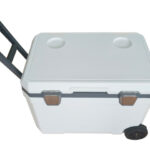
Your customers expect pristine deliveries—whether it’s fresh sushi or life-saving vaccines. The container you choose has to keep products at a stable temperature, survive bumps on the road and support your brand’s sustainability goals. The EPP cooler box is emerging as a game-changer. Its closed-cell structure provides excellent insulation and strength while being lightweight and recyclable. This guide explains what an EPP cooler is, compares it to traditional foams and shows you how to pick the right box for your needs.
Cet article répondra:
What is an EPP cooler box and how does it work? – Understand the science behind expanded polypropylene and why it maintains temperature better than many alternatives.
How does an EPP cooler compare with EPS and PU coolers? – Learn the differences in insulation, durability and environmental impact using long-tail keywords like EPP vs EPS cooler and EPP cooler thermal performance.
Why choose an EPP cooler box for cold-chain logistics? – Explore benefits such as reusability, impact resistance and food safety with keywords like EPP foam cooler benefits.
How do you select the right EPP cooler box? – Get practical tips on capacity, density and customization.
Quelles sont les dernières tendances en matière 2026? – Discover market growth, regulatory shifts and innovations shaping the future of cold-chain packaging.
Qu'est-ce qu'une glacière EPP et comment ça marche?
Polypropylène expansé (PPE) is a lightweight foam with a closed-cell structure that traps air to deliver exceptional insulation while remaining remarkably strong. When molded into a cooler box, these tiny cells form a rigid shell that resists water and chemicals. The result is a container that keeps contents cold or hot for extended periods—essential for perishable goods, pharmaceuticals and even outdoor recreation.
How EPP Insulation Works
Think of an EPP cooler box as a thermos built from millions of tiny air pockets. Each bead of expanded polypropylene encapsulates air, slowing heat transfer and providing a high strength-to-weight ratio. Unlike open-cell foams, the closed cells prevent moisture ingress, so the box doesn’t become soggy when exposed to condensation. This structure also makes the material non-hygroscopic; it doesn’t support bacterial or mold growth. The beads are fused into custom shapes, allowing manufacturers to produce boxes of varying densities and sizes.
Materials and Insulation: How Does EPP Compare to EPS and PU?
Traditional cooler boxes use expanded polystyrene (PSE) ou polyuréthane (Unité centrale) foams. These materials insulate well but come with trade-offs. EPS often relies on blowing agents such as Freon or butane that harm the environment. PU can leave behind isocyanates, chemicals that pose health risks during manufacturing. PU also degrades at temperatures above 80 °C.
Par contre, EPP coolers are non-toxic, odor-free and fully recyclable. They can withstand a broad temperature range—from -30 °C up to 130 °C—without losing shape. EPP recovers its original form after impacts, a property often described as having “memory”. Its closed-cell foam structure offers low thermal conductivity and minimal water absorption, giving the cooler superior heat-retaining properties.
| Matériel | Isolation & Plage de température | Durabilité & Résistance aux chocs | Durabilité & Sécurité | Implications pratiques |
|---|---|---|---|---|
| PPE (Polypropylène expansé) | Closed-cell structure with excellent insulation and broad temperature tolerance (-30 °C–130 °C) | High energy absorption; bounces back from dents; retains dimensional stability in extremestempaidcoldchain.com | Non toxique, odor-free and fully recyclable; resists water and chemicals | Ideal for reusable cold-chain shipping where durability and sustainability matter |
| PSE (Polystyrène élargi) | Good insulation but limited by narrower temperature range; prone to brittle fractures | Moins résistant; can crack under repeated impact | Uses environmentally harmful blowing agents such as Freon or butane; difficile à recycler | Suitable for single-use shipments where cost is the main driver |
| Unité centrale (Polyuréthane) | Excellent insulation but loses strength above 80 °C | Moderately durable but susceptible to permanent deformation | Manufacturing may leave traces of toxic isocyanates; often not recyclable | Often used for premium hard coolers but less suitable for pharmaceutical cold chains |
Practical Advice When Comparing Materials
Vérifier la conformité réglementaire: As extended producer responsibility (EPR) programs expand in 2026, many jurisdictions are imposing fees on single-use foams. EPP’s recyclability can reduce compliance costs.
Consider lifecycle costs: While EPP coolers have a higher upfront price than EPS, their ability to withstand hundreds of uses and maintain shape reduces long-term expensestempaidcoldchain.com.
Match the temperature range to your cargo: If your shipments include frozen items, choose a box with denser EPP and thicker walls. For ambient or hot meals, lighter densities suffice.
Why Are EPP Cooler Boxes Ideal for Cold-Chain Logistics?
EPP cooler boxes combine thermal stability, impact resistance and reusability—qualities critical for modern logistics. Their closed-cell foam insulates effectively while resisting water and chemicals. The material’s high strength-to-weight ratio allows thin walls without sacrificing robustness. It doesn’t support bacterial growth, making it food-safe. EPP can be reused hundreds of timestempaidcoldchain.com, dramatically reducing waste compared to single-use EPS.
Durability and Life-Cycle Benefits
Réutilisable des centaines de fois: EPP boxes are designed for hundreds of cycles but remain cost-effective even for single-use applicationstempaidcoldchain.com. This durability reduces your per-shipment cost over time.
Bounces back from dents and dings: The foam springs back after impacts, so you don’t have to discard boxes due to cosmetic damagetempaidcoldchain.com.
Recycling and remolding options: EPP can be shredded and remolded or recycled after usetempaidcoldchain.com. It is also classified as a Class 7 curbside material in many regionstempaidcoldchain.com, making disposal easier.
Aesthetics: Dark-colored EPP hides stains and dirt, keeping your containers looking professional even after repeated tripstempaidcoldchain.com.
Compatibilité: EPP shells can fit snugly around EPS inserts for added protection and insulationtempaidcoldchain.com. This hybrid approach offers a practical bridge for companies transitioning away from single-use foam.
Exemple: Chaîne du froid pharmaceutique
Pharmaceutical shipments often require maintaining 2–8 °C for 48 heures. Traditional EPS boxes can insulate but are prone to damage and are difficult to reuse. An EPP cooler box paired with gel packs or phase-change materials maintains the required temperature profile while surviving multiple return cycles. The material’s chemical resistance ensures that spilt saline or vaccine vials don’t degrade the box. Reusable EPP packaging also aligns with tightening sustainability targets, giving pharmaceutical brands a competitive edge.
Hygiène, Chemical Resistance and Food Safety
EPP’s non-porous surface doesn’t harbor bacteria or mold. The foam is virtually unaffected by alcohols, acides, oils and gasoline, meaning spills or cleaning agents won’t compromise performance. This makes EPP safe for transporting meat, dairy or laboratory samples. En revanche, EPS and PU can absorb liquids and become breeding grounds for microbes.
Thermal Performance Under Extreme Conditions
Expanded polypropylene retains dimensional stability even at temperature extremestempaidcoldchain.com. High-density EPP grades are used in automotive safety parts because of their energy absorption and thermal insulation qualities. For cold-chain packaging, this stability means you can use EPP coolers for frozen seafood at -20 °C or hot meal delivery at 60 °C without warping.
How to Choose the Right EPP Cooler Box for Your Needs
Selecting the right EPP cooler is about matching your logistics requirements with the material’s properties. Considérez la capacité, performance d'isolation, customization and budget.
Capacity and Box Dimensions
EPP coolers come in sizes ranging from individual lunch boxes to large shipping containers. Many manufacturers offer custom dimensions and shapes, allowing you to fit everything from a single vaccine tray to entire food kits. Evaluate the internal volume in litres and compare it with your payload. Don’t forget to account for coolant packs.
Density and Insulation Thickness
The foam’s density affects both insulation and strength. Low-density EPP (around 18–60 g/L) is lighter and suitable for short journeys, while medium-density foams (60–120g/L) offer better impact resistance for heavier loads. High-density grades (jusqu'à 200 g/L) are reserved for applications requiring maximum rigidity. Opt for thicker walls when your shipment must stay cold for 72 heures ou plus.
Lid and Handle Design
Check whether you need a flush-fitting lid for stacking or a hinged design for quick access. Integrated handles or shoulder straps improve portability, especially for catering and meal delivery. Some suppliers integrate lid locks or tamper-evident seals for high-value goods.
Customization and Branding
EPP boxes can be molded in custom colors and densities, and logos can be embossed into the material. This not only promotes brand recognition but also helps staff distinguish boxes intended for different temperature ranges. Customization may also include adding sensors or QR codes for monitoring.
| Considération | Que rechercher | Comment ça vous aide |
|---|---|---|
| Taille de la charge utile & poids | Choose internal volume that accommodates goods plus coolant packs | Prevents wasted space or cramped packing |
| Journey duration | Longer trips need thicker walls and higher density foam | Maintains temperature over extended routes |
| Conformité réglementaire | Boxes certified for food or pharmaceutical use | Meets health and safety requirements |
| Reuse program | Durable construction and easy cleaning | Lowers total cost of ownership and supports sustainability goals |
| Options de personnalisation | Embossed logos, color coding, tracking devices | Enhances brand visibility and traceability |
Assessing Performance and Insulation Requirements
Avant d'acheter, conduct a small test. Pack your typical payload with the intended coolant and record the internal temperature over time. Most suppliers will provide performance data or even simulation reports. Remember that EPP’s high strength-to-weight ratio allows thinner walls without sacrificing durability, so compare thermal curves rather than just wall thickness.
Conseils pratiques
Prototype first: Order a few samples to validate size and thermal performance before committing to a bulk purchase.
Planifier la logistique inverse: If you intend to reuse boxes, work with partners to arrange return shipping or drop-off points. Reusing EPP coolers hundreds of times maximizes your return on investmenttempaidcoldchain.com.
Inspecter régulièrement: Although EPP bounces back from dentstempaidcoldchain.com, inspect for cracks around hinges or handles after each trip. Damaged boxes should be recycled.
Exemple de cas: A meal-kit company shipping chilled ingredients across state lines switched from corrugated cardboard liners to medium-density EPP coolers. By designing a custom box with a flush lid and integrated handle, they reduced damaged shipments by 25 % and reused each cooler up to 80 fois. The branding embossment improved customer perception, and the durable foam maintained cold temperatures over 48-hour deliveries.
Common Applications of EPP Cooler Boxes
EPP coolers are versatile and serve many industries. Their combination of insulation, durability and reusability opens opportunities beyond basic food delivery.
Industry-Specific Uses: Nourriture, Pharma & Au-delà
Livraison et restauration: Meal-kit services and caterers use EPP coolers to keep meals at safe temperatures during transit. The lightweight design reduces driver fatigue and fuel costs.
Pharmaceutical and Life Sciences: Vaccine vials and biologics require strict temperature control. EPP boxes maintain 2–8 °C with gel packs and withstand return cycles without warping.
Beverage and Retail: EPP beverage coolers keep drinks chilled for hours. Some models include string handles for easy carrying.
Logistique des produits frais: EPP’s impact resistance cushions delicate fruits during transport. Its insulation minimizes temperature spikes that cause spoilage.
Industrial and OEM Packaging: High-density EPP is used for shipping sensitive electronics and automotive parts. The foam’s shock absorption protects items during long-haul freight.
| Application | Required Features | Avantages pour vous |
|---|---|---|
| Chaîne du froid pharmaceutique | Long-duration insulation, tamper-evident design, return-able | Maintains 2–8 °C; reusable packaging aligns with sustainability targets |
| Meal-Kit Delivery | Medium insulation, poignées ergonomiques, marque | Keeps ingredients fresh; improves brand visibility and customer experience |
| Produits frais | Impact cushioning, ventilation options | Reduces bruising; keeps produce crisp and reduces waste |
| Beverage Sales & Événements | Portable size, brise | Provides chilled drinks at events; facile à transporter |
| Électronique & Automobile | High density, custom inserts | Protects fragile components during transit; reusable crates save cost |
Practical Tips for Industry Adoption
Layer different coolants: Pair EPP coolers with phase-change materials to maintain specific temperature ranges (Par exemple, 5 °C or frozen). This approach is used in pharmaceutical logistics.
Use color coding: Assign colors or labels for different product categories to avoid cross-contamination and simplify warehouse handling.
Train staff on return logistics: Drivers and clients should know how to collapse or stack empty EPP boxes for return. Efficient reverse logistics ensures you achieve the full reuse potential.
Exemple concret: An organic grocery chain replaced its EPS liners with EPP fruit coolers. The robust foam protected berries from bruising and extended shelf life by preventing temperature spikes. Reusable boxes reduced packaging waste by 70 %, satisfying customer demand for sustainability.
2026 Tendances & Innovations in EPP Cooler Boxes
Market and Technology Overview
The cold-chain packaging market is expanding rapidly. Reports estimate that the overall market will grow from USD 35.56 billion in 2025 to USD 40.75 billion in 2026, representing a 14.6 % compound annual growth rate (TCAC). Soft coolers and insulated bags account for roughly 40 % of the cooler market, generating about USD 2.4 billion. Reusable materials like EPP are at the center of this growth because they meet sustainability mandates and reduce long-term costs. The circular cold-chain packaging market specifically is projected to grow from USD 820 million in 2026 to USD 1,959.1 million by 2036, with EPP, HDPE and insulation foams holding a 50 % share. Reusable insulated boxes and totes are expected to dominate the segment with 45 % market share.
Another report forecasts that the expanded polypropylene (PPE) foam market will grow from USD 1.24 billion in 2025 to USD 1.32 billion in 2026, reaching USD 1.83 billion by 2031 with a 6.68 % CAGR. Growth drivers include automotive lightweighting and the boom in reusable e-commerce packaging. Synthetic polypropylene accounts for 91.78 % of the market, and molded EPP captures 70.88 % share.
Dernières innovations
Integrated IoT sensors: Manufacturers are embedding temperature and humidity sensors into EPP lids to provide real-time monitoring. Data can be transmitted to logistics dashboards for compliance.
Recycled EPP resin: Some suppliers blend post-industrial or post-consumer polypropylene into new foams, reducing virgin plastic usage. Future regulations may require minimum recycled content.
Modèles pliables: Foldable EPP coolers are gaining popularity. The material’s memory and flexibility allow boxes to collapse flat for return shipment without compromising strength.
EPR-friendly labeling: 2026 marks the rollout of extended producer responsibility programs across several U.S. états. Manufacturers are adding QR codes and standardized recyclability labels to EPP boxes, streamlining downstream sorting.
Modular systems: Companies are developing modular EPP panels that connect via interlocking edges. Users can configure boxes of different sizes by assembling panels, reducing inventory SKUs.
Insistance au marché
The push toward circular packaging and lower greenhouse-gas emissions drives adoption of reusable materials. The fresh and frozen food sector is expected to increase consumption of circular cold-chain systems, with China leading growth through 2036. Regulatory tightening on microplastic loss in Europe and California is adding compliance costs for resin processors. Par conséquent, large fabricators are leveraging scale efficiencies and investing in new capacity in North America and Asia. For brand owners and logistics managers, these trends mean that EPP cooler boxes will become even more accessible and customizable, while legislation will make single-use foams more expensive.
Questions fréquemment posées
Q1: Are EPP cooler boxes really environmentally friendly?
Oui. Le PPE est 100 % recyclable, and its reusability reduces waste. Par rapport à l'EPS, it doesn’t rely on harmful blowing agents. Many manufacturers offer programs to shred and remold used EPP into new productstempaidcoldchain.com.
Q2: How long can an EPP cooler box maintain cold temperatures?
It depends on the box’s density, wall thickness and the type of coolant used. High-density EPP coolers can maintain 2–8 °C for 48–72 hours when paired with gel packs. Always validate performance with a small test run.
Q3: Is there a weight limit for EPP coolers?
EPP has a high strength-to-weight ratio. Typical shipping coolers can hold 10–50 kg depending on design. For very heavy loads, choose higher density foam and reinforced handles.
Q4: Can I clean EPP coolers with harsh chemicals?
Oui. The material is resistant to most acids, oils and gasoline. For food applications, use mild detergents or disinfectants; the non-porous surface won’t absorb liquids.
Q5: How do EPP coolers affect shipping costs?
Their lightweight construction reduces transportation costs and fuel consumption. Reusable boxes also decrease the number of disposables you need to purchase, saving money over time.
Résumé & Recommandations
Principaux à retenir: EPP cooler boxes offer superior insulation, durability and sustainability compared with traditional EPS or PU coolers. Their closed-cell foam traps air to maintain temperature, yet the containers remain lightweight and resistant to impactstempaidcoldchain.com. EPP is non-hygroscopic and resistant to water and chemicals, le rendant sans danger pour les aliments et les produits pharmaceutiques. The material is fully recyclable and can be reused hundreds of timestempaidcoldchain.com, s'aligner avec 2026 sustainability regulations. Market forecasts show rapid growth for EPP foam and circular cold-chain systems.
Plan d'action:
Assess your cold-chain needs: Déterminer la taille de la charge utile, journey duration and temperature requirements. Choose EPP densities and box designs accordingly.
Piloter et valider: Test different EPP coolers with your product and coolant to confirm thermal performance and handling.
Planifier la logistique inverse: Set up return programs for used EPP boxes. Partner with carriers or create drop-off points to maximize reuse.
Embrace customization: Collaborate with your supplier to mold boxes in your brand colors, add logos and integrate sensors for temperature monitoring.
Gardez une longueur d'avance sur la réglementation: Monitor EPR deadlines and recycled content requirements. EPP’s recyclability positions you favorably as single-use foams face higher fees.
À propos du tempk
Tempk specializes in innovative cold-chain packaging solutions. We design and manufacture EPP cooler boxes, phase-change ice packs and insulated bags tailored for food, clients pharmaceutiques et industriels. Our products leverage high-quality expanded polypropylene foam with customizable densities and colors. By investing in advanced molding and R&D, we ensure that every Tempk cooler delivers superior thermal performance and survives hundreds of reuse cycles. We pride ourselves on sustainable practices—our EPP products are fully recyclable and manufactured under strict quality standards.
Ready to improve your cold-chain logistics? Contact Tempk for a consultation and discover how our EPP cooler boxes can help you protect products, reduce costs and meet 2026 objectifs de durabilité.