Frozen Shipping Packaging Built Around Arrival Requirements
An order arriving in a cold carton can still miss its frozen specification. Frozen shipping packaging should be selected around the required product condition and the entire period from packing to receiving storage. That requires a compatible coolant, an insulated enclosure, physical and moisture protection, and evidence for the complete assembly. For food and seafood buyers, the most useful starting point is a measurable arrival requirement followed by a trial of the actual payload, itinéraire et processus d'emballage.
Set a receiving standard that can be tested
Replace instructions such as keep frozen with a product-specific requirement. Identify the temperature limit, permitted variation, quality checks and method used to assess receipt. The limit should come from the product owner and applicable market requirements. A packaging supplier can help design protection around it, but should not invent the product's acceptance standard.
For quick-frozen foods within its scope, Codex describes maintenance at −18°C or colder, subject to permitted tolerances. The code excludes edible ices, ice cream and milk. Do not apply that reference without checking product scope or treat it as a universal law for every destination. Frozen pharmaceutical material, food and laboratory samples can have different requirements.
Record the starting condition alongside the receiving requirement. Product that enters the shipper warmer than intended creates a different thermal load. Packaging designed to maintain frozen goods should not be relied upon to complete a freezing process during transport unless that use has been specifically evaluated and accepted.
Define how the receiving decision will use measurements. A carton air reading, product surface reading and product core measurement answer different questions. Select the method appropriate to the product and approved procedure. Apparence, remaining coolant and an arrival spot reading can contribute to inspection, but do not by themselves establish the complete temperature history.
Agree the endpoint of protection. Delivery to a loading dock or doorstep may precede movement into suitable storage. If packaging is expected to bridge that interval, include it in the design and trial. If the recipient assumes responsibility earlier, make the handling requirement explicit and verify that the arrangement is practical.
Choose coolant by its function and constraints
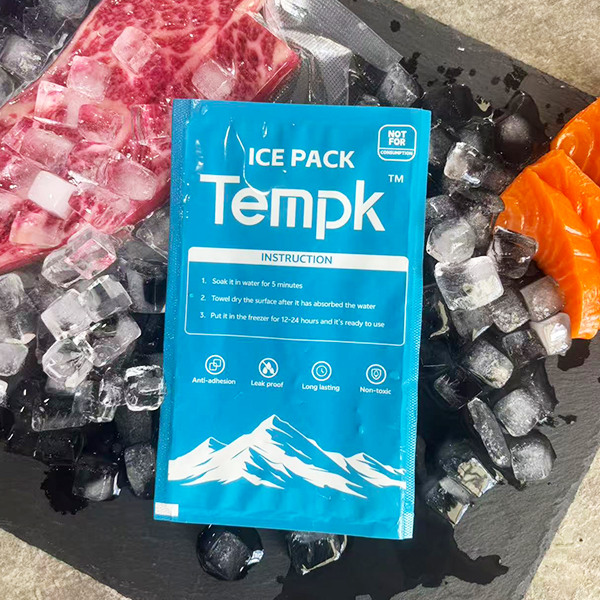
Packs de glace à base d'eau, subzero phase change materials and glace carbonique should be compared as different options. The decision depends on the required product condition, exposition, compatibilité, preparation process and carrier acceptance. A generic description such as frozen paquet de gel does not identify the temperature behavior needed for the shipment.
Water ice melting near 0°C cannot provide the same phase-change buffering as a material selected for a lower frozen temperature. A deeply frozen water pack can absorb energy while warming, but that initial reserve is finite. It does not justify a general claim that ordinary ice packs maintain any frozen requirement for a stated journey.
A subzero PCM may be suitable when its documented behavior and the complete system support the application. Request the relevant data and preparation instructions. Check which freezer or conditioning equipment is needed, how readiness is established and how long prepared components can remain staged before use. A nominal phase point is not a substitute for payload performance evidence.
Dry ice offers another approach for compatible applications. It becomes carbon dioxide gas, creating requirements for gas release and safe handling. The FAA's guidance for US air shipments states that emballage de glace sec must allow the gas to escape, and carrier-specific arrangements must also be addressed. Confirm the transport modes, acceptance and applicable preparation obligations before choosing the packout.
| Approche du liquide de refroidissement | Decision it may support | Limitation to resolve |
|---|---|---|
| Ordinary water-based ice pack | Applications supported by its actual temperature behavior | No automatic sustained control at a lower frozen limit |
| Subzero PCM | Defined frozen range in an assessed passive system | Formulation, conditioning and packout evidence must match |
| Glace sèche | Compatible frozen or colder transport requirements | Acceptation du transporteur, dégagement de gaz, handling and product compatibility |
| Temperature controlled transport with protective packaging | Routes supported by suitable controlled infrastructure | Transfer exposure and service contingencies remain relevant |
Shortlist feasible approaches before asking which is cheapest. A coolant barred by the transport arrangement cannot become a workable choice through better insulation. Inversement, a permitted coolant still needs to demonstrate protection in the proposed box with the actual load.
Design the enclosure around the loaded shipment
Compare usable product space after placing coolant, panneaux, separators and containment. Nominal volume is a poor purchasing measure when thermal components occupy part of the enclosure. Provide packed product dimensions and check the completed layout physically before approving a drawing.
Include product mass and shape. A heavy load can stress the base and outer carton; irregular packs can interfere with the lid or create difficult contact points. Thin product portions and dense bulk packs can respond differently to heat. The packaging brief should identify those differences rather than average them into an unrepresentative order.
Evaluate the offered insulation assembly rather than judging the material name alone. A carton with an doublure isolée, un rigide boîte de mousse and a protected vacuum-panel shipper can each be appropriate under supported conditions. Construction de murs, ajustement du couvercle, articulations, closure and handling durability contribute to the result. Ask what evidence applies to the actual proposed structure.
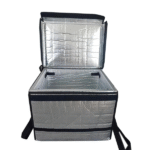
Reflective foil is one feature within an enclosure, not proof of thermal duration or leak resistance. Confirm the liner's full construction, seams and closure in the sample. If a supplier changes the liner to meet a price target, assess the effect instead of assuming that a similar-looking surface preserves the original performance.
Keep product movement under control. Cloisons, separators and void management should protect primary packs and maintain the intended arrangement during handling. Excessive compression can damage a bag or prevent correct closure. Empty spaces should be handled according to the evaluated design rather than filled with whatever material is available on the line.
Give seafood containment a separate job
Seafood packaging needs to consider sealed product packs, bords tranchants de la coque, vitrage, abrasion and possible fluid release. Define which layer contains the product and which protects the carton. An insulated liner, absorbent pad and sealed primary bag perform different functions and should not be treated as interchangeable.
Inspect primary packs after representative loading and handling. Vacuum packs or bags that fit at rest can be punctured by movement, corners or an adjacent frozen component. Adjust the protection or arrangement based on observed risks, then reassess the complete configuration if the change affects the thermal design.
Specify secondary containment and absorbent material where the product and hazard assessment call for them. Keep leakage away from the outer carton and neighboring goods. Wet packaging can create handling and strength problems even when the thermal result is acceptable. Moisture management should be evaluated during the same practical trial, not added as an afterthought.
Outils de décision utiles
Vérifiez les détails avant de choisir l'emballage
Ces outils rapides peuvent vous aider à comparer le risque d'itinéraire, besoins de dimensionnement, choix de liquide de refroidissement, et les détails de l'emballage avant de demander un devis.
Liquide de refroidissement & Référence PCM
Comparez les options de liquide de refroidissement et de PCM lorsqu'un itinéraire nécessite une prise en charge supplémentaire de la température.
Comparez les optionsRéférence du matériau isolant
Comparez les choix de matériaux d'isolation pour différents besoins d'emballage de la chaîne du froid.
Comparez les matériauxCalculateur de glace carbonique
Estimer les besoins en glace carbonique pour les envois congelés ou ultra-froids avant l'emballage.
Estimation de la neige carboniqueFor a dry ice system, ensure that product containment does not trap evolving gas in a sealed compartment. Rétention thermique, leak control and gas release need to work together in the approved assembly. Use the applicable packing instructions and supplier design assessment rather than improvising a sealed inner bag around all contents.
Food-contact suitability should also be checked for the relevant materials and intended contact conditions. Request applicable documentation instead of assuming that all thermal components are suitable for direct contact. The packout should preserve food safety controls as well as temperature and appearance.
Trial the order patterns that could fail differently
Consider a hypothetical frozen seafood program with small replenishment orders and larger cartons on the same parcel service. The smaller load may have less cold product mass; the larger load may crowd coolant space or complicate closure. Neither pattern should be approved solely from a trial of the other.
Define the relevant order envelope, including product formats and starting conditions. Select representative and challenging configurations through a risk review. If a surrogate payload is used, explain how it represents the properties and arrangement important to the result. Convenient test contents are not automatically representative contents.
Apply an external exposure appropriate to the intended use and record it. Standardized parcel thermal profiles can provide a documented reference, but the specific procedure and relationship to the lane should be clear. Add route trials or further assessment where the intended conditions remain unsupported. A box tested under one exposure does not carry a universal duration for all shipping programs.
Place sensors to investigate likely vulnerable product areas. Explain whether each records air, a surface or an internal location, and confirm the equipment is suitable for the frozen temperatures encountered. Review calibration, logging interval and measurement uncertainty as part of the method. Do not place a sensor against coolant and then describe that record as every product unit's temperature.
Inspect physical condition as well as thermal results. Record leakage, bag damage, mouvement, ajustement du couvercle, carton wetting and ease of handling at receipt. A satisfactory temperature trace cannot compensate for failed primary containment. The trial should answer whether the finished shipment meets the agreed acceptance criteria as a whole.
Make the packing line capable of repeating the result
Translate the assessed design into instructions that identify components, préparation, ordre de chargement, séparateurs, closure and monitor placement. Use a bill of materials and revision code that purchasing and fulfillment can both recognize. Photographs or drawings of the approved arrangement can help staff identify departures without relying on memory.
Verify conditioning readiness before loading. A freezer setpoint alone does not prove that a crowded stack of PCM packs has reached its required state. The procedure should define preparation and readiness checks for the actual equipment and component load. Match conditioning capacity to the order schedule so that urgent dispatch does not encourage premature use.
Manage product staging between frozen storage and box closure. Prepare available materials before releasing the order where practical, and measure the real process during a pilot. When a missing component, delayed label or interrupted line changes the starting condition, staff need an escalation route and an approved action.
Set a missed-pickup procedure. A completed carton waiting for another collection has already experienced part of its planned history. Reprinting its label does not reset the thermal reserve. Decide how the product is held, reviewed and repacked when needed under the product-specific process.
Control substitutions. Un autre pack de liquide de refroidissement of similar size may have different thermal behavior; a replacement liner may have different seams or thickness. Even additional coolant can alter payload fit, contact and weight. Require assessment of relevant changes instead of treating any colder or heavier arrangement as automatically better.
Compare cost only after the scope is equivalent
Ask each supplier to quote the full assembly and identify exclusions. Inclure le liquide de refroidissement, séparateurs, endiguement, étiquettes, outer carton and preparation resources in the comparison. A low box price can conceal costs that are necessary to deliver the supported configuration.
Use external dimensions and actual packed weight with the chosen carrier's current charging rules. Evaluate labor, espace de conditionnement, réapprovisionnement, damaged components and returns where applicable. These operating costs can change the purchasing decision even when two samples have similar thermal results.
Pour des emballages réutilisables, confirm who returns, nettoie, inspects and prepares the system. A return program needs enough usable equipment available at dispatch, not merely enough units purchased. Environmental claims should reflect the real return and reuse process and the relevant evidence, rather than an assumption that every reusable enclosure is automatically preferable.
Send a quotation brief that includes the product requirement, condition de départ, enveloppe de charge, itinéraire, service, delay exposure, accord de réception, leakage risks, quantity and sample deadline. Ask suppliers to confirm commercial terms and the proposed evidence scope. Separate what is available now from what would require development or testing.
Tempk's published frozen food and seafood offering describes configuration discussions covering expéditeur isolé formats, coolant layouts and seafood containment. These options provide a starting point for a sample inquiry. The performance of an individual order still needs support from the identified configuration and its evaluation; a public service description does not establish a universal hold time.
Frozen shipping packaging is ready for operational use when the arrival requirement, loaded design and dispatch process have a defensible connection. Approve the configurations that the evidence supports, define how exceptions are handled and preserve the assembly through repeat orders.
Prepare your product limit, dimensions de la charge utile, route and receiving requirements, then request a complete sample packout. Use the trial to confirm temperature protection, containment and repeatable packing before releasing the production specification.