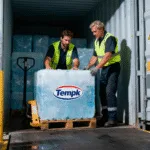
La conception des expéditeurs de palettes en briques de gel commence par la charge
UN brique de gel un expéditeur de palettes ne peut pas être créé en agrandissant un paquet de colis et en multipliant son nombre de liquide de refroidissement. Les charges de palettes développent des conditions différentes au centre, visages, coins, haut, et socle. Les briques ajoutent une masse substantielle, les longs joints d'isolation créent des chemins de chaleur, et la manipulation d'un chariot élévateur peut déplacer ou endommager les composants thermiques. La première question n’est donc pas « Combien de briques?" Il s'agit de savoir si une enceinte de palette passive est la bonne stratégie de contrôle pour le produit, voie, modèle de charge utile, entrepôt, et destination. Ce n'est qu'alors que l'équipe doit concevoir le réseau de liquides de refroidissement et le programme de qualification..
Sélectionnez l'architecture d'expédition avant les composants
La quantité de palettes peut varier de plusieurs manières, et chacun répartit les risques différemment.
Une enceinte passive autour d'une palette complète réduit les emballages individuels et peut maintenir la charge unitaire intacte tout au long de la manutention du fret.. Cela concentre également la valeur du produit et crée un important gradient interne. Un panneau manquant ou un module de refroidissement déplacé peut affecter de nombreux cas.
Au niveau du cas expéditeurs qualifiés placé sur une palette utilise plus d'emballage et de main d'œuvre, mais chaque cas a sa propre configuration contrôlée. Cela peut convenir à des charges réparties sur plusieurs récepteurs ou ayant des exigences de température mixtes..
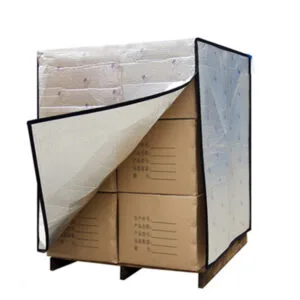
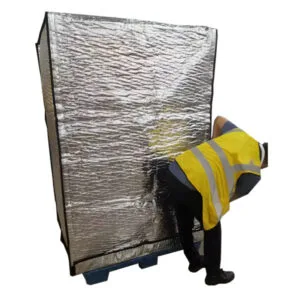
Un conteneur actif ou un véhicule à température contrôlée gère l'air autour du chargement. Cela peut durer longtemps, de grande valeur, ou itinéraires variables, puissance fournie, disponibilité des équipements, installation, chargement, transferts, et la récupération sont contrôlées. Une couverture de palette isolée peut réduire les courtes expositions lors des transferts, mais un couvercle seul ne constitue pas une réfrigération active et ne devrait pas faire tomber un produit chaud..
Comparez les architectures à ces questions:
Le chargement reste-t-il intact à destination ou est-il divisé en livraisons plus petites?
Dans quelle mesure les limites de produits sont-elles étroites, et quelle est la conséquence d'une excursion?
Les installations actives sont-elles fiables à chaque transfert?
L'état d'origine peut-il et installer une quantité de liquide de refroidissement par palette de manière cohérente?
Quel retard ou comportement douanier se produit sur la voie réelle?
Un système consigné peut-il être récupéré, inspecté, et repositionné?
Quelle quantité de cube de charge utile et de masse de fret chaque option consomme-t-elle?
Le devis sortant le moins cher peut entraîner la charge de qualification ou le risque d'échec le plus élevé.. Décidez avec la qualité, ingénierie de l'emballage, logistique, opérations d'entrepôt, et les achats à la même table.
Établir une base de conception tridimensionnelle
Une palette doit être traitée comme une unité de charge cartographiée, pas un poids total. Dimensions du porte-documents, masse du produit et condition de départ, orientation, motif de calque, pile maximale, règles de charge partielle, lacunes, feuilles intercalaires, planches de coin, fardage, film étirable, et construction de palettes. Les caisses mixtes peuvent stocker et transférer la chaleur différemment même lorsque la palette pèse le même.
| Entrée de conception | Décision que l'équipe doit prendre | Pourquoi ça change le système |
|---|---|---|
| État du produit | Limites requises, sensibilité au gel, et processus d'excursion | Le périmètre froid et les positions intérieures chaudes peuvent avoir leur importance |
| Modèle de charge | Approuvé complet, minimum, partiel, et configurations mixtes | La densité et l'espace libre modifient les gradients et le flux d'air |
| Voyage | Temps de porte à porte, demeurer, retard, et fenêtre de réception | Le refroidissement passif a une capacité limitée à chaque transfert |
| Défi externe | Conditions saisonnières chaudes et froides pertinentes | Grands visages, exposition du toit, et le contact au sol réagissent différemment |
| Liquide de refroidissement | Formulation, géométrie, condition, quantité, et disposition des zones | De nombreuses unités amplifient les tolérances et les variations d'assemblage |
| Enceinte | Panneaux, articulations, base, couvercle, fermeture, et accès | Les coutures et les éléments structurels peuvent devenir des ponts thermiques |
| Manutention | Entrée de fourche, vibration, compression, retenue, et inclinaison | Les dommages peuvent modifier à la fois la sécurité du chargement et les performances thermiques |
| Surveillance | Plan de cartographie, postes courants, contrôle des appareils, et revoir | Une lecture centrale représente rarement la palette entière |
| Réutilisation | Possession, retour, nettoyage, réparation, et la retraite | La logistique inverse peut déterminer le coût et la valeur environnementale |
La base de conception devient la référence en ingénierie, essai, approvisionnement, et instructions de travail. Si les palettes partielles sont courantes, définissez-les maintenant. Le remplissage en vrac ajouté au quai ne constitue pas un substitut acceptable à une configuration approuvée à faible charge..
Comprendre les zones thermiques
Les boîtiers d'angle peuvent recevoir la chaleur de plusieurs surfaces. Les valises supérieures peuvent faire face à un toit de remorque chaud ou à une exposition sur une rampe, tandis que la base interagit avec le plateau de palettes, canaux de fourche, sol de l'entrepôt, et la surface du véhicule. Le produit central est tamponné par les cas environnants et peut changer lentement. Cela n'aide que lorsqu'il commence dans l'état approuvé; le liquide de refroidissement périmétrique ne peut pas corriger rapidement un noyau de palette chaud.
Les voies aériennes comptent également. Emballage serré, canaux ouverts, et le mouvement de changement du bois de calage effondré à l'intérieur de l'enceinte. Préserve tout espace ou entretoise conçu grâce aux vibrations et à la manipulation. Une palette passive n'a pas la circulation contrôlée d'une chambre réfrigérée.
Construisez le liquide de refroidissement et la structure en un seul assemblage
Les briques en vrac sont difficiles à compter et à retenir à l'échelle des palettes. Plateaux, cassettes, poches, ou des panneaux conditionnés peuvent regrouper le liquide de refroidissement en zones visibles et réduire les erreurs d'installation. Un module doit conserver son contenu en le soulevant, freinage, vibration, et déconsolidation sans percer la brique ni bloquer le transfert de chaleur prévu.
Les dispositions courantes incluent des banques latérales, un pont supérieur, modules de base protégés, cassettes d'angle, ou liquide de refroidissement entre les niveaux de produits. Chacun a un compromis. La couverture périmétrique peut surrefroidir les boîtiers extérieurs tout en laissant une condition différente au centre. Le liquide de refroidissement intercouche rapproche la capacité du produit mais ajoute du travail, complexité de la pile, et risque de contact direct. Les briques de base nécessitent un tablier structurel et une protection contre les dommages causés par les fourches..
Pour les produits sensibles au gel, séparer les boîtiers de produits du liquide de refroidissement profondément conditionné selon la conception qualifiée. Plus de réserve de refroidissement n'est pas automatiquement plus sûre. Des matériaux à changement de phase ou des briques conditionnées différemment peuvent être envisagés le cas échéant., mais un point de transition nominal n'établit pas une température uniforme du produit.
L’enceinte isolante doit survivre à la réalité du fret. Définir l'ordre des panneaux, joints d'angle, fermeture de porte ou de couvercle, interface de base, attaches, points d'accès, sangles, motif de film étirable, et ouvertures de fourches. Articulations longues, cadres conducteurs, coins écrasés, et les pénétrations peuvent contourner un panneau autrement solide. Étiquettes, dispositifs de suivi, et les pochettes à documents doivent rester visibles sans ouvrir la limite thermique.
Vérifier les dimensions hors tout, masse, centre de gravité, jeu de fourche, contraintes d'avion ou de véhicule, portes d'entrepôt, et compatibilité des racks. Une conception thermiquement prometteuse qui ne peut pas être soulevée en toute sécurité ou acceptée par le transporteur n'est pas un expéditeur viable..
Rendre le conditionnement et l’assemblage opérationnellement possibles
Les quantités de palettes transforment la préparation du liquide de refroidissement en un processus d'installation. Les cas denses de briques retournées chaudes limitent le flux d'air du congélateur et imposent une charge thermique importante. Les unités proches de l'extérieur d'une pile peuvent atteindre l'état requis avant celles du centre.. Vérifiez le congélateur actuel, espacement des racks, taille du lot, séquence de chargement, méthode de préparation, récupération, et plan de sauvegarde.
Retour séparé, conditionnement, libéré, et stock rejeté. Si le système utilise un matériau trempé ou à changement de phase, définir précisément l'état et la méthode de mise en scène. Le premier module retiré lors d'un assemblage long peut avoir un historique différent du dernier, la qualification doit donc inclure un temps de construction réaliste et une exposition maximale.
Concevoir la zone d'emballage comme une cellule de production. Organisez les composants dans l'ordre d'installation et utilisez des points d'arrêt avant que les couches ultérieures ne masquent une erreur.. Un dossier pratique peut capturer:
identification et inspection des palettes et des coffrets;
Outils de décision utiles
Vérifiez les détails avant de choisir l'emballage
Ces outils rapides peuvent vous aider à comparer le risque d'itinéraire, besoins de dimensionnement, choix de liquide de refroidissement, et les détails de l'emballage avant de demander un devis.
Calculateur de glace carbonique
Estimer les besoins en glace carbonique pour les envois congelés ou ultra-froids avant l'emballage.
Estimation de la neige carboniqueCalculateur de banquise
Estimation de la quantité de pain de glace pour les expéditions réfrigérées et planification pratique des itinéraires.
Estimer les packs de glaceDoublure de boîte & Dimensionnement des couvertures de palettes
Vérifiez la logique de dimensionnement du revêtement de boîte et du couvercle de palette pour les projets d'emballage isotherme.
Dimensionnement estimérévision approuvée du modèle de charge;
version du produit et condition de départ;
identité du liquide de refroidissement, parcelle, État, et nombre de zones;
début et fin de l'assemblage;
activation du moniteur et emplacement cartographié;
fermeture, sangles, envelopper, scellés, dimensions, et le poids;
préparation et transfert du transporteur approuvés.
Utiliser des analyses, photographies, rapprochement des poids, ou contrôles en deuxième personne lorsque le risque le justifie. Ces contrôles doivent rester suffisamment rapides et clairs pour le pic de production. Les grands modules congelés peuvent nécessiter des chariots, aides au levage, des gants adaptés, ou levage en équipe dans le cadre du processus de sécurité du site. Si le personnel contourne systématiquement une étape difficile, réviser la conception plutôt que de compter sur des rappels.
Qualifier ensemble les performances thermiques et mécaniques
Les études thermiques doivent utiliser la palette exacte, modules de refroidissement, isolation, fermeture, charge utile ou simulant justifié, et modèles de charge. Défiez les profils chauds et froids pertinents, durée avec une indemnité de retard justifiée, variation de conditionnement, et un temps de montage crédible. Mappez plusieurs zones de produits au lieu d'en faire la moyenne en un seul résultat.
Les positions des capteurs doivent suivre une logique technique et peuvent inclure des coins supérieurs et inférieurs., emplacements des murs, joints de panneaux, couches supérieure et base, positions à proximité du liquide de refroidissement, et le centre. Sécurisez et documentez chaque appareil. Un enregistreur à l'extérieur signale l'exposition ambiante; celui qui touche une brique signale une interface de liquide de refroidissement locale. Ni l'un ni l'autre ne représente automatiquement le produit.
La manutention mécanique doit être liée au risque thermique. Choc de fourche, compression, vibration, inclinaison, force d'enroulement, ou une perforation du panneau peut ouvrir une couture ou déplacer une cassette. Inspectez le système après le test et répétez le travail thermique là où des dommages pourraient modifier les performances.. Une étude de chambre d'un stationnaire, la palette vierge ne couvre pas ces chemins de défaillance.
Norme ISTA 20 fournit un processus structuré pour la conception et la qualification des conteneurs d'expédition isolés, tandis qu'ISTA 7E est associé aux profils thermiques des parcelles. Une voie de fret de palettes ou de fret aérien peut nécessiter des profils et des méthodes de distribution physique différents ou supplémentaires.. Utiliser les normes, informations sur la voie mesurée, et les exigences du produit adaptées à l'environnement de distribution réel.
Une défaillance technique utile est une palette partielle qui se réchauffe sur un bord inférieur tandis qu'une partie du liquide de refroidissement reste solide.. L'enquête peut montrer que le matériau de remplissage non soutenu s'est effondré et qu'un module latéral s'est éloigné d'un joint de base.. La correction est une géométrie de charge partielle et une rétention de module plus fortes, pas forcément plus de liquide de refroidissement. Les matières congelées restantes ne prouvent pas que le produit protégé est resté dans les limites.
Transferts de contrôle, Intervention, et reçu
Cartographier l'itinéraire depuis la sortie du produit jusqu'au stockage du destinataire. Le risque palette se concentre souvent lors de la constitution de l’origine, terminal en attente, transfert de rampe, connexions manquées, douane, répartition des destinations, transbordement, et retards de rendez-vous. Définir qui surveille chaque étape, quelle détention contrôlée est disponible, et qui a le pouvoir d'intervenir.
Ouvrir une palette passive pour remplacer des briques peut perturber l'isolation, capteurs, stabilité de la charge, et le tableau qualifié. Ne faites pas du réapprovisionnement le plan par défaut à moins qu'une procédure testée, corriger les modules publiés, personnel formé, et la documentation existe. Déplacer l'expéditeur fermé dans un environnement contrôlé approprié peut être la réponse la plus sûre.
Le fret international destiné aux soins de santé peut impliquer des exigences en matière de produits, Attentes en matière de bonnes pratiques de distribution, Procédures IATA, variantes de transporteur, et les règles nationales. Les exigences dépendent de l'expédition et changent avec le temps; vérifier la voie actuelle plutôt que d'utiliser un composant de liquide de refroidissement comme déclaration de conformité. Gardez les informations sur le transport des briques de gel séparées de la classification de la charge utile et des exigences en matière de neige carbonique.
A la réception, examiner les sceaux, envelopper, indicateurs d'inclinaison, le cas échéant, perforation, panneaux écrasés, cartons humides, modules déplacés, et statut de l'enregistreur. Transférer le produit rapidement dans les conditions de stockage approuvées. La disposition du produit après un écart de température fait partie du processus de qualité autorisé, pas à une évaluation visuelle générale pour savoir si les briques sont encore froides.
Comparez les propositions sur le risque, Coût, et la boucle de retour
L’économie des palettes inclut le liquide de refroidissement, enceinte, équipement de congélation et énergie, travail d'assemblage, matériaux de structure, cube de fret et poids, manipulation spéciale, surveillance, intervention douanière, travail de dépannage, transport de retour, nettoyage, réparation, stockage, temps d'arrêt des actifs, et exposition à la perte de produit. Calculez le coût par unité protégée et le mouvement réussi plutôt que le coût par enceinte vide.
Un système de palettes réutilisables peut bien fonctionner sur une voie interentreprises stable avec un transport dense et un délai d'exécution rapide.. La durabilité physique à elle seule ne crée pas un programme de retour. Suivre la propriété des actifs, utilisations réalisées, perte, rejet d'inspection, réparations, nettoyage, remplacement du liquide de refroidissement, repositionnement vide, et traitement douanier le cas échéant. Une vérification périodique peut être appropriée lorsque la dégradation n'est pas visible.
Avant d'attribuer un fournisseur, demander des dessins à grande échelle, tolérances des composants, masse du module, instructions de conditionnement, limites structurelles, informations sur le matériel et sa manipulation en toute sécurité, cohérence des échantillons de production, traçabilité des lots, délai de mise en œuvre, notification de changement, et l'étendue précise des rapports thermiques ou mécaniques. Les signaux d’alarme incluent la durée sans charge utile ni profil, un seul capteur central, un résultat de colis à l'échelle d'une palette, pas de forfait à charge partielle, et réutiliser les hypothèses sans frais de retour.
La durabilité doit être évaluée au niveau du système. Dimensionnement correct, utilisation efficace, pièces réparables non critiques, réutilisation fiable, et moins de pertes de produits peuvent réduire les déchets. Repositionnement vide, énergie de congélation, nettoyage, et les matériaux hautes performances mis au rebut peuvent contrecarrer les gains attendus. Les exigences spécifiques au marché en matière d'emballage et de déchets doivent être vérifiées avant de faire des allégations de valorisation..
Questions fréquemment posées
Combien de briques de gel sont nécessaires pour un expéditeur de palettes?
Aucun décompte sûr ne peut être dérivé de la seule taille des palettes. La masse et la répartition requises dépendent des propriétés du liquide de refroidissement, conditionnement, isolation et joints, modèle de charge, masse thermique du produit, profil externe, durée, et limites de produits. Utiliser des calculs pour filtrer les concepts, puis confirmez le tableau complet grâce à des tests cartographiés à grande échelle.
Un système de palettes en briques de gel peut-il remplacer un camion frigorifique?
Il peut fournir une protection passive pour un itinéraire défini, mais il n'offre pas de contrôle motorisé ni d'endurance illimitée. Le transport réfrigéré peut être plus pratique pour les chargements complets récurrents, tandis que l'emballage passif peut protéger les transferts ou les voies sans infrastructure active fiable. Comparez les contrôles porte-à-porte, contingence, coût, et qualification plutôt que de supposer une équivalence directe.
Où placer les enregistreurs de palettes de routine?
Choisissez des emplacements à partir de la cartographie des qualifications et des risques produits. Les travaux de développement devraient identifier les zones probables de produits chauds et froids au niveau des faces., coins, haut, base, articulations, et centre. La surveillance de routine peut utiliser moins d'appareils lorsque la justification est documentée. Sécurisez chaque enregistreur afin que sa manipulation ne le mette pas en contact avec le liquide de refroidissement ou hors de la zone du produit..
Un expéditeur de palettes réparées peut-il revenir directement en service?
Cela dépend de la réparation. Le remplacement d'un protecteur externe peut avoir peu d'effet thermique, tout en réparant l'isolation, changer une cassette de liquide de refroidissement, ou la modification d'une fermeture peut affecter l'état qualifié. Utiliser des pièces et des procédures approuvées, inspection des documents, et effectuer une vérification ciblée ou complète en fonction du risque avant la publication.
Adaptez les preuves à la valeur du produit
Un expéditeur de palettes en briques de gel fiable commence par une architecture correcte et une charge tridimensionnelle définie. Liquide de refroidissement, isolation, structure, capacité du congélateur, assemblée, manutention, surveillance, et les contrôles de voie doivent fonctionner comme un seul système. Cartographier les zones chaudes et froides, contester les dommages physiques, et préserver la version approuvée grâce à des instructions de travail visibles et un contrôle des modifications.
Avant qualification thermique finale, réaliser une construction à sec grandeur nature avec des composants destinés à la production. Chronométrez-le, pesez-le, soulevez-le, déplace-le, inspecter chaque joint, et laissez l'équipe qui reçoit s'entraîner à la répartition. Cet exercice permet souvent de détecter des problèmes coûteux alors qu'ils sont encore faciles à corriger..
À propos du tempk
Nous fournissons du rigide briques de glace, packs de gel, couvertures de palettes isolées, doublures de boîte, sacs isolés, Boîtes EPP, boîtes d'expédition à froid, et des packs d'injection d'eau pour emballage chaîne du froid. Tempk peut discuter de la géométrie du liquide de refroidissement, composants isolés, et des alternatives au niveau de la caisse à partir du dessin de palette d'un acheteur, voie, et besoins de manutention. Parce que les performances des palettes dépendent de l’assemblage complet, les acheteurs doivent établir la configuration finale grâce à une qualification thermique et mécanique appropriée.
Envoyez à Tempk l'empreinte de la palette, hauteur, carte des cas, modèles de charge utile complète et partielle, état requis du produit, étapes de couloir, matériel de manutention, capacité de conditionnement, besoins de surveillance, prévision, et plan de retour. Demander des composants destinés à la production pour une étude de conception à grande échelle avant la commercialisation.