Un cadre de spécifications pour un fournisseur de glacières en mousse haute densité
Le moyen le plus efficace de se procurer une glacière en mousse est de supprimer la « haute densité » de la première porte de décision.. Commencez par le produit et l'itinéraire, sélectionner un système de matériaux, définir comment la densité et l'épaisseur sont contrôlées, tester la boîte finie, et relier les changements de production aux preuves. Ce cadre aide un acheteur à évaluer une mousse haute densité fournisseur de glacières sans transformer un numéro de matériau en garantie de performance.
Le résultat est une construction maîtrisée avec des limites claires. Approvisionnement, conditionnement, qualité, opérations, et le fabricant possède chacun sa propre part de la décision.
Porte 1: Écrivez l'exigence d'utilisation
Nommez le contenu, emballage du produit, conditions requises, charge utile, liquide de refroidissement, voyage, exposition saisonnière, ouvertures, manutention, nettoyage, surveillance là où elle est utilisée, recevoir, retour, et parcours de fin de vie. Le propriétaire du produit doit définir l'acceptation; un conteneur passif ne peut pas définir ou vérifier par lui-même la température requise correcte.
Identifier les contraintes sur la taille extérieure, volume utilisable, packed weight, cube d'expédition, et levage du personnel. Inclure des scénarios crédibles de dommages et de retards. Un colis léger pour un seul voyage, une boîte de nourriture consignée, et un expéditeur de produits pharmaceutiques protégé peut nécessiter des constructions différentes même si leurs volumes internes correspondent.
Marquer les exigences obligatoires séparément des préférences. Cela permet au fournisseur de proposer une mousse ou un hybride différent sans changer silencieusement une interface essentielle.
Porte deux: Nommez correctement le système de matériaux
La spécification doit identifier le PSE moulé, PPE moulé, un noyau rigide en polyuréthane dans une coque définie, un arrangement VIP, ou une autre construction précise. Enregistrer les identifiants de note, méthode de densité le cas échéant, épaisseur, couvercle et joints, doublures, parements, adhésifs, coquille, joint, matériel, and revision.
Utiliser chaque technologie dans ses limites factuelles. Les mousses de perles dépendent de la fusion des perles et du moulage. La mousse rigide dépend de la réaction, remplir, liaison, et enceinte. Les VIP dépendent de l’intégrité et de la protection des barrières à panneaux évacués. Les hybrides ajoutent des interfaces et des besoins de traçabilité. Une expression marketing courante ne rend pas leurs commandes interchangeables.
Demander au fournisseur d'énoncer les hypothèses et les exclusions. Si un devis couvre uniquement le corps en mousse, distinguer le carton extérieur, liquide de refroidissement, doublure, travail d'essai, et frais de montage.
Porte trois: Définir la densité et l'épaisseur comme entrées contrôlées
Énoncer la méthode de la densité apparente, conditionnement, emplacement de l'échantillon, unités, tolérance, échantillonnage, et réaction à un échec. Ne copiez pas une cible à partir d’un autre polymère ou d’une autre boîte. La gamme sélectionnée doit avoir une raison liée au moulage, mécanique, poids, coût, ou travaux de conception validés.
Définir l'épaisseur sur un dessin de coupe, y compris les coins, couvercle, mesures, articulations, niches, et bords des panneaux. L'épaisseur nominale de paroi sur une page de catalogue peut masquer des réductions locales. Link the drawing to internal dimensions so increased insulation is not purchased without understanding the payload and freight effect.
Density and thickness still do not prove thermal duration. They sit beside fusion or fill, fermeture du couvercle, articulations, condition physique, liquide de refroidissement, charge utile, et exposition ambiante.
Evidence Map for Release
| Couche | Controlled information | Question de libération |
|---|---|---|
| Matériel | Polymer or panel identity, grade, relevant declarations | Is the intended input being used? |
| Processus | Moulage, fusion, remplir, assemblée, contrôles de manipulation | Can production create the intended component? |
| Géométrie | Sections, couvercle, articulations, interfaces, dimensions utilisables | Does the completed design match the drawing? |
| Physical | Compression, impact, empiler, fermeture, inspection des dommages | Does handling preserve functional construction? |
| Thermique | Complete packout under stated conditions | Does this configuration meet its acceptance rule? |
| Opération | Paquet, moniteur, recevoir, faire le ménage, retour, se retirer | Can users reproduce and maintain the system? |
| Changement | Notification and risk assessment | Does previous evidence remain applicable? |
The layers are connected but not substitutes. A material certificate does not pass a box-level thermal protocol, and a thermal pass does not excuse uncontrolled production changes.
Porte quatre: Prototype the Complete Packout
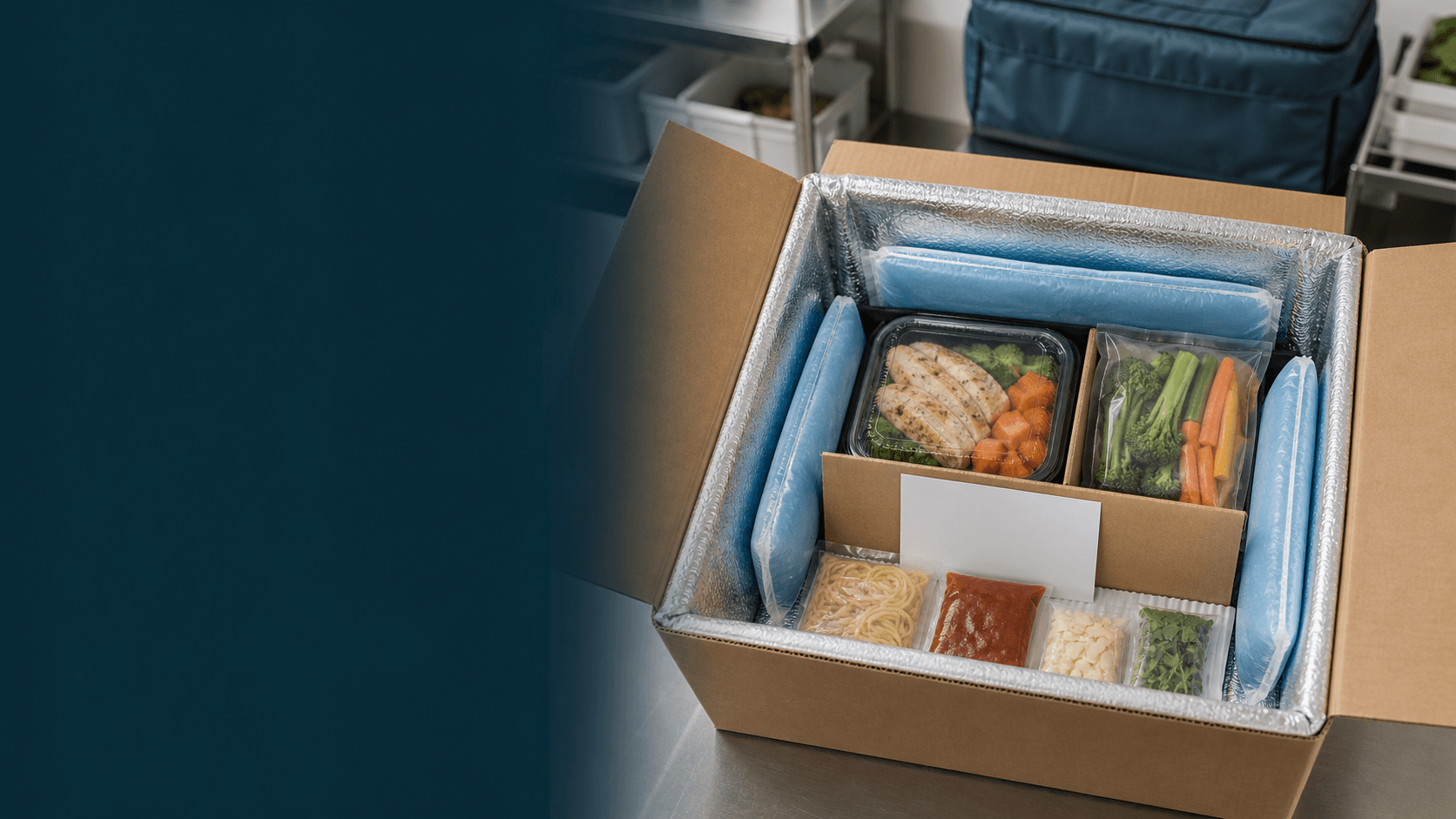
Create a dimensional loading plan with payload, liquide de refroidissement, doublure, diviseur, moniteur, et le fardage. Check gross internal volume, net usable payload, exterior cube, and packed weight. Have intended operators load and close the box. Observe upside-down parts, cartons écrasés, interférence du couvercle, and ambiguous coolant placement.
The packout controls thermal mass and temperature distribution. Precondition contents and coolant according to the approved method. If load quantity varies, define separate arrangements or justified dunnage. A test with an empty box or water bottles may answer a development question but should not be presented as evidence for an unrelated commercial payload.
Photograph the configuration and give it an identifier. Physical customization, including a new cavity, couvercle, handle recess, or panel layout, crée une nouvelle question de conception.
Porte cinq: Construire des preuves thermiques et physiques au niveau de la boîte
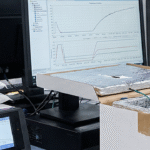
Approuver un protocole avant de tester. Identifier la révision du modèle, charge utile, liquide de refroidissement, conditionnement, profil ambiant, carte des capteurs, ouvertures, durée, échantillons, et critères d'acceptation. Préserver les données, enregistrements ambiants, photos d'emballage, et les écarts. Lire un résultat de temps de maintien uniquement dans ces conditions.
La condition physique doit refléter le parcours: impact et compression des colis, manipulations et lavages répétés en boucle fermée, charges de pile, ou risques de perforation pour les panneaux. Inspectez la boîte après des défis physiques. Si des dommages pourraient modifier l’isolation ou la fermeture, une comparaison thermique peut être appropriée.
La vérification sur le terrain peut tester les hypothèses opérationnelles, tandis qu'une surveillance continue peut détecter une dérive. Ni l’un ni l’autre ne devrait devenir une revendication de performance universelle pour les produits non testés., saisons, ou des itinéraires.
Porte Six: Qualifier la répétabilité de la production
Utiliser des unités pilotes représentatives du processus de moulage et d'assemblage prévu. Vérifier le poids de la pièce, dimensions, échantillons de densité, fusion de perles, remplissage de mousse, placement des panneaux, ajustement du couvercle, articulations, matériel, étiquettes, et emballage selon la construction choisie. Comparez-les avec la révision testée.
Le plan d'inspection doit indiquer la méthode, fréquence, limite, enregistrer, et réponse. L'isolation cachée peut nécessiter des données de processus ou des échantillons destructifs périodiques. Un contrôle visuel final ne peut pas confirmer chaque vide, lier, ou barrière à panneaux.
Convenir de la manière dont les unités non conformes sont confinées et de la manière dont les actions correctives sont vérifiées. La capacité du fournisseur à expliquer les variations est plus utile qu’une promesse que chaque pièce est identique..
Porte sept: Nettoyage de contrôle, Réutilisation, et retraite
Identifiez la surface qui entre en contact avec le contenu ou le sol. Vérifier les produits chimiques de nettoyage, concentration, temps de contact, température, pression, abrasion, rincer, et séchage pour coquille, mousse, doublure, joint, étiquettes, adhésif, et panneaux. L’adéquation alimentaire ou pharmaceutique doit être exacte, preuves pertinentes pour le marché et ne peuvent pas être déduites de la densité.
Pour réutilisation, créer du sale, faire le ménage, libéré, mis en quarantaine, réparation, et statut de retraité. Inspecter les fissures, séparation des perles, compression, noyaux humides, ponction, déformation du couvercle, odeur, contamination, et identifiants. Réparer uniquement avec des composants contrôlés et un contrôle de libération.
Outils de décision utiles
Vérifiez les détails avant de choisir l'emballage
Ces outils rapides peuvent vous aider à comparer le risque d'itinéraire, besoins de dimensionnement, choix de liquide de refroidissement, et les détails de l'emballage avant de demander un devis.
Doublure de boîte & Dimensionnement des couvertures de palettes
Vérifiez la logique de dimensionnement du revêtement de boîte et du couvercle de palette pour les projets d'emballage isotherme.
Dimensionnement estiméGénérateur de liste de contrôle de conformité
Créer une liste de contrôle pratique pour l'examen des emballages, expédition, et documentation.
Construire une liste de contrôleVérificateur de risque d'itinéraire
Examinez les conditions des pistes avant de sélectionner l'emballage en fonction des exigences opérationnelles réelles..
Vérifier le risque d'itinérairePour les conceptions à trajet unique, planifier l'emballage de protection et la manutention à destination. Les allégations de recyclabilité doivent refléter la collecte réelle et l'état des matériaux sur le marché cible..
Porte huit: Comparez le service total fourni
Normaliser la portée des fournisseurs pour l'outillage, échantillons, matériel, moulage, coquilles, panneaux, doublures, liquide de refroidissement, cartons extérieurs, essai, densité des palettes, fret, inspection, nettoyage, retours, réparation, perte, remplacement, et élimination. Utiliser plusieurs scénarios de comptage de déplacements et de récupération pour la réutilisation. Séparez les coûts ponctuels et récurrents.
La densité affecte la masse du matériau et peut affecter le traitement ou la durabilité, mais ce n'est pas une mesure du coût total. Les VIP peuvent conserver la charge utile à un coût de composant plus élevé. Le PPE peut prendre en charge une boucle de retour qui nécessite un lavage et une récupération. L'EPS peut convenir à une voie à sens unique protégée avec manutention de matériaux à destination. Les coques à âme rigide peuvent ajouter du poids et du matériel, mais protègent l'isolation.
Select the system that delivers the defined service with acceptable evidence and manageable operations. Update the model after pilot and launch data.
Exemple pratique: closing the evidence gates
A buyer initially asks for the densest possible foam. The supplier proposes two materials, and packaging engineering shows that the same exterior size produces different payload, manutention, et l'économie du retour. The team defines density methods, creates packouts, runs comparable tests, inspects pilot units, and models landed service. The final choice uses a moderate controlled input within a better lid and joint design.
The decision improves because density moved from slogan to one traceable parameter.
Final Governance Controls
Before controlled scale-up of a chemistry-defined boîte de mousse, create a change-notification matrix covering polymer grade, blowing or expansion inputs, bead supplier, objectif de densité, cycle de moulage, formulation de mousse, source du panneau, film barrière, coquille, adhésif, doublure, géométrie du couvercle, and subcontracted assembly. The matrix helps both parties distinguish a meaningful technical change from an administrative update.
In cross-functional review of a chemistry-defined foam box, track production data after launch. Poids de la boîte, dimensions, closure observations, dommage, résultats de température, plaintes, and supplier deviations can reveal drift. Trend by model, révision, parcelle, et voie. A density certificate may remain unchanged while molding fusion, assembly gaps, or handling produces a new pattern of failures.
Before controlled scale-up of a chemistry-defined foam box, set objective retirement criteria for reusable constructions. Cherchez des fissures, permanent compression, séparation des perles, déformation du couvercle, damaged facings, ponction, water ingress, odeur, uncleanable soil, and missing identification. A cosmetic dent may be acceptable while a small barrier-film puncture may be critical. Criteria should reflect the actual insulation technology.
In cross-functional review of a chemistry-defined foam box, compare repair options honestly. Certains composants EPP réutilisables peuvent être remplacés sous forme d'inserts, tandis qu'une carrosserie moulée endommagée peut être retirée. Une boîte en mousse rigide peut permettre la réparation du matériel de coque, mais pas un noyau humide. Un VIP perforé peut nécessiter le remplacement du panneau ou le retrait du module. La réparabilité dépend de l'accès à la conception et des pièces contrôlées, pas la seule catégorie matérielle.
Before controlled scale-up of a chemistry-defined foam box, demander une identification de l'échantillon qui a survécu à la découpe et aux tests. Marquez le modèle de boîte, révision, date ou lot de production, cavité le cas échéant, qualité de mousse, et l'état de l'assemblage. Un coupon de mousse lâche ne peut pas prouver la densité, fusion, articulations, ou répartition de l'épaisseur à l'intérieur d'un conteneur fini. Gardez les données des coupons et les preuves au niveau de la boîte connectées mais distinctes.
Before controlled scale-up of a chemistry-defined foam box, définir la manière dont la densité est échantillonnée. La densité apparente peut varier selon l'emplacement, peau, insert moulé, ou calcul en partie entière. Conditionnement d'état, emplacement de l'échantillon, méthode de masse et de volume, unités, tolérances, et fréquence d'échantillonnage. Si la méthode détruit la boîte, se mettre d'accord sur des échantillons périodiques ou des coupons de processus conservés plutôt que de prétendre que chaque unité peut être vérifiée de la même manière.
Faire en sorte que le devis identifie à quoi les tests s'appliquent. Un fournisseur peut présenter un rapport matériel, un test de boîte générique, ou un rapport pour une autre taille. Enregistrez le modèle, révision, charge utile, liquide de refroidissement, profil ambiant, capteurs, et passer la règle. Les preuves deviennent précieuses lorsque leur portée correspond à l'article et à la configuration proposés..
Before controlled scale-up of a chemistry-defined foam box, clarifier les limites de personnalisation. Une nouvelle cavité, mur plus épais, logo profond, couvercle modifié, trou de drainage, handle recess, doublure, ou la disposition des panneaux peut modifier les ponts thermiques, remplissage de moulage, stresser, et le volume de la charge utile. Considérez la personnalisation physique comme une révision technique, pas seulement un choix artistique, et sélectionner les preuves nécessaires avant la libération.
Before controlled scale-up of a chemistry-defined foam box, create a change-notification matrix covering polymer grade, blowing or expansion inputs, bead supplier, objectif de densité, cycle de moulage, formulation de mousse, source du panneau, film barrière, coquille, adhésif, doublure, géométrie du couvercle, and subcontracted assembly. The matrix helps both parties distinguish a meaningful technical change from an administrative update. Ce point d'application est examiné au stade 2 du même programme.
In cross-functional review of a chemistry-defined foam box, track production data after launch. Poids de la boîte, dimensions, closure observations, dommage, résultats de température, plaintes, and supplier deviations can reveal drift. Trend by model, révision, parcelle, et voie. A density certificate may remain unchanged while molding fusion, assembly gaps, or handling produces a new pattern of failures. Ce point d'application est examiné au stade 2 du même programme.
A la sortie d'une boîte de mousse définie par la chimie, review corners and lid interfaces separately from flat walls. Heat can bypass a strong wall through a gap, thin edge, uninsulated handle zone, or poorly compressed seal. Mechanical damage also starts at corners and hinges. Section drawings and sensor placement should reflect these nonuniform features rather than assuming one average wall.
Questions fréquemment posées
What should a buyer provide before requesting a foam density?
Provide contents, exigence de température, itinéraire, durée, saisons, liquide de refroidissement, charge utile, dimensions, manutention, nettoyage, modèle de retour, et les besoins en preuves. Then work with technical teams to select chemistry, construction, density method, et épaisseur. A density target without use context can add cost without solving the actual risk.
Can two foams with the same density be treated as equivalent?
Non. Polymer chemistry, grade, cell or bead structure, moulage, fusion, géométrie, humidité, épaisseur, and assembly can differ. Even within one family, the finished parts need controlled comparison. Equivalence should be demonstrated for the functions that matter, not inferred from one number.
What evidence should support a thermal-duration statement?
Look for a report identifying box revision, charge utile, liquide de refroidissement et conditionnement, températures de départ, profil ambiant, capteurs, ouvertures, durée, échantillons, et règle d'acceptation. Compare those conditions with the intended lane. The statement should remain limited to the tested configuration and justified extrapolations.
Which changes should trigger technical review?
Review changes to polymer grade, objectif de densité, bead or chemical source, cycle de moulage, formulation de mousse, épaisseur, couvercle, articulations, panneau, coquille, adhésif, matériel, outil, sous-traitant, charge utile, liquide de refroidissement, ou itinéraire. The response can range from documents to samples or retesting based on risk.
Conclusion
A disciplined specification begins with use, names the material system, defines density and thickness methods, prototypes the packout, tests the box, qualifies production, controls reuse, and models total service cost. That sequence respects the boundaries among EPS, PPE, rigid PU, VIP, and hybrid designs while keeping evidence connected to the actual shipment.
À propos du tempk
Tempk, associé à Shanghai Tempk, fournitures glacières médicales, Boîtes EPP, Coffrets isothermes VIP, plastique boîtes de la chaîne du froid, et options de liquide de refroidissement correspondantes. Buyers can bring payload, itinéraire, emballage, construction, et exigences en matière de preuves pour comparer les catégories appropriées. L’évaluation finale du système reste liée au produit de l’acheteur et aux conditions de fonctionnement.
Prochaine étape: Envoyez à Tempk vos exigences d'utilisation et votre liste de contrôle des preuves pour commencer une comparaison structurée des matériaux et des fournisseurs..