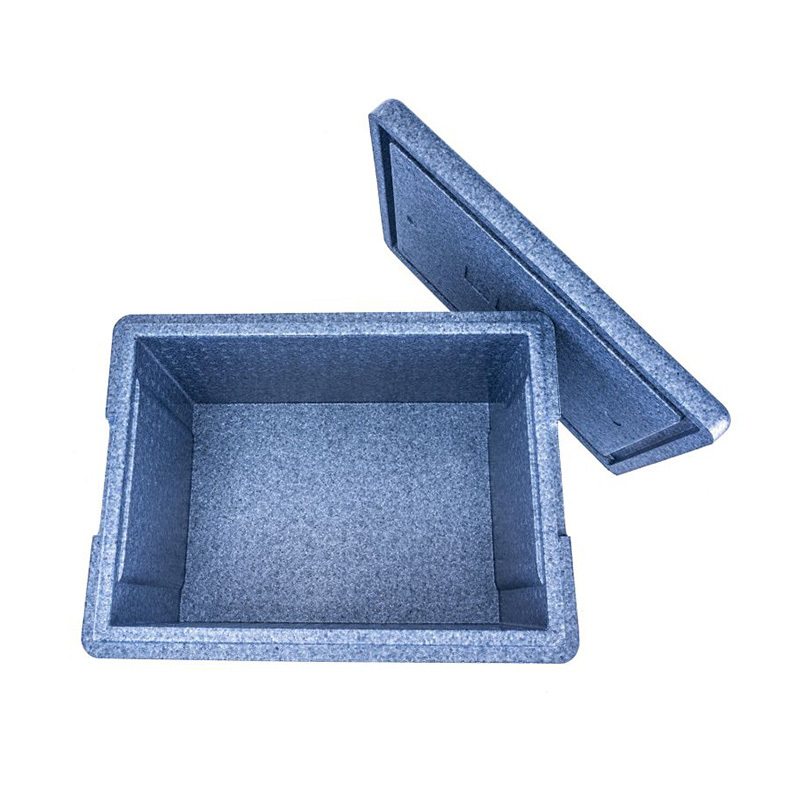
A strong eco-friendly chemical-resistant EPP storage container combines the best points of buyer logic, performances matérielles, and real operating needs. You need the box to protect product quality, hold temperature with less guesswork, and make daily work easier for packers, conducteurs, kitchen staff, or warehouse teams. Dans 2026, the best-performing options are the ones designed around real routes, realistic wash routines, and measurable handling risks rather than generic claims.
Before you compare quotes, decide what success looks like in your own operation. For one buyer it may mean lower damage. For another it may mean cleaner delivery presentation, better thermal consistency, or faster daily packing. When the target is clear, it becomes much easier to judge whether a eco-friendly chemical-resistant EPP storage container is genuinely stronger or simply described more confidently.
Cet article vous aidera à répondre:
- how eco-friendly chemical-resistant EPP storage container fits lab consumables and other B2B shipping needs
- which design details matter most for compatibility checks, sanitation routines, réutiliser les boucles, et planification de fin de vie
- how to compare reusable EPP packaging against one-way formats
- quoi 2026 buying trends mean for your next packaging decision
- which checklist helps you qualify a supplier faster
What makes a eco-friendly chemical-resistant EPP storage container worth buying in 2026?
A eco-friendly chemical-resistant EPP storage container is worth buying when it improves delivered condition, packing consistency, and operational repeatability at the same time. En pratique, that means the box must do more than hold temperature. It should reduce unnecessary movement, fit the payload cleanly, remain easy to handle, and stay practical across repeat cycles. Quand ces pièces s'alignent, the box stops being a packaging expense and starts acting like a process tool.
The strongest solutions combine the core EPP advantages of low weight, résilience, and insulation with smart application-specific design. You see this in features such as better lid paths, more accurate internal geometry, route-sized footprints, or easier cleaning surfaces. The point is not to load the box with features. It is to remove the points where the real workflow usually breaks.
What separates a good sample from a scalable solution?
Buyers should also remember that product condition is shaped by timing as much as by materials. A good box helps create a wider safety margin when dispatch is delayed, when a driver restacks loads, or when the receiver opens the pack later than planned. That wider margin is one of the most practical reasons to invest in a better design.
| <fort>Performance area</fort> | <fort>Que chercher</fort> | <fort>Bon signe</fort> | <fort>Pourquoi ça compte pour toi</fort> |
| Contrôle thermique | Ajustement du couvercle, wall build, disposition du liquide de refroidissement | Stable product condition across delays | Protège la qualité livrée |
| Handling protection | Insert guidance and impact zones | Less internal movement | Cuts breakage and complaints |
| Convivialité | Poids, grip, and opening logic | Staff use it correctly without reminders | Improves workflow speed |
| Durabilité | Surface wear and shape retention | Box stays useful across cycles | Supports total cost value |
Conseils pratiques que vous pouvez utiliser
- Start with one clear success target, such as fewer damages, emballage plus rapide, or better thermal consistency.
- If staff pack in a hurry, réduire les choix. Fewer inserts and clearer orientation points usually improve consistency.
- Pilot the box on a bad day as well as a normal day. Retard, restacking, and rushed handoff reveal the real weak points.
A technical storage team chose an eco-friendly chemical-resistant EPP storage container for internal shuttle use because it handled cleaning better, stayed light for staff, and fit their reuse targets better than heavier rigid bins. The lesson was that better fit and better handling logic often create a larger benefit than simply adding more packing material.
How should you design and specify a eco-friendly chemical-resistant EPP storage container?
The right specification for a eco-friendly chemical-resistant EPP storage container starts with route and product logic, then moves into material and geometry choices. You should define what you ship, how fragile it is, the expected temperature band, the longest dwell time, the likely shock points, and the cleaning or return routine. Une fois que ces variables sont claires, decisions about density, wall build, inserts, and branding become far easier.
A development program should ask three simple questions. D'abord, where does the product fail now? Deuxième, which design lever can remove that failure? Troisième, how will we prove it under realistic conditions? This sounds obvious, but many projects skip directly to pricing or tooling and then spend weeks correcting avoidable mistakes. The better path is disciplined specification before optimization.
Which details most often get missed during development?
The most commonly missed details are lid fit, internal movement allowance, instructions d'emballage, and wash or return handling. Those are not minor details. They are the places where a technically good box can still create operational confusion. When suppliers address these points early, qualification is faster and the final box is easier for teams to adopt.
| <fort>Specification area</fort> | <fort>Question to answer</fort> | <fort>Useful output</fort> | <fort>Pourquoi ça compte pour toi</fort> |
| Charge utile | What exactly must fit inside? | Cavity map and insert logic | Stops oversizing |
| Itinéraire | What is the longest realistic dwell? | Thermal test target | Prevents false assumptions |
| Manutention | Where are the roughest touchpoints? | Drop and stack conditions | Links design to risk |
| Entretien | How will the box be cleaned or returned? | Operating SOP | Makes reuse practical |
Conseils pratiques que vous pouvez utiliser
- Write route temperature, temps de séjourner, and staging conditions into the project brief before you ask for pricing.
- Keep the specification sheet simple enough that both operations and procurement can use it.
- Validate cleaning and cosmetic wear early if the box will be reused in front of customers or branch staff.
A technical storage team chose an eco-friendly chemical-resistant EPP storage container for internal shuttle use because it handled cleaning better, stayed light for staff, and fit their reuse targets better than heavier rigid bins. The lesson was that a reusable container only performs well when the maintenance routine is as clear as the transport routine.
Which real-world use cases fit a eco-friendly chemical-resistant EPP storage container best?
Real-world fit determines whether a eco-friendly chemical-resistant EPP storage container becomes a scalable packaging standard or just a promising sample. The best use cases are the ones where product value is meaningful, handling risk is real, and route repetition is frequent enough to reward a disciplined format. That is why EPP boxes are often strongest in food delivery, chilled B2B transport, fragile item handling, internal shuttle loops, and premium presentation-sensitive programs.
Launch planning matters too. A new box should be introduced with a clear packing guide, a defined cleaning routine where relevant, and a simple return rule if the system is reusable. Without those basics, staff create workarounds and buyers end up blaming the box for problems caused by process drift. A strong rollout makes the packaging feel obvious to use from the first week.
How do you launch the box without adding friction?
Once the box is in use, the fastest learning comes from watching real handling. Look at how it is picked up, how it is stacked, what gets dirty first, and where product movement still appears. Those observations often reveal the next design improvement faster than another long debate about theoretical specs.
| <fort>Cas d'utilisation</fort> | <fort>Why EPP can fit</fort> | <fort>Que regarder</fort> | <fort>Pourquoi ça compte pour toi</fort> |
| Livraison de nourriture | Fast pack-out and light handling | Route variation and hygiene | Keeps service quality stable |
| Cold chain shuttle | Repeat use and thermal buffer | Return discipline | Supports operational consistency |
| Fragile premium goods | Impact control plus presentation | Cavity accuracy | Protects margin and brand |
| Wet or outdoor routes | Moisture tolerance and easy wipe-down | Lid cleanliness and grip | Improves daily usability |
Conseils pratiques que vous pouvez utiliser
- Compare labor time, réduction des dégâts, and presentation gains together instead of judging only the piece price.
- Use a simple return or collection rule from day one if the box is reusable.
- Review live handling videos or photos after launch to spot the next improvement quickly.
A technical storage team chose an eco-friendly chemical-resistant EPP storage container for internal shuttle use because it handled cleaning better, stayed light for staff, and fit their reuse targets better than heavier rigid bins. The lesson was that standardization creates hidden value because every team member starts handling the box in the same way.
2026 developments and trends for eco-friendly chemical-resistant EPP storage container
Dans 2026, the discussion around the eco-friendly chemical-resistant EPP storage container is broader than material choice alone. Buyers are connecting insulation, handling quality, sanitary workflow, reuse economics, and end-of-life planning into one decision. Current FDA transport guidance keeps attention on clean equipment, procédures, enregistrements, and trained handling for food loads, while recent reusable packaging guidance keeps reminding teams that return distance, effort de nettoyage, and loop efficiency decide whether a reuse model works in practice. For EPP specifically, current industry references still emphasize the combination of low weight, repeated impact resilience, isolation, and recyclability in the PP stream.
Derniers développements en un coup d'œil
- Route-based design: Buyers want packaging sized for real dwell time, loading style, and handoff conditions rather than generic volume targets.
- Reuse with proof: Buyers increasingly ask how the box will be returned, nettoyé, and eventually recycled instead of accepting a vague sustainability claim.
- Validated compatibility: Technical buyers now ask suppliers to discuss real cleaning agents and exposure conditions, not just a broad chemical-resistance statement.
The market direction is practical rather than theoretical. Buyers are rewarding packaging that lowers daily friction, protects delivered quality, and scales without constant workarounds. That is why suppliers who can connect design advice with live operating logic are gaining ground. Pour toi, this means a better buying process: focus on route truth, payload behavior, nettoyage de la réalité, and return discipline, and the right eco-friendly chemical-resistant EPP storage container becomes much easier to identify.
Questions fréquemment posées
Can a eco-friendly chemical-resistant EPP storage container handle cleaning agents or mild chemical exposure?
It often can, but you should validate compatibility with the exact cleaner or chemical used in your workflow. A broad resistance claim is useful, but application-specific checking is safer before scale-up.
How long can a eco-friendly chemical-resistant EPP storage container hold temperature?
Il n'y a pas de réponse honnête et unique. Hold time depends on wall design, ajustement du couvercle, masse de charge utile, disposition du liquide de refroidissement, température de démarrage, et conditions d'itinéraire. Always test with your real pack-out and actual dwell profile.
Can a eco-friendly chemical-resistant EPP storage container be reused many times?
Généralement oui, if the design matches the route and the operating team uses a clear cleaning and return routine. Reuse performance is shaped as much by process discipline as by the material itself.
What should you ask a supplier before ordering a eco-friendly chemical-resistant EPP storage container?
Ask how the design matches your route, charge utile, shock risk, méthode de nettoyage, and expected cycle count. A supplier that only discusses size and price is usually not giving you enough decision support.
When does a eco-friendly chemical-resistant EPP storage container make financial sense?
It makes sense when reduced damage, emballage plus rapide, better delivered condition, or repeat-use efficiency outweigh the higher starting price. Compare total operating value, pas seulement le coût unitaire.
Résumé et recommandations
A well-chosen eco-friendly chemical-resistant EPP storage container helps you in practical ways: it improves temperature stability, reduces handling risk, makes pack-out more repeatable, and creates a stronger base for reuse when the workflow is defined clearly. The best design is not the one with the loudest claim. It is the one that fits your product, itinéraire, méthode de nettoyage, and team behavior with the least daily friction.
Si vous comparez les options maintenant, start with a simple three-step plan. D'abord, define the real route and pack-out. Deuxième, identify the main failure point you want to remove. Troisième, pilot the eco-friendly chemical-resistant EPP storage container under ordinary operating conditions instead of ideal ones. That approach will help you choose faster and with fewer revisions.
À propos du tempk
Et tempk, we work on temperature-control packaging with a practical B2B mindset. We focus on insulated boxes, packs de glace, and related cold chain packaging solutions that must perform in real transport environments, pas seulement dans une brochure. We can support development around fit, durabilité, manutention, and repeat-use logic so your packaging decision is easier to scale. Our goal is to help you move from sample approval to dependable daily use with less trial and error.