The smartest way to buy thermal plastic bin for vaccine export is to treat it as a system decision, not a crate decision. A thermal plastic bin is best understood as a plastic outer shell combined with insulation or thermal buffering features, not as an ordinary open crate that merely happens to travel in a cold room. If the lane involves vaccines, biologique, or imported pharmaceuticals, you should expect to review the temperature range, tenir le temps, format du liquide de refroidissement, charge utile, profil d'itinéraire, and data-logging method before you decide anything about standard dimensions or artwork. Autrement dit, buy the thermal result first and the outer plastic architecture second.
What the Right Solution Has to Do
The phrase sounds simple, but the buying decision is not. In pharmaceutical and vaccine lanes, a plastic outer structure may provide rigidity, contrôle anti-effraction, and repeatable handling. The temperature result, cependant, depends on the insulation package inside or around it, the coolant format, the payload arrangement, and the operating instructions used by packers and receivers. Health guidance for vaccines accepts specifically engineered transport containers and packouts, while warning against ordinary food or beverage coolers. The same discipline applies to commercial pharmaceutical import and export programs: if the shipment needs 2 à 8 C, température ambiante contrôlée, or frozen control, the outer shell should be evaluated as part of the total passive system rather than as a standalone crate.
The Design Choices That Matter Most
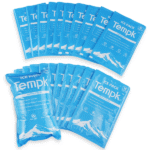
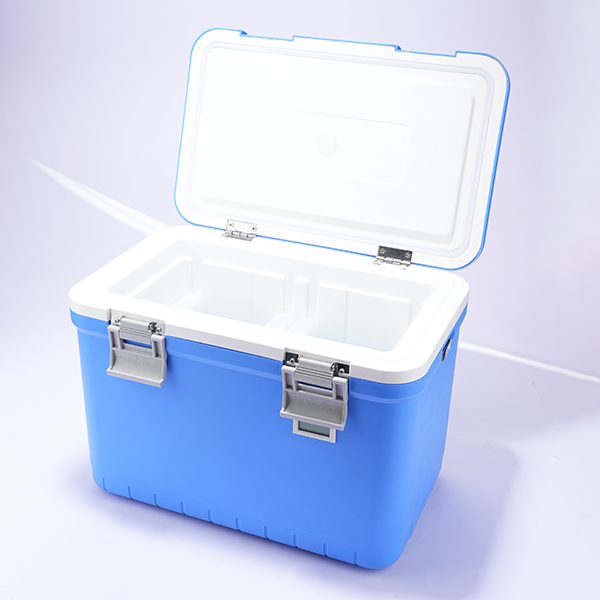
In pharmaceutical and vaccine packaging, the shell material and the insulation architecture do different jobs. PP or HDPE outer structures may provide durability and cleanability, but the thermal result usually depends on EPP, Unité centrale, VIP, VPU, or another insulating structure combined with gel packs, Briques PCM, or other coolants. Public Tempk product pages, Par exemple, show single-use and reusable insulated boxes across controlled room temperature, glacé, and frozen profiles with hold-time claims that vary by design. Thermal performance depends on insulation structure, masse de liquide de refroidissement, charge utile, et profil ambiant, not on the word thermal alone. A standard plastic shell without true insulation will not behave like a qualified passive shipper. That is exactly the point: there is no single correct thermal crate. There is only a route-specific system that has been designed around payload, durée, and ambient exposure.
In life-science shipping, the plastic outer pack is most useful when it improves operational repeatability. It can create a standardized footprint for packout teams, protect insulation panels from rough handling, support tamper evidence, and make labeling and data logger placement more consistent. That is valuable in import and export lanes where shipments may pass through multiple handoffs. But the container has limits. It cannot replace route mapping, recevoir des SOP, or packout qualification. Requirements vary by product and lane, and additional qualification may be needed whenever the route, charge utile, or component set changes.
The main limitation is obvious but often ignored: a strong plastic outer pack is not the same thing as a qualified shipping system. Waterproof does not mean validated. Reusable does not mean acceptable for every medicinal product. Temperature-controlled claims are only meaningful when tied to a defined payload, coolant set, durée, et profil ambiant. That is why sophisticated buyers ask for route-relevant performance evidence and clear change control. Even a small change in insulation source, PCM formulation, or packout sequence can affect the result, so sample approval should not be the last quality step.
How to Match the Container to the Real Route
Thermal packaging should always be lane-matched. Start with the full route: packing environment, temps hors réfrigération, points de transfert, airport or customs dwell, vehicle type, destination receiving time, and what happens if the shipment is delayed. Then check whether the proposed system is qualified for that exact use case or only for a broader laboratory profile. Reusable outer structures can make sense where the route is stable and returns are practical. Single-use systems may be safer where export flows are irregular or where reverse logistics are weak. The important point is that the packaging decision has to mirror the transport map. Otherwise the project may look technically sound on paper while failing at the very handoff point that matters most.
Common Buying Mistakes to Avoid
The most common error is to buy on generic thermal language instead of route-specific evidence. The second is to assume that a reusable plastic shell is enough without reviewing coolant, complexité de l'emballage, receiving practice, et changer de contrôle. The third is to sign off on a sample that performs well once, then fail to control sample-to-production consistency. In regulated and temperature-sensitive lanes, packaging errors are often process errors wearing a product-design disguise.
PIB, Vaccine Guidance, and Qualification
Good distribution practice guidance from WHO and the European Union, along with USP good storage and distribution principles, all push buyers toward a risk-based approach to drug transport rather than a label-based one. Vaccine guidance from WHO and CDC goes further by emphasizing qualified containers, conditioned coolants where relevant, and disciplined transport procedures. CDC specifically notes that ordinary soft-sided food or beverage coolers should not be used for vaccine transport unless they are specifically engineered for that purpose. The takeaway is simple: if the shipment is pharmaceutical, vaccine-related, or biologic, the plastic outer shell has to be evaluated within a qualified shipping system, and additional qualification may be needed whenever route, charge utile, or component changes occur.
Think in Cost per Trip, Not Piece Price
Le prix unitaire compte, but reusable packaging projects usually succeed or fail on cost per trip. Buyers should estimate service life, frais de nettoyage, efficacité de retour, asset loss, espace de stockage, labor at touchpoints, and damage reduction before they compare quotations. A more expensive container can be the lower-cost option if it reduces product loss, speeds handling, survives more cycles, or cuts empty-return cube significantly. The opposite is also true. A low-cost design becomes expensive when latches fail, labels fall off, or the container shape wastes transport space on the reverse leg. Good supplier evaluations therefore include a simple operating model: how many turns are realistic, what percentage of units are lost, how much labor does the design add or remove, and what does one full cycle really cost? Buyers who do that work usually make calmer, de meilleures décisions.
What Buyers Should Ask Suppliers Before Ordering in Bulk
- Confirm internal and external dimensions separately, and ask for usable internal volume rather than relying on nominal size alone.
- Ask for route-relevant qualification data: plage de température, tenir le temps, charge utile, profil ambiant, coolant set, and packout instructions that match your lane.
- Confirm how data loggers, preuve d'inviolabilité, recevoir des chèques, and change control are handled when components or suppliers change.
- Check whether the design is intended as a reusable outer shell, a complete qualified system, or a component within a larger passive shipper.
- Check stackability, nesting or folding ratio, handling ergonomics, and whether the product remains stable after repeated use and cleaning.
- Ask about MOQ, outillage, color or logo options, lead-time variability, and what happens if you need sample revisions before production.
- Request clarity on quality control, resin traceability, and change-notification procedures so sample approval matches production reality.
Sample Approval, Change Control, and Production Consistency
Healthcare packaging projects often fail through quiet change rather than obvious breakage. A sample may be approved with one resin source, one insulation set, one label position, or one packout sequence, then production drifts in ways that look minor but change the operational result. Buyers should ask how the supplier controls resin substitutions, tooling adjustments, insulation component changes, and artwork or label-area revisions. They should also ask what documentation accompanies the approved design and how deviations are communicated before shipment. In temperature-sensitive and traceability-sensitive workflows, that control discipline is part of packaging performance, not an administrative extra.
Public Reference Points Buyers Can Use
Public insulated-shipper portfolios show just how broad the thermal design space is, with examples for 2 à 8 C, température ambiante contrôlée, and frozen lanes and hold profiles ranging from one day to several days depending on insulation and packout. Public vaccine and specimen guidance also shows that the packaging system, not the plastic shell alone, determines whether the shipment is fit for temperature-sensitive or regulated content.
Short FAQ
Is a plastic crate enough for vaccine or pharmaceutical shipping?
Habituellement pas. Temperature-sensitive healthcare goods normally need a complete insulated and qualified shipping system, not just a rigid outer shell.
What should buyers ask for first: dimensions or qualification data?
For temperature-sensitive lanes, ask for qualification logic first: plage de température, durée, charge utile, profil ambiant, et emballage. Dimensions come after the thermal concept is right.
Can reusable systems be a good fit for pharma import or export lanes?
Oui, in many cases, but only when return logistics, nettoyage, qualification, and change control are realistic for the route and product.
Final Recommendation
A good purchase decision for thermal plastic bin for vaccine export comes from matching the container to the product, l'itinéraire, and the operating discipline behind it. When those three elements line up, reusable plastic packaging can reduce damage, simplifier la manipulation, and improve repeatability. Quand ils ne le font pas, even a strong container becomes expensive friction.
Additional Practical Notes
One more practical point: sample approval should reflect real operations. Ask the supplier to send samples that use the final resin family, conception de mur, lid or latch option, and labeling method you expect in production. A visually similar sample can hide important differences in stiffness, ajuster, et durabilité.
In regulated or high-value lanes, receiving discipline is part of packaging performance. Clear instructions for opening, inspection, temperature review, and component return can be as important as the outer shell itself.
How to Validate the Design Before Full Rollout
For temperature-sensitive healthcare lanes, a pilot should do more than prove that the shipment arrives intact once. Run the proposed packout through a route profile that reflects real packing times, exposition ambiante, transferts, and receiving behavior. Confirm who packs the coolant, where the logger sits, how the receiver interprets the shipment on arrival, and what happens if the lane is delayed. Reusable systems also need a return, inspection, and component-replacement plan. The goal of the pilot is not only to confirm temperature hold. It is to expose operational weak points before the program scales.
What to Measure During a Trial
Useful trial metrics are usually simple. Track damage or leakage events, stabilité de la pile, time per handling touch, storage footprint for empties, label readability after the trip, and loss or non-return rate. In temperature-sensitive work, add temperature data and receiving-condition checks. In food and hygiene-sensitive work, add wash time and cleanliness observations. These practical measures help teams compare designs on operating reality instead of on brochure language. They also make supplier discussions more concrete because they connect packaging choice to labor, espace, qualité du produit, et le coût total.
À propos du tempk
Et tempk, we focus on temperature-control packaging for healthcare, pharmaceutique, et logistique alimentaire. Our public product range includes gel ice packs, briques de glace, sacs isolés, and insulated boxes built around materials such as EPP and VIP or VPU-style structures for different temperature lanes. We also present reusable and single-use solutions for chilled, controlled-room-temperature, and frozen transport, which makes us most useful when a reusable outer container must work with a real thermal packout rather than act alone.
Prochaine étape
If your shipment involves medicines, vaccins, échantillons, ou d'autres biens sensibles à la température, ask for route-based packaging advice before you lock in the outer container format.