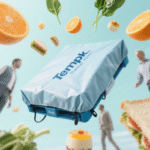
If you are planning an insulated container liner bulk order, the best choice is the liner that protects your product, fits your box correctly, supports your packing speed, and makes commercial sense at scale. Dans 2026, that decision is more important because cold chain buyers are facing stronger delivery expectations, tighter process discipline, and more visible sustainability pressure.
Ce que ce guide vous aidera à résoudre
- How to define the right insulated container liner bulk order for your shipping lanes
- Which technical specifications affect real performance
- How to compare suppliers on quality, délai de mise en œuvre, and validation support
- Quoi 2026 compliance and sustainability trends mean for buyers
- How to lower total system cost instead of chasing the cheapest unit price
- Why this keyword matters to buyers with real shipping volume
A bulk liner purchase is rarely just about packaging inventory. It affects spoilage risk, travail d'emballage, coolant cost, espace d'entrepôt, Satisfaction du client, and even claim rates.
If your team ships chilled meals, fruit de mer, laitier, diagnostic, specialty ingredients, or healthcare support products, the liner becomes part of your operating system. A poor choice can create warm arrivals, oversized packouts, slow packing lines, and waste complaints. A good choice can simplify the whole program.
Start with the shipping lane, not the sample
- Before you compare materials, answer five basic questions:
- What product temperature range must be protected?
- How long is the real transit window?
- What carton sizes are used most often?
- What is the hottest realistic seasonal profile?
What customer or regulatory expectations apply?
This matters because the same liner may look excellent in a controlled sample review and underperform in a summer parcel lane.
- What makes a strong insulated container liner bulk order?
A strong program usually combines:
- Correct dimensional fit
- Appropriate insulation structure
- Reliable seam quality
- Route-relevant thermal performance
- Stable production repeatability
- Clear supply planning for MOQ and lead time
- Buyer comparison table
- Which material questions should you ask?
- Different liner structures suit different priorities.
Reflective bubble liners are often strong for everyday parcel cold chain programs because they balance cost, efficacité du stockage, and practical performance.
Foam-based liners may support longer or rougher lanes, especially when cushioning matters too.
Paper-forward or recyclable-focused liners can help when your brand or market puts more weight on disposal experience.
Hybrid structures make sense when you need tailored performance, premium appearance, or special fit.
The best liner is the one that fits your packout logic. It is not always the thickest. It is not always the cheapest. It is the one that works as a system.
Why fit is one of the biggest hidden performance factors
Fit is a quiet but powerful variable.
If the liner is too large, it folds, leaves gaps, and wastes internal volume. If it is too tight, it stresses seams and slows insertion. A well-fitted liner reduces unnecessary air movement, supports coolant placement, and helps the box close more consistently.
That is why smart buyers ask for finished dimensions and tolerance ranges, not only material descriptions.
- What test data is worth reviewing?
Ask suppliers for data that resembles your operation:
- Carton size used in the test
- Product mass or simulated payload
- Coolant type and quantity
- Profil ambiant
- Duration and pass range
- Closure method
- Number of repeat runs
- If a supplier cannot explain the test conditions clearly, treat the claim carefully.
ISTA’s current process standards specifically reference Standard 20 for insulated shipping containers and 7E for thermal controlled parcel packaging, which makes those frameworks useful reference points in supplier conversations. Buyers do not need to copy every method exactly, but using recognized testing language helps everyone compare results more intelligently.
Quoi 2026 compliance pressure means for liner buyers
Cold chain packaging is increasingly evaluated as part of a broader shipping process.
FDA’s sanitary transportation rule focuses on vehicles, transportation equipment, opérations, enregistrements, entraînement, and waivers. Autrement dit, packaging should support a controlled program, not replace one. For healthcare or pharma-linked lanes, EU GDP expectations and IATA temperature-control rules make buyers more careful about documentation, manutention, et étiquetage. That is why serious suppliers are now asked about qualification support, not only price and lead time.
Why the market is pushing more buyers into bulk liner planning
E-commerce growth continues to raise the importance of parcel-ready thermal packaging. Les États-Unis. Census Bureau reported that 2025 e-commerce sales reached about $1.2337 trillion and accounted for 16.4% of total retail sales. More online volume means more last-mile exposure, more direct-to-consumer cold shipments, and more attention on right-sized packaging that can protect product without creating excessive packaging waste.
Pour les acheteurs, this changes the sourcing conversation. You are not only buying for protection. You are buying for a delivery model that is becoming more fragmented, more visible, and more customer-facing.
How sustainability affects a bulk order in 2026
If you ship into Europe or sell to sustainability-sensitive brands, material questions now come earlier.
The EU’s packaging framework from 2026 under Regulation (UE) 2025/40 sets sustainability and labeling requirements across the packaging life cycle and aims to prevent unnecessary packaging while promoting reuse, refill, and recycling. That means insulated packaging buyers should look harder at material simplification, recyclability claims, disposal communication, and whether the liner design is actually proportionate to the shipment need.
This does not mean every program needs the same answer. It means buyers should stop treating sustainability as an afterthought.
A practical decision tool for procurement teams
- Use this simple scoring model before placing an insulated container liner bulk order:
- Thermal fit for lane: 30%
- Dimensional fit and packing speed: 20%
- Commercial terms and lead time: 15%
- Production consistency and QC confidence: 15%
- Sustainability alignment: 10%
- Supplier support and communication: 10%
Score each candidate from 1 à 5. The result is usually more useful than arguing over a small unit-price difference.
Practical tips by use case
For food delivery and meal kits
Choose liner formats that insert quickly, use space well, and reduce coolant waste. A clean fit often improves both appearance and thermal stability.
Pour les fruits de mer, protéine, et exportation
Prioritize moisture resistance, seam reliability, and export packing logic. A liner that looks fine in a dry warehouse may fail under wet, manipulation brutale.
For healthcare support and regulated lanes
Ask about documentation language, handling experience, and test support. Even if the shipment is not a pharmaceutical product, disciplined packaging records can still matter.
For brands with strong sustainability goals
Request clarity on material family, disposal guidance, and packaging reduction opportunities before approving mass volume.
Modèle du monde réel: The buyers who get the best long-term results are usually the ones who test earlier, size more carefully, and compare total system impact instead of chasing a low first quote.
Internal content suggestions
- Cold chain packaging qualification checklist
- Gel pack sizing guide for insulated liners
- How to reduce cold chain packaging cost
- Parcel thermal packaging validation basics
- Recyclable insulated packaging buying guide
- FAQ
How big should my first insulated container liner bulk order be?
Big enough to run a live operational trial and one repeat cycle. Small enough to change design if the lane data says you should.
Can an insulated container liner bulk order lower overall shipping cost?
Oui. A better-fit liner can reduce coolant usage, improve cube efficiency, and lower damage or reshipment costs.
Should I prefer custom or stock liners?
Use stock sizes when your box is common and your route is forgiving. Use custom when fit, vitesse, and performance materially affect results.
- What is the biggest mistake in bulk liner purchasing?
Buying from a sample impression instead of a lane-based qualification plan.
Résumé et recommandation
A successful insulated container liner bulk order in 2026 depends on more than insulation. You need the right size, the right structure, the right supplier, and the right validation logic. Compliance expectations are pushing buyers toward better documentation. E-commerce growth is increasing parcel pressure. Sustainability rules, surtout en Europe, are making material choices more visible. If you build your purchase around actual shipping conditions and total cost, you will make a better decision and create a more stable cold chain program.
À propos du tempk
Et tempk, we focus on cold chain packaging that works in real operations. We support buyers with practical liner selection, scalable production, fit-oriented design, and packaging strategies that balance performance, handling efficiency, et objectifs de durabilité. If your team is preparing an insulated container liner bulk order, we help you move from requirement mapping to repeatable supply with fewer surprises.