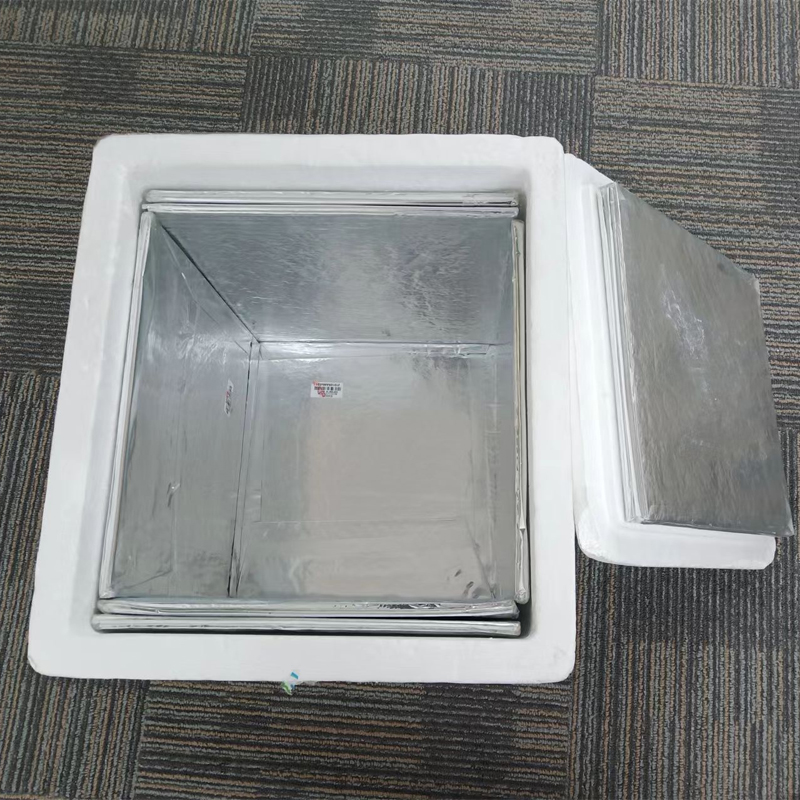
Comment spécifier une boîte isolée doublée de mousse
The right foam-lined boîte isotherme est celui dont les preuves et les instructions d'utilisation correspondent au produit, charge utile, itinéraire, saison, et recevoir la réalité. Un processus d'approvisionnement solide commence donc par les exigences, les convertit en packout, teste le packout dans des conditions définies, et le contrôle après le lancement. Cet article combine le thermique, opérationnel, fournisseur, et les décisions de qualité nécessaires pour les produits réfrigérés, congelé, or moderately temperature-sensitive food, Soins de santé, and specialty products without treating insulation as a universal guarantee.
Rédiger une exigence à laquelle un fournisseur peut réellement répondre
Une exigence utile nomme le produit, état approuvé, plage de charge utile, itinéraire, fenêtre opérationnelle maximale, exposition saisonnière, processus de réception, et conséquence de l'échec. Il indique également ce que l'emballage ne doit pas faire. Pour cette application, a foam lining slows heat transfer but does not create a defined temperature range without a suitable coolant and packout design. Cette phrase empêche la dérive de la portée et rend visibles les contrôles manquants avant que les cotations ne soient comparées..
L'exigence devrait distinguer les intrants fixes des variables. Les entrées fixes peuvent inclure des limites de taille externe, un emballage intérieur réglementé, un carton de produit, ou une procédure de destination. Les variables peuvent inclure le type d'isolation, disposition du liquide de refroidissement, insertion de charge utile, fermeture, carton extérieur, et plan de surveillance. Permettre aux fournisseurs de proposer des alternatives peut améliorer la conception, mais chaque alternative doit être évaluée par rapport aux mêmes critères d'acceptation.
The useful thermal window depends on foam material, géométrie, articulations, liquide de refroidissement, charge utile, températures de départ, exposition ambiante, et événements d'ouverture. Enregistrez la source et le propriétaire de cette exigence de produit. Une équipe d'approvisionnement ne doit pas créer une plage de température simplement pour faciliter la comparaison des fournisseurs..
- Quel produit ou famille de produits sera expédié, et à qui appartient la décision de stabilité?
- Quelles sont les charges utiles minimales et maximales, y compris les dimensions physiques et la condition de départ?
- Quelle est la durée totale de l'emballage au stockage, y compris les imprévus et les délais de réception?
- Quelle chaleur, froid, mécanique, humidité, hygiène, et des expositions réglementaires peuvent survenir?
- Quelle preuve, mode d'emploi, contrôles de production, et un support post-lancement est requis?
Choisissez les matériaux une fois que l'itinéraire et la charge utile sont connus
Commencez par la contrainte dominante. Un envoi express aller simple peut donner la priorité à une faible masse, durabilité du colis, et emballage simple. Une boucle d'hôpital ou de distributeur réutilisable peut donner la priorité à la résistance aux chocs, nettoyabilité, composants remplaçables, et efficacité du retour. Une voie d'exportation de biotechnologies peut donner la priorité à une longue fenêtre d'urgence, espace documentaire, compatibilité avec la glace carbonique, ou une efficacité d'isolation élevée dans une limite de taille de compagnie aérienne. L'architecture suit la contrainte.
Les boîtes en carton ondulé doublées de mousse peuvent être pratiques pour de nombreux itinéraires à usage unique. Le PSE moulé fournit une isolation profilée avec une masse relativement faible. L'EPP peut prendre en charge les manipulations répétées lorsque le modèle opérationnel justifie le retour et l'inspection.. Les systèmes de panneaux peuvent prendre en charge des dimensions personnalisées. Les conceptions basées sur VIP peuvent réduire l'épaisseur de l'isolation mais nécessitent des bords soignés, ponction, vieillissement, et contrôles de qualité. Aucun choix de matériau ne supprime le besoin de tester l'emballage fini.
La géométrie devrait être revue parallèlement au fret. Plus d'isolation et de liquide de refroidissement peuvent augmenter les dimensions externes tout en réduisant l'espace de charge utile. Une solution plus petite et hautes performances peut réduire le coût dimensionnel, mais cela peut ajouter une complexité matérielle. Une solution simple et plus grande peut être plus facile à emballer mais coûteuse à stocker et à expédier. Comparez l’ensemble du programme plutôt qu’un prix unitaire isolé.
Contrôler les variables qui modifient le profil de température
Un système passif fonctionne à partir de l’énergie thermique stockée et de la résistance au flux de chaleur. Produit, liquide de refroidissement, isolation, espace aérien, et l'exposition externe interagissent. Si le produit est chargé chaud, le réfrigérant doit éliminer cette chaleur avant de pouvoir tamponner le trajet. Si la charge utile est très petite, il peut réagir rapidement aux gradients locaux. Si le liquide de refroidissement est placé directement contre un élément sensible, l'emballage peut créer des dommages causés par le froid tout en résistant avec succès à la chaleur externe.
Les spécifications de l'emballage doivent identifier le liquide de refroidissement ou le PCM exact, état de conditionnement requis, quantité, placement, barrières, limites de charge utile, méthode de remplissage du vide, emplacement du moniteur, et fermeture. Les composants doivent être retenus afin que la manipulation des colis ne puisse pas réorganiser la géométrie testée. Pour les applications de glace carbonique, dégagement de gaz, compatibilité des matériaux, sécurité des travailleurs, règles relatives aux modes de transport, et le traitement à destination nécessite un examen dédié.
Considérez la capacité opérationnelle complète. Congélateurs conditionnés, espace de préparation, bancs d'emballage, temps du personnel, liquides de refroidissement de secours, et les règles limites d'expédition peuvent limiter un programme même lorsque la boîte fonctionne bien. Une conception qui nécessite plus de composants gelés que ce que le site peut préparer de manière cohérente n'est pas robuste sur le plan opérationnel..
Remplacez les réclamations d'heures génériques par un profil documenté
Demandez des preuves liées à la construction et à l'emballage proposés. Le rapport doit identifier la version du package, matériels, dimensions, liquide de refroidissement, conditionnement, charge utile, emplacements des capteurs, profil ambiant, durée, événements d'ouverture le cas échéant, et critères d'acceptation. Un profil de parcelle standardisé peut faciliter la comparaison, tandis que le profilage spécifique à une voie peut améliorer la pertinence. Ni l'un ni l'autre n'a de sens si l'unité de production fournie diffère de la conception testée..
Examiner les charges utiles minimales et maximales ainsi que les conditions saisonnières chaudes et froides lorsqu'elles représentent des risques différents. Les systèmes à usage répété peuvent nécessiter une évaluation du vieillissement ou de la réutilisation. Des tests mécaniques peuvent être appropriés en cas de chute, compression, vibration, ou la fragilité du sac congelé peut modifier la géométrie ou endommager le produit. Les preuves thermiques et mécaniques doivent refléter la manière dont le colis est réellement manipulé..
Le rapport soutient une décision; il ne prend pas la décision tout seul. Le responsable de la qualité ou du produit évalue si le profil observé est acceptable pour le produit réfrigéré., congelé, or moderately temperature-sensitive food, Soins de santé, et produits spécialisés. Lorsqu'un écart se produit, l'équipe doit comparer les conditions d'expédition réelles avec l'enveloppe qualifiée et le processus d'excursion approuvé du produit.
Évaluer les fournisseurs en tant que partenaires de fabrication contrôlés
Un prototype soigné peut cacher un contrôle de production faible. Demandez comment le fournisseur gère l'identité matérielle, dimensions, tolérances, assemblée, ajustement de la fermeture, impression, inspection finale, unités non conformes, traçabilité, et des changements. Pour les produits personnalisés, approuver un dessin, nomenclature, œuvres d'art, emballage, et échantillon doré. Définir quelles substitutions ou modifications de processus nécessitent une notification et si des tests supplémentaires sont nécessaires.
Assess support for foam type, joint continuity, ajustement du couvercle, volume utilisable, gestion de l'humidité, résistance aux chocs, reuse or disposal model, et tests complets. La réponse doit démontrer une connaissance de l'application sans entrer dans des allégations de produit ou réglementaires non étayées.. Un fournisseur peut fournir des détails de construction, échantillons, dessins d'emballage, rapports de tests, aides à la formation, et modifier les enregistrements. L'acheteur reste responsable des exigences du produit, décisions d'itinéraire, conformité locale, et disposition de qualité.
Les conditions commerciales doivent refléter la portée contrôlée. Comparer les outillages, échantillons, travail d'essai, liquide de refroidissement, inserts, cartons, étiquettes, attentes minimales de commande, hypothèses de délais, stockage, pièces de rechange, et gestion du changement. Lorsqu'une valeur n'est pas encore connue, formulez-la sous forme de question plutôt que d'inventer un chiffre pour l'analyse de rentabilisation.
Foam type changes operations as well as insulation
Expanded polystyrene is widely used in one-way shippers because it can be molded into efficient shapes. Expanded polypropylene is often considered where impact resistance and reuse are priorities. Rigid polyurethane and other panel constructions can support different performance and manufacturing needs. The right choice depends on more than a single insulation value: articulations, résistance à l'eau, nettoyage, rupture, nidification, outillage, and end-of-life pathways all affect the business case.
Outils de décision utiles
Vérifiez les détails avant de choisir l'emballage
Ces outils rapides peuvent vous aider à comparer le risque d'itinéraire, besoins de dimensionnement, choix de liquide de refroidissement, et les détails de l'emballage avant de demander un devis.
Doublure de boîte & Dimensionnement des couvertures de palettes
Vérifiez la logique de dimensionnement du revêtement de boîte et du couvercle de palette pour les projets d'emballage isotherme.
Dimensionnement estiméRéférence du matériau isolant
Comparez les choix de matériaux d'isolation pour différents besoins d'emballage de la chaîne du froid.
Comparez les matériauxGénérateur de liste de contrôle de conformité
Créer une liste de contrôle pratique pour l'examen des emballages, expédition, et documentation.
Construire une liste de contrôleCe problème devrait être visible dans la revue de conception, mode opératoire, et évaluation des fournisseurs. Ce n'est pas une note d'application mineure. Cela change les composants acceptables, ce que le personnel doit vérifier, et comment une expédition est libérée ou transmise.
Buyers should inspect the lid and corners closely. Small gaps or poorly aligned panels create preferred paths for heat flow. A thick wall with a loose lid can perform worse than a thinner but well-integrated design. Usable payload is another trade-off because thicker insulation and more coolant reduce the volume available for product.
Piloter les personnes et les processus, pas seulement le paquet
Un pilote devrait fonctionner avec du personnel normal, équipement, temps de coupure, transferts de transporteurs, lieux de réception, et systèmes de données. Observer le conditionnement, cueillette, emballage, étiquetage, expédition, reçu, déballage, surveillance, nettoyage, et revient. Enregistrer la confusion et les solutions de contournement. Un package qui ne fonctionne que lorsque l'ingénieur se tient à côté de l'opérateur n'est pas prêt pour une utilisation de routine.
Définir les critères de sortie du pilote. Ceux-ci peuvent inclure la sélection correcte des composants, achèvement de l'emballage, intégrité de la fermeture, qualité de numérisation et d'étiquette, résultats de température, dommages au colis, heure de réception, récupération de données, et les commentaires du personnel. Quand des pannes surviennent, séparer les faiblesses de conception des écarts de processus et des perturbations d'itinéraire avant de sélectionner une action corrective.
Après le lancement, protéger l'état agréé. Nouveaux produits, dimensions de la charge utile, fournisseurs, matériels, liquide de refroidissement, œuvres d'art, transporteurs, destinations, saisons, ou les produits chimiques de nettoyage peuvent affecter les performances. Une revue de contrôle des modifications décide si la documentation est mise à jour, tests supplémentaires, entraînement, ou une requalification est nécessaire.
Examen en mode échec avant l’approbation de l’achat
| Mode de défaillance | Question avant approbation | Contrôle possible |
|---|---|---|
| Excursion chaleureuse | La route est-elle plus longue ou plus chaude que les preuves? | Réviser le profil, capacité, service, règle d'expédition, ou imprévu. |
| Excursion froide | Le liquide de refroidissement ou l'exposition hivernale peuvent-ils trop refroidir la charge utile? | État du liquide de refroidissement, ajouter des barrières, réviser l'emplacement, et tester le risque de saison froide. |
| Espace de charge utile insuffisant | Le volume utilisable a-t-il été mesuré avec chaque composant installé? | Approuver un dessin d'emballage et un échantillon d'ajustement physique. |
| Variation de processus | Les opérateurs peuvent-ils confondre les composants ou sauter une étape critique? | Pièces du kit, simplifier les instructions, utiliser des contrôles visuels, et emballage de vérification. |
| Dommages au colis | Peut gouttes, compression, humidité, ou réutilisation modifier la géométrie? | Renforcer la coque ou la fermeture, inspecter les unités, et inclure des tests mécaniques. |
| Retard de réception | Qui reçoit, déballe, magasins, et examine l'envoi? | Confirmer les heures, envoyer des alertes, définir des instructions, et ajouter une contingence. |
| Réclamation non fondée | La déclaration identifie-t-elle les conditions et les preuves? | Demander le rapport complet ou réécrire l'exigence comme point de vérification. |
La valeur de cette revue est sa spécificité. « Un emballage fiable » n'est pas une exigence testable, tandis que les modes de défaillance répertoriés peuvent être liés aux dessins, rapports, instructions de travail, et responsabilités. Ajoutez des éléments spécifiques à l'application si nécessaire, especially choosing by wall thickness or appearance while ignoring foam continuity, ajustement du couvercle, rapport de charge utile, humidité, manutention, and disposal or return requirements.
L'examen peut également éviter une conception excessive inutile. Une fois que les modes de défaillance dominants sont maîtrisés et que les preuves montrent une marge adéquate, l'équipe peut évaluer si le matériel excédentaire, liquide de refroidissement, fret, ou la complexité du processus peut être réduite grâce à un changement documenté.
Un chemin de décision pratique
An online seller changes from a compact product to a taller package but keeps the same outer box. The product now touches the lid and displaces coolant, so the original thermal balance no longer applies. Commencez par vérifier les exigences du produit et cartographiez chaque minute, de l'emballage à la réception contrôlée.. Sélectionnez une architecture candidate qui correspond à la charge utile et aux contraintes d'exploitation. Créer un pack défini, testez-le dans des conditions représentatives, et lancez un projet pilote à travers le réseau réel. Examiner les preuves avec qualité, logistique, opérations, et approvisionnement avant approbation.
Si l'envoi change, revenir à l'étape concernée plutôt que de recommencer aveuglément. Une nouvelle étiquette peut nécessiter seulement un examen des documents. Une charge utile plus importante, liquide de refroidissement différent, itinéraire plus long, profil hivernal plus froid, ou un nouveau processus douanier peut nécessiter des tests supplémentaires. Ce chemin basé sur les risques permet de garder le contrôle du programme sans traiter chaque changement comme identique..
Questions fréquemment posées
What is the first step in specifying a foam-lined insulated box?
Confirmer les exigences du produit et cartographier la voie opérationnelle complète. Définir la charge utile, condition de départ, durée maximale de l'emballage au stockage, exposition saisonnière, transferts, processus de réception, et conséquence de l'échec. Ces données créent une base équitable pour comparer les conceptions et empêchent le fournisseur de deviner ce que signifie « froid » ou « longue durée »..
Quelle est la preuve la plus importante à demander?
Demander un rapport pour la construction et l'emballage proposés qui identifie les composants, conditionnement, charge utile, positions des capteurs, profil ambiant, durée, et critères d'acceptation. Associez-le à des dessins, une nomenclature, et contrôles de production. Les preuves sont plus solides lorsque l'unité testée et l'unité fournie sont manifestement identiques..
L’approvisionnement doit-il choisir le liquide de refroidissement ou le fournisseur?
Le choix doit être collaboratif. Le Product Owner définit la condition acceptable; les spécialistes de l'emballage évaluent le flux de chaleur et les gradients; les opérations confirment la capacité de conditionnement et la praticité de l’emballage; les équipes de sécurité et de conformité examinent les restrictions de transport; et le fournisseur propose des composants compatibles. Aucune partie ne devrait décider sans les contraintes des autres.
Comment savoir si la personnalisation nécessite un nouveau test?
Évaluer si le changement peut affecter le flux de chaleur, capacité du liquide de refroidissement, géométrie de la charge utile, fermeture, durabilité mécanique, surveillance, ou le processus de fonctionnement. Les illustrations seules ne peuvent pas affecter les performances thermiques, tandis qu'une dimension, matériel, couvercle, liquide de refroidissement, ou le changement de charge utile mérite souvent un examen plus approfondi. Documenter la décision sous contrôle des modifications.
Ce qui doit être inclus dans une spécification d'achat?
Inclure les dessins approuvés, matériels, dimensions et tolérances, espace de charge utile utilisable, fermeture, liste des composants, instructions d'emballage, preuve de test, inspection de la production, étiquetage, emballage pour la livraison, notification de changement, gestion des non-conformités, et toute exigence de nettoyage ou de réutilisation. Marquez les hypothèses qui nécessitent encore une confirmation au lieu de les transformer en faits non étayés.
La décision d'achat en pratique
Specify a foam-lined insulated box through a controlled sequence: confirmer l'exigence du produit, tracer l'itinéraire, sélectionner une architecture, définir le packout, examiner les preuves, qualifier le fournisseur, piloter l'opération, et protéger l'état approuvé grâce au contrôle des modifications. Cette approche évite les garanties non étayées tout en donnant aux marchés publics, qualité, et les opérations une base commune pour la prise de décision.
À propos du tempk
Shanghai Tempk Industrial Co., Ltée. offres emballage chaîne du froid sous la marque Tempk. Les options pertinentes incluent packs de gel, doublures isolées et des sacs, moulé Boîtes EPP, et basé sur VIP glacières médicales. Tempk peut examiner les entrées de l'application telles que la taille, charge utile, structure d'isolation, disposition du liquide de refroidissement, et format d'emballage. La recommandation appropriée dépend de la voie à suivre et ne doit pas être séparée des preuves d'emballage à l'appui..
Prochaine étape
Décrire le produit, itinéraire, dimensions de la charge utile, plan de réutilisation, liquide de refroidissement, and target condition to Tempk for a foam-lined box recommendation.