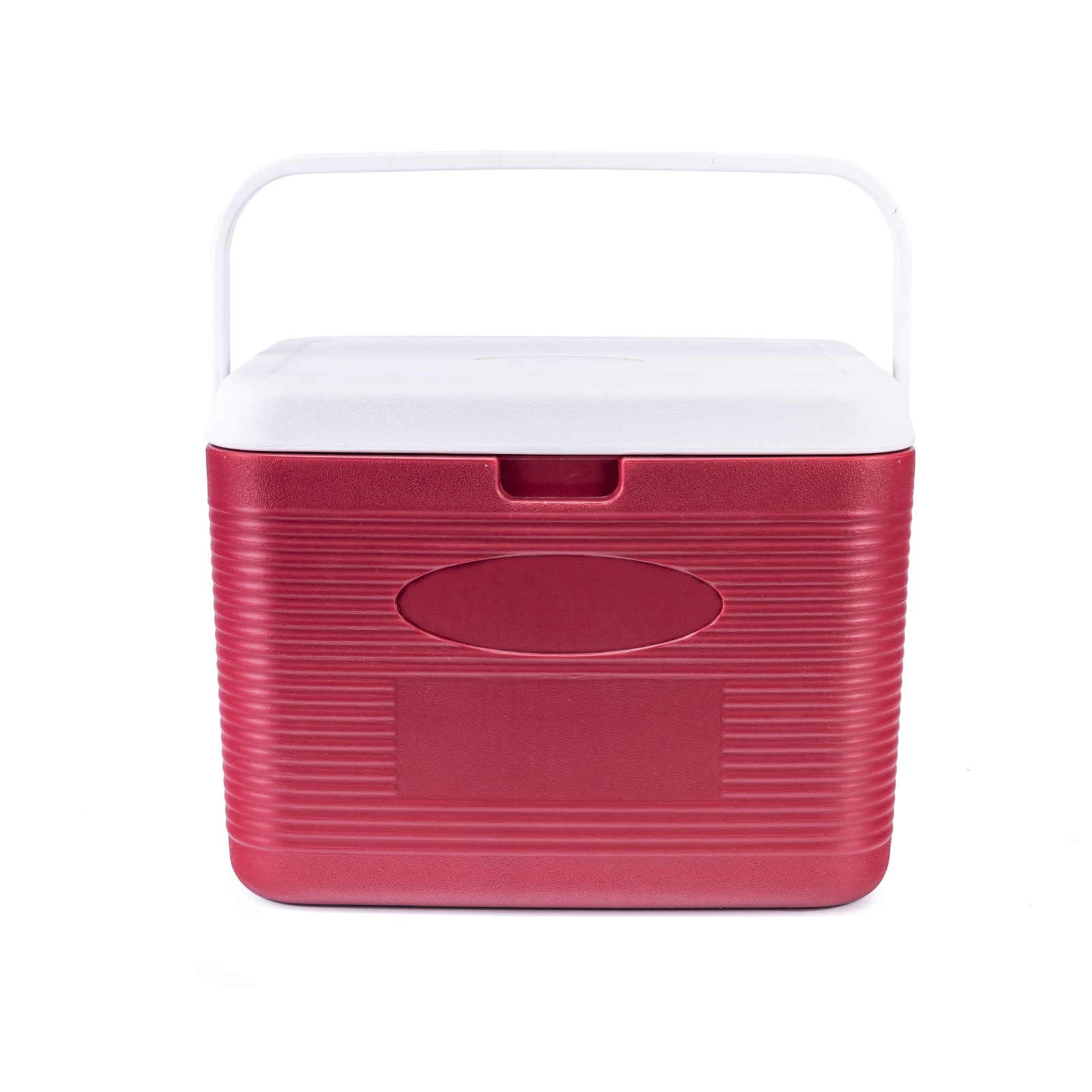
Comment spécifier une boîte EPP empilable pour les produits frais
Une caisse empilable en PPE pour les produits frais doit être spécifiée dans le cadre d'un itinéraire, non acheté comme produit en mousse isolé. Le design réussi s'adapte aux produits de base et aux emballages de vente au détail., permet le débit d'air de refroidissement requis, transporte des charges en pile plutôt qu'à travers les produits, reste nettoyable, et revient économiquement pour la réutilisation. Le polypropylène expansé peut fournir un poids léger, corps résilient et isolant, mais il ne peut pas éliminer la chaleur du champ, créer de la réfrigération, prouver l'aptitude au contact alimentaire, ou garantir à lui seul une durée de vie. Les acheteurs doivent définir l’enveloppe opérationnelle, approuver les dimensions utilisables et les interfaces de pile, tester une palette complète, et contrôler les changements de production avant la mise à l’échelle.
La première décision: où dans la chaîne du froid la boîte fonctionnera-t-elle?
Un même récipient peut se comporter très différemment avant et après le pré-refroidissement. Les produits chauds chargés sur le terrain doivent être évacués rapidement. Un fermé, très boîte isotherme résiste à ce flux de chaleur et peut prolonger le temps de refroidissement. Les produits pré-refroidis transitant par les quais et les itinéraires de livraison peuvent bénéficier d'une isolation qui ralentit le gain de chaleur.. Essayer d'optimiser les deux étapes sans énoncer la priorité produit généralement un compromis difficile à valider..
Cartographier la boîte tout au long du processus:
- température de chargement et état du produit;
- temps entre la récolte et le refroidissement;
- méthode de refroidissement et direction du flux d’air;
- pile et séjour dans une chambre froide;
- disposition des palettes et des véhicules;
- transferts, préparation de commandes mixtes, et ouvertures du couvercle;
- inspection de réception et déchargement des produits;
- retour à vide, tri, lavage, séchage, et stockage.
Marquer le stade auquel la qualité du produit est la plus vulnérable. Les baies délicates peuvent être dominées par la compression et les vibrations. Les légumes-feuilles peuvent être dominés par un refroidissement rapide et une perte d'humidité. Les champignons peuvent nécessiter une gestion minutieuse de l’humidité et de la condensation. Les fruits fermes peuvent permettre une charge plus profonde mais souffrent quand même d'impacts répétés. La conception doit servir le risque aux conséquences les plus élevées plutôt que de collecter des fonctionnalités génériques.
Traduire le paquet de produits en dimensions utilisables
Les dimensions extérieures déterminent le modèle de palette, ajustement en rack, cube de véhicule, interface de convoyeur, dégagement de la porte, et stockage de retour. Les dimensions internes décrivent la cavité moulée. Les dimensions utilisables décrivent l'espace qui reste après le brouillon, rayons d'angle, cône mural, évents, côtes, engagement du couvercle, doublures, plateaux, et manipulation du dédouanement. Les acheteurs ont besoin des trois.
Créez une enveloppe de charge utile à partir de la plus grande configuration de pack approuvée. Inclure des barquettes, sacs, plateaux, coussinets, couches absorbantes, étiquettes, et tout liquide de refroidissement. Mesurez les conditions les plus larges et les plus hautes, pas un échantillon moyen. Confirmez que le paquet passe par l'ouverture et peut être retiré sans se retourner, pressant, ou tirer sur le produit.
La profondeur est une décision de qualité du produit. Plus de profondeur peut améliorer le cube de palette, mais les couches inférieures supportent plus de poids et peuvent recevoir moins de flux d'air. Une boîte moins profonde réduit la pression du lit tout en augmentant le nombre d'unités et la manipulation.. Où les emballages de vente au détail transportent leur propre charge verticale, la boîte est peut-être plus profonde; où les produits en vrac portent la charge, la profondeur peut nécessiter un contrôle plus strict. Établir une ligne de remplissage et un dégagement du couvercle que les opérateurs peuvent voir.
Evitez un boitier universel sauf si la gamme est réellement compatible. Une coque extérieure modulaire avec des inserts ou des séparateurs contrôlés peut supporter plusieurs produits, mais les inserts ne doivent pas bloquer les évents ou créer de nouveaux pièges de nettoyage. Les produits mixtes doivent également être examinés en termes de température, humidité, odeur, et compatibilité éthylène. L'espace vide n'est pas automatiquement disponible pour un autre produit.
Concevoir un chemin de circulation d'air, pas une collection de trous
Les méthodes d’emballage influencent le flux d’air, température, et gestion de l'humidité autour des produits frais. Pour refroidissement à air pulsé, l'air doit passer à travers la face de la palette, mur de boîte, paquet de produits, mur opposé, et chemin de retour. Chaque élément peut créer une résistance. Film étirable, planches de palettes, doublures, étiquettes, sacs, et les caissons voisins peuvent bloquer des ouvertures qui paraissent généreuses sur un échantillon isolé.
Commencez par l'équipement. L'usine de conditionnement aspire-t-elle l'air horizontalement à travers des tunnels de palettes, faire circuler l'air autour des cheminées, utiliser le refroidissement sous vide, hydrorefroidissement, ou un autre processus? La boîte ne doit pas être considérée comme compatible simplement parce qu’elle est « ventilée ». Tracez la direction attendue et vérifiez l'alignement de l'évent dans chaque orientation approuvée..
La conception a des besoins concurrents:
| Exigence | Implications dans la conception | Défaut d'éviter |
|---|---|---|
| Pré-refroidissement rapide | Aligné, chemins de circulation d'air dégagés | Zones chaudes cachées à l'intérieur de la palette |
| Empilage structurel | Sections verticales continues ou poteaux d'angle | Évents affaiblissant le chemin de charge principal |
| Produire le confinement | Ouvertures plus petites que le produit vulnérable ou protégées par le format du pack | Renflé, abrasion, ou extrusion de doublure |
| Hygiène | Accessible, ouvertures drainables | Terre et eau de lavage emprisonnées dans les recoins |
| Protection post-refroidissement | Fuite de chaleur contrôlée et fermeture stable | Traiter l’isolation comme un refroidissement actif |
| Efficacité des palettes | Orientation reproductible et zone bloquée minimale | Boîtes tournées selon un modèle inefficace |
Ce tableau devrait guider un essai physique de palette. La simulation du flux d'air peut comparer des concepts, mais les vrais produits créent une résistance irrégulière qui change avec la densité du paquet et la sédimentation.. Mesurez les emplacements représentatifs du produit plutôt que seulement l'air près du mur extérieur..
Faire en sorte que la pile porte des boîtes, pas de fruits
Une boîte n'est pas vraiment empilable car les échantillons vides sont bien rangés sur une table.. Les piles complètes bénéficient d'un poids soutenu, déviation de la palette, impacts, freinage, virage, vibration, surfaces mouillées, et les changements de température. Les éléments d'accouplement doivent enregistrer les boîtes et résister aux mouvements latéraux sans rendre la séparation difficile.
Les charges verticales doivent passer à travers les coins renforcés ou les sections de mur continues. Le couvercle peut localiser la boîte supérieure, mais il ne devrait pas s'incliner devant la charge utile. L'autorisation doit tenir compte de la variation du produit, doublures, tolérances de boîte, porter, et trop remplir. Si la pile dépend de la fermeture parfaite de chaque couvercle, la procédure opératoire doit rendre évidente une fermeture incomplète.
Le polypropylène expansé peut absorber l'énergie d'impact et récupérer de nombreuses déformations modérées, mais la durabilité du fini est contrôlée par la qualité, densité, géométrie, fusion de perles, et chemin de chargement. Les longs panneaux non soutenus peuvent s'incliner. Des transitions internes brusques peuvent concentrer le stress. Les grandes ouvertures d'aération peuvent réduire la section. Le matériau fin au-dessus d'une poignée peut se déchirer même lorsque le reste de la boîte est robuste.
Évaluer au moins quatre mécanismes séparément:
- impacts courts dans les coins, bords, base, et couvercle;
- levage et dépose répétés à la masse emballée approuvée;
- vibrations et migration des produits pendant le transport;
- empilement chargé soutenu dans des conditions environnementales pertinentes.
Les procédures ASTM D4169 et ISTA peuvent éclairer les tests de distribution. Elles s'appliquent à des produits conditionnés et à des conditions de test définis; ils ne transforment pas le matériau EPP en un système d'expédition universellement certifié. L'élément de test doit contenir une charge utile représentative, doublure, fermeture, palette, et la retenue.
Conserver l’isolation dans son rôle
L'EPP ralentit le transfert de chaleur, ce qui peut réduire l’exposition pendant la préparation ou la distribution. Il ne génère pas de refroidissement. Une boîte chargée de produits chauds reste chaude à moins que le processus n'enlève la chaleur. Une boîte utilisée avec packs de gel, Matériaux à changement de phase, glace, ou un autre liquide de refroidissement fait partie d'un pack thermique passif dont les performances dépendent de la configuration complète.
N'acceptez pas une réclamation de temps d'attente sans contexte. Demandez le produit ou la charge utile simulée, températures initiales, type et conditionnement du liquide de refroidissement, placement du liquide de refroidissement, volume utilisable, profil ambiant, emplacements des capteurs, horaire d'ouverture du couvercle, et critères d'acceptation. Une durée de laboratoire dans une configuration ne peut pas être généralisée à chaque produit ou itinéraire.
La conception thermique affecte également l’état des produits. Le liquide de refroidissement en contact direct peut créer des points froids locaux ou des dommages dus au gel pour les produits sensibles. Une doublure peut protéger contre les contacts mais peut restreindre la circulation de l'air. Un espace libre excessif peut augmenter le mouvement de l’air pendant la manipulation et modifier le comportement thermique. L'emballage nécessite à la fois un examen de la température et un examen mécanique.
Un enregistreur de données de température peut documenter l'exposition et aider à identifier la variabilité de l'itinéraire. Il ne compense pas un chemin de circulation d'air bloqué ou un emballage sous-conçu. L'emplacement du capteur doit refléter les emplacements chauds et froids attendus, et l'équipe qualité doit définir la manière dont les données seront examinées.
Contact alimentaire, nettoyage, et conditions de retour
L'aptitude au contact alimentaire appartient à la formulation finie et aux conditions d'utilisation prévues. Les règles européennes établissent des principes généraux de sécurité et d'inertie, bonne pratique de fabrication, et contrôles spécifiques pour les matières plastiques. Les exigences des États-Unis dépendent également d'une base réglementaire appropriée pour la substance entrant en contact avec les aliments et l'utilisation prévue.. Les acheteurs doivent demander de la documentation pour la qualité EPP proposée, couleur, additifs, contenu recyclé le cas échéant, étiquettes, encres, et d'autres composants.
Une déclaration ne remplace pas un programme d'hygiène. Boîtes réutilisables passer des retours sales au stock propre et nécessiter une séquence contrôlée. Définir le tri, pré-nettoyage, laver, rincer, séchage, inspection, et stockage. Indiquez le détergent ou le désinfectant, concentration, température de l'eau, temps de contact, action de pulvérisation ou de brossage, et nombre d'expositions utilisées dans les tests de compatibilité.
Outils de décision utiles
Vérifiez les détails avant de choisir l'emballage
Ces outils rapides peuvent vous aider à comparer le risque d'itinéraire, besoins de dimensionnement, choix de liquide de refroidissement, et les détails de l'emballage avant de demander un devis.
Doublure de boîte & Dimensionnement des couvertures de palettes
Vérifiez la logique de dimensionnement du revêtement de boîte et du couvercle de palette pour les projets d'emballage isotherme.
Dimensionnement estiméRéférence du matériau isolant
Comparez les choix de matériaux d'isolation pour différents besoins d'emballage de la chaîne du froid.
Comparez les matériauxLiquide de refroidissement & Référence PCM
Comparez les options de liquide de refroidissement et de PCM lorsqu'un itinéraire nécessite une prise en charge supplémentaire de la température.
Comparez les optionsInspectez les éléments qui retiennent réellement la contamination: évents, poches profondes pour étiquettes, surfaces de cordon endommagées, coutures, interfaces du couvercle, poignées, et évidements de drainage. La boîte doit sécher complètement dans le temps disponible. L'empilage d'unités humides peut emprisonner l'humidité même lorsque le matériau de base absorbe peu d'eau..
Créez des catégories de disposition que les opérateurs peuvent appliquer de manière cohérente:
- propre et prêt à l'emploi;
- nécessite un nouveau lavage;
- endommagé mais utilisable uniquement dans un rôle défini à faible risque;
- réparable selon une méthode approuvée;
- définitivement rejeté en raison de dommages profonds, contamination, odeur, ou perte de fonction.
Une demande de réutilisation n'est crédible que lorsque l'exploitation sait quand ne pas réutiliser une unité..
Construire le business case autour de la boucle
Le prix d'achat n'est qu'un élément de emballage réutilisable coût. Ajoutez le nombre de cartons nécessaires pour couvrir le volume sortant et le délai de retour, espace de liaison, numérisation ou dépôts, perte, laver le travail, eau et énergie, séchage, inspection, stockage, réparation, retraite, et gestion de fin de vie. Incluez les dommages au produit et les effets du processus de refroidissement, car un emballage qui réduit le coût de la boîte mais augmente la perte de produit n'est pas efficace..
Le cube de retour peut dominer. Forme fixe Boîtes EPP peuvent voyager à vide à moins qu'ils ne nichent ou ne se déplacent sur une liaison de retour disponible. L'imbrication réduit le volume mais introduit une conicité murale et peut entrer en conflit avec la géométrie de la pile ou l'espace utilisable.. Les alternatives pliables enregistrent le cube de retour mais ajoutent des charnières, articulations, étapes d'assemblage, et complexité du nettoyage. La bonne solution dépend de la densité et du contrôle des itinéraires.
Ne supposez pas un nombre standard de cycles. Suivre les unités pilotes individuellement ou par lots. Enregistrer les unités perdues, dégâts majeurs et mineurs, rejet du lavage, délai d'exécution, incidents de pile, plaintes des opérateurs, et les résultats des produits. Le coût par cycle réussi ne devient significatif qu'une fois ces variables observées.
L’évaluation environnementale suit une logique similaire. Le PPE peut être recyclable là où une collecte et un traitement appropriés existent, mais la recyclabilité dépend des infrastructures locales et de l'état réel de la boîte utilisée. La réutilisation peut réduire la demande d’emballages à usage unique, tandis que le transport retour et le lavage créent des impacts. La protection des produits est importante car les produits mis au rebut portent le fardeau environnemental de leur culture., refroidissement, et transport. Optimiser le système, pas une seule réclamation importante.
Que verrouiller avant de commander un outillage
La spécification doit être suffisamment détaillée pour qu'un changement de production ne puisse pas modifier discrètement la fonction.. Verrouiller la qualité EPP approuvée ou les alternatives définies, plage de densité de moulage, le cas échéant, dimensions extérieures et minimales utiles, engagement du couvercle, enregistrement de la pile, interface de base, géométrie de la poignée, modèle de ventilation, zone d'identification, couleur, et statut de contact alimentaire.
Convenir des mesures et des méthodes critiques pour la qualité. Les pièces en mousse peuvent nécessiter un conditionnement avant l'inspection dimensionnelle, et les surfaces dépouillées nécessitent des références définies. Une seule longueur nominale ne suffit pas. Identifier l'élévation à laquelle les dimensions internes sont mesurées et l'ouverture minimale par laquelle la charge utile doit passer.
Demandez au fournisseur d'expliquer les contrôles de fusion des billes, indicateurs de processus, échantillonnage en lots, confinement des non-conformités, et plans de réaction. Le poids des pièces peut être utile lorsqu'il est corrélé avec le processus approuvé, mais cela ne prouve pas toutes les caractéristiques fonctionnelles. Les échantillons fonctionnels doivent être vérifiés pour l'ajustement du couvercle., empilement, levage en charge, et l'alignement des évents.
L'accord de contrôle des modifications doit couvrir la qualité des matériaux, colorant, additifs, contenu recyclé, révisions de moules, changements de processus clés, composants secondaires, lieu de production, et la construction de l'étiquette lorsque ces changements peuvent affecter l'ajustement, contact alimentaire, nettoyage, flux d'air, ou durabilité. Produit important, emballer, ou les changements de processus peuvent nécessiter un nouveau test.
Exécuter un pilote d'itinéraire avant de procéder à la mise à l'échelle
Un pilote de route doit être délibérément ordinaire. Utiliser les opérateurs normaux, vrai produit, temps de chargement standards, le revêtement et la palette prévus, équipement de refroidissement normal, transferts typiques, pratiques de réception, le processus de lavage prévu, et au moins une remise en service. La tenue en main exceptionnelle de l'équipe projet cache les erreurs que la conception doit tolérer.
Définir les observations avant le pilote. Pour les produits, inspecter les ecchymoses, marques de pression, déshydratation, condensation, pourriture, répartition de la température, et le mouvement du paquet. Pour la boîte, inspecter la fermeture du couvercle, décalage de pile, poignées, coins, évents, usure du fond, eau retenue, étiquettes, et les efforts de nettoyage. Les boîtes d'enregistrement ont mal tourné, trop rempli, laissé ouvert, ou placé sur des palettes endommagées. Ces événements révèlent si le système nécessite une modification de conception ou un contrôle de fonctionnement plus clair..
Imaginez un producteur transportant des baies préemballées grâce à un refroidissement à air pulsé.. La boîte a une bonne isolation et un couvercle stable, mais ses évents d'extrémité sont en partie bloqués par la disposition des barquettes et du film étirable.. Les boîtiers extérieurs refroidissent rapidement tandis que les boîtiers centraux restent chauds. Remplacer l'EPP par un autre matériau ne résoudrait pas nécessairement le problème. La solution commence par un réseau de flux d'air aligné et un test au niveau des palettes.
Échelle seulement après que le pilote ait confirmé la conception, processus, nettoyage, et hypothèses de retour. Conserver un échantillon principal approuvé et conserver l'ensemble des preuves utilisées pour la décision.
Questions des acheteurs qui révèlent des propositions faibles
Une citation forte devrait répondre directement à ces questions:
- Quelle marchandise, format du paquet, masse maximale emballée, et l'étape de refroidissement, la conception suppose-t-elle?
- Quelles sont les dimensions minimales utilisables de l'ouverture et de la cavité après tous les éléments moulés?
- Comment la palette complète prend-elle en charge la direction du flux d'air requise?
- Quelles sections supportent une charge de pile, et qu'est-ce qui protège la couche supérieure des produits?
- Quelles preuves de test utilisent la configuration emballée réelle plutôt qu'une boîte vide?
- Quelle documentation relative au contact alimentaire s'applique à la formulation finie exacte et au marché?
- Quelles conditions de nettoyage ont été évaluées, et comment la boîte s'égoutte et sèche-t-elle?
- Comment se déroule la fusion de perles, dimensions, ajustement du couvercle, évents, et fonctionnalités de pile contrôlées en production?
- Quels changements nécessitent une notification de l'acheteur et un nouveau test?
- Quel est le plan de reverse-logistique et de fin de vie?
Un fournisseur qui identifie les limites et demande des données d'itinéraire offre généralement plus de valeur qu'un fournisseur qui associe des revendications universelles à une boîte standard..
Questions fréquemment posées
Le PPE est-il meilleur que les emballages en carton ondulé pour les produits?
Ni l’un ni l’autre n’est universellement meilleur. Le PPE peut offrir un rembourrage réutilisable, isolation, résistance à l'humidité, et fonctionnalités de pile intégrées. Les formats ondulés peuvent être légers, imprimable, largement récupérable sur certains marchés, et pratique pour les itinéraires à sens unique. Comparez la protection des produits, flux d'air, exposition en chambre froide, performances des palettes, logistique de retour, nettoyage, perte, coût par expédition réussie, et systèmes de récupération locaux.
Une glacière de pré-refroidissement devrait-elle avoir autant d'aérations que possible?
Non. Le flux d'air doit être suffisamment ouvert, zone alignée, mais la conception des évents doit également préserver les chemins de charge structurels, contenir le produit, éviter l'extrusion du revêtement, et reste nettoyable. Des ouvertures excessives ou mal placées peuvent affaiblir les murs sans produire un refroidissement uniforme. Déterminer la méthode de refroidissement, modéliser la palette assemblée, et vérifiez avec un produit réel ou un pack représentatif.
La conformité au contact alimentaire peut-elle être déduite de la résine polypropylène?
Non. L'article fini peut inclure une qualité EPP spécifique, pigments, additifs, contenu recyclé, encres, étiquettes, et d'autres pièces. La conformité dépend du marché visé, type de nourriture, temps et température de contact, et base réglementaire. Demandez de la documentation pour la construction exacte proposée et n'acceptez pas « qualité alimentaire » comme déclaration complète.
Quand le système doit-il être retesté?
Un nouveau test doit être envisagé lorsque des changements pourraient affecter les performances.. Les exemples incluent un nouveau produit ou un emballage de vente au détail, hauteur ou masse modifiée de la charge utile, une doublure différente, révision d'évent ou de moule, changement de matériau ou de densité, nouveau modèle de palette, différents équipements de refroidissement, changement d'itinéraire, produit chimique de nettoyage, ou changement de site de production. L'équipe qualité doit définir le déclencheur en fonction du risque.
Conclusion
La spécification d'une boîte de produits EPP est une tâche transversale. La biologie du produit définit la pression acceptable, température, humidité, et les conditions de circulation de l'air. L'ingénierie de l'emballage crée un espace utilisable, évents, chemins de chargement, et fonctionnalités de manipulation. Contrôles qualité contact alimentaire, hygiène, preuve de test, et gestion du changement. La logistique boucle la boucle grâce à l'ajustement des palettes, performances du véhicule, retours, et le lavage. Lorsque ces fonctions partagent une même spécification de fonctionnement, Le PPE peut fournir une plateforme durable au lieu d’une promesse matérielle isolée.
À propos du tempk
Tempk fournit emballage chaîne du froid produits, y compris conteneurs isolés, fluide de refroidissement, et options de surveillance de la température pour la distribution sensible à la température. Pour un projet PPE de produits frais, nous pouvons vous aider à organiser les contributions nécessaires à une révision de concept utile, tels que les produits et le format d'emballage, dimensions utilisables, méthode de refroidissement, modèle de palette, exposition ambiante, utilisation du liquide de refroidissement, nettoyage, et renvoyer la logistique. Toute performance de température proposée ou utilisation en contact avec les aliments doit être confirmée pour la configuration exacte et le marché de destination..
Partagez le flux complet des produits et les contraintes qui ne peuvent pas changer pour comparer les normes appropriées, modifié, ou options EPP personnalisées.