Ton ice box factory isn’t just a warehouse full of ice makers; it’s the nerve centre of a cold chain network. Dans 2024 the global cold chain logistics market was valued at US $341 milliard, and it is forecast to grow to more than US $1.1 mille milliards par 2034. With e commerce surging and half of new medicines requiring cold storage, companies need flexible facilities that efficiently produce, store and ship temperature sensitive goods. This article demystifies ice box factories and shows you how to build, operate and optimize them in 2026.
Cet article répondra:
What is an ice box factory and why is it essential? Understand how a modern ice factory integrates ice production, storage and packaging equipment to support cold chain logistics.
How do insulated shipping boxes and cooling materials work? Learn the pros and cons of dry ice, packs de gel et matériaux à changement de phase.
Which technologies are transforming ice box factories in 2026? Explore predictive weather tracking, track and trace systems, automation and solid state cooling.
What challenges will you face and how can you overcome them? Discover how to handle food waste costs, labour shortages and dry ice supply constraints.
How should you design or upgrade your own facility? Follow a step by step checklist that considers capacity, efficacité énergétique, local conditions and sustainability.
What Is a Modern Ice Box Factory and Why Does It Matter?
An ice box factory is a complete facility that produces, stores and prepares ice or insulated boxes for temperature sensitive transport. Unlike a simple ice plant, a modern ice box factory combines ice makers, systèmes de réfrigération, storage rooms and packaging lines under one roof. The goal is to maintain product integrity from production through distribution, ensuring foods, medicines and other perishables stay within a controlled temperature range. Dans la logistique de la chaîne du froid, these factories enable safe last mile delivery and reduce waste, helping businesses meet regulatory and consumer expectations.
Understanding the Ice Box Factory System
A typical ice box factory works like a mini ecosystem. Water enters through treatment units, flows into ice machines (bloc, cube or flake), then moves to insulated storage rooms where temperature and humidity are tightly controlled. Packaging lines integrate weighing systems, pre cooling chillers, and conveyors that funnel products into insulated boxes or pallets ready for shipment. Each component is designed to minimize thermal shock during hand offs, which are critical points of failure in the cold chain. Choosing the right plant requires considering local water supply, coûts énergétiques, available labour and the preferred type of ice.
Key Components and Their Purpose
| Composant | Fonction | Avantage |
| Ice maker (bloc, cube, flake) | Produces ice in the desired format (block for marine use, cube for beverages, flake for rapid cooling). | Allows customization of cooling media to match product needs. |
| Refrigeration system & compresseurs | Provides continuous cold through ammonia or CO₂ refrigerants; integrates energy management systems. | Reduces energy consumption by 10–30% while maintaining temperature control. |
| Insulated storage rooms | Hold ice or packaged goods at stable temperatures; insulated walls prevent heat infiltration. | Maintains quality and reduces melting, preventing product waste. |
| Packaging and delivery lines | Peser, pre cool and pack goods into insulated boxes; may include automated conveyors. | Minimizes manual handling, improves hygiene and speeds fulfillment. |
Conseils pratiques et suggestions
Match the ice format to your product: use block ice for long haul seafood shipping and flake ice for rapid cooling of produce. Evaluate demand and choose machines accordingly.
Consider modular design: invest in modular ice makers and storage rooms that can scale up as your business grows; this avoids costly retrofits.
Integrate energy management early: energy management systems reduce power consumption by up to 30% while maintaining temperature. Implement them during the design phase rather than as a retrofit.
Exemple de cas: A mid size seafood exporter customized a 28 ton block ice plant with modular storage and automated packaging. By integrating energy management, the facility cut power consumption by 20% and scaled up production during peak fishing season without exceeding utility limits.
How Do Insulated Shipping Boxes and Cooling Materials Maintain Temperature?
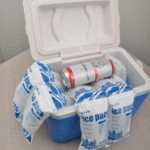
Insulated shipping boxes act as portable refrigerators by combining robust insulation and cooling agents that slow heat exchange. As e commerce and direct to consumer (DTC) models surge, demand for insulated boxes has grown rapidly. Modern boxes use recyclable fiber films, tamper proof closures and smart temperature indicators. Asia Pacific leads adoption of fiber based insulated boxes while Europe focuses on circular economy packaging and North America invests in cold chain logistics for e commerce.
Comparing Cooling Agents: Glace sèche, Packs de gel et matériaux à changement de phase
| Agent de refroidissement | Avantages | Défis |
| Glace sèche | Très froid (-78.5 °C), long lifespan, sublimates into gas so it doesn’t create messes; affordable per pound. | CO₂ supply is tight; production about 4 600 t/day and demand growing 5% annuellement; risk of shortage in 2026; handling hazards require protective gear; transport restrictions and emissions concerns. |
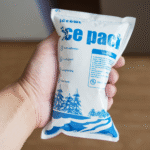
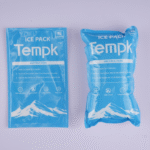
| Packs de gel & salt based packs | Non dangereux; facile à manipuler; good for refrigerated ranges (2–8 ° C); options réutilisables disponibles. | Up to 15–20 times more expensive than dry ice; not effective for frozen shipments; durée de refroidissement limitée. |
| Matériaux à changement de phase (PCMS) | Maintain specific temperatures through melting and freezing cycles; can be tailored to different ranges (0 °C, 8 °C, –20 ° C); reduce dry ice usage. | Upfront cost is higher; still emerging; may require careful pairing with insulation; not a one to one replacement for dry ice in extreme conditions. |
| Solid state cooling (Peltier & IoT enabled boxes) | Semiconductor devices create cooling without refrigerants; self refrigerated, reusable shipping boxes maintain 2–8 °C for 72 h; connect to cloud for tracking and return logistics. | Investissement initial plus élevé; currently focused on pharmaceutical use; scaling to food requires further development. |
Conseils pratiques et suggestions
Optimize your cooling mix: Evaluate product temperature requirements and transit time. Utilisez de la glace sèche pour les produits congelés, gel packs or PCMs for chilled products, and consider solid state boxes for high value pharmaceuticals.
Reduce dry ice dependence: Design packaging that requires less dry ice per shipment; high performance insulation and improved geometry can stretch dry ice life.
Adopt reusable insulated boxes: Durable containers with IoT sensors can be reused for years, lowering cost per use and emissions. Implement a returns program to recover and sanitize boxes.
Scénario pratique: A meal kit company switched from single use EPS boxes and dry ice to reusable insulated boxes with phase change packs. Customers returned the boxes via prepaid labels, and the company cut dry ice usage by 40% and reduced packaging waste.
How Digital Technology and Automation Optimize Ice Box Factory Operations
Predictive weather tracking, track and trace systems, automation and energy management are reshaping cold chain logistics. These tools allow operators to foresee temperature swings, adjust coolant levels and reroute shipments before problems occur. Predictive weather tracking uses real time environmental data to determine how much coolant to pack, which carriers to use and whether a route is viable. This proactive approach reduces wasted materials and lowers weight based shipping fees.
Track and trace systems are evolving from passive data loggers to real time intervention platforms: when a shipment stalls or risks missing delivery, the system sends alerts and recommended actions. Automation inside ice box factories supports labour by handling strenuous tasks such as picking and packing, reducing exposure time in cold zones. Energy management systems combine analytics and predictive control to monitor compressors, lighting and material handling systems, cutting power consumption by 10–30%.
Technology and Their Impact
| Technologie | Description | Impact on Ice Box Factories |
| Predictive weather tracking | Uses real time and forecasted weather data to determine coolant needs, route viability and shipment timing. | Reduces dry ice waste, optimizes shipping routes and lowers cost; helps avoid temperature excursions. |
| Track and trace with intervention | Real time sensors and connectivity trigger alerts when shipments stall or temperatures drift. | Permet une intervention proactive, protecting product integrity and reducing losses. |
| Automatisation et robotique | Robots and automated conveyors handle picking, packing and sorting tasks inside cold warehouses. | Improves throughput, reduces worker exposure to sub zero conditions and mitigates labour shortages. |
| Energy Management Systems (SME) | Combines automation, analytics and predictive control to adjust refrigeration, lighting and material handling loads. | Cuts energy usage by 10–30% while maintaining temperature control, improving sustainability and lowering operating costs. |
| Solid state and IoT enabled boxes | Self refrigerated, cloud connected shipping boxes use semiconductor cooling and track location and temperature. | Provide reusable, Contrôle précis de la température; reduce reliance on disposable refrigerants. |
Conseils pratiques et suggestions
Implement predictive tracking tools: Integrate weather APIs and machine learning models into your logistics software to anticipate heat spikes and adjust coolant loads accordingly.
Use real time data for quick decisions: Set up dashboards that show shipment location, temperature and predicted arrival; empower operators to reroute or add coolant if needed.
Automate repetitive tasks: Deploy automated palletizers and robotic arms for picking and packing; schedule human workers for supervision and quality control. Automating high exposure jobs improves safety and retention.
Vrai exemple: An online grocer integrated predictive weather tracking and track and trace sensors. When storms threatened a coastal region, the system rerouted shipments through an inland distribution hub, reducing product loss and saving thousands in wasted dry ice.
What Challenges Will You Face and How Can You Overcome Them?
Ice box factories and cold chain operators face rising costs, labour constraints, and supply chain bottlenecks—but targeted strategies can mitigate these issues. Food waste remains one of the most costly challenges: independent modeling forecasts global food waste costs reaching US $540 milliards 2026. Nearly one third of revenues can be lost to food waste in the retail supply chain, yet over 61% of businesses still lack visibility into where waste occurs. Entre-temps, dry ice supply is tight due to limited CO₂ production; demand has grown 5% per year while capacity growth is only 0.3%, raising fears of shortages in 2026.
Labour pressures are intensifying. Recruiting and retaining staff willing to work in sub zero environments is challenging; 3PLs are adopting part time or short shift models to reduce burnout. Dry ice handling requires protective gear and carries safety risks. Regulatory changes and sustainability mandates are pushing companies to adopt greener refrigerants and packaging.
Tackling Food Waste, Labour and Supply Constraints
| Défi | Preuve | Stratégies |
| Food waste | Economic cost forecast to hit $540 milliards 2026; 33% of revenues lost to waste; 61% of businesses lack visibility. | Implement item level tracking and demand forecasting; use predictive shelf life analytics; invest in real time temperature monitoring to detect excursions; adopt first expire, first out rotations. |
| Dry ice supply constraints | CO₂ production is about 4 600 t/day; demand grows 5% annually vs capacity growth of 0.3%; potential shortage in 2026. | Diversify cooling media—adopt PCMs and phase change packs; design packaging that reduces dry ice use per shipment; consider battery operated coolers; strengthen supplier partnerships to secure CO₂ sources. |
| Pénuries de main d'œuvre & sécurité | 3PLs struggle to attract workers for sub zero conditions; dry ice causes cold burns and requires PPE. | Offer flexible shifts and cross training; invest in automation and robotics to reduce manual work; provide comprehensive PPE and safety training; rotate staff through warm zones. |
| Visibility and data gaps | 56% of companies lack understanding of waste during transit; 61% lack full visibility across operations. | Deploy IoT sensors for real time monitoring; integrate data from production, stockage et transport; use cloud dashboards; réaliser des audits réguliers. |
Conseils pratiques et suggestions
Invest in training and safety: Provide workers with proper PPE, safety protocols and incentives. Emphasize ergonomics and rotation schedules.
Collaborer avec des partenaires: Build relationships with CO₂ suppliers, packaging manufacturers and last mile carriers to ensure continuous supply and innovation.
Leverage data to reduce waste: Use predictive analytics to forecast demand, schedule production and optimize inventory; track expiry dates and enforce first expire, first out policies.
Exemple de cas: A pharmaceutical distributor implemented IoT enabled boxes with track and trace sensors and automated alerts. By gaining visibility into transit, the company cut product spoilage by 25% and avoided millions in losses due to temperature excursions.
How to Choose and Plan Your Own Ice Box Factory
Selecting or upgrading an ice box factory requires balancing capacity, qualité, coût et durabilité. An appropriate facility depends on local water supply, electricity prices, skilled labour availability and the type of ice required. You should also consider regulatory requirements, such as refrigerant restrictions and food safety standards.
Checklist for Selecting a Facility
| Critère | Ce que cela signifie | Pourquoi ça compte |
| Capacity and daily ice output | The tonnage of ice or insulated boxes the plant can produce per day. | Determines whether you can meet peak demand without excessive overtime or energy costs. |
| Type of ice or product | Bloc, cube, flake or insulated box specification. | Matching the product to the intended application ensures efficient cooling and minimizes waste. |
| Efficacité énergétique & refrigeration technology | Use of ammonia or CO₂ systems, energy management integration, qualité de l'isolation. | Lowers operating costs and aligns with sustainability goals; advanced EMS reduces power consumption by 10–30%. |
| Local conditions & resources | Availability of clean water, reliable electricity, skilled labour and space. | Affects capital and running costs; remote areas may need robust backups and on site training. |
| Réglementaire & sustainability compliance | Conformity with food safety, environmental and refrigerant regulations. | Non compliance can lead to fines and reputational damage; sustainable practices attract customers. |
| Évolutivité & modularity | Ability to expand capacity or add modules as demand grows. | Avoids expensive overbuilds; modular design allows incremental investment. |
Conseils pratiques et suggestions
Conduct a feasibility study: Assess local water quality, electricity rates and labour market. Calculate the payback period for different refrigeration technologies.
Choose reputable equipment suppliers: Invest in compressors, pumps and controls from known brands to ensure reliability and service support.
Plan for training: Provide on site training so your team can operate and maintain the facility autonomously.
Exemple de cas: A dairy cooperative considering an ice box factory used a capacity planning tool to estimate daily output. By aligning equipment size with seasonal demand and designing modular storage rooms, the cooperative avoided overinvestment and achieved a two year payback.
2026 Latest Ice Box Factory Developments and Trends
The landscape of cold chain logistics and ice box factories is evolving rapidly. Here are the most notable developments and market insights up to January 2026:
Aperçu de la tendance
Expansion du marché: The cold chain logistics market is expected to exceed US $1.1 mille milliards par 2034. Growth drivers include demand for fresh and convenience foods, e commerce expansion and international trade.
Emballage durable: Manufacturers are innovating with recyclable materials, fiber based films and tamper proof solutions; L’Asie-Pacifique mène l’adoption, Europe focuses on circular economy, and North America invests in e commerce logistics.
Dry ice alternatives: Tight CO₂ supply and potential dry ice shortages are spurring research into phase change materials and reusable battery operated coolers.
Analyse prédictive & IoT: Predictive weather tracking and track and trace systems allow companies to tailor coolant loads, reroute shipments and prevent product loss.
Automation & robotique: 3PLs are deploying automation to support labour and reduce exposure to cold. Robots handle picking and packing tasks, while EMS reduces energy consumption.
Solid state cooling: Peltier based containers and self refrigerated shipping boxes maintain precise temperatures and are reusable; le cube de braise 2 is scheduled for pilot launch in 2026.
Food waste awareness: Economic costs of food waste are forecast to reach $540 milliards 2026, prompting investment in visibility, demand forecasting and shelf life analytics.
Insistance au marché
Leadership régional: Asia Pacific dominates the insulated shipping box market thanks to rapid adoption of sustainable materials and supportive government initiatives. Europe emphasizes regulatory compliance and circular economy packaging, while North America’s growth stems from e commerce logistics.
Segment focus: Healthcare packaging for vaccines, biologics and blood dominates insulated box demand; food and beverage delivery and e commerce logistics are also major segments.
Paysage concurrentiel: Companies invest in recyclable materials, tamper proof seals and holographic labels to enhance product safety and sustainability.
Questions fréquemment posées (FAQ)
Q1: What is the difference between an ice box factory and a cold storage warehouse?
An ice box factory includes ice makers and packaging lines, producing ice or insulated boxes for shipment. A cold storage warehouse primarily stores perishable goods but does not manufacture ice; it maintains temperature to preserve existing products.
Q2: How can I maintain energy efficiency in my ice box factory?
Adopt energy management systems that combine automation and predictive control to adjust refrigeration and lighting loads, reducing power consumption by 10–30%. Utiliser une isolation de haute qualité, regularly service compressors and consider heat recovery systems.
Q3: Are reusable insulated boxes better for the environment?
Reusable boxes can last more than 15 années. They reduce waste and cut emissions over time. Cependant, they require a return logistics program and higher initial investment.
Q4: What are the main alternatives to dry ice?
Les alternatives incluent des packs de gel, salt based packs and phase change materials (PCMS). PCMs maintain specific temperatures and can reduce dry ice use. Battery operated coolers with small compressors are emerging for high value pharmaceuticals.
Résumé et recommandations
Principaux à retenir:
An ice box factory is an integrated system combining ice production, cold storage and packaging lines that support cold chain logistics.
Sustainable insulated boxes and alternative cooling agents such as recyclable fiber films and phase change materials are reshaping packaging.
Digital technology and automation—predictive weather tracking, track and trace, robotics and energy management—improve efficiency and reduce waste.
Challenges include food waste, dry ice shortages and labour pressures. Mitigate them through demand forecasting, diversified cooling media and flexible workforce strategies.
Selecting a facility requires careful planning. Considérez la capacité, ice type, efficacité énergétique, local resources, regulations and scalability.
Plan d'action:
Evaluate your current cold chain operations: identify where temperature excursions, waste and delays occur. Use IoT sensors to gain visibility and predictive analytics to forecast demand.
Design or upgrade your ice box factory: follow the selection checklist and invest in modular, équipement économe en énergie; incorporate sustainable insulation and alternative cooling agents.
Integrate digital technology: implement predictive weather tracking, track and trace systems and automation to optimize routing and reduce labour strain.
Renforcer les partenariats: collaborate with CO₂ producers, packaging suppliers and logistics providers to secure resources and innovate together.
Continually train your team: provide ongoing education on safety, equipment maintenance and data driven decision making. Encourage a culture of continuous improvement.
À propos du tempk
Rotation (Shanghai Huizhou Industrial Co., Ltd.) is a high tech enterprise headquartered in Shanghai with more than seven factories in China. Fondée en 2011 avec un capital social de 30 million yuan, Tempk focuses on the recherche, développement, production, vente et service of cold chain products. The company supplies phase change cold storage materials, gel and dry ice packs, sacs isolés, Boîtes isolées EPP, réfrigérateurs médicaux et temperature control verification services for pharmaceutical groups and fresh food e commerce companies. By combining innovative materials with strict quality control, Tempk helps customers ship temperature sensitive goods safely and efficiently.
Tempk’s extensive expertise and commitment to sustainable solutions make it a trusted partner for businesses building or upgrading ice box factories. Reach out to Tempk’s team of specialists for tailored advice on selecting the right insulated packaging, designing your facility and integrating next generation technologies.