Glacière industrielle Laboratory Samples Supplier: Un guide d'évaluation pratique pour les acheteurs B2B
The search for « industrial ice box laboratory samples supplier » usually points to a practical B2B decision: comment acheminer une charge sensible à la température ou emballée à froid d'un point à un autre avec moins de risques, moins de conjectures, et une meilleure répétabilité. La bonne réponse est rarement la case contenant la revendication de rétention la plus bruyante. C'est la combinaison boîte-emballage qui correspond à votre itinéraire, produit, routine de nettoyage, et contrôle des fournisseurs.
C'est pourquoi les acheteurs intelligents séparent dès le départ trois questions. D'abord, quel travail thermique le colis doit-il faire? Deuxième, quelles exigences mécaniques et hygiéniques l'itinéraire imposera-t-il? Troisième, dans quelle mesure le fournisseur peut-il reproduire systématiquement la même spécification après le premier échantillon? Une fois ces trois questions répondues, les comparaisons de coûts et les listes restreintes de fournisseurs deviennent beaucoup plus utiles.
Définir le travail de transport avant de comparer les boîtes
For laboratory logistics, le conteneur doit être traité dans le cadre d'un processus de transport fonctionnel, pas comme un produit isolé. Vous avez besoin de suffisamment d'espace utilisable une fois le liquide de refroidissement chargé, un emballage qui protège la charge utile du réchauffement et du refroidissement excessif, et une structure qui peut tolérer la façon dont la boîte est transportée, empilé, ouvert, nettoyé, et revint. For many specimen routes, additional compliant inner and outer packaging elements may still be required alongside the récipient isolé.
A good laboratory sample transport ice box needs to do four jobs at the same time. Cela doit ralentir le gain de chaleur, protéger la charge utile des chocs et des écrasements, favoriser une manipulation propre, et s'adapter à la façon dont l'itinéraire est réellement exécuté. Si l'un de ces travaux est ignoré, la boîte peut paraître impressionnante seule tout en restant peu performante sur le terrain. C'est pourquoi les acheteurs devraient comparer le volume utilisable, méthode d'emballage, fréquence d'ouverture, et le délai de nettoyage au lieu de s'appuyer sur une simple déclaration de « rétention de glace ». Pour les échantillons de laboratoire, that usually means enough room for secondary packaging, matériaux absorbants, rigid organization, and a temperature-control method that matches the specimen requirement without creating leakage or crush risk.
Même un coffre-fort ne donne pas de bons résultats lorsque la méthode d'emballage est informelle. Les acheteurs doivent demander un concept d'emballage écrit indiquant où se trouve le liquide de refroidissement., comment la charge utile est mise en mémoire tampon, comment les vides sont contrôlés, et où un enregistreur ou un indicateur de température est positionné. C’est important car deux expéditions utilisant la même boîte peuvent se comporter très différemment lorsque l’une est étroitement organisée et que l’autre est emballée de manière opportuniste.. Pour le transport d'échantillons, a disciplined packout also protects chain of custody and prevents absorbent layers, conteneurs secondaires, or paperwork from being crushed into the wrong position.
L'adéquation de l'itinéraire compte plus que le langage marketing générique. Une boîte emballée une fois pour un court trajet urbain peut échouer sur un trajet plus long avec des ouvertures répétées, exposition au soleil, vibrations du véhicule, ou réception retardée. Les allégations de durée de vie froide tirées des spécifications publiques des vaccins illustrent bien ce point.: le résultat dépend d'une condition ambiante définie, un état de liquide de refroidissement défini, et un point final de mesure défini. En termes pratiques d'achat, cela signifie que la case doit être choisie autour de la température de destination, durée du transit, fréquence d'ouverture, et quel degré de discipline de paquetage l'opération peut raisonnablement maintenir. For lab routes, route fit also includes classification, courier method, and whether the sample needs refrigeration, gel, or controlled ambient protection.
Les détails techniques qui comptent le plus
Les glacières passives fonctionnent en ralentissant le transfert de chaleur et en utilisant un réservoir de liquide de refroidissement pour absorber la chaleur entrante.. En pratique, trois mécanismes comptent: conduction à travers les murs, couvercle, matériel, et ouvertures; convection lorsque de l'air chaud entre lors de l'ouverture ou par fuite; et masse thermique, qui est la capacité du liquide de refroidissement et de la charge utile à amortir les changements de température au fil du temps. C'est pourquoi un mur plus épais ne garantit pas à lui seul de meilleures performances.. Le sceau, pression de verrouillage, circulation de l'air autour de la charge utile, et la quantité et l'état du liquide de refroidissement peuvent modifier considérablement le résultat. Pour le transport d'échantillons, the thermal target may be refrigerated, congelé, ou ambiance contrôlée, so the correct coolant and buffer arrangement can differ sharply between programs.
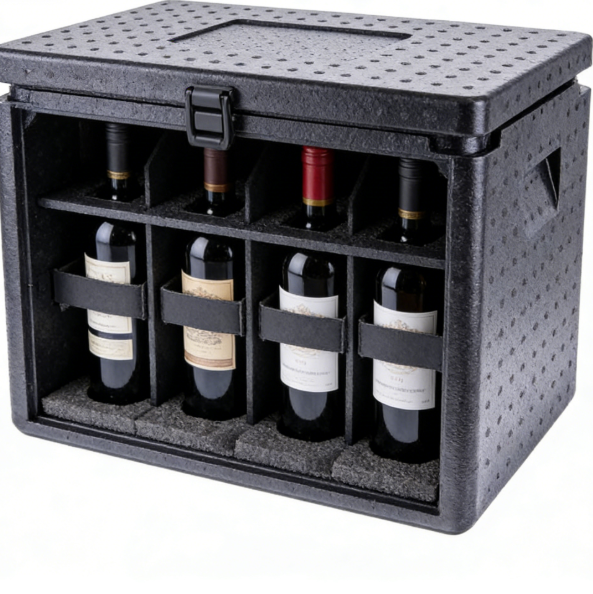
La plupart des boîtes de cette classe utilisent une coque en plastique et une âme isolante en mousse.. Dans les refroidisseurs durs commerciaux, le polyéthylène rotomoulé et le polyuréthane injecté sous pression sont courants car ils combinent résistance mécanique et isolation passive décente. Aux formats médicaux et de laboratoire, les coques en plastique rigide et la mousse de polyuréthane sont également courantes, parfois avec des inserts, cloisons, ou des composants extérieurs à parois souples pour des itinéraires plus légers. La coque donne structure et facilité de nettoyage; la mousse ralentit le transfert de chaleur. Mais le joint du couvercle, géométrie du verrou, protection des charnières, et la manière dont le couvercle rencontre le corps détermine souvent si l'isolation théorique fonctionne au quotidien..
Le choix du matériau de la coque est généralement un compromis entre la résistance aux chocs, moulabilité, nettoyabilité, Résistance aux UV, et coûter. Les glacières commerciales rigides utilisent souvent du polyéthylène rotomoulé ou d'autres plastiques durables car elles tolèrent une manipulation brutale et permettent des sections de paroi isolées épaisses.. Médical et laboratoire caisses de transport utilisent souvent des coques rigides en polypropylène ou en polyéthylène, parfois combiné avec des extérieurs aux parois souples, en fonction de l'itinéraire et des besoins de transport. Dans les deux cas, la coque est avant tout structurelle. Il protège la cavité et soutient l'isolation.
La couche d'isolation est généralement de la mousse polyuréthane dans les caissons rigides car elle offre de bonnes performances thermiques par rapport à l'épaisseur et peut être intégrée dans des constructions moulées.. Les systèmes passifs avancés peuvent ajouter des matériaux à changement de phase ou des panneaux isolés sous vide lorsque l'itinéraire exige un contrôle plus strict ou une durée plus longue., mais ces options changent également le coût, complexité de l'emballage, et réparabilité. Les spécifications publiques des boîtes froides de l’OMS mettent également en évidence des comportements matériels que les équipes d’achat négligent souvent: Résistance aux UV, eau- et joints étanches à la vapeur, résistance aux désinfectants courants, et des surfaces faciles à nettoyer.
Le volume utilisable est l’un des chiffres les plus mal compris dans cette catégorie. Le volume externe ou la taille du titre ne sont pas les mêmes que l'espace de charge utile protégé. Des murs plus épais améliorent l’isolation mais réduisent la cavité. Packs de glace, Packs PCM, plateaux, séparateurs, et les enregistreurs de données le réduisent à nouveau. C'est pourquoi vous devez toujours demander trois mesures: dimensions extérieures, dimensions de la cavité interne, et volume utilisable avec l'agencement de liquide de refroidissement prévu en place. Pour le transport d'échantillons, ask whether the specified volume already assumes leakproof secondary packaging, matériau absorbant, and any rigid specimen organization that your workflow requires.
Les pratiques de suivi et de réception doivent être discutées dès le début, pas après la passation de la commande. Si le programme utilise un enregistreur, indicateur, ou enregistrement manuel de la température, la boîte doit avoir un emplacement dégagé sans interférer avec la charge utile ni forcer le personnel à improviser. Les équipes de réception doivent également savoir inspecter le colis rapidement sans laisser le couvercle ouvert plus longtemps que nécessaire..
Là où les allégations de conformité et les exigences réelles divergent
Le langage de la conformité est fréquemment galvaudé dans cette catégorie. Une boîte peut être robuste, isolé, et bien construit, mais ils ne répondent toujours pas au système d'emballage documenté requis pour un itinéraire réglementé. C'est pourquoi les acheteurs devraient demander ce qui est exactement revendiqué.: adéquation des matériaux, performances d'isolation passive, un emballage qualifié, ou conformité totale de l'expédition selon une norme de transport spécifique.
For laboratory routes, classification matters. Some samples can move under simpler conditions, while others may require Category B or more stringent packaging. PI650 requirements around primary and secondary receptacles, matériau absorbant, résistance à la pression, drop performance, and outer marking are not replaced by buying a better cooler. The insulated box supports temperature control; it does not by itself satisfy the full transport rule set.
Outils de décision utiles
Vérifiez les détails avant de choisir l'emballage
Ces outils rapides peuvent vous aider à comparer le risque d'itinéraire, besoins de dimensionnement, choix de liquide de refroidissement, et les détails de l'emballage avant de demander un devis.
Référence du matériau isolant
Comparez les choix de matériaux d'isolation pour différents besoins d'emballage de la chaîne du froid.
Comparez les matériauxDoublure de boîte & Dimensionnement des couvertures de palettes
Vérifiez la logique de dimensionnement du revêtement de boîte et du couvercle de palette pour les projets d'emballage isotherme.
Dimensionnement estiméCalculateur de banquise
Estimation de la quantité de pain de glace pour les expéditions réfrigérées et planification pratique des itinéraires.
Estimer les packs de glaceEn logistique de laboratoire, the insulated container often sits inside a larger rule set. Depending on the specimen and mode of transport, the shipment may still need leakproof inner packaging, matériau absorbant, a rigid outer, résistance à la pression, drop performance, et marquage spécifique à l'itinéraire. Les acheteurs techniques doivent donc évaluer le contrôle de la température et la conformité des emballages comme des questions liées mais distinctes..
Une liste de contrôle pratique pour les fournisseurs
Une bonne liste restreinte diminue généralement rapidement une fois que de vraies questions sont posées. Après le premier écran, les fournisseurs les plus utiles sont ceux qui peuvent fournir un échantillon, un dessin ou une fiche technique claire, et des réponses directes sur les matériaux, dimensions, nettoyage, hypothèses d'emballage, et que se passe-t-il si un composant change plus tard. Les réponses vagues à ce stade se transforment généralement en problèmes opérationnels plus tard..
- Interne, externe, et dimensions utiles. Demandez les trois, et demandez le volume utilisable avec la disposition du liquide de refroidissement prévue ou le jeu d'inserts déjà en place.
- Matériau de coquille, type de mousse, et construction de joints. Un bon devis doit identifier la famille de résine, la démarche d'isolation, et les principaux matériaux de fermeture au lieu de se cacher derrière des mots génériques comme durable ou qualité alimentaire.
- Conditions de manutention. Confirmez que la boîte est destinée à votre environnement réel, y compris l'empilage, vibration, utilisation du véhicule, lavage, soleil, ou ouverture répétée au cours du parcours.
- Nettoyabilité et hygiène. Demandez comment les coins, coutures, joints de couvercle, bouchons, ou le matériel est nettoyé et si les matériaux tolèrent les désinfectants courants ou les produits chimiques de lavage.
- Support à l’étiquetage et à la traçabilité. Vérifiez où vous pouvez placer les codes-barres, étiquettes d'itinéraire, scellés inviolables, ou enregistreurs de données sans bloquer le couvercle ni compromettre la manipulation.
- Cohérence de l'échantillon à la production. Demandez comment le fournisseur contrôle l'outillage, changements de résine, consistance moussante, dimensions, et substitutions de matériel après l'approbation de l'échantillon.
- Compatibilité des emballages secondaires. Vérifiez si la cavité s'adapte à l'emballage intérieur et secondaire étanche que vous utilisez réellement plutôt qu'à des tubes ou des pots nus..
- Ajustement du courrier et de la classification. Assurez-vous que le fournisseur comprend si la boîte prend en charge la glace carbonique, packs réfrigérés, ou un transport à température ambiante contrôlée et si un emballage extérieur conforme supplémentaire sera toujours requis.
L'un des coûts cachés les plus importants dans cette catégorie est l'incohérence. Une boîte qui change légèrement d'une commande à l'autre peut forcer de nouveaux ajustements d'emballage., réétiquetage, recyclage, ou recevoir des exceptions même lorsque le numéro de pièce nominal reste le même. C'est pourquoi les acheteurs disciplinés se demandent comment les matériaux, dimensions, remplissage isolant, matériel, et les options d'accessoires sont contrôlées une fois qu'un échantillon a été approuvé.
Comment comparer les coûts sans perdre en performances
Le coût devient plus facile à juger lorsque la spécification est définie. Un prix unitaire bas peut cacher une isolation plus fine, matériel plus léger, volume utilisable inférieur, accessoires manquants, ou un contrôle de processus plus faible. Un devis plus élevé peut inclure une meilleure étanchéité, fermetures plus fortes, pièces remplaçables, inserts personnalisés, support d'étiquetage plus clair, ou une production plus cohérente. La seule comparaison équitable se fait avec les mêmes hypothèses d'itinéraire et le même objectif de conditionnement..
Le meilleur fournisseur est rarement celui qui propose la liste de fonctionnalités la plus longue. C'est celui qui peut définir clairement la boîte, répondre aux questions sur le matériel et l'emballage, prise en charge de l'échantillonnage, et conserver la même spécification pour les commandes futures. Si le vendeur ne peut pas expliquer le volume utilisable, conception de joint, ou chargement des hypothèses, le risque apparaît généralement plus tard sous forme de plaintes, retards, ou retouche cachée. Pour toute discussion sur les coûts ou les prix, il est préférable de demander une citation à plusieurs niveaux plutôt qu'un seul numéro de titre. Demander le prix unitaire, le MOQ, accessoires, coût de l'échantillon, coût d'emballage, frais d'outillage ou de moule le cas échéant, politique de pièces de rechange, et le terme commercial derrière l'expédition. Cela transforme la conversation d'une vague négociation en une véritable comparaison d'achats.
La comparaison la plus utile n’est pas boîte contre boîte dans l’abstrait. Il s'agit d'une configuration de travail définie par rapport à une autre. Comparez la cavité utilisable après l'ajout du liquide de refroidissement, le poids chargé, le schéma d'ouverture et de fermeture, la méthode de nettoyage, et le cycle de réutilisation attendu. Cela vous en dit bien plus que la comparaison de l'épaisseur de la coque ou d'un seul numéro de rétention marketing isolément..
La durée de vie doit faire partie de la décision d'achat dès le départ. A laboratory sample transport ice box may look economical on a unit basis, mais le rendement change rapidement si les charnières tombent en panne prématurément, les poignées se desserrent, les joints ne peuvent pas être remplacés, ou la coque devient difficile à désinfecter après une utilisation répétée. Demandez comment la boîte est entretenue, s'il existe des pièces de rechange pour les pièces d'usure, et ce qui provoque généralement la fin de vie en utilisation sur le terrain.
Points de défaillance courants et comment les éviter
Les pannes sur le terrain proviennent rarement d’un seul défaut dramatique. Ils proviennent le plus souvent d’une accumulation: remplissage de mousse incohérent, un couvercle qui ne se comprime pas uniformément, liquide de refroidissement chargé en contact direct avec une charge utile sensible au gel, remplissage excessif qui bloque la circulation de l'air, ou ouverture répétée qui n'a jamais été prise en compte dans le test initial. Sur les itinéraires mobiles, les vibrations et une mauvaise fixation peuvent également déplacer l'emballage et créer des points chauds ou froids à l'intérieur de la cavité.
C'est pourquoi une évaluation technique d'un fournisseur doit inclure plus qu'une simple boîte d'échantillons.. Demandez ce qui est contrôlé de lot en lot, si les contrôles dimensionnels sont enregistrés, comment les substitutions de charnières et de loquets sont approuvées, s'il existe des joints ou des bouchons de rechange, et comment les modifications de conception sont communiquées. Un fournisseur qui ne peut pas décrire les modes de défaillance ne peut généralement pas bien les contrôler.
Avant de passer à l'échelle, cela vaut la peine de lancer un petit projet pilote dans des conditions réalistes. Cela signifie charger la charge utile prévue, en utilisant la préparation réelle du liquide de refroidissement, en suivant le modèle d'ouverture prévu, et vérifier ce que l'équipe qui reçoit voit au fond. Un pilote n’a pas besoin d’être trop compliqué. Son but est de confirmer que la boîte, le paquet, et le processus humain travaillent ensemble sur le chemin réel plutôt que uniquement sur papier. Cela vous donne également un moyen pratique de juger si le fournisseur peut répondre aux commentaires sans perdre le contrôle des spécifications..
For laboratory routes, workflow clarity matters because the box is only one step in a larger handoff sequence. Staff may also be managing paperwork, specimen IDs, matériaux absorbants, and outer markings at the same time. A box that supports tidy, repeatable loading can therefore improve both temperature control and sample integrity.
Prise finale
The most dependable buying decision is the one that treats the laboratory sample transport ice box as a controlled system. Définir la charge utile, la bande de température, la durée du parcours, le modèle d'ouverture, les conditions de manutention, et les attentes en matière de maintenance avant de comparer les fournisseurs. Cette approche produit de meilleures performances, des conversations plus claires avec les fournisseurs, et des comparaisons de coûts plus significatives.
The right laboratory sample transport ice box is the one that matches your route, charge utile, et gérer la discipline avec le moins de conjectures opérationnelles. Si vous définissez la boîte par volume utile, méthode d'emballage, nettoyabilité, force de manipulation, et cohérence des fournisseurs, vous prendrez une bien meilleure décision que si vous achetez sur l'apparence ou sur une allégation générique de rétention au froid.
À propos du Tempk
Et Tempk, nous nous concentrons sur emballage à température contrôlée pour les entreprises qui ont besoin de déplacer des marchandises sensibles de manière plus sûre et plus prévisible. We develop temperature-controlled packaging used across medical, laboratoire, and other sensitive distribution settings, y compris les blocs de glace, boîtes isolées, sacs thermiques, et emballage personnalisé. Notre site présente également des options d'emballage personnalisées à contrôle de température, ce qui est utile lorsqu'une boîte standard du commerce ne correspond pas à l'itinéraire, charge utile, ou modèle de manipulation. Cette combinaison de produits standard et de support d'emballage personnalisé aide les équipes à passer d'une vague demande de boîte à une spécification d'emballage plus claire..
Prochaine étape
Si vous présélectionnez des partenaires, demander un échantillon et une fiche technique claire couvrant le volume utilisable, matériels, et des conseils sur l'emballage avant d'aller de l'avant.