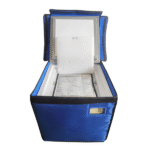
insulated backpack business indonesia should be evaluated as a complete operating tool, not as a simple bag. You need the right thermal build, the right size-to-payload ratio, the right level of documentation, and a supplier who can repeat the approved sample at scale. Quand ces pièces s'alignent, you reduce complaints, protect margin, and make the product easier to explain to buyers or internal teams.
This optimized guide combines the strongest buyer advice, science des matériaux, compliance logic, et 2026 market direction in one place. It is written to help you make a faster, safer sourcing decision while still supporting people-first SEO structure and clear user value.
Cet article vous aidera à répondre
- How to match the right build level to your actual route, charge utile, et le budget
- Quels matériaux, branding choices, and compliance steps matter most in 2026
- How to create a cleaner supplier brief and a stronger final buying decision
- How logo placement, print method, and repeat use affect long-term brand value
- What buyers should watch when sourcing for Indonesia conditions and approvals
What should you prioritize first when choosing Insulated Backpack Business Indonesia?
Start with route reality, not with catalog language. The right choice becomes much easier once you define payload, durée, plage ambiante, fréquence d'ouverture, and user behavior.
Buyers often waste time comparing many bags that should never have been compared together. The better method is to lock the use case first. Are you carrying chilled food for two hours, shipping a parcel for twenty-four hours, or handing out a branded bag meant for daily reuse? Each scenario points to a different balance of insulation, structure, coût, et documentation.
For insulated backpack business indonesia, the goal is not maximum material at any price. The goal is enough performance, enough durability, and enough clarity in the specification to make daily use predictable. Business buyers want products that look organized, work daily, and stay within a realistic rollout budget. En Indonésie, tropical temperatures, humidité, island distribution, and dense urban delivery windows make route discipline and moisture management especially important.
A five-question filter that works fast
Ask five questions in order: what temperature range matters, how long the bag must perform, how often it will be opened, who carries it, and what approval documents are required. Those answers usually eliminate more bad options than hours of browsing product photos.
| Question | What you define | Why it changes the spec | Best next action |
|---|---|---|---|
| Température | portable temperature control with business-friendly carry | Sets the insulation and pack-out baseline | Define your pass-fail target first |
| Durée | Court, moyen, or extended window | Changes wall build and PCM need | Match to route reality |
| Manutention | Porter, colis, multi-drop, event use | Changes closure and structure | Test with the real user |
| Nettoyage | Faible, moyen, or high wipe frequency | Changes liner and seam priorities | Check odor and dry-down risk |
| Approbation | Marque, QA, or procurement review | Changes document pack | Request only the documents that matter |
Conseils pratiques et recommandations
- Write the use case at the top of the brief before you discuss colors or trim.
- Keep a reference payload ready for all sample comparisons.
- Reject any claim that cannot explain test conditions or material logic.
Which material and build combination fits your route best?
The winning build is usually the simplest structure that can meet the target reliably under your actual lane conditions.
Most bag decisions come down to a trade-off among thermal hold, bag weight, user comfort, nettoyabilité, et coûter. That trade-off should be visible in the sample. A light bag may be fine for short routes. A denser structured bag may be worth it when the route is longer, the ambient temperature is high, or the payload value is harder to risk.
The usual building blocks include structured woven shell, isolation en mousse, foil layer, comfort shoulder system. What matters most is not the marketing name of the material, but whether the layer is doing a real job in the final build. Every layer should either protect temperature, improve durability, support hygiene, or improve user handling. If it does none of those, it may only add cost and complexity.
Fit remains one of the most underrated variables. A bag that hugs the payload, closes smoothly, and stays stable during carrying often beats a roomier design with a thicker-looking wall.
A quick route-to-build decision tool
Use this matrix as a starting point, then validate with your own payload. It is meant to simplify shortlisting, not replace testing.
| Use scenario | Recommended build | Thermal support level | Note de l'acheteur |
|---|---|---|---|
| Short daily carry | Entry or mid build with clean liner | Light to medium | Best when price and portability matter most |
| Routine multi-drop route | Mid build with reinforced closure | Moyen | Usually the best balance for everyday operations |
| Hotter or longer window | Premium structured build with disciplined pack-out | Moyen à élevé | Worth it when complaints are expensive |
| Brand-led repeat use | Mid or premium build with stable logo zone | Use-case dependent | Function keeps the branding alive longer |
Conseils pratiques et recommandations
- Do not upgrade wall thickness blindly if the bag is already oversized.
- Compare compression recovery after handling, not only new-condition thickness.
- Treat closure quality as part of the insulation system.
How do branding, conformité, and validation work together?
A bag becomes easier to scale when the visible design, hidden material choices, and proof of performance all tell the same story.
If the project is branded, the logo should sit on a stable area that survives folding, wiping, and normal use. If the project is operational, the bag should include useful identification such as a label zone or size code. In either case, the external design should not fight the thermal structure underneath.
Compliance is the same kind of discipline. If the bag is meant for food-related or cold-chain work, the supplier should be able to explain what the liner is, how the materials are handled, and which declarations are appropriate for the project. Testing then closes the loop by showing whether the built bag can meet the intended route or handling condition.
These three pieces reinforce each other. Good branding without thermal logic creates disappointment. Technical claims without supporting documents create approval delays. Documents without a usable product create operational frustration.
What should a clean validation package include?
A clean package includes the sample revision, a simple layer description, the route or test condition, the pass-fail target, and any project-specific declarations that are actually relevant. That level of clarity is often enough to win internal confidence and speed up supplier alignment.
| Élément | À quoi ressemble le bien | Erreur courante | Pourquoi ça compte |
|---|---|---|---|
| Marque | Stable logo zone and matched print method | Artwork across stress lines | Protects appearance through reuse |
| Conformité | Use-case specific declarations | Requesting everything or nothing | Reduces approval risk |
| Validation | Real payload and clear pass-fail rule | Vague ‘hours cold’ réclamations | Makes performance claims credible |
| Revision control | Sample linked to final spec | Sample approved without locked spec | Protects repeat orders |
Conseils pratiques et recommandations
- Approve logo placement on the assembled bag, not only on artwork.
- Ask for a plain-language explanation of each layer and its purpose.
- Keep the validation rule simple enough that your team will actually use it.
What sourcing model gives you the best total cost instead of the lowest quoted price?
Total cost includes rework, plaintes, receiving effort, storage friction, and the time your team spends clarifying vague samples or vague claims.
The cheapest quote often assumes hidden trade-offs: matériaux plus légers, looser tolerances, weaker documentation, or slower issue resolution. Those choices may not appear on the first order, but they show up later in receiving, in field feedback, and during the next reorder.
The better sourcing model depends on your role. For this keyword, the main lens is professional appearance, daily practicality, and scalable deployment. That means you should score suppliers on sample clarity, réactivité, spec control, QC transparency, and how easily they support the next order, not just the first PO.
One practical rule helps a lot: simplify before you negotiate. Reduce unnecessary options, define the use case, freeze the dimensions, and confirm the print method. Then ask for pricing. Suppliers can quote more accurately, and you can compare offers more fairly.
What should go into a final sourcing decision?
Use a balanced score: product fit, test result, document quality, supplier response speed, and commercial terms. A supplier who is slightly higher on price but much better on clarity and repeatability often becomes the cheaper partner across the project lifecycle.
| Facteur de décision | Low-maturity sign | High-maturity sign | Votre avantage |
|---|---|---|---|
| Sample control | Unlabeled revisions | Clear revision tracking | Fewer approval mistakes |
| Spécification | General descriptions | Locked dimensions and materials | Cleaner repeat orders |
| QC approach | Generic promises | Defined defect standards | More predictable receiving quality |
| Commercial support | Price only | Price plus packing and lead-time clarity | Better landed-cost planning |
| Assistance après-vente | Slow answers after PO | Structured response process | Résolution des problèmes plus rapide |
Conseils pratiques et recommandations
- Simplify option sets before asking for bulk pricing.
- Keep one sealed reference sample for future reorder comparison.
- Do not separate commercial review from technical review; they influence each other.
Exemple: A city delivery team in Indonesia tested a structured backpack design with better shoulder balance and a tighter insulated chamber. Riders moved faster on short routes, and the bag stayed easier to load and wipe clean between drops.
How do you future-proof the bag for 2026 et au-delà?
Future-proofing does not mean guessing every regulation or trend. It means choosing a bag system that is easier to explain, easier to validate, and easier to improve later.
The direction of travel is clear. Buyers want helpful, specific information, cleaner material choices, better labeling, and proof that a product really fits the use case. En emballage, that often means less tolerance for vague claims and more interest in realistic performance plus reuse value.
For EU-linked work, recyclability direction and labeling clarity are already shaping sourcing conversations. For food-related work, hygiene and food-contact logic remain essential. For fast-moving retail and delivery programs, operational ease and route-fit continue to decide whether the bag earns repeat business.
The simplest future-proof move is to build a cleaner specification now: define the layer structure, remove unnecessary complexity, validate under real conditions, and document the final approved version well. That gives you room to evolve the bag later without losing control.
A future-proofing checklist
Keep the structure as simple as the job allows. Match the sustainability claim to actual service life. Reserve a clear zone for labels or revision control. Re-test when a major material or pattern change is made. These small habits create a surprisingly strong long-term foundation.
Conseils pratiques et recommandations
- Prefer clarity over buzzwords in every product claim.
- Review whether each layer still earns its place in the build.
- Revalidate after significant supplier or material changes.
2026 Développements et tendances
Le meilleur 2026 play for insulated backpack business indonesia is to combine people-first content, clear specification logic, and a bag design that actually fits the job. That combination supports both SEO performance and buyer confidence because it replaces generic wording with practical answers.
Derniers développements en un coup d'œil
- Indonesia-facing projects continue to favor durable, easy-clean bags that handle heat, humidité, and fast last-mile turnover.
- Buyers are asking for cleaner material disclosure and more realistic thermal claims instead of vague insulation marketing.
- Reusable formats keep gaining ground where delivery teams, détaillants, and corporate programs want brand visibility and lower waste per use.
- Procurement teams are increasingly pairing packaging choice with validation, cleaning rules, and route data rather than buying on sample feel alone.
As search and procurement both reward clarity, the strongest articles and the strongest products increasingly look alike: spécifique, utile, honest, and complete. That is the standard worth building toward.
Questions fréquemment posées
What is the best way to compare insulated backpack business indonesia samples?
Utiliser la même charge utile, the same starting temperature, and the same pack-out for every sample. Then compare closure quality, ajuster, and handling speed as well as temperature performance. A fair side-by-side test beats any catalog claim.
How long can insulated backpack business indonesia keep products cold?
There is no single honest answer without conditions. En pratique, performance depends on ambient temperature, masse de charge utile, fréquence d'ouverture, and whether you use gel packs or PCM. Use your real route to validate the working window instead of relying on a generic promise.
Can insulated backpack business indonesia be custom branded or labeled?
Oui, most projects can support branding, but the print method and placement should match the outer material and the stress zones of the bag. Approve the logo on an assembled sample so you can see wrinkles, fold lines, and readability before mass production.
What documents should I ask for before buying insulated backpack business indonesia?
Start with a clear specification sheet, a material description, and the inspection or quality rules for the final product. Add food-contact or hygiene-related documents only when the real use case requires them. The goal is practical clarity, not paperwork for its own sake.
What common mistake should buyers avoid with insulated backpack business indonesia?
Avoid buying oversized bags just to feel safe. Extra air reduces thermal efficiency, slows loading, and often makes the bag harder to handle. Dans de nombreux projets, a better fit creates better performance than a bigger bag.
Should insulated backpack business indonesia be tested against a standard profile?
If the project has real temperature risk, Oui. A disciplined profile, whether simple in-house or aligned to a recognized thermal testing framework, gives you a much more useful decision basis than broad marketing language.
Résumé et recommandations
The most effective insulated backpack business indonesia strategy combines buyer-fit, preuve technique, clean documents, and a future-ready design story. That mix helps you source better now and publish content that remains useful as the market becomes more demanding.
Build your next step around a short buyer brief: define the use case, shortlist the right build level, test with the real payload, and request the minimum effective document pack. Then compare suppliers on clarity, répétabilité, et le coût total, not just the first quote. Start with your user journey, then choose the bag form.
À propos du tempk
Tempk focuses on practical cold chain and insulated bag solutions for food, vente au détail, livraison, and customized business projects. We work on the details that matter in the field: realistic insulation structures, cleaner specifications, reliable customization, and product builds that are easier to scale across repeat orders.
Share your target temperature, durée, Taille de la charge utile, and customization needs so the specification can be built around real use instead of guesswork.