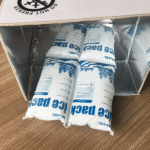
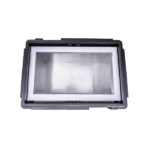
If you are comparing insulated box insert manufacturers, you are probably trying to protect temperature-sensitive products without letting packaging costs expand faster than your order volume. The right liner can reduce excursion risk, simplifier l'emballage, and make seasonal shipping easier to control. This guide explains what to ask, what to measure, and how to turn samples into a confident 2026 supply decision.
Cette version optimisée combine l'accompagnement de l'acheteur, technical screening, and current market context so you can move from first inquiry to qualified supply with fewer costly surprises.
Cet article vous aidera à répondre
- How insulated box insert fits different cold chain shipping lanes and payload sensitivities
- Which insulated box insert specifications matter most for thermal hold time, ajuster, et la cohérence du conditionnement
- What to request from manufacturers and factory teams before sample approval or commercial rollout
- How to compare price, efficacité du fret, and total landed cost instead of unit price alone
- Quoi 2026 sustainability and compliance changes mean when sourcing insulated box insert
Why Is Insulated Box Insert More Than A Packaging Line Item?
Insulated Box Insert should be evaluated as a risk-control tool, not just a packaging SKU. When buyers searching insulated box insert manufacturers treat it like a simple commodity, they often compare only unit price and miss the bigger levers: ajustement du carton, répétabilité d'emballage, freight cube, qualification d'itinéraire, and post-delivery claims. A stronger specification usually saves more money than aggressive quote shopping.
The format itself is usually pre-cut panels or fold-up inserts that create an insulated chamber inside a corrugated shipper. That sounds technical, but your operational question is simpler: can the liner create a stable cavity around the payload with minimal variation from one packer, entrepôt, or season to the next? Si la réponse est oui, you get cleaner execution, fewer temperature surprises, and easier training across locations.
What makes this purchase strategic?
A well-matched liner can lower damage risk, reduce overpacking, save storage space, and simplify scale-up at the same time. That is why high-performing teams connect packaging selection to operations, approvisionnement, and quality from the first sample stage instead of treating it as a last-minute accessory.
| Cas d'utilisation | What You Need | Best Format Signal | Ce que cela signifie pour vous |
| Biologique, Vaccins, And Cell-Therapy Support Materials | Fast pack-out and stable thermal hold | Consistent fold pattern and easy loading | Lower training time and fewer assembly errors |
| Diagnostic Kits And Lab Reagents | Controlled temperature with predictable fit | Tight carton match and repeatable closure | Better day-to-day execution across sites |
| Longer or hotter lanes | More thermal reserve and tighter qualification | Thicker build or upgraded coolant plan | Lower excursion risk but potentially higher cost |
Conseils pratiques
- Map the insulated box insert format to a specific route length and season before approving a mass purchase.
- Check carton dimensions, payload fill level, and coolant placement together instead of approving the liner alone.
- Ask the supplier to show the liner both flat and fully assembled so you can judge handling speed and fit.
Cas: An operations team shipping biologics, vaccins, and cell-therapy support materials switched from a loose improvised insert to a standardized insulated box insert format. The immediate gain was not a dramatic new temperature claim. It was faster pack-out, cleaner box presentation, and fewer packing variations between shifts.
How Do You Build The Right Insulated Box Insert Specification?
The right insulated box insert specification starts with your operating conditions, not the supplier catalog. Avant de demander un devis, define the outer carton, charge de produit, plage de température cible, planned dwell time, type de liquide de refroidissement, assembly steps, and success criteria. That single page removes most of the confusion that slows sampling and causes quote mismatch for insulated box insert manufacturers projects.
Once that brief exists, suppliers become easier to score. You can compare whether they answer directly, recommend fit improvements, flag unrealistic assumptions, and show a workable sample-to-production timeline. You also see who is selling a product and who is helping you build a dependable shipping process.
In optimized sourcing, the supplier is not selected only on price. They are selected on how well they reduce hidden costs such as repacking, seasonal overpacking, storage inefficiency, traitement des plaintes, and requalification after small design changes.
What should your purchase brief include?
Include carton internal dimensions, payload weight range, fenêtre de transit cible, expected ambient extremes, méthode de fermeture, annual volume, and destination disposal expectations. The more precise your brief, the more useful the sample, citation, and validation plan become.
| Supplier Factor | À quoi ressemble le bien | Panneau d'avertissement | Impact On Your Project |
| Technical intake | Asks about route, charge utile, liquide de refroidissement, et assaisonner | Only asks for quantity and size | Weak brief leads to weak fit |
| Sample process | Clear timeline with assembly guidance | Samples arrive with no instructions | Longer launch and more packing variation |
| Contrôle de qualité | Lot traceability and dimensional checks | No clear inspection method | Harder troubleshooting after scale-up |
| Commercial reliability | Honest MOQ and lead time visibility | Vague supply promises | Higher stock-out or rush-order risk |
Conseils pratiques
- Request the same data set from each supplier so your comparison stays fair.
- Treat sample approval, commercial terms, and quality documentation as one workflow, not three separate conversations.
- Do not approve a liner design until warehouse staff can assemble it at target speed with low variation.
Cas: A buyer reviewing three suppliers for insulated box insert found that the most useful sample was not the cheapest one. It came with a carton-fit note, a suggested coolant layout, and a clear list of assumptions. That saved days of internal trial-and-error.
Which Material, Ajuster, And Validation Details Reduce Risk?
The strongest insulated box insert decisions connect material choice, ajustement du carton, and validation into one approval loop. If you optimize only one of those areas, the system stays fragile. A smart specification states the structure, expected fit tolerance, méthode de fermeture, recovery needs, and acceptable temperature outcome.
That matters because hidden variation usually starts at the edges. Slightly oversized liners sag. Slightly undersized liners fight the operator and leave exposed corners. Add a different coolant pack or a heavier payload, and the same liner may behave like a completely different system.
During optimization, look for the lowest-complexity format that still meets the route requirement. Simpler pack-outs scale better, train faster, and reduce packing error. That usually creates more long-term value than a highly engineered format that only one experienced shift can assemble perfectly.
What should be written into the final spec?
Define material family, target dimensions after assembly, acceptable tolerance, méthode de fermeture, recovery or pre-conditioning requirement, coolant pairing assumptions, and the route or test profile used for approval. When those items are written down, later quote comparisons become far more reliable.
| Format Option | Typical Strength | Typical Trade-Off | Meilleur ajustement |
| Reflective air-cell | Light and easy to handle | Moderate reserve for harsh lanes | Short to medium chilled routes |
| Foam or thicker hybrid | Higher thermal reserve | More storage and freight burden | Longer or hotter transit profiles |
| Paper-forward recyclable style | Better disposal story | Needs careful validation | Brands with sustainability pressure |
| Vacuum-compressed or nested | Strong freight and storage efficiency | Recovery and fit must be managed | High-volume programs |
Conseils pratiques
- Judge the liner after full assembly, not while it is still flat on the table.
- Ask how the structure behaves in wet, glacé, and warm handling conditions.
- Balance insulation, vitesse d'emballage, and disposal simplicity instead of maximizing one variable alone.
Cas: A fulfillment team comparing two liner stacks found that the technically thicker option did not create the best overall result. The better choice was the format that packed faster, sealed cleaner, and held a more consistent shape across multiple operators.
How Do You Score Suppliers With A Simple Decision Tool?
A useful approval package for insulated box insert should let another team reproduce your result without guesswork. That is the simplest test of whether the documentation is good enough. If a new warehouse, distributeur, or contract packer can follow the written method and achieve the same outcome, your sourcing decision becomes easier to defend and scale.
This is where the optimized process pulls from both buyer guidance and technical discipline. You want a specification, a sample history, a route or chamber test summary, assembly instructions, contrôle des lots, and a change-notification expectation. That sounds thorough because it is, but it prevents repeated reinvestigation later.
En termes pratiques, the documentation package should be simple enough for operations to use and strong enough for quality teams to trust. That balance is usually better than either extreme of no documentation or excessive paperwork with little operational value.
How can you keep compliance practical?
Write the smallest complete package: approved dimensions, description du matériau, validated pack-out, hypothèses de voie, and the trigger for requalification. That gives you enough control to scale without creating a slow and bureaucratic approval cycle.
| Document | Pourquoi ça compte | Common Gap | Avantage pratique |
| Fiche technique | Defines what was bought | Too generic or incomplete | Cleaner supplier comparisons |
| Test or qualification summary | Shows route relevance | No payload or ambient detail | Better confidence before launch |
| Assembly instruction | Controls pack-out variation | Left in tribal knowledge | Moins d'erreurs de l'opérateur |
| Change control note | Protège les performances approuvées | Unclear notification trigger | Less surprise requalification |
Conseils pratiques
- Tie every validation result to a specific pack-out method and ambient profile.
- Record the triggers that would force requalification, such as a material change or route extension.
- Make sure receiving teams know how to interpret data loggers, excursion reports, or arrival-condition checks.
Cas: A quality team once approved a liner sample but delayed the launch because nobody had documented the coolant arrangement used in the trial. After the method was written down, the same design moved into production smoothly across two sites.
What Changed In 2026 For Compliance And Sustainability?
Optimized sourcing treats insulated box insert as a total-cost lever. That means you compare unit price, fret entrant, charge de stockage, temps de montage, pack-out error rate, refrigerant demand, and complaint exposure on one page. Une fois que tu as fait ça, the cheapest liner on paper often stops looking like the best option.
A useful scorecard separates fixed and variable cost. Fixed cost includes tooling, échantillonnage, and requalification risk. Variable cost includes liner price, fret, travail, et liquide de refroidissement. When teams can see both, they make better long-run decisions instead of chasing short-term quote wins.
If two suppliers are close, choose the one that reduces operational variation. Fewer exceptions create cleaner planning, formation plus facile, and less time spent on packaging-related firefighting.
What belongs in the final commercial comparison?
Use an apples-to-apples model with delivered terms, densité des palettes, qualité d'ajustement, temps de montage, and expected lane success. A sourcing decision is stronger when operations and procurement both recognize their priorities in the same table.
| Inducteur de coûts | Low-Risk Signal | Hidden Risk | Why It Changes Value |
| Prix unitaire | Aligned specification | Quotes built on different assumptions | False price comparison |
| Inbound freight | High pallet density or flat-packed format | Bulky packaging | Bigger warehouse and transport burden |
| Pack labor | Easy and repeatable assembly | Complex folding or closure | More time and more errors |
| Coût d'échec | Validated route fit | Overreliance on generic claims | Claims and product loss can dominate savings |
Conseils pratiques
- Normalize quotes to the same carton size, route requirement, et volume annuel.
- Calculate storage and inbound freight before concluding that a thinner unit price is cheaper.
- Test the design under peak season conditions before locking in annual supply.
Cas: A procurement team once selected a slightly higher-priced liner because it shipped denser, packed faster, and needed less seasonal overcompensation. The line item rose, but the total landed cost moved in the right direction.
What Is The Fastest Path From Inquiry To Qualified Supply?
The fastest path from inquiry to qualified supply is a disciplined sequence: define the lane, write the spec, shortlist suppliers, run route-relevant trials, document the approved method, then scale with monitoring. That sequence sounds basic, but it prevents most of the avoidable friction that slows sourcing projects.
Dans 2026, that process matters even more because the external environment is shifting. FDA's 2025 draft Q1 stability guidance says a transient temperature excursion may be acceptable only when it is justified and supported by stability data. Le règlement européen sur les emballages et les déchets d’emballages est entré en vigueur le 11 Février 2025 and pushes packaging placed on the EU market toward practical recyclability by 2030. Those signals encourage buyers to combine performance proof with material transparency.
When you align procurement, opérations, and quality around the same specification and scorecard, supplier selection becomes faster and easier to defend. That is the real optimization: not more complexity, but fewer unclear decisions.
What is the first step after reading this guide?
Build a one-page sourcing brief and use it for every sample and quote request. Once every supplier responds to the same brief, you can compare them fairly and move to validation with confidence.
| 2026 S'orienter | What Changed | Packaging Response | Benefit To You |
| Evidence-based approval | More focus on route relevance | Clearer qualification support | Safer decisions |
| Pression de durabilité | More scrutiny on disposal and materials | Better material transparency | Easier customer communication |
| Higher-value payloads | Mistakes cost more | Tighter pack-out discipline | Fewer expensive excursions |
| Operational simplification | Lean teams need repeatable methods | Lower-complexity designs | Faster training and scale-up |
Conseils pratiques
- Review lane conditions at least seasonally instead of assuming last quarter's pack-out still fits.
- Keep the supplier informed when payload weight, type de liquide de refroidissement, or distribution geography changes.
- Use post-launch feedback to refine the next round of orders instead of waiting for a failure.
Cas: A sourcing team that documented its route profile and supplier scorecard before requesting quotes reached commercial approval faster than prior projects. The biggest time saver was not better negotiation. It was better alignment on what success looked like.
Questions fréquemment posées
How do you choose the right insulated box insert size for your carton?
Start with the real internal carton dimensions, then test the liner with the actual payload and coolant arrangement. A size chart is useful, but a live fit check is what confirms whether corners close cleanly and the cavity stays consistent.
Is a lower-priced insulated box insert manufacturers option always the better buy?
Pas habituellement. A cheaper liner can still increase freight, travail, utilisation du liquide de refroidissement, or failure risk. Compare total landed cost and operating ease, not just the unit price on the quotation.
What validation data should you request before approving insulated box insert manufacturers?
Ask for route or chamber test context, détails de la charge utile, coolant assumptions, placement du capteur, and assembly instructions. The goal is to understand the exact conditions behind the reported result so your team can repeat it.
When should you requalify a insulated box insert program?
Requalify when route time changes, the season shifts materially, the payload or coolant setup changes, or the supplier modifies the liner structure. Small changes can alter real-world performance more than buyers expect.
Can insulated box insert work for both food and pharmaceutical shipments?
The format can, but the approval pathway may differ. Food shipments often prioritize speed and cost, while healthcare lanes may require tighter documentation, route discipline, et traçabilité.
What is the biggest mistake buyers make with insulated box insert manufacturers?
They approve the liner in isolation. The real decision should include carton fit, plan de refroidissement, lane profile, assembly method, and receiving conditions. The liner is only one part of the shipping system.
Summary And Recommendations
The strongest version of insulated box insert manufacturers sourcing combines buyer clarity, technical discipline, and current market awareness. When the specification is clear, suppliers are easier to compare, qualification becomes faster, and the final decision is easier for procurement, opérations, and quality to support.
Create a one-page sourcing brief, score suppliers against it, and validate with the route conditions that matter most to your business. That is the fastest practical route to reliable 2026 fournir.
À propos du tempk
Tempk focuses on practical cold chain packaging solutions, including insulated box insert programs designed for food, Soins de santé, and temperature-sensitive distribution needs. We emphasize route-aware selection, consistent conversion quality, and supply formats that are easier to scale across real operations.
If you are planning a new project, a seasonal redesign, or a supplier comparison, the most productive next step is to share your carton size, objectif de température, route window, and expected volume. That allows a faster discussion about fit, validation, and commercial feasibility.