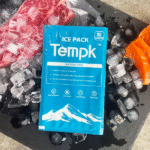
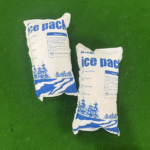
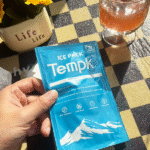
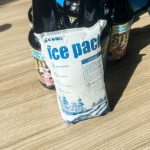
Insulated Box OEM Pouch Complete Guide
Insulated Box OEM Pouch is worth treating as a complete shipping system, not a commodity box. The strongest programs align four things at once: the payload requirement, the lane reality, the supplier control model, and the daily packout behavior of the people doing the work.
This optimized article blends the best parts of the strategy view, the buyer guide, and the technical standards approach. It is written to help you make one confident decision instead of switching between commercial, QA, and engineering viewpoints. If you are planning a new program or replacing an underperforming shipper, this is the practical framework to follow.
For compact temperature-controlled pouch systems, good results come from clarity more than complexity. When the target range, méthode d'emballage, and supplier controls are clear, the packaging becomes easier to qualify, plus facile à entraîner, et plus facile à améliorer au fil du temps.
Cet article répondra
- Why insulated box OEM pouch should be chosen as a full packaging system instead of a box-only purchase.
- How to balance materials, thermal evidence, and day-to-day usability without overengineering.
- What supplier framework helps you avoid weak validation, substitutions silencieuses, and scale-up surprises.
- Lequel 2026 trends really matter for performance, réduction des déchets, et la confiance des clients.
- How to turn your next packaging brief into a faster, nettoyeur, more defensible sourcing decision.
Why is insulated box OEM pouch the right packaging system for this type of payload?
The right shipper protects the product and simplifies the operation at the same time. That is why the best Insulated Box OEM Pouch programs start with the payload and route, not with a preconceived material. If the design can hold the target range, fit the product well, and be packed the same way by different staff, it is already solving most of the real problem.
This category often serves small meal kits, specialty pharmacy deliveries, trousses de diagnostic, and refrigerated cosmetics, with common profiles such as Short refrigerated lanes at 2 à 8 C for useful for pharmacy and healthcare last mile; Fresh convenience food at 0 à 5 C for snacks, laitier, and prepared foods on short routes. But temperature is only one layer of the choice. The package also needs to survive staging, balayage, manutention, and the ordinary delays that happen in live distribution. That is what separates a technically acceptable sample from a robust operating solution.
Viewed this way, packaging becomes a risk-management tool. It reduces the chance of insufficient coolant mass, customer overconfidence in a soft pouch for long lanes, and seal wear in reuse cycles, and it does so in a way that can be trained, audited, et amélioré. When the program is framed like that, cross-functional agreement becomes much easier.
What does the system need to get right from day one?
It needs the correct thermal class, a stable payload layout, a realistic operating SOP, and enough documentation that future teams can reproduce the same result. If one of those is missing, the design may still look good in a pilot while carrying hidden fragility into scale.
| System Need | Question to Answer | Bon signe | Pourquoi ça compte |
| Thermal class | What temperature range must be protected? | Clearly defined product requirement | Prevents wrong coolant logic |
| Ajustement de la charge utile | How should the product sit in the cavity? | Stable mapped layout | Reduces local hot or cold spots |
| Packout behavior | Can staff build it the same way every time? | Simple repeatable SOP | Lowers human-error risk |
| Evidence trail | Can the result be explained later? | Controlled documentation | Supports audits and changes |
Conseils pratiques et recommandations
- Define the common shipment first: design for the lane you run most often, then manage true exceptions separately.
- Treat packout as part of design: the process is not separate from the package; it is one system.
- Write down what failure means: different payloads justify different safety margins and costs.
Integrated lesson: The package that wins long term is not only thermally capable. It is easy to execute, facile à expliquer, and hard to misuse.
How should you balance temperature control, qualification, et la convivialité?
Balance beats overdesign. A very powerful shipper that is expensive, lent, or difficult to pack may not be the best answer. De même, a very simple box with weak evidence may look efficient but create hidden risk. The goal is to reach the point where thermal performance, qualité de validation, and operational ease support one another.
That balance usually comes from a disciplined comparison of soft insulated pouch body, pouch plus outer box, and pcm sleeve or thin gel format, plus the associated conditioning steps and payload fit. Du côté technique, standards such as ASTM D3103 and ISTA 7E are useful because they encourage real-package testing and realistic transport stress. From the operating side, the design should still tolerate normal human variation.
A practical way to buy is to ask: Can this design be conditioned correctly, packed quickly, validated clearly, and monitored sensibly? Si la réponse est oui, you are much closer to a package that will survive scale and scrutiny.
Which trade-offs deserve the most attention?
Pay attention to the trade-off between tighter thermal control and added operational complexity. Also watch the trade-off between smaller cube and higher component cost, and between reusable ambitions and the reality of return logistics. Strong decisions happen when these trade-offs are explicit, not hidden.
| Compromis | Question | Balanced Choice | Result for You |
| Performance vs complexity | Can staff execute the design reliably? | Enough margin without unnecessary steps | Meilleure cohérence |
| Evidence vs speed | Is validation still clear at launch pace? | Fast development with documented assumptions | Moins de surprises plus tard |
| Cube vs margin | Are you overpaying for empty space? | Right-sized design with realistic buffer | Coût au débarquement inférieur |
| Reuse vs practicality | Will assets truly come back? | Closed-loop reuse where route density supports it | More honest sustainability |
Conseils pratiques et recommandations
- Request the packout instructions with the sample: usability should be evaluated immediately, not after technical approval.
- Ask where the logger belongs and why: this reveals how the supplier thinks about local product risk.
- Do not accept evidence without conditions: a test result only matters when the assumptions are visible.
Balanced-buying insight: The best design is often the one that is just strong enough, clearly proven, and easy to repeat.
What buying framework helps you choose a supplier with fewer surprises?
Use a supplier framework that combines proof, contrôle, et un soutien. Too many purchasing decisions rely on unit price and sample appearance alone. A better framework asks what evidence exists, how the package is controlled over time, and how the supplier behaves when your route or volume changes.
Pour ce sujet, the framework should include standards awareness, méthode de validation, changer de contrôle, packout documentation, seasonal readiness, et vitesse de réponse. That covers both the technical side and the operational side. It also gives procurement, QA, and operations one shared language for comparing options.
Use a weighted scorecard if needed, but keep it simple. If the supplier can explain the design clearly, show the evidence, and manage revisions cleanly, that usually signals a healthier long-term partner. If the supplier cannot answer basic questions about assumptions and changes, the future exception burden is likely to land on your team.
What questions reveal whether the supplier really understands your program?
Ask what was tested, what assumptions matter most, what components are controlled, what changes have happened recently, and how the packout would be adapted for a longer or hotter route. Suppliers who understand your program answer these questions specifically, not generically.
| Framework Area | Strong Supplier Signal | Signal faible | Why It Predicts Success |
| Validation | Specific protocol, hypothèses, and result logic | Broad hold-time claim only | Evidence quality shapes trust |
| Changer le contrôle | Documented revision path | Informal substitutions | Protège la stabilité à long terme |
| Conseils d'emballage | Visual controlled SOP | Ad hoc verbal instruction | Améliore la répétabilité |
| Seasonal planning | Defined summer/winter approach | One profile for everything | Reduces route mismatch |
| Support model | Clear contact and issue process | Unclear ownership | Faster correction and scaling |
Conseils pratiques et recommandations
- Choose the partner, not just the package: revision control and responsiveness are part of product performance.
- Keep the scorecard visible: it helps the team resist late-stage subjective switching.
- Review after pilot: the best supplier should improve the design with you, not disappear after the first shipment.
Framework reminder: Surprises usually come from hidden assumptions, weak change control, or poor support — not from lack of foam alone.
Comment faire 2026 trends improve performance without inflating cost or waste?
Le meilleur 2026 programs are getting smarter, not just bigger. Buyers are using more route-specific thinking, more temperature evidence, and more disciplined packout control instead of simply adding thickness or coolant to every shipment. That shift creates better performance with less unnecessary material and less freight penalty.
Dans cette catégorie, the most relevant signals are urban delivery programs are pushing demand for lighter, hand-carry packaging, buyers want compact branding without losing cold-chain discipline, and OEM pouch projects are expanding from food into pharmacy and wellness categories. These trends reward suppliers who can connect design logic, documentation, and field feedback. They also help buyers avoid the old habit of treating sustainability, coût, and performance as separate conversations.
The practical wins usually come from compact formats can reduce dimensional weight and material use when lanes are short, reusable soft pouches work only when return behavior is predictable, and hybrid pouch-in-box systems can cut waste if the right component is reused. Those actions reduce waste because they prevent spoilage, excès de liquide de refroidissement, excess cube, or uncontrolled redesign. Autrement dit, a smarter packaging brief often becomes the most sustainable packaging decision.
What should your next packaging refresh look like?
It should be evidence-backed, de bonne taille, route-aware, and easy to train. That does not require a complicated program. It requires a clear brief, a disciplined comparison, and a supplier who treats performance and operating reality as one problem.
| 2026 Priorité | Smarter Practice | What It Replaces | Avantage |
| Route awareness | Design around route families | One generic box for all jobs | Better fit and lower waste |
| Evidence loop | Use logger and validation data thoughtfully | Assumption-driven redesigns | Faster improvement |
| Usability focus | Simplify packout where possible | Hidden labor burden | More repeatable operations |
| Honest sustainability | Measure avoided loss and excess material | Cosmetic green claims | More defensible results |
Conseils pratiques et recommandations
- Refresh with data: use live-lane learning to refine, not to panic.
- Keep the brief cross-functional: approvisionnement, QA, and operations should sign off on the same target.
- Choose improvements that survive reality: the right change still works during peak season and staff turnover.
Optimized conclusion: Dans 2026, the best packaging programs reduce temperature risk, operating friction, and waste together — because they were designed as systems from the start.
2026 Developments and Trends for Insulated Box OEM Pouch
Dans 2026, the conversation around insulated box OEM pouch is getting more evidence-driven. Buyers want lane-specific qualification, simpler packout control, une documentation plus claire, and a packaging strategy that fits how products are actually shipped. That shift mirrors the latest guidance environment: WHO updated vaccine air-shipping guidance in 2025, IATA released the 2026 Temperature Control Regulations edition, and sectors such as food, recherche, and pharmaceuticals are placing more emphasis on temperature records and process discipline than before.
Derniers développements en un coup d'œil
- Urban delivery programs: Urban delivery programs are pushing demand for lighter, hand-carry packaging.
- Buyers want compact branding without losing cold-chain discipline: Buyers want compact branding without losing cold-chain discipline.
- Oem pouch projects: OEM pouch projects are expanding from food into pharmacy and wellness categories.
Market demand is also becoming more segmented. Some buyers want premium documentation and qualification support, while others want a simpler cost-efficient design for stable regional lanes. De toute façon, suppliers that can connect design, essai, and operating SOPs are gaining ground over vendors who only sell foam volume or generic hold-time charts. Pour toi, that means the best sourcing conversations now sound more like technical-commercial workshops than commodity price calls.
Questions fréquemment posées
What is the most important factor when choosing insulated box OEM pouch?
The biggest factor is fit between the package and your real lane. Start with the target temperature, masse de charge utile, et durée du transit, then check whether the design is easy to pack correctly every day. A box that looks stronger on paper but is hard to execute can fail more often than a simpler, well-controlled design.
Should insulated box OEM pouch be validated before scale-up?
Oui. Use a qualification approach that reflects the real shipment, including component conditioning, disposition de la charge utile, and seasonal ambient stress. For higher-risk programs, documented testing and a clear packout SOP are worth far more than an unverified hold-time promise.
Which temperature range is common for this type of program?
Un point de départ courant est 2 à 8 C for useful for pharmacy and healthcare last mile. Toujours, your correct range depends on the payload, not the package category alone. Separate refrigerated, ambiant, congelé, and deep-frozen flows early so you do not force one design into jobs it cannot reliably do.
Are reusable options always better than single-use insulated box OEM pouch?
Pas toujours. Reuse only pays off when return logistics, inspection, and cleaning are dependable. On dense closed loops, reusable assets can work very well. On fragmented or consumer-facing routes, a right-sized single-use system may be more practical and less wasteful overall.
How can you lower cost without weakening insulated box OEM pouch performance?
Focus on right-sizing, packout simplification, and lane-specific design. Many teams overspend by shipping extra empty space and extra coolant. If you reduce void space, standardize approved components, and validate the common lane, you can often lower cost while improving consistency.
What should you ask a supplier of insulated box OEM pouch?
Ask what was tested, what standards or operating rules informed the design, how change control works, and how the packout is documented. Also ask what happens under delay, substitution, or seasonal stress. Clear answers show maturity; vague answers usually predict future exceptions.
Résumé et recommandations
Insulated Box OEM Pouch works best when you treat it as a full cold-chain system rather than a simple carton. The most reliable programs define the temperature target, right-size the cavity, valider le pack, and keep supplier change control visible. They also measure success by delivered product integrity, not by box cost alone.
Votre prochaine étape est simple: map the real lane, rank the failure modes, choose the design family that fits the common shipment, and validate before you scale. Turn your requirements into a lane-based packaging brief, then validate the final design before scale-up. That approach gives you a better result than chasing the thickest wall or the cheapest quote.
À propos du tempk
Et tempk, we design OEM pouch systems and pouch-in-box programs that balance thermal performance, confort de portage, and scalable manufacturing. We focus on practical insulated packaging for temperature-sensitive products, with attention to dimensional control, convivialité du pack, and qualification-ready design logic. That means helping you bridge the gap between an engineering sample and a repeatable daily operation.
If you are planning a new packaging program, prepare a short brief with your temperature target, fenêtre de transit, détails de la charge utile, and key failure concerns. That gives any serious supplier the information needed to recommend a more accurate starting design.