How to Choose an Insulated Cooler Bag in 2025?
Dernière mise à jour: Décembre 10, 2025
You can pick an sac de glacière isolé faster in 2025 if you focus on three things: tenir le temps, ajuster, et nettoyage. The right bag protects taste, texture, and safety during last‑mile delivery and pickup. Frozen foods typically target 0°F / -18°C, while many chilled items target 35–46 ° F / 2–8 ° C. When your bag holds temperature longer, you spend less on ice, replace fewer spoiled orders, and get fewer angry calls.
Ce guide vous aidera:
-
Choose an insulated cooler bag for food delivery based on route time and stops
-
Improve insulated cooler bag temperature retention with simple packout habits
-
Compare materials for a leakproof insulated cooler bag with zipper that cleans fast
-
Build a sustainability plan with a reusable insulated cooler bag wholesale programme
-
Vet a supplier using practical tests, pas d'allégations marketing
What does an insulated cooler bag actually do?
An insulated cooler bag slows heat from entering, so your cold items stay cold longer. It works like a “jacket” for your products, trapping cold air and blocking warm air. In daily use, you are fighting three enemies: hot air, surfaces chaudes, and repeated opening. A well-built bag reduces all three, so you deliver fresher groceries and safer medicines with less ice and less stress.
Most people focus only on “thicker is better.” Thickness helps, but sealing and handling matter too. Think of it like a thermos with a loose lid. Even a great thermos fails if the lid leaks. Your bag’s zipper, coutures, and inner liner decide whether the insulation can do its job.
Insulated cooler bag temperature retention: what changes it most?
Temperature retention depends on the whole system, not one feature. A strong insulation layer can be ruined by tiny air gaps. Aussi, puits d'air froid, so layout inside the bag matters. If you pack “randomly,” you create warm pockets that speed melting and thawing.
| What affects hold time? | Meilleur choix | Risky choice | Ce que cela signifie pour vous |
|---|---|---|---|
| Seal at the opening | Tight zipper + rabat | Loose zipper | Less warm air infiltration per stop |
| Type d'isolation | Mousse à cellules fermées | Thin felt lining | Slower heat transfer and fewer gel packs |
| Doublure intérieure | Soudé, doublure essuyable | Stitched fabric liner | Faster cleaning and fewer odors |
| Empty space | Bag looks “full” | Bag half empty | Less air to heat up, temps de froid plus long |
Conseils pratiques que vous pouvez utiliser aujourd'hui
-
Livraison multi-arrêts: Open the bag only when you are ready to hand off the item.
-
Hot weather pickup: Put the bag in shade, not on asphalt, even for five minutes.
-
Charges mixtes: Use a divider so frozen items do not warm chilled items.
Vrai exemple: A grocery courier team cut “soft ice cream” complaints after switching to an insulated cooler bag with a tighter lid flap and a smoother liner. They also changed one habit: they stopped leaving the bag open while searching for items.
Which insulated cooler bag size fits your route and payload?
The best insulated cooler bag size matches your route time, number of stops, and the shape of your products. Bigger is not always better. Oversized bags create more air to warm up, so hold time can drop if you do not fill the space. Undersized bags cause crushed packaging, zipper strain, and slow loading, which increases door-open time and warming.
Start by measuring your “typical order,” not your biggest order. Many teams do the opposite and end up with bags that are too large for daily work. Dans 2025, the winners are the operators who standardize sizes and simplify loading, like a well-organized toolbox.
Best insulated cooler bag for groceries: a simple sizing rule
Use a quick sizing rule before you buy. Add up the approximate volume of your common items. Then add space for ice and airflow control. Comme point de départ, planifier pour 20–30% extra volume beyond product volume, pas 80% supplémentaire.
| Type d'itinéraire | Taille de sac suggérée | Stratégie de glace | Ce que cela signifie pour vous |
|---|---|---|---|
| 1–2 stop pickup | Petit à moyen | 1–2 petits packs de gel | Fast handoff and less wasted space |
| 3–6 arrêts | Moyen à grand | Packs de gel + diviseur | Stable temperature across stops |
| Bulk restock | Sacs volumineux ou multiples | Packs de gel en couches | Less crushing and faster sorting |
Practical tips for choosing the right size
-
If you handle groceries: Choose a flatter base to stabilize milk cartons and trays.
-
If you handle meal kits: Choose a bag that fits standard boxes without bending.
-
If you stack bags: Confirm the base panel can handle repeated compression.
Vrai exemple: A meal-kit operator reduced “leaking sauce” incidents by using two medium insulated cooler bag units instead of one large one. The load stayed stable, and the team loaded faster.
How do you pack an insulated cooler bag for maximum hold time?
You get longer hold time when you treat the insulated cooler bag like a mini cold room. Pre-cool the bag, build layers, and limit air exchange. Many failures happen because the bag starts warm and gets opened too often. A simple packout routine can add hours of performance without buying a more expensive bag.
Think of cold like money. Chaque fois que tu ouvres le sac, you spend it. If you spend it early, you go broke before delivery ends. If you spend it slowly, you finish the route with temperature to spare.
HowTo pack an insulated cooler bag for food delivery
Follow these steps as a repeatable routine. You can train a new driver in minutes.
-
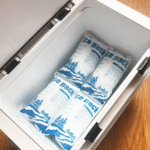
Pre-cool the insulated cooler bag for 10–20 minutes with a gel pack.
-
Tapisser la base with a thin cold source if the route is longer than two hours.
-
Placez les articles congelés ensemble to reduce “warm mixing” inside the bag.
-
Add a divider between frozen and chilled items when both are present.
-
Top-load cold packs for multi-stop routes to fight warm air at the opening.
-
Fermer complètement and confirm the zipper ends are seated.
| Type de produit | Meilleur emplacement | Source froide | Ce que cela signifie pour vous |
|---|---|---|---|
| Glace | Centre, surrounded | Packs de gel puissants | Fewer soft products at delivery |
| Produits laitiers réfrigérés | Couche intermédiaire | Packs de gel modérés | Less souring and better taste |
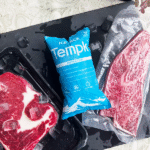
| Fruit de mer | Bottom in tray | Packs froids + tampon absorbant | Less leakage and smell control |
Practical packout tips that reduce mistakes
-
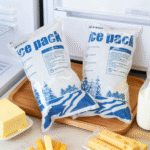
Hot climate routes: Add one extra gel pack for every two hours of travel.
-
Many stops: Use color-coded pouches to avoid long “search time” with the bag open.
-
Fragile packaging: Put heavy items in a second bag, not on top of eggs or cakes.
Vrai exemple: A pharmacy courier improved on-time cold deliveries by using a consistent packout map. They labeled “top packs” and “side packs” and stopped guessing on each route.
What makes an insulated cooler bag leakproof and durable?
A leakproof insulated cooler bag with zipper protects your vehicle, your products, and your brand image. Leaks usually come from melted ice water, condensation, or spilled containers. Durability problems often come from corner abrasion and zipper failure. En opérations réelles, the bag gets dragged, empilé, and cleaned many times a day.
If your team avoids using the bag because it is hard to clean, you already lost. A bag that smells or stains will get “retired” early, which raises your true cost per use. Durability is not just strength. It is also cleanability and daily usability.
Leakproof insulated cooler bag with zipper: what to inspect
Focus on details you can touch and test. A good distributor will not hide these details.
| Fonctionnalité | Meilleure conception | Échec commun | Ce que cela signifie pour vous |
|---|---|---|---|
| Doublure intérieure | Coutures soudées | Coutures cousues | Fewer hidden bacteria traps and easier cleaning |
| Fermeture éclair | Résistant à l'eau + big pull | Fermeture éclair à petites dents | Less snagging and fewer mid-route failures |
| Base | Panneau de protection renforcé | Dessous en tissu doux | Less wear from floors and truck beds |
| Poignées | Box-stitch reinforcement | Point de ligne unique | Lower tear risk under heavy loads |
Practical durability tips for daily operations
-
Nettoyage quotidien: Wipe and dry the liner before you close the bag for storage.
-
Ice choice: Prefer gel packs over loose ice if leaks are a recurring problem.
-
Habitude de chargement: Soulever par les poignées, pas la fermeture éclair, pour éviter les dommages dus au stress.
Vrai exemple: A seafood seller reduced vehicle odors by moving to a leakproof insulated cooler bag with a welded liner. They also added absorb pads under trays, which cut drip cleanup time.
How do you choose a sustainable insulated cooler bag in 2025?
Un sac isotherme durable est celui que vous réutilisez plusieurs fois, clean easily, and keep in service longer. Dans 2025, sustainability is less about slogans and more about measurable reuse. If a bag lasts 300 des voyages au lieu de 60, your footprint drops and your budget improves. The most sustainable choice is usually the one that stays useful, not the one with the fanciest label.
Aussi, buying the right size is a sustainability move. Les sacs surdimensionnés gaspillent de la glace et de l'énergie. Underfilled bags warm faster and cause spoilage. Both increase waste. Sustainability starts with performance and discipline.
Reusable insulated cooler bag wholesale: cost-per-use math
Use a simple calculation when comparing options. It keeps the decision honest.
-
Cost per use = (Prix du sac ÷ utilisations attendues) + coût de nettoyage par utilisation
| Option | Example bag price | Utilisations attendues | Ce que cela signifie pour vous |
|---|---|---|---|
| Entry reusable bag | 25 | 80 | Low entry cost, higher replacement work |
| Mid-grade reusable bag | 45 | 200 | Coût et durabilité équilibrés |
| Premium reusable bag | 70 | 350 | Lowest cost per trip if you maintain it |
Practical sustainability actions you can start this month
-
Introduce a return loop: Reward drivers for bringing every insulated cooler bag back.
-
Suivre les pertes: Label bags and record loss rates by route and team.
-
Repair instead of replace: Keep spare zippers or handle kits if available.
Vrai exemple: A subscription grocery service reduced packaging waste by standardizing one insulated cooler bag model and adding a simple return deposit. Loss rates dropped, and bag life increased.
What should you ask an insulated cooler bag supplier before you buy?
A trustworthy insulated cooler bag supplier provides test data, matériaux cohérents, and stable lead times. Dans 2025, buyers are tired of vague claims like “keeps cold for hours.” You want proof under realistic conditions. You also want consistency, because a “good sample” is useless if the next batch performs differently.
Ask for data that matches your use case. A lab test at mild temperatures does not help if you deliver in hot summers. You do not need a perfect supplier. You need a supplier that is transparent and reliable.
Insulated cooler bag quality checks you can request
| Tester ou vérifier | Ce que ça montre | What a “good” result looks like | Ce que cela signifie pour vous |
|---|---|---|---|
| Test de tenue thermique | Real cold retention | Clear time/temperature curve | Livraisons prévisibles et moins de remboursements |
| Drop and abrasion | Durabilité sous manipulation | Pas de division des coutures | Taux de remplacement inférieur |
| Test du cycle de fermeture à glissière | Opening/closing life | Lisse après plusieurs cycles | Fewer mid-route failures |
| Démo de nettoyabilité | À quelle vitesse il nettoie | Se nettoie en quelques minutes | Higher driver compliance |
Practical questions that uncover the truth fast
-
“Show me the liner seam.” Welded seams usually win for hygiene.
-
“What is the insulation thickness and density?» Consistency matters as much as thickness.
-
“Can you share batch traceability?» It helps when a defect appears.
Vrai exemple: A retailer avoided a costly rollout delay by requesting a zipper cycle sample test. Two vendors failed early, and one passed with a stronger zipper design.
Insulated cooler bag fit finder: a 2-minute self-check
Use this quick tool to narrow down options before you request samples. Write your answers and add the points.
-
Route time is usually: sous 2 heures (1), 2–4 heures (2), sur 4 heures (3)
-
Arrêts par itinéraire: 1–2 (1), 3–6 (2), 7+ (3)
-
Ambient heat exposure: faible (1), moyen (2), haut (3)
-
Cleaning frequency: after each route (1), tous les jours (2), parfois (3)
-
Risque de fuite: faible (1), moyen (2), haut (3)
Score your total:
-
5–7: Lightweight insulated cooler bag, isolation modérée, simple gel packs
-
8–11: Stronger insulation, meilleure doublure, divider system, base renforcée
-
12–15: High-performance insulated cooler bag, sceau serré, doublure étanche, standardized packout
This tool is not a substitute for testing. It helps you ask better questions.
2025 latest insulated cooler bag developments and trends
Dans 2025, the insulated cooler bag category is evolving toward smarter materials and simpler operations. Buyers want bags that hold temperature longer with less ice. They also want bags that are easy to clean and easy to track. The big shift is from “single purchase” thinking to “system” thinking, including return loops and standard packout training.
Derniers développements en un coup d'œil
-
De meilleures conceptions d’étanchéité: Wider flaps and improved zippers reduce warm air leaks during frequent stops.
-
Inserts modulaires: Removable dividers and rigid liners help separate frozen and chilled items.
-
Plus de programmes de réutilisation: Businesses are building return-and-reuse cycles to cut packaging waste.
Market behavior is shifting too. Customers now expect fresh and frozen orders to arrive in good condition even on hot days. That pushes operators to treat the insulated cooler bag as part of quality control, not just a container. If you standardize bag type, emballage, et nettoyage, you usually see fewer returns and higher repeat orders.
Questions fréquemment posées
Q1: Combien de temps un sac isotherme peut-il garder les aliments au frais?
Le temps de maintien dépend de l'isolation, glace, and stops. Many setups work for short routes, but multi-stop delivery needs better sealing and a consistent packout. Start with a simple test on your hottest day. If you hit your target, scale that routine.
Q2: Un sac isotherme peut-il garder les aliments surgelés congelés?
Cela peut ralentir la décongélation, but “fully frozen” depends on time and ice strength. Pour les produits surgelés, use stronger gel packs and reduce empty space. Also group frozen items together. Always validate with real route testing before you promise results.
Q3: Quelle taille de sac isotherme est la meilleure pour la livraison d'épicerie?
Un sac de taille moyenne convient souvent mieux aux commandes quotidiennes qu'un sac de grande taille. Choose a bag that fits your common items plus 20–30% for ice. If you deliver many stops, consider two smaller bags. That keeps loads stable and reduces open time.
Q4: Comment nettoyer un sac isotherme sans l'abîmer?
Utilisez du savon doux, eau chaude, and a soft cloth. Essuyez la doublure, rincer, then dry fully with the bag open. Avoid harsh solvents unless the manufacturer approves them. Drying matters because trapped moisture can cause odors and mildew.
Q5: Les sacs isothermes sont-ils sans danger pour les produits pharmaceutiques?
Ils peuvent être, but only if you validate your full system. That includes the bag, packs froids, charge utile, and route conditions. For medicines, you should document temperatures and follow your quality process. Do not rely on bag claims alone.
Q6: Devriez-vous choisir une glacière dure au lieu d’un sac isotherme?
Hard coolers can hold temperature longer, but they are heavier and slower to handle. Many teams prefer an insulated cooler bag for speed, confort, and lower transport weight. If your routes are short and frequent, soft bags often win. If routes are long, envisager un système hybride.
Résumé et recommandations
Choosing an insulated cooler bag in 2025 is easier when you focus on performance, ajuster, and daily habits. Start with the temperature target, puis faites correspondre la taille du sac aux commandes réelles et arrêtez les modèles. Privilégier l’étanchéité, a wipeable liner, and a durable base. Build a repeatable packout and cleaning routine, because behavior often matters as much as materials. Enfin, request test data so you buy with confidence, pas d'espoir.
Que faire ensuite
-
Write your target temperature range and route time on one page.
-
Shortlist two or three insulated cooler bag models with different insulation levels.
-
Run a simple hot-day test using your real payload and stop pattern.
-
Choose the winner based on results, pas d'allégations marketing.
-
Train your team on one standard packout map and cleaning routine.
If you want fewer spoilage claims and more repeat customers, your next step is to test and standardize.
À propos du tempk
Et tempk, nous construisons des systèmes d'emballage sous chaîne du froid conçus pour des itinéraires réels, real stops, and real cleaning. Nous soutenons les projets de sacs isothermes avec la sélection des matériaux, packout guidance, and validation-style testing. Notre objectif est la performance pratique: stable sealing, durable liners, and reusable designs that lower cost per trip. Si vous avez besoin d'un programme de sacs cohérent et évolutif, nous pouvons vous aider à le concevoir et à le garder simple.
Appel à l'action: Partagez votre temps de parcours, payload type, and temperature target, et nous vous recommanderons une configuration pratique de sac isotherme pour tester.