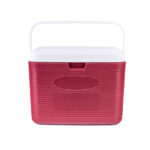
An insulated packaging liner bulk order should help you ship with more consistency, Moins de déchets, and fewer daily decisions on the packing floor. The best bulk order reduces SKU confusion, improves packout speed, and supports your real temperature-control goals. The wrong bulk order creates clutter, dead stock, and hidden failure points that only show up when temperatures rise or volumes spike.
Cet article répondra:
- When bulk ordering is the right move
- How to design liner families around box sizes and lane risk
- Which technical and operational details belong in the specification
- How to validate before placing serious volume
- Quoi 2026 trends should influence your bulk-order strategy
When is an insulated packaging liner bulk order the right decision?
Bulk ordering is the right decision when your shipping pattern is stable enough to standardize. If your top carton sizes are known, your route families are reasonably clear, and your packout has already been tested, buying in volume can improve both cost control and execution quality. Standardization is the real prize. The purchase discount is only part of the value.
Bulk ordering is weaker when the operation is still changing. If carton sizes are being revised, the payload mix is unpredictable, or the temperature risk is poorly understood, a large order can lock you into the wrong packaging choice. In that case, smaller controlled buying is safer.
A simple readiness test
How should you build the right liner portfolio?
The goal is a small, disciplined liner family, not the largest possible catalog. Start by mapping which cartons and routes matter most. Then group them into a few practical categories, such as short chilled, moderate-duration warm-weather, and larger-volume shipments. This approach reduces redundant SKUs and makes training easier.
A good portfolio is also easy to receive and easy to use. The liners should be packed clearly, labeled cleanly, and simple for operators to identify. If the product is thermally acceptable but operationally confusing, the bulk order still fails.
Why fit and repeatability matter more than nominal size
A liner that fits the box correctly supports better temperature performance and cleaner labor flow. A liner that almost fits may still slow the line, create corner gaps, or force inconsistent gel pack placement. Those issues turn a promising bulk order into an operational headache.
This is why your specification should include more than thickness or general dimensions. You need approved fit logic, acceptable tolerance, and a clear expectation for fold style and seam quality.
Which technical and compliance checks should happen before scale-up?
Validation should happen before the warehouse fills up, not after. Start by defining the target temperature range, durée de l'expédition, masse de charge utile, refrigerant plan, and the hottest realistic lane. Then test the full packout under those conditions. You are not qualifying a liner in isolation. You are qualifying a shipping system.
For food and temperature-sensitive goods, documented control still matters. FDA’s sanitary transportation framework covers refrigeration, sanitary equipment, opérations, enregistrements, et formation. For medicines and health-sensitive products, EU GDP and USP good storage and distribution practice emphasize quality systems and risk-based control. L'OMS 2025 vaccine shipping guidance, WHO PQS performance expectations, and ISTA 7D development testing also reinforce the need for defined, evidence-based thermal packaging decisions. (NOUS. Food and Drug Administration)
You do not need the same validation depth for every product, but you do need an approval process that matches the risk. The higher the product consequence, the less acceptable informal packaging changes become.
Practical validation flow
- Build the draft packout with actual carton, charge utile, et réfrigérant.
- Run controlled testing on the most difficult realistic lane.
- Confirm line handling and packer repeatability.
- Send monitored live shipments.
- Approve the liner SKU and lock the change-control rule.
What performance evidence is most useful?
Useful evidence includes monitored live shipments, simulation d'itinéraire, fit evaluation, packer feedback, and packaging-condition checks on receipt. Research on cold chain insulated protection continues to support the idea that passive thermal barriers can buy meaningful time during warming events. Dans un 2023 produce study, insulated covers delayed the rise from 4°C to 10°C compared with uncovered loads, showing why barrier design deserves serious attention during packaging selection. (PMC)
Pour toi, the lesson is practical: performance proof should answer whether the packout survives your real route, not whether the material sounds impressive in isolation.
Comment faire 2026 market trends affect bulk-order planning?
Le 2026 direction is toward validated efficiency and SKU discipline. Buyers want fewer overlapping liner types, cleaner box fit, and stronger proof that the packaging is necessary. En Europe, PPWR entered into force on February 11, 2025 and applies generally from August 12, 2026. Eurostat’s latest figures show 79.7 million tonnes of packaging waste in the EU in 2023, ou 177.8 kilograms per person. That pressure is making companies rethink oversized boxes, duplicated packouts, and packaging added “just to be safe.” (Environnement)
Another major change is better route visibility. Reviews and studies from 2025 et 2026 describe wider use of IoT, RFID, and smart packaging systems for condition monitoring. That means bulk ordering can now be guided by where failures actually happen rather than by broad assumptions. Instead of buying more packaging for every shipment, companies can target the routes and conditions that truly need extra protection. (PMC)
2026 action list
- Rationalize liner SKUs around actual route families.
- Match the liner program to your top cartons, not rare exceptions.
- Use monitored data to decide where stronger packouts are needed.
- Reduce empty space before increasing material.
- Keep reserve stock disciplined instead of overfilling the warehouse.
Questions fréquemment posées
Should I order one universal liner for everything?
Généralement non. A small controlled portfolio works better than one forced universal fit that performs poorly across several boxes.
What is the most common bulk-order mistake?
Ordering before the packout is validated. That creates dead stock and operational workarounds.
- How many liners should I carry?
Only as many as you can control well. Simplicity supports better execution.
- Can I lower refrigerant after improving the liner?
- Éventuellement, but only after testing. Do not assume savings without proof.
Pourquoi 2026 different from earlier years?
Because sustainability pressure and better shipment data are pushing packaging teams to justify every layer more clearly.
Résumé et recommandation
A smart insulated packaging liner bulk order starts with stability, ajuster, and validation. Buy in volume only after you know which cartons matter most, which routes carry the most risk, and which liner family operators can use consistently. Dans 2026, the best bulk-order programs are not the biggest. They are the clearest and the most disciplined.
Your next move should be to map your current liner SKUs, remove unnecessary overlap, and validate one streamlined packout family before expanding volume. That approach lowers both packaging waste and daily operational friction.
Suggestions de liens internes
- Insulated liner fit and tolerance guide
- Bulk-order validation checklist
- Gel pack optimization for parcel shipping
- Packaging SKU rationalization guide
- Seasonal cold chain packout planning
À propos du tempk
Et tempk, we help teams turn packaging purchases into practical cold chain systems. We work on liner selection, packout simplification, and repeatable packaging standards that make daily shipping easier to control. Our goal is straightforward: meilleur ajustement, meilleure cohérence, and more useful packaging decisions.