Pochette Isotherme Achat En Gros Espagne: Un plan d'approbation pratique
L'œuvre décisive dans un pochette isotherme Le programme d'achat en gros en Espagne a lieu avant la commande en volume. Un acheteur doit traduire une épicerie, livraison de repas, vente au détail, ou besoin de logistique interne dans une charge utile définie, carte de remise, spécification matérielle, plan de preuve, et modèle de propriété. Ce n'est qu'alors que les échantillons et les offres pourront être comparés équitablement. La pochette doit être traitée comme un composant d'un système d'exploitation: ça ralentit le flux de chaleur, tandis que le liquide de refroidissement, mise en scène, contrôle d'itinéraire, comportement de l'utilisateur, nettoyage, et les processus de conformité déterminent si le système fonctionne en Espagne.
Porte 1: Décrire le service dans un langage opérationnel
Remplacez la requête « réutilisable sac isotherme pour les produits réfrigérés » avec une brève déclaration opérationnelle. Nommer les marchandises emballées, charge typique, premier et dernier points de stockage contrôlés, mode de livraison, utilisateur, modèle de retour, et toute condition cible fixée par l'équipe qualité responsable. N'insérez pas un nombre d'heures froides non vérifié.
Suivant, dessiner la séquence de transfert. Une commande d'épicerie peut passer de la cueillette réfrigérée à la préparation en magasin, collecte des clients, un véhicule privé, et un réfrigérateur domestique. Une livraison dans un restaurant peut passer de la cuisine au support d'expédition, courrier, entrée de l'appartement, et le destinataire. Une boucle interne peut ajouter un transport aller-retour, ségrégation, nettoyage, séchage, inspection, et redistribution.
Cette carte révèle si une pochette souple est appropriée. Un court, le transfert contrôlé peut nécessiter plus de commodité et d’organisation qu’une isolation lourde. Un itinéraire long ou incertain transportant des marchandises sensibles peut nécessiter un système d'emballage passif, surveillance, ou une solution active. Une pochette isotherme normale ne doit pas être présentée comme un expéditeur de produits pharmaceutiques ou comme preuve qu'un produit commercial chaîne du froid alimentaire a été maintenu.
Attribuez un propriétaire à chaque étape. Quelqu'un doit contrôler le conditionnement du liquide de refroidissement, libérer, chargement, exceptions de livraison, retours, sanitaire, et la disposition du produit lorsqu'une règle de durée ou de température n'est pas respectée. L’emballage ne peut pas combler un manque de responsabilité.
Porte deux: Concevoir l'emballage avant la pochette
Mesurer les packages principaux réels. Durée d'enregistrement, largeur, hauteur, poids, orientation, et s'ils peuvent être empilés. Ajouter les sources de froid prévues, séparateurs, paperasserie, et jeu de fermeture. L’espace interne utilisable de la pochette est important; le volume nominal et les dimensions extérieures n'indiquent pas la quantité de gousset flexible qui reste après la prise de forme des parois et des joints épais.
Construire au moins une charge normale et une charge difficile crédible. Le cas difficile peut être une petite charge utile avec un vide supplémentaire, un plateau peu pratique, une grande bouteille, ou le mix de commandes le plus susceptible de fausser la clôture. Ne choisissez pas automatiquement la plus grande pochette. Un volume excessif peut permettre le mouvement, compliquer le placement du liquide de refroidissement, augmenter la surface et le matériau, et invitez les utilisateurs à mélanger des produits chauds avec des produits réfrigérés.
Demandez aux opérateurs réels d'emballer un échantillon. Regarder plutôt que donner des instructions. Placent-ils le liquide de refroidissement là où la procédure l'attend? Peuvent-ils fermer le zip sans comprimer les conteneurs? La poignée incline-t-elle la charge ou ouvre-t-elle le dessus ?? Un coursier peut-il le transporter avec d'autres équipements? Le destinataire peut-il identifier l'action de déballage correcte?
Le résultat devrait devenir un dessin d'emballage ou une photo standard. Il doit identifier les contenus et les positions sans transformer un exemple typique en une affirmation thermique universelle.. Si plusieurs familles de produits nécessitent des agencements sensiblement différents, créez plus d'une configuration ou sélectionnez différentes tailles de pochette.
Porte trois: Contrôler la construction multicouche
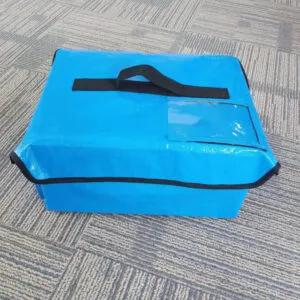
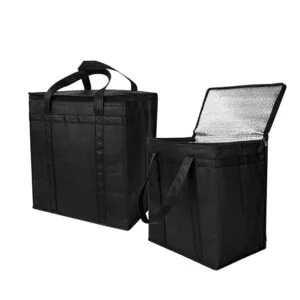
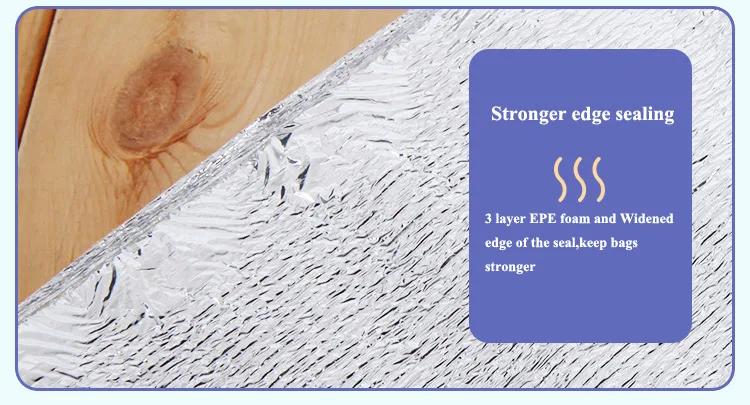
Une pochette isotherme est un empilement de matériaux, pas une seule résine ou tissu. L'extérieur offre une résistance à la manipulation et une impression. Le noyau ralentit la conduction. La doublure facilite le nettoyage, gestion de l'humidité, et parfois un contrôle de la chaleur radiante. Adhésifs, piqûre, reliures, bande zippée, renforcement, sangles, revêtements, étiquettes, et l'encre connecte le système.
Les noms commerciaux ne suffisent pas. "Doublure en aluminium" pourrait signifier du papier d'aluminium, polymère métallisé, ou un autre stratifié réfléchissant. « Mousse » n'identifie pas la qualité, structure, continuité, ou comportement en compression. « Non-tissé » ne décrit pas la fibre, revêtement, poids, ou durabilité. Demander au fournisseur de verrouiller les composants approuvés dans une spécification maîtrisée.
Inspectez les endroits où les couches cessent d'être plates. Coins, plis de base, charnières du couvercle, extrémités de la fermeture éclair, poignée d'ancrage, et les pénétrations des coutures peuvent devenir des points faibles thermiques et hygiéniques. Chargez la pochette avant de les juger. Un échantillon vide et propre peut développer des espaces ou des plis exposés lorsque les conteneurs rigides sont poussés vers l'extérieur..
Le nettoyage doit être compatible avec l'article assemblé. Un produit chimique peut laisser le revêtement inchangé tout en affaiblissant l'adhésif., imprimer, mousse, ou zip. Définir le véritable processus de nettoyage et de séchage, puis obtenez des informations complémentaires sur les soins et testez un échantillon représentatif de la production. Évitez de promettre un certain nombre de cycles de réutilisation à moins qu'une méthode définie et des preuves ne le soutiennent.
Porte quatre: Faire en sorte que les preuves thermiques répondent à la route
L'isolation réduit le taux de transfert de chaleur; il ne crée pas de réfrigération. La chaleur conductrice se déplace à travers les murs et les points de contact. L'air chaud entre par les fermetures et les ouvertures. L'exposition radiante peut ajouter de la chaleur, surtout en plein soleil. Le liquide de refroidissement absorbe la chaleur, et la température de départ de la charge utile modifie le budget thermique.
C’est pourquoi la déclaration de durée d’un fournisseur ne peut pas être autonome. Les preuves doivent identifier la pochette exacte, construction de production, profil ambiant, charge utile, liquide de refroidissement et conditionnement, températures de départ, capteurs et emplacements, événements d'ouverture, durée de l'essai, et critère d'acceptation. Demandez si toutes les unités répondaient au critère et comment les variations ont été gérées..
Le profil de l'itinéraire doit être crédible pour le service espagnol. Un test intérieur doux ne peut pas représenter un véhicule sous le soleil d'été. Un itinéraire urbain continental ne peut pas automatiquement représenter une livraison insulaire ou lointaine. En même temps, un test d'une rigueur irréaliste peut augmenter les coûts et le matériel sans refléter l'activité. La qualité, sécurité alimentaire, et les équipes logistiques doivent définir le profil à partir des données d'itinéraire et des risques.
Traitez tout test comme spécifique à la configuration. Si la charge utile, dimensions de la pochette, isolation, fermeture, liquide de refroidissement, ou des changements d'itinéraire, examiner si les preuves restent applicables. Un pilote sur le service réel est utile pour l’apprentissage opérationnel, mais un voyage réussi n'est pas la preuve de chaque saison ou de chaque voie.
Porte cinq: Construire le dossier de responsabilité de l'Espagne et de l'UE
| Question d'approbation | Examen responsable | Preuve à rattacher à la commande | Défaut d'éviter |
|---|---|---|---|
| La nourriture touchera-t-elle la doublure? | Spécialiste du contact alimentaire ou de la qualité | Déclaration d'utilisation prévue, construction matérielle exacte, déclarations et pièces justificatives le cas échéant | S'appuyer sur la « qualité alimentaire » pour un stratifié non identifié |
| Est-ce un produit de consommation? | Équipes de sécurité des produits et juridiques | L'évaluation des risques, dossiers techniques, identification, traçabilité, instructions, et informations de vente, le cas échéant | Traiter un certificat de catalogue comme une révision GPSR complète |
| La législation CE s’applique-t-elle? | Spécialiste de la conformité des produits dans l'UE | Évaluation de la portée des fonctions réelles du produit | Ajout d'un marquage CE comme logo de qualité générique |
| Qui le met sur le marché espagnol? | Importateur, légal, et équipes environnementales | Rôles d'opérateur, contrats, plan d'enregistrement et de déclaration | En supposant que l'usine à l'étranger assume toutes les taxes espagnoles |
| Ce qui compte comme emballage? | Conseiller espagnol en emballage | Classification et données matière/poids pour le sachet et tous les niveaux d'emballage | Ignorer les sacs individuels, cartons, envelopper, ou utilisation du service |
| Les allégations environnementales sont-elles justifiables? | Équipes juridiques et développement durable | Article définissant le dossier de réclamation, comparaison, géographie, et des preuves | Appeler un article multimatériau recyclable sur la base d'une seule couche |
| La production restera-t-elle identique? | Equipes Achats et Qualité | Échantillon approuvé, spécification, traçabilité des lots, et les conditions de notification des modifications | Accepting visually similar material substitutions |
This approval table prevents one document from being asked to prove unrelated things. Performance thermique, aptitude au contact alimentaire, general product safety, and packaging responsibility are distinct reviews. The exact scope depends on the pouch’s intended use and sales model.
Where direct food contact is intended, Règlement (CE) Non 1935/2004 provides the EU framework for safety and inertness, et réglementation (CE) Non 2023/2006 covers good manufacturing practice. Règlement (UE) Non 10/2011 contains specific rules for plastic food-contact materials within its scope. Declarations and tests should match the finished contact surface, types d'aliments, temps, température, and repeated-use conditions.
For consumer supply, Règlement (UE) 2023/988 on general product safety may be relevant. Review the product and economic-operator obligations for the actual channel, including distance sales where applicable. Les instructions et les informations de sécurité pour l'Espagne doivent être compréhensibles pour l'utilisateur prévu., avec les exigences linguistiques locales confirmées.
Outils de décision utiles
Vérifiez les détails avant de choisir l'emballage
Ces outils rapides peuvent vous aider à comparer le risque d'itinéraire, besoins de dimensionnement, choix de liquide de refroidissement, et les détails de l'emballage avant de demander un devis.
Sélecteur d'emballage
Comparez les options d'emballage isotherme par produit, itinéraire, et besoin de température.
Trouver un emballageLiquide de refroidissement & Référence PCM
Comparez les options de liquide de refroidissement et de PCM lorsqu'un itinéraire nécessite une prise en charge supplémentaire de la température.
Comparez les optionsRéférence du matériau isolant
Comparez les choix de matériaux d'isolation pour différents besoins d'emballage de la chaîne du froid.
Comparez les matériauxLe marquage CE n'est pas un certificat de conformité universel. Les règles de l'UE l'exigent uniquement pour les catégories de produits couvertes par la législation qui rend obligatoire la marque., et les produits en dehors de cette portée ne doivent pas l'afficher. Une pochette isotherme de base non alimentée doit être évaluée selon les règles qui s'appliquent réellement. Ajout de chauffage électrique, refroidissement alimenté, piles, une fonction jouet, ou une autre fonctionnalité réglementée peut changer le résultat.
Porte Six: Résoudre les droits d'emballage et de déchets avant l'expédition
Arrêté Royal 1055/2022 fixe le cadre espagnol en matière d’emballages et de déchets d’emballages, y compris l'enregistrement du producteur, rapport, et des obligations de responsabilité élargie des producteurs pour les opérateurs relevant du champ d'application. Les directives officielles espagnoles couvrent les ménages, commercial, et catégories d'emballages industriels. The party that meets the legal producer definition needs to be identified from the supply chain facts.
Règlement (UE) 2025/40 on packaging and packaging waste entered into force on 11 Février 2025 et s'applique généralement à partir de 12 Août 2026. Orders placed during the transition need a current review because definitions, responsabilités, information, and implementation details can affect the product and its packaging. Use official guidance and qualified Spanish advice rather than a static checklist copied from an earlier year.
Classify every level. The pouch may be a saleable product, un emballage réutilisable article, service packaging filled at a point of sale, or part of transport operations depending on the model. Its protective bag, étiquettes, grouped carton, palette, and wrap can create separate data and responsibilities. Obtain component material and weight information in a form the relevant Spanish operator can retain and report.
Les règles fiscales espagnoles sur les emballages en plastique non réutilisables peuvent également affecter le coût au débarquement. Classification, preuve de contenu recyclé, exemptions, et la responsabilité nécessitent un examen spécialisé. Ne prétendez pas que le fait de qualifier le sachet de réutilisable résout automatiquement les questions fiscales ou de responsabilité élargie du producteur.; la conception réelle et le système d'exploitation sont importants.
Porte sept: Piloter le modèle économique, Pas seulement le sac
Un échantillon de pré-production confirme la construction mais ne peut pas prouver que le réseau l'utilisera correctement. Exécutez un pilote contrôlé sur des emplacements et des itinéraires représentatifs. Incluez les personnes qui choisissent, paquet, expédition, porter, recevoir, retour, faire le ménage, inspecter, magasin, et signaler des problèmes.
Recueillir des preuves opérationnelles:
- temps d'emballage et modèles d'erreur;
- problèmes de fermeture et de manutention sous charges réelles;
- exceptions d'itinéraire et échecs de livraison;
- taux de retour et temps hors circulation;
- travail de nettoyage, capacité de séchage, et unités rejetées;
- perte, type de dommage, et motif de retraite;
- compréhension des instructions par l'utilisateur;
- temperature information where the approved protocol requires it;
- packaging waste and transport implications relevant to the comparison.
The pilot may show that a lighter pouch is sufficient for a short handover, that a stronger zip prevents early retirement, or that a return scheme is impractical in one channel. It may also reveal that the route, pas le sac, needs redesign. Use the results to change the specification and operating procedure before volume pricing makes change expensive.
When production begins, retain the approved sample, construction revision, œuvres d'art, documents, and quality criteria. Require advance notice for changes to critical materials, site de fabrication, dimensions, fermeture, ou impression. Inspect delivered lots against the same baseline and quarantine unexplained differences.
Calculate Cost Across the Whole Loop
To compare quotations, put every supplier on the same commercial basis. Identify sampling, œuvres d'art, outillage le cas échéant, essai, inspection, emballage du produit, cartons principaux, fret, assurance, douane, devoirs, impôts, domestic delivery, stockage, and payment conditions. Confirm trade terms and which party owns risk at each step.
For reusable programmes, add distribution, collection, transport inverse, nettoyage, séchage, suivi, administration, remplacement, and final treatment. Do not divide purchase price by an invented service-life number. Use pilot data and a range of return and loss assumptions. A pouch with a higher purchase price may perform better, but only measured use can show whether the difference pays back.
Environmental evaluation needs the same system boundary. More durable materials can support reuse but add manufacturing and transport burdens. A light one-way option uses less material per item but creates repeated flows. Perte de produit, gaspillage alimentaire, nettoyage, and reverse travel also belong in the comparison where relevant. Document assumptions and avoid a universal claim when the result depends on behaviour.
FAQ
What information should be in the first supplier brief?
Include the use case, Spanish destinations, dimensions et poids de la charge utile, emballage, liquide de refroidissement, expositions d'itinéraire, food-contact boundary, closure and handling needs, processus de nettoyage, marque, configuration de l'emballage, order forecast, plan de livraison, and evidence checklist. Ask suppliers to list assumptions and exclusions.
Should a buyer choose a pouch by insulation thickness?
Non. Thickness is only one variable. Structure matérielle, continuité, compression, coutures, fermeture, géométrie, charge utile, liquide de refroidissement, and ambient exposure affect performance. Compare the finished assemblies with evidence relevant to the intended packout and route.
What makes a food-contact declaration useful?
It should identify the supplier and exact article, applicable legal basis, intended foods and contact conditions, restrictions, and supporting evidence as required. It also needs a traceable connection to the delivered construction. A generic resin or film statement is not enough for a changed multilayer pouch.
How should PPWR affect a 2026 commande?
Règlement (UE) 2025/40 s'applique généralement à partir de 12 Août 2026. Buyers should review current EU and Spanish guidance, classify the pouch and every packaging level, gather material data, assign producer responsibilities, and check claims and markings. Specific obligations and transitions should be confirmed by qualified advisers.
When is a bulk order ready to release?
Release it after the written specification, representative packout, decorated sample, performance evidence where needed, compliance file, packaging-responsibility plan, pilot findings, portée commerciale, quality criteria, traçabilité, and change-control terms are approved by the responsible functions.
Scale Only What Has Been Defined
A Spain-ready insulated-pouch programme connects service design, emballage, construction, preuve thermique, legal roles, packaging duties, and operating economics. It does not rely on foil appearance, a generic certificate, or the word “reusable.” By passing each approval gate before volume production, buyers can make supplier quotes comparable, keep documentation tied to the delivered article, and select a system that operators can run across real Spanish routes.
À propos du tempk
Tempk est une marque de Shanghai Tempk Industrial Co., Ltée. We support B2B buyers selecting cold-chain and emballage isolé and related temperature-control packaging products. Tempk can help organise a pouch discussion around the payload, emballage, itinéraire, construction matérielle, compatibilité du liquide de refroidissement, and purchasing evidence. The Spanish importer and buyer should retain qualified legal, sécurité alimentaire, impôt, and environmental advisers for market-specific decisions and claims.
Send Tempk your service map, échantillon d'emballage, conditions d'itinéraire, modèle de retour, and approval checklist to compare insulated packaging before committing to a bulk order.