Insulated pouch trade in 2026 rewards disciplined buyers. The days of buying by category photo and chasing the lowest quote are fading. Aujourd'hui, better buyers want a pouch that is easier to sell, easier to repeat, and easier to defend on quality and sustainability.
Cet article vous aidera à répondre:
- How to source insulated pouches with better margin protection
- Which construction details matter most in trade buying
- How compliance and sustainability now shape the brief
- What trade volatility means for supply planning
- How to choose suppliers that support repeat success
Why does insulated pouch trade require more discipline now?
Because the pouch has become more than a utility item. In retail, it affects perception. In private label, it reflects your brand. In food-related programs, it sits close to practical safety expectations. Buyers therefore need more clarity on material, doublure, fermeture, imprimer, and packing than before.
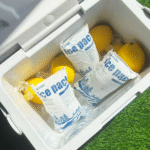
Public food-safety guidance reinforces the point. USDA recommends using at least two cold sources in an insulated bag for perishables, and FDA and CDC continue to emphasize cold-holding discipline and avoiding prolonged time in the danger zone. Even if your trade program is not a direct food-contact product, these expectations influence what end users and customers see as a credible insulated product. (美国农业部)
- What should every serious trade buyer define first?
Exact size and tolerance
- Material stack
- Closure type
- Printing method
- Méthode d'emballage
- Cas d'utilisation
- Target market
- QA standard
- If you do not define these early, you will compare unlike quotes and create avoidable margin risk.
- Better buyer scorecard
- Which cost areas hide the biggest risk?
- The most common hidden risks are:
- too-thin insulation,
- weak closures,
- fragile print,
- poor carton planning,
- and weak liner durability.
These do not always show up in a showroom sample. They appear later in use, in warehousing, or in customer feedback.
How should sustainability change the buying brief?
Sustainability should make your product stronger, not just better sounding. Textile Exchange reported that polyester remained 59% of total fiber output in 2024. Recycled polyester grew in absolute volume but held only a 12% partager, and less than 1% of total global fiber came from recycled textiles. So a meaningful trade brief should ask not only for recycled content, but also for verification and expected product life. GRS remains useful because it requires at least 50% recycled content and adds chain-of-custody, environnement, and social criteria. (Textile Exchange)
EU rules reinforce the durability and chemistry side of this conversation. Règlement (UE) 2025/40 sets sustainability and labeling requirements across the packaging life cycle, supports reuse systems, and states that food-contact packaging with PFAS above stated limits cannot be placed on the EU market from 12 Août 2026. That pushes trade buyers toward more durable, better-documented, and more transparent pouch programs. (EUR-Lex)
How do trade conditions affect sourcing plans?
The WTO’s October 2025 update raised 2025 merchandise trade growth to 2.4% but cut the 2026 outlook to 0.5%. That weaker forward signal makes supply planning more important. Better insulated pouch trade programs now use tighter lead-time review, smarter reorder timing, and less dependence on one fragile supply path. (世贸组织)
A practical sourcing plan
- Build one master specification pack
- Test one economy and one better-value version
- Review sustainability claims before launch
- Confirm the carton and label logic
- Keep a backup trim or material route ready
- 2026 derniers développements et tendances
- The market is moving toward:
- more reusable designs,
- stronger traceable recycled-content claims,
- stricter chemistry awareness,
- and more careful global supply planning.
- That is good news for disciplined buyers because stronger briefs now create a clearer advantage.
Questions fréquemment posées
What is the best way to protect margin in insulated pouch trade?
Define the specification early and compare quotes only after the build is aligned.
Should I ask for testing even on mass-market pouches?
Oui, at least enough validation to support the intended use and expected quality level.
Why are buyers asking more about PFAS?
Because EU packaging rules now make chemistry more visible, especially for food-contact uses. (EUR-Lex)
Résumé et recommandation
Insulated pouch trade in 2026 favors buyers who combine spec control, quality discipline, sustainability proof, and supply planning. That approach protects margin better than chasing the lowest quoted unit cost.
À propos du tempk
Tempk helps teams source insulated packaging with a practical balance of product function, clarté de la documentation, and manufacturing repeatability. We focus on making trade decisions easier to compare and easier to scale.