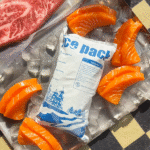
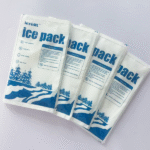
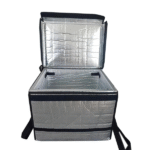
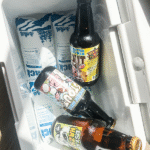
L’expédition de marchandises congelées ou sensibles à la température pose un défi unique: vous devez maintenir un environnement ultra froid tout en empêchant l'eau fondue d'endommager la cargaison. UN feuille de glace carbonique étanche résout les deux problèmes car la neige carbonique se sublime directement en gaz plutôt qu'en liquide et la conception multicouche de la feuille maintient ce gaz contenu. Dans ce guide vous découvrirez le fonctionnement de ces fiches, de quelle quantité de neige carbonique vous avez réellement besoin, et quelles réglementations s'appliquent lors de leur utilisation.

Qu'est-ce qui différencie les feuilles de glace sèche étanches des autres liquides de refroidissement? Comprendre leur structure multicouche et leurs propriétés de sublimation vous aide à choisir le bon réfrigérant.
Comment sélectionner la bonne taille et le bon poids pour votre envoi? Une simple calculatrice et des exemples concrets vous montrent la quantité de neige carbonique nécessaire pour conserver les produits congelés..
Quelles réglementations régissent l'expédition avec de la neige carbonique? En savoir plus sur l'IATA, Limites DOT et USPS, telles que 2.5 exception en kg pour les expéditions aériennes et les exigences en matière d'étiquetage.
Les feuilles PCM réutilisables sont-elles meilleures que les packs de gel traditionnels? Comparez les plages de température, impact environnemental et réutilisation.
Quelles innovations façonneront des feuilles de glace carbonique étanches dans 2025 et au-delà? Explorez les capteurs IoT, des matériaux durables et des analyses basées sur l'IA qui améliorent l'efficacité de la chaîne du froid.
Qu'est-ce qui distingue les feuilles de glace carbonique étanches des autres réfrigérants?
Réponse directe
Les feuilles de glace sèche étanches offrent des températures ultra froides sans dégâts d'eau en combinant du CO₂ solide avec un agent protecteur., pochette multicouche. La neige carbonique se sublime à environ –78,5 °C et ne fond jamais en liquide, pour que le drap reste sec. Les couches extérieures comprennent un polyéthylène résistant (Pe) film et un tissu non tissé respirant; à l'intérieur, un polymère super absorbant (SÈVE) retient l'eau pendant l'hydratation et gèle pour former une couche de glace flexible. Comme la glace sèche sublime, Le gaz CO₂ s'échappe par les évents de la feuille, empêcher l'accumulation de pression. Cette conception signifie que les marchandises restent congelées et que l'emballage reste intact, éliminant la détérioration liée à l'humidité.
Plus de détails
Dans un pack de gel traditionnel, le réfrigérant est à base d'eau; lorsqu'il fond, il produit un liquide qui peut s'infiltrer à travers l'emballage. Par contre, une plaque de glace carbonique étanche utilise du dioxyde de carbone solide enfermé dans une pochette multicouche. Le film extérieur en PE et la barrière composite offrent une résistance à la perforation, tandis que la couche interne de SAP absorbe l'eau d'hydratation et devient un gel une fois congelée.. Lorsqu'il est placé au congélateur, la feuille hydratée se transforme en solide, coussinet flexible. Parce que la neige carbonique se transforme directement en gaz en se réchauffant, il n'y a pas d'eau de fonte; plutôt, Le CO₂ s'échappe par les canaux de ventilation. Cette ventilation empêche également l'accumulation de pression, c'est pourquoi la réglementation exige que les emballages ne soient pas hermétiques.
Principales caractéristiques expliquées
| Caractéristiques | Feuille de glace carbonique étanche | Pack de gel | Avantage pratique |
| Plage de température | –78,5 ° C (ultra froid) | 0 °C–10 °C | Conserve les produits biologiques, vaccins et fruits de mer surgelés |
| Risque de fuite | Minime : la neige carbonique se sublime en gaz et est contenue dans la pochette | Modéré : le gel peut fuir en cas de perforation | Empêche les emballages mouillés et la détérioration des produits |
| Impact environnemental | Le CO₂ est un gaz industriel réutilisé; la pochette extérieure peut être recyclable; pas de gel toxique | Le gel contient souvent des polymères difficiles à éliminer | Élimination plus facile et empreinte carbone réduite |
| Réutilisabilité | Glace carbonique à usage unique; la pochette peut être réutilisée, mais la glace carbonique sublime | Usage unique (le gel se dégrade après un voyage) | Encourage une bonne chaîne du froid sans achats répétés |
| Statut réglementaire | Classe 9 matières dangereuses; nécessite un marquage et des limites de poids | Pas dangereux; plus facile à expédier | Doit suivre les règles IATA/DOT mais offre des performances ultra froides |
Conseils pratiques et exemples
Préhydrater et congeler: Faire tremper le drap dans l'eau pendant au moins 15 minutes pour activer complètement la couche SAP, puis congeler jusqu'à ce qu'il soit solide. Cela garantit une capacité de refroidissement maximale.
Positionner correctement: Disposez les feuilles autour du produit ou placez-les dessus pour que l'air froid coule; laisser de l'espace pour que le gaz CO₂ puisse s'évacuer.
Utiliser une bonne isolation: Associez des feuilles de glace carbonique à des boîtes isolées de haute qualité ou à des inserts de panneaux sous vide pour ralentir la sublimation et prolonger le temps de maintien..
Étude de cas: Un distributeur pharmaceutique est passé des packs de gel aux plaques de neige carbonique étanches et a constaté une 20 % réduction des excursions de température et 15 % moins de plaintes concernant l'emballage. La feuille sèche évite les dommages causés par l'humidité aux étiquettes et garantit que les vaccins restent congelés pendant les expéditions à travers le pays..
Comment sélectionner la bonne taille et le bon poids pour votre envoi?
Réponse rapide
Choisissez la quantité de glace carbonique en fonction de la durée de l'expédition, poids de la cargaison et plage de température requise, en utilisant environ 1 à 2 lb (0.5–1 kg) de glace carbonique par période de 24 heures pour les aliments surgelés typiques et 5 à 10 lb (2.3–4,5 kg) par jour pour les produits pharmaceutiques ultra froids. Commencez par une règle de calcul empirique, puis ajustez à l'aide d'enregistreurs de données et d'essais de voie.
Explication et exemples
Durée estimée: Déterminez la durée du transit de l'envoi. Pour chaque période de 24 heures, allouez 5 à 10 lb de neige carbonique pour les produits surgelés. Pour les trajets plus courts ou les marchandises nécessitant des températures juste en dessous de zéro (–10 °C à –18 °C), 1–2 lb par jour peuvent suffire.
Calculer la charge: Multipliez l'estimation par jour par le nombre de jours de transit et ajustez en fonction de l'isolation et de la température ambiante.. Par exemple, une expédition de 48 heures dans un climat modéré peut nécessiter 10 à 20 lb de neige carbonique plus un tampon.
Correspondre à la taille du paquet: Les feuilles de glace sèche sont disponibles en différentes longueurs et nombres de cellules. Sélectionnez une feuille qui correspond aux dimensions de votre glacière et à votre tolérance de poids. N'oubliez pas que les transporteurs limitent la masse nette de neige carbonique: pour les expéditions d'air, les colis ne doivent pas dépasser 5.5 kg (2.5 kg) de glace carbonique, sauf dispositions particulières; pour les expéditions de marchandises par certains transporteurs, 200 des limites de kg s'appliquent.
Utilisez une simple calculatrice: Démarrer le chargement = (5–10 lb × heures/24) × facteur d'isolation × facteur ambiant + 5Tampon de –10 lb. Par exemple, expédition de fruits de mer surgelés pour 48 heures dans une glacière en polystyrène (facteur d'isolation 1.0) à 30 °C (facteur ambiant 1.2) produit environ 17 à 34 lb de neige carbonique. Arrondissez à la feuille entière la plus proche pour rester en sécurité.
Tableau de décision pour les expéditions typiques
| Type d'envoi | Poids de glace carbonique par 24 h | Plage de température | Notes réglementaires | Importance du monde réel |
| Produits pharmaceutiques/vaccins | 5–10 lb (2.3–4,5 kg) | –20 °C à –70 °C | Doit être conforme à IATA/DOT; 2.5 kg exception pour les expéditions aériennes | Garantit des conditions ultra froides sans endommager les étiquettes |
| Fruits de mer/aliments surgelés | 1–2 livres (0.5–1 kg) | –18 °C à –20 °C | Marquez « Nourriture, Congelé » et « Glace sèche, UN1845”; permettre la ventilation | Garde les fruits de mer frais et empêche les fuites d'eau |
| Échantillons de biotechnologie | ~ 5 lb (2.3 kg) | –20 °C à –50 °C | Chaîne de traçabilité des documents; respecter les limites du transporteur | Maintient la viabilité des échantillons pour la recherche |
| Livraisons de repas | 2–3 lb (0.9–1,4kg) | –10 °C à –18 °C | Évitez de congeler des articles réfrigérés; étiquette selon les règles de sécurité alimentaire | Empêche les aliments de décongeler tout en évitant les brûlures du congélateur |
Conseils pratiques et check-list
Calculer avec précision: Utilisez le tableau et le calculateur ci-dessus pour estimer la quantité de glace carbonique. En cas de doute, ajoutez une journée supplémentaire de neige carbonique pour tenir compte des retards.
Préparez votre contenant: Précongeler le produit à ≤–18 °C, tapisser la glacière pour éviter tout contact direct avec de la neige carbonique, et charge supérieure si possible pour une meilleure uniformité de la température.
Étiqueter clairement: Marquer les colis « Glace carbonique » ou « Dioxyde de carbone », solide (UN1845)» et indiquer le poids net de neige carbonique.
Surveiller en transit: Utilisez des enregistreurs de données de température et des capteurs IoT pour suivre les températures internes et effectuer des ajustements lors des expéditions répétées.. De nombreux opérateurs proposent désormais des services de surveillance en temps réel.
Exemple de cas: Une entreprise de biotechnologie expédiant des échantillons génétiques à l'échelle internationale utilise 5 lb de glace carbonique pour un vol de 24 heures. Ils emballent les échantillons dans une boîte en carton aérée, coller l'étiquette UN1845 et le poids net, insérez un enregistreur de température et informez la compagnie aérienne. Le respect de ces protocoles garantit la conformité réglementaire et préserve l’intégrité des échantillons.
Quelles réglementations régissent l'expédition avec des feuilles de glace carbonique?
Résumé direct
L’expédition avec de la neige carbonique est strictement réglementée. Les emballages doivent permettre au gaz CO₂ de s'échapper et ne peuvent pas être scellés hermétiquement.. Pour la plupart des expéditions aériennes, il y a un 2.5 kg (5.5 kg) limite par colis, comme spécifié par la Federal Aviation Administration (FAA) Et les États-Unis. Ministère des Transports. Les packages doivent afficher une classe 9 étiquette de danger et inclure la désignation d'expédition appropriée (Glace carbonique ou dioxyde de carbone, solide) et l'ONU 1845 nombre.
Explication élargie
DOT et e CFR: Titre 49 CFR § 173.217 déclare que le dioxyde de carbone, solide (glace carbonique) utilisé comme réfrigérant doit être emballé dans un emballage ventilé et marqué du poids net et du contenu. Forfaits avec ≤ 2,5 kg (5.5 kg) de glace carbonique utilisée pour réfrigérer le contenu est à l'exception de nombreuses exigences en matière de matières dangereuses, à condition qu'ils soient correctement marqués.
FAA & règles des compagnies aériennes: Les directives PackSafe de la FAA font écho à la même limite: chaque passager peut transporter jusqu'à 2.5 kg de neige carbonique dans les bagages à main ou enregistrés si l'emballage permet une ventilation. Les compagnies aériennes exigent également que le colis porte l'étiquette « Dry Ice » et indique son poids..
Variations des porteurs: Certains transporteurs de marchandises, comme American Airlines Cargo, appliquer un 5.5 kg (2.5 kg) limite par pièce pour la glace sèche, sauf si elle accompagne des envois médicaux. Lorsqu'il est associé à des produits médicaux, il n'y a pas de limite sur la glace carbonique, mais la pièce combinée ne peut pas dépasser 50 kg.
Fédéral Express et IATA: Instruction d'emballage de l'IATA 954 couvre la glace carbonique à 200 kg par forfait pour le fret aérien général et nécessite un emballage ventilé, une déclaration de l’expéditeur et un étiquetage approprié. FedEx exige également une classe 9 étiquette et indique que les emballages ne peuvent pas contenir plus de 200 kg de neige carbonique sans autorisation particulière.
USPS: Le service postal autorise jusqu'à 5 lb de glace carbonique par envoi postal pour les expéditions aériennes intérieures (Instruction d'emballage 9A) et interdit la glace carbonique dans le courrier international.
Étapes de conformité importantes
Ventilation: Ne scellez jamais de glace carbonique dans des contenants hermétiques; laissez toujours le CO₂ s’échapper.
Limites de poids: Restez dans le 2.5 exception en kg pour la plupart des expéditions aériennes. Si le colis contient plus de neige carbonique, suivre la documentation sur les matières dangereuses et les dispositions des compagnies aériennes.
Marques: Apposer une classe 9 étiquette de danger et marquez l'emballage avec « Glace sèche » ou « Dioxyde de carbone », solide," le poids net de glace carbonique et les noms et adresses de l'expéditeur et du destinataire.
Documentation: Pour les expéditions contenant uniquement de la neige carbonique et des marchandises non dangereuses, une déclaration de l’expéditeur peut ne pas être requise. Cependant, certains transporteurs exigent une lettre de transport aérien faisant référence à UN1845 et à la masse nette.
Entraînement: Toute personne préparant des expéditions de glace carbonique doit être formée aux réglementations sur les matières dangereuses afin d'éviter les amendes et les expéditions rejetées..
Tableau récapitulatif réglementaire
| Autorité | Limite/exigence | Citation clé | À retenir pratique |
| POINT (49 CFR 173.217) | ≤2,5 kg de neige carbonique par colis sont exemptés s'ils sont ventilés et étiquetés | Marquer le colis avec UN1845 et son poids net; emballage de ventilation | |
| PackSafe de la FAA | 2.5 kg par passager en bagage à main/bagage enregistré | Doit obtenir l’approbation de la compagnie aérienne; étiqueter l'emballage en conséquence | |
| Voici pi 954 | ≤ 200 kg de glace sèche par paquet; ventilation requise; L'AWB doit indiquer UN1845 et le kg net | Les expéditions plus importantes nécessitent une déclaration de l’expéditeur et des variations de l’opérateur | |
| USPS (Instruction d'emballage 9A) | ≤5 lb de neige carbonique par envoi postal pour l'air domestique; interdit à l'international | Utiliser uniquement pour le courrier national; suivre les règles d'étiquetage | |
| Exemples de transporteurs | Cargaison d'American Airlines: 5.5 lb par pièce; illimité si associé à des produits médicaux, mais pièce totale ≤50 lb | Vérifiez la politique du transporteur avant l’expédition |
Les feuilles PCM réutilisables sont-elles meilleures que les packs de gel ou la neige carbonique?
Réponse courte
Matériau à changement de phase réutilisable (PCM) les feuilles peuvent maintenir des températures comprises entre –20 °C et 5 °C jusqu'à 72 heures et réduire considérablement les déchets, mais ils ne peuvent pas atteindre les températures ultra basses de la neige carbonique. Pour les envois nécessitant une surgélation, les calottes carboniques restent inégalées; pour températures modérées et durabilité, Les PCM sont souvent le meilleur choix.
Comparaison approfondie
Les blocs de glace carbonique réutilisables intègrent un PCM ou un réfrigérant réutilisable avec une capacité thermique latente élevée dans un boîtier durable. Contrairement aux packs de gel, Les PCM sont conçus pour changer de phase (solide ↔ liquide) à une température spécifique (Par exemple, –21 °C ou 5 °C), libérer ou absorber de la chaleur pour maintenir une plage de température étroite. Ils sont souvent biodégradables et peuvent être recongelés des centaines de fois, réduisant les déchets d'emballage jusqu'à 60 %. Packs de gel, en revanche, sont à base d'eau et peuvent fuir ou transpirer; ils sont généralement à usage unique et moins écologiques.
Voici un aperçu comparatif:
| Type de réfrigérant | Plage de température | Risque de fuite | Impact environnemental | Réutilisabilité | Implication pratique |
| Packs de gel traditionnels | 0 °C–10 °C | Modéré; le gel peut couler | Les polymères sont difficiles à éliminer | Usage unique | Convient aux produits réfrigérés mais pas à la congélation |
| Feuille de glace carbonique | –78,5 ° C | Minime si ventilé | Le CO₂ est réutilisé; les emballages peuvent être recyclés | Usage unique (glace carbonique); la pochette peut être réutilisée | Idéal pour les expéditions surgelées telles que les vaccins et les fruits de mer |
| Feuille PCM | –20 °C à 5 °C | Négligeable; les matériaux ne fuient pas | Les PCM biodégradables réduisent les déchets de 60 % | Hautement réutilisable (≥500 cycles) | Idéal pour les produits réfrigérés ou légèrement surgelés; évite les étiquettes dangereuses |
Conseils pratiques
Correspondre aux besoins de température: Utilisez de la neige carbonique pour les envois nécessitant une surgélation (Par exemple, vaccins à –70 °C). Utilisez des feuilles PCM pour les produits nécessitant une température de 2 à 8 °C (réfrigéré) ou –20 °C (congelé mais pas ultra froid).
Vérifier la capacité thermique latente: Les PCM à chaleur latente plus élevée conservent le froid plus longtemps. Par exemple, une feuille PCM évaluée à –20 °C avec une chaleur latente élevée peut maintenir la température pendant 72 heures contre seulement 48 heures pour un produit de plus faible densité.
Rechercher la durabilité: Choisissez des PCM avec des boîtiers biodégradables et des certifications FDA ou EU MDR; ils réduisent les déchets d'emballage jusqu'à 60 % et sont plus sûrs pour les utilisateurs finaux.
Formez votre équipe: Les packs réutilisables nécessitent un nettoyage approprié, recongélation et manipulation; la formation peut prolonger la vie au-delà 500 cycles.
Aperçu du monde réel: Une entreprise de kits repas a remplacé les packs de gel jetables par des feuilles PCM biodégradables et a réduit les déchets d'emballage en 60 %. L'association de PCM avec des capteurs IoT a réduit les excursions de température de 25 % et économisé sur $5,000 par installation de distribution et par an.
Quelles innovations façonneront des feuilles de glace carbonique étanches dans 2025 et au-delà?
Résumé des tendances
L'industrie de la chaîne du froid adopte rapidement emballage intelligent et matériaux durables. Les capteurs IoT intégrés dans les plaques de glace sèche fournissent la température en temps réel, données d'humidité et de localisation, permettre des interventions proactives lorsque des écarts se produisent. Les matériaux durables, tels que les PCM biodégradables et les films extérieurs recyclables, réduisent les déchets et les émissions de carbone.. Les analyses basées sur l'IA analysent les données des capteurs pour prédire les excursions de température et optimiser la conception des emballages., tandis que les formats d'emballage personnalisables et les formulations PCM adaptent les solutions à des plages de température spécifiques..
Dernières avancées en un coup d'œil
Surveillance activée par l'IoT: Les capteurs intégrés envoient des données continues de température et de localisation, alerter les expéditeurs des problèmes potentiels avant que les marchandises ne se détériorent.
Matériaux durables: Les films recyclables et les PCM biodégradables réduisent les émissions jusqu'à 25 % et soutenir les objectifs d’économie circulaire.
Analyses basées sur l'IA: Les algorithmes d'apprentissage automatique analysent les données d'expédition pour prédire les excursions thermiques et optimiser le chargement du réfrigérant.
Solutions personnalisées: Les fabricants proposent des formats de feuilles sur mesure et des formulations PCM pour répondre à des exigences de température spécifiques..
Croissance du marché: Le marché de la logistique de la chaîne du froid devrait atteindre $500 milliards 2025, et le marché des réfrigérants pour la chaîne du froid devrait croître de $2.01 milliards en 2025 à $4.28 milliards 2034 à un TCAC de 7.7 %. La demande croissante de produits biologiques et d’aliments frais stimule les investissements dans des domaines plus intelligents, des réfrigérants plus durables.
Insistance au marché
Comme la demande de produits biologiques, les vaccins et les livraisons d’épicerie en ligne continuent d’augmenter, les entreprises doivent équilibrer le contrôle de la température, impact environnemental et coût. Les consommateurs sont de plus en plus conscients des emballages durables, et les régulateurs renforcent les normes en matière de déchets et d’émissions. Les entreprises qui adoptent l'intelligence, Les solutions de glace sèche ou PCM réutilisables avec capteurs intégrés seront mieux positionnées pour répondre à la fois aux attentes des consommateurs et aux exigences réglementaires..
Questions fréquemment posées
Q1: Combien de temps les feuilles de glace carbonique étanches maintiennent-elles les articles congelés?
Une feuille bien hydratée et congelée peut conserver les aliments congelés pendant 24–72 heures, en fonction de l'isolation et de la température ambiante. Les expéditions plus importantes ou les environnements plus chauds peuvent nécessiter des feuilles supplémentaires.
Q2: Pouvez-vous réutiliser des feuilles de neige carbonique étanches?
La neige carbonique elle-même se sublime, donc il ne peut pas être réutilisé. Cependant, la pochette extérieure peut souvent être remplie d'eau et recongelée; pour des expéditions fréquentes, pensez aux feuilles PCM qui peuvent être réutilisées des centaines de fois.
Q3: Les plaques de glace carbonique sont-elles autorisées à bord des avions?
Oui, mais les compagnies aériennes et la FAA limitent chaque forfait à 2.5 kg (5.5 kg) de glace carbonique et nécessitent un emballage non hermétique. Les colis doivent afficher « glace sèche » et le poids net.
Q4: Comment éliminer les plaques de glace carbonique usagées?
Laissez toute glace carbonique restante se sublimer dans un endroit bien ventilé, loin des personnes et des animaux.. Ensuite, recyclez ou jetez la pochette extérieure conformément aux réglementations locales.; de nombreuses feuilles utilisent des plastiques recyclables.
Q5: Pourquoi les PCM pourraient-ils être préférés à la glace carbonique?
Les PCM maintiennent des plages de température spécifiques sans étiquettes dangereuses ni rejet de CO₂, ce qui les rend plus faciles à expédier à l’international et plus durables. Ils sont idéaux pour les produits qui doivent être réfrigérés (2–8 ° C) ou conditions modérément gelées.
Résumé et recommandations
Les feuilles de glace sèche étanches sont des outils puissants pour protéger les marchandises sensibles à la température.. Leur construction multicouche empêche les fuites, garde les produits ultra froids et évite les dégâts des eaux. Pour maximiser les performances:
Adaptez la taille des feuilles et la quantité de glace carbonique à votre envoi. Utilisez 1 à 2 lb par jour pour les aliments surgelés et 5 à 10 lb par jour pour les produits pharmaceutiques.
Suivre la réglementation. Gardez les colis aérés, rester dans le 2.5 kg par colis, exception pour la plupart des envois aériens et étiqueter correctement.
Envisagez des alternatives réutilisables. Pour les envois qui ne nécessitent pas –78 °C, Les feuilles PCM fournissent un froid longue durée avec moins de déchets.
Investissez dans des technologies intelligentes et des matériaux durables. Capteurs IoT, les PCM biodégradables et les analyses d'IA amélioreront l'efficacité et la conformité de la chaîne du froid.
Prochaines étapes réalisables
Évaluez les exigences de température de votre produit. Déterminez si vous avez besoin de conditions de surgélation (glace carbonique) ou réfrigération modérée (PCM). Utilisez la calculatrice fournie pour estimer le poids du réfrigérant.
Choisissez le bon emballage. Sélectionnez des feuilles de glace sèche étanches dimensionnées pour votre glacière et associez-les à une isolation de haute qualité.. Assurez-vous qu'il y a de la place pour que le gaz puisse s'évacuer.
Étiquette et document. Marquez les colis avec « Glace sèche » ou « Dioxyde de carbone », solide," comprenant le code UN1845 et le poids net. Préparer toutes les déclarations requises.
Surveiller les expéditions. Utilisez des enregistreurs de données ou des capteurs IoT pour valider les performances de température et affiner votre emballage. Examiner les données après chaque expédition pour optimiser les chargements futurs.
Explorez les options durables. Contacter les fournisseurs au sujet des PCM biodégradables et des feuilles réutilisables pour réduire les déchets et améliorer la performance environnementale.
À propos du tempk
Chez Tempk, nous concevons des solutions avancées de chaîne du froid qui protègent vos produits de l'origine à la destination.. Notre feuilles de glace carbonique étanches, feuilles PCM réutilisables et conteneurs isolés combinez des matériaux haute performance avec une technologie intelligente pour maintenir des températures précises et réduire les déchets. Nous nous engageons en faveur de la durabilité, proposer des PCM biodégradables et des emballages recyclables qui réduisent les émissions et diminuent les coûts d'élimination. Collaborez avec nous pour optimiser votre chaîne du froid : contactez nos spécialistes pour une solution sur mesure ou demandez une consultation gratuite dès aujourd'hui.