Pack de glace en gel non toxique pour soulager la douleur à l'épaule 2025?
Dernière mise à jour: Décembre 17, 2025.
UN non-toxic gel ice pack for shoulder pain relief can make everyday movement feel easier—if it fits your shoulder and you use it on a timer. If it slips or leaks, ton non-toxic gel ice pack for shoulder pain relief becomes hard to trust. Many clinical self-care guides recommend short cold sessions (souvent 15–20 minutes) and repeating a few times per day, rather than “icing forever.”
This guide is educational, not medical advice. Use it to build a safer routine with a non-toxic gel ice pack for shoulder pain relief, then adjust based on comfort. If pain is severe, worsening, or limiting your arm movement, get professional help.
Cet article vous aidera à répondre
-
Comment choisir un non-toxic gel ice pack for shoulder pain relief that is clearer about materials and leak safety
-
How long to use a non-toxic gel ice pack for shoulder pain relief sans risque (the practical 10–20 minute rule)
-
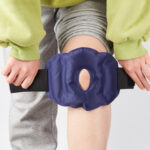
How to pick a wearable non-toxic gel ice pack for shoulder pain relief wrap that stays in place while you rest
-
Where to place your pack (front/side/top/back) so you stop “chasing the pain”
-
What to do if a non-toxic gel ice pack for shoulder pain relief fuites, especially around kids and pets
-
What’s changing in 2025: safer labeling, fit-first designs, and travel rules
What makes a non-toxic gel ice pack for shoulder pain relief truly “non-toxic”?
A non-toxic gel ice pack for shoulder pain relief is “non-toxic” when its contents are low-risk in small accidents—but it is still not meant to be eaten or rubbed into eyes. Poison Control explains that reusable ice packs often contain water plus ingredients that lower freezing temperature, thickeners, gel de silice, and coloring, while “instant” cold packs can involve different chemicals.
Treat “non-toxic” as a checklist, not a marketing word. Your goal is fewer surprises after months of repeat skin contact. Un bon non-toxic gel ice pack for shoulder pain relief should also explain safe use, délais, and what to do if it breaks.
The “non-toxic” label checklist (PVC-free, Sans BPA, latex-free)
Look for clear statements such as:
-
PVC-free / phthalate-free: some buyers prefer to avoid soft vinyl-style plastics
-
Sans BPA: common concern for plastics in general
-
Sans latex: useful if you have sensitivities
-
Coutures résistantes aux fuites: reinforced edge welds and durable film
-
Sleeve or barrier layer: less risk of cold irritation
| Ce que tu vérifies | Ce que cela signifie | What to watch for | Le sens pratique pour vous |
|---|---|---|---|
| Clear material claims | Fewer unknowns | Vague “safe gel” wording | More confidence using it daily |
| Durable seams | Lower leak risk | Thin edges, uneven welds | Less mess and less skin exposure |
| Sleeve included | Skin barrier | Sleeve not washable | More comfort and easier timing |
| Flexible une fois congelé | Better shoulder contact | “Brick-like” rigidity | More even cooling on rounded joints |
The Non-Toxic Confidence Score (interactif)
Donnez-vous 1 point pour chaque « Oui ».
-
The listing explains what the pack is made of (not just “non-toxic”).
-
It has coutures renforcées or a double-sealed edge.
-
It includes a fabric sleeve (or clearly tells you to use a towel barrier).
-
It stays flexible une fois congelé (so it conforms to your shoulder).
-
It prints or repeats a délai (10–20 minutes, not “use as long as you want”).
-
It provides a simple leak/cleanup instruction.
Guide de notation: 5–6 = strong candidate • 3–4 = workable with extra caution • 0–2 = skip. If you’re buying for repeat use, pick the option that helps you use a non-toxic gel ice pack for shoulder pain relief correctly every time.
How long should you use a non-toxic gel ice pack for shoulder pain relief?
Most people do best with timed sessions: start around 10 minutes and cap at 20 minutes par session. Cleveland Clinic advises that maximum icing time generally shouldn’t extend past 20 minutes, and 10–15 minutes is often enough.
Mayo Clinic’s self-care guidance for minor shoulder pain also suggests icing for 15–20 minutes a few times each day.
The point is comfort and control. Over-icing can irritate skin and make you stiffer, même avec un non-toxic gel ice pack for shoulder pain relief.
10–20 minute rule: how long to ice shoulder pain safely
Use this simple routine every time you grab a non-toxic gel ice pack for shoulder pain relief:
-
La barrière d'abord: thin towel or sleeve between cold gel and skin.
-
Timer on: 10 minutes for your first session.
-
Stop by 20: even if it still feels “good.”
-
Recover: wait until skin feels normal before repeating.
| Session goal | Time on | Time off | What it helps you do |
|---|---|---|---|
| New flare-up (day 1–2) | 10–15 minutes | 30–60+ min | Calm irritation without overdoing it |
| Post-activity soreness | 10–20 minutes | 60+ min | Reduce “angry” feeling after use |
| Cold-sensitive skin | 8–12 minutes | longer breaks | Lower cold-burn risk while staying consistent |
A 7-day plan you can actually follow
-
Jours 1 à 2: Utiliser un non-toxic gel ice pack for shoulder pain relief for 10–15 minutes, up to 2–4 sessions/day if it helps.
-
Jours 3 à 5: Ice after activity with a non-toxic gel ice pack for shoulder pain relief, then add gentle range-of-motion after each session.
-
Jours 6 à 7: Utiliser le non-toxic gel ice pack for shoulder pain relief only when symptoms spike.
Exemple pratique: If your shoulder flares after desk work, a 12–15 minute session after work often beats a long session that makes you stiff.
How do you choose the best non-toxic gel ice pack for shoulder pain relief fit?
Fit is the hidden performance feature for any non-toxic gel ice pack for shoulder pain relief. A shoulder is curved and moves in multiple directions, so a flat rectangle often slides off and cools unevenly—especially when you want a non-toxic gel ice pack for shoulder pain relief to stay in contact.
A good non-toxic gel ice pack for shoulder pain relief should feel like a wrap, not a chore. When it stays put, you use your non-toxic gel ice pack for shoulder pain relief more consistently.
Shoulder Fit Finder: envelopper, cape, or strap pad?
Pick the sentence that sounds like you:
-
“I need hands-free icing while I rest.” → Wrap/brace style
-
“My pain spreads across the top shoulder and upper arm.” → Cape/poncho style
-
“My pain is pinpoint and I want targeted contact.” → Contoured pad + sangles
-
“I hate the ‘cold shock’ feeling.” → Choose a soft sleeve and shorter sessions first.
| Shoulder pack style | Mieux pour | Inconvénient commun | Le sens pratique pour vous |
|---|---|---|---|
| Wrap/brace | stabilité + hands-free | can feel bulky | best if you hate holding packs |
| Cape/poncho | broad coverage | can slide if loose | best for sofa recovery |
| Strap pad | targeted spot | smaller coverage | best for a single tender zone |
What materials matter most in 2025?
Prioritize these features when shopping for a non-toxic gel ice pack for shoulder pain relief:
-
Soft-touch barrier: reduces skin irritation and “too cold” shock
-
Flexible inner liner: avoids cracking after repeated freezing
-
Low-odor materials: strong plastic smell can be a warning sign
-
Clear care instructions: washable sleeve, vérifications des coutures, storage guidance
Cas pratique: People quit cold therapy because it’s inconvenient. Straps and a sleeve are “compliance features,” not luxury features.
Where should you place a non-toxic gel ice pack for shoulder pain relief?
Placement is the multiplier for your non-toxic gel ice pack for shoulder pain relief. If you place a non-toxic gel ice pack for shoulder pain relief on the wrong spot, you’ll think “ice doesn’t work” when the real issue is targeting.
Most shoulder pain clusters into four zones. Use this map with a non-toxic gel ice pack for shoulder pain relief and you’ll stop guessing.
Placement map: devant, côté, haut, or shoulder-blade pain
| Your pain pattern | Meilleur emplacement | Best pack style | What it helps you do |
|---|---|---|---|
| Front shoulder pain | front of shoulder, slightly down the arm | smaller flexible pack | calms tendon irritation from reaching |
| Side shoulder pain | outside “cap” of shoulder | medium pack or wrap | helps after lifting or carrying |
| Top shoulder pain | top near collarbone | wrap/contoured | hands-free relief when sleeping is hard |
| Shoulder-blade overlap | upper back near shoulder blade | flat pack + towel barrier | targets desk posture tension |
Three positioning tips that save time
-
Sit slightly forward to improve contact on the top/front shoulder.
-
Utiliser gentle pressure; cold works by contact, not squeezing.
-
If it slides, adjust the strap, not your body.
Real-life win: Moving the pack one inch forward (from back to front) often changes the result fast.
Ice vs heat: what should you do when cold makes you stiff?
Ice is often used when pain feels irritated, chaud, or newly flared. Heat is often used when pain feels stiff and “rusty.” Mayo Clinic notes ice can ease pain and swelling after a sudden tendon injury and recommends using a towel barrier.
You don’t need perfect diagnosis to choose a safer first step. You need a simple decision tool for using a non-toxic gel ice pack for shoulder pain relief (or choosing heat instead).
Ice-or-heat decision tool (interactif)
Choisir ICE today if:
-
Pain flared in the last 48 heures
-
The area feels warm/tender
-
Movement triggers sharp pain
Choisir HEAT today if:
-
Pain feels tight and stiff
-
A warm shower helps
-
There is no obvious swelling
Choisir BOTH (alternating) si:
-
You’re stiff in the morning but sore after activity
If cold makes you stiff: try this alternating routine
-
Chaleur 10 minutes to loosen.
-
Easy movement 2–3 minutes (gentle range only).
-
Froid 10 minutes using your non-toxic gel ice pack for shoulder pain relief.
| Stratégie | Quand ça convient | Main goal | Ce que cela signifie pour vous |
|---|---|---|---|
| Froid seulement | after activity flare | calm pain | quick comfort without overthinking |
| Heat only | before stretching | loosen tightness | mouvement plus facile |
| Alterner | mixed symptoms | balance both | better daily function |
Leak safety: what to do if your gel pack breaks
Even a non-toxic gel ice pack for shoulder pain relief can leak after repeated freezing, bending, or pressure. Si une fuite se produit, treat it like a household spill: keep it out of mouths and eyes, clean it promptly, and replace the non-toxic gel ice pack for shoulder pain relief.
Poison Control explains that small tastes of reusable ice pack liquid often cause minor effects like mouth irritation, but risk rises with larger exposures or different pack types.
Gel ice pack leak cleanup steps for a non-toxic gel ice pack for shoulder pain relief (kids & animaux de compagnie)
-
Isolate the pack in a plastic bag and remove it from reach.
-
Évitez le contact direct with gel; use gloves if available.
-
Wipe up gel with paper towels and seal waste in a bag.
-
Wash the surface with soap and water.
-
Wash hands thoroughly.
-
If ingestion happens, contact Poison Control (NOUS. est 24/7).
| Situation | Qu'est-ce qui peut mal se passer | Que faites vous | Pourquoi ça compte |
|---|---|---|---|
| Toddler grabs a pack | chewing + gel exposure | store high, use sleeve | prevents accidental ingestion |
| Pet bites pack | gel ingestion | remove immediately, call for guidance | avoids GI upset and risk |
| Bead pack tears | choking hazard | collect carefully, jeter | safer around children and pets |
2025 mises à jour: matériels, étiquetage, and travel rules
Dans 2025, the biggest shift is not a “magic gel.” It’s proof and usability: clearer labels, better sleeves, and fewer ways to misuse cold therapy with a non-toxic gel ice pack for shoulder pain relief.
What’s trending (and why it helps you)
-
Short-session education: many consumer health sources emphasize timed use and a 20-minute cap.
-
Better disclosure: more brands publish clearer material claims and care instructions.
-
Fit-first design: straps and contoured shapes improve contact, so people stick with routines.
Phthalate-aware buying is becoming normal
If a product uses soft, plasticized materials, some shoppers look for “phthalate-free” language. Aux États-Unis, CPSC rules restrict certain phthalates above 0.1% in children’s toys and child care articles. NOUS. Commission de sécurité des produits de consommation
Dans l'UE, REACH restrictions limit certain phthalates in plasticised materials in articles at 0.1% en poids under a revised entry.
That does not make every gel pack a children’s product. It does make “phthalate-free” a practical filter when choosing a non-toxic gel ice pack for shoulder pain relief for a family home.
Air travel rules for gel ice packs (congelé)
For airport security in the U.S., TSA guidance indicates frozen liquid items (y compris les packs de gel) are generally allowed through screening if they are frozen solid.
Si votre non-toxic gel ice pack for shoulder pain relief is partially melted, expect extra screening or different treatment depending on the officer.
Questions fréquemment posées
Q1: What’s inside a non-toxic gel ice pack for shoulder pain relief?
Reusable packs often contain water plus ingredients that help them stay cold and flexible, along with thickeners and coloring. Pack types differ, and “instant” packs can use other chemicals.
Q2: How long to ice shoulder pain safely with a non-toxic gel ice pack for shoulder pain relief?
Une ligne directrice courante est 10–20 minutes par séance with a towel barrier, and many sources recommend not exceeding 20 minutes.
Q3: Can I use a non-toxic gel ice pack for shoulder pain relief every day?
Souvent oui, if your skin tolerates it and you keep sessions timed. Stop if you see burning, numbness that lasts, or unusual skin color.
Q4: Should I put the gel pack directly on skin?
Non. Use a sleeve or thin towel barrier to reduce cold injury risk.
Q5: Why does cold sometimes make my shoulder feel stiffer?
Cold can tighten muscles temporarily. Shorten sessions, use a sleeve, and do gentle movement afterward.
Q6: When should I stop self-care and get checked?
If pain is getting worse, you have swelling/redness/warmth, or you’re having a harder time moving your shoulder, it’s time for a clinician visit. Mayo Clinic+1
Résumé et recommandations
A non-toxic gel ice pack for shoulder pain relief works best when you choose a pack with clear material claims, durable seams, and a comfortable sleeve—and then use the non-toxic gel ice pack for shoulder pain relief with a timer. Start with 10–15 minutes, stop by 20, and repeat only if it helps.
For many people, fit and consistency matter more than “extra cold.” If your pain persists, worsens, or limits movement, get evaluated.
À propos du tempk
Et tempk, we build temperature-control products with a simple philosophy: clear materials, performances reproductibles, and routines people can actually follow. We apply the same thinking to comfort-focused cold therapy products—prioritizing sleeves, scellage, and fit so your non-toxic gel ice pack for shoulder pain relief is practical, not fussy, and so your non-toxic gel ice pack for shoulder pain relief stays dependable after repeated freezing.
CTA: Dis-nous où se situe ta douleur (front/side/top/shoulder-blade), qu'est-ce qui le déclenche (travail de bureau, levage, sportif), and whether cold makes you stiff. We’ll suggest a simple cold/heat schedule and the most practical pack style for your routine.