Espace libre idéal dans un sac de glace carbonique: 2025 Guide
Le espace libre idéal dans un bac à glace carboniqueg est le volume libre qui maintient l'évacuation du CO₂ en toute sécurité et votre charge utile au froid. Votre objectif n'est pas qu'un chiffre; c'est une configuration qui évite l'accumulation de pression et maintient des températures uniformes. Comme point de départ, de nombreux packouts au sol valident 15–25 % d’espace libre en volume, mais la ventilation dépasse l'espace libre dans toutes les voies, surtout l'air.
-
Comment l'espace libre idéal dans un sac de glace carbonique affecte la sécurité et l'uniformité de la température lors des expéditions réelles.
-
Quel pourcentage utiliser comme référence et quand donner la priorité à la ventilation plutôt qu'au volume.
-
Comment calculer l'évolution du CO₂ au cours de la première heure afin que votre chemin de ventilation ne s'étouffe jamais.
-
Quels styles de sacs changent l'espace libre dont vous avez besoin (soupape, perforé, plier et serrer).
-
Quoi 2025 les tendances en matière d'emballage doivent être validées, capteurs, et des bouches d'aération plus intelligentes.
Quel est l'espace libre idéal dans un sac de glace carbonique et pourquoi est-ce important?
Réponse courte: L'espace libre idéal dans un sac de glace carbonique Il y a suffisamment de volume libre pour garder le chemin de ventilation dégagé pendant que le gaz CO₂ s'échappe en continu. Mandat des régulateurs ventilé, sans air packages; l'espace libre répond à cette exigence en empêchant le gonflement et le refroidissement irrégulier. Pour de nombreux expéditeurs isolés, 15–25 % d’espace libre équilibre sécurité et efficacité, mais les expéditions aériennes doivent d'abord prouver la ventilation.
Vue plus longue: La glace carbonique se dilate considérablement à mesure qu'elle se sublime. À peu près 1 lb donne ~8,8 pi³ de CO₂; 1 kg donne environ 500 à 541 L. Si les bouches d’aération sont bloquées, la pression augmente et peut déformer les doublures, profils de température compromis, ou enfreindre les contrôles de conformité. Utilisez l’espace libre pour protéger la voie de ventilation, ne pas le remplacer.
Comment l'espace libre idéal dans un sac de glace sèche permet une ventilation sûre
La ventilation contrôle le risque; l'espace libre permet la ventilation. Un sac doté d'une valve unidirectionnelle peut fonctionner avec un jeu modeste car la valve est la sortie conçue. Les doublures perforées ont besoin jeu supplémentaire en haut donc les trous se trouvent au-dessus du lit de granulés. Les sacs pliables et serrés nécessitent cous spacieux et doit ne jamais être thermoscellé. Dans tous les styles, dimensionner l'espace libre afin que la glace qui se dépose n'étouffe jamais la zone de ventilation.
| Scénario d'expédition | Espace libre de base | Méthode de ventilation préférée | Ce que cela signifie pour vous |
|---|---|---|---|
| Sol (aliments surgelés, 10–30L) | 15–20% | Doublure perforée avec jeu | Flux d'air stable; faible risque de rupture; POS simple. |
| Biopharma (voies validées) | 20–25% | Sac à valve; valve exposée | Protège les flacons, prend en charge les audits, temps de maintien plus longs. |
| Fret aérien (n'importe quelle masse) | Fonctionnel (évent en premier) | Tout chemin non étanche | La conformité nécessite une ventilation visible; % est secondaire. |
Conseils pratiques que vous pouvez appliquer aujourd'hui
-
Fret aérien: Afficher un chemin de ventilation visible; ne jamais sceller à chaud du poly ordinaire autour de la neige carbonique. Partir 3–5cm jeu près des bouches d'aération.
-
Doublures perforées: Granulés secoués, garder des trous au dessus du lit, et évitez de coller du ruban adhésif sur les perforations.
-
Sacs à valves: Découpez une petite fenêtre dans le suremballage pour que la valve respire; ne l'enterre pas sous des murs en mousse.
Cas réel: Une équipe de kits repas a éliminé le renflement de la boîte en remplaçant une doublure ordinaire par un sac à valve et en laissant la valve exposée : aucun changement dans la masse de glace, grande amélioration des contrôles d'acceptation.
Comment calculer l'espace libre idéal dans un sac de glace carbonique?
Idée de base: Combiner un pourcentage de référence avec un contrôle d'essence de la première heure. De nombreuses voies au sol validées fonctionnent à 15–25 % d’espace libre. Vérifiez ensuite que votre chemin de ventilation peut gérer l'évolution précoce du CO₂ sans ballonnement.. Pour la planification, supposer 1–2 % de la masse de glace carbonique se sublime par heure dans des conditions ambiantes à l'intérieur d'emballages isolés.
Étape par étape:
-
Espace de tête de calcul:
Headspace% = (Container – Product – Ice) ÷ Container × 100%
Cible 15–25% comme point de départ pour les voies au sol. -
Estimer le CO₂ de la première heure:
CO₂_first_hour (ft³) ≈ Ice_lb × Rate_per_hour × 8.8
Utiliser 1–2%/heure pour Rate_per_hour. Gardez les évents dégagés pour ce volume. -
Ventilation étanche: Testez par pression la doublure chargée; si ça gonfle, réduire le remplissage, ajouter du mou, ou passer à un sac à valve.
| Volume du conteneur | Exemple d'espace de tête (20%) | Charge typique de glace carbonique | Pourquoi ça vous aide |
|---|---|---|---|
| 10 L | 2.0 L | 1–2 kg | Réduit les pics de pression; flux d'air stable. |
| 20 L | 4.0 L | 3–4 kg | Prend en charge un refroidissement uniforme sur toute la charge utile. |
| 30 L | 6.0 L | 5–6 kg | Tampon pour sublimation précoce; moins de points chauds. |
L’ajout de « plus » d’espace libre améliore-t-il toujours la sécurité?
Non. L'espace libre idéal dans un sac de glace carbonique empêche l'obstruction de l'évent, mais la ventilation fait le travail de sécurité. Trop de vide peut accélérer la sublimation et réduire la durée. Taille pour une voie de ventilation dégagée, vérifier avec un enregistreur, et régler par voie.
Quel style de sac modifie l'espace libre idéal dans un sac de glace carbonique?
Sac à valve (doublure ventilée): Un espace libre modeste est acceptable car le la valve est la sortie. Gardez la valve visible; ne colle pas dessus.
Doublure perforée: Utiliser espace libre modéré donc les perforations s'assoient au-dessus de boulettes. Évitez de comprimer la zone du trou avec du fardage ou des ajustements en mousse serrés..
Poly plié et serré: Nécessite cous spacieux et ne jamais thermosouder; choisis au moins un sac 1.5× le volume de glace en vrac pour empêcher le pli de se boucher.
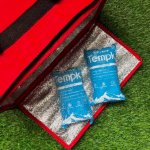
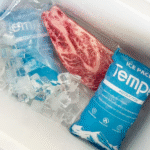
Note: Les « blocs de glace carbonique à 24 cellules » sont feuilles de polymère qui gèle près 0 °C. Ils ne sont pas du CO₂ solide et ne nécessitent pas d’étiquettes UN1845 lorsqu’ils sont utilisés seuls. Utilisez-les pour les allées réfrigérées ou les packouts hybrides; ils occupent un espace qui réduit l'espace libre, donc prévoir le volume en conséquence.
2025 règles de conformité qui façonnent l'espace libre idéal dans un sac de glace carbonique
La ventilation n'est pas négociable: Les règles aériennes exigent emballages non hermétiques et libération continue de CO₂. Les transporteurs avertissent explicitement: ne placez pas de neige carbonique dans des sacs en plastique scellés. Limites de passagers (~2,5 kg) et les limites de CO₂ sur le lieu de travail s'appliquent également. Planifiez l'espace libre pour préserver le chemin de ventilation et réussir les contrôles d'acceptation.
Liste de contrôle rapide
-
Marquer et documenter: UN1845 + poids net lors de l'expédition de CO₂ solide.
-
Gardez un couvercle vide: Préserver un petit vide supérieur pour que le gaz monte et sorte librement.
-
Valider: Les traces de l'enregistreur doivent montrer une pression stable et des gradients ≤ ±2 °C sur la charge utile.
2025 tendances: espace libre plus intelligent, des bouches d'aération plus intelligentes
Aperçu de la tendance: Les équipes adoptent évents à pression régulée, Modèles thermiques IA, et culture de validation qui traite l'espace libre comme un protecteur d'aération fonctionnel plutôt qu'un pourcentage fixe. Attendez-vous à plus de doublures de valve, télémétrie CO₂ en temps réel, et des modèles d'emballage qui évoluent par voie et par saison.
Dernier progrès en un coup d'œil
-
Vannes intelligentes à régulation de pression: Auto-relief sous les pointes; réduire le ballonnement du revêtement.
-
3Géométries d'isolation imprimées en D: Façonner l’espace libre pour orienter les chemins de gaz.
-
Emballages hybrides: Les feuilles de polymère stabilisent le produit, une petite charge de CO₂ prolonge la tenue.
Perspicacité du marché: Les prestataires signalent des taux de réussite plus élevés lorsque les SOP s'affichent explicitement où l'évent repose et combien de mou le protège. De nombreuses voies se normalisent 20–25% pour la biopharmacie et 15–20% pour les aliments surgelés, puis réglez par ambiance.
FAQ
Q1: Existe-t-il un pourcentage universel pour l'espace libre idéal dans un sac de glace carbonique?
Non. Utiliser 15–25% comme ligne de base pour la voie au sol, mais la réglementation exige une ventilation, pas un fixe %. Dimensionner l'espace libre pour garder le chemin de ventilation ouvert.
Q2: Puis-je thermosceller ma doublure et compter uniquement sur l'espace libre?
Non. Les sacs en polyéthylène unis doivent pas être hermétique. Utilisez un sac à valve ou une fermeture pliable et serrée qui respire.
Q3: Quelle quantité de gaz apparaît au début du transit?
Planifier 1–2%/heure sublimation initialement; 1 livres ≈ 8.8 pi³ CO₂ total. Confirmez que votre chemin de ventilation gère le volume de la première heure.
Q4: Les « blocs de glace carbonique » en polymère modifient-ils les besoins en matière d'espace libre?
Oui. Ils prennent du volume et réduisent l’espace libre mais ne créent pas de CO₂. Recalculer le volume libre lors du mélange avec du CO₂ solide.
Q5: Ce qui est différent pour le fret aérien?
Priorité aux voies aériennes ventilation visible et approprié UN1845 marques. Headspace est « fonctionnel »: tout ce qui préserve la libération continue de gaz.
Résumé & recommandations
L'espace libre idéal dans un sac de glace carbonique c'est le jeu qui protège un chemin de ventilation dégagé tout en offrant un refroidissement uniforme. Commencer à 15–25% pour voies au sol, puis vérifiez avec un contrôle CO₂ de la première heure et un test de compression. Pour l'air, diriger avec conformité de la ventilation et sélection de styles de sacs. Valider de façon saisonnière et ajuster en fonction du conteneur, charger, et ambiant.
Étapes d'action:
-
Calculer l'espace libre et le gaz de la première heure.
-
Choisissez le bon style de sac et exposez les aérations.
-
Un enregistreur valide la pression et la température.
-
Standardiser les SOP par voie et par saison.
-
Documentez UN1845 et formez les équipes sur les fermetures par évent en premier.
À propos du tempk
Nous concevons emballages chaîne du froid validés qui équilibrent la sécurité, conformité, et coûter. Nos ingénieurs optimisent doublures ventilées, SOP concernant les sacs à valve, et Calculateurs de CO₂ pour dimensionner l'espace libre idéal dans un sac de glace carbonique pour vos voies. Les clients réduisent généralement les réclamations pour arrivées chaudes et les retravaillent à deux chiffres après un cycle saisonnier..
Appel à l'action: Besoin d'un plan spécifique à la voie? Réservez un avis de 20 minutes et obtenez une SOP prête à publier avec headspace, ventilation, et critères d'enregistreur adaptés à vos itinéraires.