Paquet de 48 Pack de glace carbonique: Comment choisir dans 2025
If you’re deciding whether a paquet de 48 sac de glace carbonique fits your shipping mix, start with two facts: dry ice typically burns 5–10 lb par 24 heures, and gel/PCM packs hold tight 2–8 °C bands when you can’t risk freezing. Ce guide montre comment tailler, secouer, étiquette, forecast, and train so you hit temperature targets with less waste—based on a consolidation of your three draft articles.
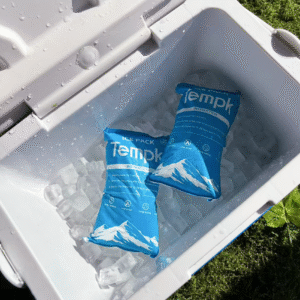
This guide will help you solve:
-
What’s inside a pack of 48 sac de glace carbonique? Clarify bag types, packs de gel, and use-cases.
-
How many shipments can one case support? Use simple formulas and lane recipes.
-
How do you stay compliant? Get venting, Marquage UN1845, and SOP checklists.
-
What about 2025 tendances? See films, capteurs, and predictive pack-outs that lower cost.
What does a pack of 48 dry ice ice pack actually include?
Réponse courte: UN paquet de 48 sac de glace carbonique can mean two legitimate things. (1) Dry ice liners/bags—open‑mouth multi‑wall kraft or micro‑perforated film that doit éviter co₂. (2) Gel/PCM ice packs—48 reusable refrigerant bricks or sheets for 2–8 °C lanes. Choose the version that matches your product’s required temperature band, tenir le temps, and compliance profile.
Étendu: If your target is congelé (≤–20 °C), utiliser vent-capable dry ice bags inside an insulated shipper and keep the outer container’s vent/drain unobstructed. If your target is glacé (2–8 ° C), un 48‑count gel or PCM pack case offers flexible placement, températures stables, and easy reuse. In both cases, standardize pack-out recipes and label the outer shipper correctly (Par exemple, «Glace sèche / Dioxyde de carbone, solide (UN1845)” with net weight for air).
paquet de 48 sac de glace carbonique
Vented dry ice bags vs. gel packs for 48‑count programs
The details: Utiliser open‑mouth kraft for blocks/slices (robuste, inherently not airtight). Utiliser micro‑perforated film for pellets/chips (debris control while venting CO₂). For gel, 6–12 oz units are common; distribute around the load to avoid hot spots. When lanes vary, combine a small dry‑ice slab with gel to extend hold without cold shocking sensitive goods.
paquet de 48 sac de glace carbonique
| Choice you face | Dry ice liner (ventilé) | Gel/PCM pack (48‑count) | Ce que cela signifie pour vous |
|---|---|---|---|
| Bande de température | Profond (≈ –78.5 °C airspace) | Réfrigéré 2–8°C | Match band to product risk |
| Conformité | Étiquette UN1845, Classe 9 (air), évent requis | Non-DG (typique), plus simple | Lower paperwork with gel |
| Manutention | Gloves/PPE; Jamais hermétique | Manipulation facile; réutilisable | Faster kitting for teams |
| Duration lever | Add pounds per day (5–10 lb / 24h) | Add units & isolation | Predictable cost control |
Conseils pratiques et gains rapides
-
Frozen desserts LTL (48–72h): Dry ice blocks in open‑mouth kraft, lid notch/vent open; log net kg on label.
-
2–8 °C pharma parcels (48 H): Six 6 oz gel packs, top/bottom/sides; pas de glace carbonique (avoid freezing risk).
-
Mixed lanes: Keep a paquet de 48 sac de glace carbonique for the dominant modality + a secondary 24‑count SKU for spikes.
paquet de 48 sac de glace carbonique
Vraie cas: A meal‑kit line moved to 48‑count standardized recipes and cut over‑icing by ~18% while maintaining targets across four hubs.
paquet de 48 sac de glace carbonique
How many shipments will a pack of 48 dry ice ice pack support?
Réponse directe: Estimate units with one‑line math, then round up to full cases to avoid open‑case drift.
Formule (dry ice or gel units):
Dry ice planning: Commencer à 5–10 lb per 24 h en fonction de l'isolation et de l'environnement. Blocks burn slower than pellets due to lower surface area. One 48‑bag case often supports ~48 one‑day frozen shippers or ~24 two‑day shippers (one liner each).
paquet de 48 sac de glace carbonique
Lane recipes for small parcels (appliquer, puis valider)
-
24–36 h food, –18 to –10 °C: 3 unités (ou 1 dry‑ice block), top/bottom/side; maintain a lid vent gap.
-
36–48 h frozen, ≤–20 °C: 4–6 unités (ou 2 blocs), split above/below the tray; mark UN1845 net kg.
-
2–8 ° C Pharma (48 H): 6 packs de gel (≈ 6 oz each), charge utile surround; add datalogger.
paquet de 48 sac de glace carbonique
| Quels changements | Lower bound | Upper bound | Votre point de relance |
|---|---|---|---|
| Chaleur ambiante | Printemps doux | Peak summer | Add 20–30% refrigerant in heat |
| Isolation | Panneaux VIP | EPS de base | Better R‑value = fewer units |
| Format | Blocs | Boulettes | Pellets sublimate plus rapidement |
| Staffing | Trained team | New crew | Carded recipes beat “feel” |
Pack‑out calculator (drop into your intranet):
paquet de 48 sac de glace carbonique
Packs de gel vs. glace carbonique: how do you choose with a pack of 48 sac de glace carbonique?
Conseils de base: Use gel/PCM when goods must not freeze (vaccins, produire, chocolat) and lanes are ≤48 h. Utiliser la glace sèche when goods must Restez surgelé and you can maintain ventilé packaging and labels. For long frozen lanes, combine a small dry‑ice slab with gel to slow burn and cushion temps.
paquet de 48 sac de glace carbonique
Règle (gel): Commencer à ≈ one‑third of payload weight in gel for ~48 h, then adjust for ambient and R‑value. Règle (glace carbonique): 5–10 lb/24 h; confirm with lane tests and dataloggers.
paquet de 48 sac de glace carbonique
Avoid common failure modes (en quart de travail: “vented dry ice shipping”)
-
Airtight inner bags: Never heat‑seal dry ice bags; fold‑close kraft or use micro‑perfed film.
-
Blocked cooler vents: Leave drain/vent paths open; don’t tape over the relief path.
-
“Use what’s open” over‑icing: Stage full‑case multiples; issue only today’s allocation.
paquet de 48 sac de glace carbonique
Résultat réel: A dessert brand swapped thin film sleeves for kraft open‑mouth liners; acceptance improved and training time fell because the vent path was visible in QA.
paquet de 48 sac de glace carbonique
Sécurité, ventilation & 2025 compliance for a pack of 48 sac de glace carbonique
Non-négotibles: Vent every inner bag. Vent every outer shipper. Label every frozen air shipment. IATA acceptance checklists still include "le colis est ventilé." Marque «Glace sèche / Dioxyde de carbone, solide (UN1845)» et le poids net (kg); Classe 9 mark applies for air. Utilisez des gants et des lunettes de protection; never store dry ice in sealed containers.
paquet de 48 sac de glace carbonique
SOP you can print (en quart de travail: “UN1845 labeling checklist”)
-
Choose bag: kraft open‑mouth for blocks; micro‑perfed film for pellets.
-
Load and pli, faire pas heat‑seal; keep a visible gap.
-
Verify cooler vent/drain is open; avoid blocking with dunnage.
-
Appliquer UN1845 + Kg net; add datalogger when validating.
-
Audit 5 boxes/line/day; reconcile open cases at shift end.
paquet de 48 sac de glace carbonique
2025 trends shaping the pack of 48 dry ice ice pack decision
Quoi de neuf: Pressure‑responsive films that micro‑vent at low PSI, predictive pack‑out planners that factor hour‑by‑hour ambient, mono‑material ou kraft‑hybrid liners for ESG goals, et low‑cost sensors logging temperature and CO₂. Teams adopting these see double‑digit unit savings without missed holds when paired with 48‑count discipline.
paquet de 48 sac de glace carbonique
Dernières avancées en un coup d'œil
-
Smart‑vent liners: Risque de rupture réduit; consistent gas escape.
-
Predictive recipes: Right‑size refrigerant by lane, not by gut feel.
-
Recyclable films & papier kraft: Easier downstream handling and ESG reporting.
Perspicacité du marché: Standardizing on a paquet de 48 sac de glace carbonique plus predictive recipes reduces over‑icing by 10–15% in year one for steady‑cadence operations.
paquet de 48 sac de glace carbonique
Questions fréquemment posées
Q1: How do I know if a pack of 48 dry ice ice pack fits my weekly demand?
If your weekly usage lands near 0.8–1.2 cases per SKU, you’ll minimize open‑case drift and shrink. Pilot on one line for 2–4 weeks and audit.
paquet de 48 sac de glace carbonique
Q2: Can I heat‑seal dry ice inside plastic bags?
Non. Conditionnement doit éviter co₂. Use open‑mouth kraft or micro‑perforated film; keep cooler vents open.
paquet de 48 sac de glace carbonique
Q3: How much dry ice should I plan for a 48‑hour frozen lane?
Commencer à 10–20 lb (5–10 lb par 24h), then refine with lane tests and sensors. Blocks generally last longer than pellets.
paquet de 48 sac de glace carbonique
Q4: How many gel packs should I use for 2–8 °C for 48 h?
À peu près one‑third of payload weight in gel, adjusted +20–30% for peak heat or poor insulation.
paquet de 48 sac de glace carbonique
Q5: Do I need to label gel‑only shipments as hazardous?
Typiquement Non; gel packs are non‑DG. Dry‑ice shipments require UN1845 wording and (pour l'air) Classe 9.
À propos du tempk
We help logistics teams ship colder, plus sûr, et plus intelligent with engineered dry‑ice liners, gel/PCM systems, and validated shippers. Our programs deliver two quantifiable wins: 15–25% lower over‑icing and fewer handling defects during peaks, backed by training, Sops, and digital QA. Let us translate your lanes into one‑page recipes your crews can trust.