


Guide de sélection des fournisseurs d'emballages à température contrôlée
Guide de sélection des fournisseurs d'emballages à température contrôlée
Guide de sélection des fournisseurs d'emballages à température contrôlée
The right temperature controlled packaging supplier provides more than containers and coolant. Le fournisseur doit aider à convertir une exigence de distribution définie en un emballage contrôlé, documenter comment ce pack a été testé, reproduire la configuration approuvée à grande échelle, et gérer les changements tout au long de sa vie.
Les acheteurs comparent souvent la taille du catalogue, prix unitaire, et la durée revendiquée en premier. Ces données sont faciles à collecter mais difficiles à interpréter sans contexte. Un processus de sélection plus fiable évalue la chaîne depuis les exigences d'expédition jusqu'aux preuves thermiques., contrôles de production, exécution d'entrepôt, et un soutien continu.
Donnez à chaque fournisseur le même brief d’expédition
Des propositions comparables commencent par des contributions comparables. Émettre une spécification des besoins de l'utilisateur ou une annexe structurée à la demande de prix qui identifie:
- limites de température du produit requises et règles d'excursion;
- dimensions de la charge utile, masse, condition de départ, et plage de charge;
- contraintes d'emballage secondaire et d'orientation;
- itinéraire, modes de transport, transferts de garde, et points d'arrêt;
- expositions saisonnières attendues et retards crédibles;
- durée totale du porte à porte plutôt que le seul transit programmé;
- surveillance, étiquetage, sécurité, et besoins en protection mécanique;
- workflow à usage unique ou réutilisable;
- attentes en matière de qualification et de documentation;
- volume annuel, modèle de commande, lieu de livraison, et date de lancement.
Demander aux soumissionnaires d'énumérer les hypothèses et les exclusions. Si les données d'itinéraire ou les conditions de charge utile sont incomplètes, la proposition devrait identifier le manque d'informations plutôt que de le cacher derrière un numéro de modèle standard.
Le processus de découverte est en soi une preuve. Un fournisseur qui ne demande pas de charge minimale, conditionnement, itinéraire, ou les critères d'acceptation peuvent traiter une revendication du système comme universelle.
Lire les allégations thermiques sous forme d'instructions conditionnelles
Une réclamation relative à la durée n'a de sens qu'avec ses conditions. The same insulated shipper can produce different results when the payload, liquide de refroidissement, profil ambiant, température de départ, ou changements de placement du capteur.
Demander un rapport complet ou un résumé technique contrôlé qui identifie:
- numéros de pièces testés et version de configuration;
- isolation et construction de conteneurs;
- type de liquide de refroidissement, quantité, placement, et conditionnement;
- Propriétés de la charge utile ou du simulateur et disposition de la charge;
- profil de chambre programmé et réel;
- durée de l'essai, répétitions, et critères d'acceptation;
- carte des capteurs, informations sur l'enregistreur, et statut d'étalonnage;
- résultats de séries chronologiques individuelles, écarts, et conclusions.
Le fournisseur le plus solide expliquera les limites de la preuve. Un test peut prendre en charge la configuration testée dans les conditions appliquées. Il ne couvre pas automatiquement une voie différente, une charge utile plus importante, another gel pack, ou le pire des cas défini par l'acheteur.
Distinguer les profils standardisés des preuves de voie
ISTA Standard 7E provides heat and cold profiles for evaluating thermal transport packaging used in parcel delivery. L'ISTA déclare que les profils ont été élaborés à partir de données de transport réelles caractérisées et représentent des extrêmes saisonniers annuels.. Cela offre une référence commune pour comparer les conceptions.
ISTA décrit également le 7E et le Standard 20 approche comme n'étant pas des données de voie personnalisées ou une qualification personnalisée du pire cas. Si l'expédition prévue utilise le fret maritime, traitement d'air spécialisé, longues prises en douane, service de messagerie directe, ou des climats inhabituels, demander comment le fournisseur reliera les preuves de tests standardisés à ces conditions.
Vérifier que le fournisseur comprend les limites des qualifications
Pour les conteneurs d'expédition pharmaceutiques, Les directives de l'OMS décrivent la qualification de conception, qualification opérationnelle, et qualification des performances. Il nécessite également une spécification approuvée des exigences de l'utilisateur avant les tests et met l'accent sur l'évaluation des risques liés aux conditions environnementales et aux voies de distribution..
Un fournisseur peut fournir une conception préqualifiée ou un package de qualification opérationnelle. The buyer still needs to decide whether the supplied documentation meets the end user's requirements and what performance qualification or route verification remains necessary. Un certificat de composant, un test en chambre, et un système d'expédition qualifié ne sont pas équivalents.
Le langage réglementaire et indicatif doit être traité avec soin. Les orientations de l’UE en matière de PIB pour les médicaments appellent à une approche de transport basée sur les risques et, le cas échéant, systèmes de contrôle de température validés. Cela ne rend pas tous les expéditeurs du catalogue conformes pour chaque itinéraire pharmaceutique.. Demandez au fournisseur d'indiquer quel document, configuration, et la condition d'utilisation soutient chaque allégation liée à la conformité.
Auditer le lien entre l'échantillon testé et le produit livré
La preuve thermique est aussi fiable que le contrôle de configuration. Le fournisseur doit faire correspondre la nomenclature testée avec les numéros de pièces de production contrôlés.. Examiner les spécifications et les méthodes d'inspection pour les caractéristiques pouvant affecter les performances., comme les dimensions, intégrité du mur ou du panneau, ajustement du couvercle, formulation du liquide de refroidissement et masse de remplissage, joints de pochette, construction de doublure, espaceurs, et configuration du carton.
Demandez comment le fournisseur gère les matières entrantes, fournisseurs agréés, sortie non conforme, traçabilité des lots, étalonnage de l'équipement, plaintes, et actions correctives. Le niveau d'examen doit refléter le risque lié au produit et à l'expédition..
Le contrôle des modifications mérite un langage contractuel spécifique. Définir quel matériau, processus, outillage, site de production, et les changements de sous-traitants nécessitent un préavis. Exiger une analyse d’impact et convenir de la manière dont les parties choisissent entre l’examen documentaire, tests de transition, et requalification.
Sans ce lien, l'acheteur peut qualifier un prototype tout en achetant une cible mobile.
Testez le package avec des opérateurs normaux
Un système qui fonctionne dans une chambre peut échouer sur le plan opérationnel s'il est assemblé de manière incohérente. Réaliser un essai avec l'équipe de l'entrepôt qui conditionnera le liquide de refroidissement, parties de scène, emballer la charge utile, placez le moniteur, fermer l'expéditeur, et appliquer des étiquettes.
Observez si:
- les états du liquide de refroidissement sont indubitables;
- les composants ont une orientation et des identifiants clairs;
- les emballages saisonniers sont séparés;
- les charges minimales et maximales ont défini le fardage;
- les instructions fonctionnent sans coaching verbal;
- les contrôles de fermeture et d'effraction sont pratiques;
- l'unité emballée répond aux contraintes de taille et de poids du transporteur;
- l'installation dispose d'une capacité de conditionnement et de préparation adéquate.
Les orientations du PIB de l'UE soulignent la nécessité de former le personnel à l'assemblage des boîtes isothermes et aux configurations saisonnières, ainsi que de contrôler la réutilisation des packs réfrigérants.. Ces contrôles sont utiles au-delà du secteur pharmaceutique, car ils corrigent les erreurs d'exécution courantes..
Comparez les propositions avec une carte de pointage pondérée en fonction des risques
| Catégorie | Des preuves solides | Question complémentaire |
|---|---|---|
| Ajustement aux exigences | Cartographie écrite du brief d'expédition à la configuration | Quelle exigence n'est pas couverte par les preuves existantes? |
| Performance thermique | Conditions transparentes et données détaillées | Quels changements invalideraient ce résultat? |
| Qualité de production | Spécifications et traçabilité maîtrisées | Comment l'échantillon testé est-il lié à chaque lot fourni? |
| Gestion du changement | Préavis et étude d’impact documentée | Quels changements peuvent survenir sans l'approbation de l'acheteur? |
| Convivialité opérationnelle | Essai opérateur réussi et instructions claires | Quelle est l'erreur d'assemblage la plus courante? |
| Continuité d'approvisionnement | Plan de gestion des risques liés aux capacités et aux composants critiques | Quelle est la réponse approuvée à une pénurie? |
| Assistance technique | Propriété nommée et chemin d'escalade | Qui examine les nouveaux itinéraires et les déviations? |
| Ajustement commercial | Modèle complet de portée et de coût du cycle de vie | Quels coûts se situent en dehors du prix unitaire? |
Pondérer le tableau de bord. Pour une charge utile pharmaceutique de grande valeur, les preuves et le contrôle des modifications peuvent contrebalancer les petites différences de prix. Pour un court trajet de livraison de nourriture, un assemblage simple et un approvisionnement local peuvent avoir plus de poids. La méthode doit refléter les conséquences, pas d'habitude.
Évaluer le coût total d’exploitation
Le prix unitaire exclut plusieurs coûts de matériaux: poids du fret, volume de charge utile utilisable, énergie et équipement de conditionnement du liquide de refroidissement, main d'oeuvre en entrepôt, espace de stockage, élimination, retours, dommage, et requalification après changement. Modéliser le coût par expédition réussie selon des hypothèses réalistes de chargement et de retour.
Pour les systèmes réutilisables, examiner toute la boucle: achat ou location d'actifs, suivi, collection, fret de retour, nettoyage, inspection, remise à neuf, perte, déséquilibre des stocks, et la retraite. La réutilisabilité est un modèle opérationnel, pas une étiquette matérielle. Un expéditeur durable qui ne peut pas être récupéré de manière fiable peut offrir peu de valeur de réutilisation.
Demander des réductions de prix, termes d'outillage, exemples de frais, quantités minimales, hypothèses de délais, et conditions de livraison par écrit. Ne traitez pas les déclarations de MOQ ou de délai non vérifiées comme des capacités fixes..
Planifier la mise à l'échelle, écarts, et changements d'itinéraire
Utiliser un processus d'approbation par étapes: proposition technique, prototype, preuves de tests contrôlés, essai opérateur, expédition pilote, approbation de production, et examen de routine. Identifier les documents et les décideurs pour chaque étape.
Avant le lancement, établir comment les alarmes de température, composants endommagés, fuites de liquide de refroidissement, assemblage incorrect, et les livraisons en retard seront traitées. Un fournisseur d'emballages peut enquêter sur le système et fournir des preuves, mais la disposition du produit doit rester la responsabilité du propriétaire du produit et de la fonction qualité autorisée..
Nouveaux itinéraires, transporteurs, origines, charges utiles, ou les niveaux de service devraient déclencher un examen documenté. Certains changements peuvent rester dans les limites des preuves acceptées; d'autres peuvent nécessiter des tests supplémentaires. Le fournisseur doit être en mesure d'expliquer le parcours d'évaluation sans promettre une couverture universelle..
Sélectionnez un fournisseur capable de maintenir le système fidèle
A temperature controlled packaging supplier should make performance claims traceable, limitations visibles, et les changements de production gérables. La décision de sélection doit relier le brief d'expédition, configuration testée, produit fourni, instructions d'emballage, et support du cycle de vie.
Pour un devis utile, fournir aux fournisseurs potentiels des données utiles, Exigences de température, itinéraires, durée, volume, besoins de surveillance, et les attentes en matière de preuves. Comparez ensuite la qualité du système et des contrôles proposés avant de négocier le prix unitaire final.
Test thermique ISTA 7E: Portée, Plan, et preuves

Plan et preuves de la portée des tests thermiques ISTA 7E
ISTA 7E thermal testing uses standardized heat and cold profiles to evaluate thermal transport packaging used in parcel-delivery shipments. L'ISTA explique que l'ensemble de profils a été développé à partir de données de transport réelles et est conçu pour représenter les maxima et minima saisonniers annuels.. Ce défi commun aide les laboratoires, développeurs d'emballages, et les acheteurs comparent les conceptions thermiques de manière plus cohérente.
The standard does not turn an insulated box into a universally qualified shipper. Le résultat s'applique à la configuration testée, charge utile, préparation, profil, durée, plan de capteur, et critères d'acceptation. Comprendre ces limites fait la différence entre des preuves utiles et une allégation marketing non étayée..
Ce pour quoi ISTA 7E est conçu
L'ISTA répertorie le 7E parmi ses tests de développement et le décrit comme une norme de test pour les emballages de transport thermique utilisés dans l'expédition des systèmes de livraison de colis.. Les profils évaluent les effets de l'exposition à la température externe sur un produit emballé individuel.. L'ISTA indique également que 7E peut être utilisé comme profil autonome ou en conjonction avec une norme de processus telle que la norme ISTA. 20.
Le profil standardisé offre trois avantages pratiques:
- Les conceptions candidates peuvent être confrontées au même défi ambiant.
- Les résultats des tests sont plus faciles à comparer que les résultats générés avec des profils propriétaires non liés.
- Le profil peut devenir un élément défini dans un processus plus large de conception et de qualification.
N'IMPORTE LEQUEL's thermal guidance also states what the approach is not: données personnalisées sur les voies d'expédition ou qualification d'expédition personnalisée dans le pire des cas. Un résultat 7E ne doit pas être étendu automatiquement à chaque réseau colis, itinéraire, climat, retard, ou mode de transport.
Commencez par la question à laquelle le test doit répondre
Avant de sélectionner un profil ou de réserver une chambre, définir l'usage prévu. Une spécification des besoins de l'utilisateur ou une base de protocole équivalente doit identifier:
- limites de température des produits et règles d'excursion;
- dimensions de la charge utile, masse, géométrie, et condition de départ;
- configurations de charge minimale et maximale;
- processus complet d'emballage et de conditionnement du liquide de refroidissement;
- Mode de distribution attendu et caractéristiques des itinéraires;
- durée requise et délai crédible;
- défis saisonniers;
- besoins en matière de surveillance et de protection mécanique;
- critères d’acceptation et appropriation des décisions.
Pour les conteneurs d'expédition pharmaceutiques, Les directives de l'OMS exigent une spécification approuvée des exigences de l'utilisateur avant les tests de qualification et recommandent une évaluation des risques liés aux conditions environnementales et aux voies de distribution.. Cela empêche la méthode de test de définir les exigences métier à rebours..
Un profil n'est approprié que lorsque sa portée répond à la question d'expédition. Si l'itinéraire utilise un coursier spécialisé, long stockage douanier, fret maritime, équipement aérien actif, ou un climat non représenté par le challenge sélectionné, le protocole doit identifier des preuves supplémentaires.
Congelez le paquet avant de tester
La performance thermique appartient à un système, pas uniquement dans la boîte extérieure. L'article de test comprend l'isolation, liquide de refroidissement, espaceurs, doublures, charge utile ou simulant, emballage secondaire, fermeture, et procédure de montage.
Utilisez des identifiants contrôlés pour chaque composant et enregistrez la version de configuration. Le protocole doit décrire:
- dimensions et construction du conteneur;
- type et géométrie d'isolation;
- formulation ou identifiant du liquide de refroidissement, quantité, remplir la masse, et placement;
- équipement et procédé de conditionnement;
- propriétés de charge utile ou de simulation;
- disposition des charges et fardage;
- séquence d'assemblage, orientation, et fermeture;
- temps de préparation autorisé avant l'analyse de la chambre.
Les photographies sont utiles pour confirmer les calques et l'orientation, mais ils ne remplacent pas les dimensions, numéros de pièces, et instructions écrites.
Les cas de charge utile minimale et maximale nécessitent un traitement délibéré. Une charge conditionnée complète peut ajouter de la masse thermique, tandis qu'une charge minimale peut créer plus d'espace aérien et différents gradients locaux. Il ne faut pas prétendre qu’une seule charge d’essai couvre une large plage sans une stratégie de bracketing justifiée..
Concevoir le plan de capteur autour du risque
Un capteur au centre d'une charge utile ne peut pas caractériser tous les emplacements chauds et froids. La carte du capteur doit inclure les positions susceptibles de subir un gain de chaleur limite, proximité du liquide de refroidissement, coins, effets de couvercle, et intérieurs de charge utile représentatifs. Une cartographie préliminaire ou une analyse technique peut aider à identifier ces points.
Chaque enregistreur doit avoir un identifiant unique et un étalonnage actuel approprié à l'utilisation.. Confirmez que sa portée, précision, résolution, et l'intervalle d'échantillonnage prend en charge les limites d'acceptation. Lorsque la plage autorisée est étroite, l'incertitude de mesure peut affecter les conclusions proches d'une limite.
Définir la manière dont les capteurs sont fixés afin qu'ils mesurent l'objet ou l'emplacement prévu. Un capteur suspendu dans l'air et un capteur en contact avec un simulant de produit peuvent signaler des conditions différentes. Le rapport doit indiquer ce que représente chaque capteur.
Synchronisation de l'heure, règles de démarrage et d'arrêt, données manquantes, et les enregistrements exclus doivent être spécifiés avant le test. Ces contrôles empêchent une interprétation sélective une fois les résultats connus.
Contrôlez le défi ambiant
Le rapport de test doit inclure le profil 7E sélectionné, le cycle de chambre programmé, et les données réelles de la chambre. Définir la variation acceptable de la chambre et la manière dont un segment hors tolérance sera évalué.
Les défis liés à la chaleur et au froid répondent à différentes questions sur les risques. Si le système prévu utilise des packouts saisonniers, chaque configuration doit être clairement liée à son profil applicable. Évitez de combiner les configurations sous un nom de système générique lorsque le placement ou le conditionnement des composants diffère.
La durée du test doit correspondre à la méthode sélectionnée et à l'objectif du protocole. Une durée indiquée ne doit jamais être séparée du profil et de la charge. « Température maintenue pendant 72 heures » est incomplet à moins que le lecteur connaisse également le défi ambiant, emballage, charge utile, emplacements des capteurs, et critères d'acceptation.
Établir les critères d’acceptation avant l’exécution
Le propriétaire du produit doit définir des limites de température à partir des exigences du produit et des informations de stabilité applicables.. Le laboratoire applique le protocole; it should not invent the product's allowable excursion after seeing the data.
Les règles d'acceptation devraient aborder:
- si chaque capteur de produit doit rester dans les limites;
- traitement des périodes de préconditionnement ou de stabilisation;
- de brèves excursions et qui peut les évaluer;
- incertitude de mesure proche d'une limite;
- capteurs manquants ou défectueux;
- écarts de chambre;
- exécutions échouées, enquêtes, et reteste;
- répétitions requises.
La température moyenne est rarement suffisante. Les moyennes peuvent cacher une courte excursion ou un seul endroit vulnérable. Évaluez chaque trace de capteur définie dans le temps et conservez suffisamment de données pour un examen indépendant.
Lire le rapport final sous forme d'ensemble de preuves
| Élément de preuve | Ce qu'un évaluateur devrait être capable de déterminer |
|---|---|
| Objectif et portée | Quelle question d'expédition et quelle configuration ont été évaluées |
| Protocole | Exigences, profil, cas de charge, répétitions, et critères |
| Articles de test | Pièces exactes, matériels, dimensions, et version assemblée |
| Préparation | Conditionnement de la charge utile et du liquide de refroidissement, ainsi que contrôles échelonnés |
| Mesures | Carte des capteurs, détails de l'enregistreur, étalonnage, et intervalle de données |
| Contrôle de la chambre | Profil programmé, données ambiantes réelles, et les écarts |
| Résultats | Historiques individuels et évaluation claire de réussite ou d'échec |
| Exceptions | Anomalies, enquêtes, données exclues, et reteste |
| Conclusion | Ce que soutiennent les preuves et quelles limites subsistent |
Un certificat ou un résumé peut être utile pour le dépistage, mais l'acheteur doit avoir accès à suffisamment de preuves contrôlées pour confirmer l'applicabilité. Le libellé doit distinguer « testé à l'aide d'un profil ISTA 7E »,» une conclusion de réussite interne, et toute voie de certification formelle. Ces déclarations ne sont pas automatiquement interchangeables.
Placez ISTA 7E dans le cycle de vie de la qualification
Les directives de l'OMS décrivent trois étapes séquentielles pour les conteneurs d'expédition de produits pharmaceutiques: qualification de conception, qualification opérationnelle, et qualification des performances. La qualification de conception confirme que la solution proposée est adaptée à l'exigence. La qualification opérationnelle challenge le système défini dans des conditions contrôlées. La qualification des performances évalue le système dans son fonctionnement prévu.
Un test en chambre ISTA 7E peut soutenir le développement ou la qualification opérationnelle, en fonction du protocole et du cadre qualité. Il ne remplace pas en soi l’évaluation d’itinéraire, qualification de performance, stratégie de surveillance, ou examen de la qualité spécifique au produit.
Norme ISTA 20 provides a broader design and qualification process for insulated shipping containers and includes the 7E thermal profiles. Les organisations recherchant un parcours de certification standardisé doivent vérifier les exigences actuelles de l'ISTA., statut du laboratoire, et une formulation exacte autorisée pour les allégations plutôt que d'utiliser « certifié ISTA » de manière vague.
Sachez quand des preuves supplémentaires sont nécessaires
Preuve thermique spécifique à l'itinéraire
Ajoutez des données de voie ou un profil ambiant basé sur les risques lorsque le réseau prévu contient des conditions crédibles en dehors du défi colis standardisé.. Les exemples incluent des séjours frontaliers inhabituels, hubs contrôlés, itinéraires de messagerie directs, segments terrestres étendus, ou d'autres modes de transport.
Tests de distribution mécanique
L'exposition thermique ne démontre pas de résistance aux chutes de colis, vibration, compression, humidité, ou une manipulation brutale. Utiliser des tests mécaniques appropriés lorsque l'intégrité de l'emballage ou la protection du produit dépend de ces dangers.
Qualification ou vérification des performances sur le terrain
L'utilisation courante introduit les gens, équipement, timing, et les transferts ne sont pas présents dans la chambre. Un protocole de champ contrôlé peut confirmer l'assemblage, conditionnement, surveillance, et hypothèses d'itinéraire dans le cadre d'une exploitation représentative.
Évaluation du changement
Modifications de l'isolation, liquide de refroidissement, charge utile, espaceurs, carton, conditionnement, assemblée, itinéraire, ou la durée peut affecter l’applicabilité. Utiliser un contrôle des modifications documenté pour décider si la révision, travaux de pontage, ou un nouveau test est requis.
Utiliser la norme pour une allégation précise
Les tests thermiques ISTA 7E sont précieux car ils fournissent une référence thermique reconnue pour la livraison de colis. Sa crédibilité dépend d’une planification disciplinée et de rapports transparents.
Avant d'accepter un résultat, confirmer l'objectif du test, emballage exact, cas de charge, préparation, carte des capteurs, performances de la chambre, critères d'acceptation, écarts, et les limites des preuves. Lorsque ces éléments sont alignés avec l'expédition prévue, 7E peut fournir un solide support de comparaison et de qualification. Quand ils ne sont pas alignés, la bonne réponse est d'ajouter des preuves pertinentes, ne pas élargir la revendication.
Emballage personnalisé pour la chaîne du froid: Des exigences à la version

Emballage personnalisé pour la chaîne du froid, des exigences à la version
Custom cold chain packaging is a controlled shipping system built for a defined product, charge utile, itinéraire, durée, et exigence de température. It is not simply an insulated box with extra coolant. Une conception personnalisée utile convertit les risques de distribution en un package reproductible, puis soutient ce paquet avec des preuves, caractéristiques, instructions de travail, et changer de contrôle.
Pour les acheteurs, la question centrale n'est pas, "Combien de temps dure cette boîte?" C'est, « Dans quelles conditions testées cette configuration complète protège-t-elle notre charge utile ?, et ces conditions correspondent-elles à notre opération?»
Commencez par une spécification des besoins de l'utilisateur
Le premier document de conception doit décrire l'expédition plutôt que prescrire un matériau. Dans la distribution pharmaceutique, Les directives de l'OMS utilisent la spécification des exigences de l'utilisateur comme base de qualification. La même discipline est précieuse pour la nourriture, diagnostic, matériel de laboratoire, et autres biens sensibles à la température.
Une spécification réalisable couvre:
- limites de température du produit requises et comment les excursions sont évaluées;
- minimum, typique, et dimensions et masse maximales de la charge utile;
- condition de départ de la charge utile et emballage secondaire;
- origine, destination, modes de transport, transferts, et points d'arrêt probables;
- durée prévue plus un scénario de retard justifié;
- expositions saisonnières ou climatiques;
- mécanique, contamination, sécurité, et besoins en étiquetage;
- procédures de suivi et de réception;
- fonctionnement à usage unique ou réutilisable;
- exigences en matière de documentation et d’approbation.
Évitez de définir un objectif de temps de maintien sans ses conditions. Le temps seul ne dit rien sur le profil ambiant, charge utile, disposition du liquide de refroidissement, ou limites d'acceptation. Une exigence claire permet aux fournisseurs de faire des propositions comparables et expose les informations manquantes avant la création des échantillons.
Concevoir le système, composants non isolés
Chaque emballage thermique combine la résistance à la chaleur, capacité thermique, géométrie, et contrôles opérationnels. L'isolation ralentit la chaleur entrant ou sortant de l'emballage.. Les liquides de refroidissement absorbent ou libèrent de l’énergie. La charge utile contribue à la masse thermique. Les entretoises et séparateurs gèrent les contacts et les chemins d'air. Le carton et la fermeture gardent la géométrie intacte.
Ces fonctions interagissent. Un panneau haute performance peut être fragilisé par un bord endommagé ou une mauvaise étanchéité du couvercle.. A deeply frozen gel pack may create a local freezing risk for a refrigerated product. Une plus grande quantité de liquide de refroidissement peut prolonger la durée de vie tout en réduisant le volume de charge utile utilisable et en augmentant le poids du fret.. La personnalisation devrait rendre ces compromis explicites.
La revue de conception doit faire la distinction entre les entités communes:
- Un pack de liquide de refroidissement ou à changement de phase est un composant thermique.
- Un conteneur isolé réduit le flux de chaleur mais ne prouve pas le contrôle de la température.
- Un enregistreur de données mesure les conditions mais ne protège pas le produit.
- Un système d'expédition qualifié est une configuration définie soutenue par des tests documentés et des contrôles opérationnels..
Ce langage empêche qu'une réclamation de composant soit confondue avec les performances du système..
Traduire le parcours en un défi test
Le temps de transit prévu est généralement plus court que l'exposition totale. Le colis peut attendre avant le ramassage, s'asseoir dans un centre de colis, rester sur une rampe d'aéroport, passer la douane, manquer une fenêtre de livraison, ou attendez au quai de réception. La cartographie des itinéraires doit identifier les événements qui entraînent l'exposition à la chaleur, exposition au froid, ou durée.
EU GDP guidance for medicinal products states that container selection should consider the product's storage and transport requirements, espace nécessaire pour les médicaments, températures extérieures extrêmes anticipées, durée de transport maximale estimée, y compris le stockage en transit à la douane, et le statut de validation de l'emballage. Il s'agit d'une liste de contrôle solide pour l'acheteur, même lorsque l'expédition ne relève pas du champ d'application direct du PIB pharmaceutique de l'UE..
Un profil ambiant doit avoir une justification documentée. Les sources possibles incluent les données mesurées sur les voies, un profil basé sur le risque, ou une norme reconnue. La norme ISTA 7E fournit des profils de chaleur et de froid développés pour les tests thermiques de livraison de colis. L'ISTA décrit ces profils comme représentant des maxima et minima saisonniers basés sur des données de transport caractérisées.. Ils fournissent une référence commune, mais l'ISTA déclare également que l'approche ne consiste pas en des données de voie personnalisées ou en une qualification personnalisée du pire des cas..
Utiliser un profil standard lorsqu'il répond à la question de distribution. Ajouter des travaux spécifiques aux voies ou en condition exceptionnelle lorsque le réseau réel crée des risques que le profil standard ne représente pas.
Construire des preuves autour du paquet exact
Un rapport doit permettre à une autre équipe formée de reconstituer le test. Au minimum, il doit identifier les versions du conteneur et des composants, isolation, type et quantité de liquide de refroidissement, méthode de conditionnement, charge utile ou simulant, disposition des charges, carte des capteurs, profil ambiant, durée, critères d'acceptation, données de la chambre, écarts, et les résultats.
Demandez ce que les preuves prouvent et ce qu'elles ne prouvent pas. Un résultat de chambre peut montrer les performances de la configuration testée sous le profil appliqué. Il n'établit pas automatiquement les performances d'une autre charge utile, un liquide de refroidissement différent, un carton changé, un itinéraire plus long, ou chaque voie géographique.
Pour produits pharmaceutiques sensibles à la température, Les directives de l'OMS décrivent la qualification de conception, qualification opérationnelle, et qualification des performances. La qualification de conception détermine si la conception proposée répond aux exigences. La qualification opérationnelle challenge le système défini dans des conditions contrôlées. La qualification des performances fournit des preuves dans le cadre de l'opération prévue. La documentation du fournisseur peut réduire le travail en double, mais l'utilisateur final reste responsable de la confirmation que les preuves correspondent à l'utilisation prévue et au système de qualité..
Choisissez délibérément les emplacements des capteurs
La température est rarement uniforme dans tout un conteneur passif. Les capteurs doivent inclure des emplacements probablement chauds et froids et des positions représentatives de la charge utile. Leur gamme calibrée, précision, intervalle d'échantillonnage, et l'incertitude de mesure doit être adaptée aux limites d'acceptation.
N'acceptez pas une température moyenne comme seule conclusion. Une courte excursion locale peut être masquée par la moyenne. Examinez l'historique temporel de chaque emplacement et assurez-vous que tout résultat ou écart exclu est documenté..
Conception pour un assemblage correct
Un emballage qui dépend du jugement d'experts à chaque expédition est difficile à mettre à l'échelle. Réduisez l’ambiguïté grâce à des étiquettes de pièces distinctes, états contrôlés du liquide de refroidissement, positions des composants fixes, des diagrammes clairs, et une étape de vérification avant clôture. Si des emballages saisonniers sont nécessaires, séparez-les et identifiez-les afin que les composants ne puissent pas être mélangés.
Le processus de conditionnement mérite la même précision que le dessin de la boîte. Définir l'équipement, point de consigne, critères de durée ou de préparation, modèle de chargement, temps autorisé hors conditionnement, et comme c'est gelé, glacé, ou des packs équilibrés sont distingués. Les directives du PIB de l'UE mettent spécifiquement en garde contre le contact direct entre les packs réfrigérants et les produits en cas de risque de congélation., et cela nécessite une formation du personnel et un contrôle de la réutilisation des cool-packs.
Les assemblées d'essai doivent impliquer les personnes qui effectueront le travail. Leurs retours révèlent souvent des erreurs d’orientation, fermetures difficiles, étiquettes peu claires, ou des étapes irréalistes pendant le volume de pointe.
Comparez les propositions des fournisseurs sur des preuves contrôlées
Les comparaisons de prix ne sont significatives qu'une fois que la portée technique est alignée. Utiliser la RFQ pour faire des propositions comparables.
| Zone d'évaluation | Que demander | Pourquoi ça compte |
|---|---|---|
| Configuration | Dessins, nomenclature, espace interne utilisable | Empêche les dimensions nominales de masquer les contraintes de charge utile |
| Preuve thermique | Conditions complètes, carte des capteurs, répétitions, données brutes ou détaillées | Indique si l'allégation correspond à l'utilisation prévue |
| Contrôles de production | Tolérances critiques, méthodes d'inspection, traçabilité des lots | Connecte les échantillons testés à la production en vrac |
| Changer le contrôle | Processus de notification et d’évaluation | Protège la qualification après des modifications de matériaux ou de processus |
| Exécution du pack | Instructions de conditionnement et de montage | Réduit les variations dépendant de l'opérateur |
| Mise à l'échelle | Exemple de plan, quantité pilote, approbation de production | Détecte les différences avant une commande complète |
| Réutilisation, le cas échéant | Nettoyage, inspection, remise à neuf, critères de retraite | Empêche les actifs endommagés de rester en service |
Demander au fournisseur de marquer les hypothèses et les exclusions. Données d'itinéraire inconnues, variabilité de la charge utile, propriété du test, et les responsabilités en matière de qualification ne doivent pas rester cachées dans les notes de devis.
Contrôler la transition de l'échantillon à la production
Un prototype réussi n’établit pas à lui seul la cohérence de la production. Définir les caractéristiques importantes pour les performances thermiques et opérationnelles: dimensions internes et externes, intégrité du mur ou du panneau, ajustement du couvercle, coolant pack mass and seal quality, construction de doublure, espaceurs, étiquettes, et configuration du carton. Convenez des tolérances seulement après avoir compris leur effet.
La conception approuvée doit avoir des identifiants contrôlés pour chaque composant et document. Les substitutions de fournisseurs nécessitent un examen. Une évaluation du changement basée sur les risques peut conclure que l'examen documentaire est suffisant, que des tests partiels sont nécessaires, ou qu'une requalification est nécessaire. La décision doit être enregistrée plutôt que supposée.
L'inspection à la réception doit confirmer l'identité et les caractéristiques critiques, pas seulement l'apparence. Maintenir une inspection proportionnelle au risque et à la performance du fournisseur, et conserver la traçabilité des lots lorsque le système qualité l'exige.
Suivi des plannings, écarts, et publier avant le lancement
Le suivi des expéditions est plus utile lorsque le processus de décision est défini à l'avance. Spécifier l'emplacement de l'enregistreur, activation, responsabilité de téléchargement, seuils d'alarme, et conservation des données. Définir qui peut libérer le produit après une alarme et quelles informations sur la stabilité du produit sont nécessaires pour une évaluation d'excursion.
Un enregistreur est une preuve provenant d'un emplacement de mesure, ce n'est pas la preuve que chaque article a subi la même température. La stratégie de surveillance doit refléter les gradients trouvés lors de la qualification et la valeur ou le risque de la charge utile..
Les procédures d'urgence doivent couvrir la non-livraison, emballage endommagé, connexions manquées, et retards au-delà de la durée qualifiée. Une conception récupérable peut permettre un réapprovisionnement ou un transfert contrôlé, mais seulement si la procédure a été évaluée et si le personnel dispose du matériel et de l'autorité nécessaires.
Libérez une configuration qui peut rester contrôlée
Avant une utilisation courante, confirmer que la nomenclature finale, dessins, instructions d'emballage, processus de conditionnement, preuve de test, entraînement, plan de surveillance, et la procédure de réception font tous référence à la même version. Réaliser un projet pilote dans des conditions représentatives et résoudre les écarts avant la mise à l'échelle.
Les emballages personnalisés pour la chaîne du froid créent de la valeur lorsqu'ils suppriment toute ambiguïté dans l'expédition.. Un système adapté à ses besoins est un système qui peut être assemblé de manière cohérente, contesté contre des conditions pertinentes, inspecté en production, et maintenu à travers le changement. Pour demander une proposition significative, envoyer aux fournisseurs la charge utile, itinéraire, limites de température, durée, besoins de surveillance, et les attentes en matière de preuves en premier; la sélection des matériaux doit découler de ces exigences.
Sélection et preuves des emballages d’expédition ultra-froide
Sélection et preuves des emballages d’expédition ultra-froide
L'emballage d'expédition ultra froid est un dispositif complet de protection contre la température pour un produit avec des exigences définies en matière de transport à basse température.. Son adéquation dépend du réfrigérant, isolation, charge utile, processus de préparation et conditions rencontrées avant que le produit n'atteigne sa destination de stockage. L’expression ultra froid ne constitue pas à elle seule une spécification.. Buyers need the product's actual limits and evidence showing that the proposed arrangement can meet them.
Le processus de sélection le plus utile fonctionne en amont, depuis l'acceptation du produit, jusqu'à l'expédition.. Cette approche révèle des incompatibilités avant qu'un devis ne devienne une commande: un réfrigérant trop froid pour le contenant du produit, un volume de charge utile nominal qui exclut les composants de refroidissement, ou un colis de longue durée ne pouvant être préparé sur le site d'expédition.
Définir le besoin produit avant de choisir la source de froid
Demander au propriétaire du produit de préciser les conditions de transport approuvées et la température de départ. Enregistrez si le critère est une plage limitée, une température maximale ou une autre limite définie. Inclure toutes les restrictions pertinentes sur le réchauffement, refroidissement excessif, manipulation physique et temps en dehors du stockage contrôlé. Un point de consigne pour un congélateur de stockage ne doit pas devenir silencieusement une règle d'acceptation du transport.
Congelé, ultra froid et cryogénique sont des termes utilisés dans différents contextes. Ne les utilisez pas comme substituts aux spécifications du produit. Deux produits décrits comme congelés peuvent nécessiter une protection différente, et deux produits nominalement similaires peuvent avoir des contenants ou des fermetures primaires différents. Le système d'expédition doit être adapté au produit fourni, y compris l'emballage en contact direct avec celui-ci.
Séparer les conditions de transport courant de toute indemnité d'excursion justifiée. An allowance belongs to the product's approved stability and quality assessment. Ce n’est pas une marge opérationnelle supplémentaire qu’un fournisseur d’emballages peut inventer. De la même manière, un fournisseur's test limit may differ from the product's limit; l'équipe qualité doit évaluer la relation avant d'accepter le test comme pertinent.
Identifiez le propriétaire de l'acceptation au début. Les achats peuvent collecter des documents et comparer les coûts, mais le propriétaire du produit ou la fonction qualité responsable doit décider si les critères de température et les preuves justifient l'utilisation.. Cela évite qu'une phrase de performance dans un devis ne devienne la seule base d'une décision de libération..
Sélectionnez un mécanisme de refroidissement que le réseau d’exploitation peut prendre en charge
Un système d'expédition passif combine la capacité de refroidissement stockée et l'isolation. Dry ice and suitable phase change materials are possible cold sources, en fonction des exigences du produit et du comportement démontré du système. Un système de réfrigération motorisé ajoute différentes dépendances, y compris sa plage de fonctionnement spécifiée, arrangements électriques et assistance technique. Vérifiez ces dépendances pour l'équipement sélectionné plutôt que de supposer que n'importe quel conteneur actif peut fournir des conditions ultra froides..
La glace sèche est un dioxyde de carbone solide. Some products sold under names such as dry ice pack instead contain a phase change material, ou PCM. Le nom de vente n'établit pas la composition, comportement en température ou classification de transport. Demander l'identité matérielle, spécifications techniques et informations de sécurité pertinentes. Un produit PCM doit être évalué sur ses propres preuves; il ne devrait pas hériter des performances de glace carbonique de son nom.
Un expéditeur de vapeur sèche d’azote liquide appartient à une approche cryogénique distincte. Cryoport's public description of its standard cryogenic system illustrates this distinction by identifying liquid nitrogen dry vapor as the cooling technology. That is a description of a manufacturer's system, pas une instruction universelle pour le transport cryogénique. Préparation, vérification de la charge, payload arrangement and handling must follow the selected system's instructions.
Évitez de présélectionner une option uniquement parce que son réfrigérant peut devenir très froid. La température du produit dépend de l'agencement complet. L'acheteur doit également déterminer si le site d'expédition peut préparer le système de manière cohérente et si une installation intermédiaire peut prendre en charge toute intervention proposée.. Un mécanisme techniquement adapté peut néanmoins s’avérer inadapté sur le plan opérationnel.
| Approche | Décision qui doit être résolue | Preuve à demander |
|---|---|---|
| Système passif de glace carbonique | Le produit et l'itinéraire peuvent-ils prendre en charge une gestion solide du CO2? | Rapport d'emballage complet et instructions d'expédition applicables |
| Système passif PCM | Le matériau sélectionné offre-t-il les conditions de produit requises? | Identité matérielle, méthode de conditionnement et données de température du système |
| Réfrigération alimentée | L'équipement et le réseau sélectionnés peuvent-ils maintenir les conditions spécifiées? | Plage de fonctionnement, contrôles de service et preuves de l’utilisation prévue |
| Système à vapeur sèche d’azote liquide | Le produit nécessite-t-il et tolère-t-il cette approche cryogénique? | Préparation du système, charge utile et instructions de manipulation |
Cette comparaison identifie les questions qui déterminent la faisabilité avant le prix. Il n’existe pas de mécanisme privilégié unique pour tous les produits décrits comme ultra froids.. Le choix approprié est celui soutenu à la fois par les exigences du produit et par les commandes de fonctionnement disponibles..
Comparez l'emballage assemblé plutôt que les étiquettes d'isolation
L'isolation réduit le transfert de chaleur dans le conteneur. Le réfrigérant fournit une capacité de refroidissement, tandis que les composants de protection localisent et séparent la charge utile. L'agencement complet de ces composants constitue le packout. Un enregistreur de données mesure les conditions; il n'offre pas de protection thermique.
PSE, des conceptions de panneaux de polyuréthane et d'isolation sous vide peuvent être envisagées lorsque le système spécifique est adapté. Les noms de matériaux à eux seuls ne permettent pas de classer les expéditeurs finis. Ajustement du couvercle, articulations, fermeture, la protection externe et la disposition des composants affectent également les performances. Demandez au fournisseur d'identifier l'expéditeur exact et la configuration testée plutôt que de fournir uniquement une brochure matérielle..
Déterminer l'espace de charge utile utilisable avec les composants de refroidissement et de protection installés. Un volume interne nominal peut inclure l'espace que l'emballage approuvé réserve au réfrigérant., séparateurs ou dégagement. Request a loading drawing using the product's secondary packaging. Confirmer l'orientation, l'accès au retrait et l'espace nécessaire pour les dispositifs de surveillance.
La masse de la charge utile est un autre raccourci incomplet. Les produits ayant un poids similaire peuvent réagir différemment en raison du matériau, géométrie, température de départ et emballage. Où un substitut est utilisé pour les tests, demandez quelles caractéristiques thermiques et géométriques il représente. Un conteneur rempli d'un matériau sans rapport peut être utile pour le développement sans établir le comportement du produit prévu.
Envisagez les configurations de charge utile faible et élevée via une évaluation des risques. Un expéditeur légèrement chargé peut avoir une masse thermique inférieure et un agencement interne différent.. Une charge complète peut créer d'autres défis, y compris un accès bloqué ou un produit à proximité d'une limite. La preuve d’un accord ne doit pas être automatiquement étendue à chaque taille de commande.
Lire une demande de temps d'attente en tant que résultat de test conditionnel
Une durée indiquée n'est utile qu'avec ses conditions. Demander le profil temps-température ambiant, configuration de la charge utile, conditions de départ, spécification du réfrigérant, processus de conditionnement, limites d'acceptation et positions de mesure. Confirmer quand l'horloge de test démarre et quel événement définit la fin de la protection.
OMS's shipping-container guidance links qualification to the intended product and transport conditions. Appliquer ce principe d’adéquation à l’objectif lors de l’examen des preuves. Un fournisseur's report may be valuable, but the buyer still needs to establish that the report's scope matches the proposed use.
Distinguer les essais de développement à température constante des essais utilisant des expositions variables. Les deux peuvent répondre à des questions utiles. Aucun des deux ne doit être présenté comme preuve de chaque expédition réelle.. Un profil adapté à l'analyse comparative des colis peut omettre un événement douanier ou d'inspection particulier.; ces lacunes doivent être évaluées.
ISTA identifie la norme 20 comme processus de conception et de qualification pour les conteneurs maritimes isothermes, et 7E comme profils thermiques associés à la livraison des colis. Demandez quel document, révision et traitement d'un fournisseur utilisé. L'ISTA distingue également les outils de qualification standardisés des données de voie personnalisées. Une mention de l'ISTA dans une brochure nécessite donc une explication précise de ce qui a été testé ou certifié.
Lire les historiques de température individuels, pas seulement une déclaration de réussite ou une courbe moyenne. Rechercher des positions proches d'une limite, réchauffement précoce, changements inattendus et dossiers incomplets. Si le produit prévu a à la fois des limites supérieure et inférieure, revoir les deux. Une mesure du centre de passage ne permet pas d'établir que chaque position pertinente du produit est restée acceptable.
L’adéquation des mesures est particulièrement importante à basse température. Vérifier la plage et l'étalonnage du capteur pour les conditions mesurées, avec échantillonnage, capacité de mémoire et de batterie. Identifiez si le capteur mesure l’air, un substitut ou le produit. Un affichage avec de nombreuses décimales ne démontre pas la précision des mesures.
Tenir compte du temps consommé en dehors du trajet de transit annoncé
Construire l'exigence de protection à partir de la séquence de fonctionnement réelle. Le colis peut être préparé avant le ramassage, attendre un transfert, rester en douane et s'asseoir à la réception avant d'être ouvert. Those periods matter even when the carrier's airport-to-airport or door-to-door target is met.
Définir les limites d'horloge pertinentes pour le système sélectionné. La préparation et l'étape du réfrigérant peuvent affecter l'état à la fermeture, tandis que la période allant de la fermeture à la destination du stockage régit une autre partie de la mission thermique. Enregistrez suffisamment d'horodatages pour distinguer ces intervalles. Sinon, une expédition décrite comme étant à temps peut avoir consommé une durée de vie de colis plus longue que celle supposée par l'évaluation de qualification.
Utilisez des scénarios de retard crédibles plutôt que d'ajouter une durée arbitraire à chaque voie. Identifiez les connexions probablement manquées, les autorisations sont prises, restrictions du week-end et retards de rendez-vous. Déterminez ensuite si le forfait peut les couvrir ou si un changement de service est nécessaire.. Un package passif ne peut pas résoudre les retards illimités.
Par exemple, un acheteur peut avoir un courtier de destination qui peut dédouaner l'expédition mais ne peut pas réapprovisionner en réfrigérant ou fournir un stockage approprié. Cette contrainte illustrative modifie le plan de relance. L'acheteur doit évaluer une installation intermédiaire prise en charge, un service de transporteur différent ou un itinéraire avec moins de transferts incontrôlés avant de compter sur le réapprovisionnement.
Si l'ouverture est un événement prévisible, documenter comment cela sera traité. Les preuves thermiques d'un emballage scellé ne prouvent pas ses performances après inspection et remontage informel. Une intervention nécessite une procédure approuvée, personnel compétent, composants appropriés et enregistrements de ce qui a changé.
Rendre la sécurité et la récupération exécutables
Pour le transport aérien américain de dioxyde de carbone solide, actuel 49 CFR 173.217 traite du rejet de dioxyde de carbone provenant de l'emballage. Un expéditeur de glace carbonique thermiquement adapté doit toujours être préparé aux conditions de transport applicables.. Confirmer les dispositions réglementaires en vigueur, exigences du transporteur et classification du contenu avec un personnel qualifié. Les directives relatives aux bagages des passagers ne doivent pas être utilisées comme spécifications pour le fret..
Ne modifiez pas un dispositif de ventilation pour améliorer l'isolation sans une évaluation approuvée.. La fonction de sécurité et la conception thermique doivent coexister. Handle the chosen refrigerant using its safety information and the site's procedures, y compris les dispositions relatives aux risques de contact et à l'accumulation de gaz, le cas échéant.
La visibilité de la température nécessite également une réponse opérationnelle. Identifiez qui reçoit les alertes, qui a le pouvoir d’intervenir et quelle installation peut réellement réaliser l’action. Un enregistreur de transmission offre peu de valeur de récupération si le seul contact n'est pas disponible ou si l'envoi se trouve dans un endroit inaccessible.. Établir la communication avec l’expéditeur, transporteur, courtier et site de réception avant expédition.
Définir les déclencheurs d’intervention suffisamment tôt pour la réponse approuvée. Le déclencheur peut impliquer le temps écoulé, une étape manquée ou une tendance de température. Il ne faut pas la confondre avec la limite d'acceptation du produit. Attendre que la limite d'acceptation soit dépassée ne peut laisser aucun temps pour conserver l'envoi.
Les instructions de réception doivent couvrir l'identification, déballage en toute sécurité, transfert vers un stockage approprié et examen des données. Définir comment le destinataire sépare un envoi dont les preuves sont manquantes ou douteuses. L'arrivée dans les limites est une observation utile, mais il ne remplace pas l'historique complet des températures ni une disposition qualité autorisée.
Acheter un système reproductible avec des changements contrôlés
Transformez l’approbation des échantillons en une spécification d’achat contrôlée. Identifier l'expéditeur, couvercle, carton extérieur, réfrigérant, séparateurs, modalités de chargement et instructions de fermeture. Conserver le rapport et la version approuvée avec le dossier de commande. Demandez comment les modifications de composants ou de matériaux sont communiquées avant que les substitutions de production ne se produisent.
Le support de qualification et la propriété formelle du rapport doivent être définis commercialement. Déterminer quelle documentation est incluse, combien coûteraient des tests supplémentaires et si l'acheteur peut accéder aux preuves sous-jacentes nécessaires à l'examen. A report summary may support early screening but be insufficient for the quality function's approval.
Pour les systèmes réutilisables, établir la responsabilité du retour et les critères de libération pour une utilisation ultérieure. Inclure le nettoyage, inspection, préparation, temps de récupération et actifs indisponibles dans l'évaluation des coûts. N’assimilez pas une coque extérieure durable à des performances thermiques indéfinies. Les allégations de réutilisation et les avantages environnementaux nécessitent une évaluation qui reflète le programme réel.
Tempk's public packaging resources include a Route Risk Checker and guidance on validation and packout planning. Ces ressources peuvent aider à structurer une enquête, tandis que la portée des tests et la documentation requises doivent être confirmées pour l'application proposée..
Envoyer les limites du produit, dessin de la charge utile, compléter le calendrier de l'itinéraire et les contraintes de récupération lors de la discussion sur les emballages d'expédition ultra froids. Demandez les preuves spécifiques à la configuration nécessaires pour décider si le système proposé peut être approuvé pour votre envoi..
Protocole de qualification des emballages thermiques et examen du rapport
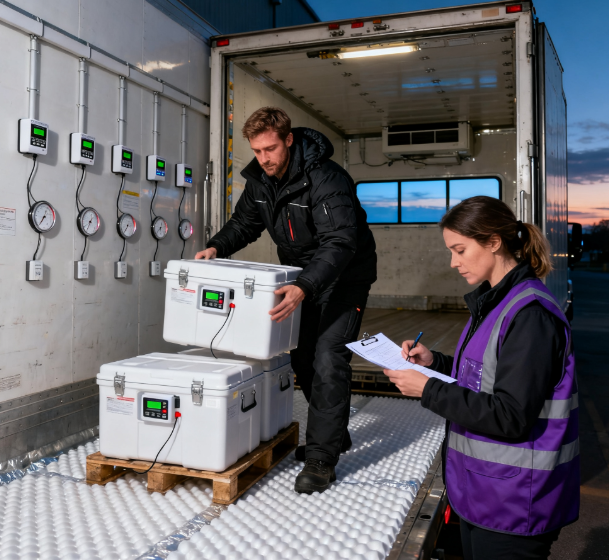
Protocole de qualification des emballages thermiques et examen du rapport
La qualification d'emballage thermique fournit la preuve documentée qu'une configuration d'expédition spécifiée peut répondre aux exigences de température définies dans les conditions évaluées.. L'objet qualifié est le pack complet, y compris l'isolation, réfrigérant, arrangement et préparation de la charge utile. La conclusion est limitée par la portée du test. Un rapport de réussite pour une configuration n'établit pas l'adéquation à chaque charge utile, itinéraire ou méthode d'exploitation.
Pour les évaluateurs qualité et les acheteurs techniques, la tâche consiste à relier les exigences aux mesures puis à l'utilisation de routine. Le rapport doit rendre ce lien visible. Si un réviseur ne peut pas identifier la configuration testée, limites ou bases pertinentes pour l’exposition, une déclaration de temps de rétention est insuffisante pour la décision d'approbation prévue.
Commencez l'examen avec la décision soutenue par le rapport.
Déterminer si le travail consiste en des tests de développement, qualification formelle ou confirmation sur le terrain. Le développement peut comparer les conceptions ou localiser un mécanisme de défaillance. La qualification évalue une configuration identifiée par rapport à des critères pré-approuvés. Les preuves sur le terrain expliquent comment l'arrangement se comporte dans les conditions de fonctionnement représentées.. Chaque activité peut être utile sans être interchangeable.
Localisez le document d’exigences et le protocole. Ils doivent identifier les conditions du produit, limites de charge utile, température de départ, intervalle de protection et contraintes de manipulation importantes. Confirmer que les critères d'acceptation ont été approuvés avant les tests. Les critères introduits une fois les résultats connus peuvent affaiblir la base de la conclusion.
OMS's shipping-container guidance describes design, qualification opérationnelle et de performance en étapes distinctes. Son approche adaptée à l’objectif est utile pour structurer l’examen. Terminology should also follow the organization's quality system and applicable requirements; les tests informels sur échantillons ne devraient pas acquérir des labels d’approbation formels simplement par leur présentation.
Demandez si les preuves existantes des fournisseurs peuvent étayer une partie de l’évaluation. La réponse peut être oui lorsque sa portée et sa configuration correspondent à l'utilisation prévue.. Répéter automatiquement le travail peut gaspiller des ressources, alors qu'accepter un rapport sans comparer sa portée peut laisser un vide important. Documenter la comparaison et les besoins en preuves restants.
Déterminer à qui appartient l’approbation finale. Un fournisseur peut fournir des preuves de laboratoire et des recommandations techniques, pendant que le propriétaire du produit détermine l'acceptation de son application. Les achats et les opérations doivent répondre à leurs exigences sans remplacer cette décision de qualité.
Identifiez le pack pour qu'une autre équipe puisse le reproduire
Le rapport doit préciser le modèle d'expéditeur, couvercle, carton externe, composants d'isolation, réfrigérant, séparateurs, arrangement et fermeture de la charge utile. Inclure l'identité et la révision des composants, le cas échéant. Une photo est utile, mais cela peut ne pas révéler la qualité du matériau, dimensions, formulation ou état de préparation du réfrigérant.
Conditionnement des documents séparément du stockage des composants. Un point de consigne d'équipement ne prouve pas à lui seul que les composants ont atteint l'état prévu. La procédure doit identifier la méthode de préparation, approche de vérification et séquence de manipulation que les opérateurs doivent reproduire. Où la mise en scène affecte les performances, capturez-le dans la spécification.
Définir la zone de produit et les dimensions de charge utile utilisables après l'installation des composants de refroidissement et de protection. Le volume nominal est une spécification incomplète. L'agencement qualifié peut réserver un espace pour le réfrigérant, séparateurs et surveillance, et peut autoriser uniquement certains modèles de chargement.
Décrire les conditions de démarrage et l'orientation de la charge utile. De petits changements de placement peuvent placer un produit près d'une limite plus chaude ou d'une interface réfrigérante plus froide.. Un diagramme de chargement doit identifier la disposition autorisée, y compris tout matériel de dégagement et de gestion des vides requis. Ne laissez pas les opérateurs déduire l'arrangement à partir d'un dessin de conteneur vide..
Examiner les changements apportés au cours de l’étude. Un pack substitué, un séparateur supplémentaire ou une fermeture révisée appartient à l'enregistrement des écarts. Si la configuration finale diffère de celle initialement prévue, la conclusion doit clairement identifier quel arrangement est étayé par la preuve.
Vérifiez si l'exposition répond à la question souhaitée
La performance thermique dépend de l'exposition externe temps-température. Revoir le profil utilisé, comment il a été sélectionné et quel est son rapport avec la distribution prévue. Une exposition constante peut répondre à une question de développement. Un profil changeant peut représenter d’autres conditions. Ni l’un ni l’autre ne mérite une revendication de performance universelle.
ISTA identifie la norme 20 as a design and qualification process for insulated shipping containers and 7E as thermal profiles for parcel delivery systems. Les documents ont des rôles liés mais distincts. Vérifier la norme ou la procédure précise, révision, profil et base de certification revendiquée plutôt que d’accepter une référence ISTA inexpliquée.
Les profils standardisés prennent en charge une base de test cohérente. Il ne s'agit pas de données automatiquement personnalisées dans le pire des cas pour une voie spécifique.. Si l'itinéraire réel comprend un intervalle de dédouanement inhabituellement long, un délai de réception non pris en charge ou un mode de transport différent, évaluer si le profil standard constitue un défi adéquat pour cette utilisation.
Le rapport devrait séparer le défi environnemental de la durée du transport.. Deux expositions de même durée peuvent produire des résultats différents. Préserver la séquence temporelle et les détails du profil lors de la comparaison des rapports. Une durée revendiquée plus longue dans le cadre d'une exposition moins exigeante n'est peut-être pas la meilleure option pour la demande proposée..
Envisager les interventions prévues. Ouverture, le réapprovisionnement en liquide de refroidissement ou son transfert dans un autre conteneur peut modifier le comportement du système. Inclure une version approuvée de l'événement dans l'évaluation s'il fait partie d'une utilisation de routine. Sinon, énoncer clairement la restriction. La preuve d'un emballage scellé ne doit pas être décrite comme une preuve d'une inspection non contrôlée..
Évaluez ensemble les limites de la charge utile et la pertinence des mesures
Identifier le produit ou le substitut utilisé. Un substitut doit représenter les caractéristiques thermiques et géométriques pertinentes pour l'étude. Une masse similaire à elle seule n’établit pas l’équivalence. Sa forme, conditionnement, la température et la position de départ peuvent affecter la relation entre la réponse mesurée et le produit prévu.
Examiner la justification de la sélection des configurations de charge utile. Des charges faibles et élevées peuvent présenter différents risques, et la variation de l'ordre peut modifier l'espace interne et le contact avec les composants. Où un seul arrangement est testé, évaluer si la demande doit être restreinte ou si des preuves supplémentaires sont nécessaires.
La cartographie de la température examine les différences entre les positions pertinentes. Vérifiez si les emplacements sélectionnés peuvent résoudre les risques liés au produit dans la configuration choisie. Un capteur au centre géométrique peut être utile mais insuffisant pour un produit limite proche du couvercle ou du réfrigérant. Les mesures de cartographie et de qualification doivent être liées par une justification explicite.
Déterminer ce qui est réellement mesuré: air, produit, substitut ou une surface à proximité. Ces enregistrements peuvent servir à différentes fins. Un capteur directement adjacent au liquide de refroidissement ne doit pas être traité silencieusement comme la température de chaque élément de charge utile.. Le rapport nécessite un dessin de placement et une explication du rôle de mesure.
L'équipement de mesure doit avoir une plage et un étalonnage appropriés pour les conditions de l'étude.. Examiner l'échantillonnage, comportement de réponse, capacité de la batterie, récupération de mémoire et de données. La résolution est l'incrément affiché, pas une preuve d'exactitude. Un enregistreur adapté à l'expédition réfrigérée peut ne pas convenir à une application à des températures beaucoup plus basses..
Utiliser une règle de décision définie lorsque les mesures approchent d'une limite. Tenir compte de l'incertitude de mesure pertinente à travers le processus qualité approuvé. N'améliorez pas le résultat en arrondissant vers l'intérieur ou en modifiant les paramètres d'alarme après l'étude.. Une alarme opérationnelle et un critère d'acceptation du produit ont des objectifs différents.
Examiner les exécutions individuelles et les écarts avant le résumé
Commencez par les historiques de température, not the supplier's pass statement. Examiner les positions pertinentes par rapport aux limites supérieure et inférieure lorsque les deux s'appliquent. Identifiez quand une position s'approche pour la première fois d'une limite et si le modèle se répète. Une courbe centrale ou une moyenne peut masquer une position défaillante.
La réplication doit suivre le protocole applicable, standards or guidance and the project's risk rationale. Une seule exécution réussie peut constituer une preuve de développement utile sans établir de performances qualifiées reproductibles.. Si le rapport repose sur la réplication, les résultats individuels doivent rester disponibles pour examen.
Vérifier le bilan environnemental réel ainsi que le profil programmé. Un point de consigne de chambre décrit la commande prévue, tandis que le dossier d'exposition aide à établir ce que l'article de test a vécu. Des différences inexpliquées, les interruptions ou les intervalles manquants doivent être évalués avant d'accepter le résultat.
| Rapport de constatation | Interprétation pour enquêter | Action du réviseur |
|---|---|---|
| Une position diffère du centre | Problème de variation ou de placement dans la zone de produit | Réviser la cartographie et la pertinence du poste |
| Une exécution échoue alors que la moyenne passe | La moyenne masque la variabilité | Évaluer l’échec individuel |
| Changements de température après ouverture | L’intervention change la mission thermique | Vérifier le périmètre d'intervention approuvé |
| Les données s'arrêtent avant le point de terminaison | La protection pendant tout l’intervalle n’est pas prouvée | Évaluer les preuves manquantes |
| Les composants diffèrent du protocole | Les résultats peuvent prendre en charge une autre configuration | Vérifier l'écart et l'identité de la configuration |
Ces résultats incitent à une enquête plutôt qu’à des diagnostics automatiques. Un problème de capteur, l'erreur de préparation et la limitation de conception nécessitent des corrections différentes. Le rapport doit montrer comment l'équipe est parvenue à son explication et quelles preuves soutiennent la conclusion révisée..
Conserver les tests infructueux et les conditions exceptionnelles dans le dossier. Un nouveau test réussi ne les efface pas. Déterminer si une correction modifie le système, le protocole ou l'utilisation autorisée. L'approbation finale doit décrire la configuration et les contrôles qui ont réellement produit les preuves acceptées..
Distinguer les performances des packages de l'approbation de l'itinéraire et du produit
Un rapport de qualification du laboratoire établit les performances dans le cadre de son test. L'évaluation de l'itinéraire relie cette portée au service réel, transferts, conditions de retard et réception. Ce sont des étapes liées, et un rapport de package ne doit pas prétendre avoir évalué des transferts qui n'ont jamais fait partie de l'étude.
La disposition des produits est une autre limite. Les données de température soutiennent une décision de qualité, mais un fournisseur d'emballages ne crée pas de tolérances pour la stabilité du produit. Où a lieu une excursion, le propriétaire du produit doit l'évaluer à l'aide d'informations et de procédures autorisées. Un retour ultérieur à une température acceptable ne résout pas en soi l’exposition antérieure..
De la même manière, matériel, les documents de sécurité et de transport servent leurs propres objectifs. Une déclaration de contact alimentaire ne démontre pas le temps de conservation. Un résultat de profil thermique n’établit pas l’acceptation des marchandises dangereuses. Une certification en laboratoire n'étend pas le rapport aux configurations non testées. Examinez chaque réclamation par rapport au document qui peut la soutenir.
Demander à un fournisseur utilisant le terme préqualifié d'en définir la signification. Déterminer la configuration, exigences, profils et conditions couverts, et si la certification est revendiquée. Le terme peut faire référence à des preuves existantes précieuses, mais l'acheteur a besoin de cette preuve plutôt que seulement de l'étiquette.
Lorsque la demande proposée diffère du rapport, documenter l'écart. Les réponses possibles incluent la restriction de l'utilisation, obtenir des preuves supplémentaires ou sélectionner un autre système. L’objectif est une décision explicite basée sur la différence, pas une large assurance que le paquet devrait fonctionner parce qu'il a fonctionné ailleurs.
Transférer les preuves dans un processus d'emballage reproductible
Convertissez la configuration approuvée en instructions d'utilisation claires. Inclure la préparation, identification des composants, chargement, fermeture, suivi et timing d'expédition. Donnez au personnel un diagramme qui correspond à la disposition testée et expliquez comment reconnaître la version correcte.
Vérifier que le site de conditionnement peut effectuer le processus. Équipement de conditionnement, espace de préparation, la charge de travail et la formation peuvent avoir une incidence sur la déployabilité des instructions de laboratoire. Un site illustratif peut disposer de suffisamment d'équipement pour la préparation des échantillons, mais d'une capacité insuffisante pendant les périodes de pointe.. Résolvez cette contrainte avant d’adopter le processus à grande échelle.
Définir des actions en cas de collecte différée, composants endommagés et commandes en dehors de la limite de charge utile. L'opérateur a besoin d'un chemin de décision plutôt que d'une instruction pour garder le produit au froid. Le reconditionnement ou des composants alternatifs peuvent nécessiter un examen car ils peuvent modifier la configuration prise en charge par le rapport..
La surveillance de routine peut fournir des informations sur les performances et l'exécution. Examiner les résultats répétés proches de la limite, enregistrements manquants et écarts de préparation. Ces observations peuvent révéler un problème de processus avant qu'un envoi hors limite ne se produise. La surveillance complète le système agréé; un enregistreur ne fournit pas de capacité de refroidissement.
Les instructions de réception doivent permettre un transfert en toute sécurité vers un stockage approprié, récupération de données et gestion des exceptions. Lier l'acceptation du produit au processus d'examen autorisé. Un colis froid à l'arrivée ne remplace pas le relevé de température requis.
Conserver la configuration qualifiée liée aux achats et aux évolutions
Les spécifications d'achat doivent faire référence à l'ensemble de composants approuvés.. Définir comment les modifications apportées aux dimensions, couvercle, matériel, liquide de refroidissement, fermeture, la charge utile ou la préparation sont évaluées. Un remplacement avec le même poids nominal ou une apparence similaire peut toujours affecter le comportement.
Pour les systèmes réutilisables, établir des critères d'inspection et de libération alignés sur les instructions du fournisseur et le périmètre de performance approuvé. Nettoyage, le stockage et le remplacement des composants doivent être contrôlés. N'interprètez pas une désignation réutilisable comme une durée de vie illimitée et ne supposez pas qu'une coque intacte confirme l'état de chaque composant thermique..
Spécifier la propriété du rapport, accès aux preuves et portée commerciale des tests supplémentaires. Certains fournisseurs fournissent des résumés pour la sélection et une documentation plus complète dans des conditions convenues.. Résoudre l'accès avant que l'approbation ne soit requise afin que l'examen ne soit pas bloqué à la fin de l'approvisionnement.
Tempk's public validation and packout-testing resources can help organize product conditions, hypothèses d'itinéraire et détails de préparation pour une discussion technique. Confirmer la portée des tests spécifiques au projet, les livrables et les responsabilités plutôt que de les déduire d’une page de service général.
Utiliser la qualification d'emballage thermique pour approuver un système défini qui peut être reproduit et maintenu. Prendre les exigences du produit, configurations de la charge utile et signaler les lacunes dans l'examen des fournisseurs, puis enregistrez l'utilisation soutenue et toute autre preuve nécessaire avant la publication de routine.
Qualification des itinéraires de la chaîne du froid, du profilage à l'approbation

Qualification des itinéraires de la chaîne du froid, du profilage à l'approbation
Cold chain route qualification establishes documented confidence that a defined transport arrangement can protect the intended temperature-sensitive product under the conditions represented by the assessment. L'arrangement comprend le service de transport, matériel d'emballage ou de transport, préparation, transferts, suivi et réception des contrôles. L'origine et la destination ne définissent pas suffisamment cet arrangement pour étayer une conclusion de qualification utile..
La décision essentielle est de savoir si la voie proposée est prête pour une utilisation courante., prêt uniquement sous certaines restrictions, ou encore des preuves manquantes. Y répondre nécessite un lien entre l'exposition réelle, performance de la zone de produit et capacité opérationnelle. Une trace de température fait partie de cette preuve. La trace devient bien plus utile lorsqu'elle est liée aux événements et aux responsabilités qui l'ont produite..
Décidez de ce que l’étude d’itinéraire doit prouver
Begin with the product's approved transport conditions, la charge utile prévue et les modalités d'exploitation prévues. Identifier qui approuvera l'étude et à qui appartient la disposition du produit. L'équipe logistique ne devrait pas avoir à interpréter les limites de stabilité du produit une fois les expéditions sur le terrain terminées..
Séparez trois activités qui sont souvent combinées dans une conversation. L'évaluation des risques identifie les dangers et les hypothèses. Le profilage des routes ambiantes caractérise l'exposition externe rencontrée dans la distribution. L'évaluation des performances sur le terrain évalue l'arrangement d'expédition sélectionné dans l'environnement opérationnel représenté.. Ils s'informent, mais leurs conclusions répondent à des questions différentes.
OMS's transport-route profiling supplement explains that actual distribution temperature data can support representative ambient profiles. Cela fait du profilage une contribution à l’évaluation du système d’expédition. Il ne constitue pas une preuve d'enregistrement ambiant que le produit est resté protégé.. Les mesures de la zone de produit et les enregistrements d'exploitation pertinents sont nécessaires pour cette question distincte.
Une étude d'itinéraire préalable peut être nécessaire avant qu'un package final ne soit sélectionné. Dans ce cas, le décrire comme un profilage ou une caractérisation des risques et l'utiliser pour développer les exigences d'emballage. Des preuves ultérieures peuvent évaluer le système sélectionné. Évitez une étiquette de qualification large qui cache un travail inachevé.
Définir la voie à suivre jusqu'au transfert final du stockage
Cartographier la séquence depuis la préparation jusqu'au stockage de destination. Inclure l'étape d'expédition, collecte de transporteurs, dépôt d'origine, transferts, dédouanement, dépôt de destination, dernier kilomètre et réception. Enregistrez si chaque segment a un contrôle de température, combien de temps cela prend normalement et quelles perturbations crédibles peuvent le prolonger.
Identifiez le service du transporteur plutôt que seulement le nom du transporteur. Les services express et standard peuvent utiliser des réseaux différents. Le même itinéraire peut également changer selon le jour d'expédition, programmation saisonnière ou livraison sous-traitée. Les preuves d’un service ne doivent pas en autoriser silencieusement un autre.
Specify the study's time boundaries. Fermeture, la collecte et le départ sont des événements différents. À destination, numérisation de livraison, le déballage et le placement dans un stockage approprié sont également des événements différents. L'intervalle de protection pertinent doit correspondre aux exigences du produit et du système d'expédition., avec des conditions de préparation capturées là où elles influencent les performances.
Inclure des informations qui modifient le plan de réception: heures de travail, conditions de rendez-vous, disponibilité d'un congélateur ou d'un réfrigérateur, restrictions d'accès et personne autorisée à accepter l'envoi. Une voie satisfaisante pendant les heures normales de réception peut nécessiter des restrictions le week-end ou les jours fériés..
| Segment | Lacune en matière de preuves à enquêter | Contrôle à attribuer |
|---|---|---|
| File d'attente d'envoi | Combien de temps s'écoule après la préparation? | Délai de sortie et réponse en cas de retrait manqué |
| Facilité de transfert | Le stockage est-il contrôlé pendant les délais de connexion? | Propriétaire de l’accès au stockage et de l’escalade |
| Douane | Le dédouanement ou l’inspection peuvent-ils prolonger l’exposition? | Préparation des documents et intervention approuvée |
| Dernier kilomètre | Le service de routine diffère-t-il de l'essai? | Spécifications du service et instructions du transporteur local |
| Réception | Que se passe-t-il après le scan de livraison? | Transfert de stockage, récupération des données et examen de l'acceptation |
Le tableau permet de localiser les éléments de preuve supplémentaires nécessaires. Il ne remplace pas une feuille de route ou un accord d'exploitation.. L'étude doit utiliser la séquence réelle, y compris tout segment omis par le devis de transport.
Recueillir l'exposition et la réponse au produit en tant que preuves distinctes
Un moniteur d'ambiance caractérise les conditions extérieures au système de protection de la température. Un moniteur de zone de produit évalue les conditions pertinentes à la charge utile. Positioning a sensor inside an insulated box and labeling its reading ambient would blur those roles. Documentez chaque placement et la question à laquelle il répond.
Où les deux types de mesures sont collectés, associez-les à un identifiant d’expédition commun et à des horodatages cohérents. La différence entre l'exposition externe et la réponse interne peut expliquer pourquoi un colis reste dans les limites lors d'un événement mais s'approche d'une limite lors d'un autre.. Aucun des deux enregistrements ne doit être interprété sans sa position et ses conditions de départ.
Choisissez des appareils avec des plages de mesure et un étalonnage adaptés aux conditions enregistrées. Définir l'intervalle de journalisation afin qu'il puisse résoudre les événements importants pour l'étude, tout en permettant une mémoire et une autonomie suffisantes pour les retards. Définir le début, procédures d'arrêt et de récupération. Vérifiez que l'emplacement choisi ne perturbe pas le conditionnement ou ne donne pas une vision trompeuse des limites du produit..
Pour les moniteurs de transmission, distinguer un écart de communication d'un écart de mesure. Un appareil peut continuer l'enregistrement local alors que la connectivité n'est pas disponible. Confirmez comment ces enregistrements sont récupérés et comment l'absence de données en direct affecte le plan d'intervention. Ne considérez pas un téléchargement réussi comme une preuve d'un placement ou d'un calibrage correct..
Collectez des informations sur l'événement ainsi que la température. Les dossiers pertinents incluent la préparation, fermeture, ramasser, départ, transfert, autorisation, ouverture, livraison et stockage. Les horodatages des opérateurs et des courtiers peuvent utiliser différents fuseaux horaires; normalisez-les soigneusement et conservez les enregistrements originaux. Cela empêche qu'un événement de température apparent soit associé à un mauvais transfert..
Représenter la variation plutôt que de répéter des expéditions pratiques
Le plan d'échantillonnage doit refléter les conditions qui peuvent modifier la décision. Tenez compte du niveau de service, jour d'expédition, chemin de transfert, saison, installations d'origine et de destination, disposition de la charge utile et contraintes de réception. Inclure des conditions défavorables crédibles grâce à un plan d'étude justifié ou à une évaluation contrôlée complémentaire.
N'assimilez pas la taille de l'ensemble de données à la représentativité. De nombreux voyages au cours d'une saison favorable peuvent laisser un risque hivernal sans réponse. Des essais répétés gérés par une équipe de projet spéciale peuvent ne pas représenter une répartition de routine. Le rapport doit expliquer ce que couvrent les données collectées et ce qu'elles ne peuvent pas établir.
Il n’existe pas de décompte universel des expéditions qui qualifie automatiquement chaque voie. Déterminer la taille de l'étude et la réplication via le protocole applicable, système de qualité, orientations et justification du risque. Une conclusion restreinte peut être appropriée lorsque les données sont limitées. Une utilisation plus large nécessite des preuves ou une justification documentée pour étendre la portée.
Envisagez des familles de routes lorsque cela peut réduire les duplications inutiles.. Une famille doit être fondée sur une équivalence significative dans la structure des services, exposition, durée, transferts et contrôles. Le pays de destination partagé ou une distance similaire est insuffisant en soi. Enregistrez la justification et identifiez les conditions qui nécessiteraient une évaluation de voie individuelle..
La planification doit également faire la distinction entre l'utilisation courante et les perturbations prévisibles.. Une correspondance manquée ou un retard d'autorisation peuvent nécessiter un examen séparé même s'ils ne se produisent pas pendant les trajets échantillonnés.. L'absence d'un événement indésirable dans un petit ensemble de données de terrain n'établit pas qu'il n'est pas pertinent..
Établir des règles de décision avant le travail sur le terrain
Approuver les critères du produit, portée de l'étude, règles de revue des données et traitement des écarts avant les essais. Identifier la version exacte de l'emballage ou du matériel de transport, limites de la charge utile et procédure de préparation. Déterminer ce qui constitue une exécution valide et quelles preuves sont nécessaires pour l'approbation prévue.
Définir des règles pour les mesures manquantes, appareils perdus, démarrages retardés et mouvement du capteur. Ces événements peuvent laisser un résultat non concluant même lorsque la trace disponible semble acceptable. Un résultat non concluant ne doit pas être converti en réussite en supposant que l'intervalle non enregistré ressemble à celui enregistré..
Tenir compte de l'incertitude de mesure lorsque les lectures s'approchent d'une limite. La règle de décision doit suivre le processus qualité approuvé et les capacités du système de mesure. Arrondir une valeur limite vers l’intérieur n’est pas un substitut défendable à cette règle.
Séparer l'acceptation du produit des déclencheurs opérationnels. Une étape manquée peut nécessiter une intervention avant que la température n'atteigne une limite. Une alarme de température peut être réglée pour donner le temps d'une réponse approuvée. Ces commandes peuvent prendre en charge la voie, but their triggers should not be presented as the product's stability limits.
Définir comment les écarts seront étudiés et qui peut autoriser les changements. Un nouveau test après une action corrective peut démontrer le processus révisé, tandis que l'échec initial reste une partie du dossier. Un essai avec un emballage ou un service modifié doit être identifié comme preuve de ce changement d'arrangement..
Intégrer les actions de rétablissement à l’accord évalué
Cartographier les responsabilités partout où un envoi peut attendre. Un transporteur, le courtier et le séquestre peuvent chacun avoir une procédure interne claire alors que la responsabilité entre eux en matière de contrôle de la température reste incertaine. Le plan de voie doit nommer le propriétaire de chaque transfert concerné et la personne qui peut autoriser l'intervention..
Testez le chemin de communication à travers les fuseaux horaires et les heures non travaillées. Identifier les contacts de secours, les informations qu'ils reçoivent et les mesures qu'ils peuvent prendre. Une alerte en temps réel ne peut pas créer un accès à une zone de chargement sécurisée ni mettre à disposition un congélateur de réception.. Confirmer la capacité physique derrière l'instruction d'escalade.
Par exemple, un courtier de destination peut être en mesure de dédouaner une expédition illustrative, mais incapable de fournir un stockage compatible avec le produit. Un plan indiquant de contacter le courtier en cas de retard est alors incomplet. La réponse a besoin d’une installation soutenue, un autre service ou une restriction d'expédition qui empêche la condition non prise en charge.
Le réapprovisionnement et le reconditionnement du réfrigérant nécessitent un soin particulier. Ils peuvent modifier l'emballage approuvé et exposer le produit pendant la manipulation.. Identifier le personnel formé, disponibilité matérielle, conditions de travail appropriées et enregistrements de l'action. La procédure de récupération doit expliquer l'étendue de la protection qui en résulte plutôt que de supposer que l'horloge thermique redémarre.
Si une inspection est prévisible, évaluer l'ouverture et la restauration. Un colis qualifié alors qu'il est scellé n'a pas été automatiquement démontré lors d'une inspection. Déterminer si le système dispose d'une méthode d'intervention approuvée ou si l'inspection nécessite une remontée vers le propriétaire du produit..
Convertir les résultats en une approbation limitée
Review each shipment's full temperature history with its event record. Vérifier si une approche récurrente d'une limite commence dans un dépôt particulier, intervalle de douane ou file d'attente de réception. Une correction du processus peut être plus efficace que l'ajout d'une isolation, surtout lorsque le problème principal est l'attente incontrôlée.
Conserver les résultats individuels. La température moyenne peut cacher des excursions, alors qu'une observation de point final peut manquer une exposition antérieure. Lorsque différentes positions de mesure sont utilisées, examiner les différences plutôt que de les combiner en une seule courbe rassurante. Indiquer quelles mesures soutiennent l'évaluation du produit et lesquelles caractérisent l'exposition.
Le rapport doit identifier le service approuvé, saison ou étendue d'exposition, charge utile, version du paquet, préparation, conditions de surveillance et de réception. Décrire les écarts, restrictions et questions non résolues. La conclusion doit dire ce qui est soutenu: utilisation courante dans le cadre défini, utilisation restreinte avec commandes indiquées, ou travaux supplémentaires avant approbation.
Un cycle de qualification réussi ne garantit pas chaque expédition future. Des contrôles de routine restent nécessaires. Déterminer qui examine les dossiers de surveillance, comment les exceptions sont transmises et comment un envoi contenant des preuves douteuses est conservé pour l'élimination du produit. La confirmation de livraison par le transporteur ne doit pas remplacer cette décision de qualité.
Réévaluer lorsque les hypothèses d’exploitation changent
Définir les changements qui nécessitent un examen, y compris le service de transporteur, centre de transfert, horaire de transit, conditionnement, liquide de refroidissement, charge utile, modalités de préparation et de réception. Un examen des modifications peut justifier une utilisation continue, des preuves supplémentaires ciblées ou une nouvelle évaluation. La réponse doit suivre les risques et les preuves plutôt que de répéter automatiquement chaque étude ou de supposer qu'aucune n'est nécessaire..
Utiliser les informations de routine pour détecter la dérive. Des files d'attente plus longues, dédouanement tardif répété, la récupération de données manquée et l'augmentation des résultats proches de la limite peuvent indiquer que les hypothèses initiales ne décrivent plus la voie. Examiner les causes même lorsque les expéditions individuelles restent acceptables.
Inclure l’accès aux preuves dans l’accord en cours avec les prestataires de services. Une révision d'itinéraire peut être retardée si des événements au dépôt, les dossiers d’intervention ou les détails du sous-traitant ne sont pas disponibles. Préciser les enregistrements nécessaires, le fournisseur responsable et comment ils seront fournis. Cela transforme un engagement général à coopérer en une base pratique pour enquêter sur les changements et maintenir la portée approuvée..
Conserver le dossier d'approbation avec la version d'exploitation qu'il couvre. Le personnel doit être en mesure d'identifier le service et le package autorisés sans reconstruire le projet à partir des e-mails.. Entraînement, les enregistrements et le contrôle des modifications rendent l'étude utilisable dans le travail quotidien.
Tempk's public Route Risk Checker can help organize an initial lane screen, et il distingue explicitement cet écran de la qualification de voie certifiée. Utiliser le résultat pour préparer la discussion sur l'itinéraire et identifier les lacunes, tout en confirmant séparément la portée réelle de l’étude et de la documentation.
Commencez la qualification des itinéraires de la chaîne du froid avec une carte complète des voies et des critères de produits. Prendre les données d'exposition, les dossiers d'exploitation et les contrôles de récupération proposés à l'équipe qualité responsable afin que l'approbation reflète l'arrangement qui sera réellement utilisé.
Emballages d'expédition congelés construits autour des exigences d'arrivée
Emballages d'expédition congelés construits autour des exigences d'arrivée
Une commande arrivant dans un carton froid peut toujours manquer ses spécifications surgelées. Les emballages d'expédition congelés doivent être sélectionnés en fonction de l'état requis du produit et de toute la période allant de l'emballage à la réception du stockage.. Cela nécessite un liquide de refroidissement compatible, une enceinte isolée, protection physique et contre l'humidité, et des preuves de l'assemblage complet. Pour les acheteurs de produits alimentaires et de fruits de mer, le point de départ le plus utile est une exigence d'arrivée mesurable suivie d'un essai de la charge utile réelle, itinéraire et processus d'emballage.
Définir une norme de réception qui peut être testée
Remplacer les instructions telles que conserver congelé par une exigence spécifique au produit. Identifier la limite de température, variation autorisée, contrôles de qualité et méthode utilisée pour évaluer la réception. La limite doit provenir du propriétaire du produit et des exigences applicables du marché.. Un fournisseur d’emballages peut vous aider à concevoir une protection autour de celui-ci, but should not invent the product's acceptance standard.
Pour les aliments surgelés relevant de son champ d'application, Le Codex décrit la maintenance à −18°C ou moins, subject to permitted tolerances. Le code exclut les glaces comestibles, glace et lait. N'appliquez pas cette référence sans vérifier la portée du produit ou ne la traitez pas comme une loi universelle pour chaque destination.. Matériel pharmaceutique congelé, les échantillons alimentaires et de laboratoire peuvent avoir des exigences différentes.
Enregistrez la condition de départ à côté de l'exigence de réception. Le produit qui entre dans l’expéditeur plus chaud que prévu crée une charge thermique différente. Les emballages conçus pour conserver les produits congelés ne doivent pas être utilisés pour effectuer un processus de congélation pendant le transport, à moins que cette utilisation n'ait été spécifiquement évaluée et acceptée..
Définir comment la décision de réception utilisera les mesures. Une lecture de l'air d'un carton, la lecture de la surface du produit et la mesure du noyau du produit répondent à différentes questions. Sélectionnez la méthode appropriée au produit et à la procédure approuvée. Apparence, le liquide de refroidissement restant et une lecture du point d'arrivée peuvent contribuer à l'inspection, mais n'établissent pas par eux-mêmes l'historique complet des températures.
Accepter le point final de la protection. La livraison à un quai de chargement ou à une porte peut précéder le déplacement vers un entrepôt approprié.. Si l'on s'attend à ce que l'emballage comble cet intervalle, l'inclure dans la conception et l'essai. Si le destinataire assume la responsabilité plus tôt, rendre explicite l’exigence de manutention et vérifier que l’arrangement est pratique.
Choisir le liquide de refroidissement par sa fonction et ses contraintes
Packs de glace à base d'eau, subzero phase change materials and dry ice should be compared as different options. La décision dépend de l'état requis du produit, exposition, compatibilité, processus de préparation et acceptation du transporteur. A generic description such as frozen gel pack does not identify the temperature behavior needed for the shipment.
La glace d'eau fondant à proximité de 0 °C ne peut pas fournir le même tampon de changement de phase qu'un matériau sélectionné pour une température de congélation plus basse.. Un sac d'eau profondément gelé peut absorber de l'énergie tout en se réchauffant, mais cette réserve initiale est limitée. Cela ne justifie pas l'affirmation générale selon laquelle les blocs de glace ordinaires maintiennent toute exigence de gel pour un voyage indiqué..
Un PCM inférieur à zéro peut convenir lorsque son comportement documenté et le système complet prennent en charge l'application.. Demander les données pertinentes et les instructions de préparation. Vérifiez quel congélateur ou équipement de climatisation est nécessaire, comment l'état de préparation est établi et combien de temps les composants préparés peuvent rester en préparation avant utilisation. Un point de phase nominal ne remplace pas les preuves de performances de la charge utile.
La glace carbonique offre une autre approche pour les applications compatibles. Cela devient du dioxyde de carbone, créer des exigences en matière de dégagement de gaz et de manipulation sûre. The FAA's guidance for US air shipments states that dry ice packaging must allow the gas to escape, et les arrangements spécifiques aux transporteurs doivent également être abordés. Confirmer les modes de transport, acceptation et obligations de préparation applicables avant de choisir le pack.
| Approche du liquide de refroidissement | Décision qu’il pourrait soutenir | Limitation à résoudre |
|---|---|---|
| Pack de glace ordinaire à base d'eau | Applications prises en charge par son comportement réel en température | Pas de contrôle automatique soutenu à une limite inférieure gelée |
| PCM sous zéro | Plage de gel définie dans un système passif évalué | Formulation, les preuves de conditionnement et d'emballage doivent correspondre |
| Glace sèche | Exigences compatibles en matière de transport congelé ou plus froid | Acceptation du transporteur, dégagement de gaz, manipulation et compatibilité des produits |
| Transport à température contrôlée avec emballage de protection | Itinéraires soutenus par une infrastructure contrôlée appropriée | Les risques liés aux transferts et les imprévus liés aux services restent pertinents |
Présélectionnez les approches réalisables avant de demander laquelle est la moins chère. Un liquide de refroidissement interdit par le système de transport ne peut pas devenir un choix réalisable grâce à une meilleure isolation.. Inversement, un liquide de refroidissement autorisé doit encore démontrer une protection dans la boîte proposée avec la charge réelle.
Concevoir l'enceinte autour de l'envoi chargé
Comparez l'espace utilisable du produit après avoir placé le liquide de refroidissement, panneaux, séparateurs et confinement. Le volume nominal est une mauvaise mesure d'achat lorsque les composants thermiques occupent une partie de l'enceinte. Fournir les dimensions du produit emballé et vérifier physiquement la disposition terminée avant d'approuver un dessin.
Inclure la masse et la forme du produit. Une charge lourde peut stresser la base et le carton extérieur; les paquets irréguliers peuvent interférer avec le couvercle ou créer des points de contact difficiles. Les portions de produits minces et les emballages en vrac denses peuvent réagir différemment à la chaleur. Le dossier d'emballage doit identifier ces différences plutôt que d'en faire la moyenne dans un ordre non représentatif..
Évaluez l’assemblage d’isolation proposé plutôt que de juger uniquement le nom du matériau. A carton with an insulated liner, a rigid foam box and a protected vacuum-panel shipper can each be appropriate under supported conditions. Construction de murs, ajustement du couvercle, articulations, la fermeture et la durabilité de la manipulation contribuent au résultat. Demandez quelles preuves s'appliquent à la structure réellement proposée.
La feuille réfléchissante est une caractéristique d'un boîtier, pas de preuve de durée thermique ou de résistance aux fuites. Confirm the liner's full construction, coutures et fermeture dans l'échantillon. Si un fournisseur change le revêtement pour atteindre un objectif de prix, évaluer l'effet au lieu de supposer qu'une surface d'apparence similaire préserve les performances d'origine.
Gardez le mouvement des produits sous contrôle. Cloisons, les séparateurs et la gestion des vides doivent protéger les emballages primaires et maintenir la disposition prévue pendant la manipulation. Une compression excessive peut endommager un sac ou empêcher une fermeture correcte. Les espaces vides doivent être traités conformément à la conception évaluée plutôt que remplis avec n'importe quel matériau disponible sur la ligne..
Donnez au confinement des fruits de mer une tâche distincte
L'emballage des fruits de mer doit prendre en compte les emballages de produits scellés, bords tranchants de la coque, vitrage, abrasion et éventuelle libération de liquide. Définir quelle couche contient le produit et laquelle protège le carton. Une doublure isolée, le tampon absorbant et le sac primaire scellé remplissent des fonctions différentes et ne doivent pas être considérés comme interchangeables.
Inspecter les emballages primaires après un chargement et une manipulation représentatifs. Les emballages sous vide ou les sacs qui tiennent au repos peuvent être percés par le mouvement, coins ou un composant gelé adjacent. Ajuster la protection ou l’aménagement en fonction des risques observés, puis réévaluez la configuration complète si le changement affecte la conception thermique.
Préciser le confinement secondaire et le matériau absorbant lorsque le produit et l'évaluation des dangers l'exigent.. Éloignez les fuites du carton extérieur et des produits voisins. Les emballages humides peuvent créer des problèmes de manipulation et de résistance même lorsque le résultat thermique est acceptable.. La gestion de l'humidité doit être évaluée au cours du même essai pratique, pas ajouté après coup.
Pour un système de glace carbonique, s'assurer que le confinement du produit ne piège pas les gaz en évolution dans un compartiment étanche. Rétention thermique, le contrôle des fuites et la libération de gaz doivent fonctionner ensemble dans l'assemblage approuvé. Utilisez les instructions d'emballage applicables et l'évaluation de la conception du fournisseur plutôt que d'improviser un sac intérieur scellé autour de tout le contenu..
L'aptitude au contact alimentaire doit également être vérifiée pour les matériaux concernés et les conditions de contact prévues.. Demandez la documentation applicable au lieu de supposer que tous les composants thermiques sont adaptés au contact direct. L'emballage doit respecter les contrôles de sécurité alimentaire ainsi que la température et l'apparence..
Essayez les modèles de commande qui pourraient échouer différemment
Considérons un hypothétique programme de fruits de mer surgelés avec de petites commandes de réapprovisionnement et des cartons plus grands sur le même service de colis.. La plus petite charge peut avoir moins de masse de produit froid; la charge plus importante peut encombrer l'espace du liquide de refroidissement ou compliquer la fermeture. Aucun des deux modèles ne doit être approuvé uniquement à partir d'un essai de l'autre.
Définir l'enveloppe de commande concernée, y compris les formats de produits et les conditions de départ. Sélectionner des configurations représentatives et stimulantes grâce à une revue des risques. Si une charge utile de substitution est utilisée, expliquer comment il représente les propriétés et la disposition importantes pour le résultat. Les contenus de test pratiques ne sont pas automatiquement des contenus représentatifs.
Appliquer une exposition externe adaptée à l'usage prévu et l'enregistrer. Les profils thermiques standardisés des parcelles peuvent fournir une référence documentée, mais la procédure spécifique et la relation avec la voie doivent être claires. Ajoutez des essais d'itinéraire ou une évaluation plus approfondie lorsque les conditions prévues ne sont pas prises en charge.. Une boîte testée sous une seule exposition n'a pas de durée universelle pour tous les programmes d'expédition.
Placez des capteurs pour enquêter sur les zones de produits probablement vulnérables. Expliquez si chacun enregistre l'air, une surface ou un emplacement interne, et confirmer que l'équipement est adapté aux températures de gel rencontrées. Vérifier l'étalonnage, intervalle d'enregistrement et incertitude de mesure dans le cadre de la méthode. Do not place a sensor against coolant and then describe that record as every product unit's temperature.
Inspecter l’état physique ainsi que les résultats thermiques. Fuite record, sac endommagé, mouvement, ajustement du couvercle, mouillage du carton et facilité de manipulation à la réception. Une trace de température satisfaisante ne peut pas compenser un confinement primaire défaillant. L'essai doit déterminer si l'envoi fini répond dans son ensemble aux critères d'acceptation convenus..
Rendre la ligne d'emballage capable de répéter le résultat
Traduire la conception évaluée en instructions identifiant les composants, préparation, ordre de chargement, séparateurs, fermeture et placement du moniteur. Utilisez une nomenclature et un code de révision que les achats et l'exécution peuvent tous deux reconnaître. Des photographies ou des dessins de l'arrangement approuvé peuvent aider le personnel à identifier les départs sans se fier à leur mémoire..
Vérifier l'état de préparation avant le chargement. Un point de consigne du congélateur ne prouve pas à lui seul qu'une pile bondée de packs PCM a atteint son état requis.. La procédure doit définir les contrôles de préparation et de disponibilité pour la charge réelle de l'équipement et des composants.. Adaptez la capacité de conditionnement au calendrier des commandes afin qu’une expédition urgente n’encourage pas une utilisation prématurée.
Gérer la mise en scène des produits entre le stockage surgelé et la fermeture des boîtes. Préparer les matériaux disponibles avant de lancer la commande lorsque cela est possible, et mesurer le processus réel lors d'un pilote. Lorsqu'un composant manquant, une étiquette retardée ou une ligne interrompue modifie la condition de départ, le personnel a besoin d'une voie d'escalade et d'une action approuvée.
Définir une procédure de retrait manqué. Un carton terminé en attente d'une autre collection a déjà vécu une partie de son histoire planifiée. Réimprimer son étiquette ne réinitialise pas la réserve thermique. Décidez comment le produit est conservé, examiné et reconditionné si nécessaire dans le cadre du processus spécifique au produit.
Remplacements de contrôle. Another coolant pack of similar size may have different thermal behavior; une doublure de remplacement peut avoir des coutures ou une épaisseur différente. Même un liquide de refroidissement supplémentaire peut modifier l'ajustement de la charge utile, contact et poids. Exiger une évaluation des changements pertinents au lieu de traiter tout arrangement plus froid ou plus lourd comme automatiquement meilleur.
Comparez les coûts uniquement une fois que la portée est équivalente
Demandez à chaque fournisseur de citer l’ensemble complet et d’identifier les exclusions. Inclure le liquide de refroidissement, séparateurs, endiguement, étiquettes, emballage extérieur et ressources de préparation dans le comparatif. Un prix de boîte bas peut masquer les coûts nécessaires à la fourniture de la configuration prise en charge.
Use external dimensions and actual packed weight with the chosen carrier's current charging rules. Évaluer le travail, espace de conditionnement, réapprovisionnement, composants endommagés et retours le cas échéant. Ces coûts d'exploitation peuvent modifier la décision d'achat même lorsque deux échantillons ont des résultats thermiques similaires..
Pour des emballages réutilisables, confirmer qui revient, nettoie, inspecte et prépare le système. Un programme de retour nécessite suffisamment d’équipement utilisable disponible au moment de l’expédition, pas seulement assez d'unités achetées. Les allégations environnementales doivent refléter le processus réel de retour et de réutilisation ainsi que les preuves pertinentes., plutôt que de supposer que chaque enceinte réutilisable est automatiquement préférable.
Envoyer un devis comprenant les exigences du produit, condition de départ, enveloppe de charge, itinéraire, service, retarder l'exposition, accord de réception, risques de fuite, quantité et délai d'échantillonnage. Demander aux fournisseurs de confirmer les conditions commerciales et la portée des preuves proposées. Séparez ce qui est disponible actuellement de ce qui nécessiterait un développement ou des tests.
Tempk's published frozen food and seafood offering describes configuration discussions covering insulated shipper formats, configurations de liquide de refroidissement et confinement des fruits de mer. Ces options constituent un point de départ pour un exemple de demande. L'exécution d'une commande individuelle nécessite toujours le support de la configuration identifiée et son évaluation; une description de service public n'établit pas de temps d'attente universel.
L'emballage d'expédition congelé est prêt à être utilisé lorsque les exigences d'arrivée sont remplies., le processus de conception et d'expédition chargé a un lien défendable. Approuver les configurations prises en charge par les preuves, définir la manière dont les exceptions sont gérées et préserver l'assemblage grâce aux commandes répétées.
Préparez votre limite de produits, dimensions de la charge utile, exigences en matière d'itinéraire et de réception, puis demandez un échantillon complet. Utilisez l'essai pour confirmer la protection contre la température, confinement et emballage reproductible avant de publier les spécifications de production.
15–25°C Emballage d’expédition et sélection du CRT

15Emballage d'expédition à –25°C et sélection d'une température ambiante contrôlée
15–25°C shipping packaging is appropriate when the product's approved transport requirement calls for that range and the complete packout supports the expected journey. Les emballages à température ambiante contrôlée doivent être sélectionnés en fonction d'une exigence écrite relative au produit., rather than a supplier's category name. Pour un acheteur, la preuve décisive relie la charge utile, stabilisateur thermique, enceinte isolée, méthode de préparation et exposition externe. Utilisez ces connexions pour déterminer si un système proposé correspond à l'expédition et si votre équipe peut le faire fonctionner de manière fiable..
Convertir les exigences du produit en spécifications d'expédition
Commencez par le propriétaire du produit. Obtenir la plage de température autorisée, condition de départ, informations pertinentes sur la stabilité et instructions pour gérer les excursions. Distinguer les limites de fonctionnement normales des autorisations qui s'appliquent uniquement après une évaluation d'excursion. Une exception autorisée ne devrait pas devenir l’objectif de conception par défaut simplement parce qu’elle rend l’emballage moins cher..
La terminologie doit être soignée. Le matériel public USP décrit une température ambiante contrôlée autour de 20-25°C avec des excursions conditionnelles; ce concept ne doit pas être réduit à une règle inconditionnelle de 15 à 25 °C dans le transport. Différentes références et portefeuilles commerciaux peuvent utiliser les termes de température ambiante différemment. Confirmer la norme officielle applicable et l'étiquetage du produit avec l'équipe qualité avant de finaliser les spécifications.
Pour un produit avec une exigence d'expédition explicitement approuvée entre 15 et 25 °C, enregistrer cette plage comme critère d'acceptation. Indiquer ce qui est mesuré et sur quel intervalle. Une limite pour le produit tout au long du transport est différente d'une lecture prise dans le carton à la livraison. Un rapport utilisant un critère ne peut pas soutenir silencieusement l’autre.
Décrire la charge comme une enveloppe de configurations autorisées. Inclure les dimensions de l'emballage du produit, quantité, masse tassée, température de démarrage et espace disponible après l'installation des composants thermiques. Si votre entreprise expédie à la fois de petites commandes de réapprovisionnement et des cartons complets, rendre les deux situations visibles. Le fournisseur a besoin de suffisamment d’informations pour proposer des configurations pouvant être évaluées de manière significative.
Identifiez également le point final de la protection. Le transporteur's delivery confirmation may precede receiving inspection or placement into controlled storage. Les modalités d'emballage et de service doivent couvrir la période pendant laquelle la protection est réellement requise. Attribuez la responsabilité de tout intervalle en dehors de cette période afin que le plan n'ait pas de transfert indéfini.
Diagnostiquer où l'envoi peut évoluer vers l'une ou l'autre limite
Construire une carte d'exposition de l'emballage à la réception. Considérez le banc d'emballage, file d'attente de ramassage, véhicule de transport, centre de transfert, processus douanier, quai de destination et stockage de réception. Marquez les étapes qui ont vérifié le contrôle de la température et celles qui dépendent de l'emballage.. Utilisez les enregistrements d'itinéraire lorsque cela est possible; la météo extérieure à elle seule ne décrit pas tous ces environnements.
Pour une plage avec une limite inférieure et supérieure, évaluer à la fois le réchauffement et le refroidissement. La chaleur estivale est une préoccupation évidente, mais l'exposition hivernale et les composants au froid peuvent également amener la charge utile en dehors de ses spécifications. Un expéditeur's success under a warm profile does not answer the cold exposure question.
La phase de préparation mérite une attention particulière. Si le produit entre dans la boîte en dehors de sa condition de départ approuvée, le système peut dépenser une partie de sa réserve pour corriger cette condition. Si un panneau thermique est mal préparé, le panneau lui-même peut introduire une exposition indésirable. Ces risques nécessitent des contrôles de préparation, pas simplement un carton extérieur plus solide.
Cartographier le temps avec autant de soin que la température. Démarrez la fenêtre de protection proposée au point documenté utilisé dans l'évaluation, puis ajoutez les intervalles réels de collecte et de réception. Establish a delay allowance based on the route's credible failure modes. Évitez de choisir un pourcentage arbitraire qui n'a aucun rapport avec le processus d'expédition.
Quand des étapes incertaines dominent le voyage, envisagez de modifier le service ou l'horaire avant d'augmenter le packout. Un arrangement de réception assistée, un jour d'expédition différent ou un stockage contrôlé vérifié dans un hub peut résoudre la cause de l'exposition. L'emballage fait partie de la conception de l'itinéraire, et du matériel supplémentaire ne peut pas rendre tout retard acceptable.
Sélectionnez un système que votre opération de répartition peut reproduire
Une enceinte isolée réduit les échanges thermiques; un stabilisateur thermique offre une capacité définie à absorber ou à libérer de l'énergie. Un système d'expédition passif combine ces composants avec un arrangement de chargement spécifié. Un conteneur actif utilise une régulation motorisée et nécessite son propre support opérationnel. Un enregistreur fournit un enregistrement des conditions et doit être traité séparément du système de protection..
Pour une conception CRT passive, demander pourquoi le stabilisateur proposé est adapté à l'exigence. Une température de transition PCM est une information technique utile, mais ce n'est pas un temps de maintien de la charge utile. La quantité, état initial, la disposition et l'enceinte déterminent la manière dont le matériau contribue à l'expéditeur assemblé. Vérifiez les preuves pertinentes du système au lieu de classer les produits uniquement par point de phase..
Ordinary frozen gel packs require particular caution. Les remplacer par un pack CRT peut créer des zones de contact froid, même lorsque la cavité la plus large reste à portée. Utilisez uniquement un liquide de refroidissement et une méthode de préparation pris en charge pour la conception.. Si le fournisseur propose un pack alternatif, obtenir une évaluation documentée avant de le traiter comme interchangeable.
Comparez les architectures avec l'opération de répartition. Un carton et une doublure peuvent convenir à un flux de travail de colis établi si l'assemblage testé répond aux exigences d'exposition.. Un expéditeur rigide et réutilisable peut s'adapter à une boucle de retour gérée mais nécessite une récupération, inspection et reconditionnement. Les panneaux isolés sous vide peuvent aider avec les contraintes d'espace, tout en introduisant la nécessité de protéger les panels et de définir des critères de rejet. Une solution active peut convenir à certains services de logistique maîtrisée, à condition que l'infrastructure et les imprévus soient disponibles.
Demandez au personnel de l'entrepôt d'emballer une commande représentative avant l'approbation commerciale. Observer l'identification, préparation du stabilisateur, chargement du produit, fermeture, étiquetage et placement du moniteur. Un essai qui nécessite l'intervention d'un expert à chaque étape expose un problème de déploiement, même si la conception technique est solide. La configuration sélectionnée doit être utilisable par du personnel formé avec les ressources disponibles les jours normaux d'expédition.
Demandez ce que couvre réellement le rapport de performance
Demander le rapport pour le montage et la révision exacts proposés. Les preuves doivent révéler l'exposition externe, charge utile, préparation des composants, positions des capteurs, limites et durée d’acceptation. Examinez les traces et les exceptions complètes plutôt qu'une déclaration de réussite du titre. Vérifiez si la configuration achetée correspond à celle illustrée et décrite dans le rapport.
| Question au fournisseur | Preuves nécessaires à la décision |
|---|---|
| Quel assemblage a été évalué? | Identificateurs de composants, dessin, clôture et révision |
| Quels chargements de produits étaient représentés? | Charger l'enveloppe, dimensions et condition de départ |
| Quelles conditions externes ont été appliquées? | Profil nommé ou exposition documentée avec durée |
| Quelles températures ont été enregistrées? | Objectif du capteur, position, calibrage et traces complètes |
| Comment les composants ont-ils été préparés? | Procédure de conditionnement et enregistrements de l’état initial |
| Que s'est-il passé en dehors des conditions normales? | Déviations, échecs et limites revues |
Utilisez le tableau pour identifier des lacunes spécifiques en matière de preuves. Par exemple, un rapport couvrant uniquement un chargement complet ne vous indique pas si une petite commande entre dans le champ d'application. Une référence à la même famille de caissons n’établit pas qu’une taille différente ait des performances équivalentes. Demandez l'évaluation manquante ou limitez l'application proposée à la configuration prise en charge.
Les directives de qualification de l’OMS distinguent les exigences prévues, évaluation et performances contrôlées dans l’environnement d’exploitation. N'IMPORTE LEQUEL's Standard 20 aborde un processus de conception et de qualification, tandis que 7E fournit des profils thermiques de colis. Ce sont des cadres de preuves utiles; neither a standard name nor a supplier's prequalified label removes the need to establish applicability to your product and route.
Définir la question de mesure avant d'examiner les graphiques. Une sonde dans l'air de la cavité, à la surface du produit ou à l'intérieur d'un simulant mesure différentes choses. Les tests de développement peuvent nécessiter plusieurs positions pour localiser les zones vulnérables. Le moniteur de routine doit ensuite être positionné selon la stratégie approuvée, avec une explication claire de ce que représente son dossier.
Tenir compte de l'instrumentation lors de la définition des règles d'acceptation et d'alarme. Review the monitor's working range, preuve d'étalonnage, intervalle d'échantillonnage et incertitude pertinente. Évitez d'interpréter une lecture non qualifiée d'un appareil comme un historique précis du produit.. Inversement, une absence d'alarmes n'est pas informative si les paramètres d'alarme ne correspondent pas aux exigences d'expédition.
Contrôler la préparation et la substitution avec autant de soin que la conception
Le conditionnement est une étape de production avec un résultat à vérifier. Les réglages de l'équipement à eux seuls ne montrent pas que les composants ont atteint la température et l'état de phase requis.. Demandez des instructions concernant la disposition du chargement, durée de préparation, contrôles de préparation et délai autorisé avant utilisation. Confirmer que la capacité de conditionnement correspond au volume d'expédition prévu.
Établir ce qui se passe lorsqu'un composant est en retard, endommagé ou incertain. Le personnel a besoin d’une décision d’arrêt définie et d’un accès à une alternative approuvée. Une expédition urgente ne devrait pas conduire à un remplacement improvisé d’un stabilisateur, suppression des séparateurs ou modification de la présentation du produit sans évaluation. Ces actions peuvent modifier le fondement de la demande de performance.
Créez une nomenclature approuvée et des instructions d'emballage avec un identifiant de révision. Liez les codes d'achat à l'assemblage afin qu'une nouvelle commande fournisse les composants prévus. Demander au fournisseur de vous informer des changements affectant les matériaux, dimensions, construction du panneau, formulation du stabilisant ou mode d’emploi. L'équipe qualité peut alors décider si les preuves existantes restent applicables.
Pour un programme réutilisable, définir les responsabilités de récupération et d’inspection avant le déploiement. Inclure les composants manquants, nettoyage, surfaces endommagées, décisions de stockage et de mise hors service inadaptées. Suivez le pool disponible séparément du nombre total acheté; units in transit or awaiting preparation cannot support today's dispatch. Un système réutilisable ne fournit les avantages opérationnels escomptés que lorsque cette boucle fonctionne.
Maintenir les registres de préparation et d'expédition à un niveau proportionné au produit et au système qualité. Ils devraient permettre une enquête pour reconstituer l'assemblage, état du composant, arrangement de commande et calendrier réel. La traçabilité est plus utile lorsqu'elle explique ce qui s'est passé, plutôt que d'ajouter des champs que personne ne vérifie.
Utiliser une décision par étapes pour les tailles de commandes et les itinéraires mixtes
Considérons un distributeur hypothétique dont les exigences en matière de produits approuvés sont de 15 à 25 °C.. Le distributeur envoie de petites commandes de réapprovisionnement et des envois plus importants, avec exposition saisonnière sur un hub intermédiaire. La décision d'achat doit séparer les configurations de charge et les conditions d'itinéraire saisonnières avant de demander un système unique pour l'ensemble du programme..
D'abord, établir les enveloppes de charge et d’exposition. Suivant, comparer les preuves des fournisseurs avec chaque enveloppe. Où se situent les preuves, procéder à l’examen de la mise en œuvre et à l’essai contrôlé requis. Là où ce n'est pas le cas, sélectionner une alternative évaluée ou limiter l’utilisation jusqu’à ce qu’une évaluation plus approfondie soit terminée. Cela rend visible l'incertitude restante au lieu de répartir un résultat positif sur des expéditions non prises en charge..
Un essai de production ne devrait pas examiner que la trace de température. Capacité de préparation des dossiers, temps de préparation, identification du matériau, ajustement de la fermeture, horodatages d'expédition et comportement de réception. Si la conception thermique fonctionne mais que la ligne ne peut pas la préparer de manière cohérente, réviser le processus opérationnel ou reconsidérer l’architecture. L'ajout d'un inventaire peut aider à surmonter une contrainte de capacité, mais cela ne corrigera pas les instructions peu claires.
Comparez le coût d’exploitation total une fois les options prises en charge identifiées. Inclure le boîtier, stabilisateurs, ressources de conditionnement, travail, fret, modalités de retour et pertes de composants. Use the carrier's actual commercial rules for external dimensions and packed weight. Gardez les allégations de durabilité spécifiques: a returnable box needs real return and reuse records before broad environmental benefits can be asserted.
Libérer le programme par étapes définies. Approuver les destinations initiales et charger les configurations, examiner les dossiers des pilotes, puis décidez quelles extensions nécessitent des preuves supplémentaires. Cela empêche un déploiement commercial de se développer plus rapidement que l'enveloppe opérationnelle prise en charge.. Tenir un registre des configurations approuvées que le personnel peut consulter lorsqu'une nouvelle commande ou un nouvel itinéraire ne correspond pas au modèle établi.
Intégrer la décision de réception à la spécification
Envoyer des instructions de réception identifiant la condition de stockage attendue, étapes d'inspection, surveiller le contact de récupération et d'escalade. Convenir de la manière dont le produit est conservé en attendant son examen si les enregistrements sont manquants ou en dehors des limites. La personne qui décharge le carton ne devrait pas avoir à inventer une décision d'élimination.
Une lecture d'arrivée acceptable ne prouve pas que l'historique antérieur était acceptable. De même, un enregistrement d'excursion de température n'établit pas en soi l'effet sur le produit. L'équipe qualité responsable doit examiner l'historique par rapport aux preuves spécifiques au produit et à la procédure approuvée.. Température cinétique moyenne, le cas échéant, doit être utilisé dans le cadre approprié; cela n'excuse pas automatiquement le gel ou tout événement hors de portée.
Pour emballage d'expédition à 15–25°C, la décision d'achat la plus solide relie une exigence précise à un assemblage reproductible et à une enveloppe opérationnelle prise en charge. Finalisez ces liens avant de commander à grande échelle, puis conservez-les grâce à la préparation, expédition, contrôle de la réception et du changement.
Envoyez à votre fournisseur l'exigence de température approuvée, enveloppe de charge utile, acheminer les expositions et les ressources de conditionnement. Demandez un emballage identifié et les preuves nécessaires pour évaluer son utilisation dans votre programme d'expédition.
Emballage de la chaîne du froid des vaccins: Conception résistante au gel et à l'épreuve des itinéraires
Emballage de la chaîne du froid des vaccins: De l’étiquette du vaccin à la décision de réception
The hardest part of vaccine cold chain packaging is often preventing a package from becoming trop froid tout en le gardant suffisamment froid pour tout le parcours. Un réfrigérant gelé placé à proximité d'un vaccin sensible au gel peut constituer un risque aussi grave qu'un retard de livraison en été.. C'est pourquoi un expéditeur de vaccins crédible n'est pas simplement une boîte isotherme., and why a supplier’s advertised hold time is not sufficient evidence for using it.
Un système complet d'expédition de vaccins comprend l'enceinte isolée, médias thermiques, charge utile définie, couches de protection contre le gel, instructions de manipulation et processus de surveillance. Son adéquation ne peut être jugée qu’en fonction des exigences spécifiques du vaccin et de la voie par laquelle il sera utilisé.. Ce guide explique comment transformer ces exigences en un package pouvant être testé, acheté et utilisé à plusieurs reprises sans confondre les matériaux, certifications des appareils et qualification des expéditions.
Start with the vaccine’s authorized condition—not a universal temperature claim
De nombreux vaccins réfrigérés couramment utilisés sont conservés entre +2°C et +8°C., mais tous les vaccins ne voyagent pas dans ces conditions. Certains produits nécessitent une manipulation congelée ou à très basse température; d'autres ont des périodes d'utilisation de décongélation spécifiques au produit, exigences de protection contre la lumière ou règles concernant les diluants. Les informations sur le produit autorisé et le programme de vaccination applicable déterminent les limites d'acceptation.. Une exigence de température sur l’étiquette n’est pas quelque chose que le fournisseur d’emballage peut remplacer par une spécification générique de « qualité vaccinale »..
Pour les fournisseurs de vaccins aux États-Unis, la boîte à outils du CDC sur le stockage et la manipulation des vaccins mise à jour en juillet 14, 2026, dirige les utilisateurs vers la notice du fabricant pour les produits approuvés par la FDA et la fiche d'information du fournisseur concerné pour les produits autorisés dans le cadre d'une voie d'utilisation d'urgence. OMS’s seventh edition of Guidelines for the International Packaging and Shipping of Vaccines, publié en juillet 2025, fournit des conseils pour un contexte différent: expédition internationale, principalement par voie aérienne. Ces sources sont complémentaires dans les périmètres prévus, not interchangeable substitutes for the particular vaccine’s instructions.
A buyer’s first step is to issue a enregistrement de l'état du produit avec le nom exact du vaccin et sa présentation, conditions de transport approuvées, sensibilité au gel, considérations légères, manipulation des diluants, exigences en matière de surveillance de la température et autorité de réception-libération. Si un distributeur expédie plusieurs vaccins ensemble, son équipe qualité doit déterminer si ses exigences permettent réellement un partage de charge. Les flacons d’apparence similaire n’établissent pas de températures ou de besoins de manipulation compatibles.
Pourquoi la prévention du gel mérite sa propre ligne dans les spécifications
CDC’s clinical guidance identifies that liquid vaccines containing aluminum adjuvants can permanently lose potency after freezing. Un envoi réfrigéré ne peut pas être déclaré sûr simplement parce que son enregistreur central n'a jamais enregistré d'excursion chaude.. Des points froids peuvent exister à proximité des faces du liquide de refroidissement, coins et cartons bien ajustés. La question pertinente est de savoir si le produit vaccinal est protégé des températures en dehors de sa plage autorisée, y compris à l'emplacement de charge utile plausible le plus froid.
L'utilisation d'un liquide de refroidissement gelé supplémentaire peut améliorer la résistance à la chaleur estivale, mais peut augmenter le risque de gel.. La réduction du liquide de refroidissement peut empêcher un refroidissement profond mais raccourcir la protection pendant le délai. L’ingénierie doit gérer ensemble les deux modes de défaillance; une seule température globale ou plusieurs glaces ne constituent pas une solution adéquate.
Traitez l’expéditeur comme un système contrôlé en six parties
The insulated container, la masse thermique et le dispositif de surveillance font des tâches différentes. Garder leurs rôles séparés rend les citations et les résultats des tests plus significatifs.
1. Coque isolée. PSE, PPE, les cartons isolés et les assemblages de panneaux isolés sous vide limitent le taux de transfert de chaleur. Leurs performances utiles dépendent des murs, coins, joints du couvercle, fermetures et état des dommages – pas uniquement sur une fiche technique du matériau. Un système VIP peut améliorer l'isolation dans une architecture appropriée, mais augmente la nécessité de contrôler l'intégrité et la manipulation du panneau..
2. Milieu thermique. Packs d'eau congelée ou conditionnée, packs de gel, rigid ice bricks and selected phase change materials absorb or release heat. Un PCM est choisi pour son comportement de changement de phase défini; a generic gel ice pack should not be assumed to behave like a specific PCM. Les performances du réfrigérant dépendent de sa formulation, masse, géométrie et état thermique de départ.
3. Structure antigel. Entretoises, un compartiment de charge utile bien conçu ou une barrière technique peut réduire l'exposition directe aux emballages congelés. Une barrière de fortune sans preuve ne prouve pas que les flacons de vaccins restent au-dessus de la température inférieure autorisée..
4. Charge utile réelle. Dimensions du carton de vaccins, quantité, la masse et la disposition de l'empilement influencent le champ thermique. Une indication nominale de « 10 L » ou une autre déclaration de volume n'indique pas à l'acheteur quelle quantité de vaccin peut contenir après le liquide de refroidissement., séparateurs, un enregistreur et des couches de protection sont installés.
5. Équipement de surveillance. Un enregistreur de données de température enregistre les conditions à l'emplacement de sa sonde. Il ne peut pas refroidir ou chauffer le produit et ne peut pas décider de manière indépendante si un vaccin reste apte à être utilisé.. Position du capteur, preuve d'étalonnage, les alarmes et la récupération des données doivent être définies.
6. Procédure contrôlée. Une instruction d'emballage définit le conditionnement du liquide de refroidissement, ordre de montage, temps ouvert autorisé, configuration de charge, fermeture, étiquetage et réception des chèques. Sans exécution reproductible, un test en chambre réussi peut ne pas représenter des expéditions de production de routine.
La catégorie IMD-PQS E004 de l'OMS offre une distinction importante aux acheteurs publics de vaccins.. Cela concerne les glacières, porte-vaccins et autres dispositifs passifs utilisés dans le transport des vaccins. Pour un modèle revendiquant une préqualification de l'OMS, vérifier le modèle exact et catégorie applicable, pas un design similaire. Une glacière médicale personnalisée ne doit pas hériter d'une réclamation PQS d'un autre produit.
Choisissez une stratégie de refroidissement en fonction du risque aux deux limites de température
La question pertinente n'est pas de savoir si un liquide de refroidissement peut refroidir.; il s'agit de savoir si le système emballé complet protège le vaccin spécifique tout au long de l'exposition prévue.. OMS’s vaccine cold-chain device guidance distinguishes frozen water packs, properly conditioned ice packs, packs d'eau fraîche et supports antigel spécialisés. La bonne combinaison dépend du programme, produit et instructions exactes du transporteur.
Les porte-vaccins antigel comprennent une barrière conçue entre le compartiment de stockage et les packs congelés. Les directives de l'OMS expliquent que les packs d'eau congelée compatibles peuvent être chargés sans l'étape de conditionnement conventionnelle. conceptions antigel spécifiées. Cet avantage opérationnel ne se répercute pas sur les transporteurs conventionnels. La géométrie de la barrière peut également réduire le volume de stockage utilisable. Suivez les instructions de chargement vérifiées du transporteur particulier plutôt que d'utiliser une technique empruntée à un autre modèle.
Pour un expéditeur pharmaceutique personnalisé, l'approvisionnement doit demander au fournisseur de définir chaque étape de conditionnement: lieu de départ et température, contrôle de préparation, temps de préparation autorisé, orientation du paquet, exigence de séparation et contrôle du changement. L’expression « utiliser des emballages précongelés » est trop vague pour servir d’instructions d’emballage réglementées..
| Situation de l'expédition | Préoccupation technique dominante | Question de conception ou de vérification |
| Réfrigéré, vaccin sensible au gel dans un court trajet de colis | Contact froid à proximité de supports gelés | Les positions chargées les plus froides sont-elles protégées par les SOP d'emballage approuvées? |
| Vaccin réfrigéré grâce à un long transfert à chaud | Entrée de chaleur et réserve thermique épuisée | Le défi ambiant inclut-il le délai d'attente et crédible? |
| Expédition réfrigérée dans une voie froide d’hiver | Surrefroidissement ambiant et état de démarrage du liquide de refroidissement | Un profil saisonnier froid a-t-il été testé, pas seulement un été? |
| Vaccination sur le terrain avec accès répété | Gain de chaleur lors des ouvertures et contact direct possible avec le pack | L'appareil est-il destiné et évalué pour un cycle d'utilisation de proximité? |
| Produit nécessitant une manipulation congelée ou ultra-faible | Architecture de température incompatible | L'expéditeur et le mode de transport spécifiques au produit ont-ils été évalués séparément? |
Ce tableau est une carte de décision, ce n'est pas une recette d'emballage universelle. Les conditions de température et les méthodes acceptables doivent provenir du vaccin actuel et du programme responsable..
Définir la fenêtre d'exposition depuis la fermeture finale de l'emballage jusqu'au stockage de réception contrôlé
Un itinéraire, c'est plus qu'un temps de trajet. Pour un envoi aérien international, l'intervalle protégé peut inclure l'assemblage, ramasser, entrepôt d'exportation en séjour, chargement, vols, transfert aéroports, douane et installation de réception. Pour une livraison en clinique régionale, il comprend la mise en scène des véhicules, tentatives de livraison infructueuses et minutes précédant le placement dans un stockage agréé. L'exposition la plus grave peut survenir lors d'un bref transfert incontrôlé plutôt que lors de la phase la plus longue..
OMS’s 2025 les directives internationales sur l’expédition des vaccins abordent explicitement les défis liés à la taille, poids, réceptionner les contrôles et maintenir les températures pendant le fret aérien et les mouvements au sol associés. Les lignes directrices de l’UE sur les bonnes pratiques de distribution des médicaments mettent également l’accent sur le transport fondé sur les risques., conditions de température définies par le produit, extrêmes ambiants prévisibles, stockage en transit et enquête sur les écarts dans leur périmètre de distribution dans l'UE.
Avant de sélectionner un expéditeur, dessiner une carte de transfert qui nomme chaque partie responsable et chaque installation contrôlée. Enregistrer le moment où le colis peut quitter le stockage protégé, la durée de transit crédible la plus longue, fermetures le week-end, expositions ambiantes chaudes et froides attendues, et contacts d'action en cas d'échec d'un itinéraire. La durée de la qualification doit être appuyée par un défi défini et marge explicite, pas simplement en soustrayant le départ de l'heure d'arrivée dans le meilleur des cas.
Considérons un distributeur hypothétique desservant plusieurs sites de vaccination régionaux. Un établissement reçoit les colis immédiatement; un autre accepte les livraisons uniquement pendant des heures de bureau limitées. La même distance véhicule ne crée pas la même fenêtre protégée. Pour la deuxième destination, le bon changement pourrait être un accord de transfert contrôlé ou un ajustement du calendrier de livraison, pas un pack de gel plus lourd. L’emballage fait partie du contrôle des risques liés aux itinéraires.
Quand l’emballage passif n’est pas la seule réponse
Les systèmes passifs sont intéressants lorsque la durée d'exposition et la manipulation peuvent être limitées et que le conditionnement peut être conditionné et répété de manière fiable.. Ils ne reconstituent pas activement l'énergie thermique après le départ. Long, itinéraires incertains, des conditions de stockage très variables ou des expéditions importantes peuvent nécessiter des véhicules réfrigérés, espaces de chargement contrôlés, conteneurs motorisés ou points de transfert plus fiables. Un conteneur actif n’est pas automatiquement supérieur; il apporte du matériel, pouvoir, dépendances d’entretien et de garde qui nécessitent également une gestion.
La glace carbonique est particulièrement facile à mal comprendre. Le fret aérien approprié pour les vaccins à très basse température peut utiliser de la neige carbonique lorsque cela est soutenu par les instructions approuvées sur le produit et les règles applicables des compagnies aériennes et des marchandises dangereuses.. Il s’agit d’un cas distinct du transport habituel de cliniques réfrigérées.. Le CDC’s 2026 la boîte à outils du fournisseur met spécifiquement en garde contre la glace carbonique dans ses directives sur le transport non urgent des vaccins. Ne pas transférer de règles entre ces différentes opérations.
Lire les preuves de qualification comme un ensemble de conditions, pas un certificat de performance universelle
Un rapport thermique utile répond à une question précise: un pack identifié a-t-il maintenu une charge utile représentative spécifiée dans les limites d'acceptation indiquées lors d'un défi ambiant défini dans des conditions de démarrage contrôlées? C'est le cas pas prouver automatiquement toutes les saisons, types de vaccins, tailles de boîte ou variantes d'emballage. La limite de décision doit être visible dans le rapport.
Un dossier d'approbation technique doit inclure la nomenclature et les révisions., un emballage chargé dimensionné, le liquide de refroidissement et la procédure de conditionnement choisis, températures initiales, justification de la simulation de charge utile, positions des capteurs, profil de test ambiant, enregistrements temps-température, critères d'acceptation et observations. Si un rapport indique « protection 72 heures » sans ces conditions, traiter la durée comme une allégation marketing non vérifiée jusqu'à ce que les preuves à l'appui soient examinées.
Norme ISTA 20 describes a process for designing and qualifying insulated shipping containers, et ISTA 7E fournit des profils d'exposition thermique pour les tests d'expédition de colis. Ce sont des outils d’évaluation; un test utilisant un profil ISTA n'approuve pas en soi la distribution d'un vaccin ni n'établit qu'un produit particulier est resté efficace après une excursion. A WHO PQS device listing and an organization’s transport qualification are likewise different decisions.
Différents états de charge comptent également. Un expéditeur entièrement rempli a une masse thermique et une répartition de l'air différentes de ceux d'un expéditeur presque vide.. Une hauteur de carton révisée peut modifier l'espace entre le couvercle et rapprocher les flacons d'une surface de liquide de refroidissement.. Un changement de fournisseur de liquide de refroidissement ou de formulation de gel peut modifier l'état de départ et le comportement thermique.. Le personnel qualité doit définir quelles modifications peuvent être corrigées avec des preuves justifiées et lesquelles nécessitent de nouveaux tests..
Une revue de conception opérationnelle doit également s’interroger sur la partie la plus froide d’un caisson. Cartographier uniquement le point central le plus chaud peut manquer un risque de gel local. Pendant le développement, plusieurs capteurs peuvent aider à identifier les températures extrêmes et à établir une position justifiée pour la surveillance de routine des expéditions. Le plan de surveillance final doit décrire avec précision ce que l'enregistreur de terrain représente et ce qu'il ne représente pas..
Planifiez la réception et la gestion des excursions avant d'acheter la première boîte
La dernière étape de la chaîne de température contrôlée est l'acceptation par un destinataire formé.. Une bonne procédure de réception précise ce qu'il faut inspecter avant l'ouverture, où trouver l'enregistreur, comment revoir sa trace temporelle, à quelle vitesse le vaccin doit être transféré vers un stockage approuvé, et quels enregistrements sont conservés. La procédure doit couvrir les joints endommagés, étiquettes humides, capteurs manquants, contact inattendu avec le liquide de refroidissement et expéditions tardives.
Une lecture hors plage doit déclencher le processus de qualité et de programme convenu plutôt qu'une décision rapide basée sur la question de savoir si les flacons semblent toujours acceptables.. Les directives du CDC mettent en garde contre l'utilisation de vaccins exposés à des conditions extérieures aux températures recommandées jusqu'à ce que leur adéquation soit établie par l'intermédiaire de l'autorité appropriée ou de la contribution du fabricant.. Le vendeur de l'emballage ne peut pas déterminer l'activité du vaccin à partir d'un modèle de boîte ou des spécifications d'un pack de gel..
Les emballages réutilisables apportent des contrôles supplémentaires: inspection des composants, nettoyage, vérifications des scellés, identification du liquide de refroidissement, traitement des retours et critères de retrait. Un expéditeur peut être économique sur des cycles répétés uniquement si la logistique inversée, les dommages et l'entretien sont pris en compte. L'allégation d'utilisation répétée la plus forte est celle étayée par une inspection contrôlée et des preuves de performance au cours de la durée de vie définie..
Créez un appel d'offres qui impose des réponses comparables
Pour comparer équitablement les offres, fournir les informations suivantes dans une seule spécification contrôlée:
- État du produit: vaccin exact, limites de température étiquetées, sensibilité au gel, instructions spéciales pour l'éclairage ou le diluant, et autorisation de libération.
- Charger l'enveloppe: cartons minimum et maximum, dimensions réelles, masse, présentation et orientation acceptable.
- Enveloppe de transport: durée du porte à porte, tous les transferts, expositions saisonnières chaudes et froides, risque de retard et heures d’ouverture de réception.
- Architecture du système: dimensions extérieures acceptables, formats d'isolation, options de liquide de refroidissement, barrières, besoins d'intégration et de réutilisation des enregistreurs.
- Exigence de preuve: profil thermique requis, charge utile représentative, les pires situations, format du rapport et examen de la qualité applicable.
- Contrôles de production: nomenclature, critères de tolérance, traçabilité des composants, notification de changement, SOP d'échantillonnage et de manipulation.
Demandez que chaque devis identifie le configuration testée exacte, capacité de vaccin utilisable, charge de conditionnement opérationnel, limitations connues et ce qui est exclu. La comparaison des prix doit inclure le cube de fret, espace de conditionnement du liquide de refroidissement, travail d'emballage, surveillance, remplacements et retours après dommages, le cas échéant. La coque vide la moins chère peut être la route contrôlée la plus coûteuse.
Tempk’s public product range includes gel and phase-change cooling media, briques de glace, insulated bags and medical EPP/VIP packaging, ainsi qu'un support pour la planification des emballages. Ce sont des éléments de base candidats, il ne s'agit pas d'affirmer qu'un assemblage particulier est automatiquement préqualifié ou qualifié par l'OMS pour chaque vaccin.. Une discussion utile avec les fournisseurs commence par l’exigence en matière de vaccins, carte de transfert d'itinéraire, des cartons représentatifs et les preuves de test dont votre équipe qualité a besoin.
La décision qui compte
Good vaccine cold chain packaging is spécifique au produit, conscient du gel, itinéraire qualifié et reproductible. Il doit empêcher un réchauffement inacceptable sans créer de points froids inacceptables., et il doit laisser au destinataire les preuves et le processus nécessaires pour décider de la suite des événements.. Sélectionnez le système complet et ses limites de fonctionnement avant de vous engager dans un type de boîte ou de liquide de refroidissement. Développer un pack de candidats avec Tempk, partager les conditions du produit, dessin de la charge utile, hypothèses d’exposition par itinéraire et approche de qualification planifiée; puis évaluez l'échantillon résultant par rapport aux conditions indiquées.
Solutions d'expédition à température contrôlée: Un cadre de sélection
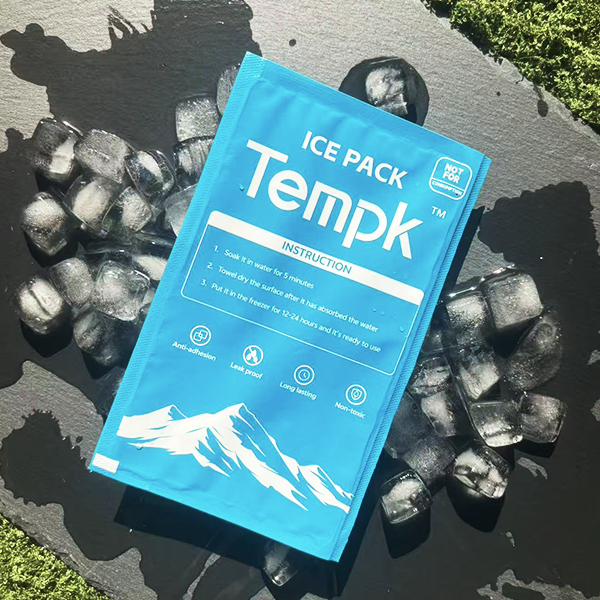
Solutions d'expédition à température contrôlée: Choisissez le contrôle avant le conteneur
The best temperature controlled shipping solutions do not begin with a cooler box. Ils commencent par identifier où le produit pourrait quitter son état approuvé, quelle partie de la chaîne de transport peut empêcher cette exposition, et de quelles preuves le destinataire a besoin. Un colis isolé, un camion frigorifique, un conteneur de fret aérien motorisé et un couvercle de palette thermique peuvent tous être utiles, mais ils résolvent différentes parties du problème.
Un envoi peut réussir un test thermique en laboratoire et échouer sur le plan opérationnel parce qu'un colis attend à la douane., un entrepôt n'a pas conditionné correctement le liquide de refroidissement, ou le site de réception ne peut pas accepter les marchandises. Une solution comprend donc des équipements, conditionnement, conception d'itinéraire, surveillance, des procédures et un plan d’exception. Les acheteurs doivent sélectionner l'ensemble minimum de contrôles dont il peut être démontré qu'ils fonctionnent ensemble pour le produit réel et le réseau de distribution..
Définir le contrat produit-condition avant de choisir la technologie
Le contrôle de la température est toujours spécifique au produit. De nombreux vaccins réfrigérés et certains produits pharmaceutiques utilisent la plage +2°C à +8°C, mais il existe aussi des appareils à température ambiante contrôlée, produits surgelés et ultra-basse température, ainsi que des aliments et des cosmétiques qui ont des tolérances très différentes. L'étiquetage du produit approuvé, informations sur la stabilité, l'accord de qualité ou les spécifications de manipulation applicables définissent ce qui est acceptable. Le fournisseur de solutions d'expédition ne peut pas remplacer cette source par une gamme universelle.
Commencez par un dossier d’exigence contenant le produit et la présentation, limites de température, toutes les allocations de temps et d'exposition approuvées par le propriétaire du produit, protection contre le gel ou la lumière le cas échéant, Taille de la charge utile, température de chargement, règle de destination et d'acceptation. Pour les charges mixtes, vérifier si le contenu peut partager une condition de température et si les contraintes physiques de séparation ou d'orientation créent d'autres conflits.
Une bonne spécification identifie également ce compte comme une livraison réussie. L'arrivée dans un délai prévu n'est pas suffisante si l'établissement de réception ne peut pas accéder aux données de température., la charge utile est endommagée, ou le produit est en dehors de son état approuvé. Définir qui peut libérer une expédition et ce qui se passe après une alarme. Dans la distribution de soins de santé, cette autorité est normalement détenue au sein de la qualité pertinente, les arrangements cliniques ou de programme plutôt que par le vendeur d'emballage.
L'horloge d'itinéraire doit continuer jusqu'à ce que le produit retourne à un stockage approprié ou à une utilisation contrôlée.. It must not stop at the customer’s loading dock just because the courier’s tracking system marks the package delivered.
Cartographiez l'itinéraire en contrôle, scènes tamponnées et exposées
Dessinez l’envoi réel sous forme d’une séquence d’étapes: inventaire d'origine, préparation, assemblée, mise en scène, collection, tri ou regroupement, transport de ligne, transferts, douanes le cas échéant, distribution et réception du dernier kilomètre. Marquez chaque étape contrôlé si une réfrigération active ou un stockage géré approprié protège le produit, tampon si la charge utile s'appuie sur sa réserve de packaging, ou exposé si aucun contrôle adéquat n’est établi.
Le risque se concentre souvent aux interfaces. Un long voyage routier réfrigéré peut être prévisible, alors qu'un déchargement sur un quai de transbordement chaud ne l'est pas.. Un colis aérien bien emballé peut attendre beaucoup plus longtemps que prévu lors du dédouanement à l'importation. Une alerte de surveillance de la température sur laquelle personne n'est autorisé à agir ne résout aucun des deux problèmes..
Attribuez un propriétaire et une contingence à chaque étape exposée. Le transfert peut-il être raccourci? La cargaison peut-elle entrer dans une pièce climatisée? Le départ pourrait-il être déplacé pour éviter une fermeture le week-end? Une classe de messagerie plus fiable est-elle disponible? La refonte du packaging est appropriée lorsque l’intervalle d’exposition reste nécessaire; l'amélioration du processus peut être meilleure lorsque l'exposition est évitable.
Pour la distribution de médicaments dans l'Union européenne, les lignes directrices de l'UE en matière de bonnes pratiques de distribution mettent l'accent sur une approche du transport basée sur les risques, conditions de stockage définies par le produit, conteneurs appropriés et contrôles des écarts. Ils attirent l'attention sur le déchargement, rechargement et stockage intermédiaire. Il s’agit d’un cadre de qualité spécifique au secteur, il ne s'agit pas d'une exigence légale universelle pour tous les aliments, cosmétiques et forfaits. Cela illustre néanmoins pourquoi une véritable solution de transport maritime doit avoir nommé des responsabilités opérationnelles.
Choisir l'architecture en fonction de ce qui doit être contrôlé
Quatre architectures principales couvrent de nombreuses analyses de rentabilisation. Ils doivent être comparés à des systèmes d'exploitation plutôt qu'à des éléments de catalogue..
Emballage de colis passif utilise une isolation et un liquide de refroidissement préconditionné, comme des packs de gel, ice bricks or a specified PCM, pour tamponner un envoi individuel sans réfrigération électrique embarquée. Il peut convenir aux itinéraires de messagerie délimités ou aux transferts contrôlés du dernier kilomètre lorsque le colis est qualifié pour sa charge utile et son exposition.. Sa réserve thermique finie, la charge de travail de conditionnement et le volume utilisable limité doivent être pris en compte.
Véhicules frigorifiques et installations de stockage contrôler l'environnement autour de nombreux objets. Ils peuvent constituer l’épine dorsale des mouvements de palettes et des centres de distribution, mais ils nécessitent toujours un chargement approprié, flux d'air, gestion des ouvertures de portes, suivi et contingence. La présence d'une unité de réfrigération ne prouve pas une température de cargaison uniforme à chaque position.
Active temperature-controlled containers utiliser des équipements de chauffage ou de refroidissement motorisés et pouvoir aborder certaines voies de fret de grande valeur ou difficiles. Ils ajoutent la réservation d'équipement, énergie, entretien, couverture des services, obligations de garde et de retour éventuel. Sans infrastructure fiable, une solution active peut introduire un mode de défaillance différent plutôt que d'éliminer le risque.
Couvoirs de palette thermique, couvertures et doublures réduire ou retarder l'influence de l'environnement sur le fret au cours d'étapes spécifiées, comme une assistance en escale ou un transfert contrôlé. Une couverture de palette n'est pas un réfrigérateur autonome ni une preuve complète que tous les cartons sont restés dans leur bande acceptée.. Son rôle doit être défini par une étude d'exposition et le reste du processus de transport.
| Défi d'expédition | Stratégie de contrôle probable | Un justificatif clé à demander |
| Colis individuels via un réseau de messagerie standard | Emballage passif qualifié avec conditionnement contrôlé | Profil thermique spécifique à la charge utile, SOP et réception de preuves |
| Palettes consolidées entre dépôts gérés | Transport réfrigéré et mise en scène contrôlée | Adéquation de l'équipement, couverture de la température de la cargaison et plan de transfert |
| Un fret aérien exigeant avec des délais de transfert incertains | Solution de chargement passive ou motorisée adaptée et commandes de hub | Itinéraire complet, hypothèses ambiantes, preuve d'équipement ou d'emballage |
| Brève exposition pendant le transfert de palettes | Amélioration des processus et, lorsque cela est justifié, protection thermique des palettes | Réduction démontrée de l’exposition et limites de protection claires |
| Itinéraire variable avec des exceptions fréquentes | Refonte des services, stockage d’urgence et protection en couches | Arbre de décision documenté et capacité à exécuter des interventions |
Un système en couches est souvent plus efficace que le choix d’une seule technologie pour tout faire. Par exemple, un itinéraire principal réfrigéré peut transporter des cartons passifs du dernier kilomètre afin que ces cartons restent en mémoire tampon après le départ d'un dépôt contrôlé. La limite correcte de chaque technologie doit être indiquée dans le plan d'itinéraire.
La catégorie de produit change ce à quoi ressemble le « bon »
Produits pharmaceutiques et biologiques peut nécessiter une protection stricte contre le réchauffement, congélation ou les deux, avec un historique documenté et un processus formel d'examen des excursions. Le PIB de l’UE constitue un cadre de répartition pertinent; les exigences varient selon le produit et la juridiction. Les systèmes de surveillance soutiennent la traçabilité et les enquêtes, pas de libération automatique du produit médical.
Vaccins avoir un programme supplémentaire- et contraintes spécifiques au produit. Les lignes directrices de l'OMS pour l'emballage et l'expédition internationale des vaccins, septième édition publiée dans 2025, répond à la complexité des expéditions internationales, y compris les boîtiers à très basse température. CDC’s Vaccine Storage and Handling Toolkit was updated in July 2026 pour les contextes de fournisseurs aux États-Unis et oriente les utilisateurs vers des informations sur les produits spécifiques au fabricant. Il distingue également le transport de routine des prestataires du transport d'urgence.. Une solution de glace carbonique adaptée à un envoi de vaccins à ultra faible teneur spécifié ne doit pas être généralisée aux envois cliniques réfrigérés ordinaires..
Frais, aliments réfrigérés et surgelés avoir des températures diverses, hygiène, besoins en humidité et en durée de conservation. Un chargement d'exportation de fruits de mer surgelés et un kit de repas réfrigérés ne doivent pas partager une recommandation générique en matière de réfrigérant.. Certains dangers sont réduits par un stockage et une manipulation corrects; d'autres nécessitent une isolation et des supports thermiques appropriés. Les exigences doivent être vérifiées par rapport au produit et aux réglementations alimentaires applicables., non déduit d'une gamme marketing.
Échantillons cliniques, matériel de diagnostic et de recherche peut nécessiter un emballage de sécurité spécial, confinement secondaire, traçabilité et classification du transport en plus du contrôle de la température. A thermal shipper alone does not resolve dangerous-goods or biological-substance packing requirements where they apply.
Cosmétiques et matériaux spéciaux peut être sensible à la fois à la chaleur excessive et au gel, sans nécessairement nécessiter une réfrigération continue. Pour ces expéditions, la conception doit cibler l'exposition autorisée réelle et le comportement du produit. L'ajout d'emballages surgelés à une formulation sensible à la chaleur peut créer un problème inutile de basse température..
Évaluer les preuves de qualification au bon niveau
Il y a plusieurs questions différentes derrière une déclaration selon laquelle un envoi est « validé ». La première est de savoir si le état du produit est défini par une source autorisée. La seconde est de savoir si un composant a des caractéristiques connues. La troisième est de savoir si le système chargé complet répond à un défi thermique particulier. La quatrième est de savoir si le processus opérationnel réel peut reproduire ce résultat. La cinquième question est de savoir si les registres réels des expéditions étayent une décision de réception..
Pour un colis passif, demander la pièce jointe exacte, identité et masse du liquide de refroidissement, étapes de conditionnement, charge utile minimale et maximale, dessin, profil thermique, positions de mesure, état de l'équipement, critères d'acceptation et dossiers de tests. Pour un conteneur actif, évaluer le mode de fonctionnement contrôlé, distribution chargée, modalités de service et éventualité si l’énergie ou l’équipement devient indisponible. Pour un véhicule frigorifique, examiner les conditions de chargement pertinentes, modèle de chargement, manipulation des portes et stratégie de surveillance.
Norme ISTA 20 donne un cadre de processus pour la conception et la qualification des conteneurs maritimes isolés; ISTA 7E fournit des profils d'exposition thermique de colis standardisés. Leur applicabilité dépend de l'expédition et du programme de test approuvé.. Un test de profil standard réussi ne constitue pas une preuve de performances universelles, an individual product’s post-excursion usability or legal approval across jurisdictions.
Un profil environnemental décrit ce que le colis a vécu dehors. Un enregistreur de charge utile enregistre ce qu'un capteur a mesuré à l'intérieur ou à côté de la charge. Aucun des deux graphiques ne doit être mal étiqueté. Pendant le développement, plusieurs positions peuvent aider à identifier les zones les plus chaudes et les plus froides; les emplacements de surveillance de routine doivent suivre une justification explicite. Un enregistreur électronique est un outil de preuve, pas un composant de contrôle de la température.
Une qualification a des limites. Nouvelles dimensions du carton, formulation de gel modifiée, liquide de refroidissement supplémentaire, une séquence d'opérateurs révisée, différentes voies saisonnières ou un hub nouvellement externalisé peuvent nécessiter une évaluation. Définir un processus de contrôle des modifications au lieu d'étendre silencieusement les anciens résultats de tests à de nouveaux arrangements.
Transformez le suivi en plan d’action
Un enregistrement de température n’a de valeur que si quelqu’un sait quoi en faire. Le plan de surveillance doit nommer la partie responsable, instrument d'État, emplacement de la sonde, comment les lectures sont collectées, comment les alarmes sont remontées, et qui prend la décision de disposition du produit. Pour la télémétrie connectée, préciser la disponibilité des communications et les actions réalisables pendant le transport. Une notification provenant d'un avion ou d'un conteneur scellé et inaccessible peut avoir un rôle opérationnel différent d'une alarme sur un camion frigorifique dont le conducteur peut prendre des mesures correctives..
A la réception, le personnel doit vérifier l'intégrité du colis, identité, état de l'enregistreur, températures enregistrées, tout signe de fuite ou de liquide de refroidissement endommagé, et transfert rapide vers un stockage accepté. Les excursions suspectées doivent suivre le processus de qualité ou de sécurité spécifique au produit.. Ne considérez pas l’absence d’alarme d’enregistreur ou la sensation de froid restant d’un emballage comme une preuve universelle de la sécurité du produit..
Pour les expéditions entre plusieurs entrepreneurs, inclure les conditions opérationnelles dans l’accord de transport: sites de manutention autorisés, environnement de stockage pendant les retards, transfert de documents, délais de déclaration et pouvoir de disposition. Cela évite qu'un problème de température ne se transforme en conflit de propriété..
Comparez le coût total d’exploitation, pas le prix de l'équipement
Une box passive peut avoir un faible coût d’achat mais nécessiter un espace de congélation important, travail de conditionnement, inventaire de liquide de refroidissement et volume de fret. Une unité de fret active peut coûter plus cher au départ tout en réduisant les consommables sur un itinéraire particulier., en ajoutant la location de matériel, obligations d'électricité et de service. La distribution réfrigérée peut bénéficier d’une consolidation, mais les horaires fixes des véhicules et la circulation à vide affectent sa rentabilité. Les couvertures de palettes et les conteneurs réutilisables ajoutent du nettoyage, récupération, questions relatives aux dommages et à l'inspection, le cas échéant.
Utiliser coût par envoi accepté dans les conditions requises comme mesure d'organisation plutôt que de supposer que le forfait le moins cher est le plus économique. Cela ne nécessite pas d’inventer un taux d’échec industriel. Cela nécessite de comptabiliser les dépenses réelles d’emballage, transport, travail, exceptions and losses within the company’s own records.
Considérons un hypothétique réseau de distribution pharmaceutique en deux étapes. Un dépôt central expédie les cartons groupés sur un véhicule frigorifique vers les installations régionales, qui livrent ensuite les petites commandes par l'intermédiaire de coursiers. Une solution électrique universelle pourrait ne pas être pratique pour les colis du dernier kilomètre, tandis que les cartons non protégés pourraient tomber en panne pendant les retards à la porte. Un pack passif qualifié pour la dernière étape, associé à un stockage en amont contrôlé et à un personnel de réception formé, peut créer des limites plus claires et moins d’hypothèses de transfert. Son adéquation dépend toujours des preuves du produit et de l'itinéraire.
Rédigez une demande de prix qui crée des propositions comparables
Demander un format de réponse commun aux fournisseurs et aux transporteurs. Il doit documenter l'état du produit, carte d'itinéraire, exposition prévue dans le pire des cas, quantité et forme de la charge utile, architecture, modèle de composants ou d'équipement, procédure opérationnelle, preuve de qualification thermique ou d'équipement, stratégie de surveillance, limites de la portée, plan d'urgence, changements de production ou de maintenance et hypothèses de coûts d’exploitation totaux.
Séparé capacité établie depuis développement proposé. Un fabricant’s catalog component can be a candidate without being a qualified system for your route. A courier’s advertised refrigerated service can be useful without demonstrating that every handoff is controlled. Une proposition fiable doit montrer quels éléments sont déjà étayés par des preuves et lesquels nécessitent un plan pilote ou de validation..
Tempk publicly describes gel ice packs, Médias PCM, sacs isolés, Glacières médicales EPP/VIP et protection thermique des palettes, avec prise en charge de la planification des emballages. Ce sont des éléments potentiels d’une solution d’expédition à température contrôlée; leur applicabilité dépend des exigences du produit et du reste du parcours. Une prochaine étape ciblée consiste à fournir un brief d'expédition complet et à demander une architecture, un exemple de configuration et un plan de test-preuve plutôt qu'une promesse universelle de durée d'expédition.
La décision commerciale
Sélectionnez le contrôle d'expédition qui répond au étape la moins contrôlée de l'itinéraire réel, puis vérifier la chaîne complète depuis la préparation jusqu'à la réception. Une solution fiable définit ce qui est protégé, pendant combien de temps et dans quelles conditions, qui effectue chaque opération et que se passe-t-il lorsque ces conditions changent. C'est plus utile que d'acheter un conteneur sophistiqué en quittant le transfert, décisions de surveillance et d’exception non résolues.