


Couvertures thermiques pour palettes pour produits sanguins, Qualifié
Couvertures thermiques pour palettes pour produits sanguins, Qualifié
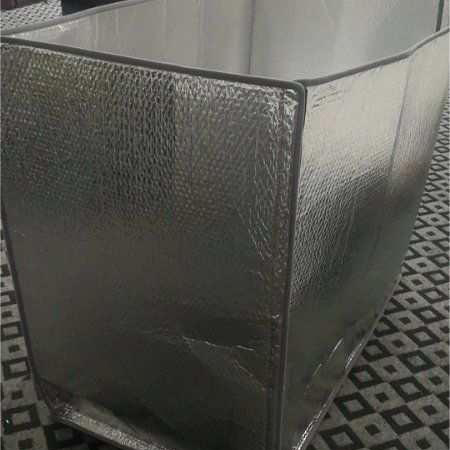
Couvertures thermiques pour palettes pour produits sanguins dans un système logistique qualifié
The safest way to buy thermal pallet blankets for blood products is to stop treating the blanket as the temperature-control system. C'est un composant passif externe. Cela peut ralentir la chaleur entrant ou sortant d'une palette, mais seulement le complet, la configuration qualifiée peut être évaluée par rapport aux exigences d’un composant sanguin. Réfrigération, emballages congelés, manipulation des plaquettes, surveillance, traçabilité, et la libération de qualité restent des contrôles distincts.
Une méthode de sélection pratique relie un état de composant à une voie et une enveloppe opérationnelle. Il passe ensuite par sept portes: exigence, rôle, géométrie, conception thermique, preuve, opération courante, et contrôle du cycle de vie. Si une proposition ne peut pas franchir une porte, une commande plus importante devrait attendre.
Grille 1: nommer le composant et son état
Ne commencez pas une spécification par « palette de sang ». Écrivez le composant complet et l'état: sang total stocké, globules rouges liquides, plaquettes selon leur processus approuvé, plasma congelé, plasma décongelé, ou un autre composant spécifiquement étiqueté. Traitement ou modification des notes affectant les conditions. Indiquer l'étiquette applicable, procédure d'établissement de sang, règles nationales, et exigences de destination.
Les directives de l'OMS sur la chaîne du froid du sang font la distinction entre le sang total réfrigéré et les globules rouges, plaquettes conservées dans des conditions contrôlées avec agitation pendant le stockage, et plasma congelé. NOUS. Les réglementations de la FDA précisent également les conditions produit par produit; les chiffres et les contextes ne sont pas identiques à chaque déclaration de formation de l’OMS ou aux règles d’un autre pays. C'est prévu. Un programme logistique mondial a besoin d’une matrice d’exigences, pas une température universelle copiée dans chaque protocole.
La matrice doit inclure un critère de plage autorisée ou d'état gelé., temps de traitement maximum, le cas échéant, agitation ou autres besoins non liés à la température, contraintes de packaging et d’étiquetage, inspection visuelle, surveillance, et pouvoir de disposition. Il convient également d'indiquer si l'exigence s'applique au stockage, expédition, traitement, tenue après décongélation, ou délivrance pour transfusion. Ces étapes ne doivent pas être confondues.
Les charges à composants mixtes échouent généralement à cette porte à moins que les produits partagent des, conditions approuvées et isolement physique. Un revêtement extérieur réfléchissant ne peut pas rendre les globules rouges réfrigérés compatibles avec des plaquettes à température ambiante contrôlée ou un emballage de plasma congelé à la glace carbonique..
Grille 2: attribuer une tâche étroite à la couverture
Écrivez une phrase qui décrit la tâche de la couverture sans utiliser « maintenir » ou « contrôler », à moins qu'elle ne soit étayée par des preuves du système.. Par exemple: « Fournissez une couche isolante externe évaluée autour des boîtes de transport de globules rouges qualifiées lors de la préparation des quais intérieurs et du chargement des véhicules. » La phrase nomme la configuration et l'exposition protégées.
Les tâches possibles incluent la mise en mémoire tampon d'un transfert planifié, ajout d'une couche externe évaluée à un emballage de palette passif, réduire la charge radiante lors d'un bref transfert, ou soutenir un mouvement d'urgence préqualifié. Les emplois inappropriés incluent le remplacement du réfrigérateur d'une banque de sang, conserver les plaquettes sans agitation requise, transformer un camion ordinaire en véhicule frigorifique, garder le plasma congelé avec une isolation seule, ou prolonger un retard au-delà de la durée admissible.
Définir l'action d'échec dans le même ensemble de phrases. Si la mise en scène atteint sa limite, la palette retourne à l'équipement agréé, transferts vers une alternative validée, ou saisit une escalade décidée par la procédure qualité. La couverture n'est pas autorisée à créer un délai de grâce indéfini.
Cette mission restreinte facilite également le langage de la conformité. La configuration complète peut être qualifiée pour un usage spécifié; la couverture elle-même ne devrait pas être universellement qualifiée de « conforme à la FDA »,» « L'OMS a approuvé,» ou adapté à tous les produits sanguins. Demander aux fournisseurs d'indiquer avec précision la construction et les tests à l'appui.
Grille 3: capturez la vraie palette et la vraie voie
Les dessins de palettes doivent refléter la charge de production emballée. Enregistrer les dimensions extérieures, hauteur minimale et maximale, disposition des boîtes, surplomb, planches de coin, vides, portée totale de la charge utile, étiquettes, scellés, emplacements de réfrigérant, et socle. Une palette complète et une demi-palette peuvent avoir des rapports surface/masse et des chemins d'air internes différents, donc les deux peuvent avoir besoin d'une évaluation.
Cartographiez la voie minute par minute du dernier point contrôlé au prochain point contrôlé. Inclure le rapprochement des expéditions, l'ascenseur attend, mise à quai, cycles de porte, sécurité, chargement, préconditionnement du véhicule, acceptation à l'aéroport, transfert, douane, recevoir, et récupération de l'enregistreur. Marquer les surfaces sous la palette et les expositions radiantes au-dessus. Identifier le délai crédible le plus long et le chemin de récupération.
La température de l’air à elle seule ne représente peut-être pas le défi. Soleil direct, un toit chaud, une terrasse en métal froid, vent, précipitation, et les charges gelées adjacentes peuvent créer des effets locaux. Si une utilisation en extérieur est possible, examiner la sécurité, comportement de l'eau, et une manipulation sûre. Une jupe ample ou une couverture saturée peut constituer un danger pour les travailleurs et une contamination..
Les facteurs humains ont leur place dans le dossier des voies. Qui installe la couverture? Quels vêtements de protection sont portés? Une personne peut-elle atteindre le sommet? Les étiquettes sont-elles visibles? Les chariots élévateurs peuvent-ils entrer sans toucher la jupe? Le retrait risque-t-il de heurter les boîtes de plasma congelé et fragiles? Essayer ces tâches avec le personnel et l'équipement prévus.
Grille 4: concevoir tous les chemins de chaleur et sources internes
Conduction, convection, et le rayonnement se produit simultanément. Le noyau isolant de la couverture résiste à la chaleur à travers ses panneaux. Une surface réfléchissante peut réduire l'échange radiant dans des conditions pertinentes. Les rabats et les jupes peuvent limiter le mouvement de l'air. Coutures, lacunes, plis compressés, et la base découverte peut contourner ces fonctions.
Considérez la palette comme une limite à six côtés. Un couvercle à cinq côtés laisse le dessous relié à la palette et au sol. Un coussin de base peut réduire ce chemin mais peut affecter la stabilité, hygiène, accès à la fourche, et qualification. Faites ce choix avant que la configuration de test ne soit gelée.
La couverture interagit également avec les réfrigérants internes. Les packs réfrigérants ou les matériaux à changement de phase absorbent de l'énergie mais peuvent créer des points froids s'il fait trop froid., mal conditionné, ou placé contre des boîtes à globules rouges. Dry ice supports certain frozen systems but releases carbon dioxide gas and brings dangerous-goods, ventilation, manutention, et problèmes de compatibilité des matériaux. L'isolation peut prolonger à la fois l'influence souhaitée et indésirable d'un réfrigérant.
Les plaquettes nécessitent à nouveau une logique distincte. Une couverture ne peut pas fournir une agitation continue pendant le stockage. Il ne doit pas non plus obstruer le flux d'air contrôlé autour de l'équipement de distribution de plaquettes.. Toute configuration de transport doit suivre le processus plaquettaire approuvé; adding generic chilled gel packs would be an unsafe assumption.
L'humidité fait partie de la conception. Une palette froide entrant dans l'air humide peut collecter de la condensation. L'eau peut affaiblir les boîtes, étiquettes de dommages, cacher les fuites, créer des sols glissants, ou entrez dans l'isolation par des coutures endommagées. Définir l'emplacement d'installation, considérations relatives à la vapeur et à l'eau, drainage, séchage, et inspection. « Étanche » ne répond pas au comportement de condensation.
Demander une description complète de la construction: couche externe, isolation, renforcement, doublure intérieure, coutures, fermetures, poignées, dimensions, tolérances, et orientation. Les valeurs des coupons de matériaux permettent la comparaison mais ne prédisent pas la durée du système complet. Testez la couverture finie autour de la charge proposée.
Grille 5: créer des preuves qui correspondent à la réclamation
Le plan de preuve doit passer des tests d'ajustement aux tests thermiques contrôlés, puis à la confirmation opérationnelle.. Un essai d'ajustement peut éliminer les concepts dangereux ou de mauvaise taille avant des travaux coûteux en chambre.. Il devrait défier toutes les hauteurs de palettes approuvées, étiquettes, dédouanement de l'équipement, portée de fermeture, temps d'installation, et retrait.
Le protocole thermique précise le critère composant, justification de substitution, plage de charge utile, commencer la distribution, emballage et conditionnement des réfrigérants, configuration de la couverture et de la base, profil environnemental, durée, gestion des événements, système de capteurs, placement, répète, et règles d'acceptation. Il doit inclure à la fois les risques liés au chaud et au froid, le cas échéant..
| Preuve requise | Ce qu'il doit identifier | Décision qu’il soutient |
|---|---|---|
| Dossier de construction | Couches finies, coutures, fermetures, dimensions, tolérances, identité de production | Si les unités testées et fournies sont comparables |
| Profil de voie ou d'installation | Temps, ambiant, humidité le cas échéant, surface, radiation, transferts, retards | Si le défi représente l'utilisation prévue |
| Protocole et rapport de qualification | Charge utile, emballage, capteurs, étalonnage, profils, répétitions, critères, résultats | Si la configuration complète prend en charge l'enveloppe opérationnelle |
| Évaluation de la manipulation | Installation, sécurisation, étiquettes, portée des travailleurs, interaction avec l'équipement | Si la méthode est reproductible et sûre |
| Accord de contrôle des modifications | Modifications fournisseurs et internes nécessitant un examen | Si les preuves restent applicables après le changement |
Le placement du capteur doit enquêter sur les extrêmes. Inclure les régions extérieures supérieures et de coin, l'interface de l'étage inférieur, positions à proximité des réfrigérants, fermetures, et le noyau de charge comme justifié. Un enregistreur ambiant interprète le défi; cela ne représente pas la température du produit. Étalonnage, gamme, réponse, résolution, intervalle, synchronisation de l'heure, et la méthode de pièce jointe doit être documentée.
Les profils thermiques et les processus de qualification ISTA peuvent éclairer certaines études d'emballage. Leur portée officielle doit être vérifiée. Les profils de livraison de colis ne représentent pas automatiquement le sang palettisé sur l’aire de trafic d’un aéroport ou dans un hôpital.. Une référence standard n'est utile que lorsque l'article de test, profil, méthode, et les écarts sont divulgués.
Un passage sous un seul profil ambiant ne prouve pas toutes les saisons et toutes les voies. Déterminer si le bracketing ou les tests saisonniers séparés sont scientifiquement justifiés. Si un fournisseur propose une durée, garder la charge utile, critère, condition de départ, profil, et les emplacements des capteurs qui y sont attachés.
Grille 6: rendre les opérations de routine observables
La qualification ne réussit que si l'expédition et la réception reproduisent la configuration critique. Convertissez le rapport en une courte instruction d'emballage avec des photographies, étapes numérotées, et des limites claires. Contrôler le conditionnement du liquide de refroidissement, disposition des boîtes, modèle de palette, base, orientation de la couverture, séquence de fermeture, position de l'enregistreur, pochette pour étiquettes, joint, et horodatages.
À l'expédition, le personnel vérifie l'état des composants, famille de charges approuvée, condition de départ, identité et inspection générales, préparation de l'enregistreur, et les documents d'expédition. A chaque remise, le temps et la garde sont enregistrés. La couverture reste fermée à moins que la SOP ne définisse l'accès. Si un retard, emplacement, ou la condition physique sort de l’enveloppe opérationnelle, l'escalade nommée commence.
A la réception, le personnel inspecte la palette couverte avant de la démonter, enregistrer les dommages ou l’humidité, rapprocher les unités composantes, récupérer des données, et placer le produit dans l'équipement contrôlé approprié. L’examen des données suit la procédure de l’établissement de transfusion sanguine. Un indicateur vert, couverture intacte, ou le réfrigérant restant ne constitue pas une décision de libération indépendante.
Pour une exception, mettre en quarantaine au besoin et conserver tous les dossiers. Vérifier l'étalonnage et le placement de l'enregistreur, histoire du temps, intégrité de la couverture et de l'emballage, état du réfrigérant, étiquette du produit, observations physiques, et critères réglementaires applicables. Seul le personnel autorisé décide de la libération, rééditer, évaluation supplémentaire, ou jeter.
La formation doit inclure des exemples de mauvaise utilisation. Le personnel doit reconnaître une couverture sélectionnée pour le mauvais composant, un bord inférieur ouvert, contact direct avec le réfrigérant, une étiquette cachée, un noyau humide, étalonnage de l'enregistreur expiré, et un retard au-delà de l'enveloppe. Les exercices périodiques sont particulièrement utiles pour les configurations d’urgence rarement utilisées.
Grille 7: contrôler la réutilisation, changement, et fin de vie
Une couverture réutilisable devient partie intégrante du pool d'actifs de qualité. Donnez-lui un identifiant unique le cas échéant et établissez-le prêt à être nettoyé., émis, revenu, nettoyage, séchage, réparation, quarantaine, et statuts de retraités. Définir les agents et méthodes de nettoyage compatibles, éclairage d'inspection, critères de couture et de fermeture, règles d'isolation humide, réparations autorisées, et conservation des dossiers.
Aucun décompte universel de réutilisation ne peut remplacer l’inspection et la vérification. L'abrasion modifie les surfaces réfléchissantes; les plis compriment l'isolation; les fermetures collectent les débris; le nettoyage peut affecter les obligations; les réparations peuvent créer des ponts thermiques. Sélectionnez les unités vieillissantes pour un examen technique périodique en fonction de la gravité de l'utilisation., échecs, et le risque. Mettre hors service les unités qui ne peuvent pas être remises dans leur état approuvé.
Le contrôle des changements de fournisseurs est tout aussi important. Un nouveau film, mousse alternative, adhésif différent, fermeture délocalisée, point changé, ou la tolérance dimensionnelle peut affecter les performances ou la sécurité. Convenir des changements qui nécessitent un préavis et des preuves qui soutiennent l'équivalence.. Intérieurement, modifications des cases, charge de palette, réfrigérants, bûcherons, véhicules, ou les itinéraires peuvent nécessiter un examen.
La durabilité doit être calculée par réussite, mouvement de palette conforme. Compter la fabrication, conditionnement, logistique inversée, nettoyage, séchage, réparation, perte, surveillance, qualification, et élimination. Comparez ces charges avec un système à usage unique pour la même fonction. Les boucles hospitalières fermées pourraient favoriser la réutilisation; Les itinéraires d'urgence ou internationaux à sens unique ne peuvent pas.
Suivre les cycles réels, taux de retour, dommage, réparation, ressources de nettoyage, perte, et cause de la retraite. Vérifier si les recycleurs locaux acceptent les matériaux assemblés. Un sinistre matériel théorique n’est pas un programme de fin de vie. Surtout, ne pas réduire la surveillance ou l’assurance thermique pour améliorer une mesure environnementale; la perte d'un composant sanguin donné entraîne ses propres conséquences cliniques et en termes de ressources.
Conclusion: Le dossier d’approbation final
Avant la mise à l'échelle, le dossier technique doit répondre à quatre questions sans s'appuyer sur le langage commercial:
Quel composant, État, configuration de palette, voie, et les conditions saisonnières sont approuvées?
Quelle fonction exacte remplit la couverture, et quelles fonctions restent avec les autres équipements?
Quel protocole et quelles données prennent en charge l'enveloppe opérationnelle, y compris les endroits chauds et froids?
Comment le personnel inspecte-t-il, installer, moniteur, recevoir, enquêter, faire le ménage, réparation, et retirer le système?
S'il manque une réponse, la prochaine étape d'achat peut être un échantillon, exercice de cartographie, ou un cycle de qualification plutôt qu'un ordre de fabrication.
Les couvertures thermiques pour palettes pour produits sanguins peuvent être utiles aux limites vulnérables d'un réseau sanguin.. Leur valeur la plus sûre vient de la précision: un état de composant défini, une voie représentative, une configuration complète, et un processus opérationnel contrôlé. Cette précision évite qu'une couche passive ne soit confondue avec un équipement de stockage de sang et donne aux équipes de qualité la preuve qu'elles peuvent se défendre..
À propos du tempk
Shanghai Tempk Industrial Co., Ltée. exploite Tempk, a provider of cold-chain packaging solutions. Its official products include thermal pallet covers, insulated packaging and boxes, liquide de refroidissement, et PCM. Le contenu de la solution officielle couvre l'examen du pack, planification de la position des bûcherons, et prise en charge du plan de validation, nous donnant une base définie pour une discussion sur l'emballage du composant à la voie pour une utilisation logistique du sang déclarée. Tempk n'approuve pas les besoins en sang, qualification, conformité, procédures de surveillance, statut de réutilisation, ou disposition du produit; ces contrôles restent du ressort de l'établissement de transfusion sanguine responsable.
Envoyer la matrice d'état des composants, configuration de palette complète, profil d'itinéraire, logique de surveillance, et réutiliser la limite vers Tempk. Nous pouvons discuter des questions d'emballage auxquelles le plan d'évaluation doit répondre..
Couvertures thermiques de palettes pour le stockage en vrac adaptées à la tâche
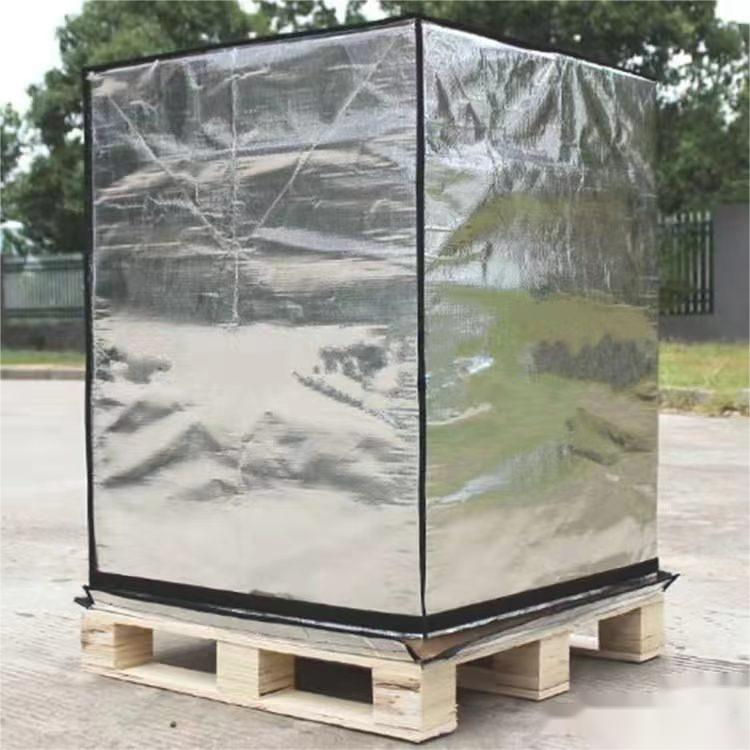
Couvertures thermiques de palettes pour le stockage en vrac adaptées à la charge, Site, et processus
The best pallet thermal covers for bulk storage are not chosen by thickness alone. Ils sont choisis en faisant correspondre un ensemble complet de couverture à une palette connue., une exposition connue, et un processus d'entrepôt reproductible. La couverture ralentit alors les échanges thermiques indésirables pour cet événement défini. Il ne génère pas de refroidissement, maintenir indéfiniment un point de consigne exact, ou remplacer une chambre froide, véhicule frigorifique, ou décision relative à la qualité du produit.
Cette approche axée sur l'enveloppe opérationnelle résout de nombreuses erreurs d'achat courantes. Au lieu de demander quelle couverture est « la plus isolée,» vous demandez quelle configuration reste utilisable et appuyée par des preuves à votre quai, sur ton sol, autour de votre charge, et à travers le retard, vous devez réellement gérer.
Tracez la limite avant de nommer la solution
Commencez par un simple dessin des limites. Placez la palette au centre et étiquetez tout ce qui peut échanger de la chaleur ou de l'humidité avec elle.: air ambiant, courants d'air de porte, toit et lumières, charges adjacentes, béton ou acier sous la palette, et toute exposition extérieure. Ajouter l'itinéraire et le timing. Cette image révèle souvent que la demande d’achat n’est pas vraiment un « stockage en masse ». Il peut s'agir d'une sortie de salle contrôlée, une attente au quai, un transfert inter-bâtiments, un support de trop-plein, ou une mise en attente d'urgence.
Ajoutez maintenant la limite du produit. Enregistrez les conditions de stockage approuvées, si le gel ou la surchauffe est particulièrement dommageable, l'uniformité de la charge lorsqu'elle quitte un espace contrôlé, et qui décide si une excursion est acceptable. Les exigences varient selon les aliments, médicaments, produits chimiques, électronique, et matériaux industriels. La température imprimée sur un bon de travail d'entrepôt peut ne pas être le critère de qualité complet.
Enfin, ajouter la limite opérationnelle. Notez les dimensions de la palette après l'emballage, porte-à-faux du boîtier, fréquence à charge partielle, matériel de manutention, étiquetage, contrôles d'incendie, besoins en matière d'assainissement, et la portée des travailleurs. Un couvercle qui semble thermiquement résistant mais qui ne peut pas être installé de manière sûre ou cohérente ne constitue pas un contrôle efficace..
Le résultat est un court énoncé du problème. Par exemple: « Mettez en mémoire tampon une famille définie de palettes préconditionnées lors de la préparation sortante intérieure à côté de la porte. 4, y compris une condition de retard documentée, sans obstruer les cartes d’identité ou l’accès des transpalettes. C'est bien plus utile pour un fournisseur et une équipe de test que « Besoin d'une couverture thermique de 48 heures ». Il énonce une fonction sans inventer de résultat.
Décidez si une couverture est le bon contrôle
Passive pallet covers are attractive because they require no power and can be deployed around existing loads. Ces avantages ne les rendent pas adaptés à tous les risques. Utiliser une hiérarchie de contrôle basée sur la gravité et la durée de l'exposition.
Si les marchandises nécessitent un stockage continu réfrigéré ou congelé, la commande principale doit normalement être un équipement conçu, surveillé, et maintenu pour cette condition. Si un transfert dépasse régulièrement la capacité de l'isolation passive, améliorer la planification, ajouter une mise en scène contrôlée, ou utilisez une enceinte appropriée à température contrôlée. Si l'exposition est brève, prévisible, et suffisamment modéré pour étudier, une couverture peut être une couche secondaire proportionnelle.
Une couverture peut également soutenir un plan d’urgence, mais seulement après que le plan ait identifié le point auquel les marchandises sont déplacées vers une réfrigération de secours ou une autre solution qualifiée. La résistance passive peut ralentir un changement de température; il ne peut pas vous dire si le produit reste publiable. Données, critères approuvés, et l'examen de la qualité remplit ce rôle.
Rejeter l’option de couverture lorsqu’elle crée un risque plus important. Les exemples incluent les matériaux en vrac près des roues du véhicule., interférence avec les arroseurs des racks, incapacité de voir les étiquettes réglementées, risques de contamination incompatibles, ou des conditions extérieures qui peuvent soulever ou tremper l'enceinte. Repenser l'œuvre peut être plus sûr que d'y insérer une housse en tissu.
Traduire la couverture en zones fonctionnelles
Une couverture finie peut être comprise comme cinq zones fonctionnelles. Cette vue rend les comparaisons de fournisseurs plus claires qu'une liste de noms commerciaux de matériaux.
Zone radiante: La face extérieure rencontre les lumières, surface du toit, soleil, ou un environnement froid. Les propriétés réfléchissantes peuvent réduire l'échange radiant, mais seulement dans l'orientation et la condition appropriées. Saleté, contact direct, dommages au revêtement, et les plis peuvent changer l'effet.
Zone résistive: Le noyau isolant ralentit le flux de chaleur conductrice à travers le panneau. Son efficacité dépend de la structure, épaisseur, compression, humidité, coutures, et le vieillissement. Les données nominales du panneau ne sont pas les mêmes que les performances de la couverture finie.
Zone de contrôle aérien: Jupes, chevauchements, rabats, et les fermetures limitent le mouvement de l'air. Un petit espace continu peut dominer une différence mineure entre les âmes isolantes, surtout en cas de vent ou de ventilateur.
Zone de contact: La palette, sol, étagère, ou le pont de la remorque forme la limite inférieure. Une couverture à cinq côtés laisse ce chemin distinct. Toute base isolée fait partie de la stabilité de la charge, hygiène, et qualification.
Zone d'interface humaine: Poignées, étiquettes, fermetures, lignes de pliage, et les points de préhension déterminent si les travailleurs installent correctement le système. Ces détails influencent également les dommages et la réutilisation.
Les explications du ministère de l’Énergie sur le transfert de chaleur identifient la conduction, convection, et le rayonnement comme modes de base. Un examen de la zone fonctionnelle relie ces principes aux détails de l'entrepôt. Cela empêche également la couche réfléchissante externe de recevoir toute l'attention tandis que l'espace inférieur, isolation humide, ou une fermeture ratée contrôle le résultat.
L'humidité traverse plusieurs zones. Une charge froide pénétrant dans l'air humide peut subir de la condensation même sous un couvercle résistant à l'eau.. L'eau peut affaiblir les cartons, étiquettes obscures, rendre les sols glissants, ou entrez un stratifié endommagé. Définir quand le couvercle est installé, comment les unités humides sont manipulées, où ils sèchent, et comment les infiltrations d'eau cachées sont détectées.
Construire des preuves en couches
Les preuves de performance doivent mûrir à mesure que l'achat passe du concept à l'échelle. Chaque étape répond à une question différente.
| Étape de la preuve | Question principale | Sortie utile |
|---|---|---|
| Examen des documents | La construction est-elle identifiable et adaptée au dépistage? | Description de la couche, dimensions, tolérances, informations sur le matériel et la sécurité, limites indiquées |
| Essai d'ajustement et de manipulation | Les travailleurs peuvent-ils l'utiliser en toute sécurité sur chaque famille de charges approuvée? | Observations sur l'installation, carte des écarts, dédouanement de l'équipement, visibilité de l'étiquette, notes de dommages |
| Etude thermique contrôlée | La configuration tamponne-t-elle le défi défini? | Protocole, données de capteur étalonnées, dégradés, répéter les résultats, observations d'humidité et d'intégrité |
| Site pilote | Le processus fonctionne-t-il dans des conditions réelles de transferts et de retards ?? | Conformité, données en direct, exceptions, commentaires de l'opérateur, résultats du contrôle des actifs |
| Vérification de routine | Les performances approuvées restent-elles crédibles dans le temps? | Inspection à l'arrivée, révision du changement, chèques de couverture âgés, enregistrements de tendances et d'écarts |
Cette séquence évite deux extrêmes. Il ne nécessite pas de programme thermique coûteux pour une couverture qui échoue au premier essai d'ajustement., et il ne confond pas un ajustement confortable avec une résistance thermique. Les preuves augmentent avec le risque et l’engagement.
L'ISTA publie des normes officielles d'essais thermiques et des profils de transport, including Standard 7E for parcel-delivery thermal transport packaging and Standard 20 processes for insulated shipping containers. Ces cadres peuvent guider une réflexion disciplinée, mais leur portée doit être respectée. Une couverture de palette utilisée pour le stockage stationnaire en entrepôt n'est pas validée du seul fait qu'un rapport mentionne un profil ISTA. Déterminer si la méthode représente l'application réelle et quelles modifications ont été apportées.
Pour une étude contrôlée, spécifier la construction de la palette, températures de départ, configuration de la couverture, profil environnemental, limite d'étage, mouvement de l'air, humidité le cas échéant, gestion des événements, système de capteurs, durée, et critères d'acceptation. Cartographier les points chauds et froids probables. Ne placez pas chaque sonde au centre, où la masse thermique fournit le plus grand tampon. Documentez les règles de données manquantes et répétez la justification avant de voir les résultats.
Soyez prudent avec la durée indiquée par un fournisseur. Demander: durée selon quel critère, sous quel modèle ambiant, avec quelle charge utile, à quelle condition de départ, en utilisant quelles positions du capteur? Un test peut être tout à fait valable pour sa configuration et ne pas être pertinent pour la vôtre.
Rédiger la consigne de travail autour des modes de défaillance
Une instruction doit montrer plus que comment tirer une couverture sur une palette. Cela devrait empêcher les échecs prévisibles du contrôle..
Avant l'installation, l'opérateur vérifie l'identité de la palette, famille de charges approuvée, statut de sortie initial, identifiant de couverture, sécheresse, propreté, coutures, isolation, fermetures, et dispositions d'étiquetage. Le couvercle est installé dans l'orientation spécifiée à l'emplacement défini. Tous les rabats et jupes sont sécurisés, avec du matériel exempt de roues et de sentiers piétonniers. L'horloge de maintien commence selon un déclencheur indiqué.
Pendant la mise en scène, la palette reste uniquement dans les positions approuvées. L’ouverture est évitée sauf si la procédure le permet; si l'accès se produit, le personnel l'enregistre ou relance la règle définie par l'équipe qualité. Un déménagement vers une porte non approuvée, tablier extérieur, endroit ensoleillé, ou le deck métallique déclenche une escalade plutôt qu'une continuation fortuite.
À la fin, le personnel retire le couvercle en toute sécurité, inspecter la charge au besoin, capturer des données de surveillance, et acheminez le couvercle vers un retour propre, nettoyage, réparation, quarantaine, ou à la retraite. Une couverture endommagée n’est jamais rendue acceptable simplement en la doublant avec une autre couverture non évaluée. Deux couches peuvent modifier la manipulation, humidité, comportement au feu, et clôture sans base de performance connue.
Les aides visuelles doivent montrer des écarts inférieurs acceptables, ordre de clôture, affichage correct de l'étiquette, et dommages courants. Les superviseurs doivent observer les performances pendant les quarts de travail les plus chargés et pendant les saisons froides ou chaudes.. Un processus conçu lors d'un essai silencieux peut échouer lorsque les opérateurs manipulent plusieurs palettes à la fois..
Les informations sur la manutention des matériaux dans les entrepôts de l'OSHA aux États-Unis mettent en évidence des passages clairs et un dégagement sécurisé des équipements.. Les lois locales et les règles des installations varient, mais la leçon opérationnelle est large: l'isolation doit s'adapter au système de déplacement sécurisé. Feu, bâtiment, assureur, et des examens de l'assainissement peuvent également être nécessaires en fonction du produit et des modalités de stockage..
Acheter le programme, pas seulement les panneaux
Les achats groupés amplifient les petites ambiguïtés. Un décalage dimensionnel d’un centimètre, une fermeture délocalisée, ou un stratifié de substitution peut donner lieu à des centaines d'installations incohérentes. La demande de devis doit indiquer la géométrie et la construction approuvées., tolérances critiques, étiquetage, conditionnement, inspection à l'arrivée, notification de changement, et documenter les attentes.
Demandez aux fournisseurs de séparer les faits en trois groupes:
Caractéristiques identifiées: matériels, assemblée, dimensions, fermetures, et contrôles de fabrication.
Performances prises en charge: résultats liés à un spécimen nommé, charge utile, profil, et critère d'acceptation.
Hypothèses d'application: conditions que l'acheteur doit confirmer par sa propre évaluation ou qualification.
Cette séparation récompense la franchise. Un fournisseur qui indique clairement les limites peut être un partenaire plus solide qu'un fournisseur proposant des allégations universelles de température..
Évaluer la cohérence de l’échantillon à la production. Conserver un échantillon approuvé ou une spécification détaillée, et définir ce que les chèques entrants vérifient. Pour un programme réutilisable, demander des limitations de nettoyage, critères d'inspection, méthode de réparation autorisée, et indicateurs de retraite. Demandez ce qui se passe si un composant devient indisponible. Une substitution matérielle ne doit pas entrer en production avant que son impact n’ait été examiné.
Évitez les allégations inventées de retour sur investissement. Plutôt, construire un modèle de coûts spécifique au site contenant l'acquisition, fret, stockage, travail pour installer et retirer, nettoyage, séchage, réparations, logistique inversée, perte, surveillance, qualification, et élimination. Comparez-le avec la méthode actuelle sur le même nombre d'événements de palettes. Inclure les pannes de service et les stocks bloqués dans la boucle de retour.
Rendre la réutilisation et la durabilité mesurables
Les housses réutilisables peuvent réduire les achats de protections jetables sur des boucles fermées stables. Ils peuvent également voyager à vide sur de longues distances, nécessitent un nettoyage gourmand en ressources, disparaître lors des transferts, ou devenir inutilisable après contamination. La performance environnementale est un résultat du système, pas d'étiquette attachée au produit.
Définir une comparaison fonctionnelle telle qu'un événement de palette correctement protégé dans le cadre de l'exposition approuvée. Suivre les cycles réels, taux de retour, fréquence de nettoyage, matériel de réparation, perte, et causes de retraite. Déterminer si l'ensemble de couverture peut entrer dans un véritable flux de recyclage local ou si des couches mixtes l'empêchent. Le « recyclable » sans filière de collecte et de traitement offre peu de valeur opérationnelle.
Les choix de conception peuvent améliorer le résultat. Une propriété claire et des identifiants uniques réduisent les pertes. Les familles de charges standard réduisent les dommages dus à un mauvais ajustement. Des fermetures remplaçables et une réparation contrôlée peuvent prolonger le service. Une méthode de pliage et de rangement peut protéger la face réfléchissante et l'isolation. Cependant, chaque réparation ou condition de vieillissement doit rester dans le cadre du programme d'inspection et de vérification.
Examiner les données après un projet pilote. Si les couvertures sont techniquement efficaces mais rarement retournées, le plan de durabilité nécessite un travail logistique. Si la plupart des dommages surviennent dans un coin pointu, la construction ou le renforcement de la palette peut nécessiter un ajustement. Si les files d'attente de nettoyage provoquent des pénuries, couvrir l'inventaire ou les méthodes d'hygiène doivent être repensées. Les preuves devraient changer le programme.
Conclusion: Une enveloppe opérationnelle prête à être libérée
Avant le déploiement complet, résumer l’utilisation approuvée sur une seule page. Inclure les familles de charges couvertes, condition de départ, emplacements autorisés, séjour maximum évalué, conditions saisonnières, configuration de base, photographies d'installation, surveillance requise, critères d'inspection, expositions interdites, et actions d'escalade. Référencer l'étude à l'appui et la spécification contrôlée.
Cette enveloppe d'une page permet aux opérateurs de prendre des décisions rapides tout en préservant le dossier technique plus approfondi.. Il permet également de distinguer le tampon passif du contrôle actif de la température.. Lorsqu'un retard, emplacement, état de la couverture, ou le produit tombe hors de l'enveloppe, la bonne action est l'escalade, pas d'optimisme.
Les couvertures thermiques de palettes pour le stockage en vrac peuvent améliorer la résilience aux limites de stockage et de transfert lorsque leur rôle est délibérément limité. Définir d'abord l'exposition, examiner les six côtés de la charge, tester la configuration terminée, et contrôler à la fois les personnes et les matériaux grâce à une mise à l'échelle. C'est ainsi qu'une simple couverture devient un élément crédible des opérations de l'entrepôt sans qu'on lui demande d'effectuer le travail de réfrigération..
À propos du tempk
Exploité par Shanghai Tempk Industrial Co., Ltd., Tempk is a cold-chain packaging brand whose product pages include thermal pallet covers, insulated packaging and boxes, liquide de refroidissement, et PCM. Sur les pages de solutions, le support indiqué couvre l'examen du package, planification de la position des bûcherons, et planification de la validation. Pour la planification du déploiement, nous pouvons relier ces activités pour charger les familles, exposition du site, manipulation des couvertures, surveillance, et hypothèses de réutilisation. Le client doit encore définir l’enveloppe opérationnelle de l’entrepôt, approuver les critères d'acceptation, et décider si les preuves de la configuration complète proposée sont suffisantes.
Utilisez votre carte d'exposition et votre matrice de famille de charge pour ouvrir la discussion avec Tempk. Ajoutez des limites de traitement et des attentes en matière de preuves afin que l'examen reste axé sur le déploiement..
Couvertures thermiques pour palettes pour l'expédition de matières dangereuses: Méthode à cinq portes
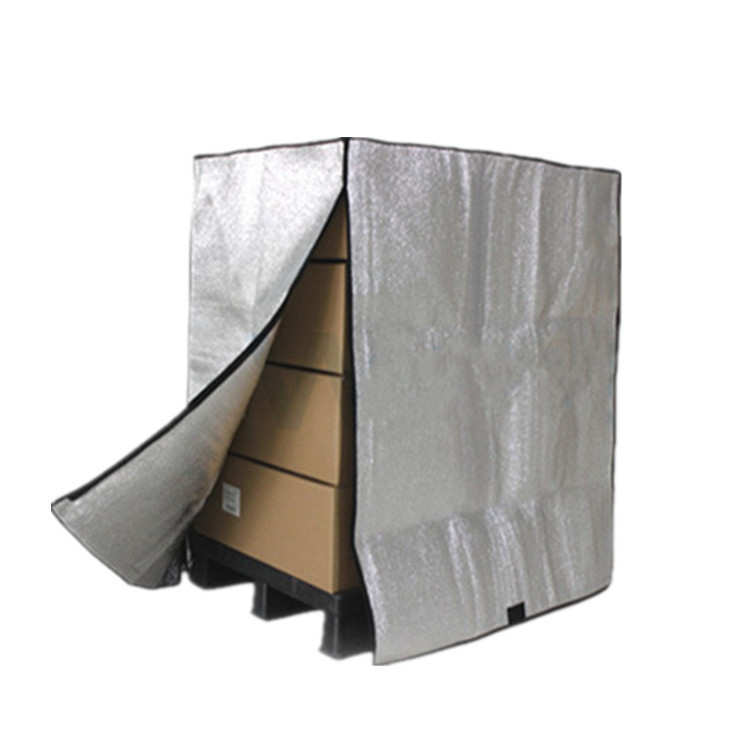
Une méthode à cinq portes pour les couvertures thermiques de palettes pour l'expédition de matières dangereuses
Une couverture thermique ne devrait jamais être le premier article approuvé sur une palette de matières dangereuses. Les premières approbations concernent le matériel, emballage autorisé, communication des dangers, itinéraire, et transporteur. Only then can pallet thermal blankets for hazardous materials shipping be assessed as secondary protection against defined ambient exposure. Ils ne peuvent pas remplacer les emballages conformes aux spécifications ONU lorsque cela est nécessaire, classification, ségrégation, marques, étiquettes, documentation, entraînement, dispositions d'urgence, ou acceptation du transporteur.
Les équipes d'approvisionnement peuvent gérer la décision à travers cinq portes: forme juridique, besoin thermique, intégration physique, preuve, et contrôle opérationnel. Un candidat n'avance que lorsqu'il franchit toutes les portes. Cette méthode évite qu'un fort résultat thermique ne cache un défaut de marchandise dangereuse et évite qu'un emballage nu conforme soit enveloppé dans une housse mal conçue..
Grille 1: L'unité achevée est-elle légalement et opérationnellement admissible?
Geler la discussion générale jusqu'à ce qu'une personne responsable formée ait défini les marchandises dangereuses. Enregistrez le numéro ONU ou le numéro d’identification, le cas échéant., Nom d'expédition approprié, classe ou division, danger subsidiaire, groupe d'emballage lorsqu'il est attribué, quantité, état physique, concentration, et mode. Confirmer les instructions d'emballage autorisées, dispositions particulières, limites de quantité, restrictions d'itinéraire, et toute variation du transporteur ou de l'opérateur.
En vertu de la réglementation américaine sur les matières dangereuses, l'offrant est responsable de la classification et de la description appropriées et de déterminer que l'emballage est autorisé. Les exigences de base en matière de communication apparaissent dans 49 Partie CFR 172 et les exigences en matière d'emballage de l'expéditeur dans la partie 173, avec des règles supplémentaires pour l'air, navire, et modes routiers. Le Règlement sur les marchandises dangereuses de l'IATA guide les expéditions aériennes et inclut les variations du transporteur et les exigences d'acceptation.. L'ADR et les règles nationales peuvent s'appliquer aux mouvements routiers européens. Utilisez toujours les dispositions actuelles pour la voie réelle.
Inspectez maintenant l’assemblage couvert proposé. Demander:
Est-ce que chaque marque requise, étiquette de danger, marque d'orientation, identification, et pochette à documents restent visibles?
Si les informations sont cachées, les exigences applicables en matière de marquage et d’étiquetage des suremballages ont-elles été correctement respectées?
La housse interfère-t-elle avec les bouches d'aération, vannes, dispositifs de décompression, fermetures, points de levage, attaches, ou accès d'urgence?
La consolidation est-elle autorisée, et les exigences de compatibilité et de ségrégation sont-elles toujours respectées?
Le transporteur a-t-il accepté la couverture, méthode de fixation, accès pour inspection, et présentation terminée?
Aux États-Unis, 49 CFR 173.25 traite des suremballages autorisés et de la reproduction des marques et étiquettes requises lorsqu'elles ne sont pas visibles, y compris l'utilisation du marquage « OVERPACK » dans les situations indiquées. La détermination exacte dépend de l'assemblage. Ne considérez pas une pochette transparente ou une étiquette copiée comme une solution universelle..
Grille 1 échoue si la couverture cache la communication, modifie une configuration autorisée sans approbation, bloque une fonction de sécurité du paquet, ou ne peut pas être accepté par l'opérateur. Les tests thermiques ne doivent pas avoir lieu tant que ces problèmes ne sont pas corrigés..
Grille 2: Quelle exposition exacte la couverture est-elle censée être modérée?
Écrivez une déclaration d'utilisation d'une phrase. Un bon exemple est: "La couverture est destinée à ralentir le gain de chaleur lors de l'accumulation de fret aérien à l'extérieur et lors d'un retard de connexion manquée après qu'une palette quitte un camion contrôlé." Un mauvais exemple est: "Le couvercle maintient les produits chimiques à la bonne température." Le premier peut être testé. Le second n'a pas de limite de produit définie, conditions ambiantes, durée, ou segment d'itinéraire.
Créer un enregistrement d'exposition chronométré. Inclure la pré-mise en scène, chargement, sécurité, séjour au cross-dock, douane, transfert entre actifs contrôlés, ouvertures de portes, périodes de conteneurs non alimentés, inspections des transporteurs, retards, et recevoir. Utiliser les données de voie, observations des installations, relevés météorologiques, et entrée du transporteur si disponible. Séparez l'exposition ambiante ombragée de la charge solaire directe et notez le contact conducteur avec les sols ou les équipements..
Définir pourquoi la température est importante pour le matériau. Qualité du produit, pression du colis, viscosité, fragilité, comportement de phase, et la sécurité des transports sont des préoccupations différentes. Les limites doivent provenir d'une évaluation approuvée du produit et des marchandises dangereuses.. Un fournisseur de couverture ne doit pas les sélectionner.
Certaines marchandises dangereuses ont des contrôles spécialisés ou des températures d'urgence, peut générer de la chaleur, ou nécessitent une ventilation. L'isolation passive n'est pas un système de refroidissement actif et peut retenir la chaleur générée en interne. De tels matériaux nécessitent une approche spécifique en matière de réglementation et de sécurité des procédés.. Grille 2 échoue si l’organisation tente d’utiliser l’isolation comme substitut au contrôle actif requis, stabilisation approuvée, réfrigération, ventilation, ou un plan d'urgence.
Grille 3: La housse s'adapte-t-elle à la palette et à ses fonctions de sécurité?
Mesurer la charge unitaire terminée. Les dimensions nominales des palettes n'incluent pas la hauteur, surplomb, cartons bombés, anneaux de tambour, protections d'angle, plis étirables, principales irrégularités, emplacements des étiquettes, et autorisations d'accès. Enregistrez les dimensions de production normales et maximales. Spécifiez si un coussin de base ou une jupe fait partie de la conception.
Chaque élément de construction doit répondre à un risque:
| Fonctionnalité en cours de révision | Décision qu’il doit soutenir | Ne pas chercher |
|---|---|---|
| Extérieur réfléchissant | Réduire l'exposition radiante définie | Saleté, abrasion, mauvaise orientation, affirmation de performance non étayée |
| Couche isolante | Résiste à la conduction à travers les visages | Compression, mouiller, épaisseur incohérente, perte |
| Couture et fermeture | Limitez les échanges d’air et restez en sécurité | Pont thermique, écart, snag, ouverture imprévue |
| Surface intérieure | Protéger les emballages extérieurs pendant l'utilisation | Abrasion, incompatibilité, contamination, souci statique |
| Traitement de base | Résoudre les fuites d'air du bord inférieur ou le chemin du sol | Interférence du chariot élévateur, liquide emprisonné, jupe instable |
| Zone d'accès et d'étiquetage | Préserver l’inspection et la communication | Marques couvertes, vannes bloquées, documents inaccessibles |
L'examen de la conception doit inclure les fuites prévisibles. Une couverture thermique générale ne constitue pas un confinement des déversements. Déterminez si son matériau pourrait réagir avec, absorber, propagé, ou dissimuler le contenu échappé et comment les intervenants le supprimeraient ou l'isoleraient. Atmosphères inflammables, opérations sensibles à l'électricité statique, sources d'inflammation, et l'élimination des couvertures contaminées nécessite un site- et évaluation spécifique au matériau.
L'ergonomie fait partie de l'ajustement. Une couverture lourde ou haute qui oblige le personnel à grimper, atteindre les tambours, ou se tenir dans les voies réservées aux chariots élévateurs crée un risque différent. Effectuer une observation des tâches avec des travailleurs représentatifs et des équipements de protection individuelle. Grille 3 échoue si c'est sûr, l'installation reproductible ne peut pas être démontrée.
Grille 4: Les preuves correspondent-elles à l'affirmation?
Traduire la déclaration d'utilisation en protocole. Identifier la révision de couverture, construction de production, palette et charge utile, condition de départ, profil ambiant, composant solaire si pertinent, durée, ouvertures, carte des capteurs, état d'étalonnage, intervalle de journalisation, répétitions, configuration de contrôle, et critères d'acceptation. Approuver le protocole avant de l'exécuter.
La chaleur se déplace par rayonnement, convection, et conduction. Les surfaces réfléchissantes répondent principalement aux échanges radiants; les couches isolantes résistent aux chemins conducteurs et au mouvement de l'air interne; les fermetures et les jupes affectent l'échange d'air. Coins, coutures, attaches, et les zones comprimées agissent comme des ponts. La base de la palette peut se comporter différemment des côtés. Une étude crédible mesure le système assemblé plutôt que d'extrapoler à partir d'une seule couche.
Utilisez des charges utiles qui représentent la masse de la charge prévue, capacité thermique, géométrie, et emballage. Une palette de liquides denses peut réagir lentement, tandis qu'une palette de faible masse avec de grands vides peut réagir plus rapidement. Si une mère porteuse est utilisée, justifier pourquoi il est conservateur ou représentatif.
Cartographier les points chauds ou froids probables ainsi qu'une référence principale. Capturez l'exposition ambiante et, quand le risque solaire compte, une surface appropriée ou un indicateur radiant. Synchroniser les capteurs. Un enregistreur est un outil de preuve, pas de protection thermique. Sa lecture représente son emplacement et sa précision; il ne certifie pas chaque colis.
Les normes thermiques peuvent assurer la discipline. ISTA Standard 7E includes profiles for thermal testing of parcel-delivery insulated shipping containers, et norme 20 fournit un processus de conception et de qualification. Une couverture flexible pour palette complète peut nécessiter un protocole justifié différent ou une qualification spécifique à l'itinéraire. Citer un nom standard sans démontrer sa portée ne suffit pas.
Lire les revendications littéralement. « Gain de chaleur réduit dans la configuration testée » peut être pris en charge. « Protège toutes les matières dangereuses pendant un nombre d'heures fixe » ne découle presque jamais d'une seule étude. Grille 4 échoue si le rapport omet la charge utile, profil, capteurs, configuration de la couverture, ou critères d'acceptation; s'appuie uniquement sur des données de matériaux plats; ou transforme un essai limité en une garantie universelle.
Grille 5: Les opérations peuvent-elles conserver l’état approuvé?
L'approbation existe sur papier; le contrôle existe sur le quai. Rédigez une SOP qui identifie la couverture et la révision approuvées, limites de palettes, orientation, inspection avant utilisation, séquence d'installation, fermetures, zones d'étiquetage, points d'accès, placement du capteur, utilisation du joint, suppression, et stockage. Inclure des conditions d'arrêt claires pour les larmes, mouiller, contamination, délaminage, balises manquantes, mauvaises dimensions, communication cachée, conditions de libération chaudes ou froides, ou des changements d'itinéraire.
Ajoutez un contrôle de libération de l'unité terminée par un personnel formé aux marchandises dangereuses. Inspecter une fois la couverture entièrement installée. Confirmer l'état de l'emballage, marques, étiquettes, orientation, traitement du suremballage le cas échéant, documents, ségrégation, évents, vannes, fermetures, sangles, et présentation du transporteur. Cette commande détecte des problèmes qui n'ont pas été détectés lors d'une inspection de palettes nues..
Définir la propriété des exceptions. La logistique gère les correspondances manquées et les événements liés aux équipements; des spécialistes des marchandises dangereuses gèrent les écarts d’emballage et de communication; la qualité évalue les excursions thermiques et la portée de la qualification; la sécurité gère les fuites ou l’exposition; le transporteur décide de l'acceptation selon ses règles. Une liste téléphonique ne suffit pas. Écrivez les informations dont chaque fonction a besoin et le pouvoir de retenir ou de rejeter un envoi..
A la réception, inspecter avant de jeter des preuves. État de la pochette du disque, ouvertures ou joints brisés, dommages au colis, fuite, renflé, lisibilité de l'étiquette, statut de l'enregistreur, et températures requises par le plan approuvé. Une lecture stable du capteur n'autorise pas l'acceptation d'un colis de matières dangereuses endommagé. Un capot endommagé ne signifie pas automatiquement que le produit est défectueux; suivre l'évaluation définie.
Grille 5 échoue lorsque le système dépend d’une expertise non écrite, impossible de retracer la révision de la couverture, n'a aucune réponse aux dommages, ou protection de crédits sur les segments de route où la couverture est retirée.
L'offre doit définir la réutilisation, Règles d'arrêt, et un Résultat Maîtrisé
Une fois les portes définies, la demande de devis devient plus utile. Fournir au fournisseur l'enveloppe de la palette, étiquette et plan d'accès, exposition par voie, gestion des contraintes, utiliser le modèle, attentes en matière de nettoyage, et objectif de test proposé. Ne divulguez pas d’informations sensibles sur les marchandises dangereuses au-delà de ce qui est approprié., mais fournissez-en suffisamment pour un examen technique sûr.
Exiger une nomenclature de construction ou une description de couche contrôlée, tolérances dimensionnelles, détails de couture et de fermeture, points de contrôle de la production, et processus de notification de changement. Demandez des preuves thermiques dans leur contexte complet, pas un seul résultat majeur. Demander des informations pertinentes sur l’inflammabilité, statique, compatibilité chimique, comportement à l'humidité, nettoyage, et l'élimination afin que les spécialistes internes puissent l'évaluer. Ces documents ne confèrent pas d'approbation pour les marchandises dangereuses; ils soutiennent l’avis de l’acheteur.
Évaluer la cohérence de l’échantillon à la production. Vérifier les dimensions finies, masse là où c'est utile, placement des coutures, force de fermeture, état de surface, fenêtres d'étiquettes, et identification. Convenir des réparations et des défauts acceptables avant la fourniture en volume. Un changement apparemment mineur dans le cinéma, mousse, adhésif, fil, ou la fermeture peut modifier le comportement thermique ou l'aptitude à la sécurité.
Les comparaisons commerciales doivent inclure la main d'œuvre d'installation, volume de stockage, manutention du transporteur, nettoyage, transport de retour, perte, inspection, réparation, et la retraite. Évitez de supposer un nombre de réutilisations non vérifié ou une durée thermique fixe. Comparez les options avec la même fonction approuvée.
La réutilisation et la durabilité passent par les mêmes portes
La réutilisation peut réduire les matériaux jetés en boucle fermée, mais cela peut également ajouter des frais de retour, nettoyage, pertes, et stratifiés complexes. Définir l'unité fonctionnelle comme étant protégée avec succès, mouvement de palette conforme. Tenez ensuite compte de la fabrication de la couverture, voyages réellement réalisés, réseau de retour, nettoyage, réparations, pièces de rechange, et parcours de fin de vie.
Chaque réutilisation commence par une inspection. Établir des limites aux larmes, isolant écrasé, taches, exposition chimique, réflectivité endommagée, rupture de couture, fermetures manquantes, et identité illisible. Une couverture contaminée doit entrer dans le processus d'intervention en cas de matières dangereuses et de traitement des déchets approprié au contaminant., pas un flux de lessive ordinaire.
Suivez les couvertures individuelles si le risque et la valeur le justifient. L'identité aide à relier l'inspection, réparations, nettoyage, and revision. Il ne remplace pas l’examen physique et ne prouve pas la performance. Une couverture réutilisée doit toujours passer Gates 1 à travers 5 pour l'envoi prévu.
Quatre décisions d'arrêt automatique
Certaines conditions devraient arrêter le rejet sans débat sur le bénéfice thermique:
Les marchandises dangereuses ne sont pas correctement classées, décrit, emballé, marqué, étiqueté, documenté, ou accepté pour le mode.
Les blocs de couverture nécessitaient une communication, ventilation, soulagement de la pression, manutention, inspection, ou accès d'urgence.
Le matériau répond à une exigence critique de contrôle de la température pour laquelle la configuration passive proposée n'a pas été spécifiquement approuvée..
La réclamation thermique ne peut pas être attribuée à une configuration représentative et à un profil pertinent..
Ces arrêts maintiennent la hiérarchie intacte. Le but d'une couverture thermique est d'ajouter une marge à un envoi sain, ne jamais donner l'impression qu'un envoi en mauvais état est complet.
Conclusion: Une décision de libération qui peut survivre à l’audit
Les couvertures thermiques pour palettes destinées au transport de matières dangereuses ne sont prêtes à l'emploi que lorsque l'organisation peut répondre à cinq questions avec des dossiers.: L'unité complétée est-elle admissible? L'exposition est-elle définie? La couverture s'intègre-t-elle en toute sécurité? Les preuves soutiennent-elles la réclamation limitée? Les opérations peuvent-elles préserver l’état approuvé?
Si la réponse à une question est incertaine, tenir le projet à cette porte. Le résultat discipliné est un cas d’utilisation plus restreint mais plus défendable: une couverture spécifiée, appliqué à une palette spécifiée, pour une condition d'itinéraire spécifiée, dans le cadre d'une SOP qui protège toutes les obligations relatives aux marchandises dangereuses.
À propos du tempk
Shanghai Tempk Industrial Co., Ltée. operates Tempk as a cold-chain packaging brand. Our official product information includes thermal pallet covers, insulated packaging and boxes, liquide de refroidissement, et PCM, tandis que les pages de solutions décrivent l'examen du pack, planification de la position des bûcherons, et prise en charge du plan de validation. Pour le transport de matières dangereuses, cette portée peut éclairer l'évaluation d'une couche thermique externe par rapport à une géométrie et une exposition définies. Cela ne s'étend pas à la classification, emballages de marchandises dangereuses autorisés, marques, documents, routage, intervention d'urgence, ou approbation du transporteur; les expéditeurs qualifiés conservent ces décisions.
Commencez par la déclaration d'utilisation proposée, dessin complet de la palette, règles d'accès, et tester la limite. Tempk peut alors discuter d'un examen restreint des emballages thermiques.
Couvertures isolantes pour palettes pour la distribution pharmaceutique: Déploiement
Couvertures isolantes pour palettes pour la distribution pharmaceutique: Un cadre de déploiement
La question utile n’est pas « Combien d’heures cette couverture maintient-elle la température ??» mais « À quelle exposition cette palette sera-t-elle confrontée, et quelles preuves montrent que le processus peut le gérer?” Pallet insulation covers for pharmaceutical distribution can slow thermal change at docks, rampes, cross-docks, les douanes tiennent, et livraison finale. Ils sont passifs, protection secondaire – pas de refroidissement actif, un système d'auto-qualification, ou un substitut à la surveillance, qualification de voie, procédures, documentation, ou revue de qualité.
Avec cette frontière claire, l'approvisionnement peut comparer les fonctionnalités, les ingénieurs peuvent tester la configuration complète, les opérations peuvent l’appliquer de manière cohérente, et la qualité peut décider si les preuves sont suffisantes.
Donnez à la couverture un travail clair
Commencez par une déclaration d'une phrase sur l'utilisation prévue. Il doit nommer le groupe de produits, configuration de palette, segment de voie, environmental challenge, contrôles primaires, et fonction de couverture. Par exemple:
La couverture est destinée à réduire le taux d'échange thermique autour d'une configuration de palette définie lors des transferts extérieurs et incontrôlés entre des installations contrôlées approuvées et des véhicules sur des voies aériennes sélectionnées..
Cette déclaration évite délibérément de promettre une température ou une durée du produit.. Ceux-ci appartiennent à des critères de qualification soutenus par des informations sur les produits et les itinéraires.. Il indique également clairement que les installations et les transports contrôlés restent l'environnement principal.
Écrivez maintenant les exclusions. La couverture n'est pas destinée à remplacer un véhicule à température dirigée, ajouter du liquide de refroidissement non approuvé, protéger une charge mixte incompatible, justifier un retard douanier indéfini, ou libérer le produit après une excursion. Il peut ne pas convenir au prélèvement de palettes partielles, transport incontrôlé de plusieurs jours, ou une palette hors de l'enveloppe dimensionnelle approuvée. Les exclusions ne sont pas une faiblesse; ils empêchent la dérive opérationnelle.
Les conditions pharmaceutiques requises doivent provenir des informations produit approuvées, instructions du fabricant, connaissance de la stabilité, accord de qualité, et les exigences du marché applicables. Il n’existe pas de gamme unique pour tous les médicaments. Les limites de stockage et de transport peuvent différer, et la sensibilité au gel peut être critique même sur une voie que le personnel décrit avec désinvolture comme « froide ». L'utilisation prévue doit donc faire référence à une catégorie de produit ou à une exigence approuvée., il ne s’agit pas d’une allégation générique telle que « pour l’industrie pharmaceutique ».
Construisez un budget d’exposition de porte à porte
Une carte d'itinéraire montre généralement les villes et les trajets de transport. Un budget d'exposition montre chaque intervalle pendant lequel la palette peut se trouver en dehors de son environnement contrôlé principal.. Démarrez le chronomètre au premier départ du stockage agréé et arrêtez-le uniquement lorsque le chargement entre dans le stockage agréé à destination.. Rompre le voyage vers la mise en scène, mouvement du quai, chargement, transports locaux, transfert de hub, activité de tablier, mouvement d'avion ou de ligne, douane, rechargement, livraison finale, et recevoir.
Pour chaque intervalle, enregistrer:
durée différée planifiée et crédible;
profil de température ambiante et incertitude saisonnière;
exposition solaire, vent, précipitation, et contact avec la surface, le cas échéant;
si la palette est dans un endroit contrôlé, modifié en température, ou espace incontrôlé;
qui en a la garde et qui peut ouvrir ou retirer le couvercle;
disponibilité d'un stockage temporaire approprié;
données de surveillance et d'étape qui peuvent confirmer ce qui s'est passé;
déclencheur d'escalade si l'hypothèse échoue.
Cet exercice révèle souvent que le trajet de transport le plus long n’est pas le moteur de la conception.. Une palette peut passer des heures dans un compartiment d'avion ou un véhicule contrôlé, mais être confrontée à un défi plus important lors d'une courte attente ensoleillée.. Inversement, un transfert à quai légèrement contesté peut ne pas justifier une couverture si un tronçon de route ultérieur non contrôlé est trop grave pour une protection secondaire passive. Le budget d'exposition montre si une couverture comble un réel écart ou crée simplement une réassurance.
Les bonnes pratiques de distribution de l’UE soutiennent cette vision basée sur les risques. Il exige que les conditions requises pour le produit soient maintenues, risque d'itinéraire pour guider les contrôles de température, attention au déchargement et au stockage en transit, équipement approprié et qualifié le cas échéant, surveillance, et procédures pour les excursions. Les orientations du modèle de l'OMS traitent également le profil de température du transport comme une séquence de conditions ambiantes et de durées anticipées et fournissent des orientations techniques sur le profilage des itinéraires et la qualification des conteneurs d'expédition..
Ne transformez pas une météo en profil de qualification. Les données météorologiques peuvent éclairer une étude, mais il ne capte pas le soleil sur une surface métallique, fuite due au vent, une assiette de quai chaude, un lit à rouleaux froid, pratiques d'exploitation du terminal, ou transfert de garde retardé. Utiliser les observations d'itinéraire, surveillance, informations sur les installations, cas saisonniers, et justifié des hypothèses conservatrices pour créer le défi.
Définir la configuration contrôlée
L'objet à tester et l'objet acheté doivent avoir la même configuration contrôlée. Notez chaque composant et condition qui affecte la réponse thermique:
matériau et dimensions de la palette;
modèle de cas, hauteur de charge, plage de masse, vides, et film étirable;
produit ou simulant justifié et son état initial;
construction et orientation du couvercle supérieur et latéral;
coussin de base, palette isolée, ou absence explicite d'isolation du fond;
fermetures, chevauchements, sangles, panneaux d’accès, et des phoques;
étiquettes de manutention et de stockage;
types d'enregistreurs, postes, paramètres, et méthode d'activation;
application, ouverture, refermeture, et procédure de retrait.
La base mérite sa propre ligne. Un couvercle à cinq côtés laisse un passage à travers la palette et la surface d'appui. Si la qualification utilise un socle, les opérations doivent utiliser la même base spécifiée. Si le vrai processus n'a pas de base, les tests ne devraient pas en ajouter un tranquillement. La même logique s’applique au film étirable, porte-à-faux de palette, et les lacunes du cas.
L'ajustement est un attribut contrôlé, pas une préférence cosmétique. Une couverture courte peut exposer le bord inférieur; un couvercle étanche peut s'ouvrir dans les coins; un surdimensionné peut créer des plis, gêner l'accès des chariots élévateurs, ou traîner dans l'eau. Définir l'enveloppe interne utilisable et les tolérances dimensionnelles à l'aide des palettes de production réelles, y compris la variation attendue et les saillies.
La fermeture fait également partie de la limite thermique. La configuration doit montrer quel rabat chevauche lequel, comment les fermetures à glissière ou les sections auto-agrippantes s'engagent, où se trouvent les sangles, et à quoi ressemble un état fermé acceptable. A photograph or line drawing in the work instruction can make the difference between a qualified configuration and an operator's approximation.
Faire correspondre les fonctions matérielles à l’exposition
La pile de couches doit répondre au budget d'exposition plutôt que de suivre une hiérarchie générique du « plus de couches, c'est mieux ». La chaleur traverse la palette couverte par rayonnement, convection, et conduction.
Une surface métallique à faible émissivité peut réduire les échanges radiants, ce qui peut être utile en cas d'exposition au soleil ou à une surface chaude à proximité. L'émissivité est une propriété de surface décrivant la capacité à émettre un rayonnement thermique. Le résultat dépend de la surface finie, orientation, espace adjacent, propreté, et des dégâts. Il n'arrête pas la chaleur transportée par l'air ou transférée par contact. La réflectivité ne peut à elle seule étayer une allégation de durée.
La couche isolante résiste au flux de chaleur à travers les larges faces. Les caractéristiques pertinentes peuvent inclure l'identité matérielle, épaisseur, densité ou structure, conductivité thermique dans des conditions indiquées, comportement en compression, et réponse à l'humidité. Un test sur matériau plat permet de caractériser la couche mais ne représente pas les coutures, coins, fermetures, la base, ou une palette complète. Demandez comment le processus de conversion contrôle l'épaisseur, liaison, et continuité.
Les joints et les pénétrations peuvent se comporter comme des ponts thermiques ou des chemins de fuite. Cousu, soudé, enregistré, ou les constructions collées nécessitent chacune un contrôle et une inspection du processus. Les pochettes et les ouvertures ne doivent pas interrompre l'enveloppe de protection sans évaluation. Des pliages répétés peuvent concentrer les dégâts à des endroits prévisibles, les conceptions réutilisables nécessitent donc des critères d'inspection liés à ces modes de défaillance.
L’humidité combine des préoccupations thermiques et de protection des produits. La résistance à la pluie ne prouve pas le contrôle de la vapeur, et un résultat de matériau en feuille ne prouve pas les coutures finies. La condensation peut être emprisonnée contre les cartons, le liquide de nettoyage peut rester à l'intérieur des couches, et la saleté peut modifier une surface réfléchissante. Définir la gestion de l'exposition humide, nettoyage, séchage, ségrégation, et le rejet plutôt que de se fier au mot « étanche ».
Créer une chaîne de preuves, Pas un certificat de test
La chaîne de preuves la plus utile relie l'exigence du produit à l'itinéraire, le chemin vers le profil de défi, le profil à la configuration testée, et la configuration testée pour la production et les opérations de routine.
| Décision | Preuve requise | Propriétaire typique | Défaut d'éviter |
|---|---|---|---|
| Ce qu'il faut protéger? | Conditions du produit approuvées, sensibilités, et logique d'acceptation | Qualité du produit | Appliquer une gamme à chaque produit pharmaceutique |
| Où est le risque? | Profil d'itinéraire, carte de remise, cas saisonniers et retardés | Logistique et qualité | En utilisant uniquement le temps de transit total ou la météo de la ville |
| Quel est le système? | Nomenclature contrôlée, enveloppe de palette, détails de fermeture et de base | Ingénierie de l'emballage | Qualifier un prototype différent de la production |
| Est-ce que ça fonctionne? | Protocole approuvé, capteurs calibrés, données brutes, écarts, et rapporter | Équipe de qualification | Traiter un coupon de matériel ou un envoi comme preuve |
| Peut-il rester sous contrôle? | Notification de changement de fournisseur, chèques entrants, entraînement, surveillance, revoir | Qualité et opérations | Ignorer la dérive après le lancement |
Ce tableau est également une carte des responsabilités. Aucun document fournisseur unique ne peut répondre à chaque ligne car l'expéditeur possède une connaissance du produit., le réseau logistique, et les décisions finales en matière de qualité. Un fournisseur peut fournir une conception, matériel, production, et informations sur les tests, but the customer's quality system must decide applicability.
Les directives techniques de l'OMS décrivent la conception, opérationnel, and performance qualification for shipping containers. Ces étapes offrent une discipline utile. Pendant la qualification de conception, les équipes examinent les exigences, risques, dessins, matériels, fermetures, et preuves préliminaires. La qualification opérationnelle remet en question les configurations définies dans le cadre de cas chauds et froids approuvés., y compris les limites de la charge utile et des conditions de démarrage. La qualification des performances démontre que la production couvre, opérateurs formés, procédures réelles, et les voies représentatives travaillent ensemble.
Les ressources de l'ISTA peuvent prendre en charge la planification des tests, mais la portée compte. Norme ISTA 20 est un processus de qualification des conteneurs d'expédition isolés utilisé avec les profils ISTA 7E, tandis que l'ISTA identifie 7E avec les systèmes de livraison de colis. Une housse de palette transportée dans un fret unitisé peut nécessiter un test différent ou personnalisé justifié par son environnement de distribution.. Les tests thermiques peuvent également devoir être associés à une évaluation mécanique de la manipulation., vibration, compression, et stabilité de la charge. Nommer une norme ne suffit pas; la procédure, objet de test, laboratoire, profil, et la réclamation qui en résulte doit correspondre.
Concevoir un suivi autour des décisions
Le suivi doit indiquer à l'organisation si les hypothèses sont valables et que faire si elles ne le sont pas.. Ce n'est pas un accessoire ajouté après qualification.
Les capteurs ambiants peuvent caractériser le défi autour de la palette. Les capteurs de charge utile peuvent afficher la réponse thermique à des positions sélectionnées. Un enregistreur près de l'extérieur peut réagir rapidement; celui qui se trouve au fond d'une charge dense peut réagir lentement. La qualification doit utiliser suffisamment de capteurs, placé grâce à une justification documentée, pour identifier les endroits vulnérables et à réponse lente. La surveillance de routine peut utiliser un plan justifié différent lorsque son objectif est clairement défini.
Review the logger's calibrated accuracy, plage de mesure, réponse, intervalle d'enregistrement, contrôle de l'horloge, configuration de l'alarme, aptitude de la batterie, intégrité des données, et workflow de récupération. Évitez de copier les paramètres d'une autre voie sans tenir compte de la durée du trajet et des besoins de décision. Les directives de l'OMS portent sur la surveillance des conteneurs maritimes passifs et actifs, avis d'arrivée, étalonnage, enregistrements, et systèmes de surveillance des transports. Le PIB de l’UE met également l’accent sur les équipements de surveillance et les procédures d’excursion entretenus et calibrés..
Le site de réception a besoin d'un chemin de données exploitable. Définir qui arrête ou lit l'appareil, quels logiciels et autorisations sont requis, comment les fuseaux horaires sont gérés, où le fichier est conservé, et qu'est-ce qui déclenche la quarantaine. Une alarme de température ne détruit pas automatiquement le produit, et l'absence d'alarme ne corrige pas un packout invalide. L'élimination fait partie du processus de qualité approuvé utilisant les informations produit pertinentes..
Pour le fret aérien, la surveillance s'accompagne d'une communication de gestion correcte. Iata's Temperature Control Regulations address pharmaceutical transport and include the Time and Temperature Sensitive label. Vérifier l'édition actuelle, règles du transporteur et du gouvernement, informations de réservation, marques, et exigences relatives aux marchandises dangereuses, le cas échéant. La couverture ne doit pas cacher les étiquettes essentielles, et les étiquettes ne doivent pas être confondues avec une protection physique.
Convertissez l'échantillon approuvé en un déploiement contrôlé
Verrouiller la spécification d'approvisionnement
La mise à l’échelle est un transfert à haut risque. L'échantillon testé par l'ingénierie peut avoir été fabriqué avec une feuille particulière, âme isolante, adhésif, motif de couture, fermeture, et le niveau d'attention. Les achats de production nécessitent une spécification qui rend ces attributs reproductibles.
Créer des dessins approuvés et une nomenclature. Définir les dimensions internes et les tolérances, identités de couche, attributs de construction critiques, emplacements des coutures et des fermetures, marquages d'orientation, propreté, étiquetage, emballage pour la livraison, et toute traçabilité requise. D'accord sur la façon dont la matière première, formulation, revêtement, adhésif, processus, outil, sous-traitant, ou les changements sur le site de fabrication seront communiqués et évalués avant la livraison.
L'inspection entrante doit vérifier les attributs liés à l'ajustement, fermeture, intégrité, et la propreté. Des contrôles périodiques peuvent être appropriés pour les caractéristiques qui ne peuvent pas être testées sur chaque unité. Conserver une référence de production contrôlée plutôt que de s’appuyer sur un échantillon de showroom non mesuré. Si le fournisseur indique un résultat thermique, demander le protocole et le contexte du rapport: profil de test, charge utile, état initial, assemblage complet, emplacements des capteurs, durée, critères, écarts, et révision de l'unité.
Aux États-Unis, les réglementations actuelles en matière de bonnes pratiques de fabrication exigent des conditions de stockage appropriées et des procédures écrites d'entreposage et de distribution. Les directives de la FDA dans des contextes de produits spécifiques renforcent la protection pendant le stockage, manutention, et expédition selon les conditions indiquées. Ces principes soutiennent des spécifications et des procédures contrôlées; ils ne créent pas un statut universel « approuvé par la FDA » ou « conforme à la FDA » pour une housse de palette.
Rendre les transferts reproductibles
La couverture réussira ou échouera entre les mains du personnel de l’entrepôt et au sol. Entraînez-vous avec une vraie palette et observez la tâche. Les opérateurs peuvent-ils identifier la révision correcte? Une ou deux personnes peuvent-elles l'installer en toute sécurité sans le traîner? Les coins sont-ils évidents? Chaque fermeture peut-elle être atteinte? Les étiquettes restent-elles visibles? Les ouvertures des chariots élévateurs sont-elles dégagées? La couverture peut-elle être restaurée après inspection?
Rédiger le contrat de transfert dans les instructions de travail et les accords de qualité:
qui demande et vérifie la couverture;
lorsque l'horloge d'exposition ou le temps d'exposition contrôlé commence;
qui peut l'ouvrir et dans quelles conditions;
comment la protection temporaire est maintenue pendant l'inspection;
comment la fermeture correcte est restaurée et enregistrée;
que faire avec mouillé, déchiré, manquant, ou des unités contaminées;
où une palette retardée peut être déplacée;
qui examine les données de surveillance et décide de la disposition.
Prenons l'exemple d'un envoi arrivant à la douane avec un rabat inférieur détaché après inspection.. La première question n’est pas de savoir si le matériau semble encore réfléchissant.. Le personnel doit savoir combien de temps la palette est restée ouverte, les conditions ambiantes, si la base est restée protégée, ce que montre l'enregistreur, si un stockage contrôlé était disponible, et quelle fonction qualité est propriétaire de la décision. Un processus mature peut reconstruire ces faits. Un immature enregistre le lambeau et continue sans enregistrement.
Choisissez le modèle de réutilisation avec les données d'exploitation
Les housses à usage unique et réutilisables peuvent toutes deux être valables. Le réseau de routes détermine celles qui peuvent être contrôlées et celles qui peuvent avoir le meilleur profil environnemental.
Un programme réutilisable nécessite une logistique inversée, points de collecte, identification des actifs lorsque cela est justifié, nettoyage, séchage, inspection, règles de réparation, stockage, gestion des pertes, et la retraite. La qualification doit tenir compte de la condition dans laquelle une unité est autorisée à remettre en service. Évitez de promettre un nombre fixe de voyages sans justificatif; les historiques de dommages et de manipulation varient.
Un programme à usage unique évite le retour et la remise à neuf mais transfère la responsabilité de l'élimination au destinataire. Se demander si la construction multicouche peut être séparée et si une récupération appropriée existe réellement sur les marchés de destination. « Recyclable » en théorie ne garantit pas la récupération en pratique.
Piloter l’un ou l’autre modèle avec des résultats mesurables. Pour réutilisation, suivre les retours, faire demi-tour, distance de transport et cube, nettoyage, dommage, rejet, et les voyages réels. À usage unique, suivre la consommation de matériaux, dommage, recevoir un fardeau, et les voies d'élimination réelles. Inclure les performances de protection des produits dans la comparaison. Prévenir une perte liée à la température fait partie de la gestion environnementale, la réduction matérielle ne doit donc pas affaiblir le contrôle qualifié.
Utilisez une porte Go/No-Go avant le lancement
Une voie est prête uniquement lorsque les affirmations suivantes peuvent recevoir une réponse avec des preuves contrôlées:
Les conditions du produit et le processus de décision d'excursion sont approuvés.
The cover's intended role and exclusions are explicit.
Le profil d'itinéraire comprend les transferts, saisonnalité, retards, et radiant pertinent, air, humidité, et expositions de surface.
La palette exacte, base, couverture, fermeture, étiquettes, et la configuration de la surveillance est définie.
La qualification prend en charge l’enveloppe opérationnelle approuvée et les critères d’acceptation.
Les unités de production sont liées à la conception testée par le biais de spécifications, contrôle entrant, et notification de changement.
Le personnel peut postuler, inspecter, ouvrir, restaurer, et retirez le couvercle selon les instructions approuvées.
Les données de surveillance peuvent être récupérées, retenu, et donné suite à la réception.
Les imprévus identifient un stockage sûr, contacts d'escalade, et actions de déviation.
Le cycle de vie à usage unique ou réutilisable peut être exploité comme prévu.
Un « non » ne signifie pas toujours abandonner la couverture. Cela peut signifier rétrécir la voie, améliorer une fermeture, ajouter une base, réviser le plan de surveillance, sécuriser l'espace de hub contrôlé, exécuter un autre dossier de qualification, ou en choisissant plutôt un contrôle actif ou passif basé sur le liquide de refroidissement. La barrière empêche le volume des achats de dépasser les connaissances en matière de qualité.
Conclusion: Mettez le couvercle à sa place appropriée
Une housse thermique pour palette est utile lorsqu'elle ralentit le transfert de chaleur sur une exposition définie que le système logistique principal ne peut pas éliminer.. Ses performances proviennent de la configuration complète: ajuster, surface à faible émissivité, le cas échéant, couche isolante, coutures, fermetures, base, état d'humidité, charge utile, température de départ, et les actions de l'opérateur. Sa crédibilité vient des données d'itinéraire, un test approuvé, cohérence de la production, surveillance, enregistrements, et changer de contrôle.
Utiliser un conteneur ou un véhicule actif lorsqu'une régulation motorisée est requise. Utilisez un système passif qualifié à base de liquide de refroidissement lorsque la voie exige une réserve thermique fermée. Améliorer l'installation ou le transfert lorsque le véritable problème est évitable. Une couverture doit résoudre le risque qui lui est attribué, ne cache pas une lacune dans la chaîne du froid.
À propos du tempk
Tempk, Shanghai Tempk Industrial Co., Ltd.’s cold-chain packaging brand, lists thermal pallet covers, insulated packaging and boxes, liquide de refroidissement, et PCM sur ses pages produits officielles. Ses pages de solution décrivent l'examen du packout, planification de la position des bûcherons, et prise en charge du plan de validation. Nous pouvons utiliser cette portée définie pour discuter du déploiement d'une couverture de palette, depuis l'utilisation prévue jusqu'à la géométrie de la charge., exposition par voie, et un plan d'évaluation. Limites des produits pharmaceutiques, approbation du protocole, procédures opérationnelles, contrôles des fournisseurs, gestion des écarts, et les décisions de mise en production restent régies par le système qualité du client.
Fournir la déclaration d’utilisation prévue, enveloppe de palette, cas de défis saisonniers, contraintes de base et de fermeture, et les preuves requises. Tempk peut ensuite discuter d'un chemin ciblé d'examen des échantillons.
Comment spécifier des couvertures de palettes isolées pour les chargements de poisson
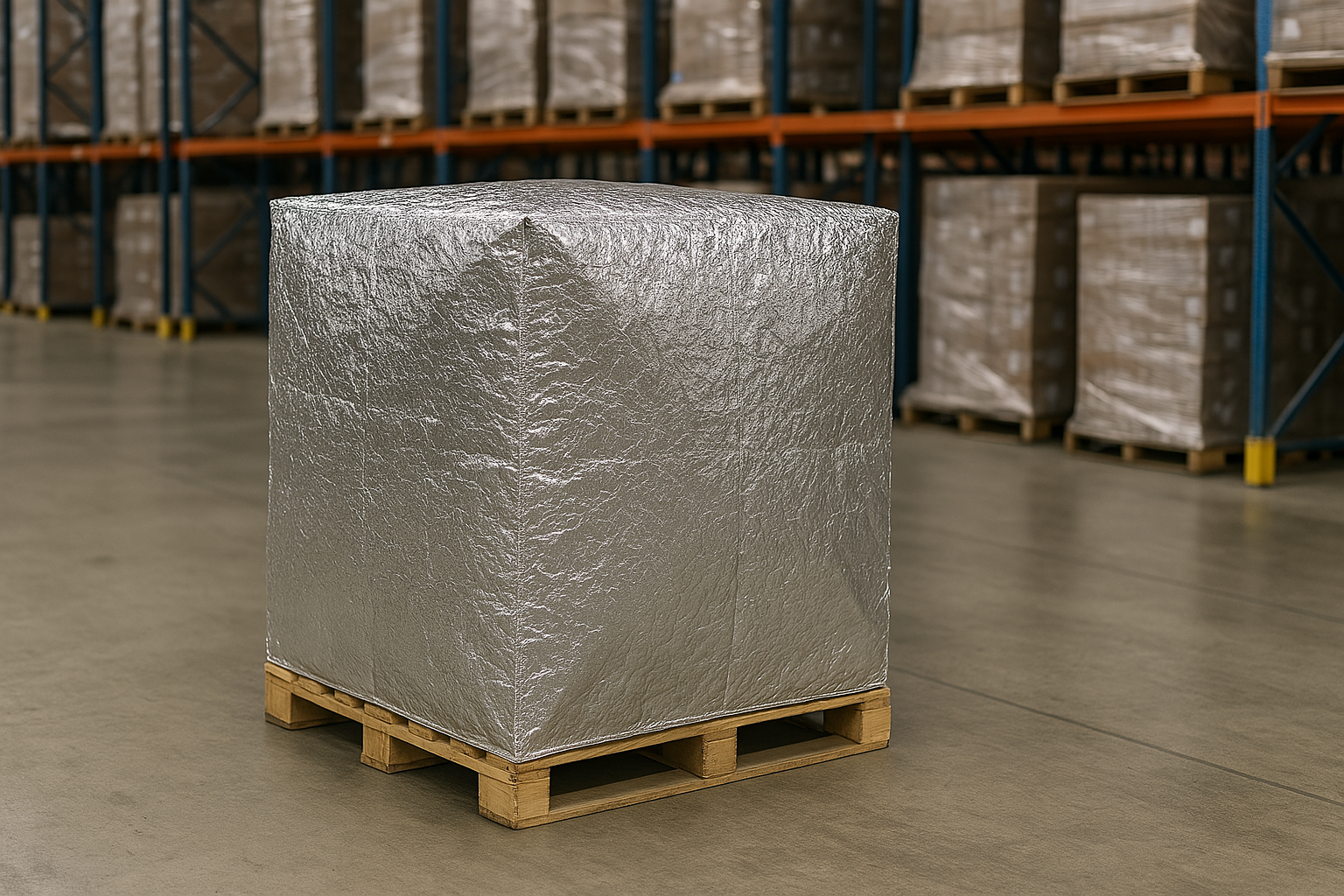
Comment spécifier des couvertures de palette isolées pour le poisson à partir de l'expédition vers l'arrière
Ne commencez pas un projet de couverture de palette de poisson en comparant les couches de papier d'aluminium. Commencez par recevoir: dans quel état doivent être les fruits de mer, quelles preuves soutiendront l'acceptation, et quels événements d'exposition pourraient menacer ce résultat? Insulated pallet covers for fish can then be designed as a secondary barrier that slows heat flow during those events. Ils ne réfrigèrent pas la charge, refroidir le poisson chaud, remplacer la glace ou un pack de liquide de refroidissement qualifié, créer un contrôle HACCP, ou qualifier chaque itinéraire.
Travailler à rebours à partir de la décision de réception crée une spécification. Il relie l'analyse des dangers des produits de la mer, état du produit, palette, actif réfrigéré, données d'itinéraire, construction de la couverture, surveillance, et procédure opérateur. Chaque connexion doit être explicite avant que la couverture gagne une place dans l'expédition de routine.
Décision 1: Définir l'état d'arrivée acceptable
Rédiger des déclarations d'acceptation distinctes pour la sécurité alimentaire, qualité, et condition physique. La déclaration de sécurité alimentaire doit provenir de l’analyse des dangers et du plan HACCP du transformateur responsable.. La déclaration de qualité peut inclure la température spécifique au produit, état gelé, glace restante, critères sensoriels ou de durée de conservation, et les exigences du client. L'acceptation physique peut concerner les sceaux, intégrité de l'emballage sous vide, cartons, lustre, fuite, contamination, et étiquettes.
Cette séparation évite une erreur courante: en utilisant une lecture d'enregistreur de base comme réponse à chaque question. Une trace de température peut prendre en charge une évaluation temps-température. Il ne peut pas montrer si un emballage sous vide a fui, un carton s'est effondré, ou de l'eau de fonte a contaminé la palette. Les observations physiques ne peuvent pas reconstruire un historique de température invisible.
Les transformateurs de produits de la mer des États-Unis couverts par 21 Partie CFR 123 doit effectuer une analyse des dangers et mettre en œuvre un plan HACCP lorsque des dangers pour la sécurité alimentaire sont raisonnablement susceptibles de se produire. Les directives sur les risques et les contrôles du poisson et des produits de la pêche de la FDA fournissent des informations sur les produits.- et informations de contrôle spécifiques aux dangers. Espèces formant de l'histamine, produits réfrigérés cuits, fruits de mer crus prêts à manger, et le poisson emballé à teneur réduite en oxygène peut nécessiter différentes stratégies. Un fabricant de housses de palette ne devrait jamais attribuer la limite critique.
Le FDA Food Code constitue un contexte utile pour la vente au détail et la restauration., y compris le maintien au froid du contrôle du temps/température pour la sécurité des aliments, mais il s'agit d'un code modèle et non d'une spécification internationale universelle pour les palettes de poissons.. Exporter, de gros, traitement, et les produits spécialisés peuvent suivre d'autres contrôles et règles juridictionnelles validés. Documenter quelle autorité et quelles spécifications du client s'appliquent.
Décision 2: Identifiez l'écart thermique, Minute par minute
Divisez la voie en segments contrôlés et exposés. Les segments contrôlés peuvent inclure une chambre froide, congélateur, camion frigorifique, ou conteneur motorisé. Les segments exposés incluent la mise en scène, chargement, transbordement, inspection, accumulation de fret aérien, douane, connexion électrique, déchargement, et recevoir.
Pour chaque segment exposé, durée de capture, température ambiante ombragée, rayonnement direct, flux d'air du vent ou du ventilateur, contact au sol, position de la porte, et toute ouverture du couvercle. Utiliser des données de routine et un cas de retard crédible. Évitez de concevoir uniquement pour le voyage moyen. Une correspondance manquée ou une file d'attente au quai peuvent dominer le risque même lorsque la majeure partie de l'itinéraire est bien contrôlée..
Énoncez ensuite le travail de la couverture dans un langage mesurable. Par exemple: “Reduce heat gain at the upper and outer packages of a frozen-fish pallet during transfer from cold storage to a powered export container, y compris un délai de puissance défini. Cette déclaration identifie l'emplacement, état du produit, événement, et objectif. Il ne garantit pas que la couverture puisse maintenir un état gelé illimité..
Si l'exposition est causée par une défaillance de processus réparable, corrige-le d'abord. Séjour au quai plus court, un véhicule pré-refroidi, meilleure discipline de porte, mise en scène motorisée, ou un rendez-vous révisé peut surpasser une isolation supplémentaire. La couverture devrait ajouter de la résilience une fois que le processus primaire est sain.
Décision 3: Choisissez la source de froid principale
L'isolation réduit le taux de transfert de chaleur; il n'élimine pas indéfiniment la chaleur entrante. Définir la source qui établit et maintient l'état du produit.
Pour le poisson frais, le refroidissement approuvé peut s'appuyer sur de la glace, eau de mer réfrigérée, réfrigération mécanique, ou une autre méthode contrôlée. Les orientations de la FAO mettent systématiquement l'accent sur un refroidissement rapide et une utilisation appropriée de la glace dans de nombreux systèmes de production de poisson frais.. Appliquez un couvercle uniquement une fois que le produit a atteint son état approuvé, à moins que le processus validé n'inclut explicitement le couvercle pendant le refroidissement..
Pour les fruits de mer emballés réfrigérés, le système principal est généralement le stockage et le transport réfrigérés, potentiellement soutenu par un dispositif de refroidissement qualifié pour les segments exposés. Les liquides de refroidissement doivent être placés délibérément. Excessively cold packs can create local freezing, tandis que des packs insuffisants ou mal distribués peuvent quitter les zones chaudes. La condensation et la compatibilité des emballages font partie de la conception.
Pour le poisson congelé, le congélateur et le véhicule ou le conteneur réfrigéré maintiennent l’état congelé spécifié du produit. Une couverture peut modérer l’exposition aux transferts courts. Il ne doit pas être utilisé pour planifier un long voyage sans moteur..
Où s’applique la règle de transport sanitaire de la FDA, les parties couvertes ont des responsabilités liées aux pratiques sanitaires, matériel de transport adapté, et un contrôle adéquat de la température pour les aliments qui en ont besoin pour des raisons de sécurité. Une palette couverte à l’intérieur d’un véhicule inadapté ou mal exploité reste un envoi impropre.
Décision 4: Ingénier l’interface physique
Mesurez la palette finie dans sa plus grande configuration approuvée. Inclure le surplomb, sangles, film étirable, planches de coin, forme supérieure, étiquettes, drains, évents, et entrées de chariots élévateurs. Enregistrez les charges approuvées les plus basses et les plus élevées si une famille de couvertures doit s'adapter à plusieurs hauteurs..
La surface extérieure, isolation, visage intérieur, coutures, fermetures, et basez chacun pour effectuer un travail différent. Un extérieur réfléchissant peut réduire les échanges radiants lorsqu'il est exposé et dans des conditions appropriées.. Le noyau isolant résiste à la conduction et au mouvement de l'air interne. Les fermetures limitent les échanges d’air incontrôlés. Les coutures et coins comprimés sont des ponts thermiques. La base peut admettre de l'air, recueillir de l'eau, ou conduire la chaleur du sol.
Concevoir délibérément le comportement à l'humidité. Le poisson frais glacé peut générer de l'eau de fonte. Les palettes gelées peuvent se condenser lorsqu'elles sont exposées à l'air humide. Une jupe longue peut toucher les sols sales; une base scellée peut accumuler de l'eau; une couche poreuse peut retenir les odeurs ou la contamination. D'accord sur le drainage, suppression, nettoyage, séchage, et stockage avec assainissement et opérations.
La couverture se trouve normalement à l’extérieur des colis d’expédition scellés. S'il peut entrer en contact avec des poissons exposés, glace qui entre en contact avec le poisson, ou une surface en contact avec les aliments, examiner le matériel pour l'usage prévu. "Étanche,» « non toxique,» ou « logistique alimentaire » ne remplace pas une détermination de contact alimentaire.
| Interface | Question de spécification | Preuve d'approbation |
|---|---|---|
| Enveloppe de palette | La housse s'adapte-t-elle à toutes les hauteurs approuvées sans écrasement ni grands espaces? | Etude dimensionnelle et tolérances de fabrication |
| Flux d'air réfrigéré | La couverture empêchera-t-elle le refroidissement nécessaire ou bloquera-t-elle la circulation du véhicule ?? | Test du plan de charge avec le couvercle installé |
| Humidité et drainage | Où ira la condensation ou l'eau de fonte? | Observation de la manipulation humide et examen de l'assainissement |
| Étiquettes et accès à la réception | Le personnel peut-il identifier, inspecter, et ouvrez correctement la charge? | Photographies d'essais opérationnels et de SOP |
| Réutiliser la surface | L'appareil peut-il être nettoyé, séché, inspecté, et stocké? | Procédure approuvée et critères de retraite |
Le tableau force les décisions thermiques et sanitaires dans la même revue de conception. Un couvercle ne doit pas passer car la courbe de sa chambre semble bonne tandis que la gestion de l'eau ou le débit d'air reste en suspens.
Décision 5: Créer des preuves qui reflètent l'envoi
Démarrez le protocole avec la déclaration d'utilisation et les critères d'acceptation. Identifier le produit ou le substitut justifié, conditionnement, type de palette, révision de la couverture, condition de départ, source de froid primaire, profil ambiant, charge solaire si pertinent, flux d'air, durée, ouvertures, et du retard. Utilisez des couvertures représentatives de la production et définissez le nombre d'exécutions nécessaires pour le risque et la variabilité..
Placer les capteurs en fonction des chemins thermiques. Un capteur supérieur peut montrer une exposition radiante; les capteurs de bord et de coin inférieur peuvent révéler une fuite d’air; un capteur de base peut révéler la conduction du sol; le noyau fournit une référence à réponse lente. Les capteurs ambiants et du véhicule décrivent le défi. Les capteurs de produit ou d'emballage décrivent la réponse. Aucun point ne représente la palette entière.
Enregistrer l'identité du capteur, état d'étalonnage ou de vérification, précision, intervalle de journalisation, emplacement, méthode de fixation, et heure synchronisée. Conserver les données brutes et documenter les écarts. Signalez uniquement la précision prise en charge par les instruments..
Utilisez un contrôle lorsqu'il répond à la question. Une palette découverte peut montrer une protection incrémentielle lors d'un test de développement sécurisé. La couverture actuellement approuvée peut évaluer une révision proposée. Pour un essai opérationnel, ouvertures de portes en rondins, événements de réfrigération, retrait du couvercle, et l'emplacement pour que la trace thermique ait un contexte.
La qualification est la conclusion documentée selon laquelle l'ensemble des preuves soutient une utilisation définie. Ce n'est pas une propriété inhérente à l'isolation. Le champ d'application doit nommer la famille de produits, gamme de palettes, itinéraire ou profil, saison le cas échéant, construction de la couverture, installation, réfrigération primaire, et critères d'acceptation. Les changements en dehors de cette portée nécessitent une évaluation.
Décision 6: Connectez la couverture aux enregistrements HACCP et qualité
Décidez si les données liées à la couverture sont surveillées, vérification, aide à la validation, ou des informations générales sur la qualité. Ces termes ont des rôles différents. Sous fruits de mer HACCP, les enregistrements de surveillance montrent si un point de contrôle critique est resté sous contrôle; la vérification vérifie que le système fonctionne comme prévu; la validation ou le soutien scientifique établit que les mesures de contrôle peuvent contrôler le danger. Le processeur responsable doit attribuer ces rôles.
Un enregistreur de palettes peut être utile sans être un enregistrement HACCP. Si l'entreprise l'intègre à un contrôle critique, le plan nécessite des procédures définies, fréquence, personne responsable, examen des dossiers, contrôles d'étalonnage ou de précision, écarts, et actions correctives le cas échéant. N'ajoutez pas d'enregistreur aux supports marketing et supposez qu'il satisfait à ces éléments.
La réception doit avoir un chemin d'escalade. Le destinataire doit savoir comment interpréter les enregistrements du véhicule, données de palette, mesures du produit, et observations physiques. Une alarme doit déclencher l’évaluation approuvée, pas d'acceptation ou de rejet automatique, sauf si le plan le dit explicitement. Préserver la traçabilité entre les palettes, couverture, enregistreur, expédition, et beaucoup.
Pour les fruits de mer importés aux États-Unis, les obligations des importateurs dans le cadre du cadre HACCP des produits de la mer peuvent ajouter des enregistrements et des considérations d'étape positive. Les routes mondiales impliquent également des exigences de destination et des spécifications des clients.. Gardez le dossier de couverture connecté à, mais distinct de, le dossier réglementaire plus large.
Décision 7: Sécurisez la répétition, Achetable, et responsable
Convertissez la configuration approuvée en un court, visuel, SOP contrôlée. Afficher le numéro de pièce de couverture et la révision corrects, orientation, gamme de palettes, séquence d'application, fermetures, zone d'étiquette, emplacement du capteur, inspection, suppression, et stockage. Inclure les conditions d'arrêt pour la libération à chaud, mauvaise taille, larmes, coutures ouvertes, isolant écrasé, intérieur humide ou contaminé, odeur, moule, identité manquante, et réparations non approuvées.
Former les personnes qui travaillent réellement sur le quai et les observer lors des premières expéditions. Vérifiez si les gants de chambre froide peuvent actionner la fermeture, la couverture s'accroche aux coins, le personnel entre dans les voies pour chariots élévateurs, et l'unité finie s'adapte aux véhicules et aux équipements terminaux. Ajuster la conception ou la méthode de travail avant l'échelle.
A la réception, séparer quatre décisions: état des fruits de mer, état du colis, état de la couverture, et l'exhaustivité des données. Un produit peut être acceptable alors qu'une couverture réutilisable doit être retirée. Une couverture sonore ne sauve pas les fruits de mer endommagés. Documenter chaque résultat.
Le contrôle des modifications doit inclure un film extérieur, isolation, doublure intérieure, adhésif, piqûre, ruban de couture, fermeture, dimension, site de production, matériel de réparation, hauteur de palette, paquet de produits, véhicule, itinéraire, et source de froid primaire. Les achats doivent nécessiter une notification avant tout changement de fournisseur.. La qualité et la sécurité alimentaire déterminent si l'examen, tests ciblés, ou une requalification est nécessaire.
Questions d'achat qui révèlent des propositions faibles
Demandez au fournisseur de fournir les conditions complètes derrière toute réclamation thermique. Quelle palette, charge utile, température de départ, profil ambiant, capteurs, durée, ouvertures, et les critères d'acceptation ont été utilisés? Le rayonnement direct était-il inclus? La couverture était-elle sèche? Un support de base était-il présent? Les résultats ont-ils été répétés?
Demandez comment les unités de production sont contrôlées par rapport à l'unité testée. Dimensions, construction des couches, espacement des coutures, lieu de fermeture, et les substitutions matérielles peuvent toutes avoir de l'importance. Demandez une comparaison entre l'échantillon et la production et un plan d'inspection entrant.
Demandez comment l'humidité et le nettoyage affectent la couverture. Quelle chimie et quelle méthode sont approuvées? Comment ça sèche? Quels dommages déclenchent une réparation ou une mise hors service? Que se passe-t-il après un contact avec des fruits de mer ou de l'eau de fonte qui ont coulé? Évitez un nombre de réutilisations fixe non pris en charge.
Enfin, demandez comment la proposition fonctionne avec l'actif réfrigéré, plan de sécurité alimentaire, méthode de réception, et réseau en fin de vie. Un faible prix unitaire peut être compensé par une application lente, flux d'air bloqué, travail de nettoyage, fret de retour, ou couvertures perdues.
La durabilité est une exigence de conception, Pas une étiquette
Définir la fonction comparée: une palette de poisson livrée dans un état approuvé sur un itinéraire spécifié. Comparez les options jetables et réutilisables avec cette même fonction. Inclure le matériel et la fabrication, poids et volume du fret, nettoyage, séchage, retours, réparations, pertes, durée de vie réelle, et élimination ou recyclage.
Les voies en boucle fermée peuvent favoriser la réutilisation car les retours sont planifiés et l'inspection peut être centralisée. Les routes d’exportation à sens unique pourraient favoriser une conception plus légère si la reprise n’est pas réaliste. Les couvertures multicouches peuvent être performantes mais difficiles à recycler; des structures plus simples peuvent améliorer les options de fin de vie, mais peuvent modifier la durabilité ou l'isolation. Testez le compromis plutôt que de supposer que la fonctionnalité à consonance plus verte l'emporte.
Les déchets de produits font partie de l’évaluation, mais utilisez des données mesurées. Si une couverture réduit les écarts de température ou les fruits de mer rejetés sur un itinéraire, documenter la ligne de base et les résultats. N'attribuez pas de pourcentage d'économie de déchets sans preuve.
Conclusion: La spécification en une phrase
Un programme défendable peut être résumé ainsi: utiliser une révision contrôlée de la couverture sur un produit de poisson et une palette définis, après refroidissement approuvé, lors d’événements exposés identifiés, avec une réfrigération adaptée, manipulation hygiénique, surveillance cartographiée, critères d'acceptation, une SOP d'opérateur, et contrôle des modifications documenté.
Les housses de palettes isothermes pour poissons sont précieuses précisément parce que leur rôle est limité et testable. Ils ralentissent le flux de chaleur. Le système HACCP du secteur alimentaire, réfrigération, méthode de refroidissement approuvée, sanitaire, enregistrements, et des personnes qualifiées protègent la chaîne d'approvisionnement des produits de la mer dans son ensemble.
À propos du tempk
Tempk est Shanghai Tempk Industrial Co., Ltd.’s cold-chain packaging brand. Product pages include thermal pallet covers, insulated packaging and boxes, liquide de refroidissement, et PCM; les pages de solution décrivent l'examen du pack, planification des postes de bûcherons, et prise en charge du plan de validation. Nous pouvons placer ces capacités autour d'une palette de poissons définie par le client., méthode de refroidissement primaire, et un défi d'itinéraire pour soutenir une discussion structurée sur l'emballage. Le transformateur ou toute autre entreprise alimentaire responsable est toujours propriétaire de l'analyse des dangers., Contrôles HACCP, sanitaire, critères de produit, et rendre les décisions, et une couverture ne doit pas être présentée comme de la réfrigération.
Partager les conditions d'arrivée, géométrie des palettes, source de refroidissement, règles d'hygiène, et la pire exposition crédible. Tempk peut discuter de ce qu'une comparaison contrôlée devrait inclure avant tout déploiement plus large.
Housses thermiques pour produits chimiques industriels: Plan
Housses thermiques pour produits chimiques industriels: Construisez le contrôle avant d’acheter la couverture
Thermal cargo covers for industrial chemicals are easy to buy and surprisingly easy to misuse. Une réflexion, la coque isolée peut réduire le taux de gain ou de perte de chaleur autour d'une palette, pourtant, cette capacité n'est utile que dans un contrôle complet: le produit commence dans le bon état, l'exposition de la route est délimitée, la couverture s'adapte, les opérateurs l'appliquent correctement, les informations sur les marchandises dangereuses restent disponibles, and an exception plan takes over when delays exceed the passive layer's role. Commencer par cette chaîne de contrôle évite qu'un raccourci d'achat ne se transforme en une allégation de température non étayée..
Commencez par la conséquence, Pas le catalogue
Notez ce que la température peut faire sur le produit spécifique. La réponse peut impliquer une viscosité qui altère le déchargement, cristaux nécessitant un reconditionnement contrôlé, séparation de phases, dégradation, changement de pression, ou un mécanisme de sécurité associé à une classification de marchandises dangereuses. Ne choisissez pas parmi ces possibilités à partir de connaissances générales du secteur. Utiliser la fiche de données de sécurité actuelle, spécifications du fabricant, informations sur la stabilité ou le processus, et le jugement du propriétaire du produit.
Suivant, définir les conséquences de l'approche ou du dépassement d'une limite. L'envoi pourrait-il être évalué et libéré via un processus de qualité approuvé? Cela nécessiterait-il un échantillonnage, retravailler, quarantaine, ou élimination? La condition pourrait-elle affecter une manipulation sûre? Existe-t-il une température de contrôle réglementaire ou d'autres dispositions relatives aux marchandises dangereuses? La conséquence fixe le niveau de preuve, surveillance, contingence, et l'attention de la direction.
La FDS est indispensable mais pas la totalité de la décision de transport. L'OSHA exige des informations sur la manipulation et le stockage, y compris les incompatibilités, dans le cadre des fiches de données de sécurité pour les produits chimiques dangereux. La classification des transports et les règles spécifiques aux modes nécessitent un examen compétent distinct. Aux États-Unis. commerce, La PHMSA administre le Règlement sur les matières dangereuses. ADR, processus relatifs aux marchandises dangereuses des compagnies aériennes basés sur les règles de l'IATA, and the IMO's IMDG Code may govern other movements. Il ne faut pas demander à un fournisseur de couvertures de prendre cette décision juridique à partir du seul nom de produit..
Enfin, décrire la marge thermique sans inventer la certitude. Le produit's required condition, condition de départ, sensibilité à la durée, répartition de la charge, et les événements ambiants crédibles forment une enveloppe de risque. Si ces entrées sont inconnues, le projet n'est pas prêt pour une promesse de performance. Les achats peuvent toujours explorer des échantillons, mais l'approbation doit attendre les questions techniques.
La chaîne de contrôle minimum comporte sept maillons
Le premier est le préconditionnement. Le produit et l'emballage doivent atteindre l'état de départ prévu grâce à un processus contrôlé.. Une couverture ralentit le mouvement hors de cet état; il ne tire pas de manière fiable une palette chaude ou froide vers l'état souhaité.
Deuxièmement, l’intégrité de l’emballage. Fermetures, prises primaires, amorti, emballage combiné, retenue de palette, et toutes les fonctions de suremballage réglementées doivent déjà être correctes. La couche thermique ne peut pas compenser une fuite du tambour, conteneur pour vrac intermédiaire endommagé, fermeture lâche, ou charge instable.
Le troisième est en forme. La couverture approuvée doit correspondre à la géométrie chargée, y compris le capuchon supérieur, saillies, protection des coins, et socle. Les tissus surdimensionnés peuvent laisser des traces d'air et présenter des risques de manipulation. Une housse trop petite peut tendre les coutures ou exposer la charge inférieure..
Quatrièmement, le contrôle de l'exposition. Le propriétaire de l'itinéraire cartographie les quais, mètres, équipement, transferts, retard, soleil, air froid, et recevoir. Dans la mesure du possible, les changements opérationnels devraient réduire l’exposition avant de demander à l’isolation de l’absorber.
Le cinquième est la vérification. Les preuves de couverture finie doivent représenter la palette, état de départ, séquence d'exposition, méthode de candidature, et objectif de mesure. Un échantillon de matériel ou une démonstration marketing mise en scène ne suffit pas.
Le sixième est l'exécution. Des opérateurs formés inspectent les colis et couvrent, appliquer la configuration documentée, conserver les marques et étiquettes requises, transferts d'enregistrements, et répondre aux dommages.
Le septième est la gestion des exceptions. L'équipe définit le point auquel l'exploitation protégée, contrôle actif de la température, examen technique, ou l'arrêt de l'expédition remplace le travail normal. Sans ce lien, la couverture peut simplement retarder la reconnaissance d'un événement incontrôlé.
La faiblesse de n’importe quel lien peut dominer le résultat. Une couverture performante placée sur une charge mal conditionnée ne peut pas retrouver l’état de départ. Les excellentes données de laboratoire ne compensent pas une fermeture ouverte au niveau du terminal. Le contrôle doit être revu de bout en bout.
Choisissez la plus petite solution qui couvre le risque crédible
La couverture passive des palettes est une option dans une hiérarchie, pas la réponse par défaut. Parfois, le meilleur contrôle est procédural: déplacer la voie de rassemblement à l'intérieur, charger sur un quai protégé, réserver une fenêtre de départ, ou créer une escalade de retard avec le transporteur. Ces changements suppriment l'exposition plutôt que de ralentir son effet.
Une couverture thermique est appropriée lorsque l'exposition restante est limitée, le produit a suffisamment de marge, et la configuration peut être vérifiée. Cela est particulièrement plausible pour les transferts et les itinéraires où un tampon au niveau des palettes s'adapte à l'opération.. Cela devient moins convaincant à mesure que la durée d’exposition et l’incertitude augmentent, la marge du produit se rétrécit, ou les exigences d'accès ouvrent la frontière à plusieurs reprises.
Un système d'expédition passif qualifié offre un package plus intégré, combinant souvent l'isolation, disposition définie de la charge utile, et stockage d'énergie thermique le cas échéant. Cela dépend toujours du préconditionnement, assemblée, et les conditions qualifiées. It should not be confused with a loose pallet cover.
Le transport actif à température gérée utilise un contrôle motorisé et peut être adapté lorsqu'un environnement stable doit être maintenu lors de mouvements plus longs ou moins prévisibles.. L'équipement actif nécessite également une configuration correcte, entretien, flux d'air, chargement, surveillance, gestion de l'énergie ou du carburant, et contingence. "Active" ne veut pas dire sans risque.
Certaines expéditions nécessitent des équipements ou des procédures spécifiques en raison de leur classification comme marchandise dangereuse.. Certaines substances autoréactives et peroxydes organiques peuvent être soumis à des dispositions de contrôle et de température d'urgence.. Dans ces cas, ne pas utiliser une comparaison générique de couverture passive pour décider de la conformité. L'équipe marchandises dangereuses responsable doit appliquer les règles en vigueur pour le mode et l'itinéraire..
Le principe de sélection est conservateur: utiliser le contrôle le moins complexe qui dispose d'une autorité suffisamment vérifiée sur l'événement crédible, mais n'évitez pas la complexité en transférant un risque inconnu au produit.
Utilisez une échelle de preuves pour tester les réclamations des fournisseurs
Les informations sur les fournisseurs arrivent sous différentes formes. Triez-le selon la façon dont il représente votre décision plutôt que selon la qualité de la présentation..
| Niveau de preuve | Ce qu'il peut raisonnablement vous dire | Ce qu'il ne peut établir seul | Réponse de l'acheteur |
|---|---|---|---|
| Description de la couche | Matériaux et fonctions prévues | Performances de couverture finie | Confirmer les détails de construction et de compatibilité |
| Test de propriété matérielle | Comportement d'un échantillon dans des conditions données | Couture, ajuster, base, et effets de palette | Méthode de vérification, conditions, et lien de production |
| Test à couverture vide terminé | Qualité de fabrication et comportement thermique limité | Réponse palette chargée | Demander des preuves représentatives de la charge utile |
| Démonstration générique chargée | Performances pour une configuration | Votre produit, itinéraire, ou critère d'acceptation | Comparer la géométrie, masse, commencer, profil, et capteurs |
| Test comparatif représentatif des itinéraires | Effet pour une configuration et une exposition définies | Retards illimités ou changement de voie | Limites des documents et contrôles de mise en œuvre |
| Utilisation opérationnelle surveillée | Si les conditions sur le terrain correspondent aux hypothèses aux points mesurés | Chaque emplacement de produit ou itinéraire futur | Tendance aux exceptions et maintien du contrôle des modifications |
Cette échelle ne signifie pas que chaque projet nécessite la même étude. Il rend les réclamations proportionnelles. Une demande de courte durée pour un produit robuste peut nécessiter un ensemble de preuves différent de celui d'une voie d'exportation à grandes conséquences.. L'équipe technique responsable doit documenter pourquoi le niveau sélectionné répond à la décision.
Lors de l'examen d'un rapport, regardez au-delà du graphique récapitulatif. Identifiez la construction exacte de la couverture, dimensions de la palette, masse de charge et propriétés thermiques, conditions de départ, programme ambiant, conditions de rayonnement et de circulation d'air, disposition de base, carte des capteurs, état de l'appareil, nombre de courses, écarts, et règle d'acceptation. Demandez si l'article testé provient d'une production normale. Si le rapport omet une condition aux limites majeure, ne comblez pas le vide avec optimisme.
Avoid generic "maintains temperature for" langue sauf si l'instruction inclut une plage définie, installation, profil, point de mesure, et méthode d'acceptation étayée par des preuves fiables. Même alors, publier la limitation. Une durée thermique n'est pas une propriété du seul tissu.
Faites passer les achats par les portes, Pas un score de fonctionnalité
Une matrice de fonctionnalités peut classer les fournisseurs tout en masquant une inadéquation fatale. Utilisez plutôt les portes de décision. Un candidat n'avance que lorsqu'il franchit chaque porte pertinente pour la candidature..
La première porte est la sécurité et la légalité. La configuration doit conserver les emballages autorisés, communication des dangers, inspection des colis, manutention, et obligations spécifiques au mode. Les matériaux de couverture et les procédures de réutilisation nécessitent un examen pour détecter les résidus chimiques, incompatibilité, allumage, électrostatique, protection incendie, et les règles de l'établissement, le cas échéant. Unsupported labels such as "chemical proof" or "anti-static" ne remplacent pas des preuves définies.
La deuxième porte est la forme physique. Évaluer la palette chargée, pas de dimensions nominales. Vérifiez le haut, base, accès pour chariot élévateur, retenue, fermetures, saillies, et portée de l'opérateur. Confirmez que les notes requises, étiquettes, documents, et les points d'inspection restent accessibles de la manière approuvée.
La troisième porte est une pertinence thermique. La construction et les preuves doivent porter sur l’exposition dominante. Une surface extérieure réfléchissante peut contribuer au gain de rayonnement mais n'élimine pas la conduction et la convection.. L'isolation peut ralentir le flux de chaleur mais ne peut pas créer une durée illimitée. Les coutures et les ouvertures doivent être incluses dans l'évaluation finale.
La porte quatre est la répétabilité opérationnelle. Le personnel représentatif postule, balayage, ouvrir, remettre en état, se déplacer, et retirez les échantillons de couvertures. Enregistrer les pas lents, ambiguë, ou susceptible d'être ignoré. If the correct result depends on a laboratory technician's careful wrapping, repenser le produit ou le processus.
La porte cinq est le contrôle de l’offre. Spécifier les dimensions, couches, construction de couture et de fermeture, fabrication, identité, documentation, et variation autorisée. Demandez comment les matériaux de production sont contrôlés et comment les changements sont notifiés. Décidez de ce qui est vérifié à la réception et de ce qui est vérifié périodiquement.
La porte six est le contrôle de fin d’utilisation. Pour housses à usage unique, établir la gestion des déchets et de la contamination. Pour les housses réutilisables, définir l'identification, retour, ségrégation, nettoyage, séchage, inspection, limites de réparation, et la retraite. Un article réutilisable qui ne peut pas être renvoyé en toute sécurité par un destinataire de produits chimiques ne constitue pas un système de réutilisation fonctionnel..
Les conditions commerciales viennent après ces portes. Prix, quantité commandée, délai de mise en œuvre, personnalisation, et l'inventaire compte toujours, mais ils devraient être demandés en tant que faits spécifiques au fournisseur plutôt que de références inventées. Comparez le coût d’exploitation total pour le volume et l’itinéraire prévus, y compris les tests, travail, stockage, retour, nettoyage, perte, et gestion des exceptions.
Concevoir la réponse retardée avant le premier envoi
Imaginez qu'une hypothétique palette de conteneurs de produits chimiques scellés soit approuvée pour une voie régionale à l'aide d'un couvercle ajusté.. L'étude d'itinéraire et les tests comparatifs soutiennent l'exposition normale au quai et au transit., et la surveillance est incluse lors du lancement. Un véhicule tombe alors en panne à proximité d'un point de transfert, et la reprise attendue se situe en dehors de la fenêtre d'exposition approuvée.
A weak procedure tells the driver to "keep the cover closed" et attends. Cela considère le ralentissement des échanges thermiques comme une protection indéfinie. Un plan plus solide nomme le coordinateur, identifie les options de détention protégées à proximité, indique quelles informations sur l'expédition et l'enregistreur doivent être déclarées, fixe un délai pour l'escalade technique, et empêche le retrait ou l'ouverture non autorisée. Le propriétaire du produit décide de continuer, transfert vers un équipement géré, retour, ou conserver pour évaluation.
La couverture apporte toujours de la valeur pendant la réponse en ralentissant le taux de changement. Sa valeur est le temps de résilience, pas une promesse que l'événement n'a plus d'importance. Le dossier de surveillance, contexte ambiant, informations sur la stabilité du produit, et le processus de disposition approuvé soutiennent ensuite la décision.
Construisez des réponses similaires pour une couverture déchirée, fermeture manquante, étiquette bloquée, surface mouillée, fuite suspectée, échec de l'enregistreur, retenue douanière imprévue, refus de livraison, ou changement de mode de transport. Certains événements sont thermiques; d'autres sont des problèmes de sécurité ou de conformité qui nécessitent une chaîne de commandement différente. Les opérateurs doivent être capables d'identifier la catégorie sans diagnostiquer le produit chimique..
Après un événement, examiner si les hypothèses initiales étaient fausses ou si l’exécution a échoué. Mettre à jour le profil de l'itinéraire, instruction du transporteur, conception de la couverture, entraînement, surveillance, ou sélection du contrôle du transport. Ne redéfinissez pas tranquillement le cas d'utilisation réussi pour inclure l'excursion.
Gardez la palette visible pour le système de sécurité
La défaillance de couverture la plus grave n’a peut-être rien à voir avec la température. Une palette couverte peut cacher une tache, paquet gonflé, tambour décalé, étiquette incorrecte, ou combinaison non autorisée. L’inspection préalable à la couverture doit donc être explicite, et les procédures de remise doivent préserver les contrôles d'état.
Les marques et étiquettes de marchandises dangereuses requises signalent les dangers aux personnes qui n'ont pas conçu le programme thermique.. Ne placez pas la commodité avant cette communication. Si un panneau d'accès, fenêtre, ou un double marquage est proposé, le personnel compétent doit confirmer que l'arrangement satisfait aux exigences applicables en vigueur. Compagnie aérienne, transporteur, port, et les procédures des installations peuvent ajouter des contraintes pratiques.
La couverture elle-même peut être contaminée. Un intervenant doit savoir de quelle zone chimique il provient, si les résidus sont connus, et quelle procédure contrôle le contact, nettoyage, transport, ou élimination. Les couvertures réutilisables ne doivent pas circuler de manière anonyme. L'identification et la quarantaine sont des mesures de sécurité même si elles n'améliorent pas l'isolation..
Les contrôles dans les entrepôts continuent de s'appliquer. Conditions de stockage et incompatibilités de la FDS, ventilation, commandes d'allumage, confinement secondaire si nécessaire, accès pour inspection, protection incendie, et la manipulation sûre des matériaux ne peut être échangée contre un tampon thermique. Un couvercle installé à l'intérieur d'une installation doit être examiné pour son effet sur ces contrôles..
Gardez les approbations réglementaires et thermiques séparées mais connectées. Un rapport thermique peut appuyer le choix d'utiliser une couverture; il ne peut autoriser un colisage ou un classement. Un examen des marchandises dangereuses peut approuver un arrangement; cela ne prouve pas que le produit chimique reste dans son état de qualité. Les deux décisions doivent pointer vers la même configuration et les mêmes instructions de travail.
Approuver une utilisation définie, Puis défendre ses frontières
Un solide programme de couverture thermique se termine par une déclaration concise d’utilisation approuvée: quel produit ou famille de produits, emballage et construction de palettes, article de couverture, condition de départ, voie ou exposition, méthode de candidature, surveillance, et plan d'exception sont inclus. Il identifie également les exclusions. Cette déclaration a plus de valeur qu'une affirmation générale, car les opérations peuvent l'appliquer et les auditeurs peuvent la tester..
Examiner les performances grâce à des observations sur le terrain, surveillance lorsque cela est justifié, qualité des fournisseurs, dossiers de dommages et de contamination, écarts d'itinéraire, et exceptions de produits. Réévaluer après des changements importants, géométrie de palette modifiée, nouveau transporteur ou mode, FDS révisée, nouvelle voie, ou règlement mis à jour. Si la limite passive est dépassée à plusieurs reprises, améliorer l'itinéraire ou adopter un contrôle avec une plus grande autorité.
FAQ sur les décisions
Quand un cache-bagages thermique n’est-il clairement pas suffisant?
Cela ne suffit pas lorsque les règles relatives aux produits ou aux marchandises dangereuses exigent un équipement de contrôle de la température actif ou spécifié., lorsque l'exposition crédible dépasse la capacité passive vérifiée, lorsque la condition de démarrage ne peut pas être contrôlée, ou lorsque le couvercle empêche les fonctions de sécurité et de manutention requises. Une incertitude élevée et des conséquences élevées favorisent également un contrôle plus autoritaire.
Une couverture isolée peut-elle être qualifiée de système d'expédition qualifié?
Pas automatiquement. Un système qualifié est pris en charge pour une charge utile définie, configuration, critère de température, profil ambiant, durée, assemblée, et utiliser. Une couverture peut être un élément d’un accord évalué plus large, mais la construction matérielle ou un test générique ne qualifie pas chaque palette et chaque voie. Demandez la portée et les limites.
Ce qui devrait être inclus dans un exemple d'essai?
Utilisez une palette représentative entièrement construite. Inclure la contention normale, capuchon supérieur, étiquettes, analyses, inspection, mouvement du chariot élévateur, ouvertures attendues, et retrait. Demandez aux opérateurs réels d'appliquer la couverture et d'enregistrer les problèmes d'ajustement.. Tests thermiques, si nécessaire, devrait alors utiliser la configuration approuvée plutôt qu'un échantillon spécialement ajusté.
Qui doit approuver l’utilisation de la couverture?
L’approbation est généralement interfonctionnelle. Le personnel produit ou qualité est propriétaire du critère de condition; environnement, santé, et le personnel de sécurité s'occupe des risques sur le lieu de travail et des risques chimiques; des spécialistes des marchandises dangereuses examinent la conformité des transports; la logistique est propriétaire de l'itinéraire; les opérations confirment le travail exécutable; et les achats contrôlent les spécifications du fournisseur. Les rôles varient selon l'organisation, mais aucune allégation marketing ne devrait les remplacer.
À propos du tempk
The relevant Tempk context is temperature-controlled packaging and cold-chain solutions. Notre rôle dans un projet de couverture de produits chimiques industriels peut être d'aider à transformer les informations sur les itinéraires et les palettes en une discussion pratique sur l'emballage passif.. Nous privilégions des conditions d'utilisation clairement définies, vérifications d'ajustement représentatives, et des preuves lues avec leurs limites. Le fabricant de produits chimiques, expéditeur, et leurs équipes qualifiées de sécurité et de conformité restent responsables des exigences du produit, décisions concernant les marchandises dangereuses, approbation d'exploitation, et disposition de l'expédition.
Demandez à Tempk d'examiner une configuration de palette spécifique et un écart d'exposition. Partager le dessin de charge, étapes du parcours, gestion des contraintes, et les critères de décision rendront la discussion plus utile que la demande d'une couverture universelle..
Couvertures de palettes à température contrôlée pour les décisions d'entreposage à température contrôlée
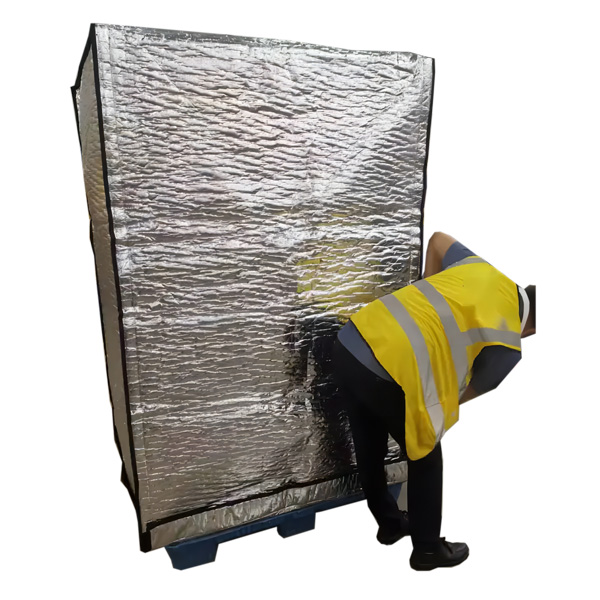
Couvertures de palettes à température contrôlée pour l'entreposage à température contrôlée: Combler l’écart de contrôle approprié
Une couverture de palette doit gagner sa place dans la stratégie de contrôle. Les couvertures de palettes à température contrôlée pour l'entreposage à température contrôlée sont plus crédibles lorsqu'elles s'adressent à un, exposition limitée dans le temps que l’installation et le flux de travail ne peuvent raisonnablement éliminer. Ce sont des barrières passives, ils modifient donc le taux de transfert de chaleur plutôt que de commander une température. Cette distinction transforme un vague achat en une décision d'ingénierie et d'exploitation: définir l'écart, comparer les options de contrôle, préciser la couverture complète, vérifiez-le dans le contexte, et régir son utilisation.
Cette méthode est utile si la palette contient des produits pharmaceutiques, nourriture, matériel de laboratoire, ou un autre produit sensible à la température. La condition requise provient toujours du produit et du système qualité applicable, pas du catalogue de couverture.
Nommez l’écart de contrôle avant de nommer le produit
Écrivez le problème sous forme d'événement. "Quai chaud" n'est qu'un emplacement. "Released pallets may wait between the monitored dispatch room and a confirmed vehicle while exterior air enters during door cycles" décrit un événement qui peut être observé. Il identifie l'état de charge, étape du processus, limite, et retard auxquels un contrôle doit remédier.
Suivant, identifier pourquoi l'événement existe. Cela peut résulter de la planification des remorques, calendrier d'inspection, mise en scène protégée insuffisante, un long transfert entre les bâtiments, fonctionnement intermittent de la porte, ou une situation d'urgence. Les causes sont importantes car une correction de processus ou d'installation peut surpasser un accessoire. Si les palettes sont appelées trop tôt, une règle de libération pourrait empêcher l'attente. Si l'exposition solaire atteint une baie marquée, le blindage ou la relocalisation pourraient protéger chaque charge. Si le contrôle est perdu parce que la capacité de réfrigération est insuffisante, une couverture ne doit pas légitimer un stockage continu.
Définir la conséquence sans la supposer. Une température ambiante en dehors de la plage requise ne prouve pas automatiquement que la température du produit a dépassé sa limite; la masse thermique du produit et l'emballage influencent la réponse. L'inverse est également important: une lecture de pièce à portée peut ne pas représenter une palette près d'une porte ou d'une source radiante. Utiliser le mappage, surveillance de routine, informations sur le produit, et évaluation des risques pour décider quelles mesures et quelles réponses sont pertinentes.
Ensuite, définissez la limite. Indiquer la durée normale de l'événement, retard crédible, configurations de produits et de palettes, condition de départ, soucis de saison ou de météo, et l'action déclenchée lorsque la limite est dépassée. Ne transformez pas le résultat d’un essai en un temps d’exposition universel admissible. L'équipe qualité doit conserver son autorité sur l'impact et les écarts du produit.
Choisissez la couche de contrôle avec les étapes les moins fragiles
Les contrôles diffèrent selon leur dépendance à l’action humaine. Un protégé, la salle de préparation à température contrôlée agit sur chaque palette correctement placée. Une règle de planification peut éviter des arrêts inutiles mais dépend de la coordination. Une housse ajustée peut voyager avec une charge individuelle mais doit être disponible, intact, correctement orienté, fermé, supprimé, et récupéré. La réponse la plus appropriée peut combiner des couches, pourtant chaque couche devrait avoir une raison.
Évaluer les options dans un ordre pratique. L’exposition peut-elle être éliminée en changeant le moment ou l’itinéraire? L'ingénierie peut-elle le réduire grâce à une enceinte, gestion des portes, changement de débit d'air, ou ajout d'un espace contrôlé? Les contrôles administratifs peuvent-ils limiter le séjour et améliorer la remontée des informations? Si l’exposition résiduelle persiste, une couverture passive pourrait-elle ajouter un tampon significatif? Il ne s’agit pas d’une hiérarchie réglementaire rigide pour chaque installation; c'est un moyen d'éviter d'utiliser un élément portable pour compenser un problème système évitable.
Tenir compte de la visibilité des échecs. Une alarme d'entrepôt est conçue pour signaler un état d'installation. Un couvercle déchiré ou partiellement ouvert peut échouer silencieusement à moins qu'un opérateur ne le remarque. Une housse réutilisable peut paraître présente alors que ses coutures ou sa fermeture ne sont plus adaptées. Inspection, entraînement, et la supervision doit correspondre à ce mode de défaillance.
Déterminez également si la couverture entre en conflit avec la conception du stockage principal.. Les chambres froides peuvent dépendre du flux d'air autour des charges et d'un espacement défini des palettes. Les couvercles peuvent gêner l’inspection visuelle, lecture de codes à barres, observation des ravageurs, modèles de gicleurs, ou état des stocks. Le revêtement stationnaire à long terme doit donc être examiné séparément de l'utilisation de transfert à court terme.. Il ne faut jamais l’adopter simplement parce que la couverture est déjà achetée.
Rédigez une exigence à laquelle les fournisseurs peuvent répondre honnêtement
Une exigence utilisateur doit décrire la fonction et le contexte avant de demander une construction. Évitez de prescrire une pile de couches à la mode sans comprendre le cheminement thermique. Donner aux fournisseurs suffisamment d’informations pour proposer un ajustement, tout en protégeant les détails confidentiels des produits grâce à un processus de partage de données approprié.
| Champ requis | Ce que l'acheteur doit définir | Ce qu'une réponse utile devrait montrer |
|---|---|---|
| Événement prévu | Itinéraire d'entrepôt, activité de mise en scène, utilisation normale, cas de retard, et direction d'exposition | Une déclaration claire d’utilisation appropriée et inappropriée |
| Charger l'enveloppe | Empreinte de palette, plage de hauteur, surplomb, capuchon supérieur, envelopper, étiquettes, et les besoins d'accès | Ajustement interne, dispositif de fermeture, et un échantillon sur une charge représentative |
| Objectif thermique | Blindage radiant, échange convectif réduit, résistance supplémentaire, ou une combinaison | Justification de la construction et preuves pertinentes de couverture complète |
| Manutention | Domaine d'application, dotation en personnel, équipement, balayage, mouvement, et retrait | Séquence de travail sécurisée, sans matériaux en vrac sur les chemins de déplacement |
| Contrôles de qualité | Identification, inspection, documentation, nettoyage, stockage, et notification de changement | Contrôles définis des matériaux et de la construction ainsi que points d'examen par l'acheteur |
| Vérification | Défi, charge utile, capteurs, répétitions, règle d'acceptation, et rendre compte des attentes | Conditions et limites de test transparentes, pas une promesse de performance inconditionnelle |
| End of use | Élimination unidirectionnelle ou récupération réutilisable, nettoyage, réparation, et la retraite | Instructions pratiques et informations matérielles pour le marché de destination |
Le tableau crée une demande comparable sans obliger chaque fournisseur à formuler une seule réclamation non étayée.. Si un champ ne peut pas encore être complété, cette lacune appartient au plan du projet. Il ne doit pas être remplacé par une dimension devinée, temps de maintien supposé, or generic request for "GDP certification."
Les détails matériels comptent toujours. Demandez ce qui contrôle les propriétés radiantes, qu'est-ce qui fournit de l'isolation, comment se forment les coutures et les coins, et comment la jupe se ferme autour d'une charge irrégulière. Demander des tolérances de production et des pratiques de notification de changement adaptées au risque. Si la couverture comporte une fenêtre ou un rabat, évaluer la construction des bords et le comportement après des accès répétés. S'il est réutilisable, confirmer la compatibilité du nettoyage, séchage, identification, inspection, et réparer les limites.
Les preuves de performances doivent décrire une configuration complète. Les coupons de panneaux ne capturent pas les coutures, ajuster, compression, ou une fuite d'air. Un test fournisseur avec une autre palette, charge utile, état initial, ou un défi ambiant peut être un contexte utile mais pas une preuve directe. Les profils et processus thermiques ISTA peuvent éclairer certains travaux de transport-emballage, pourtant, un transfert d'entrepôt doit être représenté par des conditions pertinentes à ce transfert. L'applicabilité fait partie de la vérification.
Piloter le processus, Pas seulement la couverture
Un pilote efficace commence avant que le premier capteur ne soit placé. Opérations, qualité, ingénierie, sécurité, et les marchés publics devraient se mettre d'accord sur la décision à prendre. Le protocole identifie les couvertures et les chargements représentatifs de la production, condition de référence, justification du capteur, état d'étalonnage de l'instrument, mesures environnementales, séquence de manipulation, écarts, répétitions, et critères d'acceptation. Enregistrer des photographies ou des diagrammes d’ajustement lorsque cela est autorisé, car un graphique seul ne peut pas montrer une jupe ouverte ou un coin compressé.
Utiliser les opérateurs des équipes prévues après l'instruction initiale. Une demande chronométrée peut éclairer la dotation, mais la vitesse n'est pas la seule mesure. Observez les portées difficiles, étiquettes bloquées, ourlets amples, larmes, erreurs de fermeture, mouvement de charge, et enlèvement à destination. Vérifier que les travailleurs comprennent le point d'arrêt: une garantie n'autorise pas de prolongation lorsque le véhicule est en retard, une alarme retentit, ou la palette est mal acheminée.
Envisagez un hypothétique transfert de campus. Un espace de stockage cartographié et surveillé expédie les palettes de différentes hauteurs vers un autre bâtiment contrôlé via un passage couvert mais non conditionné.. L'équipe du projet s'attend à ce que la couverture amortisse l'exposition variable à l'air. Pendant le pilote, les traces thermiques sont acceptables pour les charges testées, mais les couvertures courtes montent au-dessus du plateau de palettes sur les configurations plus hautes et laissent un espace. La bonne réponse n'est pas de faire la moyenne de toutes les exécutions et d'approuver le produit.. L'équipe peut réduire la plage de hauteur approuvée, ajouter une taille, redessiner la fermeture, ou modifier le processus de transfert, puis testez à nouveau la configuration contrôlée.
Lire les données par lieu et événement. Les capteurs de bord et supérieurs peuvent répondre plus rapidement que les emplacements principaux. Les lectures ambiantes aident à expliquer le défi mais ne correspondent pas à la température du produit. Les moyennes peuvent cacher la pire position. Enquêter sur les valeurs aberrantes, notes de manipulation, différences de départ, et le mouvement du capteur avant de conclure que le matériau a réussi ou échoué. Prédéterminer la manière dont les écarts de protocole seront évalués.
L'approbation doit indiquer exactement ce qui a été établi: identifiant de couverture, construction, plage de charge, étape du processus, méthode de candidature, conditions pertinentes, et les limites. Il faudrait aussi nommer ce qui n'a pas été établi. This concise boundary is more useful to future operators and auditors than a broad claim that the cover "passed."
Conserver l'état approuvé intact
Le contrôle de routine commence par la disponibilité. Conserver les couvertures où la procédure peut être suivie sans recherche, tout en gardant les articles propres et utilisés séparés en cas de besoin. Identifier clairement la taille et le statut. Inspecter les fermetures, coutures, panneaux, fenêtres, étiquettes, et contamination avant utilisation. Définir la quarantaine et le retrait afin que les unités endommagées ne reviennent pas car le stock de remplacement n'est pas pratique.
Pour les housses réutilisables, construire la boucle de retour au lancement. Décidez qui numérise ou compte les retours, où les couvertures sont nettoyées, quelle méthode est autorisée, comment le séchage est confirmé, si les réparations sont autorisées, et comment un article non retourné fait l'objet d'une enquête. Les allégations de réutilisation doivent être basées sur des données réelles de récupération et d'état., pas sur un maximum théorique. Les conceptions à usage unique nécessitent des instructions d'élimination et des informations sur les matériaux adaptées à la destination.; la recyclabilité théorique ne garantit pas l’acceptation locale.
Surveiller le processus ainsi que l’environnement. Les questions d'examen utiles incluent si les couvertures ont été appliquées lorsque cela était nécessaire., si les fermetures sont restées fermées, si les étiquettes étaient accessibles, pourquoi les unités ont été rejetées, et si des retards imprévus se sont produits. Ces résultats peuvent déclencher une reconversion, changements d'inventaire, refonte, ou un correctif de flux de travail plus fondamental.
Le contrôle des modifications protège les preuves. Un matériau différent, couture, fermeture, fenêtre, site fournisseur, hauteur de palette, modèle de cas, méthode d'emballage étirable, itinéraire de transfert, horaire des portes, ou les produits chimiques de nettoyage peuvent affecter l'état approuvé. Évaluer l'importance par le biais de risques et de tests plutôt que de supposer que tous les changements sont égaux. Les directives de l'Organisation mondiale de la santé et les principes de bonnes pratiques de distribution de l'UE renforcent le besoin plus large d'un stockage qualifié., surveillance adaptée, zones cartographiées, matériel entretenu, procédures, et contrôle basé sur les risques. La couverture reste une partie documentée de ce système.
Set a review trigger for major facility or workflow changes and a sensible periodic review under the site's quality system. L'équipe doit confirmer que les chargements approuvés, couvrir l'inventaire, pratique de l'opérateur, et les conditions de défi restent d'actualité. La revérification doit être motivée par le risque; la répétition routinière sans décision n'est pas un substitut à l'observation des variables qui peuvent réellement modifier les performances.
FAQ sur les décisions
Quel est le signe le plus fort qu'un projet de couverture est mal défini?
Une demande de durée garantie sans produit, charge utile, état de départ, défi ambiant, ou la règle d'acceptation est un signe d'avertissement. La durée est le résultat d'une configuration complète et de conditions de test, ce n'est pas une promesse inhérente au tissu. Convertissez la demande en un événement défini et demandez quelle preuve le représente.
Une couverture peut-elle compenser un point chaud de surveillance?
Cela ne devrait pas être la réponse automatique. Un point chaud cartographié peut influencer le placement de la surveillance, restrictions de stockage, enquête sur le débit d'air, entretien, ou mise en page. Une couverture peut être évaluée pour un transfert spécifique ou une exposition résiduelle, mais il ne peut pas contrôler uniformément l'espace sous-jacent ni remplacer les mesures correctives approuvées par l'installation et les équipes qualité..
Quand les achats doivent-ils rejeter un échantillon malgré de bonnes données thermiques?
Rejetez-le ou reconcevez-le si une utilisation sûre et cohérente est irréaliste. Les exemples incluent une jupe qui entre dans les chemins d'équipement, étiquettes de version bloquée, contrainte de montage excessive, mauvais accès à la fermeture, nettoyage incompatible, ou des modifications de construction incontrôlées. La réponse thermique n'est nécessaire que lorsque l'objectif est la protection thermique.; ce n'est pas suffisant pour l'adéquation de l'entrepôt.
L'utilisation d'un enregistreur de données permet-elle de contrôler la température de la palette couverte ??
Non. Un enregistreur enregistre les conditions à son emplacement de détection; il ne protège pas la charge et ne régule pas la température. La surveillance peut vérifier et enquêter, tandis que l'installation et le processus qualifié assurent le contrôle. Sélection du capteur, placement, étalonnage, intervalle, examen des données, et l'utilisation de l'alarme doit correspondre à la décision et aux exigences du produit.
Conclusion: Une revendication étroite peut soutenir un contrôle fort
Le programme de couvertures de palettes le plus défendable fait une affirmation modeste et la soutient bien. Nommez l’exposition, comparer des couches de contrôle plus fortes, préciser l'ajustement et la fonction, piloter l'ensemble du processus, approuver une configuration limitée, et l'entretenir grâce à une inspection, entraînement, enregistrements, et changer de contrôle.
Les couvertures de palettes à température contrôlée pour les entrepôts à température contrôlée sont passives, contrôles supplémentaires. Ils ne remplacent pas un bâtiment contrôlé, cartographie représentative, surveillance continue, CVC ou réfrigération, exigences de stockage spécifiques au produit, qualification, planification d'urgence, ou évaluation de la qualité. Utilisez-les pour combler le bon écart, ne pas en cacher un plus gros.
À propos du tempk
Tempk is a name associated with temperature-controlled packaging for cold-chain applications. Nous pouvons aider les acheteurs à transformer l’exposition d’un entrepôt en une discussion plus précise sur l’adéquation de la couverture., construction, manutention, réutilisation, et besoins de vérification. Nous ne déduisons pas les performances ou la conformité universelles d'une catégorie de produits.. The selected approach should be reviewed against the buyer's pallet configuration, facilité, surveillance, contrôles de processus, et attentes en matière de qualité.
Envoyez à Tempk l'événement que vous devez gérer, ainsi que l'enveloppe de charge et les contraintes d'exploitation, comparer une voie pratique à suivre. Planifiez une vérification indépendante ou spécifique au site, selon les besoins, avant le déploiement.
Couvertures de palettes de contrôle de température pour le plan d'expédition de produits chimiques en vrac
Couvertures de palettes de contrôle de température pour l’expédition de produits chimiques en vrac: Un système de décision qui tient le coup
Temperature control pallet covers for bulk chemical shipping should be approved through a decision system, non acheté en tant que promesse autonome. Le système relie une exigence chimique documentée à une exposition cartographiée, une couverture passive équipée, preuve représentative, étapes de fonctionnement sûres, et une sortie claire vers un contrôle plus fort. Cette approche évite deux erreurs courantes: s'attendre à ce que l'isolation réfléchissante régule un point de consigne, et laisser un couvercle interférer avec l'emballage de marchandises dangereuses ou la communication des dangers. Le résultat est une utilisation définie que les achats peuvent spécifier, les opérateurs peuvent répéter, et les équipes de qualité et de sécurité peuvent examiner.
Préparez deux fichiers avant de demander des échantillons
Le premier fichier est le brief produit et package. Il identifie le produit chimique ou la famille approuvée, fiche de données de sécurité actuelle, critères d'état du produit, mécanismes connus de réponse à la température, détermination des marchandises dangereuses, conteneurs autorisés, construction de palettes, retenue, et accès requis. Il convient de distinguer les exigences de qualité des conditions de stockage sûres et des contrôles réglementaires du transport..
OSHA's safety data sheet framework includes precautions for safe handling and conditions for safe storage, y compris les incompatibilités. Cette information doit rester au cœur du processus sur le lieu de travail. Un spécialiste du transport doit encore déterminer les exigences relatives à l'expédition proprement dite.. Les règles de la PHMSA régissent les États-Unis concernés. mouvements de matières dangereuses; ADR, Processus IATA relatifs aux marchandises dangereuses, and the IMO's IMDG Code apply in their respective road, air, et contextes maritimes.
The brief should also resolve the word "bulk." S'il s'agit d'une commande commerciale groupée de conteneurs plus petits, déclarer que. Si l'envoi utilise un conteneur pour vrac intermédiaire ou une autre forme considérée comme un emballage en vrac par les règles applicables, enregistrer la catégorie réelle. La housse ne change pas le statut de l'emballage, limites de quantité, ou des tâches de communication.
Le deuxième fichier est le dossier d'itinéraire et d'opérations. Il cartographie l'expédition depuis le conditionnement jusqu'à la réception, y compris tous les points d'arrêt, moyens de transport, conditions saisonnières, soleil direct ou flux d'air froid, contact au sol, ouvertures, changements de garde, et des retards. Il nomme ce qui peut être contrôlé à chaque point et les options protégées disponibles en cas d'échec du planning..
Ensemble, les fichiers donnent aux fournisseurs un problème résoluble. Sans eux, les fournisseurs sont poussés vers des descriptions génériques car personne n'a défini la charge ou l'exposition. Ils donnent également aux évaluateurs internes une base de référence stable: quand le produit, emballer, ou des changements d'itinéraire, l'entreprise peut voir quelles hypothèses d'approbation doivent être révisées.
Tracez la limite autour de ce que possède la couverture
La couverture doit posséder une exposition particulière, pas toute la chaîne du froid ou de la température. Une déclaration de limite peut l'attribuer à une préparation sortante et à une bande-annonce régionale ambiante., tandis que l'exploitation protégée possède un délai prolongé et que l'entrepôt possède le conditionnement des produits. Chaque risque doit faire l'objet d'un contrôle doté de suffisamment d'autorité.
| Question limite | Réponse qui prend en charge l'utilisation passive | Réponse qui signale une escalade | Propriétaire à impliquer |
|---|---|---|---|
| Le produit démarre-t-il dans l'état approuvé? | Processus de démarrage mesuré ou contrôlé | État du noyau inconnu ou libération à une limite | Équipes produit et qualité |
| L’exposition est-elle limitée et représentée par des preuves? | Étapes définies avec délai et sauvegarde crédibles | Attente incontrôlée ou variabilité d'itinéraire inobservée | Logistique et transporteur |
| La configuration de la palette est-elle stable? | Forfaits approuvés, modèle de charge, retenue, et en forme | Constructions mixtes ou changeantes sans révision | Conditionnement et opérations |
| Le couvercle peut-il rester correctement fermé? | Les ouvertures sont limitées, simulé, et revérifié | Des inspections ou des numérisations fréquentes empêchent la fermeture | Opérations et gestionnaires |
| La communication des dangers et l’inspection sont-elles préservées? | L'arrangement exact a l'approbation compétente | Marques, étiquettes, fermetures, ou les dommages sont cachés | Équipes marchandises dangereuses et sécurité |
| La mise en mémoire tampon passive est-elle suffisante pour les conséquences? | Marge vérifiée et éventualités réalisables | Conséquence élevée, marge étroite, ou contrôle actif requis | Propriétaires techniques et de conformité |
Ce tableau est un écran de gouvernance. Il empêche qu’un élément matériel favorable annule un itinéraire inapproprié.. Une seule réponse d'escalade ne met pas toujours fin au projet, mais il doit être résolu par le contrôle de la route, changement de conception, emballage plus solide, ou équipement actif.
La limite doit inclure le bas. Une couverture qui enveloppe uniquement les côtés et le dessus peut laisser des chemins conducteurs et convectifs à la base de la palette.. Si un panneau inférieur, jupe, ou une interface au sol est utilisée, il doit rester compatible avec les chariots élévateurs, transpalettes, retenue, drainage, et une manipulation sûre. Les arrangements testés et expédiés doivent correspondre.
La limite doit également inclure le temps passé en dehors des mouvements normaux.. Fermetures le week-end, transferts manqués, inspection de sécurité, les douanes tiennent, pannes de véhicules, refus de livraison, et une panne de courant ou d’équipement sur les sites protégés peut déplacer la responsabilité. Donnez à chaque événement crédible un propriétaire et une réponse.
Sélectionnez une architecture, Pas seulement une couche isolante
L'architecture du couvercle comprend une face extérieure, âme isolante, visage intérieur, coutures, coins, fermeture, haut, base, accéder, identification, et intégration avec la palette. Chaque pièce peut changer le flux de chaleur ou l'exécution. Les fournisseurs doivent expliquer la fonction prévue sans convertir les propriétés des composants en garanties du système fini..
Un extérieur réfléchissant est utile contre le gain radiant dans des conditions pertinentes. Il n'arrête pas la chaleur déplacée par l'air ou le contact. L'isolation ralentit la conduction mais peut être contournée par des espaces et des zones comprimées. Un ajustement serré peut réduire l'échange d'air mais peut obstruer les étiquettes ou l'inspection.. Un volet d'accès facilite les opérations mais crée une fermeture qui doit être systématiquement restaurée.
Pour usage chimique, l'architecture inclut également le comportement de contamination. Les surfaces lisses peuvent être plus faciles à inspecter, pourtant, les coutures et les bords peuvent retenir les résidus. Certains matériaux peuvent être attaqués par le produit chimique ou l'agent de nettoyage approuvé. Demandez des informations matérielles exactes et des preuves de compatibilité étendues. Si le comportement au feu, contrôle statique, ou la résistance aux liquides est importante, préciser le scénario et la méthode de test. Ne vous fiez pas à des adjectifs non qualifiés.
Choisissez la taille dans l'enveloppe de la palette chargée et la méthode de travail. Inclure les tolérances des packages, renflement, planches de coin, capuchon supérieur, sangles, et projections. Vérifier la portée de l'opérateur et la manipulation mécanique. Un ajustement personnalisé peut améliorer la cohérence mais augmente la complexité de l'élément; un ajustement réglable peut prendre en charge plusieurs constructions mais crée de la variation. Le bon équilibre dépend du portefeuille de palettes et des conséquences d'une mauvaise utilisation.
Déterminer si la couverture est à usage unique, réutilisation limitée, ou partie d'une boucle fermée gérée. L'architecture de réutilisation peut nécessiter des surfaces durables, unités identifiables, fonctionnalités réparables, et résistance au nettoyage définie. Mais la durabilité à elle seule ne crée pas une boucle de sécurité. Le destinataire, logistique inversée, ségrégation, et le processus de quarantaine doit exister.
Exigez des preuves en couches
Commencez par la documentation des composants pour comprendre la construction, puis passez à la couverture terminée et acheminez les preuves. Un coupon de matériau peut prendre en charge une comparaison entre les couches. Un test de couverture finie révèle les coutures et la géométrie. Une comparaison chargée montre comment la charge utile change de réponse. Un protocole représentatif de la route relie la configuration à la décision. Le suivi opérationnel vérifie si l'utilisation réelle reste dans les limites des hypothèses.
A chaque couche, demander ce qui a été testé et quelle déduction est justifiée. Enregistrer le lot de matériel ou l'identité de la couverture, état de production, dimensions, charger, état de départ, profil externe, rayonnement et débit d'air, le cas échéant, sol et base, emplacements des capteurs, étalonnage de l'appareil, intervalle de données, nombre de courses, écarts, et règle d'acceptation. Si le résultat est confidentiel, organiser un examen technique contrôlé plutôt que d'accepter seulement un titre.
Test par rapport à un comparateur approprié. An uncovered but otherwise equivalent pallet can quantify the cover's incremental effect. Une autre couverture ou un contrôle opérationnel peut appuyer une décision alternative. Assurer des conditions de départ et une exposition comparables. Une palette de contrôle plus chaude peut embellir la couverture proposée sans que la couverture en soit responsable.
Mesurer les quantités qui répondent à la décision de produit. Air sous couverture, surface du conteneur, produit, et les températures de substitution ne sont pas interchangeables. Utiliser une carte de capteurs documentée et des appareils calibrés adaptés à l'objectif. Préserver les données brutes et les heures des événements. Indiquer comment l'incertitude et la variation spatiale affectent l'acceptation.
Ne transformez pas un résultat en durée inconditionnelle. Une revendication s'applique uniquement à la configuration et aux conditions aux limites qu'elle représente. Si le test prend en charge une exposition de routine mais pas un long délai, enregistrer les deux résultats. Le retard appartient au plan d'exception, pas de formulation créative.
Utiliser des normes officielles ou reconnues uniquement dans le cadre. L'ISTA publie des ressources de tests de transport thermique pour des systèmes de distribution définis, mais un profil orienté colis peut ne pas décrire le fret chimique palettisé. Une méthode standard améliore la répétabilité lorsque cela est approprié; il ne remplace pas le critère chimique, géométrie des palettes, ou modèle d'itinéraire.
Mettez le contrôle des fournisseurs dans l’approbation technique
La qualification du fournisseur pour une couverture passive doit se concentrer sur les attributs qui soutiennent la preuve. Créer une spécification d'achat pour des matériaux ou une construction définie, dimensions et tolérances, méthodes de couture et de fermeture, accéder aux emplacements, base, identification, fabrication, réparations autorisées, stockage, et soins. Inclure l'élément de production exact lié à l'essai.
Demander au fournisseur de décrire le contrôle des matières entrantes, contrôles en cours, inspection terminée, gestion des non-conformités, traçabilité adaptée au produit, et notification de changement. N'inventez pas de certifications que le fournisseur doit détenir à moins que l'entreprise n'ait une exigence vérifiée. Une question d'audit utile est de savoir comment le fournisseur empêcherait un film de substitution apparemment similaire, mousse, fermeture, ou l'adhésif d'entrer en production sans examen.
Demander des échantillons de production avant la sortie en volume ou établir un autre contrôle du premier article adapté aux risques. Comparez-les avec la configuration approuvée pour l'ajustement, matériels, fabrication, fermetures, accéder, et identité. Un beau prototype issu d'un banc de développement ne démontre pas une production reproductible.
Définir les contrôles de réception que les opérateurs peuvent effectuer. Confirmer l'article et la taille, inspecter pour déceler des larmes, délaminage, coutures incomplètes, fermetures endommagées, contamination, humidité, et identification incorrecte. Un échantillonnage dimensionnel peut être approprié. La vérification thermique peut avoir lieu périodiquement ou après des changements en fonction du risque plutôt que sur chaque reçu.
Rendre la mise à l’échelle commerciale conditionnelle. Prix, quantités minimales de commande, délai de mise en œuvre, personnalisation, enregistré, conditionnement, et le calendrier de livraison sont des questions spécifiques au fournisseur. Ajouter les coûts internes de formation, application, stockage, inspection, nettoyage, retours, pertes, surveillance, et gestion des exceptions. Le prix de couverture le plus bas peut entraîner le coût de processus le plus élevé si l'ajustement n'est pas cohérent..
Piloter le processus opérationnel, Puis relâchez le produit
Un projet pilote doit commencer au point de conditionnement ou d'étape et se terminer après réception, pas à la porte du laboratoire. Des opérateurs représentatifs construisent et inspectent la palette, appliquer la couverture, scannez-le et déplacez-le, effectuer les transferts attendus, ouvrez-le si nécessaire, le remettre en place, et supprimez-le. Les observateurs de la qualité et de la sécurité enregistrent les solutions de contournement, problèmes de visibilité, dommage, et la pression du temps.
Utiliser la surveillance du lancement lorsque cela est justifié pour comparer l'exposition sur le terrain avec le modèle de test. Le plan définit les emplacements des appareils, état d'étalonnage, échantillonnage, télécharger, critères d'alarme ou de révision, gestion des données manquantes, et pouvoir de décision. La surveillance ne remplace pas la protection et ne doit pas créer de problèmes électriques ou d'accès incontrôlés autour du produit chimique..
Former les gens sur la raison de chaque étape critique. "Close the flap fully" est plus facile à suivre lorsque les gestionnaires comprennent qu'un chemin ouvert modifie la limite testée. "Do not cover a stained drum" relie le processus thermique à la sécurité des emballages. Évitez de demander aux opérateurs de décider de la stabilité du produit; donnez-leur des conditions d'arrêt observables et des contacts d'escalade.
La documentation de sortie doit inclure le produit et le package approuvés, dessin de palette, article de couverture, mode d'emploi, accès requis, processus de condition de départ, voies ou étapes approuvées, surveillance, et flux d'exceptions. Il devrait également indiquer les exclusions, telles que des hauteurs de palettes non approuvées, produits mélangés, marchandises dangereuses spécifiées, routes d'exportation incontrôlées, ou couvertures contaminées, le cas échéant.
Les commentaires sur le terrain doivent être examinés rapidement. Un problème apparemment mineur, comme une fermeture qui s'ouvre lors d'un scan, peut invalider les hypothèses thermiques. Corriger la conception ou le flux de travail avant d'étendre le programme. Une trace de température réussie n’excuse pas une étiquette bloquée ou une inspection dangereuse.
Une perturbation révèle si le système est réel
Considérons un lancement hypothétique de fûts palettisés sur une voie routière à température ambiante approuvée.. La couverture s'adapte, les étiquettes restent accessibles, et les preuves d'itinéraire soutiennent le mouvement de routine. À un cross-dock, un transporteur change d'équipement et la palette manque sa connexion. La durée de vie probable dépassera la limite d'utilisation passive.
Les instructions d'expédition nomment cet événement. Le terminal place la palette dans une zone protégée revue sans retirer le capot, enregistre l'heure et l'état de la couverture, et alerte le propriétaire de l'itinéraire. L’équipe technique examine les informations d’exposition et de surveillance. Si l'option protégée n'est pas disponible, le plan identifie une décision de récupération ou de retour gérée par la température. Il n’est pas demandé au chauffeur ou au docker de deviner l’adéquation du produit..
Pendant l'inspection, un manutentionnaire remarque de l'humidité près d'un fût. La réponse passe immédiatement du délai thermique à la procédure incident chimique. Le personnel isole la palette et suit la FDS, processus d'urgence du site, et les mesures de protection requises. La couverture est traitée comme potentiellement contaminée. La performance thermique n’est plus la priorité.
Après l'événement, l'équipe confirme si le changement de transporteur était prévisible, si les instructions du terminal étaient accessibles, et si le fichier d'utilisation approuvée doit être révisé. It reviews data without claiming that one sensor proves every drum's condition. La disposition du produit reste avec la fonction autorisée.
Ce scénario expose la valeur d'un système en couches. La couverture achète une marge passive, l'emplacement protégé contrôle un retard, la surveillance éclaire l'examen, et les procédures de sécurité prennent le relais en cas de fuite suspectée. No single component is asked to perform another's job.
Rejeter les affirmations qui réduisent les distinctions importantes
"Temperature controlled" est incomplet si le produit est passif. Demandez s'il ralentit simplement les échanges thermiques ou utilise une régulation active. "Maintains temperature" est incomplet sans une plage, charger, état de départ, profil, durée, point de mesure, et règle d'acceptation. "Tested" est incomplet sans le protocole et le lien de production.
"Suitable for chemicals" est trop large. Demandez quelles surfaces ont été évaluées par rapport à quelles substances, concentration, modes de contact, durée, et températures. "Waterproof" ne prouve pas la compatibilité chimique, and "reusable" n'établit pas la nettoyabilité après un déversement. "Anti-static" or "fire resistant" nécessite une méthode pertinente et une construction complète.
"Compliant" est particulièrement risqué. La couverture ne classe pas le produit chimique, autoriser le réceptacle, créer une formation, préparer les documents d'expédition, ou satisfaire toutes les marques, étiquette, placard, arrimage, ségrégation, ou règle de contrôle de la température. La conformité appartient à l'expédition et à l'exploitation conformément aux exigences applicables, pas à un accessoire de palette générique.
"Bulk shipping" doit également être déballé. Une phrase marketing sur le volume ne permet pas de déterminer si les conteneurs réels sont des emballages en vrac réglementaires.. Ask the shipper's dangerous-goods professional to document the determination.
Enfin, rejeter les allégations environnementales sans frontières. Les matériaux recyclables peuvent ne pas être acceptés localement. Le matériel réutilisable peut ne pas revenir. Un poids de produit inférieur peut ne pas compenser les pertes ou le nettoyage. Exiger une comparaison définie avant de publier des pourcentages ou des déclarations absolues.
Terminez avec un mémo d'approbation que les opérations peuvent utiliser
La décision finale doit tenir sur une page d'approbation concise étayée par des preuves. Il nomme le produit, emballer, palette, couverture, étapes du parcours, processus de démarrage, ouvertures autorisées, référence à la preuve, surveillance, limite opérationnelle, contingence, voie de réutilisation ou d’élimination, propriétaires, et changer les déclencheurs. Il s'agit du contrôle qui accompagne l'objet physique.
Approuver uniquement ce que les preuves soutiennent. Développez plus tard grâce à un examen délibéré. Si une nouvelle voie a des durées d'attente plus longues, une charge différente, ou un autre mode de transport, traitez cela comme un changement, pas une extension administrative. Si les événements approchent à plusieurs reprises la limite, améliorer l'itinéraire ou passer à un système doté d'une plus grande autorité de contrôle.
FAQ sur l'approbation
Quelle est la question la plus importante lors d'une première réunion avec un fournisseur?
Demandez au fournisseur d'expliquer quelle configuration de couverture finie et quelles conditions de test soutiennent l'utilisation proposée sur votre palette et votre itinéraire réels.. Cela ouvre la discussion sur les matériaux, ajuster, charge utile, profil, emplacements des capteurs, et limites. Un fournisseur qui commence par ces conditions vous donne des informations plus utiles qu'un fournisseur qui commence par une durée universelle..
Les couvertures de palettes peuvent-elles remplacer le préconditionnement?
Non. Une couverture passive préserve un état de départ uniquement en ralentissant le changement. On ne peut pas compter sur lui pour amener le produit chimique dans le bon état.. Définir comment le produit et l'emballage sont conditionnés, comment un délai adéquat est-il établi, et quelle mesure ou contrôle de libération confirme l'état de départ.
Quand la couverture doit-elle être retestée?
De nouveaux tests ou autres examens techniques peuvent être nécessaires après des modifications apportées aux matériaux., coutures, dimensions, fermetures, géométrie des palettes, emballer, charge utile, processus de démarrage, nettoyage, itinéraire, transporteur, mode, ou profil ambiant. Le niveau de travail dépend du risque et de la relation avec les preuves antérieures. Définir les déclencheurs dans le contrôle des modifications avant le lancement.
À qui appartient la décision d'excursion?
Le produit autorisé ou la fonction qualité doit être propriétaire de la disposition en utilisant la procédure approuvée et la connaissance pertinente du produit.. Événements de la route des fournitures logistiques, fournitures de surveillance conditions mesurées, et le personnel chargé de la sécurité ou des marchandises dangereuses s'occupe des dangers et de la conformité. Un fournisseur de couverture ou un chauffeur ne doit pas déclarer de manière indépendante que le produit chimique concerné est acceptable..
À propos du tempk
Pour les acheteurs construisant ce système de décision, Tempk is associated with temperature-controlled packaging and cold-chain solutions and can help explore passive pallet-cover configurations. Nous pouvons travailler à partir d'une palette définie et d'un itinéraire adapté, accéder, construction de la couverture, et les questions de vérification restent concrètes. Nous ne positionnons pas une couverture comme un système d'expédition automatique qualifié, un dispositif de conformité des marchandises dangereuses, ou un substitut aux exigences SDS et à l'approbation interne du produit.
Partagez votre dossier de produit et d'emballage et votre dossier d'itinéraire et d'opérations avec Tempk pour démarrer une discussion de couverture ciblée avant les échantillons, essai, ou achat en volume.
Sélection de couvertures de palettes isolées pour la livraison du dernier kilomètre

Sélection de couvertures de palettes isolées pour la livraison du dernier kilomètre
Insulated pallet blankets for last mile delivery make sense when a team can identify a temporary exposure that needs passive, protection supplémentaire. They are poorly suited to vague assignments such as "maintain the cold chain" or "cover any delay." Une couverture peut ralentir l'échange thermique pendant qu'une palette traverse un quai, attend un transfert prévu, ou passe par un court transfert. Il ne peut pas refroidir la charge, remplacer un véhicule frigorifique ou un transporteur qualifié, prouver l'état du produit, outrepasser les exigences spécifiques au produit, ou qualifier une voie. La sélection doit donc commencer par une limite de décision, pas un échantillon de tissu.
Décidez si l'espace est adapté pour une couverture
La première décision est de savoir si le problème est réellement une exposition temporaire. Si une palette passe la majeure partie du trajet à l'intérieur d'un véhicule contrôlé approprié et a besoin d'une protection supplémentaire lors du mouvement entre ce véhicule et une installation contrôlée, une couverture peut avoir un rôle de soutien logique. Si l'itinéraire ne dispose pas d'un contrôle principal fiable, Il est peu probable qu’une couverture passive soit le bon point de départ.
Décrire l'écart comme un événement. "Outbound pallet waits beside an open dock while the controlled vehicle backs into position" est exploitable. "Last mile gets warm" n'est pas. La description de l'événement doit nommer le lieu, produit, gestionnaire responsable, environnement environnant, processus attendu, et la raison pour laquelle l'exposition se produit.
Demandez ensuite si l'écart peut être supprimé. Meilleure coordination des rendez-vous, mise en scène intérieure, une règle prête à être publiée, paperasse pré-approuvée, ou une communication directe avec le récepteur peut empêcher l'exposition. Une couverture peut encore soutenir le processus révisé, mais il ne doit pas préserver un retard que les opérations pourraient éliminer.
Si l'écart persiste, confirmer l'exigence du produit. Utiliser des informations approuvées sur les produits et la qualité, il ne s'agit pas d'une gamme générique pour la chaîne du froid. La sensibilité du produit détermine si la mise en mémoire tampon passive est appropriée et quelles preuves sont nécessaires. Une couverture utilisée autour d'ingrédients stables ne peut pas être considérée comme adaptée aux médicaments., biologique, produits de diagnostic, ou des aliments nécessitant un contrôle de la température pour des raisons de sécurité.
Identifiez ensuite le contrôle principal. Véhicules à température contrôlée, expéditeurs passifs qualifiés, conteneurs actifs, et les emballages approuvés effectuent différentes tâches. Une couverture de palette se trouve à l'extérieur de ces systèmes et peut modifier leur exposition ou leur flux d'air.. L'équipe responsable de la conception du transport doit décider si la combinaison est appropriée.
Enfin, établir une règle d'arrêt. Que se passe-t-il si le véhicule est en retard, le récepteur est fermé, la couverture est endommagée, la charge démarre en dehors de son état, ou la surveillance indique une préoccupation? La protection passive ne doit pas transformer un retard inattendu en attente illimitée. L'itinéraire a besoin d'une contingence autorisée et d'un propriétaire d'escalade.
Cette limite de décision est également un filtre d'achat. Un fournisseur qui comprend l'utilisation doit se renseigner sur l'exposition, palette, et traiter. A promise that the blanket alone will keep every product "at temperature" ignore les informations nécessaires à une recommandation crédible.
Choisissez le contrôle qui correspond au mode de défaillance
Tous les problèmes de température du dernier kilomètre ne sont pas résolus par l’ajout d’isolation. Différents modes de défaillance nécessitent différentes interventions, et plusieurs contrôles peuvent être regroupés après une revue des risques. L'acheteur's task is to match the control to the failure rather than select the easiest item to purchase.
| Mode de défaillance observé | Direction de contrôle plus pertinente | Rôle potentiel d'un blanchet de palette | Hypothèse à éviter |
|---|---|---|---|
| Bref transfert via un quai ou une aire de trafic non contrôlé | Coordonner le transfert et maintenir le système de transport principal approuvé | Ajoutez une couverture passive pendant le mouvement défini | La couverture rend le temps de transfert sans importance |
| L'habitacle du véhicule ne peut pas maintenir les conditions requises | Réparation, remplacer, qualifier, ou repenser le véhicule principal ou le système d'expédition | Aucun comme substitut; utilisation supplémentaire ultérieure possible une fois le problème principal résolu | Plus d’isolation corrige les défauts de réfrigération |
| L'ouverture répétée de la porte affecte les palettes restantes | Vérifier l'ordre des itinéraires, utilisation du compartiment, flux d'air, accéder, et surveillance | Réduire les échanges ambiants directs si l’accès et l’ajustement sécurisés sont démontrés | Couvrir la palette prouve que le produit est resté acceptable |
| Le récepteur retarde le déchargement | Améliorer le contrôle des rendez-vous et définir un processus d'attente et d'escalade | Mettez en mémoire tampon le transfert prévu pendant que le récepteur est prêt | Le chauffeur peut attendre indéfiniment car le chargement est couvert |
| Les cas individuels nécessitent un contrôle de température validé | Utiliser un expéditeur qualifié ou un emballage approprié au produit | Blindage externe possible uniquement s'il est évalué avec la configuration complète | Un couvre-palette qualifie chaque caisse qu'il contient |
| L'état est inconnu après la livraison | Utiliser un processus de suivi et d’examen approprié | Aucune fonction de surveillance; il peut être utilisé parallèlement à la surveillance | L'isolation crée des preuves ou décide de la libération du produit |
Le tableau trace une ligne entre la protection, contrôle, et des preuves. Une couverture appartient principalement à la colonne de protection. Refrigeration or qualified thermal packaging may provide the primary control, tandis que la surveillance et les enregistrements soutiennent les preuves. Traiter ces fonctions comme interchangeables crée un risque.
Cette comparaison évite également une erreur budgétaire courante. Une couverture peut paraître moins coûteuse que la refonte d'un itinéraire, mais les deux options ne résoudront peut-être pas le même problème. Si le véhicule n'est pas adapté ou si le récepteur crée régulièrement de longues attentes incontrôlées, l'achat de couvertures peut augmenter le coût sans corriger le mode de défaillance.
Parfois, la meilleure décision est un contrôle combiné. Un véhicule contrôlé approprié peut supporter la principale charge thermique, une couverture ajustée peut protéger la palette pendant le transfert, un enregistreur peut fournir les données requises, et un processus de nomination peut limiter le séjour. La combinaison doit être évaluée comme un système d'exploitation complet, avec une responsabilité claire pour chaque composant.
The same logic applies when the product is already in qualified shippers. Une couverture autour de la palette pourrait réduire l'exposition externe, mais ça change le contexte testé. L'équipe qualité doit décider si la qualification existante couvre cet arrangement ou si une évaluation plus approfondie est nécessaire.. L’isolation ajoutée n’est pas automatiquement inoffensive; cela peut influencer le conditionnement, flux d'air, manutention, et accès.
Spécifiez une couverture que les opérateurs peuvent réellement utiliser
Une fois le rôle prévu approuvé, le convertir en spécification opérationnelle. Une spécification utile couvre l'ajustement, construction, manutention, soins, identification, preuve, et changer de contrôle. Il n’est pas nécessaire d’inventer des chiffres de performances pour être précis.
Commencez par la géométrie des palettes. Fournir l'empreinte chargée, plage de hauteur, forme supérieure, saillies, motif d'enveloppement, protection des coins, et manutention des ouvertures. Confirmez si la même couverture est censée s'adapter aux palettes complètes et partielles. Un échantillon doit être placé sur la charge réelle afin que l'équipe puisse voir les lacunes, matière excédentaire, fermetures, et accès aux étiquettes.
L'ajustement doit permettre une manipulation sûre. La housse ne doit pas traîner près des roues, block a driver's view, cacher les dégâts, interférer avec l'arrimage du chargement, ou nécessitent une escalade dangereuse. Si les manutentionnaires ont besoin d'accéder pendant la livraison, la conception doit permettre cet accès sans laisser toute la palette exposée ni encourager une découpe et un pliage improvisés.
Revoir la construction complète. Demander au fournisseur de vous expliquer la structure isolante, surfaces extérieures et intérieures, coutures, fermetures, rabats, renforcement, et caractéristiques d'identification. Évitez de traduire le nom d'un matériau en une conclusion thermique non étayée. Les performances dépendent de l'assemblage et de l'état d'installation.
Définir les besoins environnementaux et hygiéniques. La couverture rencontrera-t-elle la pluie, condensation, quais sales, résidus alimentaires, ou nettoyage répété? Résistance à l'humidité, compatibilité de nettoyage, séchage, ségrégation, et le stockage doit être abordé avec les informations du fournisseur et les procédures du site. Do not assume that "reusable" signifie facile à désinfecter ou adapté à chaque catégorie de produits.
L’identification mérite plus d’attention qu’elle n’en reçoit habituellement. Les opérations devront peut-être distinguer la taille, utilisation prévue, état propre, possession, ou état d'inspection. Les étiquettes ou les marquages doivent rester lisibles tout au long du processus de manipulation prévu.. Si un suivi sérialisé est souhaité, confirmer comment les identifiants sont attachés et si le nettoyage ou le pliage les affecte.
Les critères d’inspection et de retrait nécessitent une forme pratique. Larmes, perforation, séparation des coutures, fermetures endommagées, contamination, humidité emprisonnée, perte d'identité, ou une isolation déformée peut nécessiter une ségrégation. Les limites d'acceptation exactes doivent être basées sur la conception, conseils aux fournisseurs, and buyer's risk process. Un nombre de réutilisations supposé ne remplace pas la vérification de la condition.
Demander le contrôle des modifications avant d'approuver l'approvisionnement en gros. Un changement ultérieur de matériau, épaisseur, couture, fermeture, revêtement, ou les dimensions peuvent modifier la configuration examinée même lorsque le nom du produit reste le même. Établir comment le fournisseur communique les changements et comment la réception vérifie que les unités de production correspondent à l'article approuvé.
Enfin, indiquer les preuves attendues avec le produit. Cela peut inclure des spécifications, instructions d'entretien, conseils d'inspection, déclarations matérielles pertinentes pour l'utilisation, et données thermiques contextuelles. La liste des preuves doit suivre les risques réels et les procédures de l'entreprise., il ne s'agit pas d'une demande générique pour chaque certificat qu'un fournisseur peut fournir.
Prouvez le cas d’utilisation sans transformer un pilote en promesse
Un pilote doit répondre à une question limitée: cette couverture spécifique peut-elle être utilisée en toute sécurité et de manière cohérente dans ce transfert défini, and does the complete process meet the product team's acceptance criteria? Il ne doit pas être conçu pour générer une longue durée de commercialisation.
Rédiger l'utilisation prévue et les critères d'acceptation avant le projet pilote. Inclure le produit ou la charge représentative, configuration de palette, pose de la couverture, contrôle primaire des transports, étape de l'itinéraire, processus de réception, objectif de surveillance, responsabilités, et chemin de déviation. Si les conditions de l'essai changent, enregistrer le changement au lieu de traiter tranquillement l'exécution comme équivalente.
Utiliser une comparaison uniquement lorsqu'elle est éthique et sûre sur le plan opérationnel. Une configuration de contrôle ne doit pas sciemment mettre en danger un produit sensible.. En fonction du système qualité, l'équipe peut utiliser des simulateurs de produits, travaux environnementaux contrôlés, essais opérationnels surveillés, ou d'autres méthodes approuvées. La conception de l’étude appartient à un personnel technique et qualité qualifié.
Les postes de surveillance doivent être choisis pour répondre aux questions posées. Un capteur externe peut caractériser l'exposition à proximité du couvercle, tandis qu'une autre position peut représenter la charge. Adéquation de l'appareil, état d'étalonnage, approche d'échantillonnage, activation, récupération, et l'examen des données comptent. Une trace ne doit pas être généralisée à chaque emplacement de palette ou produit..
Enregistrez les données de processus ainsi que les données de température. Préparation du véhicule, heure d'expédition, pose de la couverture, ouverture de porte, début du transfert, acceptation du récepteur, suppression, événements ambiants, et les écarts aident à expliquer le record thermique. Sans ces détails, un résultat peut montrer que quelque chose s'est produit sans révéler pourquoi.
Scénario hypothétique: Un fournisseur de laboratoire utilise un véhicule contrôlé pour livrer du matériel de diagnostic palettisé à plusieurs sites urbains. Le transfert final dans un bâtiment passe par une cour de service non couverte. L'équipe évalue une couverture-housse uniquement pour ce transfert. Pendant le pilote, handlers discover that the receiver's scan label sits beneath a closed flap, ils ouvrent donc le couvercle à l'extérieur avant que la porte du bâtiment ne soit prête. La couverture peut avoir des propriétés matérielles acceptables, mais le workflow n'est pas encore adapté. L'équipe déplace les informations numérisées vers une pochette à documents accessible, recycle le transfert, répète l'évaluation, et maintient le véhicule contrôlé comme contrôle thermique principal tout au long.
Examiner les résultats négatifs pour la valeur du processus. Mauvais ajustement, fermeture difficile, levage dangereux, stockage humide, identification illisible, ou une installation incohérente sont des raisons valables de rejeter ou de reconcevoir l'option même lorsqu'un test en chambre semble favorable. La fiabilité opérationnelle fait partie de la performance réelle.
L'approbation doit définir les limites. Lister le format de palette, remettre, contrôle primaire, installation, surveillance, nettoyage, inspection, et les déclencheurs de changement couverts par la décision. Nouveaux itinéraires, produits, véhicules, révisions de couverture, saisons, ou les conditions d'accueil peuvent nécessiter un examen. L’objectif est une utilisation contrôlée, not a permanent declaration that the blanket is "qualified" En isolement.
Faites évoluer vos achats sans perdre la configuration approuvée
Les commandes groupées présentent des risques qu'un échantillon réussi ne peut pas révéler. L'organisation doit préserver l'identité des articles, cohérence de la production, entraînement, entretien, et des preuves à mesure que la couverture passe d'un outil d'essai à un équipement de routine.
L'approvisionnement doit lier les spécifications d'achat à l'échantillon examiné. Dimensions, construction, fermetures, marques, documents, conditionnement, et les attentes en matière de notification de changement doivent être claires. Si les substituts sont autorisés, définir qui les approuve. Une couverture visuellement similaire ne doit pas être acceptée automatiquement pour une utilisation contrôlée.
L’inspection à l’arrivée peut être proportionnée mais significative. Confirmer l'identité de l'article, condition, étiquetage, chantier prévu, dimensions clés, et documentation. Sample-based checks may be appropriate under the buyer's quality system, mais la méthode doit être établie plutôt qu'improvisée après l'arrivée d'une expédition.
Statut de l'inventaire du plan. Nouveau, libéré, en cours d'utilisation, en attente de nettoyage, endommagé, et les couvertures retirées ne devraient pas devenir une pile indiscernable. Le stockage doit protéger les couvertures propres de la saleté, humidité, écrasement, arêtes vives, et le trafic. Les instructions de pliage peuvent aider à préserver un ajustement cohérent si elles sont compatibles avec le design..
La formation doit utiliser la configuration approuvée et l'environnement de manipulation réel. Inclure l'expédition, entrepôt, conducteurs, récepteurs si possible, personnel de nettoyage, et toute personne qui examine les écarts. Les gens doivent comprendre à la fois ce que fait la couverture et ce qu’elle ne fait pas.. Cette connaissance les aide à progresser au lieu de s'appuyer sur un faux sentiment de sécurité..
La logistique inverse peut déterminer si la réutilisation fonctionne de manière économique. Décidez qui récupère la couverture, où il revient, comment son statut est marqué, et qui fait attention lorsqu'un objet disparaît. Une couverture durable qui revient rarement peut ne pas offrir la valeur attendue. Un processus de retour qui mélange des articles contaminés et propres peut créer un problème opérationnel plus important.
Surveiller le processus après le lancement. Vérifier les erreurs d'installation, couvertures endommagées, retards du récepteur, retours manqués, échecs de nettoyage, événements de l'enregistreur, et les écarts. Les tendances peuvent indiquer un problème de fournisseur, écart de formation, faiblesse de l'itinéraire, ou utilisation prévue irréaliste. Corrigez la source plutôt que de traiter chaque problème comme une raison pour ajouter une autre couverture.
La comparaison des coûts doit inclure l'ensemble du cycle de vie: achat, manutention, stockage, nettoyage, inspection, retour, perte, réparation là où cela est autorisé, et la retraite. Évitez une demande d’épargne non fondée. Use the organization's own route volume, processus de travail, expérience de perte, et les coûts de qualité pour déterminer si l'option en vaut la peine.
La gestion des fournisseurs se poursuit après l'achat. Confirmer périodiquement que les spécifications et l'état de fabrication restent contrôlés, surtout après des notifications ou des différences constatées. Si un changement pourrait affecter l'ajustement, manutention, hygiène, ou comportement thermique, évaluez-le avant une utilisation de routine.
Questions fréquemment posées
Comment savoir si mon itinéraire nécessite une couverture de palette isolée?
Cartographiez chaque transition entre les espaces contrôlés et identifiez l’exposition ambiante temporaire. Si le système de transport principal est adapté et qu'un transfert spécifique reste vulnérable, une couverture peut valoir la peine d'être évaluée. Si l'itinéraire ne dispose pas d'un contrôle fiable de la température, a un séjour à durée indéterminée, ou a des exigences de produit incertaines, corrigez ces problèmes en premier plutôt que d’attendre qu’une couverture passive les résolve.
Quelle documentation un acheteur doit-il demander au fournisseur?
Demander des documents pertinents à l'utilisation prévue, comme une spécification d'article, détails de construction et de dimensions, instructions d'installation et d'entretien, conseils d'inspection, informations sur le contrôle des modifications, et un support contextuel pour toute réclamation thermique. Demandez quelle configuration et quelles conditions ont été testées. Un titre de certificat ou une déclaration de performance isolée ne suffit pas à établir l'adéquation à votre palette et à votre itinéraire..
Une couverture peut-elle prolonger le délai de livraison autorisé?
Pas automatiquement. Toute durée d'itinéraire autorisée ou limite de transfert doit provenir de la conception de transport approuvée et des preuves à l'appui.. Une couverture peut réduire l'exposition dans des conditions définies, mais cela ne devrait pas être utilisé pour prolonger le temps d'attente par hypothèse. Si le processus opérationnel change, l'équipe responsable de la qualité ou de la sécurité alimentaire doit examiner l'effet et décider si une évaluation plus approfondie est nécessaire.
Ai-je encore besoin d'une surveillance de la température?
Utiliser le suivi en fonction du produit, itinéraire, accord de qualité, et exigences applicables. Une couverture n'a aucune fonction d'enregistrement et ne peut pas démontrer l'état du produit.. La surveillance ne fournit pas non plus de protection thermique, donc les deux outils ne se remplacent pas. Définir l'adéquation de l'appareil, placement, récupération, revoir, et réponse aux excursions dans le plan de transport.
Quand faut-il retirer une couverture réutilisable?
Le retrait doit suivre les critères de condition approuvés basés sur la conception du produit, conseils aux fournisseurs, besoins d'hygiène, and buyer's risk assessment. Dommages à l'isolation, coutures, fermetures, surface, ou pièce d'identité; contamination persistante; humidité emprisonnée; ou une perte d'ajustement peut nécessiter une ségrégation. Ne vous fiez pas uniquement à l’apparence ou à un nombre présumé de réutilisations.
Conclusion
La sélection d'une couverture de palette isolée est une décision système déguisée en achat de produit. La couverture peut être précieuse lorsqu'elle réduit une exposition temporaire spécifique et s'intègre en toute sécurité dans un plan de transport déjà solide.. Ce n'est pas de la réfrigération, un expéditeur qualifié, surveillance, approbation du produit, ou qualification de voie.
Définir l'écart, supprimer les retards évitables, conserver le contrôle primaire, et définir une règle d'arrêt. Spécifiez ensuite l'ajustement, manutention, construction, hygiène, identification, inspection, preuve, et changer de contrôle. Utilisez un pilote limité pour confirmer que les utilisateurs peuvent répéter le processus prévu et que la configuration complète répond aux critères approuvés..
Lors de l'achat d'une balance, conserver intacte la configuration examinée grâce au contrôle du fournisseur, inspection à l'arrivée, entraînement, gestion des statuts, retour, et un examen continu. Une couverture gagne sa place en prenant en charge un transfert contrôlé, ce n'est pas en portant des réclamations que le produit passif ne peut pas supporter.
À propos du tempk
Tempk's connection to temperature-controlled packaging and cold-chain solutions shapes a system-level view of pallet blankets. Nous abordons chaque couverture comme une couche supplémentaire possible autour d'un envoi défini.. Exigences du produit, contrôle primaire des transports, ajustement de palette, exposition temporaire, surveillance, manutention, et les preuves de voie régissent toujours la décision. Tempk ne positionne pas une couverture en remplacement de la réfrigération, emballage thermique qualifié, instructions spécifiques au produit, ou qualification de voie; the proposed use should be assessed within the customer's actual process.
Partagez votre point d'exposition, construction de palettes, et méthode de transport principale avec Tempk pour formuler les bonnes questions sur les échantillons et les fournisseurs.
Couvertures de palettes pour chaîne du froid pour les plans d'entreposage à température contrôlée

Couvertures de palettes pour chaîne du froid pour l'entreposage à température contrôlée: Un plan de contrôle de la sortie à la réception
Le moment le plus sûr pour décider de la signification d’une housse de palette est avant qu’une palette couverte n’atteigne le quai.. Cold chain pallet covers for temperature-controlled warehousing should sit inside a release-to-receipt control plan with defined readiness gates, propriétaires, limites, et des preuves. La couverture elle-même est passive: il ralentit un peu le transfert de chaleur mais ne détecte ni ne régule la température. Sa présence ne peut autoriser un délai indéfini ni remplacer un espace contrôlé.
Cette approche de plan de contrôle change la conversation d'achat. Au lieu de demander un temps de protection universel, l'équipe définit le transfert, choisit la couverture pour cet événement, vérifie une configuration représentative, et indique exactement quand le flux normal doit s'arrêter.
Commencez par la promesse du produit, Pas la revendication de couverture
L’exigence du produit est le point d’ancrage. Les conditions de stockage et de transfert peuvent provenir de l'étiquetage, informations sur la stabilité, un accord qualité client, food safety controls, ou une autre spécification approuvée. Ils peuvent varier selon le produit et le marché. A warehouse should not adopt a general "cold-chain range" et attendez-vous à ce qu'une couverture satisfasse chaque chargement.
Traduire l’exigence en obligations de processus. Quelle pièce est approuvée pour le stockage? Quelles conditions environnementales sont surveillées? Qu'est-ce qui rend un véhicule ou une zone suivante prêt? Comment le statut du produit et de la palette est-il vérifié? Quelles données sont examinées avant leur publication? À qui appartient une attente inattendue? Ces questions définissent le contrôle indépendamment de tout accessoire.
Énoncez ensuite la demande de couverture de manière précise. Il pourrait s'agir de réduire l'exposition radiante et convective à court terme lors du déplacement d'une zone de répartition surveillée vers un véhicule prêt à l'emploi.. Il pourrait fournir un tampon passif pendant que le personnel d'accueil effectue un contrôle d'identité planifié dans une baie protégée.. Chaque mention nomme une opération et une finalité thermique sans promettre que le couvercle maintient une température universelle pendant un temps universel.
Évitez de fusionner des fonctions distinctes. Le CVC ou la réfrigération contrôlent l'entrepôt. La cartographie de la température caractérise le comportement spatial et aide à placer des dispositifs de surveillance. Conditions des enregistrements de surveillance. Un enregistreur mesure au niveau de son capteur. Une couverture résiste au flux de chaleur. La connaissance de la stabilité des produits soutient l'évaluation de l'impact. La qualification montre qu'un processus ou un système défini est adapté à l'usage prévu. Aucun élément n'effectue toutes ces tâches.
Cette séparation est également pratique lors d'un événement. Une alarme de pièce ne peut pas être ignorée car une charge est couverte. Une lecture favorable de l'enregistreur ne peut pas prouver que chaque cas a été protégé. Un couvercle endommagé ne signifie pas automatiquement que le produit est défectueux. Chaque signal entre dans le processus de déviation, lorsque les preuves pertinentes et les exigences du produit soutiennent la décision.
Utilisez cinq portes de préparation autour du transfert
La première porte est l’éligibilité. Confirmez que le produit, format de palette, configuration de la couverture, itinéraire, et l'événement prévu relève de l'utilisation approuvée. Les charges mixtes nécessitent une attention particulière car l'exigence applicable la plus restrictive peut façonner la manutention., alors que différentes masses thermiques peuvent réagir différemment.
La deuxième porte est la préparation à la destination. Ne libérez pas une palette simplement parce que la couverture est disponible. La salle de réception, véhicule, position intermédiaire, personnel, et la documentation doit être prête conformément à la procédure. Cette porte élimine les séjours évitables au lieu de demander à l'isolation de l'absorber..
La troisième porte est la préparation à la couverture. Sélectionnez la taille et le statut corrects. Inspecter les panneaux, coutures, jupe, fermetures, accéder aux fonctionnalités, identification, propreté, et sécheresse, le cas échéant. Confirmez que les étiquettes et tout moniteur requis restent accessibles. Poser le couvercle sans déstabiliser la charge ni créer de matière dans une allée ou un chemin d'équipement.
La quatrième porte est à mouvement contrôlé. Propriété de l'heure de début, suivre l'itinéraire approuvé, limiter les arrêts inutiles, maintenir les fermetures dans l'état requis, et protéger contre les conditions non couvertes par la couverture, comme des précipitations ou un vent dangereux. Si le transfert dépasse sa limite, suivre l’escalade plutôt que de l’étendre silencieusement.
La cinquième porte est la réception et la fermeture. Le propriétaire qui reçoit confirme l'arrivée, enregistre les informations requises, enlève ou retient le couvercle selon la procédure, inspecte la charge, et achemine le couvercle vers l'élimination, retour, nettoyage, ou quarantaine. La responsabilité ne s'arrête pas lorsque le chariot élévateur franchit le seuil.
Ces portes peuvent être simples dans une opération à faible risque et plus formelles dans une opération réglementée.. Leur valeur est qu’ils rendent visibles les hypothèses. Une couverture passive est plus solide lorsque la préparation à la destination et la possession du temps sont déjà fortes.
Vérifiez la configuration exacte que l'équipe utilisera
La qualification ou la vérification doit répondre à une décision, ne produit pas un graphique attrayant. Écrivez la déclaration d'utilisation prévue, l'évaluation des risques, protocole, critères d'acceptation, et modifier les limites avant de commander à grande échelle. Le niveau de formalité doit refléter le produit, opération, et les exigences de qualité applicables.
| Question de vérification | Des preuves à recueillir | Décision qu’il soutient |
|---|---|---|
| La housse s'adapte-t-elle aux charges approuvées? | Hauteurs représentatives, surplomb, Caps supérieurs, film étirable, fermetures, et accéder à l'observation | Définit l’enveloppe de palette utilisable et la méthode de montage sécurisée |
| Résout-il le chemin thermique pertinent? | Tests de couverture complète avec température ambiante mesurée, radiant, flux d'air, et le contexte du contact, le cas échéant | Prend en charge une revendication limitée à des fins thermiques |
| Le résultat est-il pertinent pour le produit? | Charge utile justifiée ou simulant, état de départ, carte des capteurs, instruments calibrés, et règle d'acceptation | Relie la réponse thermique à la décision de produit ou de processus prévue |
| Le personnel concerné peut-il l’appliquer de manière cohérente? | Essai de manipulation avec un représentant d'équipe, numérisations d'étiquettes, timing, sécurité, et contrôles de fermeture | Soutient l’instruction de travail et le modèle de dotation |
| La couverture peut-elle rester contrôlée? | Chèques entrants, identification, nettoyage ou élimination, critères de dommages, et notification de changement | Prend en charge l'approvisionnement de routine, réutilisation, et gouvernance du cycle de vie |
| Que se passe-t-il en dehors du plan? | Retard, dommage, alarme, mauvais itinéraire, et discussions ou exercices sur les défis de couverture manquante | Définit les règles d'arrêt et la réponse en cas de déviation |
Le tableau combine délibérément des preuves thermiques et opérationnelles. Un couvercle qui fonctionne dans une chambre mais ne peut pas être fermé après la numérisation n'est pas vérifié pour ce flux de travail. Une couverture facile à installer mais dépourvue de preuves thermiques pertinentes ne peut pas étayer l'allégation thermique prévue..
Les articles de test doivent représenter des matériaux de production, coutures, fermetures, fenêtres, et dimensions. La palette, charge utile, arrangement de cas, capuchon supérieur, et l'emballage doit représenter une variation de routine approuvée. Mesurez le défi local plutôt que de vous fier uniquement au point de consigne de l'entrepôt. Les positions des capteurs doivent inclure des emplacements justifiés par le risque, et chaque canal doit être identifié comme étant de l'air, surface, simulant, ou mesure pertinente pour le produit.
Examiner les traces individuelles avant les moyennes. Recherchez les virages qui changent tôt, asymétrie, événements de volet, mouvement du capteur, et variabilité d'une période à l'autre. Exclusions de documents et écarts de protocole. Si les conditions de démarrage diffèrent, ne prétendez pas que la couverture a causé toute la différence dans la réponse.
Des méthodes externes peuvent éclairer le plan le cas échéant. Les normes thermiques ISTA s'adressent à des contextes de transport-emballage définis, tandis que les suppléments techniques de l'Organisation mondiale de la santé abordent la qualification, cartographie, surveillance, et le temps- and temperature-sensitive product systems. Les bonnes pratiques de distribution de l’UE abordent la cartographie représentative du stockage, équipement de surveillance et de contrôle approprié, et protection lors de la réception et de l'expédition. Aucun ne supprime la nécessité de montrer qu'une méthode correspond à cette palette, transfert d'entrepôt, et décision.
Rendre les écarts exploitables avant qu’ils ne se produisent
Écrivez les règles d'arrêt dans un langage de fonctionnement simple. Les exemples incluent une mauvaise taille de couverture, fermeture ouverte ou ratée, larme, couverture mouillée ou contaminée, étiquette d'état masquée, charge instable, véhicule non prêt, route bloquée, alarme d'installation, limite de temps manquée, exposition extérieure inattendue, problème de capteur, ou arrivée dans la mauvaise zone. Reliez chaque événement à une action immédiate sûre et à un propriétaire de l'escalade.
Une action immédiate protège le produit et les personnes sans décider plus que ce que l'opérateur sait. Cela peut impliquer de conserver la charge dans un stockage approuvé, le renvoyer dans une zone contrôlée, suspendre le mouvement, remplacement d'un couvercle, sécuriser l'itinéraire, ou notifier la qualité. L'opérateur ne doit pas décider de l'acceptabilité du produit en fonction de la sensation ambiante., apparition de la couverture, ou une seule lecture en direct, à moins qu'une procédure approuvée n'attribue spécifiquement cette décision.
Considérons une hypothétique expédition pharmaceutique. Un transfert couvert qualifié ne commence qu'une fois que le véhicule est déclaré prêt.. A mi-chemin de la baie, le véhicule échoue à un contrôle de préchargement et l'itinéraire recule. L'opérateur respecte la règle d'arrêt et ramène la palette vers la salle d'expédition surveillée plutôt que de la garer sous le couvert. L'heure et les lectures pertinentes sont enregistrées, la couverture est inspectée, et la qualité détermine si une évaluation plus approfondie est nécessaire. Le contrôle a fonctionné car le plan empêchait que la couverture devienne stockage.
Root-cause review should look beyond "operator error." L'état de préparation du véhicule était-il fiable ?? Le couvercle était-il difficile à fermer? La taille approuvée était-elle disponible? Une étiquette a-t-elle nécessité une réouverture? La variation de production a-t-elle dépassé l'enveloppe de charge spécifiée? Le personnel ou le débit de pointe ont-ils rendu la procédure irréaliste ?? Corrigez le système qui a produit l'erreur.
L'évaluation du produit doit utiliser les preuves et le processus définis par le système de qualité ou de sécurité alimentaire responsable.. Conditions environnementales, données sur le produit ou la surface si disponibles, durée, connaissance de la stabilité des produits, conditionnement, et l'histoire des événements peut avoir de l'importance. Le couvercle de la palette peut influencer l'exposition, mais il ne prend pas la décision de disposition.
Contrôler l'approvisionnement et le cycle de vie après approbation
Un échantillon approuvé ne garantit pas une équivalence continue. Les spécifications d'achat doivent identifier les matériaux et la construction contrôlés., dimensions, coutures, fermetures, accéder aux fonctionnalités, marques, fabrication, emballage entrant, et notification de modification adaptée au risque. Définir ce qui peut être inspecté à la réception et quels dossiers des fournisseurs ou preuves de test peuvent être examinés.
Évoluez avec soin lorsque la personnalisation est impliquée. Impression, fenêtres, pochettes pour étiquettes, poignées renforcées, changements de fermeture, et les ajustements de taille peuvent affecter les fuites d'air, ponts thermiques, ajuster, nettoyage, et manipulation. Un changement de marque visuelle peut encore nécessiter une évaluation technique. Le système qualité doit décider si l'examen de la documentation, confirmation d'ajustement, ou une reprise thermique est garantie.
Les couvertures réutilisables nécessitent une boucle d’identité et de condition. Établir propre, émis, utilisé, nettoyage, séchage, quarantaine, réparation, et États retraités. Définir à qui appartient chaque transition. Une réparation ne doit pas s'improviser avec du ruban adhésif ou des coutures inconnues si cela peut nuire à la propreté, isolation, comportement de la vapeur, ou en forme. Les critères de retraite doivent être suffisamment pratiques pour que le personnel puisse reconnaître une unité inapte.
Pour les couvertures aller simple, connaître la destination. Composition du matériau, revêtements, couches mélangées, contamination, et les infrastructures locales de gestion des déchets affectent l'élimination ou le recyclage. Les allégations de durabilité doivent correspondre aux limites vérifiées. La réutilisation n’entraîne pas automatiquement un impact moindre lorsque le rendement est faible, et recyclable ne signifie pas que l'article sera recyclé.
Revoir les indicateurs de processus avec un objectif: utilisation correcte, stock manquant, type de dommage, erreur de fermeture, retour, rejet de nettoyage, séjour imprévu, et les écarts. Les tendances peuvent apparaître lorsqu'une conception de couverture, fournisseur, itinéraire, ou la formation ne supporte plus l'état approuvé. Ils peuvent également montrer qu'une amélioration du processus a supprimé le besoin initial..
Le contrôle des modifications doit couvrir à la fois le produit et l'exploitation.. Un nouveau matériau de couverture, processus fournisseur, hauteur de palette, configuration du cas, motif de film étirable, itinéraire, disposition du quai, plan de surveillance, agent de nettoyage, ou le transfert du véhicule peut modifier les performances. Évaluer l’impact avant de traiter les anciennes preuves comme étant actuelles.
FAQ sur le plan de contrôle
Chaque palette couverte doit-elle transporter un enregistreur de données?
Pas automatiquement. La stratégie de surveillance dépend du risque produit, exigences de qualité, traiter les preuves, et le but de la mesure. Surveillance d'entrepôt, enregistreurs de palettes ou d'expéditions, et les capteurs d'étude répondent à différentes questions. Si un enregistreur est utilisé, définir son emplacement, état d'étalonnage, installation, revoir, et règles d'action. L'enregistreur enregistre; il n'offre pas de protection.
Un essai estival réussi peut-il couvrir une utilisation hivernale?
Uniquement si les preuves approuvées et l'évaluation des risques justifient les deux sens d'exposition.. L'hiver peut présenter un risque de refroidissement ou de gel, mouvement d'air différent, comportement de condensation après la rentrée, et différentes manipulations de matériaux. Des conditions saisonnières représentatives peuvent nécessiter des travaux de provocation distincts ou des preuves supplémentaires.
Que se passe-t-il si le fournisseur de la housse change une couture ou une fermeture ??
Évaluer le changement par rapport à la configuration approuvée. Les coutures et les fermetures peuvent affecter les fuites, ponts thermiques, ajuster, comportement de l'opérateur, nettoyage, et durabilité. La réponse peut aller de l'examen de la documentation aux tests d'ajustement et thermiques., en fonction du risque. Ne présumez pas que le changement est inoffensif car le matériau du panneau principal reste inchangé..
Est-ce que la couverture fait partie de la qualification de l'entrepôt?
Il peut s'agir d'une qualification pour un processus de transfert spécifique ou d'un contrôle opérationnel., en fonction du système qualité. Cela ne qualifie pas l’entrepôt lui-même. Qualification des installations, cartographie, surveillance, CVC ou réfrigération, entretien, et les procédures opérationnelles conservent leurs propres objectifs et preuves.
Conclusion: Libérer uniquement dans un transfert prêt
Un plan de couverture de palette fiable commence par les exigences du produit et la préparation à la destination. Utiliser l'éligibilité, couverture, mouvement, et portes de réception; vérifier la configuration exacte; écrire des règles d'arrêt; et contrôler les changements d’approvisionnement et de cycle de vie. Cette structure transforme une couverture portable en un élément de processus limité plutôt qu'en une autorisation informelle d'attendre..
Les couvertures de palettes pour chaîne du froid pour entrepôts à température contrôlée sont passives, contrôles supplémentaires. Ils ne peuvent se substituer aux locaux contrôlés, cartographie représentative, surveillance de routine, CVC ou réfrigération, exigences spécifiques au produit, transport adapté, évaluation de la qualité, ou qualification. Leur rôle est de réduire une exposition définie entre des contrôles plus stricts.
À propos du tempk
Tempk works in the area of temperature-controlled packaging and cold-chain solutions. Nous pouvons vous aider à structurer une discussion sur la couverture des palettes autour des portes de préparation, ajustement de charge, fermeture et accès, preuve de vérification, et contrôle de routine du cycle de vie. Nous évitons de traiter une couverture comme un stockage universel ou de supposer qu'une réclamation matérielle générale s'applique à chaque produit et itinéraire.. L'acheteur's facility, surveillance, procédures, examen de la qualité, et les limites de fonctionnement restent déterminantes.
Donnez à Tempk le transfert prévu et les conditions qui devraient l'arrêter. Ces détails soutiennent une recommandation de couverture plus utile et un chemin plus clair vers la vérification avant la publication de routine..