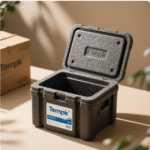
Portable EPP box price can look random until you break it into simple drivers: densité, épaisseur de paroi, joint du couvercle, et cycles de réutilisation. Dans 2025, small boxes often land around $20- 50 $, while commercial reusable models commonly reach $100+ depending on size and features. The real win is cost per successful trip—e.g., un $150 box over 300 trips is $0.50 par voyage when your return system works.
Cet article vous aidera à répondre:
-
Comment portable EPP foam box pricing factors actually change durability and insulation
-
What a “fair” portable EPP box price looks like for food, Pharma, et dernier kilomètre
-
Comment calculer portable EPP box price per trip (Retour de retour) sans deviner
-
How right-sizing reduces portable EPP cooler shipping cost and coolant waste
-
Which lid, joint, and handling upgrades are worth paying for in 2025
Why does portable EPP box price vary so much?
Portable EPP box price varies because EPP is not one standard foam. Different densities, wall designs, and lid geometries change strength, stabilité de la température, and how many cycles the box survives. Two boxes can look similar, yet one lasts a season and one lasts years. Dans 2025, smart buying starts by matching the box to your route risk and reuse plan, not by chasing the lowest quote.
Most price spread comes from:
-
Material density (how “tight” the foam is)
-
Épaisseur de paroi (insulation hold time vs weight/volume)
-
Tooling and mold complexity
-
Accessoires (poignées, joints, séparateurs, label zones)
-
Cohérence de la qualité (tolerances that keep lids fitting over time)
Portable EPP foam box pricing factors you can measure
If you want clarity fast, ask suppliers for the values below. Then compare quotes “apples to apples” instead of by photos.
| Pricing factor | Lower-cost build | Higher-cost build | Ce que cela signifie pour vous |
|---|---|---|---|
| Densité PPE | Lower density | Densité plus élevée | Higher density usually survives more drops and stacking |
| Épaisseur de paroi | Murs plus minces | Des murs plus épais | Thicker walls usually hold temperature longer |
| Interface du couvercle | Flat lid | Interlocking / sealed fit | Better fit reduces leakage and coolant need |
| Matériel | Aucun | Poignées / serrures / joints | Manipulation plus rapide, moins d'erreurs, moins de fuite |
| Tolérances | Basique | Tighter QC | More consistent performance across shipments |
| Réutiliser l'objectif | Few cycles | De nombreux cycles | Higher cycles can cut cost per trip dramatically |
Conseils pratiques que vous pouvez utiliser aujourd'hui
-
If you deliver daily: judge portable EPP box price by coût du cycle de vie, not unit cost.
-
If damage claims are rising: density and lid fit are usually your first fixes.
-
If temperature complaints happen: check lid seal before adding more refrigerant.
Exemple: A meal-kit operator paid more in portable EPP box price, then cut reships because boxes survived real handling.
What is a fair portable EPP box price for your lane and product?
A “fair” portable EPP box price is the price that matches your transit time, handling abuse, and reuse system. There is no single correct number without context. A 2-hour city route needs strong handling and fast pack-out. A 24–48 hour lane needs insulation stability and a lid that stays tight under delays.
Use this quick “lane fit” logic:
-
Voies courtes (le même jour): pay for durabilité + speed features (poignées, stabilité de la pile)
-
Voies plus longues (du jour au lendemain): pay for épaisseur + joint du couvercle (reduce temperature drift)
-
Biens de grande valeur: pay for prévisibilité (performances reproductibles, less variance box-to-box)
Cost of portable EPP insulated box by use case
| Cas d'utilisation | Typical priority | Erreur courante | Better buying logic |
|---|---|---|---|
| Grocery last-mile | Durabilité + vitesse | Boîtes surdimensionnées | Bonne taille, add grip/handles, standardiser l'emballage |
| Seafood delivery | Leakage control + rétention de froid | Weak lids and messy liners | Sealed lid options + clean-friendly design |
| Kits de repas | Réutiliser les cycles + vitesse opérationnelle | Ignoring cleaning workflow | Choose surfaces and shapes that clean fast |
| Produits pharmaceutiques réfrigérés | Temperature band stability | Overcooling product | Match coolant strategy to product tolerance |
Conseils et suggestions pratiques
-
If your route is unpredictable: design for the worst day, not the best day.
-
If your team is rushed: pick closures that are hard to do wrong.
-
If you reuse boxes: build return + cleaning SOPs before you scale purchases.
Exemple: A seafood brand reduced failures by standardizing one box size per product tier and training one packing layout.
How do density and thickness change portable EPP box price?
Density and thickness are the two biggest physical levers behind portable EPP box price. Densité mainly buys you strength and longer life. Épaisseur mainly buys you insulation hold time. Many buyers overpay by improving the wrong lever—like buying thick walls when the real issue is a leaking lid, or buying high density when the lane is gentle.
Une façon simple d'y penser:
-
Higher density = tougher “springy” foam that resists dents
-
Thicker walls = slower heat flow, longer stable temperatures
When higher density is worth a higher portable EPP box price
Higher density usually pays back when your boxes are:
-
stacked tightly in vans or depots
-
handled by many hands or multiple handoffs
-
reused frequently over months
| Spec choice | What improves | What you pay for | Votre véritable avantage |
|---|---|---|---|
| Densité plus élevée | Force, longévité | More material cost | More reuse cycles, moins de remplacements |
| Des murs plus épais | Tenir le temps | More weight/volume | Protection plus longue, moins de liquide de refroidissement nécessaire |
| Better lid seal | Leakage control | Conception + QC | Less drift, moins de défaillances de température |
Conseils et suggestions pratiques
-
If boxes return dented: density is likely too low for your handling reality.
-
If product warms up: thickness and lid seal usually matter more than density.
-
If stacking is heavy: prioritize shape stability and lid fit retention.
Exemple: A distributor increased wall thickness and improved lid fit, then saw fewer temperature complaints and fewer refunds.
How do you calculate portable EPP box price per trip (Retour de retour)?
Your true portable EPP box price is not the invoice number. C'est cost per successful delivery cycle. That means you include expected cycles, taux de perte, travail de nettoyage, and the cost of failures. Once you do this, “expensive” boxes often become cheaper than disposable options.
Use this baseline formula:
A simple ROI calculator you can copy (interactif)
Fill in your best estimates:
-
Portable EPP box price (unité): ______
-
Expected trips before replacement: ______
-
Taux de perte (not returned): ______ %
-
Nettoyage + coût de traitement par voyage: ______
-
Cost of one failed delivery (refund/reship): ______
Now use this decision rule:
-
If a better box prevents even a small number of failures, it often pays back fast.
-
If a better design saves temps d'emballage, it saves labor every single day.
| Track this input | Pourquoi ça compte | Ce que vous améliorez | Votre avantage |
|---|---|---|---|
| Trips achieved | Shows durability reality | Densité + ajustement du couvercle | Lower replacement spend |
| Temperature complaints | Shows insulation + joint | Épaisseur + fermeture | Une plus grande confiance des clients |
| Temps de rangement | Shows labor cost | Poignées + conception de fermeture | Débit plus rapide |
| Taux de retour | Shows system health | Deposit / pickup plan | Lower loss rate |
Conseils et suggestions pratiques
-
If return rate is low: portable EPP box price will always look “high.” Fix returns first.
-
Si le nettoyage est lent: choose smooth shapes and easy-drain corners.
-
If failures are costly: invest in stability before negotiating pennies.
Exemple: After a 30-day pilot, a chilled food shipper found a slightly higher portable EPP box price reduced reships enough to pay back within one quarter.
How do you right-size to reduce portable EPP cooler shipping cost?
Size selection can make or break portable EPP box price efficiency. Bigger boxes cost more, but the hidden penalty is often fret, liquide de refroidissement, and dead space. You want the smallest box that fits the payload and a repeatable coolant layout, avec un minimum de lacunes aériennes.
Use the “right-size” method:
-
Measure your most common order footprint and height
-
Choose the smallest internal dimensions that fit safely
-
Standardize one pack-out layout per size
24L portable EPP insulated box price vs oversized boxes
The 24L portable EPP insulated box price often looks attractive, but it only wins if it matches your real orders. Oversizing forces extra coolant and higher shipping cost.
| Sizing choice | Ce qui se produit | Pourquoi ça compte | Meilleure pratique |
|---|---|---|---|
| Trop petit | Crushing risk | Damage claims rise | Add safe clearance zones |
| Too large | More dead space | More coolant + higher freight | Standardize 2–3 sizes |
| Just right | Stable load | Moins d'échecs | Train one layout per size |
Conseils et suggestions pratiques
-
If you use one box for everything: portable EPP box price and shipping cost both rise.
-
If orders vary: standardize sizes by order tiers (petit / moyen / grand).
-
Si vous expédiez des liquides: choose layouts that reduce tilt and movement.
Exemple: A brand reduced coolant use after switching from “one big box” to two standardized sizes with trained pack-outs.
What lid, joint, and portability features improve portable EPP box price value?
Lids are where many “cheap” boxes fail. Even with thick walls, a poor lid fit leaks cold air and causes drift. Paying more in portable EPP box price can be worth it when it buys you repeatable closures, seal stability over time, et manipulation plus rapide.
Features that often pay back:
-
interlocking edges or secure fit zones
-
gasket options when your lane demands tighter control
-
stack-support geometry that resists warping
-
ergonomic handles and grip texture for fewer drops
Lid performance checklist (portable EPP box price value)
Ask these four questions:
-
Does the lid stay tight after repeated trips?
-
Can staff close it correctly every time?
-
Does it resist warping under stacking?
-
Is it easy to clean without trapping residue?
| Fonctionnalité | Valeur | Risque en cas de disparition | Operational impact |
|---|---|---|---|
| Interlocking edge | Meilleure étanchéité | Temperature leaks | More stable arrivals |
| Quick-close design | Faster pack-out | Inconsistent closures | Less training burden |
| Stack support | Less deformation | Loose lid fit | Longer lifespan |
| Clean-friendly shape | Travail réduit | Hygiene issues | Revirement plus rapide |
Conseils et suggestions pratiques
-
If you see drift: inspect lid fit before changing refrigerant strategy.
-
If staff make mistakes: simplify closures and add visual cues.
-
If drops happen: handles are often cheaper than replacements.
Exemple: A city delivery team reduced drops after adding grip zones and better handles—portable EPP box price rose slightly, damage fell quickly.
2025 trends impacting portable EPP box price
Dans 2025, portable EPP box price is shaped by three practical shifts:
-
Reuse is now the default: packaging is treated like equipment, ce n'est pas un produit jetable.
-
Standardization is rising: brands reduce SKUs to 2–3 box sizes and train one layout each.
-
Reverse logistics is a KPI: return rate and loss rate decide whether reuse savings are real.
Derniers développements en un coup d'œil
-
More lane testing before scaling: pilots on the toughest routes reduce costly mistakes.
-
Better operational design: faster packing and fewer closure errors matter more than “nice-to-have” features.
-
Sustainability pressure with business logic: waste reduction is paired with ROI per trip.
Perspicacité du marché: buyers increasingly accept a higher portable EPP box price when it reduces failures and protects repeat customers.
Auto-évaluation: Are you overpaying for portable EPP box price?
Répondre Oui ou Non. Si vous avez 3+ Oui, you likely have fast savings available.
-
Are you using oversized boxes for most shipments?
-
Do you add extra coolant because you don’t trust the packaging?
-
Do you lack a standard pack-out layout for each box size?
-
Is your return rate low or unknown?
-
Do you replace lids often due to warping or loose fit?
Guide de notation
-
0–2 Oui: you’re close to optimized
-
3–4 Oui: fix sizing and standardization first
-
5 Oui: redesign your system before buying more volume
Questions fréquemment posées
Q1: What affects portable EPP box price the most?
Densité, épaisseur de paroi, lid design, and expected reuse cycles drive portable EPP box price the most. Match specs to your lane.
Q2: Is a higher portable EPP box price always better?
Non. Overbuying performance wastes money. A better choice matches route time, gestion des risques, and return rate.
Q3: What is a typical 24L portable EPP insulated box price?
A 24L portable EPP insulated box price often sits in entry-level ranges, but exact quotes depend on density and lid design.
Q4: How do I reduce portable EPP cooler shipping cost?
Redimensionner la boîte, réduire l'espace mort, and standardize pack-out layouts. This lowers freight and coolant needs.
Q5: How do I calculate portable EPP box price per trip?
Divide unit price by expected trips, then add cleaning/handling and loss rate. Cost per trip beats sticker price.
Q6: Why do lids matter so much for portable EPP box price value?
A poor lid seal leaks cold air, forcing more coolant and raising failure risk. Better lids often pay back quickly.
Résumé et recommandations
Portable EPP box price makes sense when you connect it to your route reality. Densité buys durability, épaisseur buys hold time, et ajustement du couvercle often decides whether temperature stays stable. Right-sizing reduces freight and coolant waste. The smartest approach in 2025 is to judge portable EPP box price by coût par voyage réussi, not by unit price.
Étapes suivantes (plan simple):
Choisir 2–3 standard sizes, define a pack-out layout for each, run a 30-pilote de jour on your toughest lane, and track trips, échecs, temps de rangement, and return rate. Then scale purchases with confidence.
À propos du tempk
Et tempk, we help teams choose reusable cold chain packaging that performs in real delivery conditions. We focus on practical design choices—durability, ajustement du couvercle, portabilité, and lane-based sizing—so your portable EPP box price translates into stable deliveries and fewer exceptions. We support pilots and standardization so your team can pack fast, train easily, and scale without chaos.
Appel à l'action: Partagez votre temps de parcours, Taille de la charge utile, et bande de température. We’ll help you map the right spec and a simple cost-per-trip model.