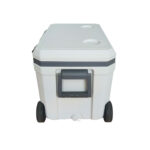
Conteneur réfrigéré VIP pour conteneur maritime intelligent: Guide pratique de sélection
La meilleure utilisation d'un Conteneur réfrigéré VIP pour intelligent conteneur d'expédition est de relier la protection thermique à un plan opérationnel clair. Commencez par les exigences du produit, puis définissez l'itinéraire, charge utile, liquide de refroidissement, surveillance des preuves, et recevoir la décision. L'isolation VIP peut être précieuse pour les expéditions difficiles ou de grande valeur sous la chaîne du froid, mais il doit être sélectionné sur la base de preuves, pas d'hypothèse. Ce guide prêt à être publié amène l'acheteur, technique, et questions opérationnelles dans un cadre pratique.
Réponse rapide: utilisez un conteneur réfrigéré VIP comme conteneur d'expédition intelligent lorsque l'expédition nécessite une isolation passive plus forte, contrôle d'emballage défini, et des preuves pratiques pour le destinataire. Ne l'utilisez pas comme substitut à la qualification d'itinéraire, conditionnement correct du liquide de refroidissement, ou revue de qualité. Le conteneur doit être considéré comme un élément d’un système complet de chaîne du froid..
Pour la plupart des acheteurs, la question pratique est: de quelles preuves avons-nous besoin avant de faire confiance à ce package à grande échelle? Cette preuve peut être un résumé des qualifications, une fiche fournisseur, une instruction d'emballage, un exemple d'examen, une recommandation de placement d'enregistreur, ou une approbation de qualité interne. Le but n’est pas de collecter des documents pour le plaisir. L'objectif est de réduire l'incertitude avant que le produit réel ne soit mis en danger..
Un chemin de décision pratique pour la bonne solution VIP
La meilleure voie de décision n’est ni purement technique ni purement commerciale. Un conteneur réfrigéré VIP pour conteneur d'expédition intelligent doit être jugé en fonction de sa capacité à répondre aux exigences du produit., exposition des voies, répétabilité de l'emballage, surveillance des preuves, et support fournisseur. Un matériau haut de gamme peut toujours décevoir si la charge utile ne convient pas, le liquide de refroidissement est mal conditionné, ou le récepteur ne peut pas interpréter le rapport de l'enregistreur. Une conception plus simple peut bien fonctionner si la voie est courte, écurie, et documenté.
VIP signifie panneau isolé sous vide, un composant isolant haute performance construit autour d'un noyau sous vide scellé à l'intérieur d'une enveloppe barrière. Dans emballage chaîne du froid, Les panneaux VIP sont généralement protégés par des couches structurelles intérieures et extérieures, car le panneau lui-même n'est pas destiné à subir directement des abus.. La valeur pratique n'est pas que le panneau soit magique; c'est qu'un transfert de chaleur réduit peut donner au packout une plus grande marge thermique ou préserver plus d'espace de charge utile interne qu'une paroi en mousse conventionnelle plus épaisse. Les acheteurs doivent encore confirmer l'emballage complet, car l'isolation seule ne définit pas la plage de température requise, conditionnement du liquide de refroidissement, ou critères de réception.
L'expédition intelligente ajoute une couche de visibilité utile. Capteurs, dispositifs de suivi, et les alertes de la plateforme peuvent aider les équipes à voir quand une expédition est retardée ou exposée à un risque. L'emballage a encore besoin d'une marge passive suffisante pour protéger la charge utile jusqu'à ce que quelqu'un puisse agir.. Si les alertes arrivent alors que le colis a déjà dépassé sa limite, le système de surveillance devient un enregistrement d’échec plutôt qu’un outil de prévention. C'est pourquoi les flux de travail intelligents et la conception des packs VIP doivent être planifiés ensemble..
Protection de température séparée, surveillance, et preuve de conformité
Un expéditeur VIP est normalement un emballage passif à température contrôlée composant sauf s'il est associé à un système de réfrigération alimenté. Passif signifie que le système repose sur l'isolation, liquide de refroidissement préconditionné, Matériel à changement de phase, glace carbonique le cas échéant, et une méthode de chargement reproductible. Il ne se refroidit pas activement après le départ. Cette distinction est importante dans les appels d'offres car certains acheteurs utilisent des mots tels que réfrigéré, intelligent, et température contrôlée dans la même phrase. Un fournisseur doit savoir si vous attendez une protection passive, réfrigération active, surveillance de la température, ou un workflow logistique hybride.
La surveillance de la température doit être considérée comme une preuve, pas comme protection thermique. Un enregistreur peut montrer si une expédition est restée dans la plage requise et peut aider l'équipe à enquêter sur un écart., mais il ne peut pas corriger un paquet faible. L'emplacement de l'enregistreur est également important. Un capteur placé contre une surface gelée pack de liquide de refroidissement, près d'un mur chaleureux, ou dans une poche d'air peut ne pas représenter l'état de la charge utile. Pour les envois importants, le plan de surveillance doit être revu avec le même soin que la carte du liquide de refroidissement.
Cette séparation évite deux erreurs courantes. La première est de croire qu'un enregistreur de données protège le produit. La seconde est de croire que l’isolation à elle seule prouve une expédition contrôlée.. Protection thermique, surveillance des preuves, et la documentation de conformité sont connectées, mais chacun a un travail différent. Un emballage solide devrait rendre ces emplois visibles.
Pour un projet de conteneur intelligent, la question la plus utile n'est pas de savoir si l'emballage peut transporter un capteur. La question est de savoir si les données soutiendront une action. Si le seuil d'alerte, propriétaire de l'escalade, et la fenêtre d'intervention ne sont pas claires, la visibilité en temps réel peut ajouter du bruit plutôt que du contrôle. Un package VIP doit être conçu de manière à ce que les lectures des capteurs soient interprétables et que l'emballage physique puisse survivre au temps nécessaire à l'intervention..
Faire correspondre le conteneur à la charge utile, voie, et recevoir la décision
Pour les marchandises sensibles à la température circulant sur des itinéraires longue distance surveillés, le conteneur doit correspondre à la fois à la charge utile et à la voie. L'examen de la charge utile inclut des dimensions, masse, sensibilité, emballage secondaire, et si le produit est endommagé par le gel, échauffement, vibration, ou contact avec le liquide de refroidissement. L'examen des voies inclut la durée prévue, transferts, exposition ambiante, douanes ou hub dwell, et recevoir la préparation. Si l'un ou l'autre côté est vague, la recommandation d'emballage sera vague.
L'expédition intelligente ajoute une couche de visibilité utile. Capteurs, dispositifs de suivi, et les alertes de la plateforme peuvent aider les équipes à voir quand une expédition est retardée ou exposée à un risque. L'emballage a encore besoin d'une marge passive suffisante pour protéger la charge utile jusqu'à ce que quelqu'un puisse agir.. Si les alertes arrivent alors que le colis a déjà dépassé sa limite, le système de surveillance devient un enregistrement d’échec plutôt qu’un outil de prévention. C'est pourquoi les flux de travail intelligents et la conception des packs VIP doivent être planifiés ensemble..
Tableau des preuves de la demande de prix
| Article de la demande de prix | Détail minimum utile | Valeur de décision |
|---|---|---|
| Description de la charge utile | Type de produit, masse, dimensions, et sensibilité | Aide à dimensionner le conteneur et à éviter un mauvais ajustement |
| Exigence de température | Règle de gestion de la portée et des excursions requises | Définit l’objectif d’acceptation |
| Voie de transport | Origine, destination, mode, saison, et les transferts | Lie le choix du forfait à l’exposition réelle |
| Conception de l'emballage | Type de liquide de refroidissement, conditionnement, placement, séparateurs, et fermeture | Rend le résultat reproductible |
| Flux de travail de surveillance | Position de l'enregistreur, processus de démarrage/arrêt, format de rapport, et aviser le propriétaire | Transforme les données de température en preuves utilisables |
| Contrôles de mise à l'échelle | Échantillon d'équivalence, cohérence de la production, et notification de changement | Réduit les surprises après approbation |
Ce tableau est utile car il transforme une demande générale sur un produit en questions vérifiables.. Cela empêche également les acheteurs de traiter un conteneur VIP comme une spécification unique alors que la véritable décision dépend de l'itinéraire complet., charge utile, liquide de refroidissement, surveillance, et flux de documentation.
Preuves à demander avant de passer de l'échantillon à la production
La qualification est le pont entre une réclamation produit et une véritable décision d'expédition. Il pose une question simple: sous un profil défini, avec une charge utile définie et un packout défini, le système a-t-il maintenu les conditions requises? Si l'une de ces entrées change, les preuves ne peuvent plus être directement transférables. C'est pourquoi les acheteurs devraient se demander si les performances déclarées reflètent la masse de leur charge utile., disposition interne, quantité de liquide de refroidissement, durée de l'itinéraire, et conditions ambiantes attendues.
Avant la mise à l'échelle, demander des preuves qui reflètent la configuration approuvée. L'étape d'échantillonnage ne doit pas tester que l'apparence visuelle. Confirmez que la construction, fermeture, Protection du panneau VIP, plan de refroidissement, disposition interne, et les instructions peuvent être répétées en production. Si un fournisseur modifie un article, structure du mur, ou composant après approbation, l'acheteur doit savoir comment ce changement est communiqué et évalué.
Outils de décision utiles
Vérifiez les détails avant de choisir l'emballage
Ces outils rapides peuvent vous aider à comparer le risque d'itinéraire, besoins de dimensionnement, choix de liquide de refroidissement, et les détails de l'emballage avant de demander un devis.
Calculateur de glace carbonique
Estimer les besoins en glace carbonique pour les envois congelés ou ultra-froids avant l'emballage.
Estimation de la neige carboniqueLiquide de refroidissement & Référence PCM
Comparez les options de liquide de refroidissement et de PCM lorsqu'un itinéraire nécessite une prise en charge supplémentaire de la température.
Comparez les optionsCalculateur de banquise
Estimation de la quantité de pain de glace pour les expéditions réfrigérées et planification pratique des itinéraires.
Estimer les packs de glaceDiscipline opérationnelle après que la boîte quitte votre établissement
La boîte quitte votre établissement, mais le processus continue. Préconditionnement, mise en scène du produit, placement d'étiquette, activation de l'enregistreur, fermeture du couvercle, ramassage par le transporteur, manutention en transit, et la réception de l'inspection affectent tous le résultat. Un conteneur VIP peut ralentir le transfert de chaleur, mais il ne peut pas corriger une charge utile chaude chargée tardivement, un ramassage manqué, ou un récepteur qui oublie de télécharger l'enregistreur. La discipline opérationnelle transforme la conception des emballages en contrôle des expéditions.
Un bon ensemble d'instructions doit être suffisamment court pour être utilisé et suffisamment spécifique pour empêcher l'improvisation.. Il doit indiquer l'ordre d'emballage, placement du liquide de refroidissement, emplacement de l'enregistreur, méthode de fermeture, position de l'étiquette, et recevoir des chèques. Pour les unités réutilisables, il doit également indiquer les étapes d'inspection et de nettoyage avant la prochaine expédition.
Notes finales de l'acheteur pour une demande de prix plus sûre
Une demande de prix plus sûre indique les conditions au lieu de demander une boîte premium générique. Inclure la plage requise, charge utile, dimensions, itinéraire, durée, saison, mode de transport, besoins de surveillance, réutiliser les attentes, et besoins en documentation. Demandez aux fournisseurs d'énoncer les hypothèses qui sous-tendent toute allégation de performance. S'ils ne peuvent pas énoncer les hypothèses, traiter la réclamation comme un point de départ plutôt que comme une base de décision.
Enfin, décider de ce qui rendrait l'option inacceptable. Le volume utilisable est peut-être insuffisant, placement peu clair de l'enregistreur, protection du panneau faible, aucune instruction d'emballage, pas de conversation de contrôle des changements, ou mauvais ajustement avec la boucle de retour. Les critères de rejet rendent l'évaluation plus objective et empêchent les équipes d'approuver un conteneur simplement parce que le matériel semble avancé..
De l’approbation des échantillons à l’expédition reproductible
L'approbation de l'échantillon pour le conteneur réfrigéré VIP pour conteneur d'expédition intelligent ne doit pas s'arrêter à l'apparence. L'équipe doit confirmer que l'échantillon peut être emballé par le personnel normal, que la charge utile s'adapte après le placement du liquide de refroidissement et de l'enregistreur, cette fermeture est reproductible, et que le destinataire peut inspecter et documenter l'arrivée sans confusion. Un échantillon solide qui ne peut pas être répété en production n'est pas un échantillon stable. solution pour la chaîne du froid.
Lors du passage à des expéditions répétées, définir les attentes en matière de contrôle du changement. Si le fournisseur change de matériau de panneau, conception de coque, structure du couvercle, diviseur, ou emballage recommandé, l'acheteur doit être informé avant que le changement n'affecte les expéditions réelles. Ceci est particulièrement important pour les produits pharmaceutiques, clinique, biologique, et produits de grande valeur pour lesquels de petites modifications d'emballage peuvent modifier le profil de risque.
FAQ
Le suivi intelligent réduit-il le besoin d'isolation VIP?
Pas habituellement. Le suivi intelligent améliore la visibilité, mais l'isolation offre une marge thermique passive. Les deux rôles sont différents. Si l'itinéraire présente des retards ou des options d'intervention limitées, les données intelligentes peuvent présenter des risques tandis que le package VIP fait gagner du temps. La meilleure conception aligne les capteurs, alertes, escalade, et marge thermique.
Quelles preuves un fournisseur doit-il fournir?
Demandez des preuves qui correspondent à votre décision. Cela peut inclure des informations importantes, instructions d'emballage, résumés de tests ou de qualifications, conseils de placement des enregistreurs, instructions de nettoyage et de réutilisation, et contrôles de l'échantillon à la production. Si une réclamation affecte la qualité ou la conformité, demande quel document le supporte.
L’emballage VIP est-il suffisant pour les envois cliniques ou pharmaceutiques?
L’emballage VIP peut être une partie de la réponse, mais le système complet compte. Les équipes qualité se soucient généralement des limites de température des produits, preuve de qualification, surveillance calibrée, risque d'itinéraire, Ajustement des SOP, et gestion des écarts. L'emballage doit être sélectionné pour prendre en charge ces contrôles, pas les remplacer.
Comment comparer deux options de box VIP?
Comparez l'espace de charge utile utilisable, répétabilité de l'emballage, compatibilité du liquide de refroidissement, panneau de protection, fiabilité de fermeture, durabilité de manipulation, disposition de surveillance, support documentaire, et coût total d'exploitation. Un prix unitaire inférieur peut être trompeur si la boîte crée des erreurs d'emballage, fret supplémentaire, ou faible réception des preuves.
Conclusion: Faites le choix VIP sur la base de données probantes
Un conteneur réfrigéré VIP pour conteneur d'expédition intelligent est plus précieux lorsque l'acheteur relie le conteneur aux limites du produit., exposition par voie, répétabilité de l'emballage, surveillance des preuves, et recevoir des décisions. L’isolation VIP est un élément fort, mais ce n'est pas tout le processus de la chaîne du froid.
Pour un appel d'offres plus sûr, demandez les preuves derrière chaque réclamation et confirmez comment l'échantillon se transformera en expéditions répétées. Le choix final doit être pratique pour les personnes qui emballent, transport, recevoir, inspecter, et approuver le produit.
Notes supplémentaires pour l'examen interne
Un autre point à vérifier pour le conteneur réfrigéré VIP pour conteneur d'expédition intelligent est le comportement de réception.. Un envoi n’est pas complet lorsqu’il atteint l’adresse; il est terminé lorsque le destinataire peut l'inspecter, interpréter les preuves de température, et prendre la bonne décision d'acceptation. Si la conception du package rend la récupération de l'enregistreur difficile ou masque la condition de la charge utile, le récepteur peut créer un écart même lorsque la conception thermique était adéquate. Des instructions de réception simples réduisent ce risque.
Le stockage avant expédition fait également partie du processus de la chaîne du froid. Conditionnement du liquide de refroidissement, mise en scène du produit, stockage de boîte vide, et la température de la salle d'emballage peut influencer la condition de départ. Si un site emballe dans une salle contrôlée et un autre emballe à côté d'un quai de chargement, la même box peut commencer le couloir avec des conditions thermiques différentes. Les acheteurs doivent standardiser les étapes de préparation avant de juger des performances du conteneur.
À propos du Tempk
Tempk propose des solutions d'emballage pour la chaîne du froid qui incluent Glacières VIP et options de glacière à panneau d'isolation sous vide amovible pour le secteur médical, pharmaceutique, nourriture, et autres besoins logistiques sensibles à la température. La valeur pertinente pour les acheteurs n’est pas seulement la coque isolée, mais aussi la conversation pratique sur l'ajustement de la charge utile, utilisation du liquide de refroidissement, manipulation réutilisable, et attentes en matière de documentation. Pour les projets VIP, Tempk peut aider les acheteurs à traduire un itinéraire, type de produit, et les exigences de température dans une discussion sur l'emballage qui est plus spécifique qu'une enquête générale sur les refroidisseurs.
Partagez votre flux de travail de conteneurs intelligents avec Tempk pour voir où l'emballage VIP peut ajouter une marge thermique passive.