Boîte en mousse EPP résistante aux chocs: 2025 Guide?
UN boîte en mousse EPP résistante aux chocs vous aide à expédier des produits fragiles ou sensibles à la température avec moins de « pauses surprises ». Il absorbe les gouttes, calme les vibrations, et résiste à l'écrasement, tout en restant léger et réutilisable. En pièces moulées en EPP, la conductivité thermique est souvent rapportée autour 0.036–0,046 W/(m·K), et l'absorption d'eau est communément décrite comme très faible (souvent <1 vol-%), ce qui compte quand la condensation est réelle.
Cet article répondra pour vous:
-
Comment un boîte en mousse EPP résistante aux chocs évite les dommages lors d'une manipulation réelle
-
Lequel Densité de la boîte en mousse EPP et épaisseur de paroi les choix comptent le plus
-
Comment exécuter un Plan de test de chute de boîte en mousse EPP résistante aux chocs tu peux répéter
-
Quand un Boîte en mousse EPP résistante aux chocs pour livraison sous chaîne du froid a du sens
-
Comment gérer réutiliser les cycles sans dérive des performances
-
Comment estimer le coût total par voyage (pas seulement le prix de la boîte)
Qu'est-ce qu'une boîte en mousse EPP résistante aux chocs?
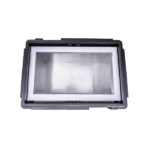
UN boîte en mousse EPP résistante aux chocs est un récipient moulé en polypropylène expansé (PPE) qui amortit les impacts et conserve sa forme après des coups répétés. Si vous voulez l'image la plus simple, c'est un casque élastique pour votre produit: il se comprime à l'impact, répartit la force, et rebondit.
boîte en mousse EPP résistante aux chocs
Votre plus grande victoire n’est pas « une mousse plus épaisse ». Votre plus grande victoire est ajustement stable-la boîte contient toujours la charge utile, donc il ne peut pas se précipiter vers l'échec.
Pourquoi « Fit First » est la mise à niveau la plus rapide
Si votre charge utile peut se déplacer, il bougera, surtout pendant les vibrations. Une cavité bien ajustée et le bon insert battent souvent en ajoutant plus d'épaisseur.
| Décision appropriée | Que se passe-t-il pendant le transport | Ce que tu verras plus tard | Ce que cela signifie pour vous |
|---|---|---|---|
| Cavité lâche | la charge utile « marche » | coins fissurés, éraflures | taux de retour plus élevé |
| Cavité confortable | le mouvement reste faible | moins de plaintes DOA | qualité plus constante |
| Confortable + insérer | coins protégés | moins de « pauses mystères » | moins de réclamations |
Conseils pratiques et recommandations
-
Test d'agitation: si ça claque, votre cavité est trop lâche : ajoutez des inserts ou ajustez le design.
boîte en mousse EPP résistante aux chocs
-
Mise au point en coin: les virages sont les premiers touchés sur les routes réelles.
-
Discipline des paupières: une grande boîte échoue si le couvercle bouge.
Comment une boîte en mousse EPP résistante aux chocs prévient-elle les dommages?
UN boîte en mousse EPP résistante aux chocs protège contre trois aléas du quotidien: gouttes, vibration, et compression. La plupart des équipes prévoient une seule goutte. Les réseaux réels génèrent de nombreux petits succès, ainsi que de gros succès occasionnels..
Pensez à « un œuf dans un casque ». Le casque répartit le coup pour que l'œuf ne se fissure pas.
| Type d'impact | Quelles sont les causes | Comment une boîte en mousse EPP résistante aux chocs peut aider | Votre avantage pratique |
|---|---|---|---|
| Baisse | manutention, dernier mile | absorbe la force maximale | moins de fissures |
| Vibration | long transport | amortit le mouvement | moins de dégâts de fatigue |
| Compression | empiler des charges | détient la structure | moins de coins écrasés |
Épaisseur vs densité: ce qui compte le plus?
L'épaisseur aide, mais la densité décide souvent si la mousse atteint le fond. Trop mou et vous touchez le « sol ». Trop rigide et le choc se transmet.
| Levier de conception | Si c'est trop bas | Si c'est trop haut | L'équilibre que vous souhaitez |
|---|---|---|---|
| Densité | touche le fond sur des gouttes dures | transmet le choc | ferme mais élastique |
| Épaisseur de paroi | bosses, fuites de chaleur | espace/poids perdu | correspondance d'itinéraire |
| Géométrie des coins | les coins se fissurent en premier | lourd/surconstruit | coins renforcés |
Conseils pratiques sur les scénarios
-
Fragile + lumière: donner la priorité aux inserts plus doux et à un ajustement parfait.
-
Charge utile lourde: privilégier une base et des côtes plus solides.
-
Expédition de palettes: donner la priorité au renforcement des coins et à la stabilité de l'empilage.
Modèle de cas pratique: De nombreuses réductions de casse proviennent d'un ajustement plus serré de la cavité et des séparateurs, pas de murs plus épais.
boîte en mousse EPP résistante aux chocs
Comment choisir la densité et l'épaisseur de paroi de la boîte en mousse EPP résistante aux chocs?
Choisir un boîte en mousse EPP résistante aux chocs est un exercice d'équilibre entre amorti et soutien. La densité influence la rigidité. L'épaisseur ajoute à la fois la distance de déplacement d'impact et le tampon thermique.
Le but est simple: protéger la charge utile sans surconception.
Un point de départ rapide en matière de densité et d'épaisseur
Utilisez ceci comme logique de départ, puis confirmer avec des tests.
| Charge utile + voie | Direction de la densité | Direction du mur | Ce que cela signifie pour vous |
|---|---|---|---|
| Lumière + fragile (électronique) | inférieur à moyen | modéré | choc de pointe inférieur |
| Lourd + durable (parties) | moyen à supérieur | plus épais + côtes | éviter l'affaissement/l'écrasement |
| Chaîne du froid + fragile | mixte (boîte + insérer) | plus épais | protéger la température + impact |
| Programme de réutilisation élevée | milieu + géométrie renforcée | écurie | performances constantes |
Un outil de décision en 90 secondes (score de 0 à 10)
Donnez-vous 1 indiquer pour chaque « Oui »:
-
Vos colis transitent par des réseaux colis avec de nombreux transferts.
-
Vous voyez déjà des coins écrasés ou des couvercles qui se détachent.
-
Votre produit est fragile ou sensible à l'étalonnage.
-
Le poids est concentré sur une petite zone.
-
Vous expédiez par temps chaud ou sur de longs trajets.
-
La livraison à plusieurs arrêts est courante.
-
La pression d'empilage se produit pendant le stockage ou le transport.
-
Le coût de votre sinistre est élevé (remplacement + travail).
-
Vous souhaitez réutiliser des emballages.
-
Vous avez besoin à la fois d’isolation et de contrôle des chocs.
Signification du score
-
0–3: La boîte de base en mousse EPP résistante aux chocs peut fonctionner; se concentrer sur l'ajustement et la fermeture.
-
4–7: Ajouter des inserts, coins plus forts, et tests de validation.
-
8–10: Traitez la boîte en mousse EPP résistante aux chocs comme un système technique.
Comment tester une boîte en mousse EPP résistante aux chocs pour l'expédition?
UN boîte en mousse EPP résistante aux chocs n’est « prouvé » que lorsque vous testez le système complet: boîte + insérer + charge utile + fermeture + méthode d'emballage. C'est là que se cachent la plupart des échecs.
Pour les voies de type parcelle, ISTA3A est couramment utilisé. Pour une simulation de distribution plus large, de nombreuses équipes utilisent ASTM D4169 horaires. ISO propose également des méthodes telles que ISO 2248 pour impact vertical (baisse) essais. ASTM D4169 a également connu une mise à jour notable dans 2024 (souvent référencé sous le nom de D4169-23e1), donc alignez-vous sur la version actuelle avant de valider.
boîte en mousse EPP résistante aux chocs
Modèle de plan de test rapide que vous pouvez copier
-
Définir la voie: colis, LTL, air, exporter, empilement d'entrepôt.
-
Choisissez la famille de test: ISTA3A (colis) ou ASTM D4169 (cycles plus larges).
-
Définir des règles de réussite/échec: fonction, fuites, limites cosmétiques, intégrité de la fermeture.
-
Testez plusieurs échantillons: 2–5 unités si fragiles ou de grande valeur.
-
Document « tel que emballé »: des photos, emplacement d'insertion, méthode de fermeture, emplacement de l'enregistreur.
boîte en mousse EPP résistante aux chocs
| Test | Ce qu'il révèle | Là où une boîte en mousse EPP résistante aux chocs échoue | Ce que vous améliorez |
|---|---|---|---|
| Baisse | faiblesse des coins/bords | coins fissurés, déplacement du couvercle | coins plus forts, meilleure fermeture |
| Vibration | coupe ample | la charge utile « marche » | insert plus serré, antidérapant |
| Compression | effondrement de l'empilement | flambage des murs | côtes, base plus solide |
Conseils pratiques et recommandations
-
Testez d’abord les virages. Les coins échouent avant les faces plates.
-
Répéter les gouttes. Une goutte peut porter chance; les répétitions montrent la durabilité.
-
Test après réutilisation. Performances liées aux bosses et à l'usure.
boîte en mousse EPP résistante aux chocs
Modèle de cas pratique: Il est courant de « réussir les chutes » mais d’échouer les vibrations parce que la charge utile migre.
boîte en mousse EPP résistante aux chocs
Une boîte en mousse EPP résistante aux chocs peut-elle prendre en charge la livraison sous la chaîne du froid?
Oui. UN boîte en mousse EPP résistante aux chocs peut bien fonctionner pour la chaîne du froid car le PPE est isolant et reste stable après les impacts. Mais l’isolation n’est pas magique. Le temps de maintien dépend de la qualité du joint du couvercle, entrefers, épaisseur de paroi, type de liquide de refroidissement (packs de gel, PCM, glace carbonique), conditions ambiantes, et durée du voyage.
boîte en mousse EPP résistante aux chocs
Si l'ajustement de votre couvercle est lâche, épaisseur du joint—réparer la fermeture avant d'ajouter du matériel.
boîte en mousse EPP résistante aux chocs
Disposition de l'emballage sous chaîne du froid qui protège des chocs et de la température
| Type de charge utile | Placement du liquide de refroidissement | Insérer une stratégie | Ce que cela signifie pour vous |
|---|---|---|---|
| Aliments réfrigérés | haut + côtés | pare-chocs d'angle | moins de bleus/fuites |
| Articles surgelés | entourer + base | support de base ferme | moins de dégel dans les coins |
| Échantillons de laboratoire/pharmaceutique | packs équilibrés | insert de précision | température stable + choc |
Règles de gestion de l'humidité (simple et efficace)
-
Boîtes sèches avant stockage. L'humidité emprisonnée devient une odeur.
-
Évitez les résidus de ruban adhésif sur les surfaces en mousse; ça retient la saleté.
-
Utilisez des doublures amovibles pour les couloirs « à risque de fuite » afin de réduire le temps de nettoyage.
boîte en mousse EPP résistante aux chocs
Combien de cycles de réutilisation une boîte en mousse EPP résistante aux chocs peut-elle gérer?
UN boîte en mousse EPP résistante aux chocs est construit pour être réutilisé, mais la vraie vie fixe la limite. Les cycles de réutilisation dépendent de l’intensité de la manipulation, méthode de nettoyage, et impacts de coin.
boîte en mousse EPP résistante aux chocs
Traitez la boîte comme un atout. Suivez-le, inspectez-le, et retirez-le en cas de panne.
Règles d'inspection simples pour les programmes de réutilisation
| Point de contrôle | Ce que tu cherches | Passer la norme | Ce que cela signifie pour vous |
|---|---|---|---|
| Coins | écrasé, mousse déchirée | rebondit + conserve sa forme | la protection contre les chutes demeure |
| Ajustement du couvercle | engagement lâche | se ferme bien | moins de déversements + fuites de chaleur |
| Intérieur | rainures profondes | surface essuyable | assainissement plus facile |
| Base | gauchissement | stabilité à plat | empilage en toute sécurité |
Un « vert » rapide / Jaune / Système de notation "rouge"
-
Vert: prêt pour le prochain voyage.
-
Jaune: utiliser pour les voies à faible risque; surveiller de près.
-
Rouge: retirer ou réparer (ne pas expédier).
Conseil opérationnel: Ajoutez une vérification des coins et du couvercle de 10 secondes à la réception pour éviter les échecs au prochain voyage..
Une boîte en mousse EPP résistante aux chocs en vaut-elle la peine?
UN boîte en mousse EPP résistante aux chocs gagne souvent sur coût par livraison réussie, pas le prix d'achat. Si cela réduit les dégâts et dure plusieurs cycles, le coût total peut baisser.
Mini-calculatrice: coût par voyage (interactif)
Remplissez vos numéros:
-
Prix de la boîte: ___
-
Déplacements attendus: ___
-
Nettoyage/réparation par voyage: ___
-
Coût par voyage = (prix ÷ voyages) + nettoyage/réparation = ___
-
Taux de dégâts actuel: ___%
-
Coût par envoi endommagé: ___
-
Réduction des dégâts attendue: ___%
Règle: Si le coût mensuel des dommages évités est supérieur à l’augmentation du coût de votre emballage, le changement rapporte.
| Scénario | Pourquoi une boîte en mousse EPP résistante aux chocs est utile | Quand ça rapporte le plus rapidement |
|---|---|---|
| Electronique fragile | moins de retours DOA | coût de réclamation élevé |
| Aliments de la chaîne du froid | moins de fuites + rejette | relivraisons fréquentes |
| Pièces lourdes | moins de dégâts par écrasement | voies de manutention difficiles |
Comment choisir un fournisseur de boîtes en mousse EPP résistante aux chocs?
Votre fournisseur doit vous aider à créer des performances reproductibles, pas seulement un bel échantillon. Demandez-leur comment ils contrôlent la cohérence de la densité, stabilité dimensionnelle, ajustement du couvercle, et insérez la précision.
Liste de contrôle pour l'évaluation des fournisseurs
| Capacité | Que demander | À quoi ressemble le « bien » | Ce que cela signifie pour vous |
|---|---|---|---|
| Contrôle des matériaux | tolérances de densité | lots cohérents | protection prévisible |
| Outillage | insérer + précision du couvercle | ajustement serré, faible oscillation | moins d'échecs |
| Prise en charge des tests | plans de chute/vibration | des rapports clairs | approbation plus rapide |
| Préparation à l'échelle | des délais stables | sortie répétable | moins de chocs d’offre |
Conseils d'achat pratiques
-
Test plusieurs échantillons de production, pas un prototype « parfait ».
-
Précisez le insérer une géométrie par écrit – insérer les résultats des changements de dérive.
-
Mettez-vous d'accord sur votre dossier de preuves: photos d'emballage + critères + résultats.
2025 Dernières tendances en matière de conception de boîtes en mousse EPP résistantes aux chocs
Dans 2025, Les programmes de boîtes en mousse EPP résistantes aux chocs évoluent vers emballage à preuve d'abord et opérations de réutilisation plus simples. Les équipes veulent moins de SKU d'emballage qui couvrent plus de voies, plus une validation plus rapide.
boîte en mousse EPP résistante aux chocs
Derniers progrès que vous verrez plus souvent
-
Familles d'inserts modulaires: une boîte extérieure, de nombreux ajustements de charge utile
-
Meilleures interfaces de couvercle: moins de changements de vitesse sous vibration
-
Des preuves plus solides: des photos + résultats des tests + hypothèses de voie
-
Plus d'envois basés sur des capteurs: choc + journaux de température pour plus de clarté sur les causes profondes
boîte en mousse EPP résistante aux chocs
Perspicacité du marché (langage clair)
La fiabilité gagne. Lorsque la boîte en mousse EPP résistante aux chocs se comporte de manière prévisible, vous passez moins de temps à réexpédier et à vous disputer.
Questions fréquemment posées
Q1: Comment choisir un boîtier en mousse EPP résistant aux chocs pour les appareils électroniques fragiles?
Choisissez une boîte en mousse EPP résistante aux chocs avec un insert de précision qui empêche tout mouvement. Validez avec des chutes de coin et des vibrations répétées.
Q2: Une mousse plus épaisse signifie-t-elle toujours une meilleure protection?
Non. Si c'est trop mou, ça touche le fond. Une densité équilibrée et une bonne géométrie des coins protègent mieux.
Q3: Une boîte en mousse EPP résistante aux chocs peut-elle fonctionner pour la livraison sous chaîne du froid?
Oui, mais vous avez toujours besoin d'une disposition cohérente du liquide de refroidissement et d'un joint étanche du couvercle.. La conception de l’emballage contrôle le temps de maintien.
Q4: Comment puis-je savoir si l'ajustement de ma charge utile est correct?
S'il vibre lorsque vous secouez doucement la boîte emballée, la cavité est trop lâche. Ajoutez des inserts ou ajustez le design.
boîte en mousse EPP résistante aux chocs
Q5: Comment augmenter les cycles de réutilisation d'une boîte en mousse EPP résistante aux chocs?
Inspecter les coins et les couvercles, sécher complètement après le nettoyage, et retirez les boîtes usées plus tôt pour protéger les performances.
Résumé et recommandations
UN boîte en mousse EPP résistante aux chocs fonctionne mieux lorsque vous le traitez comme un système: densité correcte, inserts stables, fermeture serrée, et tests reproductibles. Commencez par les dangers de votre voie : les chutes, vibration, empilement, et exposition à la température. Puis concevez les coins, ajustement verrouillé, et validez « tel que emballé ». Si vous réutilisez, ajoutez l'inspection et le suivi des cycles pour que les performances restent stables dans le temps.
Votre prochaine étape: piloter un groupe SKU sur une seule voie, exécuter un plan de chute/vibration reproductible, et comparez les dommages et la main d'œuvre à votre référence.
À propos du tempk
Et tempk, nous concevons des systèmes d'emballage qui résistent à une réelle pression logistique. Nous nous concentrons sur des configurations d'isolation stables, protection fiable contre les chocs, et réutilisez des flux de travail qui restent propres et cohérents. Si vous souhaitez une recommandation spécifique à une voie pour une boîte en mousse EPP résistante aux chocs : taille, direction de la densité, insérer une stratégie, et un plan de test simple : nous pouvons vous aider à créer une revue pratique de l'emballage et un pack d'épreuves.